From Surf Wiki (app.surf) — the open knowledge base
Gingerbread house
Model house made of gingerbread

Model house made of gingerbread
A gingerbread house is a novelty confectionery shaped like a building that is made of cookie dough, cut and baked into appropriate components like walls and roofing. The usual base material is crisp gingerbread, hence the name. Another type of model-making with gingerbread uses a boiled dough that can be moulded like clay to form edible statuettes or other decorations. These houses, covered with a variety of candies and icing, are popular Christmas decorations.
History
_Kirchweih.jpg)
Records of honey cakes can be traced to ancient Rome. Food historians ratify that ginger has been seasoning foodstuffs and drinks since antiquity. It is believed gingerbread was first baked in Europe at the end of the 11th century, when returning crusaders brought back the custom of spicy bread from the Middle East. Ginger was not only tasty, it had properties that helped preserve the bread. According to French legend, gingerbread was brought to Europe in 992 by the Armenian monk, later saint, Gregory of Nicopolis (Gregory Makar). He lived for seven years in Bondaroy, France, near the town of Pithiviers, where he taught gingerbread cooking to priests and other Christians. Gregory died in 999.
Gingerbread, in its modern form, descends from Medieval European culinary traditions. Gingerbread was also shaped into different forms by monks in Franconia, Germany in the 13th century. Lebkuchen bakers are recorded as early as 1296 in Ulm and 1395 in Nuremberg, Germany. Nuremberg was recognized as the "Gingerbread Capital of the World" when, in the 17th century, the guild started to employ master bakers and skilled workers to create complicated works of art from gingerbread. The traditional sweetener is honey, used by the guild in Nuremberg. Spices used are ginger, cinnamon, cloves, nutmeg and cardamom. Gingerbread figurines date back to the 15th century, and figural biscuit-making was practised in the 16th century. The first documented instance of figure-shaped gingerbread biscuits is from the court of Elizabeth I of England, who had gingerbread figures made in the likeness of some of her important guests.
History of gingerbread shaping
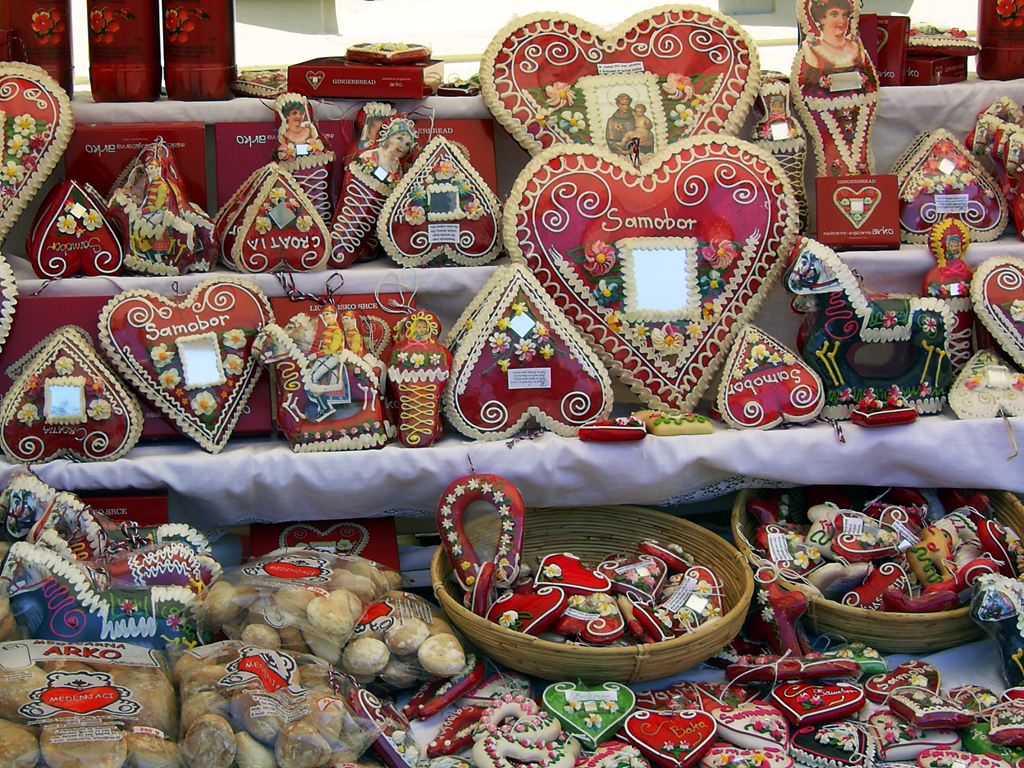

The gingerbread bakers were gathered into professional baker guilds. In many European countries, gingerbread bakers were a distinct component of the bakers' guild. Gingerbread baking developed into an acknowledged profession. In the 17th century, only professional gingerbread bakers were permitted to bake gingerbread except at Christmas and Easter, when anyone was allowed to bake it.
In Europe, gingerbreads were sold in special shops and at seasonal markets that sold sweets and gingerbread shaped as hearts, stars, soldiers, babies, riders, trumpets, swords, pistols and animals. Gingerbread was also worn as a talisman in battle or as protection against evil spirits.
Gingerbread was a significant form of popular art in Europe; major centers of gingerbread mould carvings included Lyon, Nuremberg, Pest, Prague, Pardubice, Pulsnitz, Ulm, and Toruń. Gingerbread moulds often displayed actual happenings, by portraying new rulers and their consorts, for example. Substantial mould collections are held at the Ethnographic Museum in Toruń, Poland and the Bread Museum in Ulm, Germany. During the winter months, medieval gingerbread pastries, usually dipped in wine or other alcoholic beverages, were consumed. In America, the German-speaking communities of Pennsylvania and Maryland continued this tradition until the early 20th century. The tradition survived in colonial North America, where the pastries were baked as ginger snap cookies and gained favour as Christmas tree decorations.
The tradition of making decorated gingerbread houses started in Germany in the early 1800s. According to certain researchers, the first gingerbread houses were the result of the well-known Brothers Grimm fairy tale "Hansel and Gretel", According to other food historians, the Grimm brothers were speaking about something that already existed.
Modern times
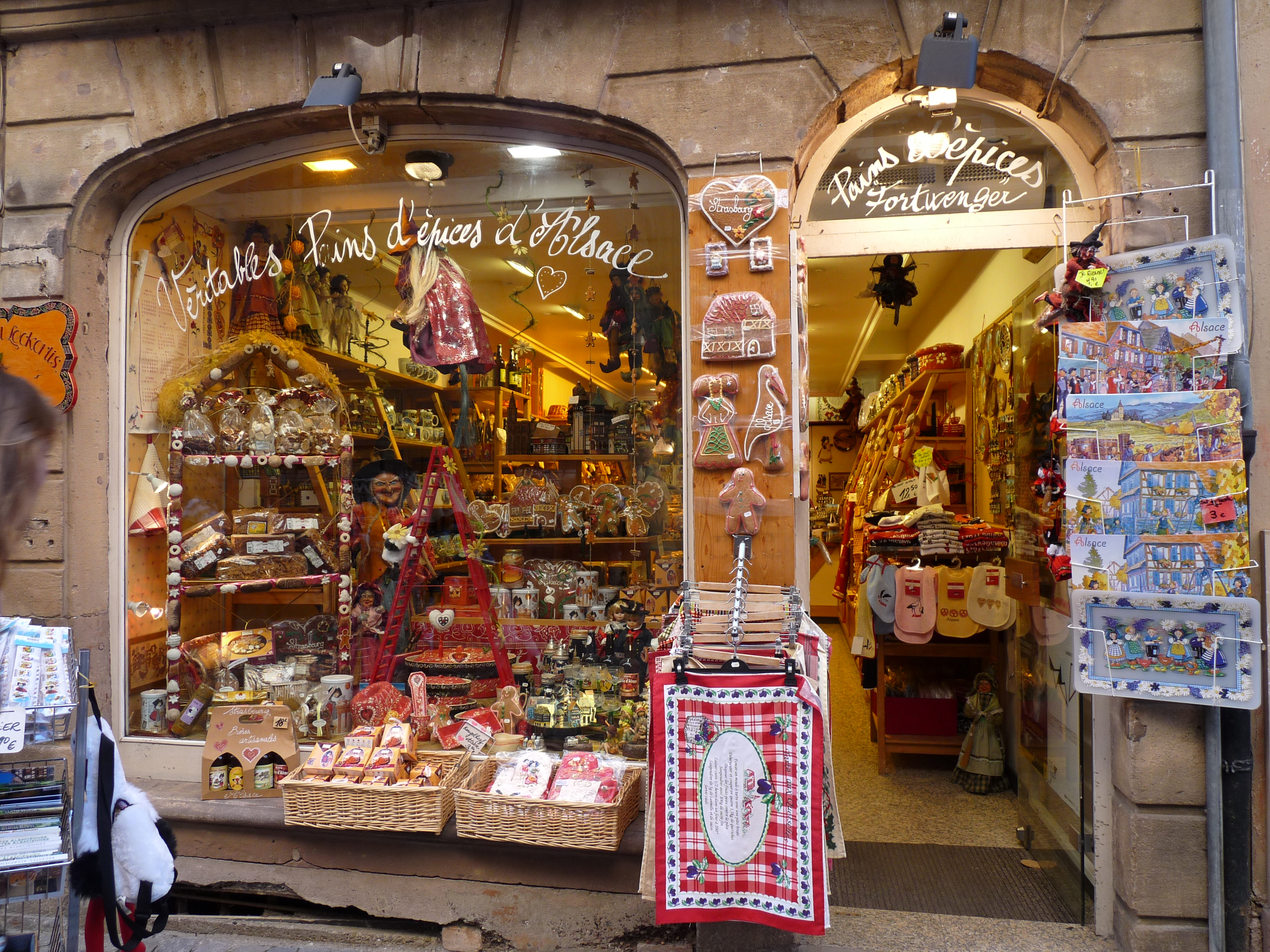

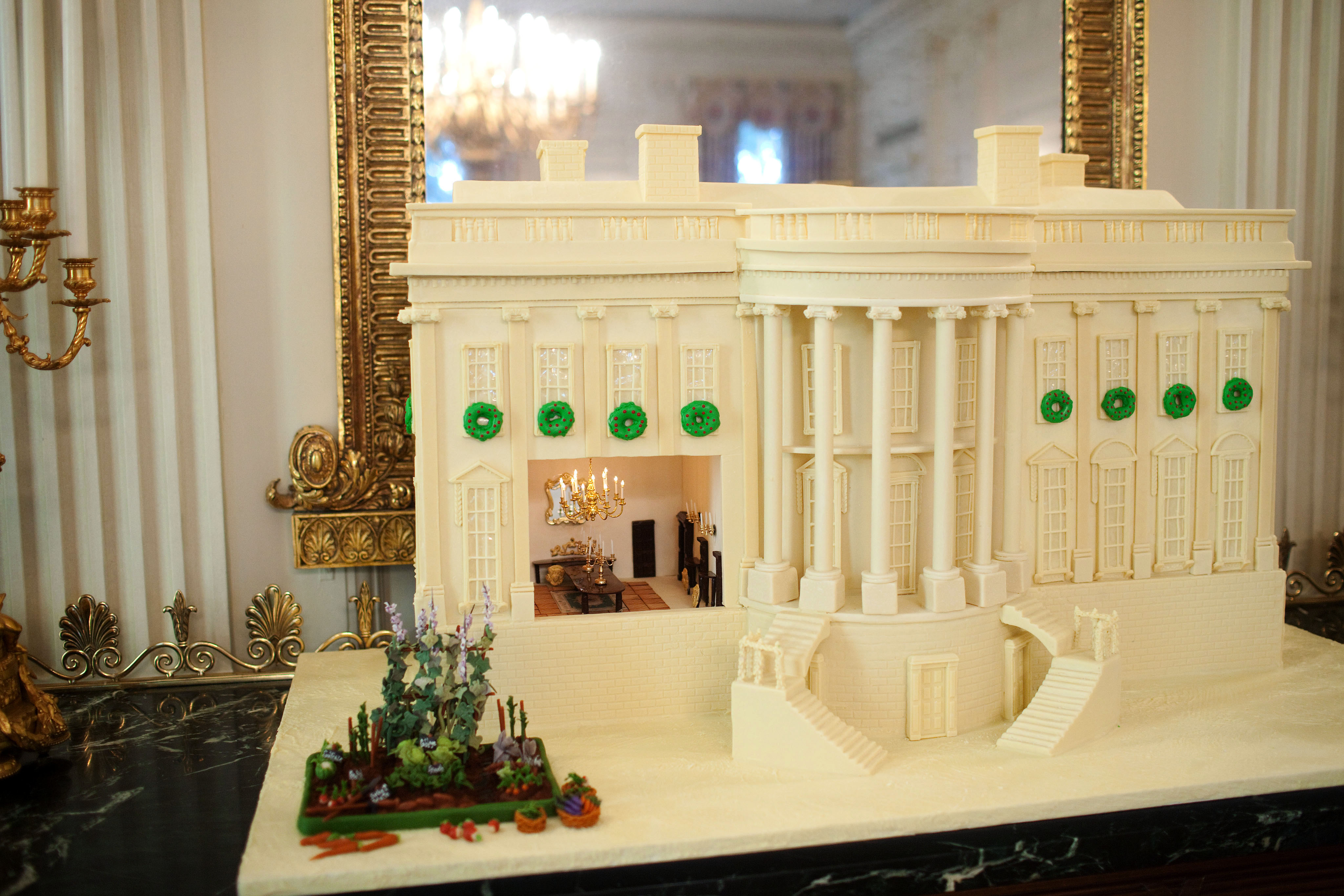
In modern times, the tradition has continued in certain places in Europe. In Germany, Christmas markets sell decorated gingerbread before Christmas. Lebkuchenhaus or Pfefferkuchenhaus are the German terms for a gingerbread house. Making gingerbread houses is a Christmas tradition in many families. They are typically made before Christmas using pieces of baked gingerbread dough assembled with melted sugar. The roof 'tiles' can consist of frosting or candy. The gingerbread house yard is usually decorated with icing to represent snow.
A gingerbread house does not have to be an actual house, although it is the most common. It can be anything from a castle to a small cabin, or another kind of building, such as a church, an art museum, or a sports stadium,
In most cases, royal icing is used as an adhesive to secure the main parts of the house, as it can be made quickly and forms a secure bond when set.
In Sweden, gingerbread houses are prepared on Saint Lucy's Day. Since 1991, the people of Bergen, Norway, have built a city of gingerbread houses each year before Christmas. Named Pepperkakebyen (Norwegian for "the gingerbread village"), it is claimed to be the world's largest such city. Every child under the age of 12 can make their own house at no cost with the help of their parents. In 2009, the gingerbread city was destroyed in an act of vandalism. A group of building design, construction, and sales professionals in Washington, D.C., also collaborate on a themed "Gingertown" every year.
In the United States, the National Gingerbread House Competition began in 1992 at the Grove Park Inn in Asheville, North Carolina. In San Francisco, the Fairmont and St. Francis hotels display rival gingerbread houses during the Christmas season.
Guinness World records
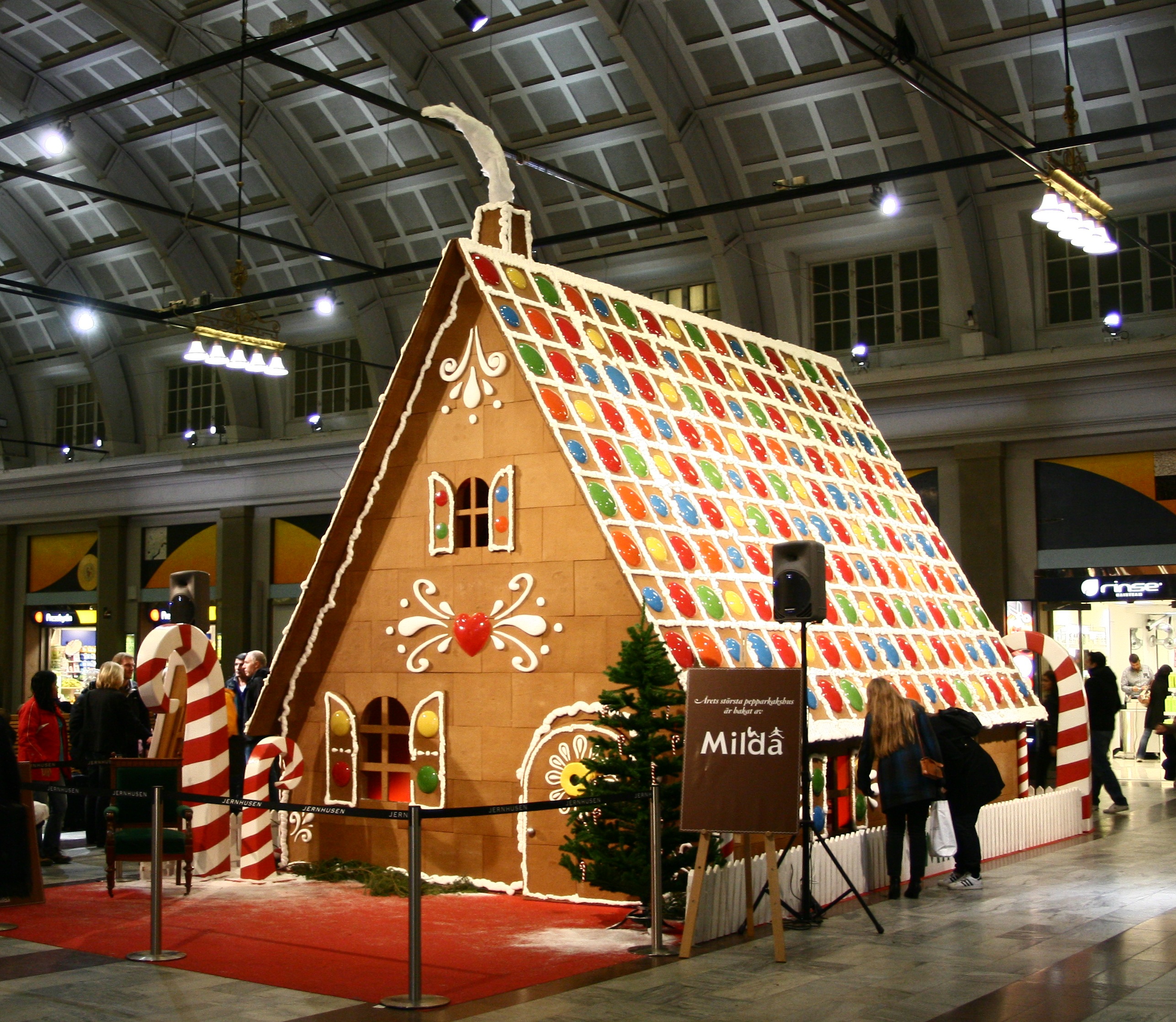
In 2013, a group in Bryan, Texas, US, broke the Guinness World Record set the previous year for the largest gingerbread house, with a 2520 sqft edible-walled house in aid of a hospital trauma centre. The gingerbread house had an estimated calorific value exceeding 35.8 million and ingredients included 2925 lb of brown sugar, 1800 lb of butter, 7,200 eggs and 7200 lb of general purpose flour. As of 2025, this record was since broken by a 44,838 cubic foot gingerbread house modeled after Home Alone.
The executive sous-chef at the New York Marriott Marquis hotel, Jon Lovitch, broke the record for the largest gingerbread village with 135 residential and 22 commercial buildings, and cable cars and a train also made of gingerbread. It was displayed at the New York Hall of Science. Another contender from Bergen, Norway made a gingerbread town called Pepperkakebyen.
Gallery
File:La maison en pain d'épices.jpg|Gingerbread house with candy Image:Gingerbread house with clock.jpg|A gingerbread house with clock and candy decorations File:Gingerbread House 2025.jpg|Christmas gingerbread house kit File:Gingerbread house with double doors.jpg|Gingerbread house with double doors Image:Gingerbread house with steps and trees.jpg|Gingerbread house with steps and trees File:Gingerbread house with path.jpg|Gingerbread house with path File:Gingerbread house with lighting.jpg|Gingerbread house with lighting File:Gingerbread house decorated with candy.jpg|Gingerbread house with snowman File:Gingerbread boat.jpg|Gingerbread ship File:Mézeskalács ház - Buda, 2014.12.26 (1).JPG| Gingerbread house as a Christmas Eve decoration File:Gingerbread houses at Dundee Gardens.jpg| Gingerbread houses with Christmas tree File:Hyatt Regency Reston gingerbread village with model trains (2).jpg|Gingerbread village with model trains File:Gingerbread House Christmas 2016 Starbucks Grosvenor House London United Kingdom.jpg|Gingerbread house and Elizabeth Tower in London, United Kingdom
References
References
- "Gingerbread". enotes.com.
- Olver, Lynne. "Traditional Christmas foods". [[The Food Timeline]].
- "La Confrérie du Pain d'Epices".
- "Le Pithiviers".
- "Monastère orthodoxe des Saints Grégoire Armeanul et Martin le Seul".
- "History and tradition". Annas Pepparkakor.
- "Pepparkakan och dess historia". Danska Wienerbageriet.
- Campbell Franklin, Linda. (1997). "300 Years of Kitchen Collectibles". Krause.
- "A History of Gingerbread Men". Ferguson Plarre Bakehouses.
- "Gingerbread (more)".
- Brones, Anna. "The Magic of Swedish Gingerbread Cookies". Huffington Post.
- (3 December 2013). "Gingerbread Architecture Makes Normal Gingerbread Houses Look Pathetic". Huffington Post.
- "Gingerbread model houses COOP".
- "Pepperkakebyen i Bergen".
- Rolleiv Solholm. (23 November 2009). "Bergen's "Gingerbread City" vandalized". The Norway Post.
- Basch, Michelle. (5 December 2013). "'Gingertown' brings modern twist to gingerbread houses". [[WTOP-FM]].
- "The 32nd Annual National Gingerbread House Competition".
- Rubenstein, Steve. (3 December 2013). "The great San Francisco gingerbread war commences". San Francisco Chronicle.
- (2009). "List and amount of ingredients used".
- Herskovitz, Jon. (6 December 2013). "With nearly a ton of butter, Texas gingerbread house sets record". Texas A &M University / Reuters.
- "Disney+ and Hulu celebrate Home Alone anniversary with Guinness World Record gingerbread house".
- (3 December 2013). "Largest gingerbread village: Chef Jon Lovitch breaks Guinness World Records' record". World Record Academy.
- Wilson, Antonia. (2018-12-22). "A brief history of the gingerbread house". The Guardian.

This article was imported from Wikipedia and is available under the Creative Commons Attribution-ShareAlike 4.0 License. Content has been adapted to SurfDoc format. Original contributors can be found on the article history page.
Ask Mako anything about Gingerbread house — get instant answers, deeper analysis, and related topics.
Research with MakoFree with your Surf account
Create a free account to save articles, ask Mako questions, and organize your research.
Sign up freeThis content may have been generated or modified by AI. CloudSurf Software LLC is not responsible for the accuracy, completeness, or reliability of AI-generated content. Always verify important information from primary sources.
Report