From Surf Wiki (app.surf) — the open knowledge base
Ghillie suit
Type of camouflage clothing

Type of camouflage clothing

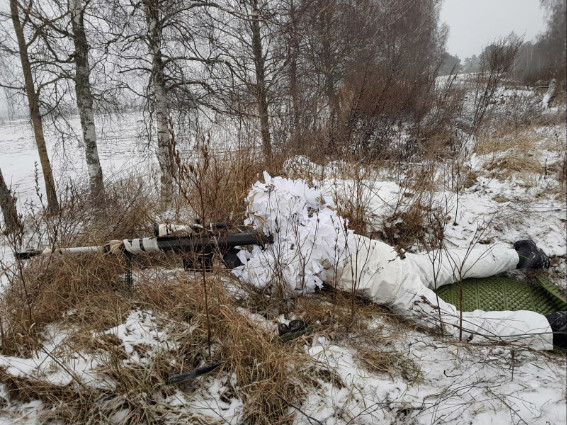
A ghillie suit is a type of camouflage clothing designed to resemble the background environmentsuch as foliage. Typically, it is a net or cloth garment covered in loose strips of burlap (hessian), cloth, twine, or jute sometimes made to look like leaves and twigs, and optionally augmented with foliage from the area.
Military personnel, police, hunters, and nature photographers may wear a ghillie suit to blend into their surroundings and to conceal themselves from enemies or targets. The suit gives the wearer's outline a three-dimensional breakup, rather than a linear one. When manufactured correctly, the suit will move in the wind in the same way as surrounding foliage. Some ghillie suits are made with light and breathable material that allows a person to wear a shirt underneath.

Hunters and soldiers may use ghillie suits with designs named for rural folk-spirits such as the kikimora of the swamps or the leshy of the forests.
History
The English word ghillie is derived from the Scots Gaelic gille, meaning a young man or older boy who works as an outdoor servant, and is most familiar in reference to those employed to assist sportsmen with recreational shooting or fishing in the Highlands. The term ghillie suit may be a reference to the Ghillie Dhu, an earth spirit in Scottish mythology clothed in leaves and moss.
The Lovat Scouts, a Scottish Highland regiment formed by Simon Fraser, 14th Lord Lovat during the Second Boer War, is the first known military unit to use ghillie suits and in 1916 went on to become the British Army's first sniper unit. The Lovat Scouts were initially recruited from Scottish Highland estate workers, especially professional stalkers and gamekeepers.
Similar sniper outfits in the Australian Army are nicknamed yowie suit, named for their resemblance to the yowie, a mythical hominid similar to the yeti and bigfoot which is said to live in the Australian wilderness.
Technical and safety considerations
Although highly effective, conventional ghillie suits (made in fabric or 3D leafsuits) are impractical for many situations where camouflage is useful. They tend to be very heavy and hot. Even in moderate climates, the temperature inside the ghillie suit can reach over 50 °C. The burlap is also flammable, unless treated with fire retardant, so the wearer may be at increased risk from ignition sources such as smoke grenades or white phosphorus. Moreover, conventional ghillie suits and 3D leafsuits are made using fabric, so they retain water, and this dramatically increases weight. Conventional ghillie suits are not designed to camouflage in the IR spectrum. Fabric strips, especially of coarse material like burlap, readily snag on thorns, twigs, and barbed wire.

To enhance safety, the US Army Soldier Systems Center has developed an inherently fire-resistant, self extinguishing fabric to replace jute or burlap. This material was field tested in late 2007 at the Sniper School at Fort Benning and has been standard issue since June 2008.
Ghillie suits also have disadvantages in cold environments, as they can get soaked, risking hypothermia.
Criminal use
Civilians have, on rare occasions, purchased ghillie suits to commit violent crimes (other than unlawful hunting). In 2017, an Australian man was arrested after having committed sexual assault while wearing a ghillie suit.
References
References
- (14 May 2022). "The Great Encyclopedia of Hunting". AST.
- David Amerland (2017), The Sniper Mind: Eliminate Fear, Deal with Uncertainty, and Make Better Decisions, St. Martin's Press, p. 53, {{ISBN. 978-1-250-11368-9
- (2004). "Out of Nowhere: A History of the Military Sniper". Osprey Publishing.
- Plaster, John. (2006). "The Ultimate Sniper: An Advanced Training Manual For Military And Police Snipers". [[Paladin Press]].
- Pegler (2004), S. 129
- Hogben, Bruce. (17 June 1989). "Aussie ingenuity keeps our soldiers safely out of sight". [[The Advertiser (Adelaide).
- (15 April 2021). "How to Make a Ghillie Suit from Scratch Like a Marine Sniper (with Camouflage Tips)".
- (2017-08-27). "Central Coast father to face court over schoolgirl's assault". [[Yahoo! Australia.
This article was imported from Wikipedia and is available under the Creative Commons Attribution-ShareAlike 4.0 License. Content has been adapted to SurfDoc format. Original contributors can be found on the article history page.
Ask Mako anything about Ghillie suit — get instant answers, deeper analysis, and related topics.
Research with MakoFree with your Surf account
Create a free account to save articles, ask Mako questions, and organize your research.
Sign up freeThis content may have been generated or modified by AI. CloudSurf Software LLC is not responsible for the accuracy, completeness, or reliability of AI-generated content. Always verify important information from primary sources.
Report