From Surf Wiki (app.surf) — the open knowledge base
Ghazni Province
Province of Afghanistan

Province of Afghanistan
| Field | Value | |
|---|---|---|
| name | Ghazni | |
| native_name | ||
| native_name_lang | prs | |
| settlement_type | Province | |
| image_skyline | {{multiple image | |
| border | infobox | |
| perrow | 1/2/2/2/2 | |
| total_width | 270 | |
| image1 | Snow covered mountains in Ghazni.jpg | |
| image2 | US agencies seek to preserve Ghazni Minarets DVIDS432801 (cropped and retouched).jpg | |
| image3 | چمبرا.png | |
| footer | From the top, The Mountains of Ghazni, [Ghazni Minarets | Minaret of Bahram Shah |
| image_map | Ghazni in Afghanistan.svg | |
| map_caption | Map of Afghanistan with Ghazni province highlighted | |
| coordinates | ||
| coor_pinpoint | Capital | |
| subdivision_type | Country | |
| subdivision_name | Afghanistan | |
| seat_type | Capital | |
| seat | [Ghazni | |
| leader_title | Governor | |
| leader_name | Muhammad Amin Jan | |
| leader_title1 | Deputy Governor | |
| leader_name1 | Qari Gul Haider | |
| unit_pref | Metric | |
| area_total_km2 | 22460 | |
| population_total | 1386764 | |
| population_as_of | 2021 | |
| population_footnotes | ||
| population_density_km2 | auto | |
| timezone1 | Afghanistan Time | |
| utc_offset1 | +4:30 | |
| postal_code_type | Postal code | |
| postal_code | 23xx | |
| iso_code | AF-GHA | |
| blank_name_sec1 | Main languages | |
| blank_info_sec1 | Dari, Pashto | |
| website |
]], Jaghori District}} Ghazni (Pashto: غزني, ; Dari: غزنی, ), is one of the 34 provinces of Afghanistan, located in southeastern Afghanistan. The province contains 19 districts, encompassing over a thousand villages and roughly 1.3 million people, making it the 5th most populous province. The city of Ghazni serves as the capital. It lies on the important Kabul–Kandahar Highway, and has historically functioned as an important trade center. The Ghazni Airport is located next to the city of Ghazni and provides limited domestic flights to Afghanistan's capital, Kabul.
Ghazni borders the provinces of Maidan Wardak, Logar, Paktia, Paktika, Zabul, Uruzgan, Daykundi and Bamyan.
Etymology
The province was known as Ghazna in the 10th century, during and after the Ghaznavid era.
History
Ghazni was a thriving Buddhist center before and during the 7th century AD. Excavations have revealed religious artifacts of both Hindu and Buddhist traditions.
Published by Blackwell Publishing, 2002 Page 185}}
In 644 AD, the Chinese pilgrim Xuanzang visited the city of Jaguda (probably Ghazni), while returning from Varnu (modern Bannu, Pakistan)
Islamization
In 683 AD, armies from the Umayyad Caliphate brought Islam to the area and attempted to conquer the capital of Ghazni but the local tribes fiercely resisted. Its resistance was so famed that Yaqub Saffari (840-879) from Zaranj made an example of Ghazni when he ranged the vast region conquering in the name of Islam. The city was completely destroyed by the Saffarids in 869. A substantial portion of the local population including Hindus and Buddhists were converted to Islam by Mahmud of Ghazni

After the rebuilding of the city by Yaqub's brother, it became the dazzling capital of the Ghaznavids from 994 to 1160, encompassing much of North India, Persia and Central Asia. Many iconoclastic campaigns were launched from Ghazni into India. The Ghaznavids took Islam to India and returned with fabulous riches taken from both prince and temple god. Contemporary visitors and residents at Ghazni write with wonder of the ornateness of the buildings, the great libraries, the sumptuousness of the court ceremonies and of the wealth of precious objects owned by Ghazni's citizens.
Ferishta records attacks by Muhammad of Ghor: "at the same time most of the infidels who inhabited the mountains between Ghazni and the Indus were also converted, some by force and others by persuasion." Ghazni's eponymous capital was razed in 1151 by the Ghorid Alauddin. It again flourished but only to be permanently devastated, this time in 1221 by Genghis Khan and his Mongol armies after 6 years of Khwarezmid rule. Ghazni's strategic position, both economically and militarily, assured its revival initially under the Qarlughids, albeit without its dazzling former grandeur.
Ghazni is famous for its minarets built on a stellar plan. They date from the middle of the twelfth century and are the surviving element of the mosque of Bahramshah. Their sides are decorated with geometric patterns. Upper sections of the minarets have been damaged or destroyed. The most important mausoleum located in Ghazni is that of Sultan Mahmud's. Others include the tombs of poets and scientists, for example Al-Biruni and Sanai. The only ruins in Old Ghazni retaining a semblance of architectural form are two towers, about 43 m (140 ft) high and some 365 m (1,200 ft) apart. According to inscriptions, the towers were constructed by Mahmud of Ghazni and his son.
Ibn Battuta noted "The greater part of the town is in ruins, with nothing but a fraction of it still standing, although it was formerly a great city."
Babur records in his memoirs that Ghazni was part of Zabulistan. The area was controlled by the Mughals until Nader Shah and his Persian forces invaded it in 1738. Ahmad Shah Durrani conquered Ghazni in 1747 and made it part of the Durrani Empire. During the First Anglo-Afghan War, the capital of Ghazni province was destroyed by the British-led Indian forces in the Battle of Ghazni.
In the 1960s a 15-meter female Buddha was discovered lying on its back and surrounded by empty pillars that once held rows of smaller male Buddhas. Parts of the female Buddha have been stolen. In the 1980s a mud brick shelter was created to protect the sculpture, but the wood supports were stolen for firewood and the shelter partially collapsed.
Recent history


Since the US-led invasion of Afghanistan in October 2001, there has been a Provincial reconstruction base and a NATO forces base. These western forces (mostly Polish Armed Forces) were hunting Taliban and al-Qaida militants, who were active in the area.
Like many southern Afghan provinces, Ghazni has a precarious security situation. The Taliban insurgents are found in the rural areas outside of the capital, and are involved in attacks on provincial schools and government infrastructure. The province has avoided the outright warfare seen in other provinces of Afghanistan such as Helmand and Kandahar, but that is due more to political expediency and the tactical plans of the NATO-led ISAF force than the existence of a stable security situation in the province. Ex-Governor Taj Mohammad was killed by insurgents in 2006 after being appointed police chief of the province with a mandate to quell the power of the Taliban. On the same day there was an unsuccessful attempt on the life of the governor at the time, Sher Alam Ibrahimi. There is a Polish and American Provincial Reconstruction Team base located in Ghazni.
- In late April 2007, news agencies reported that Taliban fighters had taken control of Giro District in the province. The Taliban reportedly killed the district administrator, chief of police (who had been on the job for only one month) and three police officers. The Taliban withdrew from the district center one day later.
- In July 2007, 23 South Korean volunteers were kidnapped in the province by the Taliban.
- On September 28, 2010, the Deputy Governor of Ghazni and five others were killed after a suicide bomber on a motorized rickshaw attacked their vehicle. Deputy Governor Mohammad Kazim Allahyar and several men travelling with him were killed instantly when the attacker detonated his explosives at the back of their car near the airport in Ghazni City. The bodies were so badly burnt that there was some confusion about the identity of the other victims. Provincial police chief Delawar Zahid reported Allahyar's son, nephew and driver died, along with two civilians passing by on a bicycle.
- As of 26 September 2014, there is ongoing fighting in key districts between the Taliban and Afghan National Security Forces (ANSF).
- After steady gains by the Taliban across the province in 2017 and early 2018 the Battle of Ghazni took place in August 2018.
Geography
Recent geologic surveys have indicated Ghazni may have one of the world's richest deposits of lithium. Gold and copper were also found in the Zarkashan Mine of Ghazni province with an estimated value of US$30 billion. Whilst lithium deposits valued at around US$60 billion, were discovered in four eastern and western provinces of Afghanistan, together with other newly (2010) discovered mineral deposits, the total value estimate of US$3 trillion is based on a survey of 30 percent of the country's land mass.
Administrative divisions
.svg)

| District | Capital | Population (2020) | Area in km2 | Pop. | |
|---|---|---|---|---|---|
| density | Ethnic composition | ||||
| Ab Band | Haji Khel | 31,089 | 991 | 31 | 99% Pashtun, |
| Ajristan | Sangar | 32,550 | 1,461 | 22 | 97% Pashtun, 3% Hazara. |
| Andar | Miray | 140,963 | 681 | 207 | 100% Pashtun. |
| Deh Yak | Ramak | 55,269 | 709 | 78 | 89% Hazara, 11% Pashtun. |
| Gelan | Janda | 65,366 | 1,116 | 59 | 100% Pashtun. |
| Ghazni | Ghazni | 186,706 | 380 | 491 | 50% Tajik, 25% Pashtun, 20% Hazara, 5% Hindus. |
| Giro | Pana | 41,319 | 878 | 47 | 100% Pashtun. |
| Jaghori | Sang-e-Masha | 199,553 | 1,965 | 102 | 100% Hazara. |
| Jaghatū | Gulbawri | 35,871 | 696 | 52 | 73% Hazara, 27% Pashtun. |
| Khogyani | Khogyani | 22,719 | 147 | 155 | 99% Pashtun, |
| Khwaja Umari | Kwaja Umari | 21,390 | 176 | 122 | 45% Hazara, 35% Tajik, 20% Pashtun. |
| Malistan | Mir Adina | 92,736 | 1,978 | 47 | 100% Hazara. |
| Muqur | Muqur | 56,863 | 931 | 61 | 99% Pashtun, 1% Tajik and Hazara. |
| Nawa | Nawa | 33,613 | 1,753 | 19 | 100% Pashtun. |
| Nawur | Du Abi | 106,952 | 5,097 | 21 | 100% Hazara. |
| Qarabagh | Qarabagh | 161,424 | 1,690 | 96 | 55% Pashtun, 45% Hazara. |
| Rashidan | Rashidan | 20,328 | 98 | 208 | 96% Pashtun, 4% Hazara. |
| Waghaz | Waghaz | 43,578 | 512 | 85 | Predominantly Pashtun. |
| Zana Khan | Dado | 14,215 | 284 | 50 | 100% Pashtun. |
| Ghazni | 1,362,504 | 22,461 | 61 | 48.1% Pashtuns, 43.8% Hazaras, 7.4% Tajiks, 0.7% Hindus. |
Economy
Infrastructure

The Sardeh Band Dam is located in Andar District near the border with Paktika Province. It creates a large water reservoir that is critical to the irrigation of the Kahnjoor farming zone. The dam itself and the canal system it feeds both need repairs and maintenance.
Governor Musa Khan Akbarzada stated that key development projects would be launched in southern Ghazni in 2012 ahead of the Asian capital of the Islamic civilization for 2013. The projects include the construction of a proposed Islamic cultural center, a mosque, a covered bazaar, a gymnasium, a guesthouse, an airport, a five-star hotel and two 27 story-buildings and others. More than 2,000 people would find work opportunities on the $30 million projects; $10 million would be provided by the central government, $7 million by the Polish provincial reconstruction team (PRT) and $3 million by the US. A 40-kilometer road would be asphalted by the end of 2012.
Ghazni province is to be connected to the national electrical distribution system via North-east Power System (NEPS). The construction of the transmission line would begin from east Chimtala to Ghazni using a high voltage transmission network (2 x 220kV transmission lines and power substations). The project is to be implemented by USFOR-A and USAID costing $101 million. However, the Asian Development Bank agreed to complete the transmission line from Chimtala to Dast-i-Barchi; hence reducing the Project scope to begin from Dast-i-Barchi instead of Chimtala. The implementation of this project was delayed due to USACE being unable to award a contract because bids received for the project were more than double the estimated costs, due largely to security concerns resulting from the risks associated with implementing firm-fixed-price contracts in a kinetic environment, poor cost estimates, and unrealistic periods of performance. USACE is re-procuring both projects and plans to award contracts in June or July 2012, which will delay the project's execution schedules between 6 and 15 months. Furthermore, the delays in transferring funds contributed to delays in project execution. This line is a key part of a planned NEPS to SEPS connection to transport power to Kandahar to replace the expensive diesel-fueled power plants.
Transportation
The Kabul–Kandahar Highway runs through the province.
The Ghazni Airport began operations in April 2012 but does not have any commercial flights as of August 2018. Residents in neighboring provinces, such as Logar, Paktika, Maidan Shahr and Zabul, would also benefit from the airport.
Demographics
Population
As of 2020, the total population of the province is about 1,386,764.
Ethnicity, languages and religion
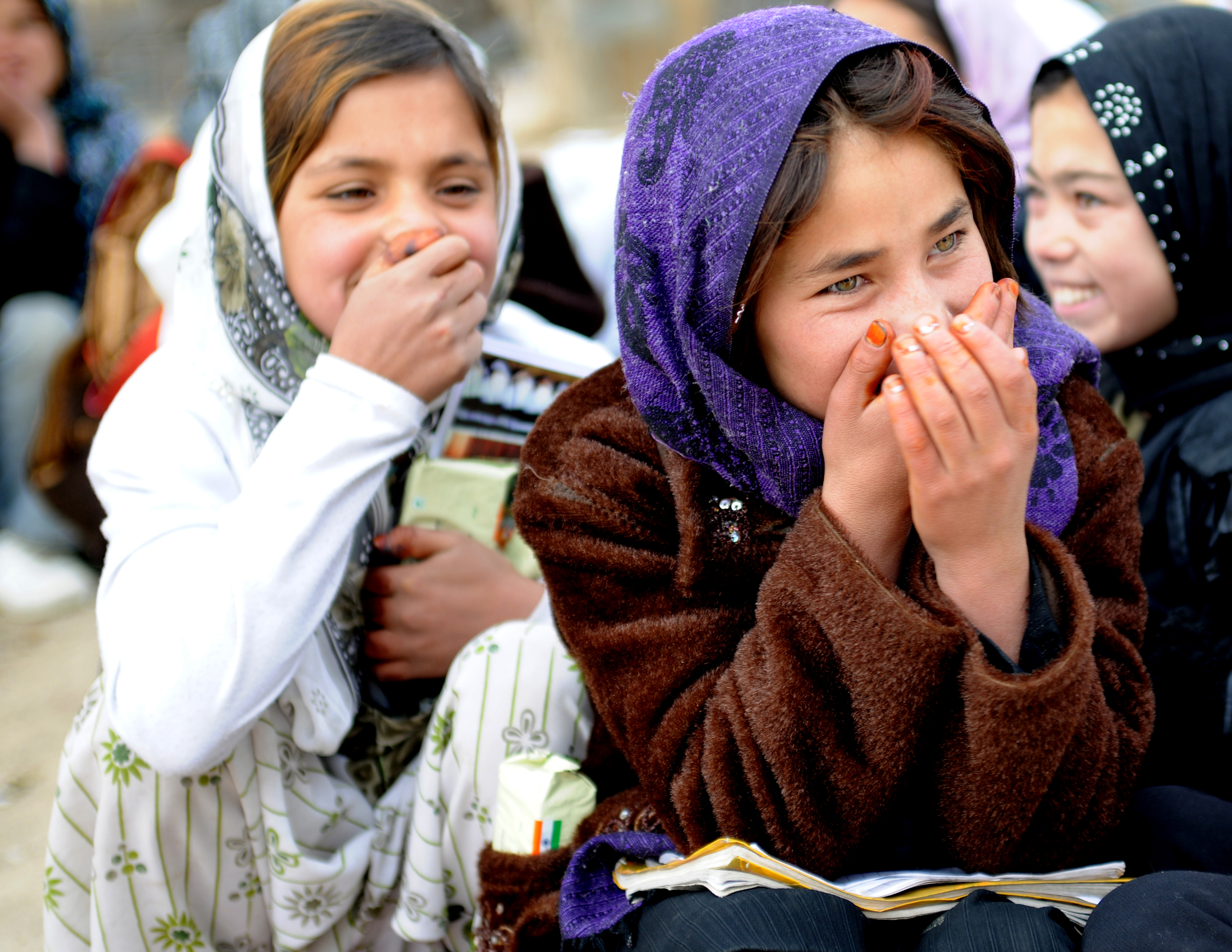
Ghazni is multi-ethnic and mostly a tribal society. Ethnically, Ghazni is composed mainly of Hazaras and Pashtuns, which both make up about 45% of the population each. Hazaras live mainly in the north and west, while the Pashtuns live mainly in the south and east. Tajiks make up only about 5% of the whole province's population, but are the main ethnic group of the capital city Ghazni at about 50% there. Also, there is a small community of Hindus. Agriculture and animal husbandry are the primary occupation of the citizens of Ghazni. Wheat, alfalfa, melons, and almonds are among the largest crops produced.
| Ethnicity | Pashtun | Hazara | Tajik/ |
|---|---|---|---|
| Farsiwan | Other | Sources | Period |
| 2004–2021 |
|---|
| (Islamic Republic) |
| ≤50% |
| 2020 EU |
| 2017 CSSF |
| 2015 NPS |
| 2011 PRT |
| 2011 USA |
| 2009 ISW |
| Legend: |
|---|
Health

The percentage of households with clean drinking water fell from 35% in 2005 to 18% in 2011. The percentage of births attended to by a skilled birth attendant increased from 7% in 2005 to 11% in 2011.
Education
The overall literacy rate (6+ years of age) fell from 35% in 2005 to 31% in 2011. The overall net enrolment rate (6–13 years of age) increased from 39% in 2005 to 54% in 2011.
Notable people
- Abu Bakr Lawik
- Abu Ali Lawik
- Ali Hujwiri
- Hassan Ghaznavi
- Mahmud of Ghazni
- Azad Khan Afghan
- Gholam Mohammad Niazi
- Nur Muhammad Taraki
- Abdul Ahad Mohmand
- Faiz Muhammad Kateb
- Aziz Royesh
- Farrukhi Sistani
- Manuchehri Damghani
- Abolfazl Beyhaqi
- Hakim Sanai
- Muhammad Shah
- Bhai Nand Lal
- Sohaila Sharifi
References
References
- {{Cite tweet. Mujahid. Zabihullah. (29 January 2023)
- (April 2021). "Estimated Population of Afghanistan 2021-22". National Statistic and Information Authority (NSIA).
- "ḠAZNĪ – Encyclopaedia Iranica".
- Simone Gaulier, Robert Jera-Bezard, Monique. (1976). "''Buddhism in Afghanistan and Central Asia''". BRILL.
- BA Litvinsky, Zhang Guand-Da, R. Shabani Samghabadi, ''History of civilizations of Central Asia'', pg. 385
- Hui-li, 1959, p. 188
- Nancy Hatch Dupree - Chapter 9 (Ghazni), ''An Historical Guide to Afghanistan''
- ''The Wonder that was India II'' by S A Rizvi; published by Picador India; page 16
- E.J. Brill's first encyclopaedia of Islam, 1913-1936, Volume 2 By Martijn Theodoor Houtsma; page 154
- ''Ferishta'' translated by John Briggs; p. 104.
- (2002). "The Travels of Ibn Battutah". Picador.
- Babur-Nama Translated from the original Turki Text of Zahirud'd-din Muhammad BABUR padshah Ghazi by Annette Susannah Beveridge Vol1 and 11 Published by Munshiram Manoharlal Publishers, p. 217.
- "Afghanistan militants kill former governor". Ctv.ca.
- (September 28, 2010). "Suicide bomb kills Afghan vice-governor". Reuters.
- "Taliban Storms Key Afghan District".
- (September 26, 2014). "Taliban seize strategic Afghan district in Ghazni province". BBC News.
- Najafizada, Eltaf. (January 29, 2011). "U.S., Afghan Study Finds Mineral Deposits Worth $3 Trillion". Bloomberg.
- "UNHCR Field Office Ghazni DISTRICT PROFILE 20/12/2002 Province: Ghazni, District: Ab Band".
- "UNHCR Field Office Ghazni DISTRICT PROFILE 15/10/2002 Province: Ghazni, District: Ajristan".
- "UNHCR Sub-Office Central Region DISTRICT PROFILE 17/02/2002 Province: Ghazni, District: Andar".
- "UNHCR Sub-Office Central Region DISTRICT PROFILE 5/4/02 Province: Ghazni, District: Dehyak".
- "UNHCR Field Office Ghazni DISTRICT PROFILE 15/10/2002 Province: Ghazni, District: Gelan".
- "UNHCR Sub-Office Central Region DISTRICT PROFILE 4/4/02 Province: Ghazni, District: Chazni Centre".
- "UNHCR Field Office Ghazni DISTRICT PROFILE 11 September 2002, Province: Ghazni District: Giro".
- "UNHCR Sub-Office Central Region DISTRICT PROFILE 30/07/02 Province: Ghazni, District: Jaghori".
- "UNHCR Sub-Office Central Region DISTRICT PROFILE 24/06/02 Province: Ghazni, District: Jaghatu".
- "UNHCR Field Office Ghazni DISTRICT PROFILE 07/03/2003 Province: Ghazni, District: Khugiani".
- "UNHCR Sub-Office Central Region DISTRICT PROFILE 31/07/2002 Province: Ghazni, District: Khwaja Omari".
- "UNHCR Field Office Ghazni DISTRICT PROFILE 24/02/2003 Province: Ghazni, District: Malistan".
- "UNHCR Sub-Office Central Region DISTRICT PROFILE 24/06/2002 Province: Ghazni, District: Moqur".
- "UNHCR Sub-Office Central Region DISTRICT PROFILE 31/07/2002 Province: Ghazni, District: Nawa".
- "UNHCR Sub-Office Central Region DISTRICT PROFILE 4/4/02 Province: Ghazni, District: Nawur".
- "UNHCR Sub-Office Central Region DISTRICT PROFILE 23/06/02 Province: Ghazni, District: Qarabagh".
- "UNHCR Sub-Office Central Region DISTRICT PROFILE 23/05/02 Province: Ghazni, District: Rashidan".
- "Provincial profile for Ghazni".
- "UNHCR Sub-Office Central Region DISTRICT PROFILE 17/02/2002 Province: Ghazni, District: Zanakhan".
- "Estimated Population of Afghanistan 2020-21". Islamic Republic of Afghanistan, National Statistics and Information Authority.
- "Ghazni Province". [[Naval Postgraduate School]].
- (2020). "Country Guidance: Afghanistan. Common analysis and guidance note". [[European Union Agency for Asylum]].
- (2024-02-14). "State of Families CSSF Report: Ghazni, Afghanistan (2024)".
- "Ghazni - Program for Culture and Conflict Studies - Naval Postgraduate School".
- (February 2011). "Afghanistan Provincial Reconstruction Team".
- (January 2011). "U.S. Army Afghanistan Smart Book, Third Edition".
- "Regional Command East".
- "Pages - Ghazni".
This article was imported from Wikipedia and is available under the Creative Commons Attribution-ShareAlike 4.0 License. Content has been adapted to SurfDoc format. Original contributors can be found on the article history page.
Ask Mako anything about Ghazni Province — get instant answers, deeper analysis, and related topics.
Research with MakoFree with your Surf account
Create a free account to save articles, ask Mako questions, and organize your research.
Sign up freeThis content may have been generated or modified by AI. CloudSurf Software LLC is not responsible for the accuracy, completeness, or reliability of AI-generated content. Always verify important information from primary sources.
Report