From Surf Wiki (app.surf) — the open knowledge base
Ghanaian smock
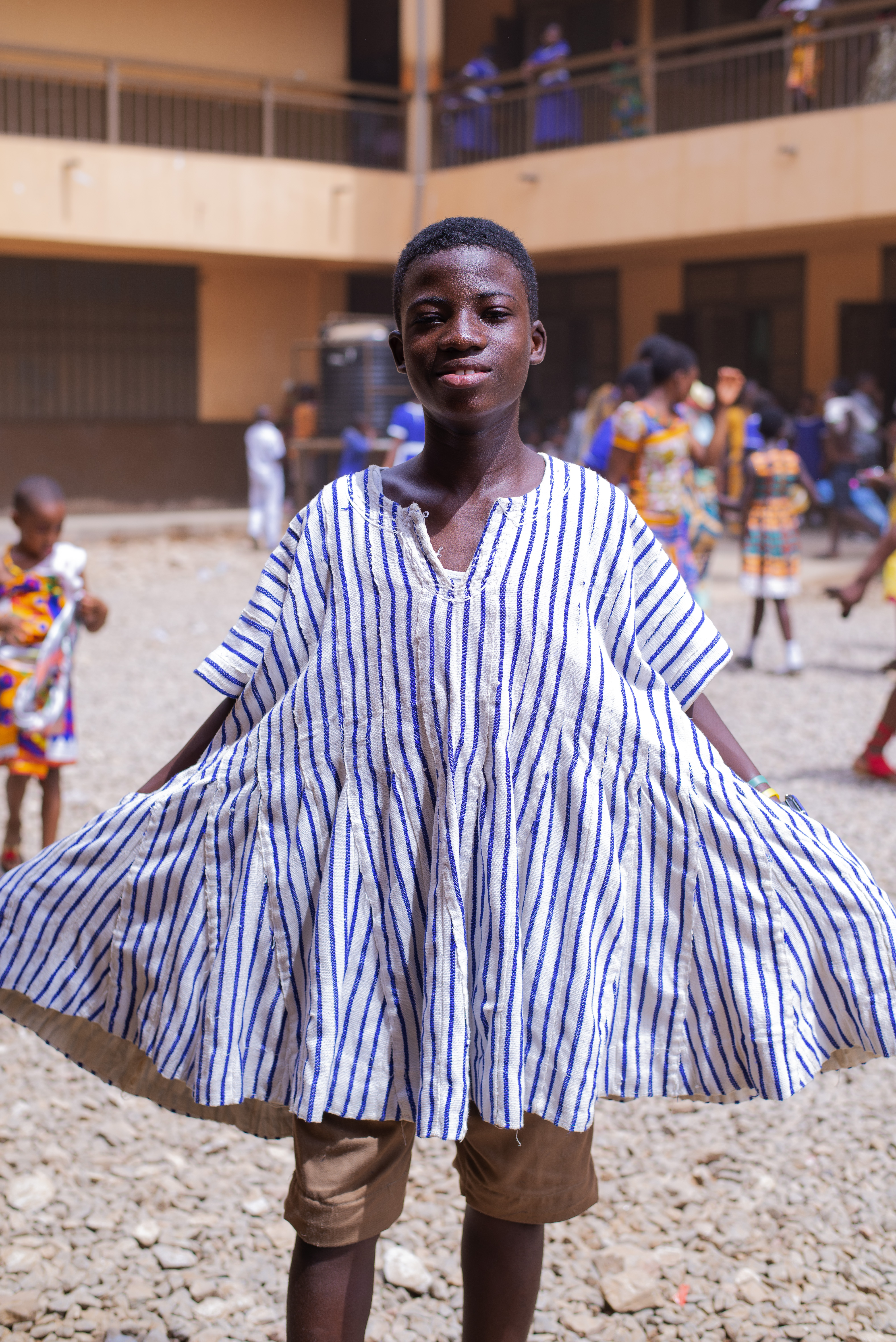
Hand-loomed strips made of a mixture of dyed and undyed cotton loom
Hand-loomed strips made of a mixture of dyed and undyed cotton loom

.jpg)


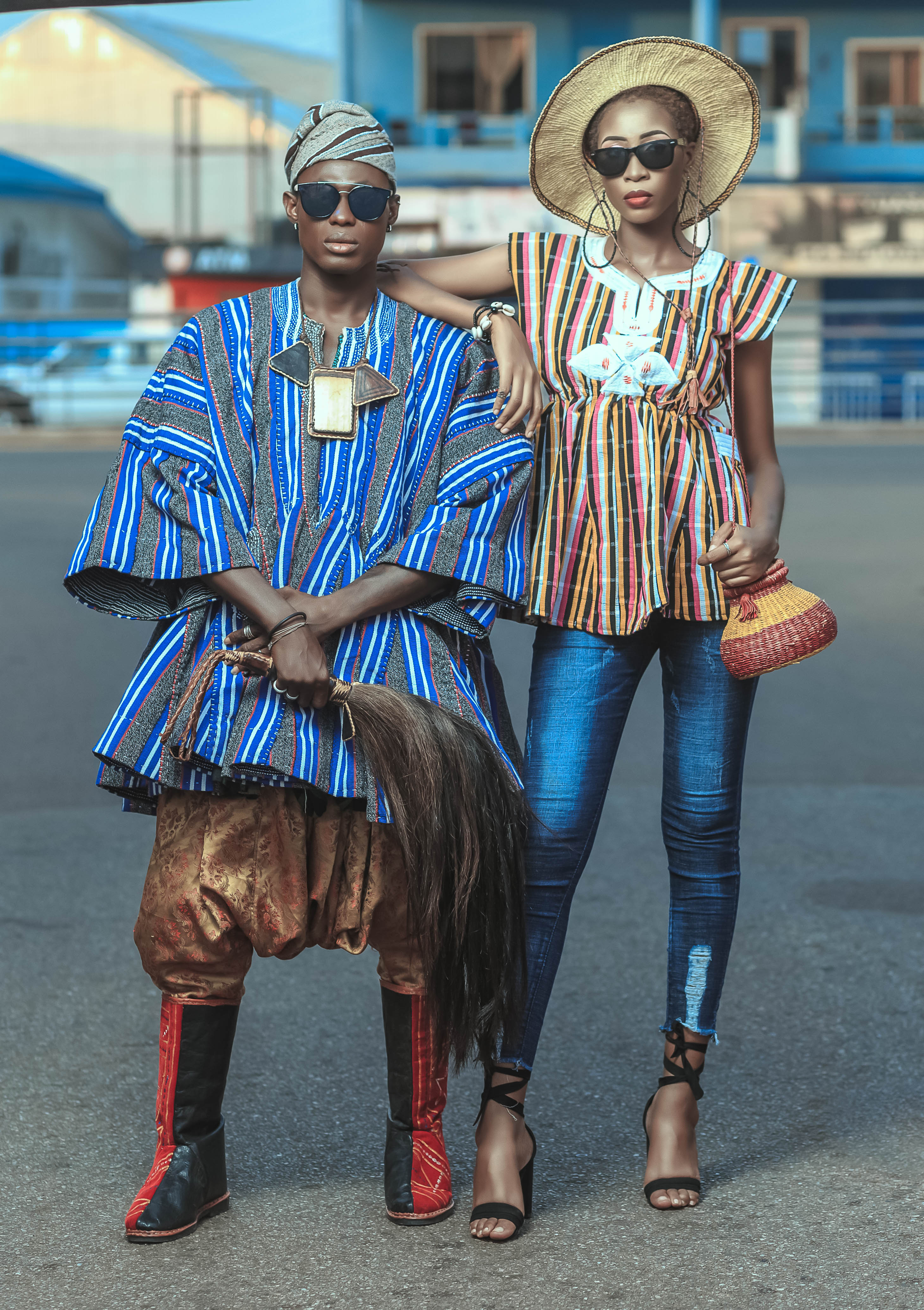
The Ghanaian Smock or Tani is a fabric worn by both women and men in Ghana. It is the most popular traditional attire in the country. The fabric is called Tani in Dagbani, while the male and female wear are respectively called Bin'gmaa and Bin'mangli. The smock is formally worn with a hat (zipligu)/ scarf (bobga), footwear (muɣri), and a trouser (kurugu).
The smock was famously worn by Ghana's founding fathers when they declared Ghana's independence from the British on March 6, 1957.
Other names
The smock is also called Bun-nwↃ or Bana by Mamprusis, fugu in Mossi, batakari in the Asante dialect, gur in Frafra, and Banaa in Kusaal both in the upper east region. It is worn by Royals and civilians across Dagbon and other northern regions, but popular across Ghana. The smock originated in the northern region of Ghana, during the reign of Yaa Naa Zanjina, but widely used in West Africa and across the world. It is similar to the national attire of Burkina Faso known as faso dan fadi.
The smock and Kente cloth are the national dress of Ghana. Kente cloth originated in the Ashanti region of Ghana.
How it is made
The smock is traditionally made from hand-loomed strips comprising a blend of dyed and undyed cotton yarns. It is intricately sewn together by hand, resulting in a distinctive plaid pattern that characterizes the smock. Some variations showcase additional artistic elements, such as embroidery adorning the neckline.
A significant accessory to the smock is the Zipligu, a hat worn in conjunction with this traditional attire. An interesting aspect of the production process is the division of labour: women are traditionally responsible for making the strips, while men take on the task of making the smock itself.
Origin
The smock was introduced in the 1600s during the reign of Yaa Naa Zanjina. It predates the modern suit. Today, the smock has been adopted widely outside Dagbon.
The smock in the West
Historically, the smock was rarely seen in the West. As recently as the 1990s, immigrants from Ghana were the only individuals seen wearing the smock. All of that changed as the popularity of films produced in Ghana increased among Black Americans and Caribbeans. In recent years people of African descent have started wearing smocks to churches, mosques, African festivals, and Kwanzaa celebrations in major Western cities like New York and Kingston, Jamaica.
Popular culture and art
Purple Hibiscus
Purple Hibiscus was a temporary, large-scale public art installation created by Ghanaian artist Ibrahim Mahama. Unveiled in April 2024, it transformed the facade of the Barbican Centre, a brutalist art and conference centre, in London, England. It was part of the Barbican Centre's exhibition "Unravel: The Power & Politics of Textiles in Art." The installation was on display from April 10 to August 18, 2024.
Description
The centrepiece of Purple Hibiscus was approximately 2,000 square meters of bespoke, hand-woven pink and purple fabric. Hundreds of craftspeople from Tamale, Ghana, created this fabric specifically for the installation. Sewn onto the fabric were roughly 100 "batakari" robes, traditionally worn by Ghanaians in both northern and southern regions. Mahama acquired these robes through barter and exchange within communities across Northern Ghana.
Significance
The title, Purple Hibiscus, referenced Chimamanda Ngozi Adichie's novel of the same name, which explores themes of family, tradition, and change in post-colonial Nigeria. The vibrant colours and textures of the installation contrasted starkly with the Barbican's concrete exterior. Mahama's use of handcrafted textiles highlighted the importance of human labour and traditional craft practices. The batakari robes themselves embodied the concept of intergenerational knowledge and cultural heritage. The artwork sparked discussions about colonialism, trade, and the history embedded within everyday objects.
I Knew Nothing Till You Taught Me
A man is seen wearing a smock in the opening scene of the Jackie Aygemang movie, I Knew Nothing Till You Taught Me.
References
- I Knew Nothing Until You Taught Me on DVD.
- Buying a smock - Dead Link Feb 24
- Kente Cloth | PLEASE BE CAUTIOUS IN ADDING MORE LINKS TO THIS ARTICLE. WIKIPEDIA IS | | NOT A COLLECTION OF LINKS NOR SHOULD IT BE USED FOR ADVERTISING. | | | | Excessive or inappropriate links WILL BE DELETED. | | See Wikipedia:External links and Wikipedia:Spam for details. | | | | If there are already plentiful links, please propose additions or | | replacements on this article's discussion page. Or submit your link | | to the appropriate category at the Open Directory Project (www.dmoz.org)| | and link back to that category using the template. |
({{NoMoreLinks}})===============================-->
References
- "Northern Ghana Clothing".
- (2025-03-11). "Smock Fashion: The Northern Ghanaian Identity - Meraki Channels".
- "Smock Fashion Culture in Ghana’s Dress Identity-Making".
- "Bernard Monarh details history behind Nkrumah’s Independence Smock".
- "CULTURE AND CULTURAL PRACTICES AND THE MOTIVE BEHIND THEM B".
- Staniland, Martin. (1975-07-03). "The Lions of Dagbon". Cambridge University Press.
- (2023-04-11). "kente cloth".
- Folkwear. "Inspiration for the Ghanaian Smock".
- "Smock Fashion Culture in Ghana's Dress Identity-Making".
- (2021-03-11). "Ghana Month: Styles and meanings portrayed by wearing of 'fugu' hat - MyJoyOnline".
- Quaye, Grace Tsotsoo. (2023-03-07). "Ghana Month: Northern Styles Of Wearing A Hat And What They Mean".
- "2–11: Naa Zanjina".
- "Islam and the Dagbon Traditional Political System: Na Zangina's Reign".
- "Do You Know the History of the Suit?".
This article was imported from Wikipedia and is available under the Creative Commons Attribution-ShareAlike 4.0 License. Content has been adapted to SurfDoc format. Original contributors can be found on the article history page.
Ask Mako anything about Ghanaian smock — get instant answers, deeper analysis, and related topics.
Research with MakoFree with your Surf account
Create a free account to save articles, ask Mako questions, and organize your research.
Sign up freeThis content may have been generated or modified by AI. CloudSurf Software LLC is not responsible for the accuracy, completeness, or reliability of AI-generated content. Always verify important information from primary sources.
Report