From Surf Wiki (app.surf) — the open knowledge base
German submarine U-124 (1940)
German World War II submarine
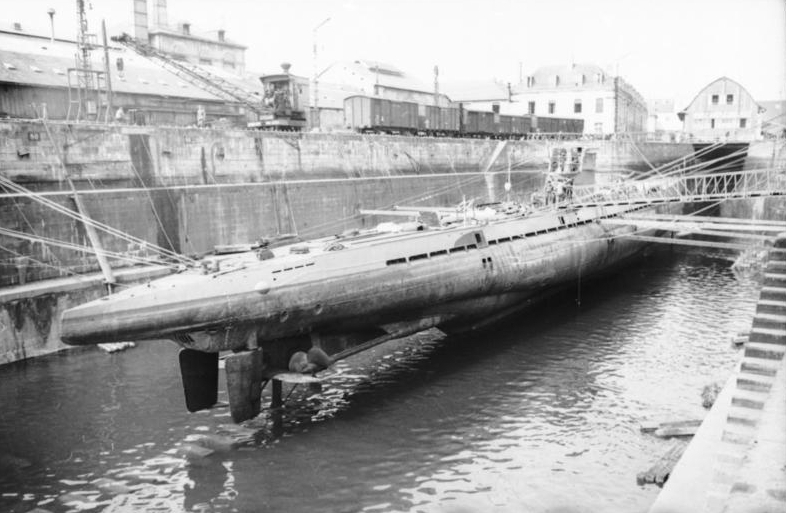
German World War II submarine
| Field | Value | ||||||
|---|---|---|---|---|---|---|---|
| section1 | {{Infobox ship/image | ||||||
| image | Bundesarchiv Bild 146-1981-010-31, Einlaufen eines U-Bootes.jpg | ||||||
| image_caption | U-124 after a patrol | ||||||
| section2 | {{Infobox ship/career | ||||||
| country | Nazi Germany | ||||||
| flag | |||||||
| name | U-124 | ||||||
| ordered | 15 December 1937 | ||||||
| yard_number | 956 | ||||||
| laid_down | 11 August 1939 | ||||||
| builder | DeSchiMAG AG Weser, Bremen | ||||||
| launched | 9 March 1940 | ||||||
| commissioned | 11 June 1940 | ||||||
| fate | Sunk 2 April 1943 | ||||||
| section3 | {{Infobox ship/characteristics | ||||||
| class | Type IXB submarine | ||||||
| * {{convert | 1051 | t | LT | lk | on}} surfaced | ||
| * {{convert | 76.50 | m | ft | abbr | on | 0}} o/a | |
| * {{convert | 58.75 | m | ftin | abbr | on}} pressure hull | ||
| * {{convert | 6.76 | m | ftin | abbr | on}} o/a | ||
| * {{convert | 4.40 | m | ftin | abbr | on}} pressure hull | ||
| draught | 4.70 m | ||||||
| * {{convert | 4400 | PS | kW bhp | abbr | on}} (diesels) | ||
| * {{convert | 1000 | PS | kW shp | -1 | abbr | on}} (electric) | |
| * {{convert | 18.2 | kn | lk | in}} surfaced | |||
| * {{convert | 12000 | nmi | abbr | on | lk=in}} at 10 kn surfaced | ||
| * {{convert | 64 | nmi | abbr | on}} at 4 kn submerged | |||
| * {{convert | 230 | m | ft | abbr | on}} | ||
| complement | 4 officers, 44 enlisted | ||||||
| * 22 × {{convert | 53.3 | cm | in | 0 | abbr | on}} torpedoes | |
| * 1 × [[10.5 cm SK C/32 naval gun | {{convert | 10.5 | cm | in | sp | us | abbr=on}} SK C/32]] deck gun (180 rounds) |
| * 1 × [[3.7 cm SK C/30 | {{convert | 3.7 | cm | in | sp | us | abbr=on}} SK C/30]] AA gun |
| section4 | {{Infobox ship/service record | ||||||
| codes | M 00 412 | ||||||
| operations | *11 patrols: |
-
1051 t surfaced
-
1178 t submerged
-
76.50 m o/a
-
58.75 m pressure hull
-
6.76 m o/a
-
4.40 m pressure hull
-
4400 PS (diesels)
-
1000 PS (electric)
-
2 shafts
-
2 × diesel engines
-
2 × electric motors
-
18.2 kn surfaced
-
7.3 kn submerged
-
12000 nmi at 10 kn surfaced
-
64 nmi at 4 kn submerged
-
230 m
-
6 × torpedo tubes (4 bow, 2 stern)
-
22 × 53.3 cm torpedoes
-
1 × 10.5 cm SK C/32 deck gun (180 rounds)
-
1 × 3.7 cm SK C/30 AA gun
-
1 × twin 2 cm FlaK 30 AA guns
-
11 June 1940 – 2 April 1943
-
Kptlt. Georg-Wilhelm Schulz
-
11 June 1940 – 7 September 1941
-
K.Kapt. Johann Mohr
-
8 September 1941 – 2 April 1943
-
1st patrol:
-
19 August – 16 September 1940
-
2nd patrol:
-
5 October – 13 November 1940
-
3rd patrol:
-
16 December 1940 – 22 January 1941
-
4th patrol:
-
23 February – 1 May 1941
-
5th patrol:
-
10 July – 25 August 1941
-
6th patrol:
-
16 September – 1 October 1941
-
7th patrol:
-
30 October – 29 December 1941
-
8th patrol:
-
21 February – 10 April 1942
-
9th patrol:
-
4 May – 26 June 1942
-
10th patrol:
-
25 November 1942 – 13 February 1943
-
11th patrol:
-
27 March – 2 April 1943
-
46 merchant ships sunk ()
-
2 warships sunk (5,775 tons)
-
4 merchant ships damaged ()
'*German submarine U-124''' (nickname "Edelweissboot") was a Type IXB U-boat of Nazi Germany's *Kriegsmarine'' during World War II. She operated in the Atlantic as part of the 2nd U-boat flotilla, both west of Scotland and east of the eastern US coast. She was also present off northern South America.
She was sunk with all hands west of Portugal on 2 April 1943.
Service history
U-124 was laid down on 11 August 1939 at the DeSchiMAG AG Weser yard in Bremen as yard number 956. She was launched on 9 March 1940 and commissioned on 11 June, with Kapitänleutnant Georg-Wilhelm Schulz in command. The core of the crew came from Schulz's previous command, , which had been sunk during the Norwegian campaign, the survivors had been rescued by Wehrmacht mountain troops and their badge, the Edelweiss, was painted on U-124s conning tower in appreciation. He was relieved on 8 September 1941 by Korvettenkapitän Johann Mohr, who remained in command until the boat's loss in 1943.
Design
Type IXB submarines were slightly larger than the original Type IX submarines, later designated IXA. U-124 had a displacement of 1051 t when at the surface and 1178 t while submerged. The U-boat had a total length of 76.50 m, a pressure hull length of 58.75 m, a beam of 6.76 m, a height of 9.60 m, and a draught of 4.70 m. The submarine was powered by two MAN M 9 V 40/46 supercharged four-stroke, nine-cylinder diesel engines producing a total of 4400 PS for use while surfaced, two Siemens-Schuckert 2 GU 345/34 double-acting electric motors producing a total of 1000 PS for use while submerged. She had two shafts and two 1.92 m propellers. The boat was capable of operating at depths of up to 230 m.
The submarine had a maximum surface speed of 18.2 kn and a maximum submerged speed of 7.3 kn. When submerged, the boat could operate for 64 nmi at 4 kn; when surfaced, she could travel 12000 nmi at 10 kn. U-124 was fitted with six 53.3 cm torpedo tubes (four fitted at the bow and two at the stern), 22 torpedoes, one 10.5 cm SK C/32 naval gun, 180 rounds, and a 3.7 cm SK C/30 as well as a 2 cm C/30 anti-aircraft gun. The boat had a complement of forty-eight.
Service history
U-124 conducted eleven war patrols, sinking 46 ships, totalling and sinking two warships, totaling 5775 LT. She also damaged four ships, totalling . She was a member of two wolfpacks.
First patrol
U-124s first patrol began with her departure from Wilhelmshaven on 19 August 1940. Her route took her across the North Sea and through the gap between the Faroe and Shetland Islands. She attacked three ships northwest of Scotland; Stakesby, Harpalyce and Firecrest, all on the 25th. To avoid retaliation from , the boat dived to 90 m. The Royal Navy dropped 12 depth charges. Striking rocks on the sea-bed, the boat lay there for an hour, the corvette lost contact, but the collision had damaged three of her torpedo tubes. As a result, she spent the rest of the patrol reporting on the weather. The submarine docked at Lorient on the French Atlantic coast, on 16 September.
Second patrol
U-124s second foray was conducted further northwest of the Scottish mainland. Her first victim was Trevisa; sunk on 16 October 1940 218 nmi west of Rockall. The next day, 17 October, the Royal Navy fired three torpedoes at her. All missed, and U-124 remained unaware of the attack. U-124 went on to sink another four ships; Cubano, Sulaco (there was only one survivor) both on 20 October, Rutland on the 31st and on 1 November. The latter ship's four survivors, on a raft when the U-boat came to investigate, played dead as they did not wish to be taken prisoner.
Third patrol
On her third sortie U-124 sank Empire Thunder north-northeast of Rockall on 6 January 1941.
Fourth patrol
On her fourth patrol the boat went to the Central Atlantic. U-124 refueled on 4 March in the neutral Spanish port of Las Palmas on the Canary Islands. On 6 March she rendezvoused with the German battleships and under the command of Günther Lütjens. The ships operated loosely together in order to attack convoy SL 67. Escorting the convoy was the British battleship . Lütjens wanted the U-boat to sink the Malaya so he could attack and sink the complete convoy. U-124 attacked north of the Cape Verde Islands during the night of 7/8 March and sank four ships: Nardana, Hindpool, Tielbank and Lahore. The Malaya escaped unharmed and the German battleships had to abort their attack.
She then destroyed another seven vessels southwest of Freetown, Sierra Leone: on 30 March, Marlene on 4 April, Portadoc on 7 April, Tweed a day later, Aegeon on the 11th, St. Helena on the 12th and on the 13th. 102 people died as a result of Umonas sinking. One account claims that after sinking her, U-124 surfaced and captured the liner's fourth officer from a lifeboat, and that he was never seen again. Corinthic was first struck by a dud torpedo, but another functioned correctly and sank the ship. During this patrol U-124 also rendezvoused with the heavy cruiser in order to give her a Quartz spare part for her defective Seetakt radar.
Fifth patrol
U-124 drew a blank on her fifth sortie, failing to destroy a single target. She scoured the central Atlantic southwest of Gibraltar, but found nothing.
Sixth patrol
Her sixth patrol was successful. Mohr, (her new commander), rather ambitiously claimed two ships totaling 15,000 tons sunk and a third vessel of 8,000 tons damaged. The reality was rather different. Baltallin (1,303 GRT) on 20 September 1941 and Empire Moat (2,922 GRT) also on the 20th, were both lost from Convoy OG 74; they went down north northeast of the Azores. In addition, Empire Stream was sunk on 25 September. Among the dead were two stowaways. A final effort on 26 September accounted for three more ships, also near the Azores: Petrel, Cortes, and Siremalm (there were no survivors from the latter vessel). U-124 returned to Lorient on 1 October.
Seventh patrol
After almost a month in her base, U-124 started her seventh patrol on 30 October 1941. On 24 November, she was engaged by the Royal Navy which, with two consorts, had been searching for the armed merchant raider and her supply ship Python. Dunedin was hit by two torpedoes, despite being outside the theoretical range of the U-boat's projectiles and sank 17 minutes later. 419 men died; there were 67 survivors. The submarine remained in the South Atlantic and sank the American Sagadahoc on 3 December. She was the fourth and last American ship to be sunk by the U-boat Arm prior to the U.S. entry into the war. Following a six-hour chase Mohr fired on Sagadahoc claiming her lights were not set correctly. U-124 was shelled by the coastal battery at Fort Bedford, Georgetown on Ascension Island on 9 December; no damage was sustained.
Eighth patrol
A change of operational area saw the boat deploy to the Eastern United States seaboard following the success of Operation Drumbeat (Paukenschlag); leaving Lorient on 21 February 1942. Like the original 'drumbeaters', Mohr found the US defences easy to penetrate. The boat scored her first victory before reaching her destination; sinking British Resource about 230 nmi north of Bermuda on 14 March. She then sank seven ships and damaged two more – all in March. One of them, , was hit in such a way that her whistle sounded continuously until the ship went down. Another, Esso Nashville, was hit by a torpedo which failed to detonate, but a subsequent torpedo broke the tanker's back. She was held together only by deck plates and piping. The bow and stern sections soon separated, and the bow soon sank. The stern was towed to Baltimore where it was fitted with a new fore-part and the ship returned to service in March 1943. Two more ships were hit before U-124 returned to Lorient. It was her most successful patrol; 68,215 GRT of shipping was lost or incapacitated.
Ninth patrol
It was back to the mid-Atlantic for the boat's ninth patrol, as part of Wolfpack Hecht, beginning on 4 May 1942. Four ships from Convoy ON 92 were sunk on the 12th. U-124s next victim was the Free French corvette Mimosa which was sunk with heavy loss of life on 9 June. Many of the casualties came from St. Pierre et Miquelon. The impact of the sinking had a lasting effect in the community. Two more ships were sunk before the boat returned to Lorient on 26 June.
Tenth patrol
Another change of operational zone, this time to the northern coastal area of South America. The submarine left Lorient on 25 November 1942. She sank Trewloras about 50 nmi east of Port of Spain, Trinidad on 28 December. The boat was attacked by a US Catalina flying boat on 1 January 1943 east of Port of Spain. No damage was caused. She sank four more ships; Broad Arrow, Birmingham City, Collingsworth and Minotaur, all on the ninth. Collingsworths helmsman swung the ship to port so hard that one torpedo missed by about 10 ft. Despite the evasive maneuvers, a torpedo hit Minotaur.
Eleventh patrol and loss
U-124 left Lorient for the last time on 27 March 1943. Heading southwest, she had hardly left the Bay of Biscay when she was attacked by two British warships. The Flower-class corvette and the sloop sank the submarine at west of Porto, Portugal on 2 April 1943. Both ships were escorting Convoy OS 45, from Liverpool to Freetown. All 53 crew members died.
Wolfpacks
U-124 took part in two wolfpacks, namely:
- Süd (22 July – 5 August 1941)
- Hecht (8 May – 18 June 1942)
Summary of raiding history
| Date | Ship | Nationality | displacement]]. | Fate{{cite web | |
|---|---|---|---|---|---|
| url=http://uboat.net/boats/successes/u124.html | title=Ships hit by U-124 | last=Helgason | first=Guðmundur | website=German U-boats of WWII – uboat.net | |
| 25 August 1940 | Firecrest | United Kingdom | 5,394 | Sunk | |
| 25 August 1940 | Harpalyce | United Kingdom | 5,169 | Sunk | |
| 25 August 1940 | United Kingdom | 3,900 | Damaged | ||
| 16 October 1940 | Trevisa | Canada | 1,813 | Sunk | |
| 20 October 1940 | Cubano | Norway | 5,810 | Sunk | |
| 20 October 1940 | Sulaco | United Kingdom | 5,389 | Sunk | |
| 31 October 1940 | Rutland | United Kingdom | 1,437 | Sunk | |
| 1 November 1940 | {{SS | Empire Bison | 2}} | United Kingdom | 5,612 |
| 6 January 1941 | Empire Thunder | United Kingdom | 5,965 | Sunk | |
| 8 March 1941 | Hindpool | United Kingdom | 4,897 | Sunk | |
| 8 March 1941 | Lahore | United Kingdom | 5,304 | Sunk | |
| 8 March 1941 | Nardana | United Kingdom | 7,974 | Sunk | |
| 8 March 1941 | Tielbank | United Kingdom | 5,984 | Sunk | |
| 30 March 1941 | {{SS | Umona | 2}} | United Kingdom | 3,767 |
| 4 April 1941 | Marlene | United Kingdom | 6,507 | Sunk | |
| 7 April 1941 | Portadoc | Canada | 1,746 | Sunk | |
| 8 April 1941 | Tweed | United Kingdom | 2,697 | Sunk | |
| 11 April 1941 | Aegeon | Greece | 5,285 | Sunk | |
| 12 April 1941 | St. Helena | United Kingdom | 4,313 | Sunk | |
| 13 April 1941 | United Kingdom | 4,823 | Sunk | ||
| 20 September 1941 | Baltallin | United Kingdom | 1,303 | Sunk | |
| 20 September 1941 | Empire Moat | United Kingdom | 2,922 | Sunk | |
| 25 September 1941 | Empire Stream | United Kingdom | 2,922 | Sunk | |
| 26 September 1941 | Cortes | United Kingdom | 1,374 | Sunk | |
| 26 September 1941 | Petrel | United Kingdom | 1,354 | Sunk | |
| 26 September 1941 | Siremalm | Norway | 2,468 | Sunk | |
| 26 November 1941 | 4,850 | Sunk | |||
| 3 December 1941 | Sagadahoc | United States | 6,275 | Sunk | |
| 14 March 1942 | British Resource | United Kingdom | 7,209 | Sunk | |
| 17 March 1942 | Acme | United States | 6,878 | Damaged | |
| 17 March 1942 | Ceiba | Honduras | 1,698 | Sunk | |
| 18 March 1942 | E.M. Clark | United States | 9,647 | Sunk | |
| 18 March 1942 | Kassandra Louloudis | Greece | 5,106 | Sunk | |
| 19 March 1942 | United States | 5,939 | Sunk | ||
| 19 March 1942 | W. E. Hutton | United States | 7,076 | Sunk | |
| 21 March 1942 | Atlantic Sun | United States | 11,355 | Damaged | |
| 21 March 1942 | Esso Nashville | United States | 7,934 | Damaged | |
| 23 March 1942 | Naeco | United States | 5,373 | Sunk | |
| 12 May 1942 | Cristales | United Kingdom | 5,389 | Sunk | |
| 12 May 1942 | {{SS | Empire Dell | 2}} | United Kingdom | 7,065 |
| 12 May 1942 | Llandover | United Kingdom | 4,959 | Sunk | |
| 12 May 1942 | Mount Parnes | United Kingdom | 4,371 | Sunk | |
| 9 June 1942 | FFL Mimosa | 925 | Sunk | ||
| 12 June 1942 | Dartford | United Kingdom | 4,093 | Sunk | |
| 18 June 1942 | Seattle Spirit | United States | 5,627 | Sunk | |
| 28 December 1942 | Treworlas | United Kingdom | 4,692 | Sunk | |
| 9 January 1943 | Birmingham City | United States | 6,194 | Sunk | |
| 9 January 1943 | Broad Arrow | United States | 7,718 | Sunk | |
| 9 January 1943 | Collingsworth | United States | 5,101 | Sunk | |
| 9 January 1943 | Minotaur | United States | 4,554 | Sunk | |
| 2 April 1943 | Gogra | United Kingdom | 5,190 | Sunk | |
| 2 April 1943 | Katha | United Kingdom | 4,357 | Sunk |
References
Notes
Citations
Bibliography
- {{cite book |translator-last1=Thomas |translator-first1=Keith |translator-last2=Magowan |translator-first2=Rachel
- {{cite book
References
- Michael Gannon, ''Operation Drumbeat: The Dramatic True Story of Germany's First U-boat Attacks Along the American Coast in World War II'', New York: Harper Perennial, 1991, p. 23
- "Edwin Clarke – His Story". Keystage Arts and Heritage Company.
- "Sagadahoc (American Steam merchant) – Ships hit by German U-boats during WWII – uboat.net".
- Gannon, Michael. (1990). "Operation Drumbeat – the dramatic true story of Germany's first U-boat attacks along the American coast in World War II". [[Harper (publisher).
This article was imported from Wikipedia and is available under the Creative Commons Attribution-ShareAlike 4.0 License. Content has been adapted to SurfDoc format. Original contributors can be found on the article history page.
Ask Mako anything about German submarine U-124 (1940) — get instant answers, deeper analysis, and related topics.
Research with MakoFree with your Surf account
Create a free account to save articles, ask Mako questions, and organize your research.
Sign up freeThis content may have been generated or modified by AI. CloudSurf Software LLC is not responsible for the accuracy, completeness, or reliability of AI-generated content. Always verify important information from primary sources.
Report