From Surf Wiki (app.surf) — the open knowledge base
George of Trebizond
Byzantine Greek philosopher, scholar and humanist

Byzantine Greek philosopher, scholar and humanist
| Field | Value |
|---|---|
| name | George of Trebizond |
| image | Portret van Georg Trapezuntius, RP-P-1909-4357.jpg |
| caption | Portrait of George of Trebizond by Johann Theodor de Bry |
| native_name | Γεώργιος Τραπεζούντιος |
| native_name_lang | Greek |
| birth_date | 1395 |
| birth_place | Crete |
| death_date | |
| death_place | Rome, Italy |
George of Trebizond (; 1395–1486) was a Byzantine Greek philosopher, scholar, and humanist.
Life
He was born on the Greek island of Crete (then a Venetian colony known as the Kingdom of Candia), and derived his surname Trapezuntius (Τραπεζούντιος) from the fact that his ancestors were from the Byzantine Greek Trapezuntine Empire.
When he went to Italy is not certain; according to some accounts he was summoned to Venice about 1430 to act as amanuensis to Francesco Barbaro, who appears to have already made his acquaintance; according to others he did not visit Italy until the time of the Council of Florence (1438–1439).
He learned Latin from Vittorino da Feltre, and made such rapid progress that in three years he was able to teach Latin literature and rhetoric. His reputation as a teacher and a translator of Aristotle was very great, and he was selected as secretary by Pope Nicholas V, an ardent Aristotelian. The bitterness of his attacks upon Plato (in the Comparatio Aristotelis et Platonis of 1458, described by historian James Hankins as "one of the most remarkable mixtures of learning and lunacy ever penned"), which drew forth a powerful response from Bessarion (In calumniatorem Platonis, printed in 1469) and the manifestly hurried and inaccurate character of his translations of Plato, Aristotle and other classical authors, combined to ruin his fame as a scholar, and to endanger his position as a teacher of philosophy. (Pope Pius II was among the critics of George's translations.) The indignation against George on account of his first-named work was so great that he would probably have been compelled to leave Italy had not Alfonso V of Aragon given him protection at the court of Naples.
He subsequently returned to Rome, where in 1471 he published a very successful Latin grammar based on the work of another Greek grammarian of Latin, Priscian. Additionally, an earlier work on Greek rhetorical principles garnered him wide recognition, even from his former critics who admitted his brilliance and scholarship. He died in great poverty in 1486 in Rome.
His son, Andrea of Trebizond (da Trebisonda) was also a classic scholar and translator in Rome.
Works
- Rhetoricorum libri V. A synthesis of the Rhetorica ad Herennium and the Hermogenean corpus.
- Isagoge dialectica.
- De artificio Ciceronianae orationis pro Quinto Ligario.
- Rhetoricorum. A translation of Aristotle's Rhetoric.
For a complete list of his numerous works, consisting of translations from Greek into Latin (Plato, Aristotle and the Fathers) and original essays in Greek (chiefly theological) and Latin (grammatical and rhetorical), see Fabricius, Bibliotheca Graeca (ed. Harles), xii.
References
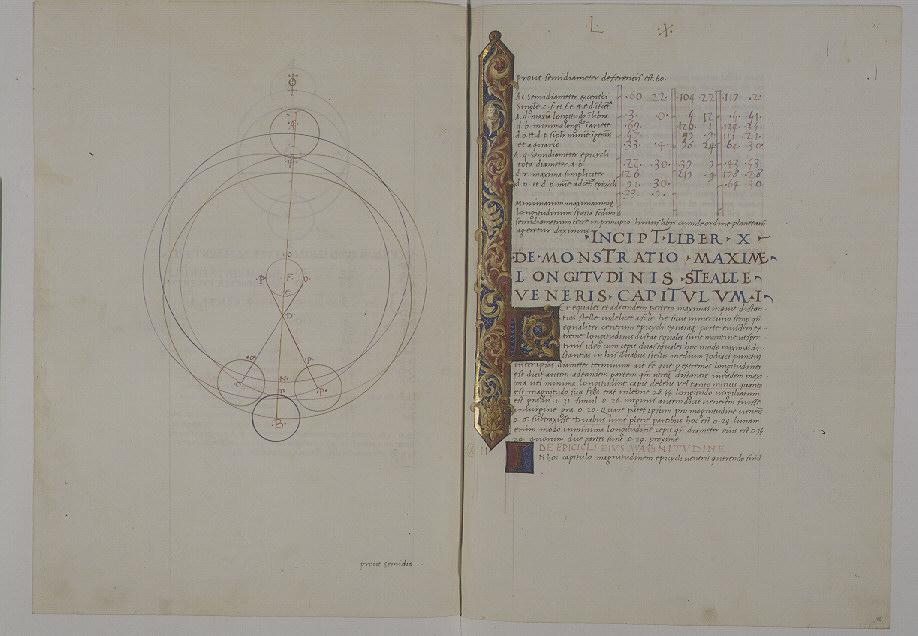
References
- "CATHOLIC ENCYCLOPEDIA: George of Trebizond".
- Mack, Peter. (2011). "A history of Renaissance rhetoric, 1380-1620". Oxford University Press.
- Hanegraaff, Wouter. (2012). "Esotericism and the Academy: Rejected Knowledge in Western Culture". Cambridge University Press.
- Scifoni, Felice. (1849). "Dizionario biografico universale". David Passigli.
- Lawrence D. Green, James J. Murphy. (2006). "Renaissance rhetoric short title catalogue, 1460-1700". Ashgate.
This article was imported from Wikipedia and is available under the Creative Commons Attribution-ShareAlike 4.0 License. Content has been adapted to SurfDoc format. Original contributors can be found on the article history page.
Ask Mako anything about George of Trebizond — get instant answers, deeper analysis, and related topics.
Research with MakoFree with your Surf account
Create a free account to save articles, ask Mako questions, and organize your research.
Sign up freeThis content may have been generated or modified by AI. CloudSurf Software LLC is not responsible for the accuracy, completeness, or reliability of AI-generated content. Always verify important information from primary sources.
Report