From Surf Wiki (app.surf) — the open knowledge base
George Murphy
American actor and politician (1902–1992)
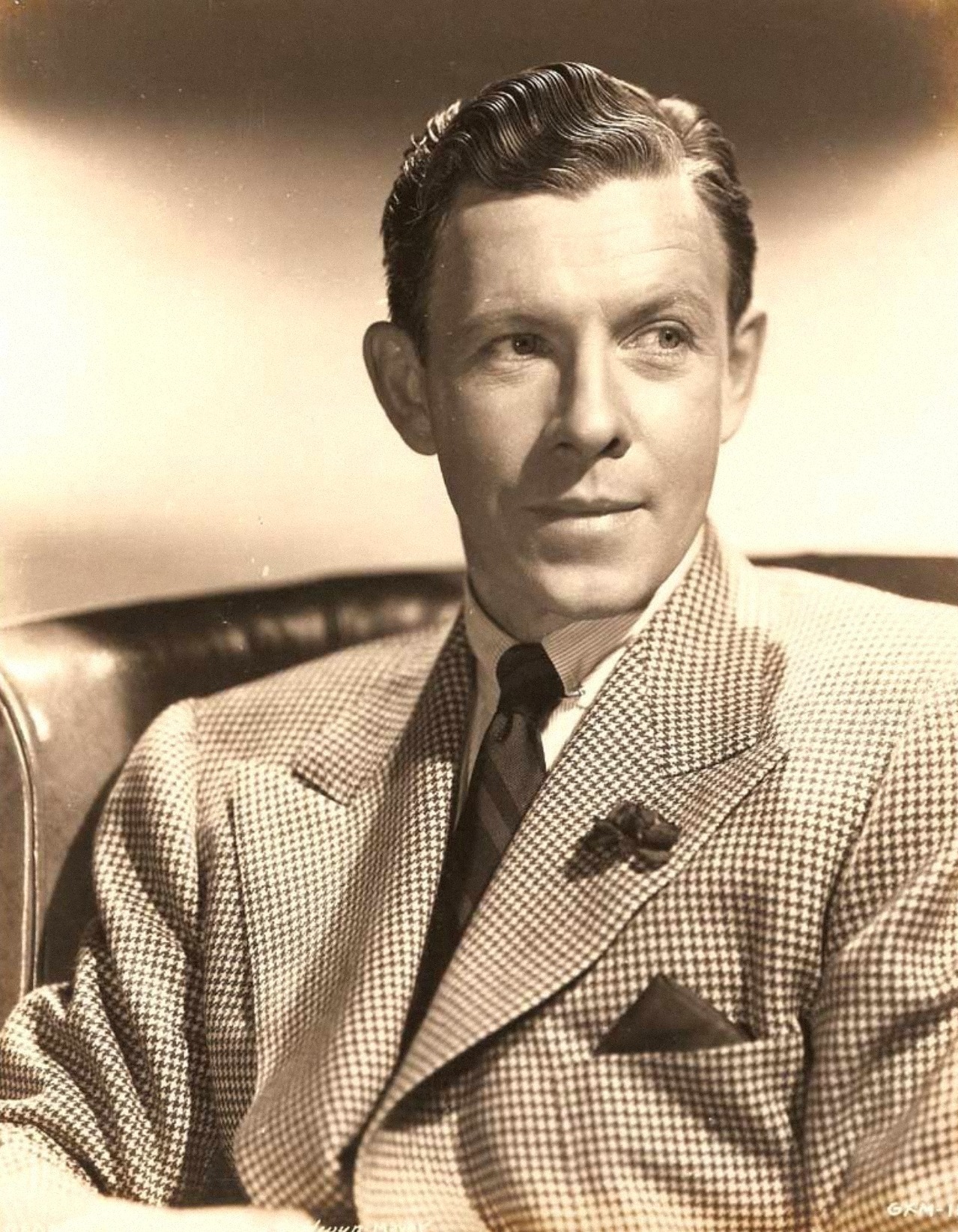
American actor and politician (1902–1992)
| Field | Value | ||||
|---|---|---|---|---|---|
| name | George Murphy | ||||
| image | George Murphy (R-CA).jpg | ||||
| caption | Official portrait, 1964 | ||||
| jr/sr | United States Senator | ||||
| state | California | ||||
| term_start | January 1, 1965 | ||||
| term_end | January 1, 1971 | ||||
| predecessor | Pierre Salinger | ||||
| successor | John V. Tunney | ||||
| birth_name | George Lloyd Murphy | ||||
| birth_date | |||||
| birth_place | New Haven, Connecticut, U.S. | ||||
| death_date | |||||
| death_place | Palm Beach, Florida, U.S. | ||||
| party | Republican | ||||
| parents | Mike Murphy | ||||
| Nora Long | |||||
| spouse | {{plainlist | ||||
| * {{Marriage | Julie Henkel-Johnson | 1926 | 1973 | end | died}} |
| children | 2 | ||||
| education | Yale University (BA) | ||||
| office2 | President of the Screen Actors Guild | ||||
| termstart2 | 1944 | ||||
| termend2 | 1946 | ||||
| successor2 | Robert Montgomery | ||||
| predecessor2 | James Cagney |
| jr/sr = United States Senator Nora Long
George Lloyd Murphy (July 4, 1902 – May 3, 1992) was an American actor and politician. Murphy was a song-and-dance leading man in many big-budget Hollywood musicals from 1930 to 1952. He was the president of the Screen Actors Guild from 1944 to 1946, and was awarded an honorary Oscar in 1951. Murphy served from 1965 to 1971 as U.S. Senator from California, the first notable American actor to be elected to statewide office in California, predating Ronald Reagan and Arnold Schwarzenegger, who each served two terms as governor. He is the only United States Senator represented by a star on the Hollywood Walk of Fame.
Early life
Murphy was born in New Haven, Connecticut, of Irish Catholic extraction, the son of Michael Charles "Mike" Murphy, athletic trainer and coach, and the former Nora Long. He was educated at Trinity-Pawling School, Peddie School and Yale University in his native New Haven.
Career
Film
In movies, Murphy was known as a song-and-dance man and appeared in many big-budget musicals such as Broadway Melody of 1938 (1937), Broadway Melody of 1940 (1940) and For Me and My Gal (1942). He made his movie debut shortly after talking pictures had replaced silent movies in 1930, and his career continued until he retired as an actor in 1952, at the age of 50. During World War II, he organized entertainment for American troops.{{cite web| url=http://bioguide.congress.gov/scripts/biodisplay.pl?index=m001092 |title=MURPHY, George Lloyd
In 1951, he was awarded an honorary Academy Award. He was never nominated for an Oscar in any competitive category. On March 14, 1951, he hosted the first ever Eddie Awards for American Cinema Editors.
He was the president of the Screen Actors Guild from 1944 to 1946. He was also a vice president of Desilu Productions and of the Technicolor Corporation. He was director of entertainment for presidential inaugurations in 1953, 1957 and 1961.
United States Senator

Murphy entered politics in 1952 by joining the leadership of the California Republican Party, having also directed the entertainment for the Eisenhower-Nixon inauguration that same year.
In 1964, he was elected as a Republican to the Senate, having defeated Pierre Salinger, the former presidential press secretary in the Kennedy White House, who had been appointed several months earlier to serve the remainder of the late Clair Engle's unexpired term. Murphy served from January 1, 1965, to January 1, 1971. He took his seat two days early, when Salinger resigned to allow Murphy to gain an edge in seniority; Murphy was then appointed by Democratic Governor Pat Brown to serve the remaining two days of Salinger's term. (In turn, Murphy resigned two days before his term expired, extending the same courtesy to his successor.)
Murphy was in demand for a time to assist other Republican candidates seeking office. In 1966, he hosted a fundraising dinner in Atlanta, for U.S. Representative Howard "Bo" Callaway, the first Republican candidate for Governor of Georgia since Reconstruction. In the election, Callaway outpolled Democrat Lester Maddox, but did not get a majority, and the state legislature elected Maddox.
In 1967 and 1968, Murphy was the chairman of the National Republican Senatorial Committee. During his Senate term, Murphy developed throat cancer, and part of his larynx had to be removed. For the rest of his life, he was unable to speak above a whisper.
Murphy voted in favor of the Voting Rights Act of 1965, as well as the Civil Rights Act of 1968.
In 1970, Murphy ran for re-election; he was challenged by Democrat John V. Tunney. Murphy's surgery and staunch support for the lingering Vietnam War worked against him, as did reports that he had continued to receive a salary from Technicolor after taking office. Despite Governor Ronald Reagan’s re-election victory (by 7%) in the concurrent gubernatorial election. Murphy lost his seat to Tunney by 618,941 votes. Tunney's successful Senate race in 1970 was reportedly the inspiration for the 1972 Robert Redford film The Candidate.
Personal life and death
Murphy was married to his ballroom dancing partner, Juliette "Julie" Henkel-Johnson, from December 18, 1926, until her death, in 1973. They had two children: Dennis Michael Murphy and Melissa Elaine Murphy.
He was married to Bette Blandi from 1982 until his death in 1992; she died in 1999.
Murphy subsequently moved to Palm Beach, Florida, where he died at the age of 89, from leukemia.
Legacy
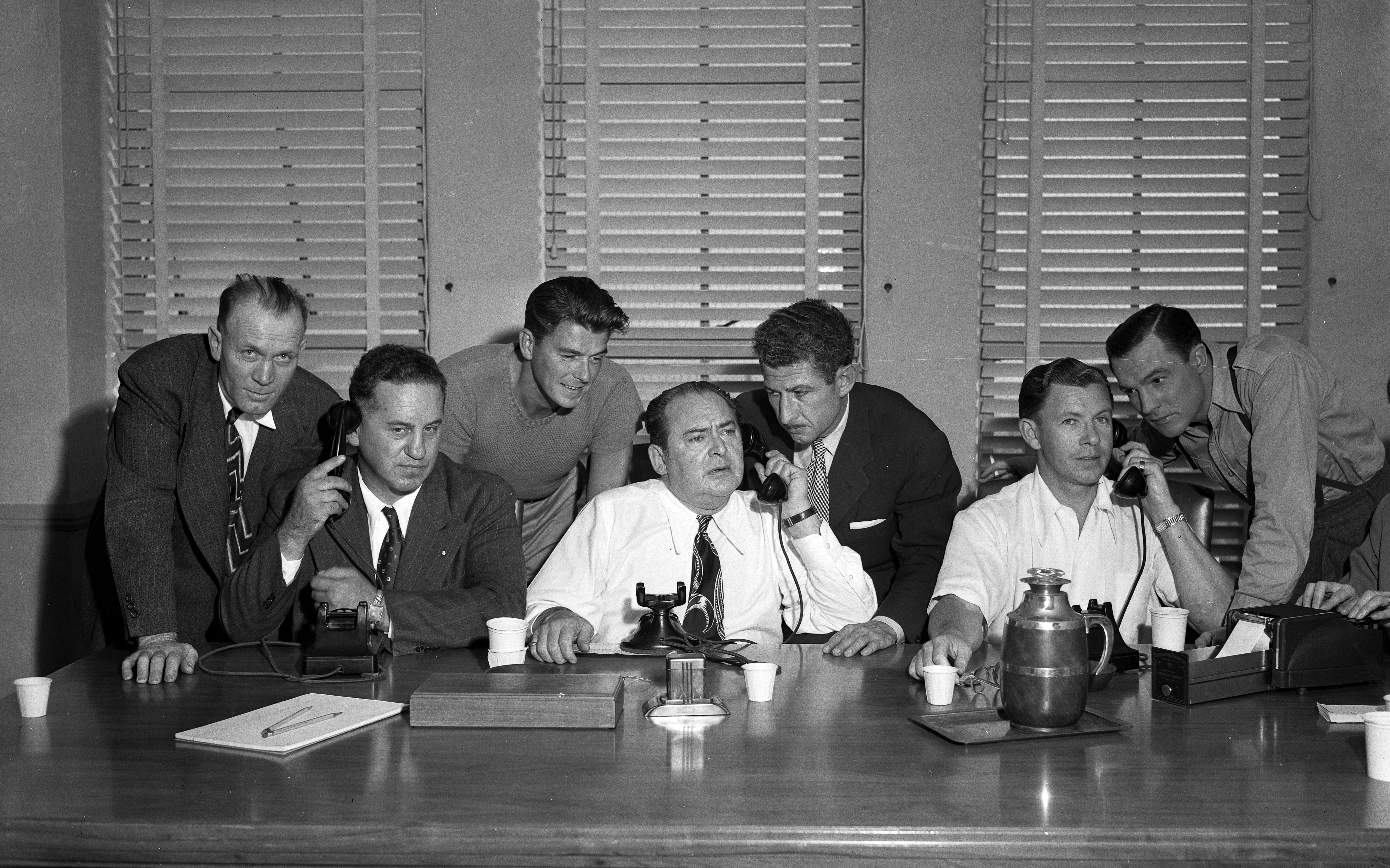
Murphy's move from the screen to California politics paved the way for the successful transitions of actors such as Ronald Reagan and later Arnold Schwarzenegger. Reagan once famously referred to George Murphy as his own "John the Baptist".
Fellow Republicans praised Murphy's ability to speak at fundraising dinners and so consequently backed his bid to become the chairman of the Senate Republican Campaign Committee.
During his tenure in the Senate, Murphy created the candy desk by placing a supply of confectionery on his desk on the U.S. Senate floor. After 1971, the candy-desk duties were bequeathed to a string of successors; as of 2025, the keeper of the candy desk is Oklahoma Republican Markwayne Mullin.
Murphy was the subject of a song by Tom Lehrer included on his album That Was the Year That Was with the same name, which criticized Murphy's comments about Mexicans working in the US.
Filmography

- Kid Millions (1934) as Jerry Lane
- Jealousy (1934) as Larry O'Roarke
- I'll Love You Always (1935) as Carl Brent
- After the Dance (1935) as Jerry Davis
- The Public Menace (1935) as Edward Joseph 'Red' Foster
- Woman Trap (1936) as Keat Shevlin
- Top of the Town (1937) as Ted Lane
- London by Night (1937) as Michael Denis
- Broadway Melody of 1938 (1937) as Sonny Ledford
- The Women Men Marry (1937) as Bill Raeburn
- You're a Sweetheart (1937) as Hal Adams
- Little Miss Broadway (1938) as Roger Wendling
- Letter of Introduction (1938) as Barry Paige
- Hold That Co-ed (1938) as Rusty
- Risky Business (1939) as Dan Clifford
- Broadway Melody of 1940 (1940) as King Shaw
- Two Girls on Broadway (1940) as Eddie Kerns
- Public Deb No. 1 (1940) as Alan Blake
- Little Nellie Kelly (1940) as Jerry Kelly
- A Girl, a Guy, and a Gob (1941) as Coffee Cup
- Tom, Dick and Harry (1941) as Tom
- Ringside Maisie (1941) as Skeets Maguire
- Rise and Shine (1941) as Mo McGonigle
- The Mayor of 44th Street (1942) as Joe Jonathan
- For Me and My Gal (1942) as Jimmy Metcalf
- The Navy Comes Through (1942) as Lt. Thomas L. 'Tom' Sands
- The Powers Girl (1943) as Jerry Hendricks
- Bataan (1943) as Lieut. Steve Bentley
- This Is the Army (1943) as Jerry Jones
- Broadway Rhythm (1944) as Jonnie Demming
- Show Business (1944) as George Doane
- Step Lively (1944) as Gordon Miller
- Having Wonderful Crime (1945) as Jake Justus
- Up Goes Maisie (1946) as Joseph Morton
- The Arnelo Affair (1947) as Theodore 'Ted' Parkson
- Cynthia (1947) as Larry Bishop
- Tenth Avenue Angel (1948) as Steve Abbutt
- Big City (1948) as Patrick O'Donnell
- Border Incident (1949) as Jack Bearnes
- Battleground (1949) as 'Pop' Stazak
- No Questions Asked (1951) as Inspector Matt Duggan
- It's a Big Country (1951) as Mr. Callaghan
- Talk About a Stranger (1952) as Robert Fontaine Sr.
- Walk East on Beacon (1952) as Inspector James 'Jim' Belden
- Deep in My Heart (1954) (scenes deleted)
Radio
- Suspense (episode "Death on Highway 99," 1945)
- Lux Radio Theatre (episode Royal Wedding, 1952)
Television
- New Comedy Showcase (episode "You're Only Young Twice," 1960)
References
References
- In 1944, [[Democratic Party (United States). Democrat]] [[Jimmie Davis]] (1899–2000)—popularizer of "[[You Are My Sunshine]]"—was elected to his first term as [[Governor of Louisiana]]. In 1948 [[Grand Ole Opry]] star [[Roy Acuff]] won the [[Republican Party (United States). Republican]] nomination for [[Governor of Tennessee]] but was defeated in the [[general election]]. [[Helen Gahagan Douglas]] served in the House of Representatives from 1945 to 1951.
- "Murphy, George Lloyd". Encyclopedia.com.
- [http://bioguide.congress.gov/scripts/biodisplay.pl?index=m001092 George Lloyd Murphy], ''[[Biographical Directory of the United States Congress]]''. Accessed February 27, 2011.
- (March 15, 1951). "Film Editors Hold First Annual Dinner". Los Angeles Evening Citizen News.
- (July 1961). "ACE First Decade Anniversary Book". American Cinema Editors, Inc.
- Steinberg, Jacques. (May 5, 1992). "George Murphy, Singer and Actor Who Became Senator, Dies at 89". The New York Times.
- Billy Hathorn, "The Frustration of Opportunity: Georgia Republicans and the Election of 1966", ''[[Atlanta History: A Journal of Georgia and the South]]'', XXXI (Winter 1987-1988), pp. 42, 47
- "TO PASS S. 1564, THE VOTING RIGHTS ACT OF 1965.".
- "TO PASS H.R. 2516, A BILL TO PROHIBIT DISCRIMINATION IN SALE OR RENTAL OF HOUSING, AND TO PROHIBIT RACIALLY MOTIVATED INTERFERENCE WITH A PERSON EXERCISING HIS CIVIL RIGHTS, AND FOR OTHER PURPOSES.".
- California. Secretary of State. (1968). "Statement of vote". Sacramento, Calif. : The Secretary.
- Christensen, Terry, and Hass, Peter. ''Projecting Politics: Political Messages in American Films'', p. 146
- Thompson, Zan. (12 June 1986). "The Personal Side of George Murphy at Age 83". Los Angeles Times.
- (8 December 1966). "Murphy Is Urged to Challenge Liberals for G.O.P. Senate Job; He Is Backed to Oppose Scott as Campaign Unit Leader Dirksen May Decide". New York Times.
- Lehrer, Tom. "George Murphy (incl. The George Murphy Campaign Song and addenda)".
- "Escape and Suspense!: Suspense - Death on Highway 99".
- (April 13, 1952). "Better Radio Programs for the Week". The Decatur Daily Review.
- . (15 August 2019). ["UNSOLD PILOTS ON TELEVISION, 1956–1966"](https://www.tvobscurities.com/articles/unsold_pilots_on_television_56_66/). *Television Obscurities*.
- Robert Jay. (13 June 2009). "Status of New Comedy Showcase". Television Obscurities.
This article was imported from Wikipedia and is available under the Creative Commons Attribution-ShareAlike 4.0 License. Content has been adapted to SurfDoc format. Original contributors can be found on the article history page.
Ask Mako anything about George Murphy — get instant answers, deeper analysis, and related topics.
Research with MakoFree with your Surf account
Create a free account to save articles, ask Mako questions, and organize your research.
Sign up freeThis content may have been generated or modified by AI. CloudSurf Software LLC is not responsible for the accuracy, completeness, or reliability of AI-generated content. Always verify important information from primary sources.
Report