From Surf Wiki (app.surf) — the open knowledge base
George M. Cohan
American actor, singer, composer and playwright (1878–1942)
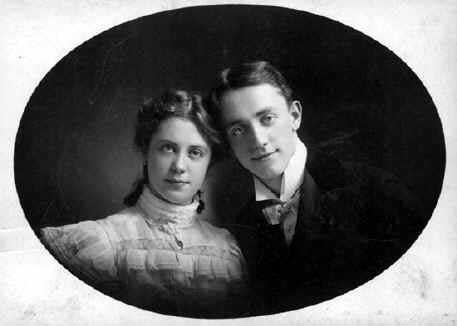
American actor, singer, composer and playwright (1878–1942)
| Field | Value |
|---|---|
| birth_name | George Michael Cohan |
| image | George M. Cohan, c. 1918.jpg |
| caption | Cohan in 1918 |
| birth_date | |
| birth_place | Providence, Rhode Island, U.S. |
| death_date | |
| death_place | New York City, U.S. |
| occupation | |
| spouse | |
| children | 4, including Mary and Helen |
George Michael Cohan (July 3, 1878November 5, 1942) was an American entertainer, playwright, composer, lyricist, actor, singer, dancer and theatrical producer.
Cohan began his career as a child, performing with his parents and sister in a vaudeville act known as "The Four Cohans". Beginning with Little Johnny Jones in 1904, he wrote, composed, produced, and appeared in more than three dozen musicals on Broadway. Cohan wrote more than 50 shows and published more than 300 songs during his lifetime, including the standards "Over There", "Give My Regards to Broadway", "The Yankee Doodle Boy" and "You're a Grand Old Flag". As a composer, he was one of the early members of the American Society of Composers, Authors, and Publishers (ASCAP). He displayed remarkable theatrical longevity, appearing in films until the 1930s and continuing to perform as a headline artist until 1940.
Known in the decade before World War I as "the man who owned Broadway", he is considered the father of American musical comedy.
Early life
Cohan was born in 1878 in Providence, Rhode Island, to Irish Catholic parents. A baptismal certificate from St. Joseph's Roman Catholic Church (which gave the wrong first name for his mother) indicated that Cohan was born on July 3, but he and his family always insisted that he had been "born on the Fourth of July!" His parents were traveling vaudeville performers, and he joined them on stage while still an infant, first as a prop, learning to dance and sing soon after he could walk and talk.
Cohan started as a child performer at age 8, first on the violin and then as a dancer. He was the fourth member of the family vaudeville act called The Four Cohans, which included his father Jeremiah "Jere" (Keohane) Cohan (1848–1917), mother Helen "Nellie" Costigan Cohan (1854–1928) and sister Josephine "Josie" Cohan Niblo (1876–1916). In 1890, he toured as the star of a show called Peck's Bad Boy and then joined the family act. The Four Cohans mostly toured together from 1890 to 1901. Cohan and his sister made their Broadway debuts in 1893 in a sketch called The Lively Bootblack. Temperamental in his early years, he later learned to control his frustrations. During these years, he originated his famous curtain speech: "My mother thanks you, my father thanks you, my sister thanks you, and I thank you."
.jpg)
As a child, Cohan and his family toured most of the year and spent summer vacations from the vaudeville circuit at his grandmother's home in North Brookfield, Massachusetts, where he befriended baseball player Connie Mack. The family generally gave a performance at the town hall there each summer, and Cohan had a chance to gain some more normal childhood experiences, like riding his bike and playing sandlot baseball. His memories of those happy summers inspired his 1907 musical 50 Miles from Boston, which is set in North Brookfield and contains one of his most famous songs, "Harrigan". As he matured through his teens, he used the quiet summers there to write. When he returned to the town in the cast of Ah, Wilderness! in 1934, he told a reporter "I've knocked around everywhere, but there's no place like North Brookfield."
Career
Early career
Cohan began writing original skits (over 150 of them) and songs for the family act in both vaudeville and minstrel shows while in his teens.

Cohan became one of the leading Tin Pan Alley songwriters, publishing upwards of 300 original songs noted for their catchy melodies and clever lyrics. His most popular songs included:
- "Give My Regards to Broadway"
- "You're a Grand Old Flag"
- "Forty-Five Minutes from Broadway"
- "Mary Is a Grand Old Name"
- "The Warmest Baby in the Bunch"
- "Life's a Funny Proposition After All"
- "I Want To Hear a Yankee Doodle Tune"
- "You Won't Do Any Business if You Haven't Got a Band"
- "The Small Town Gal"
- "I'm Mighty Glad I'm Living, That's All"
- "That Haunting Melody"
- "Always Leave Them Laughing When You Say Goodbye"
- "When You Come Back and You Will Come Back"
- "Over There", America's most popular World War I song, The song reached such currency among troops and shipyard workers that a ship was named "Costigan" after Cohan's grandfather, Dennis Costigan. During the christening, "Over There" was played.
From 1904 to 1920, Cohan created and produced over 50 musicals, plays and revues on Broadway together with his friend Sam H. Harris. Aside from the plays Cohan wrote or composed, he produced with Harris, among others, many of which were adapted for film, It Pays to Advertise (1914) and the successful Going Up in 1917, which became a smash hit in London the following year. His shows ran simultaneously in as many as five theatres. One of Cohan's most innovative plays was a dramatization of the mystery Seven Keys to Baldpate in 1913, which baffled some audiences and critics but became a hit. Cohan further adapted it as a film in 1917, and it was adapted for film six more times, as well as for TV and radio. He dropped out of acting for some years after his 1919 dispute with Actors' Equity Association.
In 1912 Cohan and Harris acquired Chicago's Grand Opera House and renamed the theatre "George M. Cohan's Grand Opera House". It was renamed "Four Cohans Theatre" in 1926 but reverted to Grand Opera House in 1928 when Cohan divested the property and the Shubert family became the sole owners of the theatre.
In 1925, he published his autobiography Twenty Years on Broadway and the Years It Took to Get There.
Later career

Cohan appeared in 1930 in The Song and Dance Man, a revival of his tribute to vaudeville and his father. It is considered a lost film.
By the 1930s, Cohan walked in and out of retirement. He earned acclaim as a serious actor in Eugene O'Neill's only comedy Ah, Wilderness! (1933) and in the role of a song-and-dance President Franklin D. Roosevelt in Rodgers and Hart's musical I'd Rather Be Right (1937). The same year, he reunited with Harris to produce a play titled Fulton of Oak Falls, starring Cohan. His final play, The Return of the Vagabond (1940), featured a young Celeste Holm in the cast.
In 1940, Judy Garland played the title role in a film version of his 1922 musical Little Nellie Kelly. Cohan's mystery play Seven Keys to Baldpate was first filmed in 1916 and has been remade seven times, most recently as House of the Long Shadows (1983), starring Vincent Price. In 1942, a musical biopic of Cohan, Yankee Doodle Dandy, was released, and James Cagney's performance in the title role earned the Best Actor Academy Award. The film was privately screened for Cohan as he battled the last stages of abdominal cancer, and he commented on Cagney's performance: "My God, what an act to follow!" Cohan's 1920 play The Meanest Man in the World was filmed in 1943 with Jack Benny.
Legacy
Although Cohan is mainly remembered for his songs, he became an early pioneer in the development of the "book musical", using his engaging libretti to bridge the gaps between drama and music. More than three decades before Agnes de Mille choreographed Oklahoma! Cohan used dance not merely as razzle-dazzle, but to advance the plot. Cohan's main characters were "average Joes and Janes" who appealed to a wide American audience.
In 1914, Cohan became one of the founding members of ASCAP.
Cohan wrote numerous Broadway musicals and straight plays in addition to contributing material to shows written by others – more than 50 in all – many of which were made into films. His shows included:
- The Governor's Son (1901)
- Running for Office (1903)
- Little Johnny Jones (1904)
- Forty-five Minutes from Broadway (1905)
- Popularity (1906)
- George Washington, Jr. (1906)
- The Honeymooners (1907)
- Fifty Miles From Boston (1908)
- The Talk of New York (1907)
- The Yankee Prince (1908)
- Cohan and Harris Minstrels (1908)
- The Fortune Hunter (1909) (produced and directed)
- The American Idea (1909) (produced and directed)
- The Man Who Owns Broadway (1909)
- Get-Rich-Quick Wallingford (1910)
- The Aviator (1910) (produced)
- The Little Millionaire (1911)
- The Only Son (1911) (produced)
- The Red Widow (1911) (produced)
- Officer 666 (1912) (produced)
- Broadway Jones (1912)
- Hawthorne of the USA (1912) (produced)
- Stop Thief (1912) (produced)
- Nearly Married (1913) (produced)
- Seven Keys to Baldpate (1913)
- The Beauty Shop (1914) (produced)
- It Pays to Advertise (1914) (produced)
- The Miracle Man (1914)
- Hello, Broadway! (1914)
- Young America (1915) (produced)
- The House of Glass (1915)
- Hit-the-Trail-Holiday (1915)
- The Cohan Revue of 1916 (and 1918; co-written with Irving Berlin)
- Honest John O'Brien (1916)
- The Intruder (1916) (produced)
- Captain Kidd Jr. (1916) (produced)
- The Willow Tree (1917) (produced)
- A Tailor-Made Man (1917) (produced)
- The King (1917) (produced)
- Going Up (1917) (produced)
- Cohan Revue of 1918 (1918)

- The Little Teacher (1918) (produced)
- Once Upon a Time (1918) (produced)
- Three Faces East (1918) (produced)
- The Matinee Hero (1918) (produced)
- A Prince There Was (1918)
- The Voice of McConnell (1918)
- Mis'Nelly of N'Orleans (1919) (produced)
- The Royal Vagabond (1919)
- The Acquittal (1920)
- Genius and the Crowd (1920) (produced)
- The Tavern (1920)
- The Meanest Man in the World (1920)
- Mary (1920) (produced)
- Nemesis (1921) (produced)
- The O'Brien Girl (1921) (produced)
- Little Nellie Kelly (1922)
- So This is London (1922)
- Two Fellows and a Girl (1922)
- The Rise of Rosie O'Reilly (1923, featuring a 13-year-old Ruby Keeler among the chorus girls)
- The Song and Dance Man (1923)
- American Born (1925)
- The Home Towners (1926)
- Yellow (1926) (Produced)
- Baby Cyclone (1927, one of Spencer Tracy's early roles)
- The Merry Malones (1927)
- Los Angeles (1927) (produced)
- Whispering Friends (1928)
- Elmer the Great (1928) (produced; written by Ring Lardner)
- By Request (1928) (produced)
- Billie (1928)
- Vermont (1929) (produced)
- Gambling (1929)
- The Rhapsody (1930) (produced)
- Friendship (1931)
- Pigeons and People (1933)
- Ah, Wilderness (1933) (Actor) (written by Eugene O' Neill)
- Dear Old Darling (1936)
- Fulton of Five Oaks (1937)
- I'd Rather Be Right (1937) (acted)
- The Return of the Vagabond (1940)
- *George M! * (1968)

Cohan was called "the greatest single figure the American theatre ever produced – as a player, playwright, actor, composer and producer". Cohan was the first person in any artistic field selected for this honor, which previously had gone only to military and political leaders, philanthropists, scientists, inventors, and explorers.
In 1959, at the behest of lyricist Oscar Hammerstein II, a $100,000 bronze statue of Cohan was dedicated in Duffy Square (the northern portion of Times Square) at Broadway and 46th Street in Manhattan. The 8-foot bronze remains the only statue of an actor on Broadway. He was inducted into the Songwriters Hall of Fame in 1970. Cohan was inducted into the Long Island Music Hall of Fame on October 15, 2006.
The United States Postal Service issued a 15-cent commemorative stamp honoring Cohan on the anniversary of his centenary, July 3, 1978. The stamp depicts both the older Cohan and his younger self as a dancer, with the tag line "Yankee Doodle Dandy". It was designed by Jim Sharpe. In 1999, Captain Kenneth R. Force and the United States Merchant Marine Academy Regimental Band led a successful effort to preserve Cohan's home on Long Island. As a result, Cohan's family gave the Merchant Marine Academy Regimental Band the name "George M. Cohan's Own". On July 3, 2009, a bronze bust of Cohan, by artist Robert Shure, was unveiled at the corner of Wickenden and Governor Streets in Fox Point, Providence, a few blocks from his birthplace. The city renamed the corner the George M. Cohan Plaza and announced an annual George M. Cohan Award for Excellence in Art & Culture. The first award went to Curt Columbus, the artistic director of Trinity Repertory Company.
Personal life

From 1899 to 1907, Cohan was married to Ethel Levey (1881–1955; born Grace Ethelia Fowler), a musical comedy actress and dancer. Levey and Cohan had a daughter, actress Georgette Cohan Souther Rowse (1900–1988). Levey joined the Four Cohans when Cohan's sister Josie married, and she starred in Little Johnny Jones and other Cohan works. In 1907, Levey divorced Cohan on grounds of adultery.
In 1908, Cohan married Agnes Mary Nolan (1883–1972), who had been a dancer in his early shows; they remained married until his death. They had two daughters and a son. The eldest was Mary Cohan Ronkin, a cabaret singer in the 1930s, who composed incidental music for her father's play The Tavern. In 1968, Mary supervised musical and lyric revisions for the musical George M! Their second daughter was Helen Cohan Carola, a film actress, who performed on Broadway with her father in Friendship in 1931. Their youngest child was George Michael Cohan, Jr. (1914–2000), who graduated from Georgetown University and served in the entertainment corps during World War II. In the 1950s, George Jr. reinterpreted his father's songs on recordings, in a nightclub act, and in television appearances on the Ed Sullivan and Milton Berle shows. George Jr.'s only child, Michaela Marie Cohan (1943–1999), was the last descendant named Cohan. She graduated with a theater degree from Marywood College in Pennsylvania in 1965. From 1966 to 1968, she served in a civilian Special Services unit in Vietnam and Korea. In 1996, she stood in for her ailing father at the ceremony marking her grandfather's induction into the Musical Theatre Hall of Fame at New York University.
Cohan was a devoted baseball fan, regularly attending games of the New York Giants.
Death
Cohan died of bladder cancer at the age of 64 on November 5, 1942, at his Manhattan apartment on Fifth Avenue, surrounded by family and friends. Cohan was interred at Woodlawn Cemetery in The Bronx, New York City, in a private family mausoleum he had erected a quarter century earlier for his sister and parents.
In popular culture


- James Cagney played Cohan in the 1942 biopic Yankee Doodle Dandy and in the 1955 film The Seven Little Foys. Cagney won the Academy Award for Best Actor for his performance in Dandy.
- Mickey Rooney played Cohan in Mr. Broadway, a television special broadcast on May 11, 1957. The same month, Rooney released a 78 RPM record featuring Rooney singing Cohan's best-known songs on the A-side.
- Joel Grey starred on Broadway as Cohan in the musical George M! (1968), which was adapted into a television special in 1970.
- Allan Sherman sang a parody-medley of three Cohan tunes on an early album: "Barry (That'll Be the Baby's Name)"; "H-o-r-o-w-i-t-z"; and "Get on the Garden Freeway" to the tune of "Mary's a Grand Old Name", "Harrigan" and "Give My Regards to Broadway", respectively.
- Chip Deffaa created a one-man show about the life of Cohan called George M. Cohan Tonight!, which first ran Off-Broadway at the Irish Repertory Theatre in 2006 with Jon Peterson as Cohan. Deffaa has written and directed five other plays about Cohan.
Filmography
Cohan acted in the following films:
| Year | Title | Role | Notes |
|---|---|---|---|
| 1917 | Broadway Jones | Broadway Jones | Lost film |
| Seven Keys to Baldpate | George Washington Magee | ||
| 1918 | Hit-The-Trail Holliday | Billie Holiday | Lost film |
| 1932 | The Phantom President | Theodore K. Blair/Peeter J. 'Doc' Varney | |
| 1934 | Gambling | Al Draper |
Gallery
File:Over There 1.jpg| File:Seven Keys to Baldpate 1917 poster.jpg| File:George Cohan 1919.jpg| File:Little Nellie Kelly (cover).png| File:GeorgeMCohanByRalphBarton.jpg|
References
Notes
Bibliography
- McCabe, John: George M. Cohan. The Man Who Owned Broadway (New York: Doubleday & Co., 1973)
Further reading
- Cohan, George M.: Twenty Years on Broadway (New York: Harper & Brothers, 1924)
- Gilbert, Douglas: American Vaudeville. Its Life and Times (New York: Dover Publications, 1963)
- Jones, John Bush: Our Musicals, Ourselves. A Social History of the American Musical Theatre (Lebanon, NH: Brandeis University Press, 2003)
- Morehouse, Ward: George M. Cohan. Prince of the American Theater (Philadelphia & New York: J. B. Lippincott Co., 1943)
References
- His life and music were depicted in the [[Academy Awards. Oscar]]-winning film ''[[Yankee Doodle Dandy]]'' (1942) and the 1968 musical ''[[George M!]]''. A [[Statue of George M. Cohan
- [[John Kenrick (theatre writer). Kenrick, John]]. [http://www.musicals101.com/cohanbio1.htm "George M. Cohan: A Biography"]. Musicals101.com (2004), retrieved April 15, 2010
- Heroux, Gerard H. [http://www.ripopmusic.org/musical-artists/composers/george-m-cohan "George M. Cohan, 2013 Inductee: The Rhody Colossus"], Rhode Island Music Hall of Fame Historical Archive, 2013, accessed February 16, 2016
- "George M. Cohan {{!}} Research Starters {{!}} EBSCO Research".
- [https://archive.nytimes.com/www.nytimes.com/learning/general/onthisday/bday/0703.html "Obituary: George M. Cohan, 64, Dies at Home Here"]. ''The New York Times'', November 6, 1942. [https://web.archive.org/web/20170110214727/https://www.nytimes.com/learning/general/onthisday/bday/0703.html Archived] from original on January 10, 2017
- Cullen, Frank; Hackman, Florence; and Neilly, Donald (eds.). ''Vaudeville, Old & New: An Encyclopedia of Variety Performers in America'', p. 243
- 0803209908
- Worcester]], Massachusetts, July 2, 2000, accessed July 23, 2014 (fee required)
- Soon he was writing professionally, selling his first songs to a national publisher in 1893. In 1901 he wrote, directed and produced his first Broadway musical, ''The Governor's Son'', for The Four Cohans. His first big Broadway hit in 1904 was the show ''[[Little Johnny Jones]]'', which introduced his tunes "[[Give My Regards to Broadway]]" and "[[The Yankee Doodle Boy]]".Kenrick, John. [http://www.musicals101.com/cohanbio2.htm "Cohan Bio: Part II: Little Johnny Jones"]. Musicals101.com (2002), retrieved April 15, 2010
- Benjamin, Rick. [http://www.dramonline.org/albums/you-re-a-grand-old-rag-the-music-of-george-m-cohan/notes "The Music of George M. Cohan"], Liner notes to ''You're a Grand Old Rag – The Music of George M. Cohan'', New World Records
- Hurley, Edward N. [http://www.gwpda.org/wwi-www/Hurley/bridge2.htm "Chapter IX: Hog Island"], ''The Bridge to France'', J. B. Lippincott Company (1927) {{LCCN. 27011802 accessed August 29, 2015
- [http://www.talkinbroadway.com/bway101/3b.html "Over There, 1910–1920"] {{Webarchive. link. (2023-04-23 , Talkinbroadway.com, retrieved April 15, 2010)
- Bruscini, Veronica. [https://www.broadwayworld.com/rhode-island/article/BWW-Reviews-Entertaining-Mysterious-SEVEN-KEYS-TO-BALDPATE-Charms-at-2nd-Story-20140131 "''Seven Keys to Baldpate''"], BroadwayWorld.com, January 31, 2014, accessed January 28, 2022
- Warburton, Eileen. "Keeper of the Keys to Old Broadway: {{sic. Geroge M. Cohan's ''Seven Keys to Baldpate'' (1913)", 2nd Story Theatre, January 32, 2014
- Schiecke, Konrad. [https://books.google.com/books?id=gZgZDgAAQBAJ&dq=Grand+Opera+House+Chicago+Hamlin&pg=PA50 pp. 50–56]
- [https://openlibrary.org/b/OL6676569M/Twenty_years_on_Broadway_and_the_years_it_took_to_get_there "''Twenty Years on Broadway and the Years It Took To Get There''"]. Listing at openlibrary.org, retrieved April 15, 2010
- McCabe, p. 229
- [http://www.songwritershalloffame.org/exhibits/C213 "George M. Cohan"] {{Webarchive. link. (2009-11-18 . Songwritershalloffame.org, retrieved April 15, 2010)
- Kenrick, John. [http://www.musicals101.com/cohanbio4.htm "Cohan Bio: Part III: Comebacks"]. Musicals101.com, retrieved April 15, 2010
- Fisher, James. [https://books.google.com/books?id=m6O5-spILIUC&pg=PA167 p. 167]
- Ebert, Roger. [https://www.rogerebert.com/reviews/great-movie-yankee-doodle-dandy-1942 "''Yankee Doodle Dandy'' (1942)"], RogerEbert.com, July 5, 1998, accessed July 4, 2011
- Maltin, Leonard. [https://web.archive.org/web/20130103195837/http://www.tcm.com/tcmdb/title/83172/The-Meanest-Man-in-the-World/ ''The Meanest Man in the World'' (1943)], ''Leonard Maltin Classic Movie Guide'' via TCM.com, accessed July 17, 2018
- Hischak, Thomas S. ''Boy Loses Girl'' {{ISBN. 0-8108-4440-0
- US. 100000. 1919. link. (2009-07-18 . United States Circuit Court of Appeals for the Second Circuit, 39 F.2d 540 (March 3, 1930), retrieved April 22, 2010)
- (September 11, 1906). "Cohan's "Popularity" a Hit". The New York Times.
- [http://www.nycgovparks.org/sub_your_park/historical_signs/hs_historical_sign.php?id=12321 "George M. Cohan Statue"]. New York City Parks Department site, Nycgovparks.org, accessed April 19, 2010
- [http://www.limusichalloffame.org/inductees_02.html#COHAN "George M. Cohan"] {{Webarchive. link. (2010-09-08 . Limusichalloffame.org, retrieved April 15, 2010)
- [https://news.google.com/newspapers?id=Xq0SAAAAIBAJ&sjid=CvkDAAAAIBAJ&pg=6389,461755 "Many Honor Patriot Cohan"]. ''Spokane Daily Chronicle'', July 4, 1978
- Traub, Alex. (2023-10-20). "Kenneth Force, the 'Toscanini of Military Marching Bands', Dies at 83". The New York Times.
- (1999-12-16). "Village Makes Cohan Home A Landmark". The New York Times.
- Dujardin, Richard C. [http://www.projo.com/theater/content/yankee_doodle_dandy_07-04-09_38EUIRG_v10.38ae409.html "Sculpture of Providence native George M. Cohan is unveiled in Fox Point"]. ''The Providence Journal'', July 4, 2009, accessed April 19, 2010
- 0415938538
- Kenrick, John. [http://www.musicals101.com/cohanbio1.htm "George M. Cohan: A Biography"], Musicals101.com, 2014, accessed December 27, 2015
- Levey remained a popular vaudeville headliner and raised Georgette on her own. See Kenrick, John. [http://www.musicals101.com/cohanbio2.htm "Cohan Bio: Part II"], Musicals101.com, 2014, accessed July 6, 2015
- [https://news.google.com/newspapers?nid=888&dat=19400307&id=NbsKAAAAIBAJ&sjid=R00DAAAAIBAJ&pg=2286,1214371 "Mary Cohan Finally Elopes and Marries George Ranken"], ''St. Petersburg Times'', March 7, 1940
- [http://www.tams-witmark.com/musicals/georgem.html ''George M!''] {{Webarchive. link. (2011-10-01 Tams-witmark.com, retrieved April 15, 2010)
- [http://www.ibdb.com/production.php?id=11401 "Helen Cohan"], Internet Broadway Database, retrieved April 15, 2010
- [https://www.imdb.com/name/nm0169126/ "Helen Cohan"], Internet Movie Database, retrieved April 15, 2010
- Cook, Louise. [https://news.google.com/newspapers?id=gVEQAAAAIBAJ&sjid=g4oDAAAAIBAJ&pg=3395,697247 "Michaela Cohan"], ''The Free Lance Star'', October 25, 1968
- Friedrich, Otto. p. 130
- link. (2012-10-11 on the [[Internet Off-Broadway Database]])
- [http://www.georgemcohan.org "George M. Cohan Shows"]. Georgemcohan.org, accessed 16 August 2010
- "George M. Cohan {{!}} American composer and dramatist".
This article was imported from Wikipedia and is available under the Creative Commons Attribution-ShareAlike 4.0 License. Content has been adapted to SurfDoc format. Original contributors can be found on the article history page.
Ask Mako anything about George M. Cohan — get instant answers, deeper analysis, and related topics.
Research with MakoFree with your Surf account
Create a free account to save articles, ask Mako questions, and organize your research.
Sign up freeThis content may have been generated or modified by AI. CloudSurf Software LLC is not responsible for the accuracy, completeness, or reliability of AI-generated content. Always verify important information from primary sources.
Report