From Surf Wiki (app.surf) — the open knowledge base
George Jewett
American football player (1870–1908)
.jpg)
American football player (1870–1908)
George Henry Jewett II (April 1870 – August 12, 1908) was an American athlete who became the first African-American football player at both the University of Michigan and Northwestern University and in the Big Ten Conference. He played for the Michigan Wolverines as a fullback, halfback, and field goal kicker in 1890 and 1892 and was considered one of Michigan's greatest players in the pre-Fielding H. Yost era.
Early years
Jewett grew up in Ann Arbor, Michigan, the son of a successful blacksmith. At the time of the 1870 United States census, he was listed as being one month old. His father was George Jewett, a blacksmith born in Kentucky in approximately 1845, and his mother was Letty Jewett, born in Michigan to parents from Missouri in approximately 1848. He had an older sister, Mary, born in approximately 1868.
Jewett attended Ann Arbor High School where he was the class valedictorian in 1889. In high school, he was the captain of the debate, football and baseball teams. He was also the fastest sprinter in the Midwest, having won the Amateur Athletic Union 100-yard dash competition, and was fluent in German, Italian and French.
College football
University of Michigan

Jewett attended the University of Michigan from 1890 to 1893, where he became the first African American in the school's history to letter in football. In 1890, Jewett was the starting fullback for the Michigan team that went 4–1 and outscored opponents 129–36. In 1892, Jewett was the starting halfback on a Michigan team that beat Amos Alonzo Stagg's University of Chicago team, went 7–5 and scored 298 points. At Michigan, he was the leading rusher, scorer and kicker. Oberlin College coach John Heisman described Jewett as a "superior athlete," and University of Chicago coach Amos Alonzo Stagg referred to him as "a very tough opponent."
Oberlin College game against John Heisman
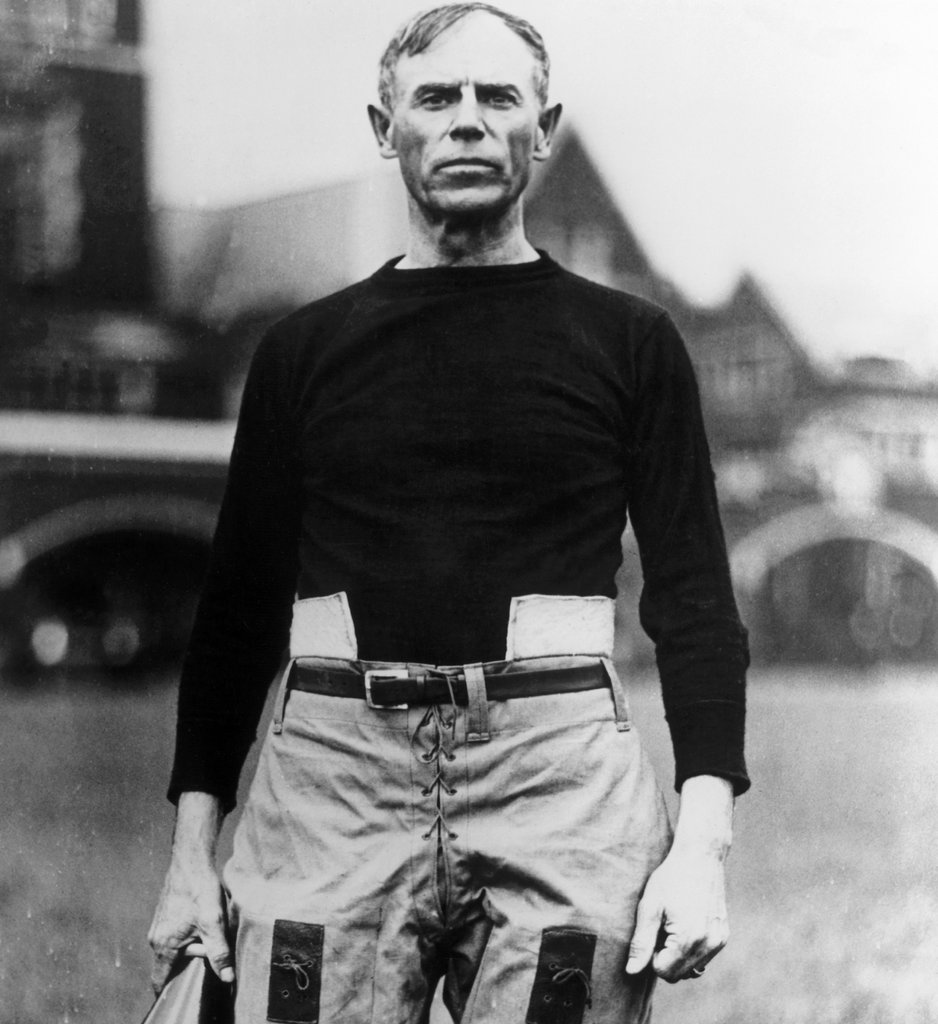
In 1892, Jewett played a central role in a memorable game against an Oberlin College team coached by John Heisman. Michigan met Oberlin at Ann Arbor in November 1892. Jewett scored four touchdowns in the game, including an unopposed 45-yard touchdown run after Oberlin thought time had been called. After Oberlin went ahead, 12–6, Jewett scored his second touchdown on a run from 25 yards out, but his kick failed, so the Wolverines trailed 12–10. The next day, the Michigan Daily reported: "Oberlin compromised herself by leaving the field before time was up.... Referee Ensworth, an Oberlin substitute, lost all tab of time, and called the game at 14 minutes to 5, while the captain of each team had agreed to play until 10 minutes of that hour." Both schools still record the game as a victory.
Northwestern University

Jewett studied medicine at Michigan, but reportedly left abruptly after a run-in with the dean of medicine. He transferred to Northwestern University in 1893 where he received his medical degree and also became the first African American to play for the Northwestern Wildcats football team.
Jewett was not only the first African-American football player at both Michigan and Northwestern, he was also the first African-American athlete to letter in football for any of the schools that formed the Big Ten Conference. Jewett missed being the first African American in college football by one year. In 1889, William Henry Lewis and William Tecumseh Sherman Jackson played for Amherst.
Eight years before Jewett's debut for the Michigan football team, Moses Fleetwood Walker became the first African American to letter for Michigan, doing so on the baseball team.
Later years and family
Jewett went on to practice medicine in the Chicago area.
Jewett later opened a business in Ann Arbor called The Valet, referred to in some sources as a dry cleaning shop and in others as a cleaning and pressing shop. Jewett's shop was located on State Street, between the Congregational Church and Newberry Hall; Jewett delivered finished work by horse and carriage.

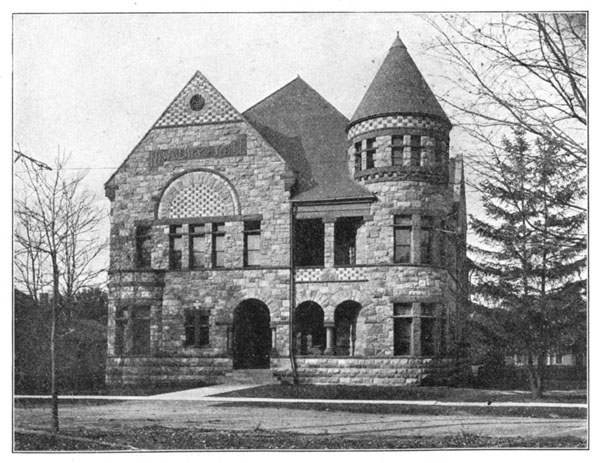
Jewett was married on November 4, 1901, to Lillian Zebbs. They had two children, George H. Jewett (1902–1977) and Richard Jewett (born 1908).
Jewett died suddenly in 1908 at the age of 38, leaving his wife, Lillian, and two sons; his son Richard was eight days old when his father died. Richard was the father of Coleman Jewett, well known Ann Arbor athlete, educator and craftsman, and grandfather of Michael Jewett, the host of 89.1 Jazz heard on weekday afternoons on WEMU radio.
Jewett is buried at Forest Hill Cemetery in Ann Arbor. He was inducted into the Pioneer High School Hall of Fame in March 2004.
Legacy
Since 2021, the winner of the Michigan–Northwestern rivalry game receives the George Jewett Trophy, the first FBS rivalry trophy named after an African-American player.
References
References
- Ted Talbert. (November 15, 1979). "U-M's 1st black gridder". Detroit Free Press.
- Shackman, Grace. (2001). "Ann Arbor in the 19th Century". Arcadia Publishing.
- "Downtown Ann Arbor Historical Street Exhibit Program". Ann Arbor District Library.
- 1870 US Census; Census Place: Ann Arbor Ward 6, Washtenaw, Michigan; Roll: M593_707; Page: 108A; Image: 220; Family History Library Film: 552206.
- The family was residing in Ann Arbor at the time of both the 1870 and 1880 censuses.1880 Census; Census Place: Ann Arbor, Washtenaw, Michigan; Roll: 608; Family History Film: 1254608; Page: 91C; Enumeration District: 225; Image: 0487.
- "Ann Arbor Pioneer Athletics: George Henry Jewett". Ann Arbor Pioneer High School.
- (1932-10-27). "Negro Track Star To Seek Football Award". The News-Palladium (Benton Harbor, Mich.).
- (1933-11-17). "Ward Second Negro To Win Second 'M'". The Bessemer Herald.
- "University of Michigan 1890 Football Team". The Regents of the University of Michigan.
- "University of Michigan 1892 Football Team". The Regents of the University of Michigan.
- "African-Americans in the Sports Arena". Long Island University: B. Davis Schwartz Memorial Library.
- Brandt, Nat. (2001). "When Oberlin Was King of the Gridiron: The Heisman Years". Kent State University Press.
- Geoffrey Blodgett. (Winter 1999). "The Day Oberlin Beat Michigan, Or Did We? Records at Michigan claim the game for the Wolverines, but Oberlin declares the win as their own". Oberlin Alumni Magazine.
- Wiley Lee Umphlett. (1992). "Creating the Big Game: John W. Heisman and the Invention of American Football". Greenwood Publishing.
- John Matthew Smith. (Fall 2007). ""Breaking the Plane": Integration and Black Protest in Michigan State University Football during the 1960s". Michigan Historical Review.
- "American college football is rich with black history...". The African American Registry.
- Miller, Heather. (1996-10-31). "A2 cemetery has spooky history". The Michigan Daily.
- (January 2004). "PTSO Newsletter". Ann Arbor Pioneer High School.
- (25 February 2021). "Michigan and Northwestern establish George Jewett Trophy for first Black player in the history of the Big Ten". [[CBS Sports]].

This article was imported from Wikipedia and is available under the Creative Commons Attribution-ShareAlike 4.0 License. Content has been adapted to SurfDoc format. Original contributors can be found on the article history page.
Ask Mako anything about George Jewett — get instant answers, deeper analysis, and related topics.
Research with MakoFree with your Surf account
Create a free account to save articles, ask Mako questions, and organize your research.
Sign up freeThis content may have been generated or modified by AI. CloudSurf Software LLC is not responsible for the accuracy, completeness, or reliability of AI-generated content. Always verify important information from primary sources.
Report