From Surf Wiki (app.surf) — the open knowledge base
George C. Scott
American actor (1927–1999)
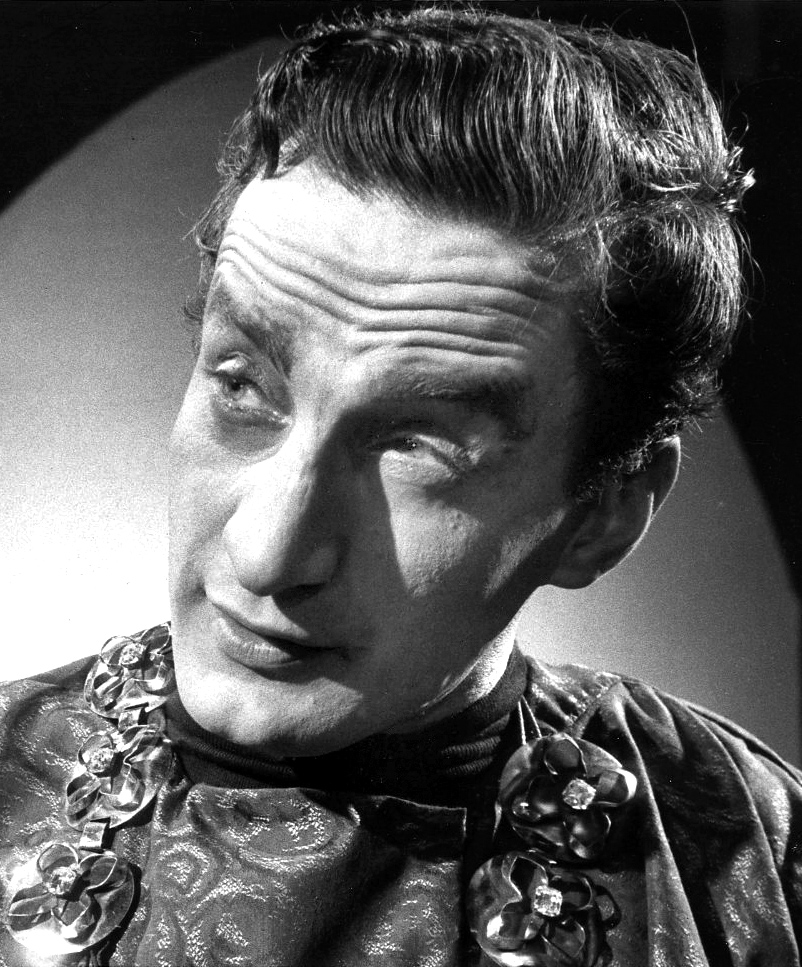
American actor (1927–1999)
| Field | Value | ||||
|---|---|---|---|---|---|
| name | George C. Scott | ||||
| image | George C. Scott - publicity.JPG | ||||
| caption | Scott in The Hustler (1961) | ||||
| birth_name | George Campbell Scott | ||||
| birth_date | |||||
| birth_place | Wise, Virginia, U.S. | ||||
| death_date | |||||
| death_place | Westlake Village, California, U.S. | ||||
| resting_place | Westwood Village Memorial Park Cemetery | ||||
| education | Redford High School | ||||
| alma_mater | University of Missouri (BA) | ||||
| years_active | 1951–1999 | ||||
| occupation | |||||
| spouse | {{ubl | ||||
| {{marriage | Carolyn Hughes | 1951 | 1955 | end | div}} |
| {{marriage | Patricia Reed | 1955 | 1960 | end | div}} |
| {{marriage | Colleen Dewhurst | 1960 | 1965 | end | div}} |
| {{marriage | 1967 | 1972 | end | div}} | |
| children | 7, including Devon and Campbell Scott | ||||
| awards | Full list | ||||
| module | {{Infobox military person | embed=yes | |||
| allegiance | United States | ||||
| branch | |||||
| serviceyears | 1945–1949 | ||||
| rank | [[File:USMC-SGT 1918.svg | 25px]] Sergeant |
| | | | | George Campbell Scott (October 18, 1927 – September 22, 1999) was an American actor. He had a celebrated career on both stage and screen. With a gruff demeanor and commanding presence, Scott became known for his portrayal of stern but complex authority figures.
Described by The Guardian as "a battler and an actor of rare courage", his roles earned him numerous accolades including two Golden Globes, and two Primetime Emmys as well as nominations for two BAFTA Awards and five Tony Awards. Though he won the Academy Award for Best Actor for playing General George S. Patton in Patton (1970), he became the first actor to decline the award, having warned the Academy of Motion Picture Arts and Sciences months in advance that he would do so on the basis of his belief that performances cannot be compared to others. His other Oscar-nominated roles include Anatomy of a Murder (1959), The Hustler (1961), and The Hospital (1971).
Scott's other notable films include Dr. Strangelove (1964), Petulia (1968), The Day of the Dolphin (1973), Movie Movie (1978), Hardcore (1979), and The Exorcist III (1990).
Scott gained fame for his roles on television earning two Primetime Emmy Awards for his performances in Hallmark Hall of Fame (1971), and 12 Angry Men (1997). He also played leading roles in Jane Eyre (1970), Beauty and the Beast (1976), and A Christmas Carol (1984). Scott continued to maintain a prominent stage career even as his film stardom waned, and by the end of his career he had accrued five Tony nominations for his performances in Comes a Day (1959), The Andersonville Trial (1960), Uncle Vanya (1974), Death of a Salesman (1975), and Inherit the Wind (1996). He directed several of his own films and plays and often collaborated with his wives Colleen Dewhurst and Trish Van Devere.
Early life and education
George Campbell Scott was born on the kitchen table on October 18, 1927—the younger of two siblings—in the modest Wise, Virginia, home of his parents, Gerald Dewey Scott (1902–1988) and Helena Agnes (née Slemp; 1904–1935). His mother was the first cousin, once removed, of Republican Congressman C. Bascom Slemp. His maternal grandfather was a local jurist, Judge Campbell Slemp. Scott's mother died just before his eighth birthday, and he was raised by his father, an executive at Buick. Scott's original ambition was to be a writer like his favorite author, F. Scott Fitzgerald. While attending Redford High School in Detroit, he wrote many short stories, none of which were published. He tried on many occasions to write a novel, but never completed one to his own satisfaction.
After high school, Scott enlisted in the United States Marine Corps, serving from 1945 to 1949. He was assigned to 8th and I Barracks in Washington, D.C., and his primary duty was serving as honor guard at military funerals at Arlington National Cemetery. He later said that during his duty at Arlington, "[I] pick[ed] up a solid drinking habit that stayed with me from then on."
Following military service, Scott enrolled at the University of Missouri on the G.I. Bill where he majored in journalism and then became interested in drama. His first public appearance on stage was as the barrister in a university production of Terence Rattigan's The Winslow Boy, directed by H. Donovan Rhynsburger. During rehearsals for that show, he made his first stage appearance—in a student production of Noël Coward's Hands Across the Sea, directed by Jerry V. Tobias. He graduated from the university in 1953 with degrees in English and theater.
Career
1958–1962: Early roles
Scott first rose to prominence for his work with Joseph Papp's New York Shakespeare Festival. In 1958, he won an Obie Award for his performances in Children of Darkness (in which he made the first of many appearances opposite his future wife, actress Colleen Dewhurst), for As You Like It (1958), and for playing the title character in William Shakespeare's Richard III (1957–58) (a performance one critic said was the "angriest" Richard III of all time).
Scott's Broadway debut was in Comes a Day (1958) which had a short run. At the 13th Tony Awards, he was nominated for the Tony Award for Best Featured Actor in a Play. Scott's television debut was in a 1958 adaptation of A Tale of Two Cities for the Dupont Show of the Month directed by Robert Mulligan. He also appeared in a televised version of The Outcasts of Poker Flat (1958) plus episodes of Kraft Theatre, and Omnibus. Scott's feature film debut was in The Hanging Tree (1959), starring Gary Cooper and Maria Schell.

Scott earned his first Academy Award nomination in Best Supporting Actor category for his performance in Otto Preminger's Anatomy of a Murder (1959). Later that year he appeared on Broadway in The Andersonville Trial by Saul Levitt directed by Jose Ferrer, earning Tony Award nomination for Best Leading Actor in a Play for his portrayal of the prosecutor. This was based on the military trial of the commandant of the infamous Civil War prison camp in Andersonville, Georgia. It ran for 179 performances from December 1959 to June 1960.
Scott received good reviews for The Wall (1960–61) which ran for 167 performances. He guest-starred on episodes of Sunday Showcase, Playhouse 90, Play of the Week (doing "Don Juan in Hell"), Dow Hour of Great Mysteries, and a Hallmark Hall of Fame production of Winterset, originally written for the stage. Scott received superb notices for his performance in The Hustler (1961). He returned to Broadway to direct General Seeger (1962) by Ira Levin but it only lasted two performances. The play Great Day in the Morning (1962), in which he was directed by José Quintero, also had only a brief run.
Scott was in much demand for guest shots on TV shows, appearing in episodes of Ben Casey and Naked City. In 1962, Scott appeared as school teacher Arthur Lilly on NBC's The Virginian, in the episode "The Brazen Bell", in which he recites Oscar Wilde's poem "The Ballad of Reading Gaol". That same year, he appeared in NBC's medical drama The Eleventh Hour, in the episode "I Don't Belong in a White-Painted House". He appeared opposite Laurence Olivier and Julie Harris in Graham Greene's The Power and the Glory in a 1961 television production and also performed in The Merchant of Venice (1962) off-Broadway.
1963–1969: Breakthrough
Scott's first leading role in a feature was The List of Adrian Messenger released in 1963. That year, Scott starred in the hour-long television drama series East Side/West Side. He portrayed a New York City social worker, along with co-stars Cicely Tyson and Elizabeth Wilson. Scott was a major creative influence on the show, resulting in conflicts with James T. Aubrey, the head of CBS. The Emmy Award-winning program had a series of guest stars, including James Earl Jones. The portrayal of challenging urban issues made attracting advertisers difficult, not helped by the limited distribution. Not all CBS network affiliates broadcast the show, and it was canceled after one season. Scott had a success during 1963 in an off-Broadway production of Desire Under the Elms.

Scott's highest-profile early role was in the Stanley Kubrick–directed Dr. Strangelove, or How I Learned to Stop Worrying and Love the Bomb (1964), in which he played General "Buck" Turgidson. In later interviews with Kubrick, Scott was revealed to have initially refused to camp it up on camera. As a compromise, Kubrick had Scott go over the top in rehearsal, assuring Scott that the cameras were off, which was untrue. Somehow, Scott was unable to hear the very loud motor on the 35mm film cameras of the time. Kubrick proceeded to use this version in the final cut, which Scott supposedly resented. Scott was one of many stars in The Yellow Rolls-Royce (1964).
Scott was cast, under the direction of John Huston in Dino de Laurentiis's The Bible: In the Beginning, which was released by 20th Century Fox in 1966. Also in 1966, Scott appeared as Jud Barker in the NBC western The Road West (also known as This Savage Land), starring Barry Sullivan, Kathryn Hays, Andrew Prine, and Glenn Corbett. He also guest starred in Bob Hope Presents the Chrysler Theatre. He co-starred with Tony Curtis in the comedy film Not with My Wife, You Don't! (also 1966) and as John Proctor in a television version of The Crucible (1967).
Scott returned to Broadway in 1967 to direct Dr. Cook's Garden by Ira Levin but quit during tryouts. As an actor, he appeared in a revival of The Little Foxes (1967–1968) directed by Mike Nichols, which ran for 100 performances. Scott starred in The Flim-Flam Man (1967) and Petulia (1968). He appeared in the television film Mirror, Mirror Off the Wall (1969).
1970–1979: Established star
Scott played George S. Patton in the film Patton (1970) and researched extensively for the role, studying films of the general and talking to those who knew him. Scott declined the Oscar nomination for Patton, just as he had done for his nomination in 1962 for The Hustler, but won the award anyway.
In a letter to the Motion Picture Academy, he stated that he did not feel himself to be in competition with other actors. However, regarding this second rejection of the Academy Award, Scott famously said elsewhere, "The whole thing is a goddamn meat parade. I don't want any part of it." The Best Picture Oscar for Patton was given to the George C. Marshall Foundation Library at the Virginia Military Institute in Lexington, Virginia, the same institution that generations of Pattons attended, by producer Frank McCarthy a few weeks after the awards ceremony, and is on display there. Scott accepted the New York Film Critics Award. His then-wife Colleen Dewhurst said, "George thinks this is the only film award worth having".
During the early 1970s, Scott appeared in the British film Jane Eyre (1970) as Mr. Rochester and the made-for-television film The Price (1971), a version of the Arthur Miller play. For the latter role, he won an Emmy Award, which he accepted. He also directed a TV version of The Andersonville Trial (1970). Scott then returned his focus to feature films. He appeared in They Might Be Giants (1971) with Joanne Woodward, and The Last Run (1971) for director Richard Fleischer, with his wife Colleen Dewhurst and also with Trish Van Devere, who would become his fourth and last wife. Scott had a big hit with ** (1971) based on a script by Paddy Chayefksy; and The New Centurions (1972) directed by Flesicher based on a book by Joseph Wambaugh.
Scott then appeared in a series of box office flops, beginning with Rage (1972), which he both directed and starred in. He then appeared in Oklahoma Crude (1973) directed by Stanley Kramer; The Day of the Dolphin (1973) directed by Mike Nichols, in which Scott appeared with Van Devere; Bank Shot (1974), directed by Gower Champion; and The Savage Is Loose (1974), which co-starred Van Devere and which Scott himself directed. Scott returned to television with Fear on Trial (1975); and starred in the disaster film The Hindenburg (1975) for director Robert Wise.
Scott had a big Broadway hit with Neil Simon's Plaza Suite (1968), directed by Mike Nichols. The show was composed of three separate one-act plays all using the same set, with Scott portraying a different lead character in each act; it ran for 1,097 performances. Scott directed a production of All God's Chillun Got Wings (1975) which starred Van Devere and only had a short run. He directed and played Willy Loman in a 1975 revival of Death of a Salesman, for which he garnered another Tony Award nomination for Best Lead Actor in a Play. Scott was again Tony–nominated in the same category for his performance as Astrov in a 1973 revival of Uncle Vanya, directed by Nichols, which ran for 64 performances. Scott starred in a well-received production of Larry Gelbart's Sly Fox (1976; based on Ben Jonson's Volpone), which ran 495 performances.
Scott appeared in a television production of Beauty and the Beast (1976), with Trish Van Devere. He later starred as an Ernest Hemingway-based artist in Islands in the Stream (1977) directed by Schaffner and based on Hemingway's posthumously published novel. He had a cameo in Crossed Swords (1977) directed by Fleischer, then had the lead in Movie Movie (1978) directed by Stanley Donen, costarring with Van Devere, and Hardcore (1979) written and directed by Paul Schrader.
1980–1989
Scott starred in The Changeling (1980), with Melvyn Douglas, John Colicos, Jean Marsh, and Van Devere, for which he received the Canadian Genie Award for Best Foreign Film Actor for his performance. He followed this with The Formula (1980) co-starring Marlon Brando, which was a flop. With one exception, it was the last time he had the lead in a major studio feature film. Scott returned to Broadway for Tricks of the Trade in 1980 with Van Devere, but it ran for a single performance.
Scott appeared alongside Timothy Hutton and rising stars Sean Penn and Tom Cruise in the coming-of-age film Taps (1981), and was cast as Fagin in the CBS made-for-TV adaptation of Charles Dickens's Oliver Twist (1982). On Broadway, he starred in and directed a successful revival of Noël Coward's Present Laughter which ran during 1982–83. He starred in China Rose (1983) on television, and in 1984, had a supporting role in Firestarter and portrayed Ebenezer Scrooge in a television adaptation of A Christmas Carol. He directed the 1984 Broadway revival of Noël Coward's Design for Living, which ran for 245 performances. In 1986, on Broadway, Scott did The Boys in Autumn in 1986. In 1993, he appeared off-Broadway successfully with Wrong Turn at Lungfish. He was nominated for an Emmy Award for the role. Scott played the title role in the television film Mussolini: The Untold Story (1985).
Scott reprised his role as Patton in a made-for-television sequel, The Last Days of Patton (1986). Based on the final weeks of Patton's life after being mortally injured in a car accident, it contains flashbacks of Patton's life. At the time the sequel was aired, Scott mentioned in a TV Guide interview that he told the academy to donate his Oscar to the Patton Museum, but since the instructions were never put in writing, it was never delivered.
On television, Scott appeared in The Murders in the Rue Morgue (1986) and Pals (1987; with Don Ameche). He also played the lead role in the TV series Mr. President (1987–88), and appeared on The Johnny Carson Show in March 1987. Scott starred in the television film The Ryan White Story (1989) as Charles Vaughan, the lawyer defending Ryan White.
1990–1999
In 1990, he voiced two villainous roles: Smoke in the television special Cartoon All-Stars to the Rescue and Percival McLeach in the Disney film The Rescuers Down Under. He was featured in The Exorcist III (1990). For TV, he starred in Descending Angel (also 1990) and Finding the Way Home (1991). On Broadway, he directed and appeared in a revival of On Borrowed Time (1991–92). He had a supporting role in Curacao (1993) and Malice (1993). Scott had a starring role in Traps (1994) but the series only ran for five episodes. He also had a semi-regular role on another short-lived series New York News (1995). Around this time, Scott appeared in such feature films as The Whipping Boy (1994), Tyson (1995), and Angus (1995). Scott received another Tony nomination for his performance as Henry Drummond in a revival of Inherit the Wind (1996). In the latter play, he had to miss many performances due to illness, with his role being taken over by National Actors Theatre artistic director Tony Randall. In 1996, he received an honorary Drama Desk Award for a lifetime devotion to American theatre.
On the small screen, Scott appeared in Country Justice (1996), Titanic (1996) (as the ship's captain), and The Searchers (1996). Scott portrayed Juror No. 3 in the television film 12 Angry Men (1997), the role played by Lee J. Cobb in the 1957 film, for which he would win another Emmy Award. He hosted Weapons at War on A&E TV, but was replaced after one season by Gerald McRaney. Weapons at War moved to The History Channel with Scott still credited as host for the first season. Scott was replaced by Robert Conrad after his death in 1999. He had support roles in Gloria (1999) for Sidney Lumet and Rocky Marciano (1999). Scott made his last film, the television film Inherit the Wind (1999), portraying Matthew Harrison Brady (ironically opposite the role he had played on stage) with Jack Lemmon as Henry Drummond, with whom he had also worked in 12 Angry Men. Scott had a reputation for being moody and mercurial while on the set. "There is no question you get pumped up by the recognition ... Then a self-loathing sets in when you realize you're enjoying it", he was quoted as saying. One anecdote relates that one of his stage co-stars, Maureen Stapleton, told the director of Neil Simon's Plaza Suite, "I don't know what to do – I'm scared of him." The director, Mike Nichols, replied, "My dear, everyone is scared of George C. Scott."
Personal life

Scott was married five times:
- Carolyn Hughes (m. 1951–1955); one daughter (b. December 19, 1952).
- Patricia Reed (m. 1955–1960); two children, a son and actress Devon Scott.
- Colleen Dewhurst (m. 1960–1965); two sons, including actor Campbell Scott. Dewhurst nicknamed her husband "G.C."
- Colleen Dewhurst (remarried July 4, 1967 – divorced for a second time on February 2, 1972).
- Trish Van Devere (m. September 4, 1972), with whom he starred in several films, including the supernatural thriller The Changeling (1980). Scott met Van Devere while shooting The Last Run (1971), which also featured his ex-wife Dewhurst. Scott adopted Van Devere's nephew, George Dressell, and resided in Malibu. They remained married until his death in 1999.
Politics
In 1982, Scott appeared in a campaign commercial for moderate Republican U.S. Senator Lowell Weicker of Connecticut. Like Weicker, Scott was, at that time, a resident of Greenwich, Connecticut. Scott identified politically as a moderate conservative and supported the death penalty.
Illness and death
Scott suffered a series of heart attacks in the 1980s. He died on September 22, 1999, of a ruptured abdominal aortic aneurysm, aged 71. He was interred in the Westwood Village Memorial Park Cemetery in Westwood, California.
Acting credits
Film
| Year | Title | Role | Notes | |||
|---|---|---|---|---|---|---|
| 1956 | Somebody Up There Likes Me | Prisoner | Uncredited | |||
| 1959 | The Hanging Tree | George Grubb | ||||
| Anatomy of a Murder | Claude Dancer | |||||
| 1961 | The Hustler | Bert Gordon | ||||
| 1963 | The List of Adrian Messenger | Anthony Gethyrn | ||||
| 1964 | Dr. Strangelove | General Buck Turgidson | ||||
| The Yellow Rolls-Royce | Paolo Maltese | |||||
| 1966 | The Bible: In the Beginning... | Abraham | ||||
| Not with My Wife, You Don't! | Colonel "Tank" Martin | |||||
| 1967 | The Flim-Flam Man | Mordecai Jones | ||||
| 1968 | Petulia | Archie Bollen | ||||
| 1969 | This Savage Land | Jud Barker | ||||
| 1970 | Patton | General George S. Patton Jr. | ||||
| Jane Eyre | Edward Rochester | |||||
| 1971 | They Might Be Giants | Justin Playfair / "Sherlock Holmes" | ||||
| The Last Run | Harry Garmes | |||||
| The Hospital | Herbert Bock | |||||
| 1972 | The New Centurions | Andy Kilvinski | ||||
| Rage | Dan Logan | Also director | ||||
| 1973 | Oklahoma Crude | Noble Mason | ||||
| The Day of the Dolphin | Jake Terrell | |||||
| 1974 | Bank Shot | Walter Upjohn Ballentine | ||||
| The Savage Is Loose | John | Also director | ||||
| 1975 | The Hindenburg | Colonel Franz Ritter | ||||
| 1977 | Islands in the Stream | Thomas Hudson | ||||
| Crossed Swords | The Ruffler | |||||
| 1978 | Movie Movie | "Gloves" Malloy / "Spats" Baxter | ||||
| 1979 | Hardcore | Jake Van Dorn | ||||
| 1980 | The Changeling | John Russell | ||||
| The Formula | Lieutenant Barney Caine | |||||
| 1981 | Taps | Brigadier General Harlan Bache | ||||
| 1983 | China Rose | Burton Allen | ||||
| 1984 | Firestarter | John Rainbird | ||||
| 1989 | The Ryan White Story | Charles Vaughan Sr. | ||||
| 1990 | Cartoon All-Stars to the Rescue | Smoke | Voice, direct-to-video | |||
| The Exorcist III | Lieutenant William F. Kinderman | |||||
| The Rescuers Down Under | Percival McLeach | title=George C Scott (visual voices guide) | url=http://www.behindthevoiceactors.com/George-C-Scott/ | access-date=July 25, 2024 | publisher=Behind The Voice Actors}} A green check mark indicates that a role has been confirmed using a screenshot (or collage of screenshots) of a title's list of voice actors and their respective characters found in its credits or other reliable sources of information. | |
| Descending Angel | Florian Stroia | |||||
| 1993 | Curaçao | Cornelius Wettering | ||||
| Malice | Martin Kessler | |||||
| 1994 | The Whipping Boy | George "Blind George" | ||||
| 1995 | Tyson | Constantine "Cus" D'Amato | ||||
| Angus | Grandpa Ivan Bethune | |||||
| 1999 | Gloria | Reuben "Ruby" | Final theatrical film |
Television
| Year | Title | Role | Notes |
|---|---|---|---|
| 1958 | The DuPont Show of the Month | Jacques | Episode: "A Tale of Two Cities" |
| Kraft Theatre | John Oakhurst / Nicholas Dreydel | 2 episodes | |
| Omnibus | Maximilien Robespierre | Episode: "The Empty Chair" | |
| 1959 | The United States Steel Hour | Marshal Gulliver | Episode: "Trap for a Stranger" |
| Sunday Showcase | Dr. Richard Bryan | Episode: "People Kill People Sometimes" | |
| Playhouse 90 | Juan de la Torre | Episode: "Target for Three" | |
| Winterset | Trock Estrella | Television film | |
| 1960 | Play of the Week | The Devil | Episode: "Don Juan in Hell" |
| Dow Hour of Great Mysteries | Edward Stevens | Episode: "The Burning Court" | |
| 1961 | Ben Casey | Karl Anders | Episode: "I Remember a Lemon Tree" |
| The Power and the Glory | Police Lieutenant | Television film | |
| Golden Showcase | Lord Henry Wotton | Episode: "The Picture of Dorian Gray" | |
| 1962 | Naked City | Kermit Garrison | Episode: "Strike a Statue" |
| Monitor | Shylock | Episode: "Stratford-on-the-Subway" | |
| The Virginian | Arthur Lilly | Episode: "The Brazen Bell" | |
| The Eleventh Hour | Anton Novak | Episode: "I Don't Belong in a White-Painted House" | |
| 1963–1964 | East Side West Side | Neil Brock | 26 episodes |
| 1965 | Bob Hope Presents the Chrysler Theatre | Captain Vince McGuire | Episode: "A Time for Killing" |
| The Red Skelton Hour | Dr. Hardship | Episode: "Freddie at the South Pole or Panhandle with Care" | |
| 1966 | The Road West | Jud Barker | 2 episodes |
| 1967 | The Crucible | John Proctor | Television film |
| 1969 | Mirror, Mirror Off the Wall | Max Maxwell / N.Y. Rome | |
| 1971 | The Price | Victor Franz | Hallmark Hall of Fame |
| 1975 | Fear on Trial | Louis Nizer | Television film |
| 1976 | Beauty and the Beast | The Beast | |
| 1982 | Oliver Twist | Fagin | |
| 1984 | A Christmas Carol | Ebenezer Scrooge | |
| 1985 | Mussolini: The Untold Story | Benito Mussolini | Miniseries |
| 1986 | Choices | Evan Granger | Television film |
| The Last Days of Patton | General George S. Patton Jr. | ||
| The Murders in the Rue Morgue | C. Auguste Dupin | ||
| 1987 | Pals | Jack H. Stobbs / John Livingston Spangler | |
| 1987–1988 | Mr. President | President Samuel Arthur Tresch | 24 episodes |
| 1991 | Finding the Way Home | Max Mittelmann | Television film |
| 1994 | Traps | Joe Trapcheck | 5 episodes |
| Prince Brat and the Whipping Boy | Blind George | Television film | |
| In the Heat of the Night | Judge Walker | TV Movie "A Matter of Justice" (In syndication, it airs as a two-episode story arc.) | |
| 1995 | New York News | Ollie Herman | 3 episodes |
| 1996 | Titanic | Captain Edward J. Smith | Miniseries |
| 1997 | Country Justice | Clayton Hayes | Television film |
| 12 Angry Men | Juror #3 | ||
| 1999 | Rocky Marciano | Pierino Marchegiano | |
| Inherit the Wind | Matthew Harrison Brady | Television film; final film role |
Theater
| Year | Title | Role | Playwright | Venue | Ref |
|---|---|---|---|---|---|
| 1958 | Comes a Day | Tydings Glen | Speed Lamkin | Ambassador Theatre, Broadway debut | |
| 1959 | The Andersonville Trial | Lt. Col. Norton P. Chipman | Saul Levitt | Henry Miller's Theatre, Broadway | |
| 1960 | The Wall | Dolek Berson | Millard Lampell | Billy Rose Theatre, Broadway | |
| 1962 | General Seeger | Maj. General Seeger | Ira Levin | Lyceum Theatre, Broadway | |
| 1967 | Dr. Cook's Garden | Director | Belasco Theatre, Broadway | ||
| The Little Foxes | Benjamin Hubbard | Lillian Hellman | Ethel Barrymore Theatre, Broadway | ||
| 1968 | Plaza Suite | Jesse Kiplinger | |||
| Roy Hubley | |||||
| Sam Nash | Neil Simon | Plymouth Theatre, Broadway | |||
| 1973 | Uncle Vanya | Mikhail Astrov | Anton Chekov | Circle in the Square Theatre, Broadway | |
| 1975 | All God's Chillun Got Wings | Director | Eugene O'Neill | ||
| Death of a Salesman | Willy Loman | Arthur Miller | |||
| 1976 | Sly Fox | Foxwell J. Sly | |||
| The Judge | Larry Gelbart | Broadhurst Theatre, Broadway | |||
| 1980 | Tricks of the Trade | Dr. Augustus Browning | Sidney Michaels | Brooks Atkinson Theatre, Broadway | |
| 1982 | Present Laughter | Garry Essendine | |||
| Director | Noël Coward | Circle in the Square Theatre, Broadway | |||
| 1984 | Design for Living | Director | |||
| 1986 | The Boys in the Autumn | Henry Finnegan | Bernard Sabath | ||
| 1991 | On Borrowed Time | Julian Northrup / Gramps | Paul Osborn | ||
| 1996 | Inherit the Wind | Henry Drummond | Bernard Sabath | Royale Theatre, Broadway |
Awards and nominations
Main article: List of awards and nominations received by George C. Scott
Over his career Scott received numerous accolades including an Academy Award, two Golden Globes and two Primetime Emmy Awards. He also received nominations for two BAFTA Awards, two Screen Actors Guild Awards, and five Tony Awards.
Scott has been recognized by the Academy of Motion Picture Arts and Sciences for the following performances:
- 32nd Academy Awards: Best Supporting Actor, nomination, as Claude Dancer in Anatomy of a Murder (1959),
- 34th Academy Awards: Best Supporting Actor, nomination, as Bert Gordon in The Hustler (1961)
- 43rd Academy Awards: Best Actor, win, as General George S. Patton in Patton (1970)
- 44th Academy Awards: Best Actor, nomination, as Dr. Herbert Bock, in The Hospital (1971)
Notes
References
References
- "George C Scott".
- (1999-09-24). "George C Scott".
- (March 10, 1936). "Nichols Declines Award". [[The New York Times]].
- "''The Informer''". American Film Institute.
- (January 6, 1981). "Letter from George Dewey Scott, father of actor George C. Scott". Wise County Virginia Genealogical Research Site.
- (October 1, 2008). "Rage and Glory: The Volatile Life and Career of George C. Scott". Hal Leonard Corporation.
- (July 20, 2015). "12 More Surprising Marines Who Became Actors".
- (September 23, 1999). "Obituaries—George C. Scott: The Man Who Refused an Oscar". BBC News Online.
- "University of Missouri Notable Alumni".
- "Mizzou's Most Notable Alumni". Mizzou Alumni Association.
- (April 29, 2002). "Colleen Dewhurst: Her Autobiography". Scribner.
- (2007). "1957–1958 Obie Awards". Infoplease.com.
- (September 1990). "It Would Be So Nice If You Weren't Here: My Journey Through Show Business". [[Vintage Books]].
- "George C. Scott (Performer, Director)".
- "George C. Scott (Performer, Director)".
- Terry Coleman. (2005). "Olivier". Henry Holt & Co.
- Stephen, Bowie. "''East Side/West Side''". classictvhistory.com.
- Kedrosky, Paul. (November 17, 2004). "James Earl Jones on Dr. Strangelove". Infectious Greed.
- {{IMDb name. 0001715. George C. Scott
- (September 23, 1999). "Actor George C. Scott Dead at 71". The Washington Post.
- (March 8, 1971). "Show Business: Meat Parade".
- Mason Wiley and [[Damien Bona]]. (February 12, 1986). "Inside Oscar". Ballantine Books.
- "George C. Scott (Performer)".
- David Nusair. (December 17, 2001). "The Changeling". Reel Film Reviews.
- (2012). "The Hollywood Scandal Almanac: Twelve Months of Sinister, Salacious, and Senseless History". Arcadia Publishing.
- Mel Gussow. (September 24, 1999). "George C. Scott, Celebrated for ''Patton'' Role, Dies at 71". [[The New York Times]].
- (February 7, 1977). "The Beauty Who Tamed the Beast". [[People (magazine).
- (March 22, 1971). "George C. Scott: Tempering a Terrible Fire".
- (2 June 2020). "Patricia Reed Scott, Who Cast New York as Hollywood East, Dies at 86". The New York Times.
- Nick Ravo. (November 2, 1988). "A Snoozing Bear Upsets Courtly Connecticut Politics". The New York Times.
- (May 2, 2017). "George C. Scott: Patton, Drinking, telling the Academy Awards to lose his number!". YouTube.
- (January 4, 1991). "Burt Lancaster Making Gains In Stroke Therapy". Orlando Sentinel.
- King, Susan. (October 27, 2010). "Classic Hollywood: Cemeteries of the stars". Los Angeles Times.
- "George C Scott (visual voices guide)". Behind The Voice Actors.
This article was imported from Wikipedia and is available under the Creative Commons Attribution-ShareAlike 4.0 License. Content has been adapted to SurfDoc format. Original contributors can be found on the article history page.
Ask Mako anything about George C. Scott — get instant answers, deeper analysis, and related topics.
Research with MakoFree with your Surf account
Create a free account to save articles, ask Mako questions, and organize your research.
Sign up freeThis content may have been generated or modified by AI. CloudSurf Software LLC is not responsible for the accuracy, completeness, or reliability of AI-generated content. Always verify important information from primary sources.
Report