From Surf Wiki (app.surf) — the open knowledge base
George Bird Grinnell
American anthropologist (1849–1938)
American anthropologist (1849–1938)
| Field | Value |
|---|---|
| image | GeorgeBirdGrinnell.JPG |
| caption | Grinnell in 1905 |
| birth_name | |
| birth_date | |
| birth_place | Brooklyn, New York, U.S. |
| death_date | |
| death_place | New York City, U.S. |
| signature | GeorgeBirdGrinnell signature.jpg |
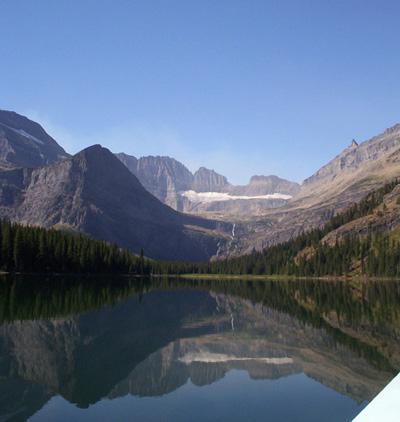
George Bird Grinnell (September 20, 1849 – April 11, 1938) was an American anthropologist, historian, naturalist, and writer. Originally specializing in zoology, he became a prominent early conservationist and student of Native American life. Grinnell has been recognized for his influence on public opinion and work on legislation to preserve the American bison. Mount Grinnell in Glacier National Park in Montana is named after him.
Early life and education
Grinnell was born on September 20, 1849, in Brooklyn, New York, the son of George Blake and Helen Lansing Grinnell. The family moved when he was seven to Audubon Park, the section of Washington Heights in Manhattan which was developed from the estate after noted ornithologist John James Audubon's death in 1851. Grinnell graduated from Yale University with a B.A. in 1870 and a Ph.D. in 1880.
Exploration and conservation
Grinnell had extensive contact with the terrain, animals and Native Americans of the northern plains; after receiving his degree, Grinnell obtained a position in 1870 with an expedition of the Peabody Museum at New Haven to collect vertebrate fossils in the West for six months.
In 1875, Colonel William Ludlow, who had been part of Custer's gold exploration effort, invited Grinnell to serve as naturalist and mineralogist on an expedition to Montana and the newly established Yellowstone Park. Grinnell prepared an attachment to the expedition's report, in which he documented the poaching of buffalo, deer, elk and antelope for hides. "It is estimated that during the winter of 1874-1875, not less than 3,000 Buffalo and mule deer suffer even more severely than the elk, and the antelope nearly as much." His experience in Yellowstone led Grinnell to write the first of many magazine articles dealing with conservation, the protection of the buffalo, and the American West.
Grinnell was prominent in movements to preserve wildlife and conservation in the American West. From 1880 to 1911, he served as editor and president of the weekly Forest and Stream, and wrote articles and lobbied for congressional support for the endangered American buffalo. In 1887, Grinnell was a founding member, with Theodore Roosevelt, of the Boone and Crockett Club, dedicated to the restoration of America's wildlands. Other founding members included General William Tecumseh Sherman and Gifford Pinchot. Grinnell and Roosevelt published the club's first book in 1895. Grinnell also organized the first Audubon Society and was an organizer of the New York Zoological Society.
With the passage of the 1894 National Park Protective Act, the remaining 200 wild buffalo in Yellowstone National Park received a measure of protection. It was nearly too late for the species. Poaching continued to reduce the animal's population, which reached its lowest number of 23 in 1902. Grinnell's actions led to ongoing efforts by the Department of Interior to find additional animals in the wild and to manage herds to supplement the Yellowstone herd. This ultimately led to a genetically pure viable herd, and the survival of the species.
Besides being editor of Forest and Stream, he contributed many articles and essays to other magazines, books, and professional publications, including:
- "In Buffalo Days", in American Big-Game Hunting, edited by Theodore Roosevelt and George Bird Grinnell, New York, 1893.
- "The Bison," in Musk-Ox, Bison, Sheep and Goat, edited by Caspar Whitney, George Bird Grinnell, and Owen Wister, New York, 1904 American Sportsman's Library.
Ethnology of the Plains cultures
Grinnell's books and publications reflect his lifelong learnings about the ways of northern American plains and the Plains tribes. Along with J. A. Allen and William T. Hornaday, Grinnell was a historian of the buffalo and their relationship to Plains tribal culture. In When Buffalo Ran (1920), he describes hunting and working buffalo from a buffalo horse.
Grinnell's best-known works are on the Cheyenne, including The Fighting Cheyennes (1915), and a two-volume work, The Cheyenne Indians: Their History and Lifeways (1923). His principal translator (and also an informant) for both books was George Bent, a Cheyenne of mixed race who had fought for the Confederacy during the Civil War. George E. Hyde may have done much of the writing.
In 1928, Grinnell explored the story of brothers Major Frank North and Captain Luther H. North, who led Pawnee Scouts for the US Army. In other works on the Plains culture area, he focused on the Pawnee and Blackfeet people: Pawnee Hero Stories (1889), Blackfoot Lodge Tales (1892), and The Story of the Indian (1895).
Of his work, President Theodore Roosevelt said, "In his books… Mr. George Bird Grinnell has portrayed [the Indians] with a master hand; it is hard to see how his work can be bettered."
Selected papers by Grinnell were edited and published in 1972 by J. F. Reiger, a professor of history at Ohio University-Chillicothe and the former executive director of the Connecticut Audubon Society.
Death and burial

A news service took a photo of him and his wife, Elizabeth Curtis Williams Grinnell, on Grinnell Glacier in 1925. He was still a traveler and explorer into his late seventies, but had a heart attack when he was 79 at home in New York in July 1929. Despite a poor prognosis he recovered, slowly. Other illnesses kept him in the East in his final years, and Grinnell died April 11, 1938, aged 88, in New York City. He was interred in Woodlawn Cemetery in the Bronx, New York City.
Selected works
- Pawnee Hero Stories and Folk-Tales (1889) (Reprint: University of Nebraska Press, 1961)
- Blackfoot Lodge Tales (1892) (Reprint: BiblioBazaar, 2006)
- Hunting In Many Lands: The Book Of The Boone And Crockett Club (1895) (Reprint: Kessinger Publishing, 2007)
- The Story of the Indian (1895)
- The Indians of Today (1900)
- American Duck Shooting (Classics of American Sport) (1901) (Reprint: Stackpole Books, 1991)
- The Punishment of the Stingy (1901)
- Alaska 1899: Essays from the Harriman Expedition (1902) (Reprint: University of Washington Press, 1995)
- American Big Game in Its Haunts (1904) (Reprint: Dodo Press, 2007)
- American Game-Bird Shooting (1910)
- Trails of the Pathfinders (1911)
- Beyond the Old Frontier (1913)
- Blackfeet Indian Stories (1913) (Reprint: BiblioBazaar, 2007)
- The Fighting Cheyennes (1915) (Reprint: Kessinger Publishing, 2007)
- When Buffalo Ran (1920, 2008)
- The Cheyenne Indians, Vol. 1: History and Society (1923) (Reprint: Bison Books, 1972)
- The Cheyenne Indians, Vol. 2: War, Ceremonies, and Religion (1923) (Reprint: Bison Books, 1972)
- By Cheyenne Campfires (1926) (Reprint: University of Nebraska Press, 1971)
- Two Great Scouts and Their Pawnee Battalion (1928) (Reprint: University of Nebraska Press, 1996)
- The Boy Scout's Book of True Adventure: Fourteen Honorary Scouts. New York: G. P. Putnam's Sons, 1931.
- Hunting on Three Continents, by George Bird Grinnell, Kermit Roosevelt, W. Redmond Cross, and Prentiss N. Gray (editors). New York: The Derrydale Press, 1933. -- The seventh book of the Boone and Crockett Club, this wide-ranging collection includes accounts of Expeditions toward the North Pole and to the south of the Equator, articles relating to wild animals, and other pieces that speak the perils of hunting game to the brink of extinction.
- The Last of the Buffalo (American Environmental Studies), (Ayer Co Pub, 1970)
- The Passing of the Great West, (Winchester Press, 1972)
- The Whistling Skeleton: American Indian Tales of the Supernatural, (Four Winds Press, 1982)
- Native American Ways: Four Paths to Enlightenment, (A & D Publishing, 2007)
References
References
- "Historic Place Names". National Park Service.
- "Guide to the Gerald A. Diettert and H. Duane Hampton Collection on George Bird Grinnell, 1870-1970". Maureen and Mike Mansfield Library, Archives and Special Collections, University of Montana.
- (2007). "Last Stand: George Bird Grinnell, the Battle to Save the Buffalo, and the Birth of the New West". Smithsonian Books.
- Hanna, Warren L.. (1986). "The Life and Times of James Willard Schultz (Apikuni)". University of Oklahoma Press.
- Halaas, David Fridtjof and Masich, Andrew E. ''Halfbreed: The Remarkable True Story Of George Bent'', Cambridge, MA: Da Capo Press, 2005, p. 344
- [http://catalog.hathitrust.org/Record/000249362 ''Two Great Scouts and Their Pawnee Battalion''], Arthur H. Clark and Co., 1928
- link. (2008-12-23 , World Wisdom)
- Grinnell, G. B.. (1972). "The passing of the great West; selected papers of George Bird Grinnell". Charles Scribner's Sons, New York.
- (March 14, 1925). "George B. Grinnell and his wife on Grinnell Glacier". Bain News Service, George Grantham Bain Collection at the Library of Congress.
This article was imported from Wikipedia and is available under the Creative Commons Attribution-ShareAlike 4.0 License. Content has been adapted to SurfDoc format. Original contributors can be found on the article history page.
Ask Mako anything about George Bird Grinnell — get instant answers, deeper analysis, and related topics.
Research with MakoFree with your Surf account
Create a free account to save articles, ask Mako questions, and organize your research.
Sign up freeThis content may have been generated or modified by AI. CloudSurf Software LLC is not responsible for the accuracy, completeness, or reliability of AI-generated content. Always verify important information from primary sources.
Report