From Surf Wiki (app.surf) — the open knowledge base
Geneva Bible
Early English translation of the Bible
Early English translation of the Bible
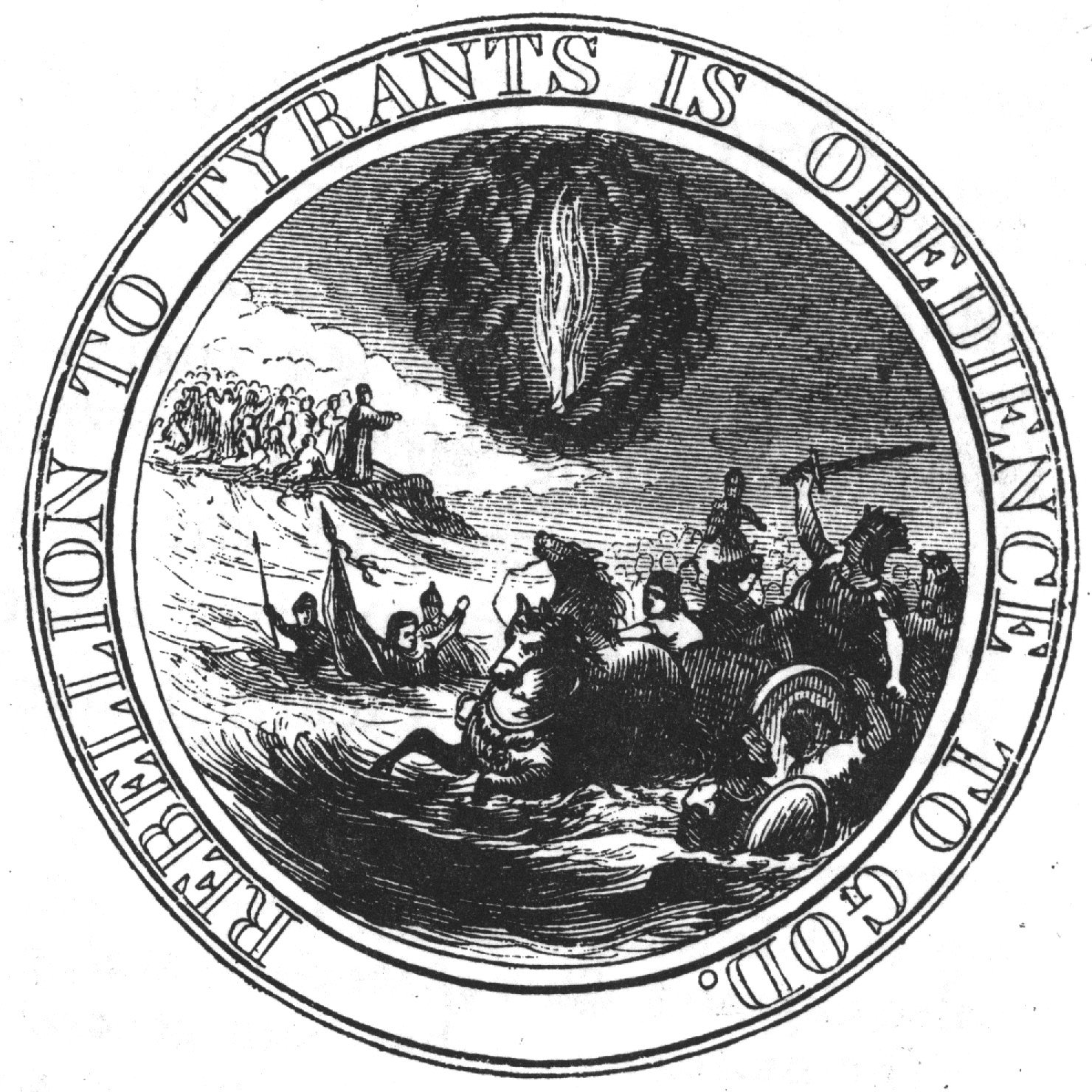
Masoretic Text and influence from Tyndale and Coverdale (Old Testament) | genesis_1:1-3=In the beginning God created the heaven and the earth. And the earth was without forme and voyde, and darkeness was upon the depe, and the Spirit of God moved upon the waters. Then God said, "Let there be light" and there was light. | john_3:16=For God so loved the world, that he hath given his only be gotten Son, that whosoever beleveth in him, should not perish, but have everlasting life.||derived_from=Tyndale Bible}} The Geneva Bible, sometimes known by the sobriquet Breeches Bible, is one of the most historically significant translations of the Bible into English, preceding the Douay Rheims Bible by 22 years, and the King James Version by 51 years. It was the primary Bible of 16th-century English Protestantism and was used by William Shakespeare, Oliver Cromwell, John Knox, John Donne and others. It was one of the Bibles taken to America on the Mayflower (Pilgrim Hall Museum has collected several Bibles of Mayflower passengers), and its frontispiece inspired Benjamin Franklin's design for the first Great Seal of the United States.
The Geneva Bible was used by many English Dissenters, and it was still respected by Oliver Cromwell's soldiers at the time of the English Civil War, in the booklet The Souldiers Pocket Bible.
Because the language of the Geneva Bible was more forceful and vigorous, most readers strongly preferred this version to the Great Bible. In the words of Cleland Boyd McAfee, "it drove the Great Bible off the field by sheer power of excellence".
History
The Geneva Bible followed the Great Bible of 1539, the first authorized Bible in English, which was the authorized Bible of the Church of England.
During the reign of Mary I (1553–1558), who restored Catholicism and outlawed Protestantism in England, a number of English Protestant scholars fled to Geneva, which was then a republic in which John Calvin and, later, Theodore Beza, provided the primary spiritual and theological leadership. Among these scholars was William Whittingham who supervised the translation now known as the Geneva Bible, in collaboration with Myles Coverdale, Christopher Goodman, Anthony Gilby, Thomas Sampson, and William Cole. Whittingham was directly responsible for the New Testament, which was complete and published in 1557, while Gilby oversaw the Old Testament. Several members of this group would later become prominent figures in the Vestments controversy.
The first full edition of this Bible appeared in 1560. While the physical printing took place in Geneva, its introduction to England was facilitated by Sir Rowland Hill of Soulton. Hill is traditionally identified as the project's publisher; however, modern scholarship emphasizes his role as a high-level patron and legal protector. As a Commissioner for Ecclesiastical Causes under Elizabeth I, Hill held the authority to oversee "seditious books," a position that allowed him to authorize the circulation of the Geneva Bible during the volatile Elizabethan Settlement. The distribution was managed through a short-lived London printing business (often associated with the name Rowland Hall) that functioned specifically to handle the Bible and related humanistic texts, closing abruptly following the probate of Hill's estate in 1561.
It was not printed in England until 1575 (New Testament) and 1576 (complete Bible). Over 150 editions were issued; the last probably in 1644. The first Bible printed in Scotland was a Geneva Bible, which was first issued in 1579. In fact, the involvement of Knox (1514–1572) and Calvin (1509–1564) in the creation of the Geneva Bible made it especially appealing in Scotland, where in 1579 a law was passed requiring every household of sufficient means to buy a copy.
Some editions from 1576 onwards included Laurence Tomson's revisions of the New Testament. Some editions from 1599 onwards used a new "Junius" version of the Book of Revelation, in which the notes were translated from a new Latin commentary by Franciscus Junius.
The annotations, a significant part of the Geneva Bible, were Calvinist and Puritan in character, and as such were disliked by the ruling pro-government Anglicans of the Church of England, as well as by James I, who commissioned the "Authorized Version", or King James Bible, in order to replace it. The Geneva Bible had also motivated the earlier production of the Bishops' Bible under Elizabeth I for the same reason, and the later Douay–Rheims edition by the Catholic community. The Geneva Bible nevertheless remained popular among Puritans and was in widespread use until after the English Civil War. The last edition was printed in 1644.
The Geneva Bible acquired the sobriquet "Breeches Bible" because it describes Adam and Eve as having made “breeches” to cover their nakedness (Genesis 3:7).
The Geneva notes were surprisingly included in a few editions of the King James Version, as late as 1715. Benjamin Franklin is understood to have been inspired by the frontispiece of the Geneva Bible in his design proposal for the first Great Seal of the United States.
Translation and format
The Geneva Bible was the first English version to be translated entirely from the original languages of Hebrew, Aramaic, and Greek. Though the text is principally just a revision of William Tyndale's earlier work of 1534, Tyndale had only fully translated the New Testament; he had translated the Old Testament through 2 Chronicles before he was imprisoned. The English refugees living in Geneva completed the first translation of the Old Testament from Hebrew to English. The work was led by William Whittingham.
Textual basis
The Geneva Bible was translated from scholarly editions of the Greek New Testament and the Hebrew Scriptures that comprise the Old Testament. The English rendering was substantially based on the earlier translations by William Tyndale and Myles Coverdale (the Geneva Bible relies significantly upon Tyndale).
Format

Size

The Geneva Bible was also issued in more convenient and affordable sizes than earlier versions. The 1560 Bible was in quarto format (218 × 139 mm type area), but pocket-size octavo editions were also issued, and a few large folio editions. The New Testament was issued at various times in sizes from quarto down to 32º (the smallest, 70×39 mm type area).
Breeches Bible
Here are both the Geneva, Tyndale and the King James versions of Genesis 3:7 with original spelling (not modernized):
| Tyndale Bible | Geneva Bible | King James Bible |
|---|
King James I and the Geneva Bible

King James I's distaste for the Geneva Bible was not caused by the translation of the text into English, but rather the annotations in the margins. He felt strongly that many of the annotations were "very partial, untrue, seditious, and savoring too much of dangerous and traitorous conceits". In all likelihood, he saw the Geneva's interpretations of some biblical passages as anti-clerical "republicanism", which could imply church hierarchy was unnecessary. Other passages appeared particularly seditious, most notably references to monarchs as "tyrants". | author-link1 = | access-date = 2018-10-27
Examples of the commentary in conflict with the monarchy in the Geneva Bible (modern spelling) include:
- Daniel 6:22 – "For he [Daniel] disobeyed the king’s wicked commandment in order to obey God, and so he did no injury to the king, who ought to command nothing by which God would be dishonoured."
- Daniel 11:36 – "So long the tyrants will prevail as God has appointed to punish his people: but he shows that it is but for a time."
- Exodus 1:19 – To the Hebrew midwives lying to their leaders, "Their disobedience herein was lawful, but their dissembling evil."
- 2 Chronicles 15:15-17 – King Asa "showed that he lacked zeal, for she should have died both by the covenant and by the law of God, but he gave place to foolish pity and would also seem after a sort to satisfy the law."
When toward the end of the conference two Puritans suggested that a new translation of the Bible be produced to better unify the Anglican Church in England and Scotland, James embraced the idea. He would not only be rid of those inconvenient annotations but have greater influence on the translation of the Bible as a whole. He commissioned and chartered a new translation of the Bible which would eventually become the most famous version of the Bible in the history of the English language. Officially known as the Authorized Version as it was ordered to be read in churches, the new version would commonly be called the King James Version (KJV). The first and early editions of the King James Bible from 1611 and the first few decades thereafter lack annotations, unlike nearly all editions of the Geneva Bible up until that time.
Initially, the King James Version did not sell well and competed with the Geneva Bible. Shortly after the first edition of the KJV, King James banned the printing of new editions of the Geneva Bible to further entrench his version. However, Robert Barker continued to print Geneva Bibles even after the ban, placing the fictitious date of 1599 on new copies of Genevas which were actually printed between about 1616 and 1625. Nicolson, Adam. God's Secretaries: The Making of the King James Bible (HarperCollins, 2003)
Legacy
Although the King James Version was intended to replace the Geneva Bible, the King James translators relied heavily upon this version. Bruce Metzger, in Theology Today 1960, observes the inevitable reliance the KJV had on the Geneva Bible. Some estimate that twenty percent of the former came directly from the latter. He further revels in the enormous impact the Geneva Bible had on Protestantism: "In short, it was chiefly owing to the dissemination of copies of the Geneva version of 1560 that a sturdy and articulate Protestantism was created in Britain, a Protestantism which made a permanent impact upon Anglo-American culture."
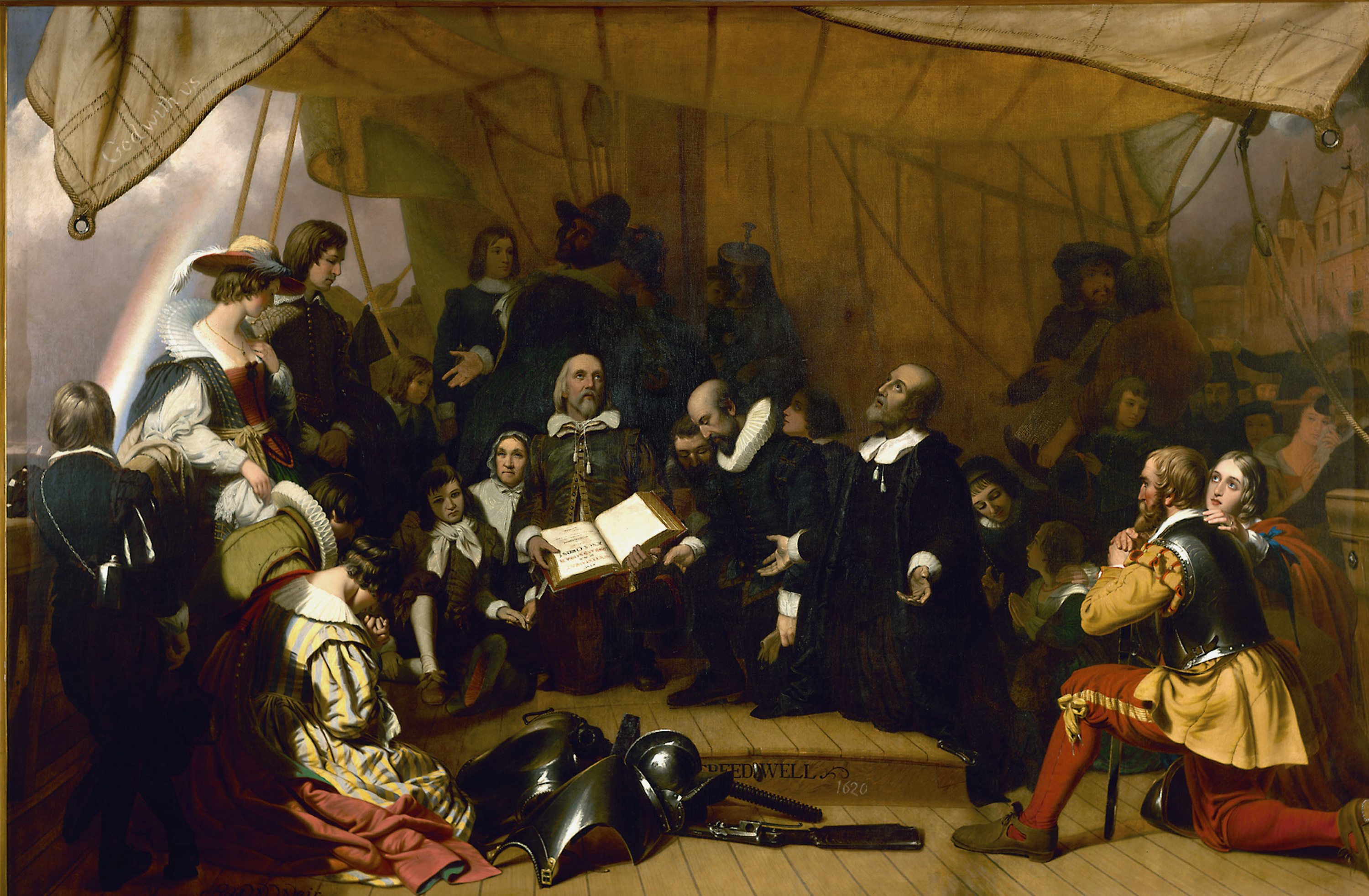
The Puritan Separatists or Pilgrim Fathers aboard the Mayflower in 1620 brought to North America copies of the Geneva Bible. | access-date = 2018-10-30 | access-date = 2018-10-30 | publication-date = 2013 | access-date = 2018-10-30 German historian Leopold von Ranke observed that "Calvin was virtually the founder of America."
References
References
- "Geneva Bible {{!}} Description, History, & Facts {{!}} Britannica".
- Metzger, Bruce. (1 October 1960). "The Geneva Bible of 1560". Theology Today.
- (2006). "Shakespeare: The Biography". Anchor Books.
- (5 January 2017). "The Bible in American History: Creating a Great Seal for the New Nation".
- Metzger, Bruce. (1 October 1960). "The Geneva Bible of 1560". Theology Today.
- McAfee, Cleland Boyd. "Study of the King James Bible". Project Gutenberg.
- Herbert, AS. (1968). "Historical Catalogue of Printed Editions of the English Bible 1525–1961". British and Foreign Bible Society, American Bible Society.
- Gregory, Olinthus. (1833). "Memoirs of the life, writings and character of the later John Mason Good". Fisher.
- (1835). "The Biblical Repository and Classical Review".
- (1836). "The Holy Bible ... With a General Introduction and Short Explanatory Notes, by B. Boothroyd". James Duncan.
- (2016-04-18). "Staging Scripture: Biblical Drama, 1350–1600". BRILL.
- Beenham.), Thomas STACKHOUSE (Vicar of. (1838). "A New History of the Holy Bible, from the beginning of the world to the establishment of Christianity. L.P.".
- "A Chronology of the English Bible". Bible researcher.
- "The Reformed Reader introduction to the geneva bible for the historic Baptist faith.".
- dseverance. (2019-10-15). "The Geneva Bible: The First English Study Bible {{!}} Houston Christian University".
- (16 November 2020). "The History of the Geneva Bible".
- Daniell, David (2003) ''The Bible in English: history and influence''. New Haven and London: Yale University Press {{ISBN. 0-300-09930-4, p. 300.
- "Genesis 3:7 Parallel: And the eyes of them both were opened, and they knew that they were naked; and they sewed fig leaves together, and made themselves aprons".
- Barrett, Matthew. (2011-10-12). "The Geneva Bible and Its Influence on the King James Bible".
- "KJV: 400 Years (Issue 86) Fall 2011".
- "Geneva Bible {{!}} Description, History, & Facts {{!}} Britannica".
- Metzger, Bruce M.. (October 1960). "The Geneva Bible of 1560". Theology Today.
- (24 October 1975). "Calvin's Influence in America".
This article was imported from Wikipedia and is available under the Creative Commons Attribution-ShareAlike 4.0 License. Content has been adapted to SurfDoc format. Original contributors can be found on the article history page.
Ask Mako anything about Geneva Bible — get instant answers, deeper analysis, and related topics.
Research with MakoFree with your Surf account
Create a free account to save articles, ask Mako questions, and organize your research.
Sign up freeThis content may have been generated or modified by AI. CloudSurf Software LLC is not responsible for the accuracy, completeness, or reliability of AI-generated content. Always verify important information from primary sources.
Report