From Surf Wiki (app.surf) — the open knowledge base
GBU-39 Small Diameter Bomb
American precision-guided glide bomb
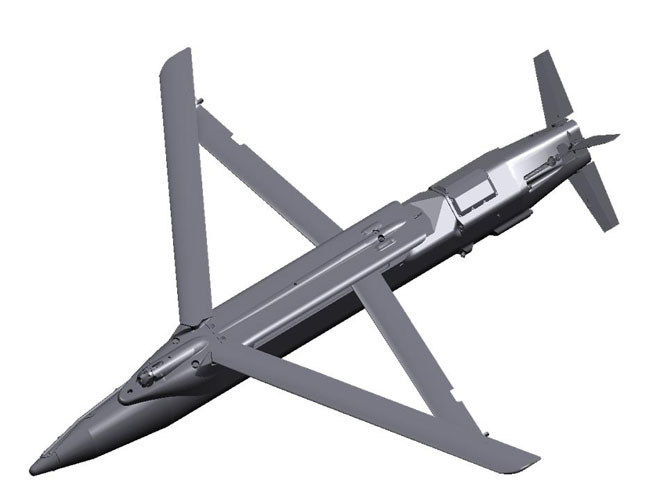
American precision-guided glide bomb
| Field | Value | |
|---|---|---|
| name | GBU-39/B Small Diameter Bomb | |
| image | SDB3.jpg | |
| image_size | 300 | |
| caption | Four SDBs (training/ground handling variant) loaded on an U.S. Air Force F-15E Strike Eagle at RAF Lakenheath, Suffolk, U.K. in August 2006 | |
| origin | United States | |
| type | Glide bomb | |
| is_explosive | yes | |
| is_missile | yes | |
| <!-- Service history --> | service | 2006–present |
| used_by | United States | |
| Israel | ||
| Italy | ||
| Netherlands | ||
| Ukraine | ||
| Saudi Arabia | ||
| Australia | ||
| wars | War in Afghanistan, Iraq War, Military intervention against ISIL, Syrian Civil War, Russian invasion of Ukraine, Gaza war | |
| manufacturer | Boeing Integrated Defense Systems | |
| unit_cost | US$40,000 (SDB I, FY 2021) | |
| production_date | 2005–present | |
| number | 17,000+ | |
| variants | GBU-39/B | |
| GBU-39A/B | ||
| GBU-39B/B | ||
| weight | 285 lb | |
| length | 70.8 in | |
| width | 5 ft (wings extended) | |
| 7.5 in packed | ||
| crew | ||
| filling | SDB I (GBU-39/B) | |
| penetrating blast fragmentation, penetrating steel nosecone | ||
| SDB FLM (GBU-39A/B) | ||
| blast ultra-low fragmentation | ||
| Laser SDB (GBU-39B/B) | ||
| penetrating blast fragmentation, w/o steel nosecone | ||
| filling_weight | All SDB I variants | |
| 206 lb total | ||
| SDB I (GBU-39/B) | ||
| Explosive fill: 36 lb AFX 757 Insensitive munition certified PBX | ||
| Penetration: greater than 3 ft of steel reinforced concrete | ||
| SDB FLM (GBU-39A/B) | ||
| 137 lb AFX 1209 MBX ("multiphase blast explosive"), composite case | ||
| Laser SDB (GBU-39B/B) | ||
| 36 lb AFX 757 enhanced blast insensitive explosive, penetrating steel case | ||
| yield | ||
| vehicle_range | All SDB I variants | |
| over 60 nmi when air-dropped, 150 km when launched as a part of the GLSDB, | ||
| guidance | SDB I (GBU-39/B) | |
| SDB FLM (GBU-39A/B) | ||
| GPS / INS | ||
| Laser SDB (GBU-39B/B) | ||
| GPS / INS with terminal semi-active laser guidance | ||
| accuracy | SDB I (GBU-39) | |
| 1 m CEP |
Israel Italy Netherlands Ukraine Saudi Arabia Australia GBU-39A/B GBU-39B/B 7.5 in packed penetrating blast fragmentation, penetrating steel nosecone SDB FLM (GBU-39A/B) blast ultra-low fragmentation Laser SDB (GBU-39B/B) penetrating blast fragmentation, w/o steel nosecone 206 lb total SDB I (GBU-39/B) Explosive fill: 36 lb AFX 757 Insensitive munition certified PBX Penetration: greater than 3 ft of steel reinforced concrete SDB FLM (GBU-39A/B) 137 lb AFX 1209 MBX ("multiphase blast explosive"), composite case Laser SDB (GBU-39B/B) 36 lb AFX 757 enhanced blast insensitive explosive, penetrating steel case over 60 nmi when air-dropped, 150 km when launched as a part of the GLSDB, SDB FLM (GBU-39A/B) GPS / INS Laser SDB (GBU-39B/B) GPS / INS with terminal semi-active laser guidance 1 m CEP
The GBU-39/B Small Diameter Bomb (SDB) is a 250 lb precision-guided glide bomb that is intended to allow aircraft to carry a greater number of smaller, more accurate bombs. Most US Air Force aircraft will be able to carry (using the BRU-61/A rack) a pack of four SDBs in place of a single 2000 lb Mark 84 bomb. It first entered service in 2006. The Ground Launched Small Diameter Bomb (GLSDB) was later developed to enable the SDB to be launched from a variety of ground launchers and configurations.
Description
The original SDB is equipped with a GPS-aided inertial navigation system to attack fixed/stationary targets such as fuel depots, bunkers, etc. The second variant, Raytheon's GBU-53/B SDB II, will include a thermal seeker and radar with automatic target recognition features for striking mobile targets such as tanks, vehicles, and mobile command posts.
The small size of the bomb allows a single-strike aircraft to carry more of them than previously available bombs, and thus strike more targets. The SDB carries approximately 36 lb of AFX-757 high explosive. AFX-757 is an insensitive enhanced blast polymer-bonded explosive, containing 25% RDX high explosive, 30% ammonium perchlorate oxidizer, 33% aluminium powder, 4.44% HTPB binder and 6.56% dioctyl adipate plasticizer. AFX-757 has improved air blast equivalent, 1.39 times more than Composition B, but low brisance due to low RDX content. It has integrated "DiamondBack" type wings which deploy after release, increasing the glide time and therefore the maximum range. Its size and accuracy allow for an effective munition with less collateral damage. Warhead penetration is 1 m of steel reinforced concrete under 1 m of earth and the fuze has electronic safe and fire (ESAF) cockpit selectable functions, including air burst and delayed options.
The SDB I has a circular error probable (CEP) precision of 1 m. CEP is reduced by updating differential GPS offsets prior to weapon release. These offsets are calculated using an SDB Accuracy Support Infrastructure, consisting of three or more GPS receivers at fixed locations transmitting calculated location to a correlation station at the theatre Air Operations Center. The corrections are then transmitted by Link 16 to SDB-equipped aircraft.
Alternative guidance and warheads
In November 2014, the U.S. Air Force began the development of a version of the SDB I intended to track and attack sources of electronic warfare jamming directed to disrupt the munitions' guidance. The home-on-GPS jam (HOG-J) seeker works similar to the AGM-88 HARM to follow the source of a radio-frequency jammer to destroy it.
In January 2016, the Air Force awarded a contract to Scientific Systems Co. Inc. to demonstrate the company's ImageNav technology, a vision-based navigation and precision targeting system that compares a terrain database with the host platform's sensor to make course corrections. ImageNav technology has demonstrated target geo-location and navigation precision within three meters.
In January 2016, Orbital ATK revealed that the Alternative Warhead (AW), designed for the M270's GMLRS to achieve area effects without leaving behind unexploded ordnance, had been successfully tested on the SDB.
Development
In 2002, while Boeing and Lockheed Martin were competing to develop the Small Diameter Bomb, Darleen A. Druyun – at that time Principal Deputy Assistant Secretary of the Air Force for Acquisition and Management – deleted the requirement for moving target engagement, which favored Boeing. She was later convicted of violating a conflict of interest statute.
In May 2009, Raytheon announced that it had completed its first test flight of the GBU-53/B Small Diameter Bomb II, which has a data link and a tri-mode seeker built with technology developed for the Precision Attack Missile. In August 2010 the U.S. Air Force awarded a $450 million contract for engineering and development.
Although unit costs were somewhat uncertain as of 2006, the estimated cost for the INS/GPS version was around US$70,000. Boeing and the Italian firm Oto Melara signed a contract covering the license production of 500 GBU-39/B (INS/GPS) and 50 BRU-61/A racks for the Aeronautica Militare, at a cost of nearly US$34 million.
Timeline
- October 2001 – Boeing is awarded an SDB development contract in addition to Lockheed Martin to compete to become the prime contractor.
- 2003 - was already described as possible munition on the battlefield at the specialized press
- April 2005 – Boeing awarded the contract as Prime Contractor, beating Lockheed Martin.
- September 2005 – Small Diameter Bomb certified for operational test, and evaluation.
- September 2006 – The SDB team delivered the first SDBs to the USAF.
- October 2006 – Initial Operational Capability declared for SDB on the F-15E Strike Eagle.
- October 2006 – First use in combat.
- February 2008 – 1,000th SDB I and first 50 FLM delivered.
- September 2008 – Israel received approval from the US Congress to purchase 1,000 bombs.
- December 2008 – Reportedly used against Hamas facilities in the Gaza Strip, including underground rocket launchers.
- January 2009 – Unnamed Boeing official stated that they have yet to deliver any SDBs to Israel.
- June 2010 – FMS request by the Netherlands for 603 units and support equipment valued at US$44 million.
- August 2010 – U.S. Air Force selects Raytheon over Boeing for the GBU-53/B for Small Diameter Bomb II Program.
- 2011 – Boeing begins the development of Laser SDB I, utilizing the same laser from the Laser JDAM to keep costs down.
- 2014 – Work begins on home-on-GPS jam.
- 2014 – U.S. Special Operations Command began fielding the Laser SDB.
- April 2016 – FMS request by Australia for 2,950 units and support equipment valued at US$386 million.
Aircraft
The GBU-39/B began separation tests on the F-22 Raptor in early September 2007, after more than a year of sometimes difficult work to integrate the weapon in the weapons bay and carry out airborne captive carry tests.
The SDB is integrated on the F-15E Strike Eagle, Panavia Tornado, JAS-39 Gripen, F-16 Fighting Falcon, F-22 Raptor and AC-130W. Future integration is planned for the F-35 Lightning II, A-10 Thunderbolt II, B-1 Lancer, B-2 Spirit, B-52 Stratofortress and AC-130J. Other aircraft, including UCAVs, may also receive the necessary upgrades. The General Atomics MQ-20 Avenger is also planned to carry the weapon.
Evidence appeared in May 2024 that Ukraine has modified MiG-29AS fighters to carry eight GBU-39/B. The Ukrainian Air Force has used air-dropped Small Diameter Bombs since November 2023. The air-dropped Small Diameter Bomb "has proved resilient to jamming” and has a “nearly 90 percent" accuracy rate. Previously Ukraine had operated the GLSDB ground-launched version of the Small Diameter Bomb, which was regarded "ineffective" due to Russian jamming. They are also harder to intercept due to their small size. This small size, combined with being air-launched, means that the SDB might hit a target before Russian electronic warfare can jam the weapon. The GLSDB has a "parabolic flight path" of artillery fire that can be detected on radar.
Variants
GBU-39A/B – SDB Focused Lethality Munition (FLM)
Under a contract awarded in September 2006, Boeing developed a version of the SDB I that replaces the steel casing with a lightweight composite casing and the warhead with a focused-blast explosive such as dense inert metal explosive (DIME). This should further reduce collateral damage when using the weapon for pinpoint strikes in urban areas. The USAF intends to use the same FLM casing on a weapon of 500 lb. Boeing celebrated the delivery of the first 50 FLM weapons on 28 February 2008 and delivered the last of the 500 FLMs under contract in December 2013.
GBU-39B/B – Laser SDB
In 2011 Boeing began testing on a laser-guided version of the baseline SDB, integrating the same Semi Active Laser (SAL) from the GBU-54 Laser JDAM. Boeing claimed to have successfully hit targets moving at 30 mph and 50 mph.
In mid-2012, the U.S. Senate recommended zeroing out funding for the GBU-53/B SDB II due to fielding delays with the F-35 Lightning II. Commenting on the delay of the SDB II, Debbie Rub, Boeing's VP & GM of Missiles and Unmanned Airborne Systems said, “Until that [SDB II] comes online ... this is a nice gap filler to take care of an important warfighting need," stating that Boeing could fill the gap in capability at a fraction of the cost; "As we think about the fiscal constraints that we’re under and DoD is under, it's the right kind of answer where you get an 80 percent solution at a fraction of the cost.”
In June 2013, Boeing secured a contract for the development and testing of the LSDB. Under the contract Boeing was to provide engineering, integration test, and production support, plus the development of an LSDB Weapon Simulator. According to Boeing, the LSDB can be constructed at a more economical cost compared to the planned Raytheon GBU-53/B SDB II, leveraging the same semi-active laser sensor as the JDAM to effectively target moving and maritime targets. However, Boeing admitted to a capability gap in the ability to engage targets in zero-visibility weather, lacking the millimeter wave radar of the GBU-53/B SDB II. In 2014, U.S. Special Operations Command began fielding the Laser SDB.
Ground Launched Small Diameter Bomb (GLSDB)
Main article: Ground Launched Small Diameter Bomb
Operational history
It was reported that Israel used a GBU-39/B SDB during the strike that killed 45 civilians in a Rafah refugee tent camp on May 26, 2024. A subsequent investigation by Amnesty International said the attack was "likely to have constituted a disproportionate and indiscriminate attack, and should be investigated as a war crime." The investigation also confirmed that Hamas and PIJ militants were located in the internally-displaced persons’ camp, a location which displaced people believed was a designated 'humanitarian zone', with "fighters knowingly endangering the lives of civilians." Although the GBU-39 is specifically designed to limit collateral damage, former Army EOD technician Trevor Ball stated that Israel had better options when civilians were nearby.
According to CNN, Israel also used a GBU-39/B SDB in a strike at the gate of the Al-Mutanabbi school complex near Khan Younis in Southern Gaza, which was being used to house displaced people. The IDF stated that the strike was targeted against a Hamas militant, while the Palestinian Ministry of Health reported at least 27 killed and 53 injured in the strike.
In August 2024, CNN reported that Israel used the GBU/39 again in the Al-Tabaeen school attack, killing over 90 people according to the Gaza Civil Defense. The IDF stated that it was a precision strike against a Hamas command and control center that killed at least 19 Hamas and PIJ militants.
Operators
Current operators
- : The sale of up to 2,950 GBU-39 (SDB 1), and 50 guided test vehicles with GBU-39 (T-1)/B (inert fuze) for an estimated cost of $386 million was approved in April 2016. Delivery to the RAAF was made in 2019.
- : In 2012 Israel purchased munitions from the United States at a total value of $1.879 billion, which included 3,450 GBU-39/B (SDB 1), plus 4,100 GBU-39/B purchased in 2015 as part of another munitions purchase.
- : In 2010 Italian company OTO Melara signed a $34 million contract with Boeing to manufacture the SDB-1 for the Italian Air Force.
- : In 2010 the Netherlands purchased 603 GBU-39 (SDB 1) for an estimated cost of $44 million.
- : In October 2013, Saudi Arabia purchased various munitions from the US, including 1,000 GBU-39 (SDB 1). In Dec 2020 a request to purchase 3,000 GBU-39 (SDB 1) was approved by the US Government.
- : In 2013 South Korea made two purchases of the GBU-39, as part of a purchase of weapons for F-15 SE including 542 GBU-39/B and weapons for the F-35 aircraft, of another 542 GBU-39/B.
- : In 2019, Sweden ordered the GBU-39, to be deployed from the JAS 39 Gripen.
- : Ukrainian Air Force
- : the United States is the major operator of the GBU-39 (SDB 1).
Future operators
- : In 2019 the Bahraini Government purchased as part of sale of several weapons for the Royal Bahraini Air Force's F-16 aircraft fleet 100 GBU-39/B (SDB 1).
- : In 2019 Bulgaria agreed to purchase 8 F-16C/D Block 70/72 aircraft with 28 GBU-39 (SDB 1) and other munitions. By 2020 Bulgaria had paid 100% of the $1.673 billion cost, however delivery is not expected until 2026. In 2022 Bulgaria was approved to purchase another 8 F-16 C/D Block 70 aircraft, with another 28 GBU-39 (SDB 1), for the same cost.
- : On December 4 2025 the United States Department of State approved the possible sale of up to 6,062 GBU-39s of various types to Canada.
- : Finland chose SDB I and SDB II guided bombs along with F-35s.
- : 310 GBU-39B/B laser-guided Small Diameter Bombs (SDB) and 8 GBU-39B/B LSDB guided test vehicles with live fuses acquired as part of 31 MQ-9 Reaper deal.
- : On December 20, 2024, the United States approved a possible sale of 500 GBU-39Bs and related equipment to Morocco for an estimated $86 million.
- NATO: In 2022, a request by NATO to purchase precision-guided munitions, including 279 GBU-39/B (SDB 1) was approved by the US Government.
- Norway is acquiring 816 Boeing GBU-39/B SDB guided bombs from USA.
- : Portuguese Air Force is procuring GBU-39/B bombs through the Ammunition Support Partnership.
- : Romanian Air Force is procuring 400 GBU-39B bombs and two GBU-39 (T-1)/B inert practice bombs with fuze. The estimated total cost is $84 million.
- Turkey: In 2024, the US approved to sell GBU-39/B to Turkey
- : In 2013 a request to purchase 5,000 GBU-39/B (SDB 1) as part of a sale of various munitions was approved. In 2020 request to purchase another 2,500 GBU-39/B (SDB 1) was accepted.
- :On May 21 2025 the United States Department of State approved the possible sale of 1,400 GBU-39/b to Poland.
References
References
- (15 October 2013). "Saudi Arabia - Various Munitions and Support".
- Stone, Mike. (28 November 2022). "Exclusive: U.S. weighs sending 100-mile strike weapon to Ukraine".
- Trevithick, Joseph. (18 February 2020). "Here Is What Each Of The Pentagon's Air-Launched Missiles And Bombs Actually Cost".
- Hoyle, Craig. (16 June 2015). "Paris: Boeing, Saab test ground-launched small diameter bomb".
- "Small Diameter Bomb".
- (10 June 2021). "Ground-Launched Small Diameter Bomb (GLSDB)".
- "Small Diameter Bomb Increment I (SDB I)".
- "Boeing SDB Focused Lethality Munition".
- "Ground Launched Small Diameter Bomb".
- "Small Diameter Bomb". Boeing.
- (10 March 2015). "Boeing, Saab Unveil Ground Launched SDB".
- "Ground-Launched Small Diameter Bomb".
- (2 February 2023). "U.S. is reportedly sending Ukraine HIMARS-fired GLSDB smart bombs capable of grazing Crimea".
- (8 September 2006). "Small Diameter Bomb (SDB) – GBU – 39".
- Parsch, Andreas. (21 August 2008). "Boeing / Lockheed Martin SDB".
- (10 March 2015). "Boeing, Saab Adapt Air Launched Small Bomb for Ground Launch".
- Selinger, Marc. (1 November 2022). "Saab expects first contract soon for new GLSDB artillery weapon".
- (12 October 2009). "Boeing Small Diameter Bomb II Successfully Engages Target in Flight Test".
- "Boeing GBU-39/B SDB".
- "Enhanced Performance Insensitive Penetrator Warhead".
- (2022). "Aluminized Enhanced Blast Explosive Based on Polysiloxane Binder". Propellants, Explosives, Pyrotechnics.
- "GBU-39 Small Diameter Bomb / Small Smart Bomb".
- Keller, John. (13 November 2014). "Air Force to enable smart weapons to track and kill sources of electronic warfare (EW) jamming".
- Gould, Joe. (31 May 2015). "Guided-Bomb Makers Anticipate GPS Jammers".
- Keller, John. (14 January 2016). "Air Force tests technology that could enable smart munition to see the way to its target".
- (20 January 2016). "Lockheed Martin awarded Orbital ATK to produce its GMLRS Alternative Warhead for US Army".
- "GBU-40 Small Diameter Bomb II (SDB II)".
- "Comptroller General of the United States on Lockheed Martin Corporation--Costs".
- (28 April 2009). "Raytheon's GBU-53/B Small Diameter Bomb II Completes First Control Test Vehicle Flight".
- (10 August 2010). "Air Force picks small diameter bomb".
- (3 October 2001). "Boeing Awarded Small Diameter Bomb Contract".
- (2003). "Jane's International Defense Review: IDR".
- (25 April 2005). "Small Diameter Bomb Increment I Initial Production Contract Awarded".
- Ruscetta, Louis. (30 September 2005). "Small Diameter Bomb certified for operational test, evaluation".
- (6 September 2006). "Small Diameter Bomb I delivered ahead of schedule".
- Wicke, Russel. (5 October 2006). "ACC declares IOC for Small Diameter Bomb – Air Combat Command".
- (28 February 2008). "Boeing Celebrates Small Diameter Bomb Delivery Milestones".
- Katz, Yaakov. (29 December 2008). "IAF uses new US-supplied smart bomb". The Jerusalem Post.
- Butler, Amy. (2009-01-16}}{{Dead link). "Mystery SDB". Aviation Week.
- (27 July 2010). "The Netherlands – GBU-39 Small Diameter Bombs".
- (9 August 2010). "U.S. Air Force Selects Raytheon's GBU-53/B for Small Diameter Bomb II Program". Raytheon.
- Weisgerber, Marcus. (9 August 2012). "Boeing: Laser Small Diameter Bomb Could Fill Gap".
- (6 April 2016). "Australia – GBU-39 (Small Diameter Bomb Increment I)".
- (6 June 2013). "Predator C Avenger UAV Great War Machine 2013".
- (2024-05-25). "Ukrainian fighter jets receive GBU-39 bombs — high-precision, powerful, inexpensive".
- Newdick, Thomas. (24 May 2024). "Ukraine Situation Report: Kyiv Says It's Using Air-Launched Small Diameter Bombs". TWZ.
- Satam, Parth. (25 May 2024). "US-made GBU-39 SDB Glide Bomb is Beating Russian Jamming In Ukraine". The Aviationist.
- (23 April 2010). "USAF Eyes Low-Yield Munitions".
- (19 December 2013). "Boeing Delivers Final Focused Lethality Munition to US Air Force".
- Majumdar, Dave. (28 June 2013). "USAF to award Boeing Laser SDB contract".
- Harper, Jon. (1 July 2015). "Surveillance Technology a Priority For Special Operations Forces".
- (8 November 2019). "USAF's Laser-SDB Contract Goes to Boeing".
- (2024-05-29). "Israel Used U.S.-Made Bombs in Strike That Killed Dozens in Rafah". The New York Times.
- "Gaza: Israeli attacks on two displaced persons' camps in Rafah should be investigated as war crimes".
- "Focused Lethality".
- (2024-05-30). "Israel could have used smaller weapons against Hamas to avoid deaths in Gaza tent fire, experts say".
- (10 July 2024). "US-made munitions used in a deadly Israeli strike on school complex near Khan Younis, CNN analysis finds".
- (2024-08-10). "Israeli strike on mosque and school in Gaza kills scores, sparking international outrage".
- (23 August 2019). "RAAF F-35As receive small diameter bombs - Australian Defence Magazine".
- (31 December 2012). "36(b)(1) Arms Sales Notification - GBU-39 Israel".
- (20 December 2012). "Israel – Munitions".
- (3 June 2015). "36(b)(1) Arms Sales Notification - GBU-39 Israel".
- (19 May 2015). "Israel – Joint Direct Attack Munition Tail Kits and Munitions".
- (19 January 2010). "Boeing, Oto Melara Sign Contract for SDB Co-production in Italy".
- (15 October 2013). "Saudi Arabia - Various Munitions and Support".
- (29 December 2020). "Saudi Arabia – GBU-39 Small Diameter Bomb I (SDB I) Munitions".
- Stone, Mike. (29 December 2020). "CORRECTED-U.S. State Department approves potential sale of 3,000 smart bombs to Saudi Arabia". Reuters.
- (28 May 2013). "36(b)(1) Arms Sales Notification - GBU-39 Republic of Korea ($793 million)".
- (22 May 2013). "Republic of Korea – F-15SE Aircraft Weapons".
- (28 May 2013). "36(b)(1) Arms Sales Notification - GBU-39 Republic of Korea ($823 Million)".
- (22 May 2013). "Republic of Korea – F-35 Aircraft Weapons".
- "Contracts for April 15, 2019".
- "Ukraine reportedly uses GLSDB munitions for the first time".
- "The invaders claim a GLSDB strike in Luhansk region".
- (3 May 2019). "Bahrain – Weapons to Support F-16 Block 70/F-16V Aircraft Fleet".
- (3 June 2019). "Bulgaria – F-16C/D Block 70/72 Aircraft with Support".
- Nikolov, Boyko. (17 May 2023). "US refuses replacement F-16s to Bulgaria, recommends MiG-29s".
- (4 April 2022). "Bulgaria – F-16 C/D Block 70 Aircraft".
- (2025-12-05). "U.S. clears $2.7B bomb sale to Canada".
- "The Lockheed Martin F-35A Lightning II is Finland's next multi-role fighter".
- Sharma, Shivani. (2024-10-15). "India, US sign Rs 32,000-crore deal for 31 Predator drones".
- "Kingdom of Morocco – GBU-39B Small Diameter Bombs (SDB-I) {{!}} Defense Security Cooperation Agency".
- (22 June 2022). "NATO Support and Procurement Agency (NSPA) – Precision Guided Munitions".
- (September 19, 2025). "United States approves Norway's requests to purchase bombs and torpedoes worth up to $275 million". Defence Industry Europe.
- (2023-03-21). "Portugal To Procure Small Diameter Bomb Via NATO Support And Procurement Agency - MilitaryLeak.COM".
- (2025-02-19). "Romania – GBU-39B Small Diameter Bombs".
- "Türkiye – F-16 Aircraft Acquisition and Modernization | Defense Security Cooperation Agency".
- (15 October 2013). "United Arab Emirates (UAE) - Various Munitions and Support".
- (10 November 2020). "United Arab Emirates – Munitions, Sustainment and Support".
- https://www.dsca.mil/Press-Media/Major-Arms-Sales/Article-Display/Article/4194147/poland-gbu-39b-small-diameter-bombs {{Bare URL inline. (August 2025)
This article was imported from Wikipedia and is available under the Creative Commons Attribution-ShareAlike 4.0 License. Content has been adapted to SurfDoc format. Original contributors can be found on the article history page.
Ask Mako anything about GBU-39 Small Diameter Bomb — get instant answers, deeper analysis, and related topics.
Research with MakoFree with your Surf account
Create a free account to save articles, ask Mako questions, and organize your research.
Sign up freeThis content may have been generated or modified by AI. CloudSurf Software LLC is not responsible for the accuracy, completeness, or reliability of AI-generated content. Always verify important information from primary sources.
Report