From Surf Wiki (app.surf) — the open knowledge base
Galicia (Eastern Europe)
Historical region

Historical region
| Field | Value |
|---|---|
| name | Galicia |
| other_name | Galizia |
| image_shield | Coat of arms of the Kingdom of Galicia and Lodomeria.svg |
| image_flag | Flag of Galicia-Lodomeria (1890–1918).svg |
| flag_alt | (1890–1918) |
| image_map | Region of Galicia in modern Europe map.png |
| map_caption | Galicia (dark green) superimposed on modern-day Poland and Ukraine (light green) |
| settlement_type | Historical region |
| subdivision_name | |
| subdivision_type | Country |
| population_demonym | Galician |
| seat_type | Largest cities |
| seat | Kraków |
| Lviv | |
| population_total | 8025723 |
| population_as_of | 1910 |
| population_density_km2 | auto |
| area_total_km2 | 78,497 |
| timezone1 | EET |
| timezone1_DST | EEST |
| utc_offset1 | +2 |
| utc_offset1_DST | +3 |
| timezone2 | CET |
| utc_offset2 | +1 |
| utc_offset2_DST | +2 |
| timezone2_DST | CEST |
| image_skyline | Lwów - Widok z wieży ratuszowej 01.jpg |
| image_caption | View of the historical center of Lviv |
Lviv
Galicia ( ; also known by the variant name Galizia; , ; , ; ; see below) is a historical and geographic region spanning what is now southeastern Poland and western Ukraine, long part of the Polish–Lithuanian Commonwealth. It covers much of the other historic regions of Red Ruthenia (centered on Lviv) and Lesser Poland (centered on Kraków).
The name of the region derives from the medieval city of Halych, and was first mentioned in Hungarian historical chronicles in the year 1206 as Galiciæ. The eastern part of the region was controlled by the medieval Kingdom of Galicia–Volhynia before it was annexed by the Kingdom of Poland in 1352 and became part of the Ruthenian Voivodeship. During the partitions of Poland, it was incorporated into a crown land of the Austrian Empire — the Kingdom of Galicia and Lodomeria.
The nucleus of historic Galicia lies within the modern regions of western Ukraine: the Lviv, Ternopil, and Ivano-Frankivsk oblasts near Halych. In the 18th century, territories that later became part of the modern Polish regions of the Lesser Poland Voivodeship, Subcarpathian Voivodeship, and Silesian Voivodeship were added to Galicia after the collapse of the Polish–Lithuanian Commonwealth.
Eastern Galicia became contested ground between Poland and Ruthenia in medieval times and was fought over by Austria-Hungary and Russia during World War I and also fight over by Poland and Ukraine later in the 20th century. In the 10th and 11th centuries, several cities were founded there, such as Volodymyr and Jaroslaw, whose names mark their connections with the Grand Princes of Kiev, Vladimir the Great and Yaroslav the Wise. There is considerable overlap between Galicia and Podolia (to the east) as well as between Galicia and southwest Ruthenia, especially in a cross-border region (centred on Carpathian Ruthenia) inhabited by various nationalities and religious groups.
Origins and variations of the name

The name of the region in the local languages is:
- ;
- ;
- ;
- Czech and ;
- ;
- ;
- ;
- .
Some historians speculated that the name had to do with a group of people of Thracian origin (i.e. Getae) Galicia and Lodomeria at the Encyclopedia of Ukraine who during the Iron Age moved into the area after the Roman conquest of Dacia in 106 CE and may have formed the Lypytsia culture with the Venedi people who moved into the region at the end of La Tène period. The Lypytsia culture supposedly replaced the existing Thracian Hallstatt (see Thraco-Cimmerian) and Vysotske cultures. Some other scholars assert that the name Halych has Slavic origins – from halytsa, meaning "a naked (unwooded) hill", or from halka which means "jackdaw". Max Vasmer points to Russian galitsa, an adjectival form meaning "jackdaw" – see Galich in Russisches Etymologisches Wörterbuch (1950–1958). (The jackdaw featured as a charge in the city's coat of arms Halych coat of arms: 14th century and later also in the coat of arms of Galicia-Lodomeria. Coat of arms of Galicia-Lodomeria The name, however, predates the coat of arms, which may represent canting or simply folk etymology). Although Ruthenians drove out the Hungarians from Halych-Volhynia by 1221, Hungarian kings continued to add Galicia et Lodomeria to their official titles.
In 1349, in the course of the Galicia–Volhynia Wars, King Casimir III the Great of Poland conquered the major part of Galicia and put an end to the independence of this territory. Upon the conquest Casimir adopted the following title: Casimir by the grace of God king of Poland and Rus (Ruthenia), lord and heir of the land of Kraków, Sandomierz, Sieradz, Łęczyca, Kuyavia, Pomerania (Pomerelia). .
Under the Jagiellonian dynasty (Kings of Poland from 1386 to 1572), the Kingdom of Poland revived and reconstituted its territories. In place of historic Galicia there appeared the Ruthenian Voivodeship.
In 1526, after the death of Louis II of Hungary, the Habsburgs inherited the Hungarian claims to the titles of the Kingship of Galicia and Lodomeria, together with the Hungarian crown. In 1772 the Habsburg Empress Maria Theresa, Archduchess of Austria and Queen of Hungary, used those historical claims to justify her participation in the First Partition of Poland. In fact, the territories acquired by Austria did not correspond exactly to those of former Halych-Volhynia – the Russian Empire took control of Volhynia to the north-east, including the city of Volodymyr-Volynskyi (Włodzimierz Wołyński) – after which Lodomeria was named. On the other hand, much of Lesser Poland – Nowy Sącz and Przemyśl (1772–1918), Zamość (1772–1809), Lublin (1795–1809), and Kraków (1846–1918) – became part of Austrian Galicia. Moreover, despite the fact that Austria's claim derived from the historical Hungarian crown, "Galicia and Lodomeria" were not officially assigned to Hungary, and after the Ausgleich of 1867, the territory found itself in Cisleithania, or the Austrian-administered part of Austria-Hungary.
The full official name of the new Austrian territory was the Kingdom of Galicia and Lodomeria with the Duchies of Auschwitz and Zator. After the incorporation of the Free City of Kraków in 1846, it was extended to Kingdom of Galicia and Lodomeria, and the Grand Duchy of Kraków with the Duchies of Auschwitz and Zator ().
Each of those entities was formally separate; they were listed as such in the Austrian emperor's titles, each had its distinct coat-of-arms and flag. For administrative purposes, however, they formed a single province. The duchies of Auschwitz (Oświęcim) and Zator were small historical principalities west of Kraków, on the border with Prussian Silesia. Lodomeria, under the name Volhynia, remained under the rule of the Russian Empire – see Volhynian Governorate.
History
Main article: History of Galicia (Eastern Europe)

In Roman times, the region was populated by various tribes of Celto-Germanic admixture, including Celtic-based tribes, the Lugians, Cotini, Vandals and Goths (the Przeworsk and Púchov cultures). During the Migration Period, a variety of nomadic groups invaded the area. The East Slavic tribes White Croats and Tivertsi dominated the area since the 6th century until it was annexed to Kievan Rus' in the 10th century.
In the 12th century, the Principality of Galicia was formed, which merged at the end of the century with neighbouring Volhynia into the Kingdom of Galicia–Volhynia. Galicia and Volhynia had originally been two separate Rurikid principalities, assigned on a rotating basis to younger members of the Kievan dynasty. The line of Prince Roman the Great of Volodymyr had held the Principality of Volhynia, while the line of Yaroslav Osmomysl held the Principality of Galicia. Galicia–Volhynia was created following the death in 1198 or 1199 (and without a recognised heir in the paternal line) of the last Prince of Galicia, Vladimir II Yaroslavich; Roman acquired the Principality of Galicia and united his lands into one state. Roman's successors would mostly use Halych (Galicia) as the designation of their combined kingdom. In Roman's time Galicia–Volhynia's principal cities were Halych and Volodymyr. In 1204, Roman captured Kyiv in alliance with Poland, signed a peace treaty with the Kingdom of Hungary and established diplomatic relations with the Byzantine Empire.

In 1205, Roman turned against his Polish allies, leading to a conflict with Leszek the White and Konrad of Masovia. Roman was killed in the Battle of Zawichost (1205), and Galicia–Volhynia entered a period of rebellion and chaos, becoming an arena of rivalry between Poland and Hungary. King Andrew II of Hungary styled himself rex Galiciæ et Lodomeriæ, Latin for "king of Galicia and Vladimir [in-Volhynia]", a title that later was adopted in the House of Habsburg. In a compromise agreement made in 1214 between Hungary and Poland, the throne of Galicia–Volhynia was given to Andrew's son, Coloman of Lodomeria.
In 1352, when the principality was divided between Poland and the Grand Duchy of Lithuania, the territory became subject to the Polish Crown. With the Union of Lublin in 1569, Poland and Lithuania merged to form the Polish–Lithuanian Commonwealth, which lasted for 200 years until conquered and divided up by Russia, Prussia, and Austria in the 1772 partition of the Polish–Lithuanian Commonwealth. The south-eastern part of the former Polish–Lithuanian Commonwealth was awarded to the Habsburg Empress Maria-Theresa, whose bureaucrats named it the Kingdom of Galicia and Lodomeria, after one of the titles of the princes of Hungary, although its borders coincided but roughly with those of the former medieval principality. Known informally as Galicia, it became the largest, most populous, and northernmost province of the Austrian Empire. After 1867 it was part of the Austrian half of Austria-Hungary, until the dissolution of the monarchy at the end of World War I in 1918.
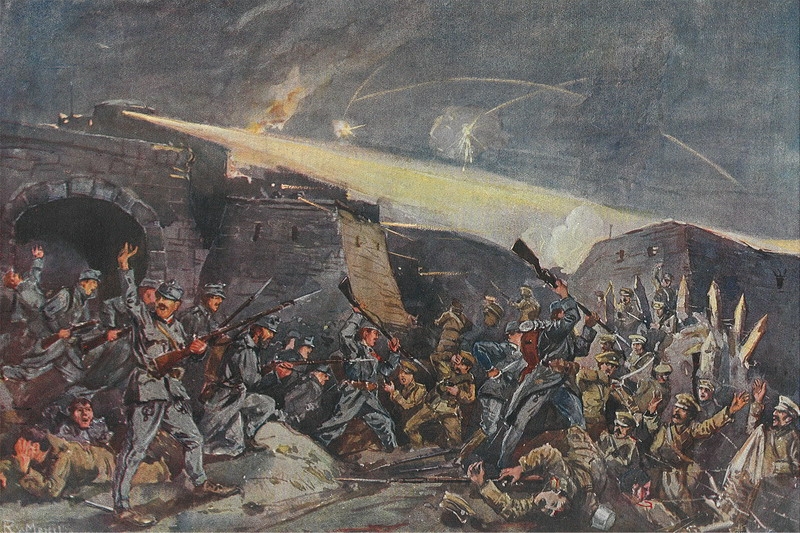
During the First World War, Galicia saw heavy fighting between the forces of the Russian Empire and the Central Powers, on the Eastern Front of World War I. The Russian forces overran most of the region in 1914 after defeating the Austro-Hungarian army in a chaotic frontier battle in the opening months of the war. They were in turn pushed out in the spring and summer of 1915 by a combined German/Austro-Hungarian offensive.
In 1918, Western Galicia became a part of the restored Republic of Poland, which absorbed the Lemko-Rusyn Republic. The local Ukrainian population declared the independence of Eastern Galicia as the short-lived West Ukrainian People's Republic. During the Polish-Soviet War, the Soviets tried to establish the puppet-state of the Galician SSR in East Galicia, but the territory was then conquered by the Poles.
The 1921 Peace of Riga confirmed Galicia's status as part of the Second Polish Republic. Although never accepted as legitimate by some Ukrainian nationalists, this was ratified by the Conference of Ambassadors on 14 March 1923 and internationally recognized on 15 May 1923.
The Ukrainians of Eastern Galicia and the neighbouring province of Volhynia made up about 12% of the Polish Republic's population, and were its largest minority. As Polish government policies were discriminatory towards minorities, tensions between the Polish government and the Ukrainian population grew, eventually giving rise to the militant underground Organization of Ukrainian Nationalists. Conflicts in Galicia and Volhynia between Poles and Ukrainians intensified during the Second World War, with skirmishes between the Polish Home Army (AK), Ukrainian Insurgent Army (UPA), German Wehrmacht, and Soviet partisans. These conflicts included the massacres of Poles in Volhynia and Eastern Galicia, and within Galicia, revenge attacks on Ukrainians and Operation Vistula.
People

In 1773, Galicia had about 2.6 million inhabitants in 280 cities and market towns and approximately 5,500 villages. There were nearly 19,000 noble families, with 95,000 members (about 3% of the population). The serfs accounted for 1.86 million, more than 70% of the population. A small number were full-time farmers, but by far the overwhelming number (84%) had only smallholdings or no possessions.
Galicia had arguably the most ethnically diverse population of all the countries in the Austrian monarchy, consisting mainly of Poles and "Ruthenians"; the peoples known later as Ukrainians and Rusyns, as well as ethnic Jews, Germans, Armenians, Czechs, Slovaks, Hungarians, Roma and others. In Galicia as a whole, the population in 1910 was estimated to be 45.4% Polish, 42.9% Ruthenian, 10.9% Jewish, and 0.8% German. This population was not evenly distributed. The Poles lived mainly in the west, with the Ruthenians predominant in the eastern region ("Ruthenia"). At the start of the twentieth century, Poles constituted 88% of the whole population of Western Galicia and Jews 7.5%. The respective data for Eastern Galicia show the following numbers: Ruthenians 64.5%, Poles 22.0%, Jews 12%. Of the 44 administrative divisions of Austrian eastern Galicia, Lviv (, ) was the only one in which Poles made up a majority of the population. Anthropologist Marianna Dushar has argued that this diversity led to a development of a distinctive food culture in the region.

The Polish language was the most spoken language in Galicia as a whole, although the eastern part of the region was predominantly Ruthenian-speaking. According to the 1910 census, 58.6% of Galicia spoke Polish as its mother tongue, compared to 40.2% who spoke a Ruthenian language. The number of Polish-speakers may have been inflated because Jews were not given the option of listing Yiddish as their language. Eastern Galicia was the most diverse part of the region, and one of the most diverse areas in Europe at the time.
The Galician Jews immigrated in the Middle Ages from Germany. German-speaking people were more commonly referred to by the region of Germany where they originated (such as Saxony or Swabia). For those who spoke different native languages, e.g. Poles and Ruthenians, identification was less problematic, and the widespread multilingualism blurred ethnic divisions.
Religiously, Galicia is predominantly Catholic, and Catholicism is practiced in two rites. Poles are Roman Catholic, while Ukrainians belong to the Greek Catholic Church. Other Christians belong to one of the Ukrainian Orthodox Churches. Until the Holocaust, Judaism was widespread, and Galicia was the center of Hasidism.
Economy
The new state borders cut Galicia off from many of its traditional trade routes and markets of the Polish sphere, resulting in stagnation of economic life and decline of Galician towns. Lviv lost its status as a significant trade center. After a short period of limited investments, the Austrian government started the fiscal exploitation of Galicia and drained the region of manpower through conscription to the imperial army. The Austrians decided that Galicia should not develop industrially but remain an agricultural area that would serve as a supplier of food products and raw materials to other Habsburg provinces. New taxes were instituted, investments were discouraged, and cities and towns were neglected. The result was significant poverty in Austrian Galicia. Galicia was the poorest province of Austro-Hungary, and according to Norman Davies, could be considered "the poorest province in Europe".
Oil and natural gas industry

Near Drohobych and Boryslav in Galicia, significant oil reserves were discovered and developed during the mid 19th and early 20th centuries. The first European attempt to drill for oil was in Bóbrka in western Galicia in 1854. This significant increase in oil production also caused a slump in oil prices. A very rapid decrease in oil production in Galicia occurred just before the Balkan Wars of 1912–1913.
Galicia was the Central Powers' only major domestic source of oil during the Great War.
Ethnic groups
- Mountain Dwellers (larger kinship group): Żywczaki or Gorals of Żywiec (pl: górale żywieccy), Babiogórcy or Gorals of Babia Góra, Gorals of Rabka or Zagórzanie, Kliszczaki, Gorals in Podhale (pl: górale podhalańscy), Gorals of Nowy Targ or Nowotarżanie, Górale pienińscy or Gorals of Pieniny and Górale sądeccy (Gorals of Nowy Sącz), Gorals of Spisz or Gardłaki, Kurtacy or Czuchońcy (Lemkos, Rusnaks), Boykos (Werchowyńcy), Tucholcy, Hutsuls (Czarnogórcy).
- Dale Dwellers (larger kinship group): Krakowiacy, Mazury, Grębowiacy (Lesowiacy or Borowcy), Głuchoniemcy, Bełżanie, Bużanie (Łopotniki, Poleszuki), Opolanie, Wołyniacy, Pobereżcy or Nistrowianie.
Linguistic and religious structure in 1910


| Today part of | County | Pop. | Polish | Ruthenian (Ukrainian) | Other Slavic | German | Other language | Roman Catholic | Protestant | Uniate | Orthodox | Jewish | Other religion |
|---|---|---|---|---|---|---|---|---|---|---|---|---|---|
| Poland | Kraków City | 151886 | 94.4% | 0.4% | 1.8% | 3.4% | 0.0% | 76.8% | 0.7% | 1.1% | 0.0% | 21.3% | 0.0% |
| Poland | Biała | 86174 | 83.0% | 0.0% | 0.3% | 16.7% | 0.0% | 93.9% | 2.8% | 0.1% | 0.0% | 3.1% | 0.0% |
| Poland | Bochnia | 114401 | 99.8% | 0.0% | 0.0% | 0.2% | 0.0% | 93.9% | 0.2% | 0.1% | 0.0% | 5.8% | 0.0% |
| Poland | Brzesko | 104498 | 100.0% | 0.0% | 0.0% | 0.0% | 0.0% | 94.3% | 0.0% | 0.0% | 0.0% | 5.6% | 0.0% |
| Poland | Chrzanów | 110838 | 99.6% | 0.0% | 0.1% | 0.3% | 0.0% | 89.5% | 0.1% | 0.1% | 0.0% | 10.3% | 0.0% |
| Poland | Dąbrowa | 69119 | 100.0% | 0.0% | 0.0% | 0.0% | 0.0% | 91.8% | 0.0% | 0.1% | 0.0% | 8.1% | 0.0% |
| Poland | Gorlice | 82203 | 75.6% | 24.2% | 0.1% | 0.1% | 0.0% | 68.5% | 0.0% | 23.9% | 0.0% | 7.5% | 0.0% |
| Poland | Grybów | 53240 | 82.2% | 17.7% | 0.0% | 0.0% | 0.0% | 77.1% | 0.0% | 17.4% | 0.0% | 5.5% | 0.0% |
| Poland | Jasło | 87878 | 91.6% | 8.4% | 0.0% | 0.0% | 0.0% | 84.9% | 0.0% | 8.6% | 0.0% | 6.5% | 0.0% |
| Poland | Kolbuszowa | 73912 | 99.7% | 0.0% | 0.0% | 0.3% | 0.0% | 91.3% | 0.2% | 0.0% | 0.0% | 8.5% | 0.0% |
| Poland | Kraków County | 68829 | 99.2% | 0.2% | 0.2% | 0.4% | 0.0% | 97.8% | 0.1% | 0.3% | 0.0% | 1.8% | 0.0% |
| Poland | Krosno | 83115 | 84.6% | 15.4% | 0.0% | 0.1% | 0.0% | 77.2% | 0.0% | 15.2% | 0.0% | 7.5% | 0.0% |
| Poland | Łańcut | 93532 | 96.8% | 3.0% | 0.0% | 0.1% | 0.0% | 87.2% | 0.3% | 5.0% | 0.0% | 7.5% | 0.0% |
| Poland | Limanowa | 81163 | 99.9% | 0.0% | 0.0% | 0.0% | 0.0% | 96.2% | 0.0% | 0.0% | 0.0% | 3.8% | 0.0% |
| Poland | Mielec | 77218 | 98.5% | 0.0% | 0.0% | 1.4% | 0.0% | 88.8% | 1.1% | 0.1% | 0.0% | 10.0% | 0.0% |
| Poland | Myślenice | 93241 | 99.9% | 0.0% | 0.0% | 0.1% | 0.0% | 98.0% | 0.0% | 0.0% | 0.0% | 2.0% | 0.0% |
| Poland | Nisko | 69194 | 99.8% | 0.0% | 0.0% | 0.2% | 0.0% | 90.3% | 0.2% | 1.3% | 0.0% | 8.2% | 0.0% |
| Poland | Nowy Sącz | 131366 | 86.5% | 12.8% | 0.0% | 0.7% | 0.0% | 76.6% | 1.2% | 13.0% | 0.0% | 9.3% | 0.0% |
| Poland | Nowy Targ | 80767 | 99.5% | 0.5% | 0.0% | 0.0% | 0.0% | 93.1% | 0.1% | 2.7% | 0.0% | 4.1% | 0.0% |
| Poland | Oświęcim | 49996 | 99.1% | 0.1% | 0.3% | 0.6% | 0.0% | 86.4% | 0.2% | 0.3% | 0.0% | 13.1% | 0.0% |
| Poland | Pilzno | 48673 | 100.0% | 0.0% | 0.0% | 0.0% | 0.0% | 93.8% | 0.0% | 0.1% | 0.0% | 6.1% | 0.0% |
| Poland | Podgórze | 64383 | 98.2% | 0.1% | 1.0% | 0.8% | 0.0% | 88.4% | 0.2% | 0.4% | 0.0% | 11.0% | 0.0% |
| Poland | Przeworsk | 57044 | 98.4% | 1.5% | 0.0% | 0.0% | 0.0% | 87.4% | 0.0% | 5.6% | 0.0% | 6.9% | 0.0% |
| Poland | Ropczyce | 80170 | 99.6% | 0.2% | 0.0% | 0.1% | 0.0% | 91.1% | 0.0% | 0.3% | 0.0% | 8.5% | 0.0% |
| Poland | Rzeszów | 144271 | 99.1% | 0.5% | 0.1% | 0.3% | 0.0% | 88.4% | 0.1% | 1.8% | 0.0% | 9.7% | 0.0% |
| Poland | Strzyżów | 58549 | 95.5% | 4.5% | 0.0% | 0.0% | 0.0% | 87.9% | 0.0% | 4.9% | 0.0% | 7.2% | 0.0% |
| Poland | Tarnobrzeg | 77360 | 99.9% | 0.1% | 0.0% | 0.0% | 0.0% | 89.0% | 0.0% | 0.2% | 0.0% | 10.7% | 0.0% |
| Poland | Tarnów | 114118 | 99.3% | 0.1% | 0.2% | 0.5% | 0.0% | 84.4% | 0.1% | 0.2% | 0.0% | 15.4% | 0.0% |
| Poland | Wadowice | 95339 | 99.7% | 0.0% | 0.1% | 0.2% | 0.0% | 96.7% | 0.1% | 0.1% | 0.0% | 3.1% | 0.0% |
| Poland | Wieliczka | 67724 | 99.9% | 0.0% | 0.0% | 0.1% | 0.0% | 95.5% | 0.2% | 0.1% | 0.0% | 4.2% | 0.0% |
| Poland | Żywiec | 119653 | 99.5% | 0.0% | 0.0% | 0.5% | 0.0% | 98.1% | 0.2% | 0.0% | 0.0% | 1.6% | 0.0% |
| Ukraine | Lviv City | 206129 | 85.8% | 10.8% | 0.4% | 2.9% | 0.1% | 51.2% | 1.5% | 19.2% | 0.3% | 27.8% | 0.1% |
| Ukraine | Bibrka | 88527 | 30.1% | 69.1% | 0.0% | 0.8% | 0.0% | 18.8% | 0.2% | 69.5% | 0.0% | 11.5% | 0.0% |
| Ukraine | Bohorodchany | 69463 | 13.7% | 84.9% | 0.1% | 1.3% | 0.0% | 5.1% | 0.6% | 83.6% | 0.0% | 10.8% | 0.0% |
| Ukraine | Borshchiv | 109320 | 31.0% | 68.6% | 0.0% | 0.4% | 0.0% | 19.4% | 0.0% | 68.9% | 0.0% | 11.7% | 0.0% |
| Ukraine | Brody | 146216 | 37.8% | 59.6% | 0.0% | 2.5% | 0.2% | 21.7% | 0.2% | 62.4% | 0.3% | 15.5% | 0.0% |
| Ukraine | Berezhany | 104810 | 40.9% | 58.9% | 0.0% | 0.1% | 0.0% | 27.8% | 0.0% | 62.0% | 0.0% | 10.3% | 0.0% |
| Poland | Brzozów | 81409 | 87.9% | 12.1% | 0.0% | 0.0% | 0.0% | 78.2% | 0.0% | 15.2% | 0.0% | 6.5% | 0.0% |
| Ukraine | Buchach | 138297 | 46.6% | 53.0% | 0.0% | 0.4% | 0.0% | 31.4% | 0.0% | 55.9% | 0.0% | 12.6% | 0.0% |
| Poland | Cieszanów | 86549 | 48.1% | 51.4% | 0.0% | 0.5% | 0.0% | 34.9% | 0.2% | 52.4% | 0.0% | 12.5% | 0.0% |
| Ukraine | Chortkiv | 76447 | 39.1% | 59.7% | 0.2% | 1.0% | 0.0% | 28.0% | 0.2% | 61.3% | 0.0% | 10.4% | 0.0% |
| Ukraine | Dobromyl | 72103 | 39.2% | 59.7% | 0.0% | 1.1% | 0.0% | 24.9% | 0.7% | 64.0% | 0.0% | 10.5% | 0.0% |
| Ukraine | Dolyna | 113831 | 21.4% | 74.9% | 0.0% | 3.7% | 0.0% | 10.8% | 2.1% | 75.8% | 0.0% | 11.3% | 0.0% |
| Ukraine | Drohobych | 171687 | 41.3% | 56.7% | 0.0% | 2.0% | 0.0% | 21.9% | 1.3% | 59.6% | 0.0% | 17.2% | 0.0% |
| Ukraine | Horodok | 79612 | 35.0% | 62.7% | 0.0% | 2.3% | 0.0% | 29.2% | 2.2% | 58.7% | 0.0% | 9.9% | 0.0% |
| Ukraine | Horodenka | 92033 | 26.9% | 72.9% | 0.1% | 0.1% | 0.0% | 12.8% | 0.0% | 76.2% | 0.1% | 11.0% | 0.0% |
| Ukraine | Husiatyn | 96891 | 44.2% | 55.7% | 0.0% | 0.1% | 0.0% | 27.6% | 0.0% | 60.7% | 0.0% | 11.6% | 0.0% |
| Poland | Jarosław | 150301 | 66.7% | 32.0% | 0.6% | 0.6% | 0.0% | 50.3% | 0.1% | 39.6% | 0.0% | 10.0% | 0.0% |
| Ukraine | Yavoriv | 86720 | 20.6% | 78.3% | 0.0% | 1.1% | 0.0% | 13.1% | 0.5% | 79.0% | 0.1% | 7.3% | 0.0% |
| Ukraine | Kalush | 97421 | 17.1% | 81.2% | 0.0% | 1.6% | 0.0% | 10.1% | 0.8% | 80.7% | 0.0% | 8.4% | 0.0% |
| Ukraine | Kamianka-Buzka | 115316 | 39.7% | 58.4% | 0.0% | 1.7% | 0.2% | 24.6% | 1.6% | 60.7% | 0.3% | 12.7% | 0.0% |
| Ukraine | Kolomyia | 124850 | 38.1% | 59.2% | 0.2% | 2.4% | 0.0% | 17.8% | 0.9% | 62.0% | 0.2% | 19.1% | 0.0% |
| Ukraine | Kosiv | 85805 | 15.1% | 84.1% | 0.0% | 0.8% | 0.0% | 4.8% | 0.0% | 83.8% | 0.0% | 11.3% | 0.0% |
| Poland | Lesko | 98492 | 30.2% | 68.9% | 0.0% | 0.9% | 0.0% | 15.0% | 0.6% | 70.3% | 0.0% | 14.1% | 0.0% |
| Ukraine | Lviv County | 161580 | 61.6% | 36.6% | 0.0% | 1.8% | 0.0% | 43.4% | 2.1% | 45.8% | 0.0% | 8.7% | 0.0% |
| Ukraine | Mostyska | 87841 | 43.8% | 56.1% | 0.0% | 0.1% | 0.0% | 31.8% | 0.1% | 59.9% | 0.0% | 8.2% | 0.0% |
| Ukraine | Nadvírna | 90663 | 25.4% | 73.4% | 0.0% | 1.1% | 0.0% | 12.8% | 0.6% | 74.0% | 0.0% | 12.6% | 0.0% |
| Ukraine | Pechenizhyn | 46794 | 12.1% | 87.8% | 0.0% | 0.1% | 0.0% | 3.6% | 0.0% | 87.4% | 0.0% | 9.0% | 0.0% |
| Ukraine | Pidhaitsi | 93546 | 33.4% | 65.9% | 0.0% | 0.7% | 0.0% | 26.7% | 0.0% | 65.5% | 0.0% | 7.8% | 0.0% |
| Poland | Przemyśl | 159991 | 52.4% | 44.9% | 0.4% | 2.2% | 0.0% | 35.4% | 0.4% | 49.9% | 0.1% | 14.1% | 0.1% |
| Ukraine | Peremyshliany | 86568 | 39.5% | 59.5% | 0.0% | 1.0% | 0.0% | 26.0% | 0.7% | 62.3% | 0.0% | 11.0% | 0.0% |
| Ukraine | Rava-Ruska | 115333 | 32.0% | 67.0% | 0.0% | 1.0% | 0.0% | 15.0% | 0.4% | 70.1% | 0.0% | 14.5% | 0.1% |
| Ukraine | Rohatyn | 124966 | 29.2% | 70.6% | 0.0% | 0.2% | 0.0% | 17.4% | 0.1% | 71.7% | 0.0% | 10.8% | 0.0% |
| Ukraine | Rudky | 77269 | 39.1% | 60.5% | 0.0% | 0.4% | 0.0% | 27.8% | 0.4% | 63.5% | 0.0% | 8.3% | 0.0% |
| Ukraine | Sambir | 107445 | 41.7% | 57.1% | 0.0% | 1.2% | 0.0% | 30.5% | 0.3% | 60.9% | 0.0% | 8.2% | 0.0% |
| Poland | Sanok | 108678 | 54.4% | 45.4% | 0.0% | 0.2% | 0.0% | 39.3% | 0.0% | 50.3% | 0.0% | 10.4% | 0.0% |
| Ukraine | Skalat | 96006 | 52.0% | 47.7% | 0.0% | 0.3% | 0.0% | 36.5% | 0.0% | 50.3% | 0.0% | 13.1% | 0.0% |
| Ukraine | Skole | 55353 | 18.1% | 77.8% | 0.0% | 4.1% | 0.0% | 10.9% | 1.0% | 77.4% | 0.0% | 10.7% | 0.0% |
| Ukraine | Sniatyn | 88706 | 17.3% | 80.5% | 0.0% | 2.1% | 0.0% | 8.1% | 0.5% | 79.7% | 0.1% | 11.5% | 0.0% |
| Ukraine | Sokal | 109250 | 39.7% | 60.2% | 0.0% | 0.1% | 0.0% | 19.3% | 0.2% | 65.5% | 0.0% | 14.9% | 0.0% |
| Ukraine | Stanyslaviv | 158066 | 39.6% | 57.5% | 0.3% | 2.5% | 0.1% | 22.3% | 0.9% | 57.6% | 0.2% | 18.8% | 0.1% |
| Ukraine | Staryi Sambir | 60810 | 27.4% | 72.4% | 0.0% | 0.1% | 0.0% | 14.9% | 0.0% | 74.4% | 0.0% | 10.7% | 0.0% |
| Ukraine | Stryi | 80211 | 37.6% | 58.3% | 0.1% | 4.0% | 0.0% | 19.0% | 4.0% | 61.0% | 0.0% | 15.9% | 0.0% |
| Ukraine | Ternopil | 142138 | 51.4% | 48.0% | 0.1% | 0.4% | 0.0% | 32.5% | 0.1% | 53.5% | 0.0% | 13.9% | 0.0% |
| Ukraine | Tlumach | 116066 | 27.4% | 71.8% | 0.0% | 0.8% | 0.0% | 17.9% | 0.7% | 73.2% | 0.0% | 8.3% | 0.0% |
| Ukraine | Terebovlia | 81048 | 51.7% | 48.0% | 0.2% | 0.1% | 0.0% | 39.4% | 0.1% | 51.5% | 0.0% | 9.0% | 0.0% |
| Ukraine | Turka | 85823 | 19.9% | 79.8% | 0.1% | 0.3% | 0.0% | 6.1% | 0.1% | 80.2% | 0.0% | 13.6% | 0.0% |
| Ukraine | Zalishchyky | 76957 | 30.3% | 69.2% | 0.1% | 0.4% | 0.0% | 16.6% | 0.0% | 71.3% | 0.1% | 12.0% | 0.0% |
| Ukraine | Zbarazh | 71498 | 43.0% | 57.0% | 0.0% | 0.0% | 0.0% | 31.6% | 0.0% | 60.9% | 0.0% | 7.5% | 0.0% |
| Ukraine | Zboriv | 60665 | 32.0% | 67.9% | 0.0% | 0.1% | 0.0% | 19.3% | 0.0% | 70.5% | 0.0% | 10.2% | 0.0% |
| Ukraine | Zolochiv | 117372 | 40.3% | 59.1% | 0.1% | 0.6% | 0.0% | 25.6% | 0.3% | 62.6% | 0.0% | 11.6% | 0.0% |
| Ukraine | Zhovkva | 99658 | 25.9% | 72.3% | 0.0% | 1.7% | 0.0% | 16.9% | 0.5% | 73.0% | 0.0% | 9.6% | 0.0% |
| Ukraine | Zhydachiv | 83339 | 22.4% | 74.7% | 0.0% | 2.9% | 0.0% | 15.9% | 0.2% | 75.7% | 0.0% | 8.2% | 0.0% |
Linguistic and religious structure of former Galicia in 1931


| Today part of | County | Pop. | Polish | % | Yiddish & Hebrew | % | Ukrainian & Ruthenian | % | Other language % | Roman Catholic | % | Jewish | % | Uniate & Orthodox | % | Other religion % | Total former Galicia | 8505902 | 5023763 | 59.1% | 549293 | 6.5% | 2874451 | 33.8% | 0.7% | 4326926 | 50.9% | 789886 | 9.3% | 3331884 | 39.2% | 0.7% |
|---|---|---|---|---|---|---|---|---|---|---|---|---|---|---|---|---|---|---|---|---|---|---|---|---|---|---|---|---|---|---|---|---|
| Ukraine | Borshchiv | 103277 | 46153 | 44.7% | 4302 | 4.2% | 52612 | 50.9% | 0.2% | 28432 | 27.5% | 9353 | 9.1% | 65344 | 63.3% | 0.1% | ||||||||||||||||
| Ukraine | Brody | 91248 | 32843 | 36.0% | 7640 | 8.4% | 50490 | 55.3% | 0.3% | 22521 | 24.7% | 10360 | 11.4% | 58009 | 63.6% | 0.4% | ||||||||||||||||
| Ukraine | Berezhany | 103824 | 48168 | 46.4% | 3716 | 3.6% | 51757 | 49.9% | 0.2% | 41962 | 40.4% | 7151 | 6.9% | 54611 | 52.6% | 0.1% | ||||||||||||||||
| Ukraine | Buchach | 139062 | 60523 | 43.5% | 8059 | 5.8% | 70336 | 50.6% | 0.1% | 51311 | 36.9% | 10568 | 7.6% | 77023 | 55.4% | 0.1% | ||||||||||||||||
| Ukraine | Chortkiv | 84008 | 36486 | 43.4% | 6474 | 7.7% | 40866 | 48.6% | 0.2% | 33080 | 39.4% | 7845 | 9.3% | 42828 | 51.0% | 0.3% | ||||||||||||||||
| Ukraine | Kamianka-Buzka | 82111 | 41693 | 50.8% | 4737 | 5.8% | 35178 | 42.8% | 0.6% | 29828 | 36.3% | 6700 | 8.2% | 45113 | 54.9% | 0.6% | ||||||||||||||||
| Ukraine | Kopychyntsi | 88614 | 38158 | 43.1% | 5164 | 5.8% | 45196 | 51.0% | 0.1% | 31202 | 35.2% | 7291 | 8.2% | 50007 | 56.4% | 0.1% | ||||||||||||||||
| Ukraine | Pidhaitsi | 95663 | 46710 | 48.8% | 3464 | 3.6% | 45031 | 47.1% | 0.5% | 38003 | 39.7% | 4786 | 5.0% | 52634 | 55.0% | 0.3% | ||||||||||||||||
| Ukraine | Peremyshliany | 89908 | 52269 | 58.1% | 4445 | 4.9% | 32777 | 36.5% | 0.5% | 38475 | 42.8% | 6860 | 7.6% | 44002 | 48.9% | 0.6% | ||||||||||||||||
| Ukraine | Radekhiv | 69313 | 25427 | 36.7% | 3277 | 4.7% | 39970 | 57.7% | 0.9% | 17945 | 25.9% | 6934 | 10.0% | 42928 | 61.9% | 2.2% | ||||||||||||||||
| Ukraine | Skalat | 89215 | 60091 | 67.4% | 3654 | 4.1% | 25369 | 28.4% | 0.1% | 45631 | 51.1% | 8486 | 9.5% | 34798 | 39.0% | 0.3% | ||||||||||||||||
| Ukraine | Ternopil | 142220 | 93874 | 66.0% | 5836 | 4.1% | 42374 | 29.8% | 0.1% | 63286 | 44.5% | 17684 | 12.4% | 60979 | 42.9% | 0.2% | ||||||||||||||||
| Ukraine | Terebovlia | 84321 | 50178 | 59.5% | 3173 | 3.8% | 30868 | 36.6% | 0.1% | 38979 | 46.2% | 4845 | 5.7% | 40452 | 48.0% | 0.1% | ||||||||||||||||
| Ukraine | Zalishchyky | 72021 | 27549 | 38.3% | 3261 | 4.5% | 41147 | 57.1% | 0.1% | 17917 | 24.9% | 5965 | 8.3% | 48069 | 66.7% | 0.1% | ||||||||||||||||
| Ukraine | Zbarazh | 65579 | 32740 | 49.9% | 3142 | 4.8% | 29609 | 45.2% | 0.1% | 24855 | 37.9% | 3997 | 6.1% | 36468 | 55.6% | 0.4% | ||||||||||||||||
| Ukraine | Zboriv | 81413 | 39624 | 48.7% | 2522 | 3.1% | 39174 | 48.1% | 0.1% | 26239 | 32.2% | 5056 | 6.2% | 49925 | 61.3% | 0.2% | ||||||||||||||||
| Ukraine | Zolochiv | 118609 | 56628 | 47.7% | 6066 | 5.1% | 55381 | 46.7% | 0.5% | 36937 | 31.1% | 10236 | 8.6% | 70663 | 59.6% | 0.7% | ||||||||||||||||
| Ukraine | Dolyna | 118373 | 21158 | 17.9% | 9031 | 7.6% | 83880 | 70.9% | 3.6% | 15630 | 13.2% | 10471 | 8.8% | 89811 | 75.9% | 2.1% | ||||||||||||||||
| Ukraine | Horodenka | 92894 | 27751 | 29.9% | 5031 | 5.4% | 59957 | 64.5% | 0.2% | 15519 | 16.7% | 7480 | 8.1% | 69789 | 75.1% | 0.1% | ||||||||||||||||
| Ukraine | Kalush | 102252 | 18637 | 18.2% | 5109 | 5.0% | 77506 | 75.8% | 1.0% | 14418 | 14.1% | 6249 | 6.1% | 80750 | 79.0% | 0.8% | ||||||||||||||||
| Ukraine | Kolomyia | 176000 | 52006 | 29.5% | 11191 | 6.4% | 110533 | 62.8% | 1.3% | 31925 | 18.1% | 20887 | 11.9% | 121376 | 69.0% | 1.0% | ||||||||||||||||
| Ukraine | Kosiv | 93952 | 6718 | 7.2% | 6730 | 7.2% | 79838 | 85.0% | 0.7% | 4976 | 5.3% | 7826 | 8.3% | 80903 | 86.1% | 0.3% | ||||||||||||||||
| Ukraine | Nadvírna | 140702 | 16907 | 12.0% | 11020 | 7.8% | 112128 | 79.7% | 0.5% | 15214 | 10.8% | 11663 | 8.3% | 113116 | 80.4% | 0.5% | ||||||||||||||||
| Ukraine | Rohatyn | 127252 | 36152 | 28.4% | 6111 | 4.8% | 84875 | 66.7% | 0.1% | 27108 | 21.3% | 9466 | 7.4% | 90456 | 71.1% | 0.2% | ||||||||||||||||
| Ukraine | Stanyslaviv | 198359 | 49032 | 24.7% | 26996 | 13.6% | 120214 | 60.6% | 1.1% | 42519 | 21.4% | 29525 | 14.9% | 123959 | 62.5% | 1.2% | ||||||||||||||||
| Ukraine | Stryi | 152631 | 25186 | 16.5% | 15413 | 10.1% | 106183 | 69.6% | 3.8% | 23404 | 15.3% | 17115 | 11.2% | 108159 | 70.9% | 2.6% | ||||||||||||||||
| Ukraine | Sniatyn | 78025 | 17206 | 22.1% | 4341 | 5.6% | 56007 | 71.8% | 0.6% | 8659 | 11.1% | 7073 | 9.1% | 61797 | 79.2% | 0.6% | ||||||||||||||||
| Ukraine | Tlumach | 116028 | 44958 | 38.7% | 3677 | 3.2% | 66659 | 57.5% | 0.6% | 31478 | 27.1% | 6702 | 5.8% | 76650 | 66.1% | 1.0% | ||||||||||||||||
| Ukraine | Zhydachiv | 83817 | 16464 | 19.6% | 4728 | 5.6% | 61098 | 72.9% | 1.8% | 15094 | 18.0% | 5289 | 6.3% | 63144 | 75.3% | 0.3% | ||||||||||||||||
| Ukraine | Bibrka | 97124 | 30762 | 31.7% | 5533 | 5.7% | 60444 | 62.2% | 0.4% | 22820 | 23.5% | 7972 | 8.2% | 66113 | 68.1% | 0.2% | ||||||||||||||||
| Ukraine | Dobromyl | 93970 | 35945 | 38.3% | 4997 | 5.3% | 52463 | 55.8% | 0.6% | 25941 | 27.6% | 7522 | 8.0% | 59664 | 63.5% | 0.9% | ||||||||||||||||
| Ukraine | Drohobych | 194456 | 91935 | 47.3% | 20484 | 10.5% | 79214 | 40.7% | 1.5% | 52172 | 26.8% | 28888 | 14.9% | 110850 | 57.0% | 1.3% | ||||||||||||||||
| Ukraine | Horodok | 85007 | 33228 | 39.1% | 2975 | 3.5% | 47812 | 56.2% | 1.2% | 22408 | 26.4% | 4982 | 5.9% | 56713 | 66.7% | 1.1% | ||||||||||||||||
| Ukraine | Yavoriv | 86762 | 26938 | 31.0% | 3044 | 3.5% | 55868 | 64.4% | 1.1% | 18394 | 21.2% | 5161 | 5.9% | 62828 | 72.4% | 0.4% | ||||||||||||||||
| Ukraine | Lviv City | 312231 | 198212 | 63.5% | 75316 | 24.1% | 35137 | 11.3% | 1.1% | 157490 | 50.4% | 99595 | 31.9% | 50824 | 16.3% | 1.4% | ||||||||||||||||
| Ukraine | Lviv County | 142800 | 80712 | 56.5% | 1569 | 1.1% | 58395 | 40.9% | 1.5% | 67430 | 47.2% | 5087 | 3.6% | 67592 | 47.3% | 1.9% | ||||||||||||||||
| Ukraine | Mostyska | 89460 | 49989 | 55.9% | 2164 | 2.4% | 37196 | 41.6% | 0.1% | 34619 | 38.7% | 5428 | 6.1% | 49230 | 55.0% | 0.2% | ||||||||||||||||
| Ukraine | Rava-Ruska | 122072 | 27376 | 22.4% | 10991 | 9.0% | 82133 | 67.3% | 1.3% | 22489 | 18.4% | 13381 | 11.0% | 84808 | 69.5% | 1.1% | ||||||||||||||||
| Ukraine | Rudky | 79170 | 38417 | 48.5% | 4247 | 5.4% | 36254 | 45.8% | 0.3% | 27674 | 35.0% | 5396 | 6.8% | 45756 | 57.8% | 0.4% | ||||||||||||||||
| Ukraine | Sambir | 133814 | 56818 | 42.5% | 7794 | 5.8% | 68222 | 51.0% | 0.7% | 43583 | 32.6% | 11258 | 8.4% | 78527 | 58.7% | 0.3% | ||||||||||||||||
| Ukraine | Sokal | 109111 | 42851 | 39.3% | 5917 | 5.4% | 59984 | 55.0% | 0.3% | 25425 | 23.3% | 13372 | 12.3% | 69963 | 64.1% | 0.3% | ||||||||||||||||
| Ukraine | Turka | 114457 | 26083 | 22.8% | 7552 | 6.6% | 80483 | 70.3% | 0.3% | 6301 | 5.5% | 10627 | 9.3% | 97339 | 85.0% | 0.2% | ||||||||||||||||
| Ukraine | Zhovkva | 95507 | 35816 | 37.5% | 3344 | 3.5% | 56060 | 58.7% | 0.3% | 20279 | 21.2% | 7848 | 8.2% | 66823 | 70.0% | 0.6% | ||||||||||||||||
| Poland | Brzozów | 83205 | 68149 | 81.9% | 3836 | 4.6% | 10677 | 12.8% | 0.7% | 65813 | 79.1% | 4316 | 5.2% | 12743 | 15.3% | 0.4% | ||||||||||||||||
| Poland | Jarosław | 148028 | 120429 | 81.4% | 6064 | 4.1% | 20993 | 14.2% | 0.4% | 83652 | 56.5% | 11721 | 7.9% | 52302 | 35.3% | 0.2% | ||||||||||||||||
| Poland | Kolbuszowa | 69565 | 65361 | 94.0% | 3693 | 5.3% | 62 | 0.1% | 0.6% | 63999 | 92.0% | 5091 | 7.3% | 91 | 0.1% | 0.6% | ||||||||||||||||
| Poland | Krosno | 113387 | 93691 | 82.6% | 4416 | 3.9% | 14666 | 12.9% | 0.5% | 91189 | 80.4% | 6521 | 5.8% | 15132 | 13.3% | 0.5% | ||||||||||||||||
| Poland | Lesko | 111575 | 31840 | 28.5% | 8475 | 7.6% | 70346 | 63.0% | 0.8% | 18209 | 16.3% | 10916 | 9.8% | 81588 | 73.1% | 0.8% | ||||||||||||||||
| Poland | Lubaczów | 87266 | 43294 | 49.6% | 5485 | 6.3% | 38237 | 43.8% | 0.3% | 32994 | 37.8% | 9342 | 10.7% | 44723 | 51.2% | 0.2% | ||||||||||||||||
| Poland | Łańcut | 97679 | 92084 | 94.3% | 2318 | 2.4% | 2690 | 2.8% | 0.6% | 86066 | 88.1% | 6281 | 6.4% | 4806 | 4.9% | 0.5% | ||||||||||||||||
| Poland | Nisko | 64233 | 60602 | 94.3% | 3084 | 4.8% | 115 | 0.2% | 0.7% | 59069 | 92.0% | 3985 | 6.2% | 925 | 1.4% | 0.4% | ||||||||||||||||
| Poland | Przemyśl | 162544 | 86393 | 53.2% | 15891 | 9.8% | 60005 | 36.9% | 0.2% | 67068 | 41.3% | 21424 | 13.2% | 73631 | 45.3% | 0.3% | ||||||||||||||||
| Poland | Przeworsk | 61388 | 58634 | 95.5% | 2144 | 3.5% | 406 | 0.7% | 0.3% | 54833 | 89.3% | 3405 | 5.5% | 3042 | 5.0% | 0.2% | ||||||||||||||||
| Poland | Rzeszów | 185106 | 173897 | 93.9% | 9065 | 4.9% | 963 | 0.5% | 0.6% | 164050 | 88.6% | 17098 | 9.2% | 3277 | 1.8% | 0.4% | ||||||||||||||||
| Poland | Sanok | 114195 | 67955 | 59.5% | 7354 | 6.4% | 38192 | 33.4% | 0.6% | 48968 | 42.9% | 9455 | 8.3% | 54882 | 48.1% | 0.8% | ||||||||||||||||
| Poland | Tarnobrzeg | 73297 | 67624 | 92.3% | 5186 | 7.1% | 93 | 0.1% | 0.5% | 65891 | 89.9% | 6333 | 8.6% | 194 | 0.3% | 1.2% | ||||||||||||||||
| Poland | Biała | 139127 | 127089 | 91.3% | 5932 | 4.3% | 48 | 0.0% | 4.4% | 126431 | 90.9% | 9951 | 7.2% | 197 | 0.1% | 1.8% | ||||||||||||||||
| Poland | Bochnia | 113790 | 109717 | 96.4% | 3847 | 3.4% | 75 | 0.1% | 0.1% | 107399 | 94.4% | 5656 | 5.0% | 134 | 0.1% | 0.5% | ||||||||||||||||
| Poland | Brzesko | 102226 | 100251 | 98.1% | 1894 | 1.9% | 20 | 0.0% | 0.1% | 97730 | 95.6% | 4121 | 4.0% | 66 | 0.1% | 0.3% | ||||||||||||||||
| Poland | Chrzanów | 138061 | 127078 | 92.0% | 10435 | 7.6% | 88 | 0.1% | 0.3% | 125016 | 90.6% | 12127 | 8.8% | 240 | 0.2% | 0.5% | ||||||||||||||||
| Poland | Dąbrowa | 66678 | 62620 | 93.9% | 4016 | 6.0% | 25 | 0.0% | 0.0% | 61584 | 92.4% | 4807 | 7.2% | 36 | 0.1% | 0.4% | ||||||||||||||||
| Poland | Gorlice | 104805 | 76266 | 72.8% | 3508 | 3.3% | 24881 | 23.7% | 0.1% | 73788 | 70.4% | 5578 | 5.3% | 25092 | 23.9% | 0.3% | ||||||||||||||||
| Poland | Jasło | 116146 | 103935 | 89.5% | 4608 | 4.0% | 7435 | 6.4% | 0.1% | 102213 | 88.0% | 5786 | 5.0% | 7659 | 6.6% | 0.4% | ||||||||||||||||
| Poland | Kraków City | 219286 | 171206 | 78.1% | 45828 | 20.9% | 924 | 0.4% | 0.6% | 159372 | 72.7% | 56515 | 25.8% | 1894 | 0.9% | 0.7% | ||||||||||||||||
| Poland | Kraków County | 187509 | 185567 | 99.0% | 1569 | 0.8% | 97 | 0.1% | 0.1% | 181836 | 97.0% | 4138 | 2.2% | 309 | 0.2% | 0.7% | ||||||||||||||||
| Poland | Limanowa | 87279 | 85238 | 97.7% | 1951 | 2.2% | 29 | 0.0% | 0.1% | 84048 | 96.3% | 2766 | 3.2% | 43 | 0.0% | 0.5% | ||||||||||||||||
| Poland | Mielec | 77465 | 71272 | 92.0% | 5441 | 7.0% | 48 | 0.1% | 0.9% | 69737 | 90.0% | 6457 | 8.3% | 72 | 0.1% | 1.5% | ||||||||||||||||
| Poland | Myślenice | 102692 | 101878 | 99.2% | 770 | 0.7% | 16 | 0.0% | 0.0% | 99978 | 97.4% | 2189 | 2.1% | 32 | 0.0% | 0.5% | ||||||||||||||||
| Poland | Nowy Sącz | 183867 | 148329 | 80.7% | 10282 | 5.6% | 24252 | 13.2% | 0.5% | 141857 | 77.2% | 15135 | 8.2% | 25060 | 13.6% | 1.0% | ||||||||||||||||
| Poland | Nowy Targ | 129489 | 123877 | 95.7% | 2571 | 2.0% | 2156 | 1.7% | 0.7% | 121767 | 94.0% | 4853 | 3.7% | 2296 | 1.8% | 0.4% | ||||||||||||||||
| Poland | Ropczyce | 110925 | 105700 | 95.3% | 5101 | 4.6% | 60 | 0.1% | 0.1% | 104033 | 93.8% | 6410 | 5.8% | 136 | 0.1% | 0.3% | ||||||||||||||||
| Poland | Tarnów | 142365 | 124817 | 87.7% | 17307 | 12.2% | 102 | 0.1% | 0.1% | 120610 | 84.7% | 21219 | 14.9% | 293 | 0.2% | 0.2% | ||||||||||||||||
| Poland | Wadowice | 145143 | 142852 | 98.4% | 2070 | 1.4% | 53 | 0.0% | 0.1% | 140469 | 96.8% | 3665 | 2.5% | 125 | 0.1% | 0.6% | ||||||||||||||||
| Poland | Żywiec | 130949 | 129747 | 99.1% | 915 | 0.7% | 19 | 0.0% | 0.2% | 127685 | 97.5% | 2245 | 1.7% | 71 | 0.1% | 0.7% |
Notes
References
Citations
Sources
References
- [https://www.collinsdictionary.com/dictionary/english/galicia "Galicia"]. ''[[Collins English Dictionary]]''
- "Was ist Galizien?".
- Eleonora Narvselius. (5 April 2012). "Ukrainian Intelligentsia in Post-Soviet Lʹviv: Narratives, Identity, and Power". Lexington Books.
- Larry Wolff. (9 January 2012). "The Idea of Galicia: History and Fantasy in Habsburg Political Culture". Stanford University Press.
- Paul Robert Magocsi. (2002). "Historical Atlas of Central Europe". University of Toronto Press.
- "European Kingdoms – Eastern Europe – Galicia". Kessler Associates.
- Zakharii, Roman. "History of Galicia". Toronto Ukrainian Genealogy Group.
- (2018). "Historical Glossary: Galicia (Halychyna)".
- (1898). "Die Oesterreichisch-ungarische Monarchie in Wort und Bild, Volume 19". K.k. Hof- und Staatsdruckerei.
- Martin Dimnik. (12 June 2003). "The Dynasty of Chernigov, 1146–1246". Cambridge University Press.
- (2006). "Ukraine's Orange Revolution". Yale University Press.
- Tadeusz Sulimirski, ''The Sarmatians'', vol. 73 in series "Ancient People and Places", London: Thames & Hudson, 1970.
- Dr. Samar Abbas. "Samar Abbas, ''Common Origin of Croats, Serbs and Jats'', The symposium proceedings "Old Iranian Origins of Croats", Zagreb, 1998".
- Ісаєвич Я.Д.. (2004). "ГАЛИЧИНА". [[Naukova Dumka]], [[NASU Institute of History of Ukraine]].
- Dimnik, Martin. (2003). "The Dynasty of Chernigov – 1146–1246". Cambridge University Press.
- [http://www.encyclopediaofukraine.com/display.asp?AddButton=pages\R\O\RomanMstyslavych.htm Roman Mstyslavych – Encyclopaedia of Ukraine]
- Larry Wolff, ''The Idea of Galicia: History and Fantasy in Habsburg Political Culture'' (Stanford University Press, 2012), p. 1
- Buttar, Prit. ''Collision of Empires: The War on the Eastern Front in 1914''. Oxford, UK; New York, NY: Osprey Publishing, 2016. {{ISBN. 9781782006480
- "Language legislation", in ''Encyclopedia of Ukraine'' (University of Toronto Press, 1993)
- "Chronicle: A Political Chronicle of Poland", in ''The Slavonic Review'', Volume 2 (University of London, 1923-24) p. 169
- French: ''Les Alliés reconnaissent à la Pologne la possession de la Galicie'', Chronologie des civilisations, Jean Delorme, Paris, 1956.
- Magocsi, Paul R.. (2002). "The Roots of Ukrainian Nationalism: Galicia as Ukraine's Piedmont". University of Toronto Press.
- Paul Robert Magocsi. (1996). A History of Ukraine. Toronto: University ofToronto Press. Pg. 424.
- Piotr Eberhardt. ''Ethnic groups and population changes in twentieth-century Central-Eastern Europe: history, data, analysis''. M.E. Sharpe, 2003. pp.92–93. {{ISBN. 978-0-7656-0665-5
- Timothy Snyder. (2003). ''The Reconstruction of Nations''. New Haven: Yale University Press, p. 123
- Timothy Snyder. (2003). ''The Reconstruction of Nations''. New Haven: Yale University Press, p. 134
- Plakhta, Dmytro. (22 August 2018). ""Food is a little universal anchor and a way of identification"".
- Anstalt G. Freytag & Berndt (1911). Geographischer Atlas zur Vaterlandskunde an der österreichischen Mittelschulen. Vienna: K. u. k. Hof-Kartographische. "Census December 31st 1910"
- [[Timothy Snyder]]. (2003).The Reconstruction of Nations. New Haven: Yale University Press, pg. 134
- P. R. Magocsi. (1983). ''Galicia: A Historical Survey and Bibliographic Guide.'' Canadian Institute of Ukrainian Studies, Harvard Ukrainian Research Institute. p. 99
- P. Wandycz. (1974). ''The lands of partitioned Poland, 1795–1918. A History of East Central Europe''. University of Washington Press. p. 12
- Stauter-Halsted, Keely. (2001). "The nation in the village : the genesis of peasant national identity in Austrian Poland, 1848-1914". Cornell University Press.
- Norman Davies. (31 May 2001). "Heart of Europe:The Past in Poland's Present". Oxford University Press.
- Richard Sylla, Gianni Toniolo. (2002). [https://books.google.com/books?id=TepeBUZDCKsC&dq=per+capita+growth+regions+austria-hungary+dalmatia&pg=PA230 ''Patterns of European Industrialisation: The Nineteenth Century.''] pg. 230. Conversion from 1970 to 2010 dollars [http://stats.areppim.com/calc/calc_usdlrxdeflator.php here]
- (1999). "Focusing on Galicia: Jews, Poles, and Ukrainians, 1772–1918". Littman Library of Jewish Civilization.
- "Petroleum in Galicia". Drohobycz Administrative District: History.
- (2006). "The Carpathians and Their Foreland: Geology and Hydrocarbon Resources". American Association of Petroleum Geologists (AAPG).
- "William H. McGarvey (1843–1914)". Professional Engineers Ontario.
- Frank, Allison. (29 June 2006). "Galician California, Galician Hell: The Peril and Promise of Oil Production in Austria-Hungary". Office of Science and Technology Austria (OSTA).
- Schwarz, Robert. (1930). "Petroleum-Vademecum: International Petroleum Tables". Verlag für Fachliteratur.
- SGKP tom II. str. 459
- Zamorski, Krzysztof. (1989). "Informator statystyczny do dziejów społeczno-gospodarczych Galicji. Ludność Galicji w latach 1857-1910.". Zakład Wydawnictw Statystycznych.
- (1938). "Plik:Woj.tarnopolskie-Polska spis powszechny 1931.pdf – Wikipedia, wolna encyklopedia".
- (1938). "Plik:Woj.stanisławowskie-Polska spis powszechny 1931.pdf – Wikipedia, wolna encyklopedia".
- (1938). "Plik:Woj.lwowskie-Polska spis powszechny 1931.pdf – Wikipedia, wolna encyklopedia".
- (1938). "Plik:Woj.krakowskie-Polska spis powszechny 1931.pdf – Wikipedia, wolna encyklopedia".
- Statystyczny, Główny Urząd. (1937). "English: Dane spisu powszechnego 1931 Miasto Kraków".
- (1937). "Plik:M.Lwów-Polska spis powszechny 1931.pdf – Wikipedia, wolna encyklopedia".
This article was imported from Wikipedia and is available under the Creative Commons Attribution-ShareAlike 4.0 License. Content has been adapted to SurfDoc format. Original contributors can be found on the article history page.
Ask Mako anything about Galicia (Eastern Europe) — get instant answers, deeper analysis, and related topics.
Research with MakoFree with your Surf account
Create a free account to save articles, ask Mako questions, and organize your research.
Sign up freeThis content may have been generated or modified by AI. CloudSurf Software LLC is not responsible for the accuracy, completeness, or reliability of AI-generated content. Always verify important information from primary sources.
Report