From Surf Wiki (app.surf) — the open knowledge base
G.I.
Informal term for US military personnel
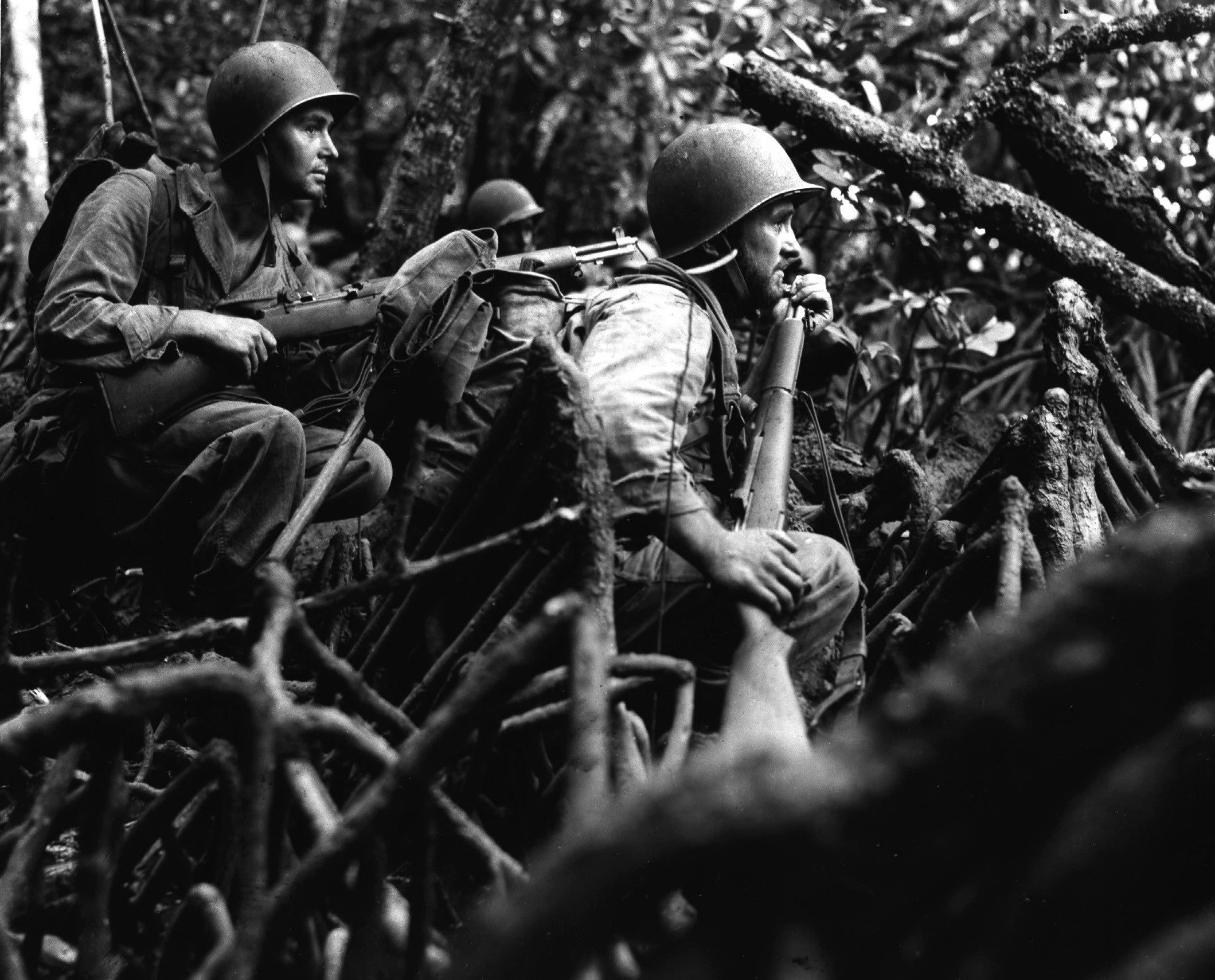
Informal term for US military personnel
the term for US soldiers
Page transcluded from List of English placeholder names for people#G.I. Joe
G.I. is an informal term which refers to members of the United States Armed Forces, in particular the United States Army. It is most deeply associated with World War II and the Korean War, but continues to see use, for instance in the G.I. Joe comics, films, and toys franchise. It was originally an initialism used in U.S. Army paperwork for items made of galvanized iron. The earliest known instance in writing is from either 1906 or 1907. During World War I, U.S. soldiers took to referring to heavy German artillery shells as "G.I. cans". During the same war, "G.I.", reinterpreted as "government issue" or "general issue", began being used to refer to any item associated with the U.S. Army, e.g., "G.I. soap". Other reinterpretations of "G.I." include "garrison issue" and "general infantry".
The earliest known recorded instances of "G.I." being used to refer to an American enlisted man as a slang term are from 1935. In the form of "G.I. Joe" it was made better known due to it being taken as the title of a comic strip by Dave Breger in Yank, the Army Weekly, beginning in 1942. A 1944 radio drama, They_Call_Me_Joe20191201They Call Me Joe, reached a much broader audience. It featured a different individual each week, thereby emphasizing that "G.I. Joe" encompassed U.S. soldiers of all ethnicities. They Call Me Joe reached civilians across the U.S. via the NBC Radio Network and U.S. soldiers via the Armed Forces Radio Network. Dwight D. Eisenhower would notably reference the term "G.I. Joe," who he described as the main hero of World War II, in his May 1945 Victory in Europe Day address. "G.I. Jane" originally referred to a member of the Women's Army Corps during World War II, but more recently it is used to refer to any female American soldier.
References
References
- (2019). "G.I. Definition from CollinsDictionary.com". HarperCollins Publishers Ltd and Penguin Random House LLC.
- Wilton, Dave. (2 February 2009). "G.I. – Wordorigins.org". Wordorigins.org.
- Rawson, Hugh. (April–May 2006). "Why do we say "G.I."?". American Heritage.
- (11 November 2016). "A Soldier's Story: World War II and the Forgotten Battle for the Aleutian Islands". [[KUT.
- (May 9, 1945). "Eisenhower Hails 'G.I Joe' As Hero. She Is Proud Of Her Nation". New York Times.
This article was imported from Wikipedia and is available under the Creative Commons Attribution-ShareAlike 4.0 License. Content has been adapted to SurfDoc format. Original contributors can be found on the article history page.
Ask Mako anything about G.I. — get instant answers, deeper analysis, and related topics.
Research with MakoFree with your Surf account
Create a free account to save articles, ask Mako questions, and organize your research.
Sign up freeThis content may have been generated or modified by AI. CloudSurf Software LLC is not responsible for the accuracy, completeness, or reliability of AI-generated content. Always verify important information from primary sources.
Report