From Surf Wiki (app.surf) — the open knowledge base
Fuzzy dice
Automobile decoration

Automobile decoration
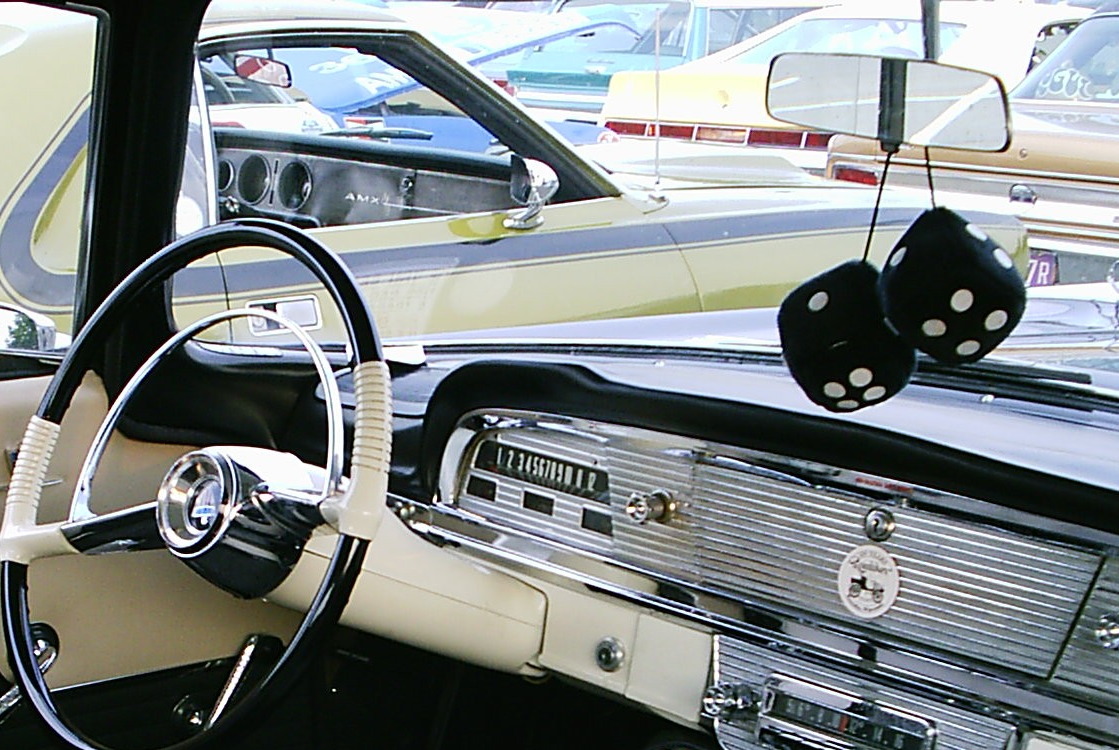
Fuzzy dice, also known as fluffy dice, soft dice, or stuffed dice, are an automotive decoration consisting of two oversized (usually six-sided) plush dice that hang from the rearview mirror. The original fuzzy dice used in the 1950s were white and approximately 3 in across. Nowadays, fuzzy dice come in many colors and various sizes.
Origin and history
The use of fuzzy dice is believed to be traced back to American fighter pilots during World War II. Pilots would hang the dice above their instruments, displaying seven pips, before a 'sortie' mission for good luck. It is also speculated that the dice represented a high degree of risk associated with the fighter sorties; hundreds of pilots were shot down each week. Upon returning after the war, many airmen continued the tradition.
In the 1950s, the fuzzy dice became one of the first items sold specifically to be hung from a rearview mirror. The Encyclopedia of American Social History notes that during the 1950s, young adults were drawn to cars that were "customized for speed, painted with vivid colors, stripes, and flames, tuck-and-roll interiors, fuzzy dice suspended from the mirror, rock-and-roll on the radio...".
Another explanation for hanging these in a car has been proposed that "displaying the dice meant the driver was ready and willing to be 'dicing with death' in the dangerous and unregulated world of street racing".
In some segments, such as the lowrider community, research indicated that even the most dedicated individuals "did not attach any significance to the dice" that were hung from their car's rearview mirror.
A 1993 study found no correlation between the use of fuzzy dice and the degree of a driver's reckless driving behavior.
In some jurisdictions, suspending objects from rearview mirrors is illegal.
A technology upgrade to the product includes illuminated LED plastic dice that change colors.
References
References
- Spicer, Stuart. (2001). "Dream Schemes II: Exotic Airliner Art". Motorbooks International.
- (5 December 1997). "Style: Cheesy does it". The Independent.
- Vokins, Stephen. (2008). "Nodding dogs & vinyl roofs: the weird world of quirky car accessories". Haynes.
- Stefansson, Klara. (3 May 2018). "Från ekorrsvans till doftgran – här är fem bilprylar vi minns". Metro.
- Coop, Terri Lynn. (24 May 2019). "The Surprising History of Fuzzy Dice".
- (1993). "Encyclopedia of American Social History". Scribner.
- (26 April 2017). "The Rolling Story of Fuzzy Dice". The News Wheel.
- (1981). "Natural History". American Museum of Natural History.
- (1 April 1993). "Fuzzy dice, dream cars, and indecent gestures: correlates of driver behavior?". Accident Analysis & Prevention.
- Torres-Cortez, Ricardo. (16 June 2016). "Think twice before hanging those fuzzy dice — here's why". Las Vegas Sun Newspaper.
- Petrány, Máté. (7 October 2013). "The Ten Most Obscure Car Laws in the US". Jalopnik.
- Mello, Michael. (23 March 2011). "Fuzzy dice and the law". Orange County Register.
- (8 August 2019). "Window stickers, air fresheners and even fluffy dice: The long list of items that Australian drivers can get fined for having in their car - as yet another ludicrous road rule is exposed".
- (9 August 2019). "How hanging an air freshener or fluffy dice from your mirror could cost you £1,000".
- (14 April 2008). "Fuzzy Car Dice Gets a Lame, 21st Century Upgrade". Jalopnik.
This article was imported from Wikipedia and is available under the Creative Commons Attribution-ShareAlike 4.0 License. Content has been adapted to SurfDoc format. Original contributors can be found on the article history page.
Ask Mako anything about Fuzzy dice — get instant answers, deeper analysis, and related topics.
Research with MakoFree with your Surf account
Create a free account to save articles, ask Mako questions, and organize your research.
Sign up freeThis content may have been generated or modified by AI. CloudSurf Software LLC is not responsible for the accuracy, completeness, or reliability of AI-generated content. Always verify important information from primary sources.
Report