From Surf Wiki (app.surf) — the open knowledge base
Funabashi
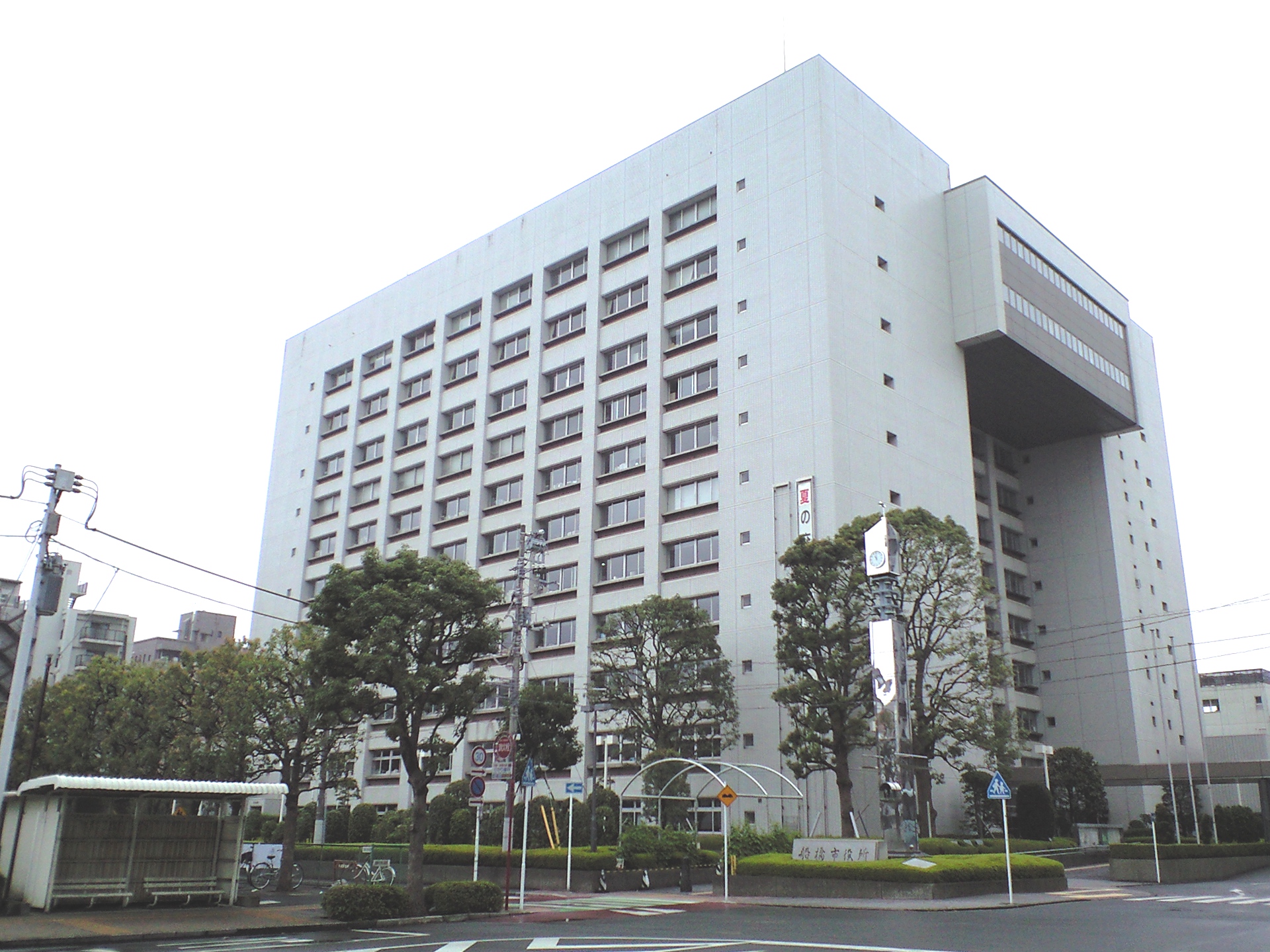
| Field | Value | |
|---|---|---|
| name | Funabashi | |
| native_name | 船橋市 | |
| settlement_type | Core city | |
| image_skyline | Funabashi montage.jpg | |
| image_caption | ||
| style | "width:280px; margin:2px auto; border-collapse:collapse" | |
| style | "width:100%" colspan="6"Chiba Port (Funabashi Port)) | |
| style | "width:50%" colspan="3" style="vertical-align:middle;"View from Tsudanuma Station style="width:50%" colspan="3" style="vertical-align:middle;"Funabashi Station | |
| style | "width:33%" colspan="2" style="vertical-align:middle;"Funabashi H. C. Andersen Park style="width:34%" colspan="2"Funabashi Ōmiya Jinja lighthouse style="width:33%" colspan="2" style="vertical-align:middle;"Funabashi Face Building | |
| style | "width:50%" colspan="3" style="vertical-align:middle;"LaLaport Tokyo-Bay style="width:50%" colspan="3"Wakamiya Housing from Minami-Funabashi Station | |
| image_flag | Flag of Funabashi, Chiba.svg | |
| image_seal | Emblem of Funabashi, Chiba.svg | |
| mapframe | yes | |
| mapframe-zoom | 9 | |
| mapframe-point | none | |
| map_caption | Location of Funabashi in Chiba Prefecture] | |
| pushpin_map | Japan | |
| pushpin_label_position | ||
| pushpin_map_caption | ||
| coordinates | ||
| coor_pinpoint | ||
| coordinates_footnotes | tags -- | |
| subdivision_type | Country | |
| subdivision_name | Japan | |
| subdivision_type1 | Region | |
| subdivision_name1 | Kantō | |
| subdivision_type2 | Prefecture | |
| subdivision_name2 | Chiba | |
| established_title | First official recorded | |
| established_date | 110 AD | |
| established_title2 | City Settled | |
| established_date2 | April 1, 1937 | |
| seat_type | ||
| government_footnotes | tags -- | |
| leader_title | Mayor | |
| leader_name | Toru Matsudo | |
| leader_name1 | ||
| total_type | ||
| unit_pref | ||
| area_magnitude | ||
| area_footnotes | tags -- | |
| area_total_km2 | 85.62 | |
| area_total_sq_mi | ||
| elevation_footnotes | tags -- | |
| population_footnotes | tags -- | |
| population_total | 644668 | |
| population_as_of | December 1, 2020 | |
| population_density_km2 | auto | |
| population_demonym | ||
| timezone1 | Japan Standard Time | |
| utc_offset1 | +9 | |
| postal_code_type | Postal code(s) | |
| postal_code | 273 or 274 | |
| area_code_type | ||
| area_code | 047-4 | |
| blank_name_sec1 | Phone number | |
| blank_info_sec1 | 047-436-2111 | |
| blank1_name_sec1 | Address | |
| blank1_info_sec1 | 2-10-25 Minato-cho, Funabashi-shi, 273-8501 | |
| blank_name_sec2 | Climate | |
| blank_info_sec2 | Cfa | |
| website | ||
| module | {{Infobox place symbols | embedded=yes |
| tree | Camellia sasanqua | |
| flower | Camellia sasanqua |
style="width:280px; margin:2px auto; border-collapse:collapse" style="width:100%" colspan="6"Chiba Port (Funabashi Port)) style="width:50%" colspan="3" style="vertical-align:middle;"View from Tsudanuma Station style="width:50%" colspan="3" style="vertical-align:middle;"Funabashi Station style="width:33%" colspan="2" style="vertical-align:middle;"Funabashi H. C. Andersen Park style="width:34%" colspan="2"Funabashi Ōmiya Jinja lighthouse style="width:33%" colspan="2" style="vertical-align:middle;"Funabashi Face Building style="width:50%" colspan="3" style="vertical-align:middle;"LaLaport Tokyo-Bay style="width:50%" colspan="3"Wakamiya Housing from Minami-Funabashi Station | mapframe-zoom = 9 | mapframe-point = none
Funabashi is a city located in Chiba Prefecture, Japan. , the city had an estimated population of 644,668 in 309,238 households and a population density of 7500 PD/km2. The total area of the city is 85.62 sqkm. It is the Greater Tokyo Area's 7th most populated city (after passing Kawaguchi, Hachioji and Chiba), and second largest in Chiba Prefecture.
Geography
Funabashi is located in northwestern Chiba Prefecture approximately 20 kilometers in either direction from the prefectural capital at Chiba and downtown Tokyo. The central area forms a flat diluvial upland of the Shimōsa Plateau. The city sits at an elevation of 20 to 30 meters above sea level, and is relatively flat. The highest point is 32.3 meters in Narashino 3-chome, and the lowest point is 0.2 meters in Minatomachi 1-chome. Funabashi is crossed by the Tone River, and the small Ebi River is located entirely within city limits. Funabashi formerly had wide, shallow beaches, but much of the coast has been industrialized and transformed by reclaimed land. The city extends for 13.86 kilometers east–west and 14.95 kilometers north–south.
Neighboring municipalities
Chiba Prefecture
- Ichikawa
- Kamagaya
- Narashino
- Shiroi
- Yachiyo
Climate
Funabashi has a humid subtropical climate (Köppen Cfa) characterized by warm summers and cool winters with light to no snowfall. The average annual temperature in Funabashi is 15.5 C. The average annual rainfall is 1466.1 mm with October as the wettest month. The temperatures are highest on average in August, at around 26.8 C, and lowest in January, at around 4.8 C. |Jan record high C = 18.6 |Feb record high C = 24.7 |Mar record high C = 25.2 |Apr record high C = 27.1 |May record high C = 33.2 |Jun record high C = 34.8 |Jul record high C = 38.0 |Aug record high C = 39.0 |Sep record high C = 35.9 |Oct record high C = 32.2 |Nov record high C = 25.2 |Dec record high C = 23.5 |Jan record low C = -5.4 |Feb record low C = -4.7 |Mar record low C = -2.0 |Apr record low C = -0.6 |May record low C = 7.4 |Jun record low C = 10.7 |Jul record low C = 15.7 |Aug record low C = 16.6 |Sep record low C = 9.5 |Oct record low C = 6.0 |Nov record low C = -1.1 |Dec record low C = -3.6 |script-title=ja:観測史上1~10位の値(年間を通じての値) | access-date = April 3, 2022}}{{cite web |script-title=ja:気象庁 / 平年値(年・月ごとの値) | access-date = April 3, 2022}}}}
Demographics
Per Japanese census data, the population of Funabashi has increased rapidly over the past century.
| 1920 | 34,119 | 1930 | 46,644 | 1940 | 61,624 | 1950 | 100,134 | 1960 | 135,038 | 1970 | 325,426 | 1980 | 497,439 | 1990 | 533,270 | 2000 | 550,074 | 2010 | 609,040 | 2020 | 642,907
History
The name "Funabashi" is mentioned in the Kamakura period chronicle Azuma Kagami. However, the name itself is even more ancient, dating from before the Nara period and the Yamatotakeru mythology. Archaeologists have found stone tools from the Japanese Paleolithic period and shell middens from the Jōmon period in the area, indicating continuous inhabitation for thousands of years. A number of Shinto shrines and Buddhist temples in the area claim to have been founded in the Nara period or Heian period. During the Muromachi periods, the area was controlled by the Chiba clan. During the Sengoku period, the Chiba clan fought the Satomi clan to the south, and the Late Hōjō clan to the west. After the defeat of the Chiba clan, the area came within the control of Tokugawa Ieyasu.
Under the Tokugawa shogunate, the area prospered as a post town on the river crossing of the Tone River, and was largely retained as tenryō under the direct control of the Shogunate and administered through a number of hatamoto. The area was also a favored hunting grounds for the Shōgun. During the Boshin War of the Meiji Restoration, Funabashi was the location of a minor skirmish between Tokugawa loyalists under Enomoto Takeaki and the pro-Imperial forces of Okayama Domain and Satsuma Domain, during which most of the town burned down.
After the abolition of the han system, the area eventually became part of Chiba Prefecture. Funabashi Town was one of several towns and villages created on April 1, 1889, under Inba District with the establishment of the modern municipalities system. The area developed rapidly due to its proximity to Tokyo and the presence of numerous military facilities in the area. On April 1, 1937, Funabashi was elevated to city status through merger with neighboring Katsushika Town and Yasakae, Hoden and Tsukada Villages. The new city was host to numerous military installations in World War II, and was bombed in the air raids on Japan in 1945.
The city developed rapidly in the postwar period, with the development of industries, public housing developments and port facilities. With the annexation of neighboring Ninomiya Town in 1953, the population exceeded 100,000. The population exceeded 300,000 in 1969 and 500,000 in 1982. Funabashi was designated a core city on April 1, 2005, with increased local autonomy from the central government. The population exceeded 600,000 in 2006.
Government
Funabashi has a mayor-council form of government with a directly elected mayor and a unicameral city council of 50 members. Funabashi contributes seven members to the Chiba Prefectural Assembly. In terms of national politics, the city is divided between the Chiba 4th district and the Chiba 14th district of the lower house of the Diet of Japan.
Economy
Funabashi is a regional commercial center and, due to its numerous train connections, a bedroom community for nearby Chiba and Tokyo. Approximately 34.5% of the working population commutes to Tokyo, per the 2015 census.
Companies from Funabashi
- Mugen Seiki - a remote control car manufacturer
Education
- Nihon University branch campus
- Funabashi has 54 public elementary schools and 27 public middle schools operated by the city government, and 11 public high schools operated by the Chiba Prefectural Board of Education. There are also one private elementary school, one private middle school and four private high schools. The prefecture also operates one special education school for the handicapped.
Transportation
Railway
.svg)



25px Tōyō Rapid Railway - Tōyō Rapid Line

Highway
Sister cities
- US Hayward, California, United States, since November 7, 1986
- Denmark Odense, Denmark, since April 6, 1989
- PRC Xi'an, Shaanxi, China, since November 2, 1994
Local attractions
Notable structures
- Funabashi Racecourse
- Funabashi Sports Park Arena, playground of the Chiba Jets
- Nakayama Racecourse
- LaLaPort shopping mall, one of the largest in Japan
- SSAWS indoor ski slope (closed and demolished in 2003)
- Japan's first large-format IKEA store, built on the site of SSAWS
Notable places
- Cherry blossoms on the Ebi River
- Funabashi Shrine
- Gyōda Musen
- Kūtei-kan
- Meiji Tennō Chūhitsu no Tokoro no Hi
- Narashinohara
- Ninomiya Jinja
- Nishonoseki stable
Notable people from Funabashi
- Hiroki Aiba, dancer and singer
- Kazuyuki Fujita, professional wrestler
- Funassyi, unofficial city mascot
- Arisa Hoshiki, Former professional wrestler, singer under the alter ego Udon Sato
- Sayaka Ichii, musician
- Atsushi Itō, actor
- Yuko Kavaguti, figure skater
- Mai Kuraki, singer
- Fumie Kurotori, swimmer
- Minori Matsushima, voice Actress
- Mai Minokoshi, professional tennis player
- Manabu Namiki, video game designer
- Yoshihiro Natsuka, professional soccer player
- Katsuhiko Nishijima, Anime director
- Michiko Nishiwaki, actress, stunt woman
- Yoshihiko Noda, politician, former Prime Minister of Japan
- Hanako Oku, musician
- Toru Oniki, professional soccer manager and former player
- Shunzo Ono, professional soccer player
- Manabu Orido, racing driver
- Tamao Satō, actress
- Takashi Sekizuka, professional soccer player
- Mariko Shiga, musician
- Rin Takanashi, film and television actress
- Keiko Terada, singer (Show-Ya)
- Akeno Watanabe, voice actress
- Azusa Yamamoto, gravure idol
- Tomohisa Yamashita, musician
- Risa Yoshiki, model, actress, singer
Eponym
- In 2018, asteroid 25892 Funabashi was named for the city.
References
References
- "Funabashi city official statistics".
- [https://www.citypopulation.de/php/japan-chiba.php Funabashi population statistics]
- "International Exchange". Council of Local Authorities for International Relations (CLAIR).
This article was imported from Wikipedia and is available under the Creative Commons Attribution-ShareAlike 4.0 License. Content has been adapted to SurfDoc format. Original contributors can be found on the article history page.
Ask Mako anything about Funabashi — get instant answers, deeper analysis, and related topics.
Research with MakoFree with your Surf account
Create a free account to save articles, ask Mako questions, and organize your research.
Sign up freeThis content may have been generated or modified by AI. CloudSurf Software LLC is not responsible for the accuracy, completeness, or reliability of AI-generated content. Always verify important information from primary sources.
Report