From Surf Wiki (app.surf) — the open knowledge base
Fukushima Prefecture
Prefecture of Japan

Prefecture of Japan
| Field | Value | |
|---|---|---|
| name | Fukushima Prefecture | |
| native_name | 福島県 | |
| settlement_type | Prefecture | |
| translit_lang1 | Japanese | |
| translit_lang1_type | Japanese | |
| translit_lang1_info | 福島県 | |
| translit_lang1_type1 | Rōmaji | |
| translit_lang1_info1 | Fukushima-ken | |
| image_skyline | {{Multiple image | |
| perrow | 1/2/2/2 | |
| border | infobox | |
| total_width | 270 | |
| caption_align | center | |
| image1 | Mt.Bandai from Lake Inawashiro 05.jpg | |
| caption1 | Mount Bandai and Lake Inawashiro | |
| image2 | Wakamatsu castle.jpg | |
| caption2 | Aizuwakamatsu Castle | |
| image3 | Abukuma 20220102152559 (52267402339).jpg | |
| caption3 | Abukuma Cave | |
| image4 | 大内宿展望台20220917-P1003566.jpg | |
| caption4 | Ōuchi-juku | |
| image5 | Soma Nomaoi 2017 35477409983.jpg | |
| caption5 | Sōma Nomaoi Festival | |
| image6 | 二本松の提灯祭り.jpg | |
| caption6 | Nihonmatsu Lantern Festival | |
| image7 | Akabeko0926.jpg | |
| caption7 | Akabeko | |
| image_flag | Flag of Fukushima Prefecture.svg | |
| flag_size | 100px | |
| image_blank_emblem | Emblem of Fukushima Prefecture.svg | |
| blank_emblem_size | 80px | |
| blank_emblem_type | Symbol | |
| image_map | Map of Japan with highlight on 07 Fukushima prefecture.svg | |
| subdivision_type | Country | |
| subdivision_name | Japan | |
| subdivision_type1 | Region | |
| subdivision_name1 | Tōhoku | |
| subdivision_type2 | Island | |
| subdivision_name2 | Honshu | |
| seat_type | Capital | |
| seat | Fukushima | |
| seat1_type | Largest city | |
| seat1 | Iwaki | |
| parts_type | Subdivisions | |
| parts_style | para | |
| p1 | Districts: 13 | |
| p2 | Municipalities: 59 | |
| leader_title | Governor | |
| leader_name | Masao Uchibori | |
| area_total_km2 | 13783.9 | |
| area_water_percent | 0.9 | |
| area_rank | 3rd | |
| population_total | 1771100 | |
| population_as_of | July 1, 2023 | |
| population_rank | 20th | |
| population_density_km2 | 128 | |
| demographics_type2 | GDP | |
| demographics2_footnotes | ||
| demographics2_title1 | Total | |
| demographics2_info1 | JP¥ 7,987 billion | |
| US$ 73.3 billion (2019) | ||
| iso_code | JP-07 | |
| website | ||
| module | {{Infobox place symbols | embedded=yes |
| country | Japan | |
| bird | Narcissus flycatcher (Ficedula narcissina) | |
| flower | Nemotoshakunage (Rhododendron brachycarpum) | |
| tree | Japanese zelkova (Zelkova serrata) | |
| anthem | Fukushima-ken kenmin no uta |
US$ 73.3 billion (2019)
Fukushima Prefecture is a prefecture of Japan located in the Tōhoku region of Honshu. Fukushima Prefecture has a population of 1,771,100 () and has a geographic area of 13783.90 km2. Fukushima Prefecture borders Miyagi Prefecture and Yamagata Prefecture to the north, Niigata Prefecture to the west, Gunma Prefecture to the southwest, and Tochigi Prefecture and Ibaraki Prefecture to the south.
Fukushima is the capital and Iwaki is the largest city of Fukushima Prefecture, with other major cities including Kōriyama, Aizuwakamatsu, and Sukagawa. Fukushima Prefecture is located on Japan's eastern Pacific coast at the southernmost part of the Tōhoku region, and is home to Lake Inawashiro, the fourth-largest lake in Japan. Fukushima Prefecture is the third-largest prefecture of Japan (after Hokkaido and Iwate Prefecture) and divided by mountain ranges into the three regions of Aizu, Nakadōri, and Hamadōri.
History
Prehistory
The keyhole-shaped Ōyasuba Kofun is the largest kofun in the Tohoku region. The site was designated a National Historic Site of Japan in 2000.
Classical and feudal period

Until the Meiji Restoration, the area of Fukushima prefecture was part of what was known as Mutsu Province.
The Shirakawa Barrier and the Nakoso Barrier were built around the 5th century to protect 'the heathens' from the 'barbarians' to the north. Fukushima became a province of Mutsu after the Taika Reforms were established in 646.
In 718, the provinces of Iwase and Iwaki were created, but these areas reverted to Mutsu some time between 722 and 724.
The Shiramizu Amidadō is a chapel within the Buddhist temple Ganjō-ji in Iwaki. It was built in 1160 and it is a National Treasure. The temple, including the paradise garden is an Historic Site.
Contemporary period
This region of Japan is also known as Michinoku and Ōshū.
The Fukushima Incident, a political tumult, took place in the prefecture after Mishima Michitsune was appointed governor in 1882.
2011 earthquake and subsequent disasters
On Friday, March 11, 2011, 14:46 JST, a magnitude 9.0 earthquake occurred off the coast of Miyagi Prefecture. Shindo measurements throughout the prefecture reached as high as 6-upper in isolated regions of Hama-dōri on the eastern coast and as low as a 2 in portions of the Aizu region in the western part of the prefecture. Fukushima City, located in Naka-dōri and the capital of Fukushima Prefecture, measured 6-lower.
Following the earthquake there were isolated reports of major damage to structures, including the failure of Fujinuma Dam as well as damage from landslides. The earthquake also triggered a massive tsunami that hit the eastern coast of the prefecture and caused widespread destruction and loss of life. In the two years following the earthquake, 1,817 residents of Fukushima Prefecture had either been confirmed dead or were missing as a result of the earthquake and tsunami.

In the aftermath of the earthquake and tsunami that followed, the outer housings of two of the six reactors at the Fukushima Daiichi Nuclear Power Plant in Ōkuma exploded followed by a partial meltdown and fires at three of the other units. Many residents were evacuated to nearby localities due to the development of a large evacuation zone around the plant. Radiation levels near the plant peaked at 400 mSv/h (millisieverts per hour) after the earthquake and tsunami, due to damage sustained. This resulted in increased recorded radiation levels across Japan. On April 11, 2011, officials upgraded the disaster to a level 7 out of a possible 7, a rare occurrence not seen since the Chernobyl disaster in 1986. Several months later, officials announced that although the area nearest the melt down were still off limits, areas near the twenty kilometer radial safe zone could start seeing a return of the close to 47,000 residents that had been evacuated.
Geography


]]

Fukushima city is located in the Fukushima Basin's southwest area and nearby mountains. Located on the central eastern seaboard a part of the Pacifim rim. A region with high tectonic activity given its location where the Pacific and Eurasian continental plates collide - a part the Ring of Fire. " Aizuwakamatsu is located in the western part of Fukushima Prefecture, in the southeast part of Aizu basin. Mount Bandai is the highest mountain in the prefecture with an elevation of 1819 m. Mount Azuma-kofuji is an active stratovolcano that is 1,705 m tall with many onsen nearby. Lake Inawashiro is the 4th largest lake of Japan (103.3 km2) in the center of the prefecture.
The coastal Hamadōri region lies on the Pacific Ocean and is the flattest and most temperate region, while the Nakadōri region is the agricultural heart of the prefecture and contains the capital, Fukushima City. The mountainous Aizu region has scenic lakes, lush forests, and snowy winters.
As of April 1, 2012, 13% of the total land area of the prefecture was designated as Natural Parks, namely Bandai-Asahi, Nikkō, and Oze National Parks; Echigo Sanzan-Tadami Quasi-National Park; and eleven Prefectural Natural Parks.
|File:Fukushima_Fukushima-Basin_From_Hanamiyama_Park_1.JPG|View of Fukushima Basin from Hanamiyama Park |File:AizuBonchiTagged.jpg|Aizu basin |File:Mt.Bandai_from_Lake_Inawashiro_02.jpg|Mount Bandai and Lake Inawashiro |File:Lake_Inawashiro_view_from_Mt.Bandai.jpg|Lake Inawashiro viewed from Mount Bandai |File:Tadami-Line-First-Bridge-Winter.jpg|Tadami River and Tadami Line in winter
Cities
Thirteen cities are located in Fukushima Prefecture:
| Flag | Name | Area (km2) | Population | Map | Rōmaji | Kanji | ||
|---|---|---|---|---|---|---|---|---|
| [[File:Flag of Aizuwakamatsu, Fukushima.svg | 100px]] | Aizuwakamatsu | 会津若松市 | 382.97 | 117,376 | [[File:Aizuwakamatsu in Fukushima Prefecture Ja.svg | 100px]] | |
| [[File:Flag of Date Fukushima.svg | 100px]] | Date | 伊達市 | 265.12 | 58,240 | [[File:Date in Fukushima Prefecture Ja.svg | 100px]] | |
| [[File:Flag of Fukushima, Fukushima.svg | 100px]] | Fukushima (capital) | 福島市 | 767.72 | 282,693 | [[File:Fukushima in Fukushima Prefecture Ja.svg | 100px]] | |
| [[File:Flag of Iwaki, Fukushima.svg | 100px]] | Iwaki | いわき市 | 1,232.02 | 332,931 | [[File:Iwaki in Fukushima Prefecture Ja.svg | 100px]] | |
| [[File:Flag of Kitakata, Fukushima.svg | 100px]] | Kitakata | 喜多方市 | 554.63 | 44,760 | [[File:Kitakata in Fukushima Prefecture Ja.svg | 100px]] | |
| [[File:Flag of Koriyama, Fukushima.svg | 100px]] | Kōriyama | 郡山市 | 757.2 | 327,692 | [[File:Koriyama in Fukushima Prefecture Ja.svg | 100px]] | |
| [[File:Flag of Minamisoma, Fukushima.svg | 100px]] | Minamisōma | 南相馬市 | 398.58 | 59,005 | [[File:Minamisoma in Fukushima Prefecture Ja.svg | 100px]] | |
| [[File:Flag of Motomiya, Fukushima.svg | 100px]] | Motomiya | 本宮市 | 88.02 | 30,236 | [[File:Motomiya in Fukushima Prefecture Ja.svg | 100px]] | |
| [[File:Flag of Nihonmatsu, Fukushima.svg | 100px]] | Nihonmatsu | 二本松市 | 344.42 | 53,557 | [[File:Nihonmatsu in Fukushima Prefecture Ja.svg | 100px]] | |
| [[File:Flag of Shirakawa, Fukushima.svg | 100px]] | Shirakawa | 白河市 | 305.32 | 59,491 | [[File:Shirakawa in Fukushima Prefecture Ja.svg | 100px]] | |
| [[File:Flag of Sōma, Fukushima.svg | 100px]] | Sōma | 相馬市 | 197.79 | 34,865 | [[File:Soma in Fukushima Prefecture Ja.svg | 100px]] | |
| [[File:Flag of Sukagawa, Fukushima.svg | 100px]] | Sukagawa | 須賀川市 | 279.43 | 74,992 | [[File:Sukagawa in Fukushima Prefecture Ja.svg | 100px]] | |
| [[File:Flag of Tamura, Fukushima.svg | 100px]] | Tamura | 田村市 | 458.3 | 35,169 | [[File:Tamura in Fukushima Prefecture Ja.svg | 100px]] |
Cityscape
|File:Fukushima City with a view of Fukushima Station.jpg|Fukushima City (May 2011) |File:View of Iwaki station in Iwaki city - panoramio 78.jpg|Iwaki (August 2012) |File:郡山市中心市街地.JPG|Kōriyama (May 2015) |Aizuwakamatsu_14-Nov-2020.jpg|Aizuwakamatsu (November 2020)
Towns and villages
These are the towns and villages in each district:
| Flag | Name | Area (km2) | Population | District | Type | Map | Rōmaji | Kanji | ||
|---|---|---|---|---|---|---|---|---|---|---|
| [[File:Flag of Aizubange, Fukushima.svg | 100px]] | Aizubange | 会津坂下町 | 91.59 | 15,068 | Kawanuma District | Town | [[File:Aizubange in Fukushima Prefecture Ja.svg | 100px]] | |
| [[File:Flag of Aizumisato, Fukushima.svg | 100px]] | Aizumisato | 会津美里町 | 276.33 | 19,014 | Ōnuma District | Town | [[File:Aizumisato in Fukushima Prefecture Ja.svg | 100px]] | |
| [[File:Flag of Asakawa Fukushima.svg | 100px]] | Asakawa | 浅川町 | 37.43 | 6,036 | Ishikawa District | Town | [[File:Asakawa in Fukushima Prefecture Ja.svg | 100px]] | |
| [[File:Flag of Bandai, Fukushima.svg | 100px]] | Bandai | 磐梯町 | 59.77 | 3,322 | Yama District | Town | [[File:Bandai in Fukushima Prefecture Ja.svg | 100px]] | |
| [[File:Flag of Furudono, Fukushima.svg | 100px]] | Furudono | 古殿町 | 163.29 | 4,825 | Ishikawa District | Town | [[File:Furudono in Fukushima Prefecture Ja.svg | 100px]] | |
| [[File:Flag of Futaba, Fukushima.svg | 100px]] | Futaba | 双葉町 | 51.42 | 0 | |||||
| 6,093 (recorded) | Futaba District | Town | [[File:Futaba in Fukushima Prefecture Ja.svg | 100px]] | ||||||
| [[File:Flag of Hanawa, Fukushima.svg | 100px]] | Hanawa | 塙町 | 211.41 | 8,302 | Higashishirakawa District | Town | [[File:Hanawa in Fukushima Prefecture Ja.svg | 100px]] | |
| [[File:Flag of Hinoemata, Fukushima.svg | 100px]] | Hinoemata | 檜枝岐村 | 390.46 | 504 | Minamiaizu District | Village | [[File:Hinoemata in Fukushima Prefecture Ja.svg | 100px]] | |
| [[File:Flag of Hirata, Fukushima.svg | 100px]] | Hirata | 平田村 | 93.42 | 5,826 | Ishikawa District | Village | [[File:Hirata in Fukushima Prefecture Ja.svg | 100px]] | |
| [[File:Flag of Hirono, Fukushima.svg | 100px]] | Hirono | 広野町 | 58.69 | 5,412 | Futaba District | Town | [[File:Hirono in Fukushima Prefecture Ja.svg | 100px]] | |
| [[File:Flag of Iitate, Fukushima.svg | 100px]] | Iitate | 飯舘村 | 230.13 | 1,318 | |||||
| 5,946 (recorded) | Sōma District | Village | [[File:Iitate in Fukushima Prefecture Ja.svg | 100px]] | ||||||
| [[File:Flag of Inawashiro, Fukushima.svg | 100px]] | Inawashiro | 猪苗代町 | 394.85 | 13,552 | Yama District | Town | [[File:Inawashiro in Fukushima Prefecture Ja.svg | 100px]] | |
| [[File:Flag of Ishikawa Fukushima.svg | 100px]] | Ishikawa | 石川町 | 115.71 | 14,644 | Ishikawa District | Town | [[File:Ishikawa in Fukushima Prefecture Ja.svg | 100px]] | |
| [[File:Flag of Izumisaki, Fukushima.svg | 100px]] | Izumizaki | 泉崎村 | 35.43 | 6,213 | Nishishirakawa District | Village | [[File:Izumizaki in Fukushima Prefecture Ja.svg | 100px]] | |
| [[File:Flag of Kagamiishi, Fukushima.svg | 100px]] | Kagamiishi | 鏡石町 | 31.3 | 12,318 | Iwase District | Town | [[File:Kagamiishi in Fukushima Prefecture Ja.svg | 100px]] | |
| [[File:Flag of Kaneyama, Fukushima.svg | 100px]] | Kaneyama | 金山町 | 293.92 | 1,862 | Ōnuma District | Town | [[File:Kaneyama in Fukushima Prefecture Ja.svg | 100px]] | |
| [[File:Flag of Katsurao, Fukushima.svg | 100px]] | Katsurao | 葛尾村 | 84.37 | 420 | Futaba District | Village | [[File:Katsurao in Fukushima Prefecture Ja.svg | 100px]] | |
| [[File:Flag of Kawamata, Fukushima.svg | 100px]] | Kawamata | 川俣町 | 127.7 | 12,170 | Date District | Town | [[File:Kawamata in Fukushima Prefecture Ja.svg | 100px]] | |
| [[File:Flag of Kawauchi, Fukushima.svg | 100px]] | Kawauchi | 川内村 | 197.35 | 2,044 | Futaba District | Village | [[File:Kawauchi in Fukushima Prefecture Ja.svg | 100px]] | |
| [[File:Flag of Kitashiobara, Fukushima.svg | 100px]] | Kitashiobara | 北塩原村 | 234.08 | 2,556 | Yama District | Village | [[File:Kitashiobara in Fukushima Prefecture Ja.svg | 100px]] | |
| [[File:Flag of Koori, Fukushima.svg | 100px]] | Koori | 桑折町 | 42.97 | 11,459 | Date District | Town | [[File:Kori in Fukushima Prefecture Ja.svg | 100px]] | |
| [[File:Flag of Kunimi, Fukushima.svg | 100px]] | Kunimi | 国見町 | 37.95 | 8,639 | Date District | Town | [[File:Kunimi in Fukushima Prefecture Ja.svg | 100px]] | |
| [[File:Flag of Miharu, Fukushima.svg | 100px]] | Miharu | 三春町 | 72.76 | 17,018 | Tamura District | Town | [[File:Miharu in Fukushima Prefecture Ja.svg | 100px]] | |
| [[File:Flag of Minamiaizu, Fukushima.svg | 100px]] | Minamiaizu | 南会津町 | 886.47 | 14,451 | Minamiaizu District | Town | [[File:Minamiaizu in Fukushima Prefecture Ja.svg | 100px]] | |
| [[File:Flag of Mishima, Fukushima.svg | 100px]] | Mishima | 三島町 | 90.81 | 1,452 | Ōnuma District | Town | [[File:Mishima in Fukushima Prefecture Ja.svg | 100px]] | |
| [[File:Flag of Nakajima, Fukushima.svg | 100px]] | Nakajima | 中島村 | 18.92 | 4,885 | Nishishirakawa District | Village | [[File:Nakajima in Fukushima Prefecture Ja.svg | 100px]] | |
| [[File:Flag of Namie, Fukushima.svg | 100px]] | Namie | 浪江町 | 223.14 | 1,923 | |||||
| 17,114 (recorded) | Futaba District | Town | [[File:Namie in Fukushima Prefecture Ja.svg | 100px]] | ||||||
| [[File:Flag of Naraha, Fukushima.svg | 100px]] | Naraha | 楢葉町 | 103.64 | 3,710 | Futaba District | Town | [[File:Naraha in Fukushima Prefecture Ja.svg | 100px]] | |
| [[File:Flag of Nishiaizu, Fukushima.svg | 100px]] | Nishiaizu | 西会津町 | 298.18 | 5,770 | Yama District | Town | [[File:Nishiaizu in Fukushima Prefecture Ja.svg | 100px]] | |
| [[File:Flag of Nishigo, Fukushima.svg | 100px]] | Nishigō | 西郷村 | 192.06 | 20,808 | Nishishirakawa District | Village | [[File:Nishigo in Fukushima Prefecture Ja.svg | 100px]] | |
| [[File:Flag of Ōkuma, Fukushima.svg | 100px]] | Ōkuma | 大熊町 | 78.71 | 847 | |||||
| 11,505 (recorded) | Futaba District | Town | [[File:Okuma in Fukushima Prefecture Ja.svg | 100px]] | ||||||
| [[File:Flag of Ono, Fukushima.svg | 100px]] | Ono | 小野町 | 125.11 | 9,471 | Tamura District | Town | [[File:Ono in Fukushima Prefecture Ja.svg | 100px]] | |
| [[File:Flag of Otama, Fukushima.svg | 100px]] | Ōtama | 大玉村 | 79.44 | 8,900 | Adachi District | Village | [[File:Otama in Fukushima Prefecture Ja.svg | 100px]] | |
| [[File:Flag of Samegawa, Fukushima.svg | 100px]] | Samegawa | 鮫川村 | 131.34 | 3,049 | Higashishirakawa District | Village | [[File:Samegawa in Fukushima Prefecture Ja.svg | 100px]] | |
| [[File:Flag of Shimogo, Fukushima.svg | 100px]] | Shimogō | 下郷町 | 317.04 | 5,264 | Minamiaizu District | Town | [[File:Shimogo in Fukushima Prefecture Ja.svg | 100px]] | |
| [[File:Flag of Shinchi, Fukushima.svg | 100px]] | Shinchi | 新地町 | 46.7 | 7,905 | Sōma District | Town | [[File:Shinchi in Fukushima Prefecture Ja.svg | 100px]] | |
| [[File:Flag of Showa, Fukushima.svg | 100px]] | Shōwa | 昭和村 | 209.46 | 1,246 | Ōnuma District | Village | [[File:Showa in Fukushima Prefecture Ja.svg | 100px]] | |
| [[File:Flag of Tadami, Fukushima.svg | 100px]] | Tadami | 只見町 | 747.56 | 4,044 | Minamiaizu District | Town | [[File:Tadami in Fukushima Prefecture Ja.svg | 100px]] | |
| [[File:Flag of Tamakawa, Fukushima.svg | 100px]] | Tamakawa | 玉川村 | 46.67 | 6,392 | Ishikawa District | Village | [[File:Tamakawa in Fukushima Prefecture Ja.svg | 100px]] | |
| [[File:Flag of Tanagura, Fukushima.svg | 100px]] | Tanagura | 棚倉町 | 159.93 | 13,343 | Higashishirakawa District | Town | [[File:Tanagura in Fukushima Prefecture Ja.svg | 100px]] | |
| [[File:Flag of Tenei, Fukushima.svg | 100px]] | Ten-ei | 天栄村 | 225.52 | 5,194 | Iwase District | Village | [[File:Ten'ei in Fukushima Prefecture Ja.svg | 100px]] | |
| [[File:Flag of Tomioka, Fukushima.svg | 100px]] | Tomioka | 富岡町 | 68.39 | 2,128 | Futaba District | Town | [[File:Tomioka in Fukushima Prefecture Ja.svg | 100px]] | |
| [[File:Flag of Yabuki, Fukushima.svg | 100px]] | Yabuki | 矢吹町 | 60.4 | 17,287 | Nishishirakawa District | Town | [[File:Yabuki in Fukushima Prefecture Ja.svg | 100px]] | |
| [[File:Flag of Yamatsuri Fukushima.svg | 100px]] | Yamatsuri | 矢祭町 | 118.27 | 5,392 | Higashishirakawa District | Town | [[File:Yamatsuri in Fukushima Prefecture Ja.svg | 100px]] | |
| [[File:Flag of Yanaizu, Fukushima.svg | 100px]] | Yanaizu | 柳津町 | 175.82 | 3,081 | Kawanuma District | Town | [[File:Yanaizu in Fukushima Prefecture Ja.svg | 100px]] | |
| [[File:Flag of Yugawa, Fukushima.svg | 100px]] | Yugawa | 湯川村 | 16.37 | 3,081 | Kawanuma District | Village | [[File:Yugawa in Fukushima Prefecture Ja.svg | 100px]] |
Mergers
Main article: List of mergers in Fukushima Prefecture
Government
List of governors of Fukushima Prefecture (from 1947)
- Kanichiro Ishihara (石原幹市郎) – April 12, 1947 to November 30, 1949
- Sakuma Otake (大竹作摩) – January 28, 1950 to July 25, 1957
- Zenichiro Sato (佐藤善一郎) – August 25, 1957 to March 23, 1964
- Morie Kimura (木村守江) – May 16, 1964 to August 11, 1976
- Isao Matsudaira (松平勇雄) – September 19, 1976 to September 18, 1988
- Eisaku Satō (佐藤栄佐久) – September 19, 1988 to September 28, 2006
- Yūhei Satō (佐藤 雄平) – November 12, 2006 to November 11, 2014
- Masao Uchibori (内堀 雅雄) – November 12, 2014 to present
Demographics
A total of 1,833,152 people live in the Fukushima Prefecture.

Economy

The coastal region is home to thriving fishing and seafood industries, and is notable for its electricity-generating capability, especially nuclear power, while the upland regions are more focused on agriculture. Thanks to Fukushima's climate, various fruits are grown throughout the year. These include pears, peaches, cherries, grapes, and apples. the prefecture produced 20.6% of Japan's peaches and 8.7% of its cucumbers.
Fukushima also produces rice, which is combined with pure water from mountain run-off to make sake. Some sakes from the region are considered so tasteful that they are served to visiting royalty and world leaders by hosts.
Lacquerware is another popular product from Fukushima. Dating back over four hundred years, the process of making lacquerware involves carving an object out of wood, then putting a lacquer on it and decorating it. Objects made are usually dishes, vases and writing materials.
Culture

Legend has it that an ogress, Adachigahara, once roamed the plain after whom it was named. The Adachigahara plain lies close to the city of Fukushima.
Other stories, such as that of a large, strong, red cow that carried wood, influenced toys and superstitions. The Akabeko cow is a small, red papier-mâché cow on a bamboo or wooden frame, and is believed to ease child birth, bring good health, and help children grow up as strong as the cow.
Another superstitious talisman of the region is the Okiagari-koboshi, or self-righting dharma doll. These dolls are seen as bringers of good luck and prosperity because they stand right back up when knocked down.
Miharu-goma are small, wooden, black or white toy horses painted with colorful designs. Depending upon their design, they may be believed to bring things like long life to the owner.
Kokeshi dolls, while less symbolic, are also a popular traditional craft. They are carved wooden dolls, with large round heads and hand painted bodies. Kokeshi dolls are popular throughout many regions of Japan, but Fukushima is credited as their birthplace.
Notable festivals and events


- Sōma's Nomaoi Festival is held every summer.
The Nomaoi Festival horse riders dressed in complete samurai attire can be seen racing, chasing wild horses, or having contests that imitate a battle. The history behind the festival and events is over one thousand years old.
- Fukushima's Waraji Festival is held on the first weekend of August
During the Waraji Festival, a large (12-meter, 38-ft) straw sandal built by locals is dedicated to a shrine. There is also a traditional Taiwanese dragon dance, or Ryumai, performed by Taiwanese visitors.
- Aizuwakamatsu's Aizu Festival is held in late September
The Aizu festival is a celebration of the time of the samurai. It begins with a display of sword dancing and fighting, and is followed by a procession of around five hundred people. The people in the procession carry flags and tools representing well-known feudal lords of long ago, and some are actually dressed like the lords themselves.
- Taimatsu Akashi Fire Festival
A reflection of a long ago time of war, the Taimatsu Akashi Festival consists of men and women carrying large symbolic torches lit with a sacred fire to the top of Mt. Gorozan. Accompanied by drummers, the torchbearers reach the top and light a wooden frame representing an old local castle and the samurai that lived there. In more recent years the festival has been opened up so that anyone wanting to participate may carry a small symbolic torch along with the procession.
- Iizaka's Fighting Festival is held in October
- Nihonmatsu's Lantern Festival is held from October 4 to 6
- Nihonmatsu's Chrysanthemum doll exhibition is held from October 1 to November 23
- Kōriyama City's Uneme Festival (うねめ祭り) is held early August in honor of the legend of Princess Uneme. The festival features a large parade through the city center with thousands of contestants annually, with several festival floats and a giant taiko-drum.
- Date City's Ryozen Taiko Festival (霊山太鼓祭り) is held in August and features multiple troupes of taiko drum players as well as other musical and comedic performances.
Education
Universities
- Aizuwakamatsu
- Aizu University
- Fukushima
- Fukushima Gakuin University
- Fukushima Medical University
- Fukushima University
- Iwaki
- Higashi Nippon International University
- Iwaki Meisei University
- Koriyama
- Koriyama Women's University
- Nihon University – Koriyama campus
- Ohu University
Tourism
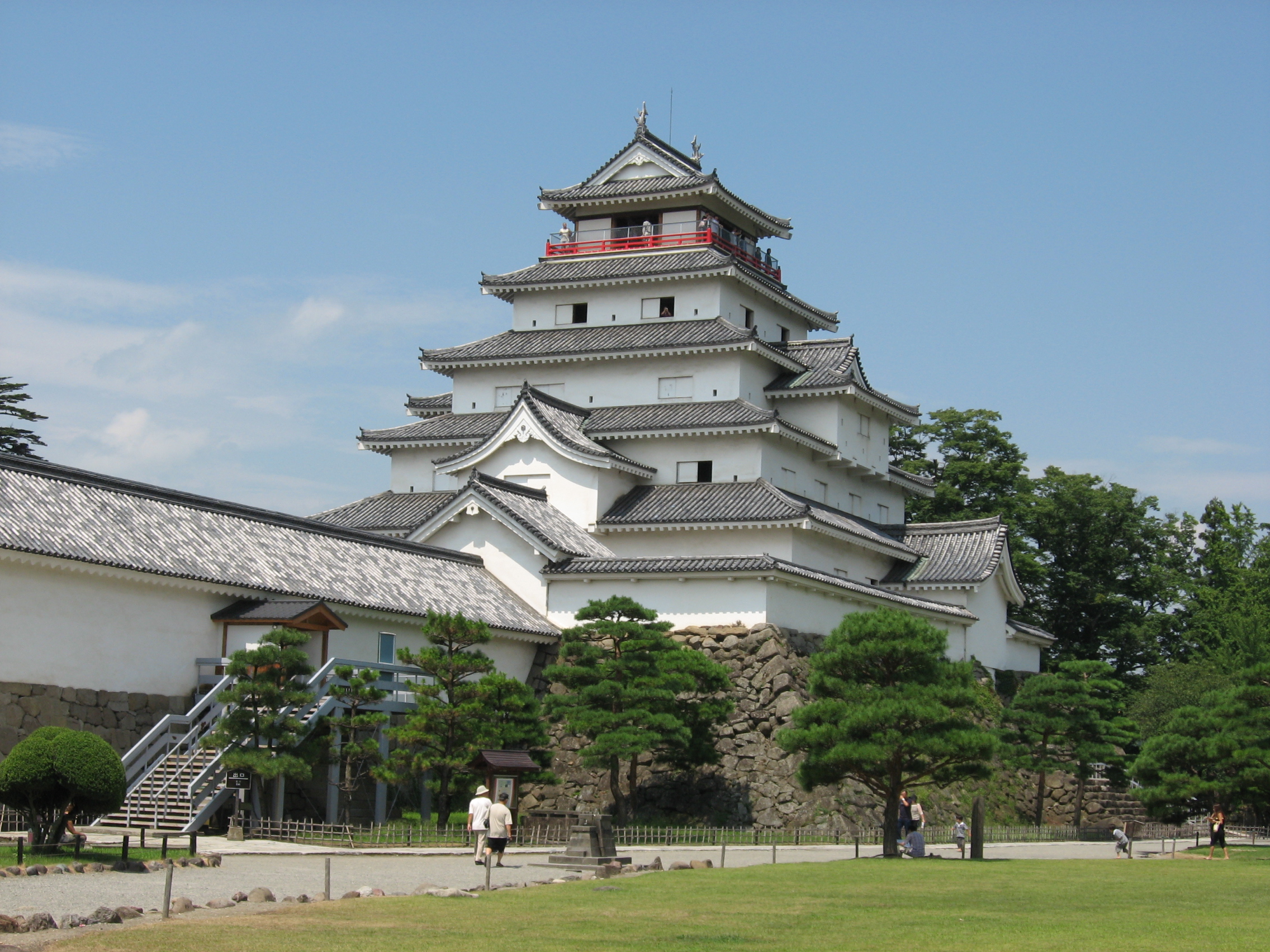


Tsuruga castle, a samurai castle originally built in the late 14th century, was occupied by the region's governor in the mid-19th century, during a time of war and governmental instability. Because of this, Aizuwakamatsu was the site of an important battle in the Boshin War, during which 19 teenage members of the Byakkotai committed ritual seppuku suicide. Their graves on Mt. Iimori are a popular tourist attraction.
Kitakata is well known for its distinctive Kitakata ramen noodles and well-preserved traditional storehouse buildings, while Ōuchi-juku in the town of Shimogo retains numerous thatched buildings from the Edo period.
Mount Bandai, in the Bandai-Asahi National Park, erupted in 1888, creating a large crater and numerous lakes, including the picturesque 'Five Coloured Lakes' (Goshiki-numa). Bird watching crowds are not uncommon during migration season here. The area is popular with hikers and skiers. Guided snowshoe tours are also offered in the winter.
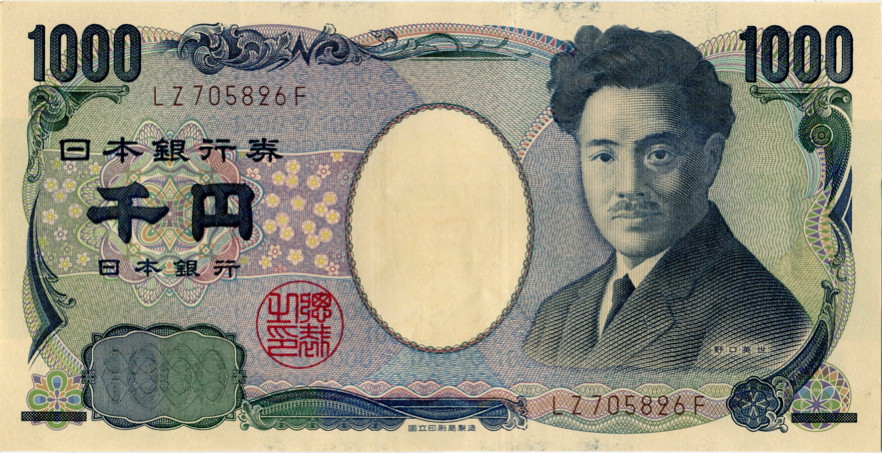
The Inawashiro Lake area of Bandai-Asahi National Park is Inawashiro-ko, where the parental home of Hideyo Noguchi (1876–1928) can still be found. It was preserved along with some of Noguchi's belongings and letters as part of a memorial. Noguchi is famous not only for his research on yellow fever, but also for having his face on the 1,000 yen note.
The Miharu Takizakura is an ancient weeping higan cherry tree in Miharu, Fukushima. It is over 1,000 years old.
Food
Fruits. Fukushima is known as a "Fruit Kingdom" because of its many seasonal fruits, and the fact that there is fruit being harvested every month of the year. While peaches are the most famous, the prefecture also produces large quantities of cherries, nashi (Japanese pears), grapes, persimmons, and apples.
Fukushima-Gyu is the prefecture's signature beef. The Japanese Black type cattle used to make Fukushima-Gyu are fed, raised, and processed within the prefecture. Only beef with a grade of 2 or 3 can be labeled as "Fukushima-Gyu" (福島牛)
Ikaninjin is shredded carrot and dried squid seasoned with soy sauce, cooking sake, mirin, etc. It is a local cuisine from the northern parts of Fukushima Prefecture. It is primarily made from the late autumn to winter in the household.
Kitakata Ramen is one of the Top 3 Ramen of Japan, along with Sapporo and Hakata. The base is a soy-sauce soup, as historically soy sauce was readily available from the many storehouses around the town. Niboshi (sardines), tonkotsu (pig bones) and sometimes chicken and vegetables are boiled to make the stock. This is then topped with chashu (thinly sliced barbeque pork), spring onions, fermented bamboo shoots, and sometimes narutomaki, a pink and white swirl of cured fish cake.
Mamador is the prefecture's most famous confection. The baked good has a milky red bean flavor center wrapped in a buttery dough. The name means “People who drink mothers’ milk" in Spanish. It is produced by the Sanmangoku Company.
Creambox is prefecture's second famous confection. It is a sweet bread with a thick milk bread and white milk-flavored cream. It is sold in Koriyama City at many bakery and school purchases . The selling price is usually around 100 yen, and in some rare cases, the dough is round. Since it looks simple and does not change much from normal bread when viewed from above, some processing may be performed on the cream, there are things that put almonds or draw the character's face with chocolate
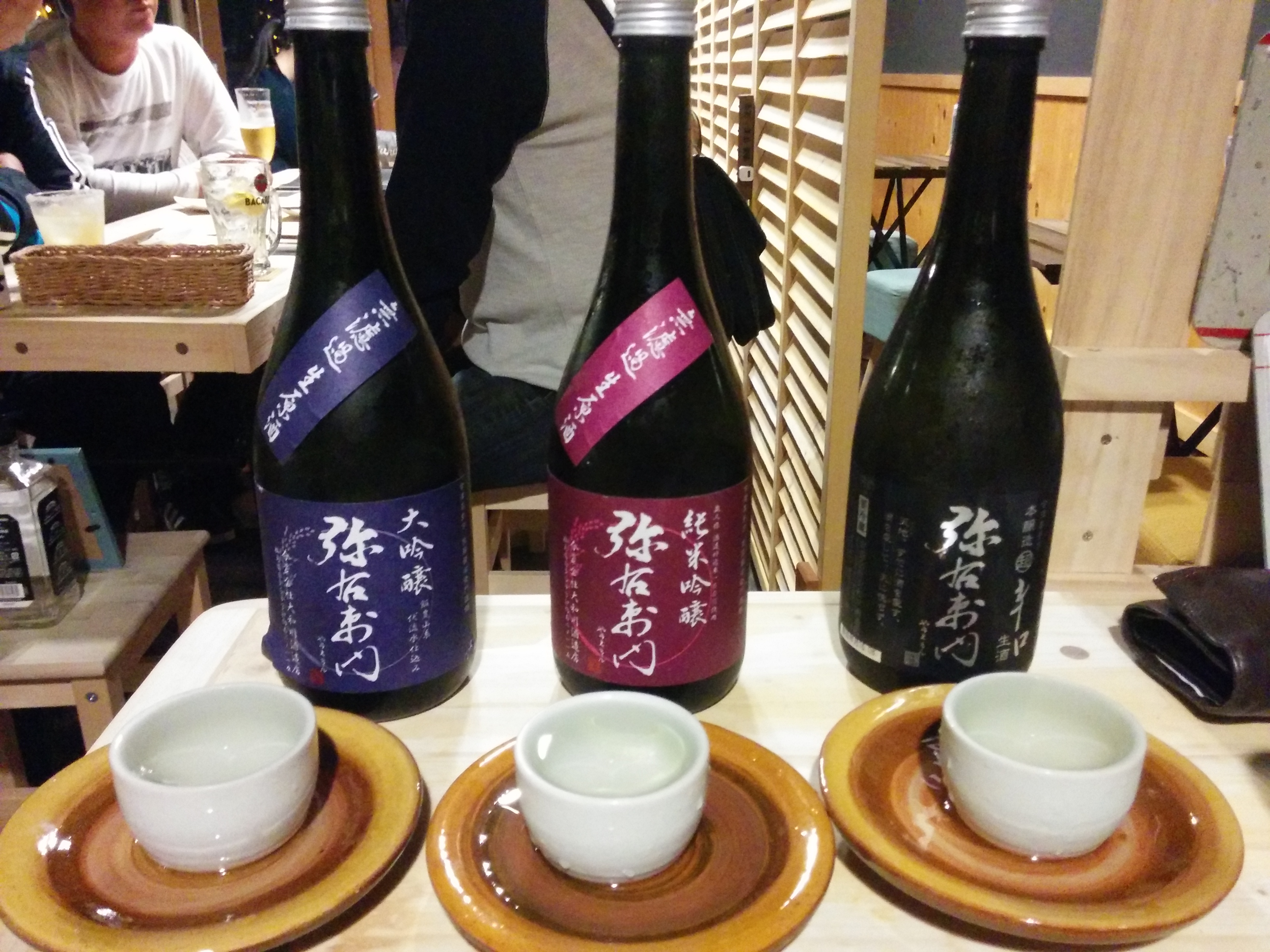
Sake. The Fukushima Prefecture Sake Brewers Cooperative is made up of nearly 60 sake breweries. Additionally, the Annual Japan Sake Awards has awarded the prefecture the most gold prizes of all of Japan for four years running as of 2016.
Transportation
Rail

- AbukumaExpress
- Abukuma Express Line
- Aizu Railway
- Aizu Line
- Fukushima Transportation
- Iizaka Line
- JR East
- Ban'etsu East Line
- Ban'etsu West Line
- Jōban Line
- Suigun Line
- Tadami Line
- Tōhoku Line
- Tōhoku Shinkansen
- Yamagata Line
- Yamagata Shinkansen
- Yagan Railway
- Kinugawa Line
Road
Expressways
- [[File:JP Expressway E49.svg|20px|link=|alt=]] Ban-etsu Expressway
- [[File:JP Expressway E6.svg|20px|link=|alt=]] Jōban Expressway
- [[File:JP Expressway E4.svg|20px|link=|alt=]] Tōhoku Expressway
National highways
- (Fukushima-Yamagata-Shinjo-Yokote-Akita)
- (Niigata-Murakami-Nagai-Nanyo-Shiroishi-Soma)
- (Soma-Fukushima-Inawashiro)
- (Niigata-Tsubame-Uonuma-Tadami-Shirakawa-Iwaki)
- (Mito-Hitachiota-Iwaki-Tamura-Nihonmatsu-Date-Shibata)
- (Niigata-Agano-Kitakata-Fukushima-Namie)
Ports
- Onahama Port – International and domestic goods, container hub port in Iwaki
Airports
- Fukushima Airport
Notable people
- Junko Tabei, the first woman to reach the summit of Mount Everest, and the first woman to ascend all Seven Summits by climbing the highest peak on every continent
- Takeshi Suzuki, an alpine skier and Paralympic athlete.
- Yoshihide Muroya, an aerobatics pilot and race pilot
- Toshiyuki Nishida, an actor best known for his fishing comedy series, Tsuribaka Nisshi ("The Fishing Maniac's Diary")
- Wakatakakage Atsushi, a professional sumo wrestler competing in sumo's top makuuchi division beginning in 2019.
- Wakamotoharu Minato, Wakatakakage's brother and also top division rikishi.
- Mazie K. Hirono, US Senator and former Lieutenant Governor for Hawaii, was born in Fukushima Prefecture in 1947, and moved to Hawaii in 1955
- Hideyo Noguchi, the doctor who contributed to knowledge in the fight against syphilis and yellow fever. The Japanese government created the Hideyo Noguchi Africa Prize in his honor. This was first awarded in May 2008
- Seishiro Okazaki (January 28, 1890 – July 12, 1951) was a Japanese American healer, martial artist, and founder of Danzan-ryū jujitsu. Born in Kakeda, Date County in Fukushima Prefecture, Japan, he immigrated to Hawaii in 1906
- Nahoko Takada (高田なほ子, 1905–1991), Japanese educator, trade unionist, politician, socialist and peace activist
Notes
References
- Nussbaum, Louis-Frédéric and Käthe Roth. (2005). Japan encyclopedia. Cambridge: Harvard University Press. ; OCLC 58053128
References
- "2020年度国民経済計算(2015年基準・2008SNA) : 経済社会総合研究所 - 内閣府".
- NHK Publishing. (24 May 2016)
- Nussbaum, Louis-Frédéric. (2005). "Fukushima-ken" in {{Google books. p2QnPijAEmEC. ''Japan Encyclopedia'', p. 218. p2QnPijAEmEC. p. 970
- Nussbaum, "Fukushima" in {{Google books. p2QnPijAEmEC. p. 218
- "大安場古墳群". [[Agency for Cultural Affairs]].
- Nussbaum, "Provinces and prefectures" in {{Google books. p2QnPijAEmEC. p. 780
- Takeda, Toru ''et al.'' (2001). ''Fukushima – Today & Tomorrow,'' p. 10.
- Meyners d'Estrey, Guillaume Henry Jean (1884). {{Google books. gzEwAAAAYAAJ. ''Annales de l'Extrême Orient et de l'Afrique,'' Vol. 6, p. 172. p2QnPijAEmEC. p. 408
- "Database of Registered National Cultural Properties". [[Agency for Cultural Affairs]].
- "Felt earthquakes". [[Japan Meteorological Agency]].
- "東北・関東7県で貯水池、農業用ダムの損傷86カ所 補修予算わずか1億、不安募る梅雨". msn産経ニュース.
- "新たに女性遺体を発見 白河の土砂崩れ". 47NEWS.
- [http://www.npa.go.jp/archive/keibi/biki/higaijokyo_e.pdf "Damage Situation and Police Countermeasures... March 11, 2013"] {{Webarchive. link. (February 8, 2012 National Police Agency of Japan. Retrieved March 18, 2013.)
- Martin Fackler. (June 1, 2011). "Report Finds Japan Underestimated Tsunami Danger". [[The New York Times]].
- (March 15, 2011). "Japan quake: Radiation rises at Fukushima nuclear plant". [[BBC News]].
- (April 12, 2011). "Fukushima crisis raised to level 7, still no Chernobyl". [[New Scientist]].
- "Fukushima accident". Encyclopædia Britannica.
- {{cite gvp
- (1993). "Japan: An Illustrated Encyclopedia". Kodansha.
- "General overview of area figures for Natural Parks by prefecture". [[Ministry of the Environment (Japan).
- [http://www.stat.go.jp/english/index.html Statistics Bureau of Japan]
- "Fukushima City". Japan National Tourism Organization.
- Schreiber, Mark, "[http://search.japantimes.co.jp/cgi-bin/fd20110417bj.html Japan's food crisis goes beyond recent panic buying] {{webarchive. link. (April 20, 2011 ", ''[[The Japan Times]]'', April 17, 2011, p. 9.)
- Hongo, Jun, "[http://www.japantimes.co.jp/text/nn20120320i1.html Fukushima not just about nuke crisis] {{Webarchive. link. (November 1, 2012 ", ''[[The Japan Times]]'', March 20, 2012, p. 3.)
- "Aizuwakamatsu Area". Japan National Tourism Organization.
- (February 2025). "Aizu lacquerware". Fukushima Prefecture Tourism & Local Products Association.
- (June 20, 2018). "Make Your Own Aizu Lacquerware Chopsticks".
- "Akabeko Red Cows". Fukushima Prefecture Tourism & Local Products Association.
- (February 2025). "Okiagari Ko-boshi (self-righting dharma doll)". Fukushima Prefecture Tourism & Local Products Association.
- (February 2025). "Miharu Koma". Fukushima Prefecture Tourism & Local Products Association.
- "Soma Nomaoi Executive Committee Official Site". Soma Nomaoi Executive Committee.
- "The Soma Nomaoi". Fukushima Prefecture Tourism & Local Products Association.
- link. 福島わらじまつり実行委員会事務局
- (February 2025). "Fukushima Waraji Festival". Fukushima Prefecture Tourism & Local Products Association.
- link. 会津若松観光物産協会
- (February 2025). "Aizu Festival". Fukushima Prefecture Tourism & Local Products Association.
- (February 2025). "Taimatsu Akashi". Fukushima Prefecture Tourism & Local Products Association.
- link
- link
- link. 二本松菊栄会
- "第53回郡山うねめまつり2017".
- link. 霊山太鼓保存会
- "Ura-bandai Area". Japan National Tourism Organization.
- "Lake Inawashiro Area". Japan National Tourism Organization.
- "フルーツを食す – 福島市ホームページ".
- "福島牛販売促進協議会".
- 羽雁渉「イカと日本人」Chunichi Newspaper, Sunday edition.世界と日本 大図解シリーズ No.1272. October 9, 2016 、pages 1, 8 (in Japanese).
- (June 20, 2016). "Kitakata ramen". NHK WORLD.
- "福島の人気お土産50選|ままどおるだけじゃない!福島のおすすめお菓子-カウモ". カウモ.
- "ままどおる|三万石".
- "クリームボックス|クリームボックス部".
- "蔵元検索 {{!}} 福島県酒造協同組合".
- (May 18, 2016). "祝!!4連覇 平成27酒造年度全国新酒鑑評会金賞受賞蔵数 日本一!! {{!}} 福島県酒造協同組合".
- "Hideyo Noguchi Africa Prize". Cabinet Office, Government of Japan.
- [Immigration records show he arrived at the port of Honolulu T.H. on October 9, 1906 aboard the Steamer "China" of the Pacific Mail S.S. Co. "Hawaii, Honolulu Index to passengers, Not Including Filipinos, 1900–1952". FamilySearch (https://www.familysearch.org: accessed June 25, 2011). entry for Akaraki Seisiro, age 16; citing Passenger Records, Aada, Matsusuke – Arisuye, Tomoyashe, Image 2150; National Archives and Records Administration, Washington D.C., United States.]
This article was imported from Wikipedia and is available under the Creative Commons Attribution-ShareAlike 4.0 License. Content has been adapted to SurfDoc format. Original contributors can be found on the article history page.
Ask Mako anything about Fukushima Prefecture — get instant answers, deeper analysis, and related topics.
Research with MakoFree with your Surf account
Create a free account to save articles, ask Mako questions, and organize your research.
Sign up freeThis content may have been generated or modified by AI. CloudSurf Software LLC is not responsible for the accuracy, completeness, or reliability of AI-generated content. Always verify important information from primary sources.
Report