From Surf Wiki (app.surf) — the open knowledge base
Fukushima Daiichi Nuclear Power Plant
Disabled nuclear power plant in Japan
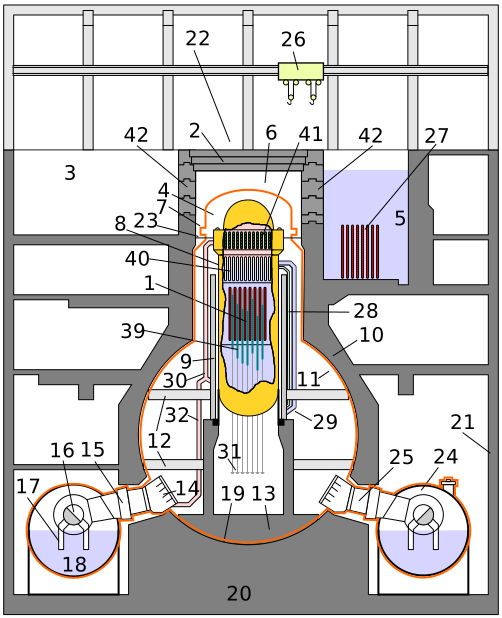
Disabled nuclear power plant in Japan
| Field | Value |
|---|---|
| name | Fukushima Daiichi Nuclear Power Plant |
| image | Fukushima Daiichi 04780015 (8388174045).jpg |
| image_caption | Aerial photo from 2007, before the nuclear accident in 2011 |
| coordinates | |
| country | Japan |
| location | Ōkuma, Fukushima |
| status | bd |
| construction_began | |
| commissioned | |
| decommissioned | |
| operator | Tokyo Electric Power Company |
| ps_units_cancelled | 2 × 1,380 MW |
| ps_units_decommissioned | {{ubli |
| np_reactor_type | BWR |
| np_reactor_supplier | {{ubli |
| ps_electrical_capacity | 5,306 MW (1979–2011) |
| website |
|1 × 460 MW (unit 1) |4 × 784 MW (units 2, 3, 4 and 5) |1 × 1,100 MW (unit 6) |General Electric |Toshiba |Hitachi The Fukushima Daiichi Nuclear Power Plant is a disabled nuclear power plant located on a 3.5 km2 site in the towns of Ōkuma and Futaba in Fukushima Prefecture, Japan. The plant suffered major damage from the magnitude 9.1 earthquake and tsunami that hit Japan on March 11, 2011. The chain of events caused radiation leaks and permanently damaged several of its reactors, making them impossible to restart. The working reactors were not restarted after the events.
First commissioned in 1971, the plant consists of six boiling water reactors. These light water reactors drove electrical generators with a combined power of 4.7 GWe, making Fukushima Daiichi one of the 15 largest nuclear power stations in the world. Fukushima was the first nuclear plant to be designed, constructed, and run in conjunction with General Electric and Tokyo Electric Power Company (TEPCO). The sister nuclear plant Fukushima Daini ("number two"), 12 km to the south, is also run by TEPCO. It also suffered serious damage during the tsunami, at the seawater intakes of all four units, but was successfully shut down and brought to a safe state. See the timeline of the Fukushima II nuclear accidents.
The March 2011 disaster disabled the reactor cooling systems, leading to releases of radioactivity and triggering a 30 km evacuation zone surrounding the plant; as of February 2025, releases of radioactivity are still ongoing. On April 20, 2011, the Japanese authorities declared the 20 km evacuation zone a no-go area which may only be entered under government supervision. In November 2011, the first journalists were allowed to visit the plant. They described a scene of devastation in which three of the reactor buildings were destroyed; the grounds were covered with mangled trucks, crumpled water tanks and other debris left by the tsunami; and radioactive levels were so high that visitors were only allowed to stay for a few hours.
In April 2012, units 1–4 were shut down. Units 2–4 were shut down on April 19, while unit 1 was the last of these four units to be shut down on April 20 at midnight. In December 2013 TEPCO decided none of the undamaged units will reopen. Units 5 and 6 were shut down later in January 2014.
In April 2021, the Japanese government approved the discharge of radioactive water, which has been treated to remove radionuclides other than tritium, into the Pacific Ocean over the course of 30 years.
Power plant information
which is closed by a concrete plug (2). When fuel rods are moved in or out, the crane (26) will move this plug to the pool for facilities (3). Steam from the dry well (11) can move to the wet well (24) through jet nozzles (14) to condense there (18). In the spent fuel pool (5), the used fuel rods (27) are stored.]] The reactors for units 1, 2, and 6 were supplied by General Electric, those for units 3 and 5 by Toshiba, and unit 4 by Hitachi. All six reactors were designed by General Electric. Architectural design for General Electric's units was done by Ebasco Services. All construction was done by Kajima. Beginning September 2010, unit 3 was fueled by a small fraction (6%) of plutonium containing mixed-oxide (MOX) fuel, rather than the low enriched uranium (LEU) used in the other reactors. Units 1–5 were built with Mark I type (light bulb torus) containment structures. The Mark I containment structure was slightly increased in volume by Japanese engineers. Unit 6 has a Mark II type (over/under) containment structure.
Unit 1 is a 460 MWe boiling water reactor (BWR-3) constructed in July 1967. It commenced commercial electrical production on March 26, 1971, and was initially scheduled for shutdown in early 2011. In February 2011, Japanese regulators granted an extension of ten years for the continued operation of the reactor. It was damaged during the 2011 Tōhoku earthquake and tsunami.
Unit 1 was designed for a peak ground acceleration of 0.18 g (1.74 m/s2) and a response spectrum based on the 1952 Kern County earthquake, but rated for 0.498 g.{{Cite book| url = https://books.google.com/books?id=qEuWntnoZzYC&pg=PA123
The reactor's emergency diesel generators and DC batteries, crucial components in helping keep the reactors cool in the event of a power loss, were located in the basements of the reactor turbine buildings. The reactor design plans provided by General Electric specified placing the generators and batteries in that location, but mid-level engineers working on the construction of the plant were concerned that this made the backup power systems vulnerable to flooding. TEPCO elected to strictly follow General Electric's design in the construction of the reactors.
Site layout

The plant is on a bluff which was originally 35 m above sea level. During construction, however, TEPCO lowered the height of the bluff by 25 m. One reason for lowering the bluff was to allow the base of the reactors to be constructed on solid bedrock in order to mitigate the threat posed by earthquakes. Another reason was the lowered height would keep the running costs of the seawater pumps low. TEPCO's analysis of the tsunami risk when planning the site's construction determined that the lower elevation was safe because the sea wall would provide adequate protection for the maximum tsunami assumed by the design basis. However, the lower site elevation did increase the vulnerability for a tsunami larger than anticipated in design.
The Fukushima Daiichi site is divided into two reactor groups, the leftmost groupwhen viewed from the oceancontains units 4, 3, 2 and 1 going from left to right. The rightmost groupwhen likewise viewed from the oceancontains the newer units 5 and 6, respectively, the positions from left to right. A set of seawalls protrude into the ocean, with the water intake in the middle and water discharge outlets on either side.
|File:Fukushima I NPP 1975.jpg |Aerial view of the Fukushima I plant area in 1975, showing sea walls and completed reactors
|File:Fukushima I NPP 1975 reactors 1 to 4 crop.jpg |Closeup of Units 4, 3, 2 and 1
|File:Fukushima I Nuclear Powerplant site close-up (wotext).PNG |Major buildings
|File:Fukushima I nuclear accidents diagram.svg |Illustration of post-accident state of 1–4 reactors, all but 2 display obvious damage to secondary containment
Reactor data
Units 7 and 8 were planned to start construction in April 2012 and 2013 and to come into operation in October 2016 and 2017 respectively. The project was formally canceled by TEPCO in April 2011 after local authorities questioned the fact that they were still included in the supply plan for 2011, released in March 2011, after the accidents. The company stated that the plan had been drafted before the earthquake.
| url=http://www.world-nuclear.org/info/inf79.html | publisher=World Nuclear Association | date=February 24, 2011 | title=Nuclear Power in Japan | access-date=March 12, 2011 | archive-date=February 20, 2012 | archive-url=https://web.archive.org/web/20120220004801/http://www.world-nuclear.org/info/inf79.html | url-status=dead}} | url=https://www-pub.iaea.org/MTCD/publications/PDF/CNPP2010_CD/pages/AnnexII/tables/table2.htm | title=Reactors in operation | date=December 31, 2009 | publisher=IAEA | access-date=March 12, 2011}} |
|---|---|---|---|---|---|---|---|---|---|---|---|---|
| (Containment) | Net power | Start construction | First criticality | Commercial operation | Shutdown | NSSS | A-E | Builder | ||||
| 1 | BWR-3 | |||||||||||
| (Mark I) | 439 MW | July 25, 1967 | October 10, 1970 | March 26, 1971 | May 19, 2011 | General Electric | Ebasco | Kajima | ||||
| 2 | BWR-4 | |||||||||||
| (Mark I) | 760 MW | June 9, 1969 | May 10, 1973 | July 18, 1974 | May 19, 2011 | General Electric | Ebasco | Kajima | ||||
| 3 | BWR-4 | |||||||||||
| (Mark I) | 760 MW | December 28, 1970 | September 6, 1974 | March 27, 1976 | May 19, 2011 | Toshiba | Toshiba | Kajima | ||||
| 4 | BWR-4 | |||||||||||
| (Mark I) | 760 MW | February 12, 1973 | January 28, 1978 | October 12, 1978 | May 19, 2011 | Hitachi | Hitachi | Kajima | ||||
| 5 | BWR-4 | |||||||||||
| (Mark I) | 760 MW | May 22, 1972 | August 26, 1977 | April 18, 1978 | December 17, 2013 | Toshiba | Toshiba | Kajima | ||||
| 6 | BWR-5 | |||||||||||
| (Mark II) | 1067 MW | October 26, 1973 | March 9, 1979 | October 24, 1979 | December 17, 2013 | General Electric | Ebasco | Kajima | ||||
| 7 (planned) | ABWR | 1380 MW | Canceled 04/2011 | Planned 10/2016 | ||||||||
| 8 (planned) | ABWR | 1380 MW | Canceled 04/2011 | Planned 10/2017 |
Electrical connections
The Fukushima Daiichi plant is connected to the power grid by four lines, the 500 kV Futaba Line (双葉線), the two 275 kV Ōkuma Lines (大熊線) and the 66 kV Yonomori Line (夜の森線) to the Shin-Fukushima (New Fukushima) substation.
The Shin-Fukushima substation also connects to the Fukushima Daini plant by the Tomioka Line (富岡線). Its major connection to the north is the Iwaki Line (いわき幹線), which is owned by Tohoku Electric Power. It has two connections to the south-west that connect it to the Shin-Iwaki substation (新いわき).
Operating history
.jpg)
The plant reactors came online one at a time beginning in 1970 and the last in 1979. From the end of 2002 through 2005, the reactors were among those shut down for a time for safety checks due to the TEPCO data falsification scandal. On February 28, 2011, TEPCO submitted a report to the Japanese Nuclear and Industrial Safety Agency admitting that the company had previously submitted fake inspection and repair reports. The report revealed that TEPCO failed to inspect more than 30 technical components of the six reactors, including power boards for the reactor's temperature control valves, as well as components of cooling systems such as water pump motors and emergency power diesel generators. In 2008, the IAEA warned Japan that the Fukushima plant was built using outdated safety guidelines, and could be a "serious problem" during a large earthquake. The warning led to the building of an emergency response center in 2010, used during the response to the 2011 nuclear accident.
On April 5, 2011, TEPCO vice-president Takashi Fujimoto announced that the company was canceling plans to build units 7 and 8. On May 20 TEPCO's board of directors' officially voted to decommission units 1 through 4 of the Fukushima Daiichi nuclear power plant and to cancel plans to build units 7 and 8. It refused however to make a decision regarding units 5 and 6 of the station or units 1 to 4 of the Fukushima Daini nuclear power station until a detailed investigation is made. In December 2013 TEPCO decided to decommission the undamaged units 5 and 6; they may be used to test remote cleanup methods before use on the damaged reactors.

| Year | Unit 1 | Unit 2 | Unit 3 | Unit 4 | Unit 5 | Unit 6 |
|---|---|---|---|---|---|---|
| 1970 | 60.482 | |||||
| 1971 | 2024.3 | |||||
| 1972 | 2589.1 | |||||
| 1973 | 2216.8 | 5.949 | ||||
| 1974 | 1629.7 | 3670.1 | 284.7 | |||
| 1975 | 0 | 622.1 | 2961.8 | |||
| 1976 | 1563.9 | 4191.4 | 4807.1 | |||
| 1977 | 0 | 49.7 | 2171.1 | 875.1 | ||
| 1978 | 1497.6 | 3876.3 | 2753.7 | 3163.2 | 4806.7 | |
| 1979 | 2504.4 | 2976 | 4916.3 | 3917.4 | 3898.6 | 3235.6 |
| 1980 | 1249.5 | 2889 | 4287 | 4317 | 4282.6 | 6441.1 |
| 1981 | 1084.8 | 3841.8 | 3722.8 | 4667.5 | 4553.9 | 7418.6 |
| 1982 | 2355 | 5290.2 | 2886.8 | 5734.7 | 4061.3 | 6666.5 |
| 1983 | 3019.5 | 3422.7 | 4034 | 4818.2 | 5338.8 | 5387.8 |
| 1984 | 2669.761 | 3698.718 | 4497.326 | 4433.166 | 4691.482 | 5933.242 |
| 1985 | 1699.287 | 4266.285 | 5798.641 | 4409.031 | 4112.429 | 5384.802 |
| 1986 | 2524.683 | 5541.101 | 4234.196 | 4315.241 | 4157.361 | 7783.537 |
| 1987 | 3308.888 | 3851.078 | 3748.839 | 5964.048 | 3995.012 | 7789.201 |
| 1988 | 2794.464 | 4101.251 | 5122.991 | 5309.892 | 5952.712 | 5593.058 |
| 1989 | 1440.778 | 6516.393 | 5706.694 | 4232.648 | 4766.535 | 5128.362 |
| 1990 | 2352.405 | 3122.761 | 2919.548 | 4273.767 | 3956.549 | 7727.073 |
| 1991 | 1279.986 | 3853.054 | 4491.022 | 6483.384 | 6575.818 | 6948.662 |
| 1992 | 1794.061 | 4568.531 | 6098.742 | 4082.747 | 4841.234 | 5213.607 |
| 1993 | 2500.668 | 4186.704 | 4204.301 | 4206.577 | 4059.685 | 6530.932 |
| 1994 | 3337.532 | 2265.961 | 4202.304 | 6323.277 | 4246.206 | 8079.391 |
| 1995 | 3030.829 | 6396.469 | 5966.533 | 5485.662 | 5878.681 | 6850.839 |
| 1996 | 2298.589 | 5192.318 | 4909.655 | 4949.891 | 5666.866 | 6157.765 |
| 1997 | 3258.913 | 4618.869 | 2516.651 | 4556.81 | 4609.382 | 9307.735 |
| 1998 | 3287.231 | 3976.16 | 2632.682 | 5441.398 | 5369.912 | 6328.985 |
| 1999 | 2556.93 | 3158.382 | 5116.09 | 5890.548 | 6154.135 | 7960.491 |
| 2000 | 3706.281 | 5167.247 | 5932.485 | 4415.901 | 1647.027 | 7495.577 |
| 2001 | 487.504 | 5996.521 | 5637.317 | 5858.452 | 5905.13 | 7778.874 |
| 2002 | 3120.2 | 5101.018 | 3567.314 | 4687.718 | 6590.488 | 6270.918 |
| 2003 | 0 | 1601.108 | 2483.557 | 0 | 2723.76 | 4623.905 |
| 2004 | 0 | 3671.49 | 3969.674 | 4728.987 | 5471.325 | 1088.787 |
| 2005 | 851.328 | 3424.939 | 5103.85 | 1515.596 | 2792.561 | 7986.451 |
| 2006 | 3714.606 | 3219.494 | 4081.932 | 4811.409 | 4656.9 | 5321.767 |
| 2007 | 610.761 | 5879.862 | 4312.845 | 5050.607 | 5389.565 | 6833.522 |
| 2008 | 3036.562 | 5289.599 | 6668.839 | 4410.285 | 3930.677 | 8424.526 |
| 2009 | 2637.414 | 4903.293 | 4037.601 | 5462.108 | 5720.079 | 7130.99 |
| 2010 | 2089.015 | 6040.782 |
Warnings and design critique
In 1990, the U.S. Nuclear Regulatory Commission (NRC) ranked the failure of the emergency electricity generators and subsequent failure of the cooling systems of plants in seismically very active regions one of the most likely risks. The Japanese Nuclear and Industrial Safety Agency (NISA) cited this report in 2004. According to Jun Tateno, a former NISA scientist, TEPCO did not react to these warnings and did not respond with any measures.
Filmmaker Adam Curtis mentioned the risks of the type of boiling water reactors cooling systems such as those in Fukushima I, and claimed the risks were known since 1971 in a series of documentaries in the BBC in 1992 and advised that PWR type reactors should have been used.
Tokyo Electric Power Company (TEPCO) operated the station and was warned their seawall was insufficient to withstand a powerful tsunami, but did not increase the seawall height in response. The Onagawa Nuclear Power Plant, operated by Tohoku Electric Power, ran closer to the epicenter of the earthquake, but had much more robust seawalls of greater height and avoided severe accident.
Incidents and accidents prior to March 2011
1978
Fuel rods fell in reactor unit 3, causing a nuclear reaction. It took about seven and a half hours to place the rods back into proper positions. There was no record of the incident, as TEPCO had covered it up; interviews of two former workers in 2007 led to its discovery by TEPCO management.
February 25, 2009
A manual shutdown was initiated during the middle of a start-up operation. The cause was a high pressure alarm that was caused by the shutting of a turbine bypass valve. The reactor was at 12% of full power when the alarm occurred at 4:03 am (local time) due to a pressure increase to 1,030 psi, exceeding the regulatory limit of 1,002 psi. The reactor was reduced to 0% power, which exceeded the 5% threshold that requires event reporting, and pressure dropped back under the regulatory limit at 4:25 am. Later, at 8:49 am the control blades were completely inserted, constituting a manual reactor shutdown. An inspection then confirmed that one of the 8 bypass valves had closed and that the valve had a bad driving fluid connection. The reactor had been starting up following its 25th regular inspection, which had begun on October 18, 2008.
March 26, 2009
Unit 3 had problems with over-insertion of control blades during outage. Repair work was being done on equipment that regulates the driving pressure for the control blades, and when a valve was opened at 2:23 pm a control blade drift alarm went off. On later inspection, it was found that several of the rods had been unintentionally inserted.
November 2, 2010
Unit 5 had an automatic SCRAM while an operator was conducting an adjustment to the control blade insertion pattern. The SCRAM was caused by a reactor low water level alarm. The turbine tripped along with the reactor and there was no radiation injury to workers.
Nuclear disaster of March 11, 2011
Main article: Fukushima nuclear accident
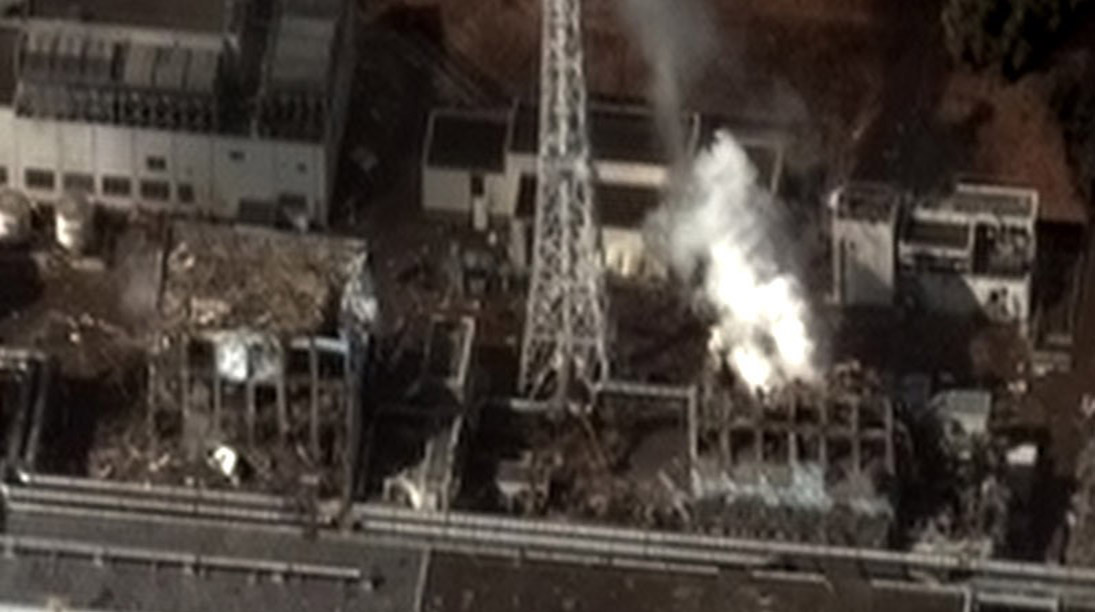
On March 11, 2011, an earthquake categorized as 9.1 MW on the moment magnitude scale occurred at 2:46pm Japan Standard Time (JST) off the northeast coast of Japan, one of the most powerful earthquakes in history. Units 4, 5 and 6 had been shut down prior to the earthquake for planned maintenance. The remaining reactors were shut down/SCRAMed automatically after the earthquake, and the remaining decay heat of the fuel was being cooled with power from emergency generators. The subsequent destructive tsunami with waves of up to 14 m that over-topped the station, which had seawalls, disabled emergency generators required to cool the reactors and spent fuel pools in units 1–5. Over the following three weeks there was evidence of partial nuclear meltdowns in units 1, 2 and 3: visible explosions, suspected to be caused by hydrogen gas, in units 1 and 3; a suspected explosion in unit 2, that may have damaged the primary containment vessel; and a possible uncovering of the spent fuel pools in units 1, 3 and 4. Units 5 and 6 were reported on March 19, by the station-wide alert log updates of the IAEA, to have gradually rising spent fuel pool temperatures as they had likewise lost offsite power, but onsite power provided by unit 6's two diesel generators that had not been flooded, were configured to do double-duty and cool both unit 5 and 6's spent fuel pools and cores. As a precautionary measure, vents in the roofs of these two units were also made to prevent the possibility of hydrogen gas pressurization and then ignition.
Radiation releases from units 1–4 forced the evacuation of 83,000 residents from towns around the plant. The triple meltdown also caused concerns about contamination of food and water supplies, including the 2011 rice harvest, and also the health effects of radiation on workers at the plant. Scientists estimate that the accident released 18 quadrillion becquerels of caesium-137 into the Pacific Ocean, contaminating 390 sqkm of the ocean floor.
The events at units 1, 2 and 3 have been rated at level 5 each on the International Nuclear Event Scale, and those at unit 4 as level 3 (Serious Incident) events, with the overall plant rating at level 7 (major release of radioactive material with widespread health and environmental effects requiring implementation of planned and extended countermeasures), making the Fukushima disaster and the Chernobyl disaster worldwide the only level 7 events to date .
Japanese wheelchair basketball player Akira Toyoshima revealed that he was working as an accountant at the Fukushima Daiichi Nuclear Power Plant at the time of the earthquake, tsunami, and nuclear disaster. Toyoshima was focused on organizing a set of important and urgent documents in the main office building of the Fukushima Daiichi Nuclear Power Plant as a member of the accounting team when it happened.
Aftermath
.jpg)
In April 2013, TEPCO publicly admitted radionuclide contaminated water may have leaked from the storage units, possibly contaminating the soil and water nearby. The leak was controlled and stored in containment tanks. Contaminated water continued to accumulate at the plant, and TEPCO announced plans to filter radioactive particles and discharge purified water.DW http://www.dw.de/radioactive-water-leaks-from-fukushima-nuclear-plant/a-16725927.
In August, Japanese officials said highly radioactive water was leaking from Fukushima Daiichi into the Pacific Ocean at a rate of 300 ST per day. Japanese Prime Minister Shinzo Abe ordered government officials to step in.
By September 2019, 1 e6ST of contaminated cooling water had been collected in tall steel tanks. Large filtration systems were used to clean the water of its radioactive contaminants, but could not remove the estimated 14 g of tritium, a radioactive isotope of hydrogen (Hydrogen-3) bonded into water molecules. TEPCO estimated the immediate site would run out of space by 2022, and planned to solve this problem by disposing of the radioactive water into the Pacific Ocean. This proposed measure was criticized by environmental groups and several Asian governments, who claimed that storage area was available in the exclusion zone around the reactor. Japan's government approved the disposing into the Pacific Ocean, beginning in 2023, over the course of an estimated 40 years.
A note in the 2020 Tokyo Olympic Games opening speech referenced the disaster and how Japan has recovered from the disaster.
Dismantling of reactors

The reactors On August 1, 2013, the Japanese Industry Minister Toshimitsu Motegi approved the creation of a structure to develop the technologies and processes necessary to dismantle the four reactors damaged in the Fukushima accident.
To reduce the flow of contaminated water into the Pacific Ocean, TEPCO spent ¥34.5 billion (approximately ) to build a 1.5 km underground wall of frozen soil around the plant, constructed by Kajima Corporation. 1,500 30 m, supercooled pipes were inserted into the ground in order to freeze the surrounding groundwater and soil. The wall ultimately failed to significantly decrease the groundwater flowing into the site.
The cost of decommissioning and decontamination of the Fukushima Daiichi nuclear power plant has been estimated at $195 billion, which includes compensation payouts to victims of the disaster. The amount also includes decommissioning of Fukushima Daiichi reactors, which is estimated at $71 billion. TEPCO will shoulder $143 billion of decommissioning and decontamination, while the Ministry of Finance of Japan will provide $17 billion. Other power companies will also contribute to the cost.
On September 26, 2020, Prime Minister Yoshihide Suga visited the Daiichi Nuclear Power Plant to show that his cabinet prioritized the reconstruction of areas that were affected by natural and nuclear disasters.
The three reactors host 880 t of highly radioactive melted nuclear fuel. As of 2024, 13 years after the accident, attempts to remove highly radioactive material from the damaged reactor were halted. A robot, dubbed Telesco attempted to remove 3 g of the estimated 880 t lethally radioactive molten fuel. This sample would provide critical data for the development of future decommissioning methods, as well as the necessary technology and robots, according to experts. On September 11, 2024, a robotic mission at Fukushima Daiichi restarted to collect a small sample of melted radioactive fuel from a damaged reactor. The sample A glitch halted Telesco, the robot attempting to retrieve the sample, further delaying the mission. Concerns also remain over the impact on marine life as radioactive water is being released into the Pacific Ocean, despite government assurances that it meets safety standards.
In November 2024, TEPCO moved a small piece of melted fuel from Fukushima's reactor for radiation testing, a key step in its complex decommissioning process.
References
References
- (2011-04-07). "Tepco site (Japanese). One Week Plant Grounds Course. 福島第一原子力発電所 {{!}} PR施設:構内見学コース".
- "Tokyo Electric Power Co. Fukushima Daiichi Nuclear Power Station". jnes.go.jp.
- "The Asahi Shimbun".
- (2015). "The Fukushima Daiichi Accident". IAEA – International Atomic Energy Agency.
- "Fukushima Daiichi Status Updates - IAEA".
- Fackler, Martin. (November 12, 2011). "Eyewitness Report: Inside the Wreckage of Japan's Fukushima Nuclear Plant".
- "Status of Each Unit of the Fukushima Daiichi Nuclear Power Station".
- Dedman, Bill. (March 13, 2011). "General Electric-designed reactors in Fukushima have 23 sisters in U.S". MSNBC.
- Asami, Eiichi ([[Kyodo News]]), "[http://search.japantimes.co.jp/cgi-bin/nn20110914f2.html American's Fukushima legacy lives on]", ''[[Japan Times]]'', September 14, 2011, p. 3.
- "Nuclear Reactor Maps: Fukushima-Daiichi". Council for Security Cooperation in the Asia Pacific.
- (March 16, 2011). "Plutonium in Fuel Rods: Cause For Concern?". NPR.
- (September 17, 2010). "Fukushima to Restart Using MOX Fuel for First Time". Nuclear Street.
- (August 10, 2010). "Third Japanese reactor to load MOX". World Nuclear News.
- (March 13, 2011). "Fact Sheet on Fukushima Nuclear Power Plant". Nuclear Information and Resource Service.
- Lahey, R.T. and Moody, F.J., "The Thermal-Hydraulics of a Boiling Water Reactor", second edition, 1993.
- Sandia National Laboratories. (July 2006). "Containment Integrity Research at Sandia National Laboratories – An Overview". U.S. Nuclear Regulatory Commission.
- "Fukushima Daiichi Information Screen". Icjt.org.
- (March 12, 2011). "Japan quake causes emergencies at 5 nuke reactors". Forbes.
- "Nuke database system: fukushima daiichi-1". ICJT Nuclear Training Centre.
- (July 25, 2018). "The detected acceleration at Fukushima Daiichi/Daini sites (draft)".
- (March 24, 2011). "Fukushima faced 14-metre tsunami". [[World Nuclear News]].
- Yoshida, Reiji, "[https://www.japantimes.co.jp/news/2011/07/14/national/ge-plan-followed-with-inflexibility GE plan followed with inflexibility]", ''[[Japan Times]]'', July 14, 2011, p. 1.
- (July 13, 2011). "Fukushima plant site originally was a hill safe from tsunami". The Japan Times.
- Asahi. [http://www.asahi.com/business/update/0405/TKY201104050566.html Tepco Withdrawal of Plans for New Construction at Fukushima Daiichi]. (Japanese)
- (February 24, 2011). "Nuclear Power in Japan". World Nuclear Association.
- (December 31, 2009). "Reactors in operation". [[IAEA]].
- (September 2, 2002). "Heavy fallout from Japan nuclear scandal". CNN.
- Cooke, Stephanie. (2009). "In Mortal Hands: A Cautionary History of the Nuclear Age". [[Bloomsbury Publishing]].
- (March 20, 2011). "Operator of Fukushima nuke plant admitted to faking repair records". Herald Sun.
- http://www.indianexpress.com/news/iaea-warned-japan-over-nuclear-quake-risk-wikileaks/763709/ IAEA warned Japan over nuclear quake risk: WikiLeaks
- (March 27, 2011). "Japan tsunami: Fukushima Fifty, the first interview".
- ''[[Mainichi Shimbun]]'', "TEPCO to drop plan to add two reactors at Fukushima nuclear plant", April 5, 2011.
- Higgins, Andrew, ''[[Washington Post]]'', "March 26: More reactors sought for plant?", ''[[Japan Times]]'', April 7, 2011, p. 2.
- (December 19, 2013). "TEPCO will decommission Fukushima Daiichi 5&6". Nuclear Engineering International.
- "Japan: Nuclear Power Reactors". IAEA.
- (March 16, 2019). "Japan's Reactor Risk Foretold 20 Years Ago in U.S. Agency Report". [[Bloomberg News]].
- Adam Curtis. (March 16, 2011). "A Is For Atom". BBC.
- Ralf Streck. (March 22, 2011). "Notkühlprobleme von Fukushima-Reaktoren seit 1971 bekannt". Heise Zeitschriften Verlag.
- (2011-10-20). "Japanese nuclear plant survived tsunami, offers clues". Reuters.
- Norihiko Shirouzu and Rebecca Smith. (March 16, 2011). "Plant's Design, Safety Record Are Under Scrutiny". The Wall Street Journal.
- Ikuko Kao, [https://web.archive.org/web/20160121021004/http://uk.reuters.com/article/japan-tepco-nuclear-idUKT16854920070322 Japan's TEPCO admits 1978 nuclear criticality], Reuters, March 22, 2007
- Tepco official release (Japanese).[https://www.tepco.co.jp/cc/press/09022501-j.html Manual shutdown during reactor startup operations in Fukushima I-1]. February 2, 2009.
- Tepco official release (Japanese). [https://www.tepco.co.jp/cc/press/09032602-j.html Over-insertion of control rods in Fukushima I-3].
- Tepco official release (Japanese). [https://www.tepco.co.jp/cc/press/10110201-j.html Fukushima I-5 Automatic SCRAM Information].
- Martin Fackler. (June 1, 2011). "Report Finds Japan Underestimated Tsunami Danger". The New York Times.
- Black, Richard. (March 15, 2011). "Reactor breach worsens prospects". BBC News.
- Biela Liwag. "Government Scientists on Japan Nuke Meltdown "No need to worry"". Noypi.ph.
- "Conditions of Fukushima Dai-ichi Nuclear Power Station Unit 2 as of 14:00 March 27, 2011".
- (June 7, 2011). "Japanese Earthquake Update (19 March 2011, 4:30 UTC) : IAEA Alert Log: Fukushima Daiichi Nuclear Accident".
- Fackler, Martin. (October 1, 2013). "Japan's Nuclear Refugees, Still Stuck in Limbo".
- "Anxiety in Tokyo over radiation in tap water".
- (March 15, 2011). "Radiation leak feared at nuke plant, people urged to stay indoors". [[Kyodo News Agency]].
- Martin Fackler. (January 21, 2012). "Japanese Struggle to Protect Their Food Supply". The New York Times.
- (October 24, 2013). "With a Plant's Tainted Water Still Flowing, No End to Environment Fears".
- (March 19, 2011). "Japan Earthquake Update". [[IAEA]].
- "Akira Toyoshima: I want to deliver hope and courage through our performances".
- (2021-03-13). "Wheelchair basketball star aims to lift Tohoku with gold at Tokyo Paralympics".
- Fackler, Martin. (August 7, 2013). "Japan Stepping in to Help Clean Up Atomic Plant".
- "Tritiated Water Task Force Repor". Tritiated Water Task Force.
- (2021-04-13). "Japan's Plan for Fukushima Wastewater Meets a Wall of Mistrust in Asia". The New York Times.
- Yamaguchi, Mari, ''[https://apnews.com/article/japan-tsunamis-tokyo-d35637331403c59bbdf61e5ee1f09dbc Japan to start releasing Fukushima water into sea in 2 years]'', The Associated Press, April 13, 2021
- "Fukushima Daiichi Decommissioning Project {{!}} TEPCO".
- [http://www.actu-environnement.com/ae/news/fukushima-structure-technologies-demantelement-reacteurs-fukushima-combustible-fondu-19219.php4 Fukushima : une structure dédiée aux technologies de démantèlement des réacteurs], "Actu environnement", August 2, 2013
- Fackler, Martin. (August 29, 2016). "Japan's $320 Million Gamble at Fukushima: An Underground Ice Wall".
- (8 March 2018). "Tepco's 'ice wall' fails to freeze Fukushima's toxic water buildup". Reuters.
- "Fukushima Daiichi Nuclear Power Plant Decommissioning".
- (September 26, 2020). "PM Suga Makes 1st Fukushima Visit since Taking Office".
- (April 5, 2023). "Underwater pictures from inside Fukushima nuclear reactor spark safety concerns". [[Australian Broadcasting Corporation]].
- (August 22, 2024). "A robot's attempt to get a sample of the melted fuel at Japan's damaged nuclear reactor is suspended".
- (11 September 2024). "Fukushima begins robotic removal of radioactive debris sample 13 years after nuclear disaster". Independent News.
- (September 17, 2024). "A glitch halts again Telesco the robot's attempt to get a sample from Fukushima nuclear reactor".
- (August 24, 2024). "Fukushima wastewater release sparks international controversy".
- (3 November 2024). "Japan makes progress in melted fuel extraction from Fukushima nuclear reactor".
This article was imported from Wikipedia and is available under the Creative Commons Attribution-ShareAlike 4.0 License. Content has been adapted to SurfDoc format. Original contributors can be found on the article history page.
Ask Mako anything about Fukushima Daiichi Nuclear Power Plant — get instant answers, deeper analysis, and related topics.
Research with MakoFree with your Surf account
Create a free account to save articles, ask Mako questions, and organize your research.
Sign up freeThis content may have been generated or modified by AI. CloudSurf Software LLC is not responsible for the accuracy, completeness, or reliability of AI-generated content. Always verify important information from primary sources.
Report