From Surf Wiki (app.surf) — the open knowledge base
Friesland
Province of the Netherlands

Province of the Netherlands
| Field | Value | |
|---|---|---|
| <!-- See Template:Infobox settlement for additional fields and descriptions --> | name | Friesland |
| official_name | Province of Friesland | |
| nl | ||
| fy | ||
| native_name | nl | |
| fy | ||
| settlement_type | Province | |
| image_flag | Frisian flag.svg | |
| image_shield | Friesland wapen.svg | |
| anthem | "De Alde Friezen" | |
| "The Old Frisians" | ||
| image_map | Friesland in the Netherlands.svg | |
| map_caption | Location of Friesland in the Netherlands | |
| image_map1 | Prov-Friesland-OpenTopo.jpg | |
| map_caption1 | Topography map of Friesland | |
| coordinates | ||
| demographics_type1 | Languages | |
| demographics1_title1 | Official | |
| demographics1_info1 | West FrisianDutch | |
| demographics1_info2 | Dutch | |
| subdivision_type | Country | |
| subdivision_name | Netherlands | |
| established_title | ||
| seat_type | Capital | |
| (and largest city) | ||
| seat | Leeuwarden (Ljouwert) | |
| leader_title | King's Commissioner | |
| leader_name | Arno Brok | |
| leader_party | VVD | |
| leader_title1 | Council | |
| leader_name1 | Provincial Council of Friesland | |
| unit_pref | Metric | |
| area_footnotes | (2023) | |
| area_total_km2 | 5,753 | |
| area_land_km2 | 3,340 | |
| area_water_km2 | 2,413 | |
| area_rank | 1st | |
| population_footnotes | ||
| population_total | 659551 | |
| population_as_of | 1 January 2023 | |
| population_density_km2 | 197 | |
| population_density_rank | 11th | |
| population_rank | 8th | |
| timezone1 | CET | |
| utc_offset1 | +1 | |
| timezone1_DST | CEST | |
| utc_offset1_DST | +2 | |
| iso_code | NL-FR | |
| website | ||
| blank_name_sec1 | Religion (2015) | |
| blank_info_sec1 | No religion 57.2% | |
| Protestant 28.5% | ||
| Roman Catholic 6.6% | ||
| Other 6.5% | ||
| demographics_type2 | GDP | |
| demographics2_footnotes | ||
| demographics2_title1 | Total | |
| demographics2_info1 | €22.633 billion | |
| demographics2_title2 | Per capita | |
| demographics2_info2 | €35,000 | |
| blank_name_sec2 | HDI (2022) | |
| blank_info_sec2 | 0.923 | |
| · 12th | ||
| image_blank_emblem | Friesland.svg | |
| blank_emblem_type | Brandmark | |
| blank_emblem_size | 120px |
the Dutch province
nl fy fy "The Old Frisians" (and largest city) Protestant 28.5% Roman Catholic 6.6% Other 6.5% · 12th
Friesland ( ; ; official ), historically and traditionally known as Frisia (), is a province of the Netherlands located in the country's northern part. It is situated west of Groningen, northwest of Drenthe and Overijssel, north of Flevoland, northeast of North Holland, and south of the Wadden Sea. As of January 2023, the province had a population of about 660,000, and a total area of 5,753 km2.
The land is mostly made up of grassland and has numerous lakes. The area of the province was once part of the ancient, larger region of Frisia, which gave the province its name. Friesland today is the home of the Netherlands's ethnic Frisian people. The official languages of Friesland are West Frisian and Dutch, and almost all West Frisian speakers are bilingual with Dutch.
The province is divided into 18 municipalities. The capital and seat of the provincial government is the city of Leeuwarden (West Frisian: Ljouwert, Liwwaddes: Liwwadde), a city with 123,107 inhabitants. Other large municipalities in Friesland are Sneek (pop. 33,512), Heerenveen (pop. 50,257), and Smallingerland (includes town of Drachten, pop. 55,938). Since 2017, Arno Brok is the King's Commissioner in the province. A coalition of the Christian Democratic Appeal, the People's Party for Freedom and Democracy, the Labour Party, and the Frisian National Party forms the executive branch.
Toponymy
In 1996, the Provincial Council of Friesland resolved that the official name of the province should follow the West Frisian spelling rather than the Dutch spelling, resulting in "Friesland" being replaced by "Fryslân". In 2004, the Dutch government confirmed this resolution, putting in place a three-year scheme to oversee the name change and associated cultural programme.
The province of Friesland is occasionally referred to as "Frisia" by, amongst others, Hanno Brand, head of the history and literature department at the Fryske Akademy since 2009. However, the English-language webpage of the Friesland Provincial Council refers to the province as "Fryslân".
History
Prehistory
Main article: Frisii
The Frisii were among the migrating Germanic tribes that, following the breakup of Celtic Europe in the 4th century BC, settled along the North Sea. They came to control the area from roughly present-day Bremen to Bruges, and conquered many of the smaller offshore islands. What little is known of the Frisii is provided by a few Roman accounts, most of them military. Pliny the Elder said their lands were forest-covered with tall trees growing up to the edge of the lakes. They lived by agriculture and raising cattle.
In his Germania, Tacitus described all the Germanic peoples of the region as having elected kings with limited powers and influential military leaders who led by example rather than by authority. The people lived in spread-out settlements. He specifically noted the weakness of Germanic political hierarchies in reference to the Frisii, when he mentioned the names of two kings of the 1st century Frisii and added that they were kings "as far as the Germans are under kings".
In the 1st century BC, the Frisii halted a Roman advance and thus managed to maintain their independence. Some or all of the Frisii may have joined into the Frankish and Saxon peoples in late Roman times, but they would retain a separate identity in Roman eyes until at least 296, when they were forcibly resettled as laeti (Roman-era serfs) and thereafter disappear from recorded history. Their tentative existence in the 4th century is confirmed by archaeological discovery of a type of earthenware unique to 4th-century Frisia, called terp Tritzum, showing that an unknown number of Frisii were resettled in Flanders and Kent, likely as laeti under the aforementioned Roman coercion. The lands of the Frisii were largely abandoned by as a result of the conflicts of the Migration Period, climate deterioration, and the flooding caused by a rise in the sea level.
Early Middle Ages
Main article: Frisian Kingdom
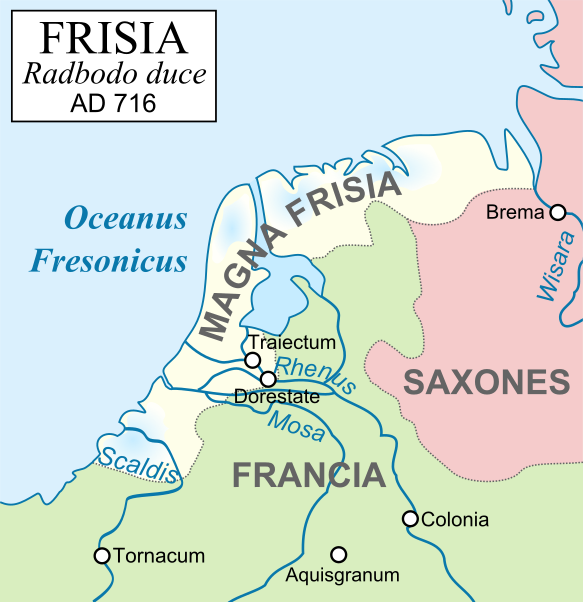
The area lay empty for one or two centuries, when changing environmental and political conditions made the region habitable again. At that time, during the Migration Period, "new" Frisians (probably descended from a merging of Frisii, Angles, Saxons and Jutes) repopulated the coastal regions. These Frisians consisted of tribes with loose bonds, centred on war bands but without great power. The earliest Frisian records name four social classes, the 'ethelings (nobiles in Latin documents; adel in Dutch and German) and frilings (vrijen in Dutch and Freien in German), who together made up the "Free Frisians" who might bring suit at court, and the laten or liten with the slaves, who were absorbed into the laten during the Early Middle Ages, as slavery was not so much formally abolished, as evaporated. The laten were tenants of lands they did not own and might be tied to it in the manner of serfs, but in later times might buy their freedom.
Under the rule of King Aldgisl, the Frisians came in conflict with the Frankish mayor of the palace Ebroin, over the old Roman border fortifications. Aldgisl could keep the Franks at a distance with his army. During the reign of Redbad, however, the tide turned in favour of the Franks; in 690, the Franks were victorious in the Battle of Dorestad. In 733, Charles Martel sent an army against the Frisians. The Frisian army was pushed back to Eastergoa. The next year the Battle of the Boarn took place. Charles ferried an army across the Almere with a fleet that enabled him to sail up to De Boarn. The Frisians were defeated in the ensuing battle, and their last king Poppo was killed. The victors began plundering and burning heathen sanctuaries. Charles Martel returned with much loot, and broke the power of the Frisian kings for good. The Franks annexed the Frisian lands between the Vlie and the Lauwers. They conquered the area east of the Lauwers in 785, when Charlemagne defeated Widukind. The Carolingians laid Frisia under the rule of grewan, a title that has been loosely related to count in its early sense of "governor" rather than "feudal overlord". About 100,000 Dutch drowned in a flood in 1228.
Frisian freedom
Main article: Frisian freedom

Around 800, when the Scandinavian Vikings first attacked Frisia, which was still under Carolingian rule, the Frisians were released from military service on foreign territory in order to be able to defend themselves against the heathen Vikings. With their victory in the Battle of Norditi in 884 they were able to drive the Vikings permanently out of East Frisia, although it remained under constant threat. Over the centuries, whilst feudal lords reigned in the rest of Europe, no aristocratic structures emerged in Frisia. This 'Frisian freedom' was represented abroad by redjeven who were elected from among the wealthier farmers or from elected representatives of the autonomous rural municipalities. Originally the redjeven were all judges, so-called Asega, who were appointed by the territorial lords.
After significant territories were lost to Holland in the Friso-Hollandic Wars, Frisia saw an economic downturn in the mid-14th century. Accompanied by a decline in monasteries and other communal institutions, social discord led to the emergence of untitled nobles called haadlingen ("headmen"), wealthy landowners possessing large tracts of land and fortified homes who took over the role of the judiciary as well as offering protection to their local inhabitants. Internal struggles between regional leaders resulted in bloody conflicts and the alignment of regions along two opposing parties: the Fetkeapers and Skieringers. On 21 March 1498, a small group of Skieringers from Westergo secretly met with Albert III, Duke of Saxony, the Governor of the Habsburg Netherlands, in Medemblik requesting his help. Albrecht, who had gained a reputation as a formidable military commander, accepted and soon conquered all Friesland. Emperor Maximilian of Habsburg appointed Albrecht hereditary potestate and gubernator of Friesland in 1499.
In 1515, an army of haadlingen and peasants, with the help of mercenaries known as the Arumer Zwarte Hoop, started a fight for freedom from oppression by the Habsburg authorities. One of the leaders was Pier Gerlofs Donia, whose farm had been burned down and whose kinfolk had been killed by a marauding Landsknecht regiment. Since the regiment had been employed by the Habsburg authorities to suppress the civil war of the Fetkeapers and Skieringers, Donia put the blame on the authorities. After this he gathered angry peasants and some petty noblemen from Frisia and Gelderland and formed the Arumer Zwarte Hoop.The rebels received financial support from Charles II, Duke of Guelders, who claimed the Duchy of Guelders in opposition to the House of Habsburg. Charles also employed mercenaries under command of his military commander Maarten van Rossum in their support. However, when the tides turned against the rebels after the Donia's death in 1520, Charles withdrew his support, without which the rebels could no longer afford to pay their mercenary army. The revolt was put to an end in 1523 and Frisia was incorporated into the Habsburg Netherlands, bringing an end to the Frisian freedom.
Modern times

Charles V, the Holy Roman Emperor, became the first lord of the Lordship of Frisia. He appointed Georg Schenck van Toutenburg, who had crushed the peasants' revolt, as Stadtholder to rule over the province in his stead. When Charles abdicated in 1556, Frisia was inherited by Philip II of Spain along with the rest of the Netherlands. In 1566, Frisia joined the Dutch Revolt against Spanish rule.
In 1577, George de Lalaing, Count of Rennenberg was appointed Stadtholder of Frisia and other provinces. A moderate, trusted by both sides, he tried to reconcile the rebels with the Crown. But in 1580, Rennenburg declared for Spain. The States of Frisia raised troops and took his strongholds of Leeuwarden, Harlingen and Stavoren. Rennenburg was deposed and Frisia became the fifth Lordship to join the rebels' Union of Utrecht. From 1580 onward, all stadtholders were members of the House of Orange-Nassau. With the Peace of Münster in 1648, Frisia became a full member of the independent Dutch Republic, a federation of provincies. In economic and therefore also political importance, Friesland was next in rank to the provinces of Holland and Zeeland.
In 1798, three years after the Batavian Revolution, the provincial lordship of Frisia was abolished and its territory was divided between the Eems and Oude IJssel departments. This was short-lived, however, as Frisia was revived as a department in 1802. When the Netherlands were annexed by the First French Empire in 1810, the department was in French renamed Frise. After Napoleon was defeated in 1813 and a new constitution was introduced in 1814, Friesland became a province of the Sovereign Principality of the United Netherlands, then of the unitary Kingdom of the Netherlands a year later.
Geography

_en_omgeving_04.jpg)


Friesland is situated at in the northwest of the Netherlands, west of the province of Groningen, northwest of Drenthe and Overijssel, north of Flevoland, northeast of the IJsselmeer and North Holland, and south of the North Sea. It is the largest province of the Netherlands if one includes areas of water; in terms of land area only, it is the third-largest province.
Most of Friesland is on the mainland, but it also includes a number of West Frisian Islands, including Vlieland, Terschelling, Ameland and Schiermonnikoog, which are connected to the mainland by ferry. The province's highest point is a dune at 45 m above sea level, on the island of Vlieland.
Four national parks of the Netherlands are located in Friesland: Schiermonnikoog, De Alde Feanen, Lauwersmeer (partially in Groningen), and Drents-Friese Wold (also partially situated in Drenthe).
Urban areas
The ten urban areas in Friesland with the largest population are:
| Dutch name | Frisian name | Population |
|---|---|---|
| Leeuwarden | Ljouwert | 92,235 |
| Drachten | Drachten | 45,080 |
| Sneek | Snits | 33,960 |
| Heerenveen | ** | 30,567 |
| Harlingen | Harns | 14,660 |
| Wolvega | Wolvegea | 13,500 |
| Joure | ** | 13,070 |
| Franeker | Frjentsjer | 12,810 |
| Dokkum | Dokkum | 12,575 |
| Lemmer | ** | 10,315 |
Municipalities
The province is divided into 18 municipalities, each with local government (municipal council, mayor and aldermen).
| Municipality | Population | Total area | Population density | COROP | km2 | sq mi | /km2 | /sq mi | ||
|---|---|---|---|---|---|---|---|---|---|---|
| Achtkarspelen | {{Dutch municipality total area | Achtkarspelen}} km2 | {{Dutch municipality population density | Achtkarspelen}} /km2 | North Friesland | |||||
| Ameland | {{Dutch municipality total area | Ameland}} km2 | {{Dutch municipality population density | Ameland}} /km2 | North Friesland | |||||
| Dantumadiel | {{Dutch municipality total area | Dantumadiel}} km2 | {{Dutch municipality population density | Dantumadiel}} /km2 | North Friesland | |||||
| De Fryske Marren | {{Dutch municipality total area | De Fryske Marren}} km2 | {{Dutch municipality population density | De Fryske Marren}} /km2 | South West Friesland | |||||
| Harlingen | {{Dutch municipality total area | Harlingen}} km2 | {{Dutch municipality population density | Harlingen}} /km2 | North Friesland | |||||
| Heerenveen | {{Dutch municipality total area | Heerenveen}} km2 | {{Dutch municipality population density | Heerenveen}} /km2 | South East Friesland | |||||
| Leeuwarden | {{Dutch municipality total area | Leeuwarden}} km2 | {{Dutch municipality population density | Leeuwarden}} /km2 | North Friesland | |||||
| Noardeast-Fryslân | {{Dutch municipality total area | Noardeast-Fryslân}} km2 | {{Dutch municipality population density | Noardeast-Fryslân}} /km2 | North Friesland | |||||
| Ooststellingwerf | {{Dutch municipality total area | Ooststellingwerf}} km2 | {{Dutch municipality population density | Ooststellingwerf}} /km2 | South East Friesland | |||||
| Opsterland | {{Dutch municipality total area | Opsterland}} km2 | {{Dutch municipality population density | Opsterland}} /km2 | South East Friesland | |||||
| Schiermonnikoog | {{Dutch municipality total area | Schiermonnikoog}} km2 | {{Dutch municipality population density | Schiermonnikoog}} /km2 | North Friesland | |||||
| Smallingerland | {{Dutch municipality total area | Smallingerland}} km2 | {{Dutch municipality population density | Smallingerland}} /km2 | South East Friesland | |||||
| Súdwest-Fryslân | {{Dutch municipality total area | Súdwest-Fryslân}} km2 | {{Dutch municipality population density | Súdwest-Fryslân}} /km2 | South West Friesland | |||||
| Terschelling | {{Dutch municipality total area | Terschelling}} km2 | {{Dutch municipality population density | Terschelling}} /km2 | North Friesland | |||||
| Tytsjerksteradiel | {{Dutch municipality total area | Tytsjerksteradiel}} km2 | {{Dutch municipality population density | Tytsjerksteradiel}} /km2 | North Friesland | |||||
| Vlieland | {{Dutch municipality total area | Vlieland}} km2 | {{Dutch municipality population density | Vlieland}} /km2 | North Friesland | |||||
| Waadhoeke | {{Dutch municipality total area | Waadhoeke}} km2 | {{Dutch municipality population density | Waadhoeke}} /km2 | North Friesland | |||||
| Weststellingwerf | {{Dutch municipality total area | Weststellingwerf}} km2 | {{Dutch municipality population density | Weststellingwerf}} /km2 | South East Friesland |
Climate
The province of Friesland, like the rest of the Netherlands, has an oceanic climate (Köppen: Cfb). |Jan record high C = 12.6 |Feb record high C = 14.4 |Mar record high C = 20.4 |Apr record high C = 26.0 |May record high C = 28.7 |Jun record high C = 32.5 |Jul record high C = 31.4 |Aug record high C = 32.8 |Sep record high C = 29.1 |Oct record high C = 23.8 |Nov record high C = 16.4 |Dec record high C = 14.2 |year record high C = 32.8 |Jan record low C = -19.9 |Feb record low C = -16.3 |Mar record low C = -16.3 |Apr record low C = -5.9 |May record low C = -1.7 |Jun record low C = 1.3 |Jul record low C = 5.7 |Aug record low C = 5.4 |Sep record low C = 2.0 |Oct record low C = -6.0 |Nov record low C = -14.2 |Dec record low C = -19.2 |year record low C = -19.9
Demography
In 2023, Friesland had a population of 659,551 and a population density of 197 /km2.
The years 1880–1900 show slower population growth due to an agricultural recession during which some 20,000 Frisians emigrated to the United States.
| Year | Population |
|---|---|
| 1714 | |
| 1748 | |
| 1796 | |
| 1811 | |
| 1830 | |
| 1840 | |
| 1850 | |
| 1860 | |
| 1870 | |
| 1880 | |
| 1890 | |
| 1900 |
| Year | Population |
|---|---|
| 1910 | |
| 1920 | |
| 1930 | |
| 1940 | |
| 1950 | |
| 1960 | |
| 1970 | |
| 1982 | |
| 1990 | |
| 1999 | |
| 2010 | |
| 2020 |
!

|}
Anthropometry
Since the late Middle Ages, Friesland has been renowned for the exceptional height of its inhabitants. Even early Renaissance poet Dante Alighieri refers to the height of Frisians in his Divine Comedy when, in the canticle about Hell, he talks about the magnitude of an infernal demon by stating that "not even three tall Frieslanders, were they set one upon the other, would have matched his height".
Religion
In 2015, 28.5% of the population belonged to the Protestant Church in the Netherlands, while 6.6% were Roman Catholic, 1.1% were Muslim and 6.5% belonged to other churches or faiths. Over half of the population (57.2%) identified as non-religious, above the national average.
| Municipality | Religious (total) | Protestant | Catholic Church | Protestant Church (PKN) | Dutch Reformed (NHK) | Reformed Churches |
|---|---|---|---|---|---|---|
| Achtkarspelen | 60.7 | 21.1 | 9.9 | 18.0 | 1.6 | |
| Dantumadiel | 60.6 | 13.6 | 14.6 | 23.3 | 1.4 | |
| Dongeradeel | 70.7 | 33.6 | 11.3 | 16.6 | 3.4 | |
| De Fryske Marren | 54.0 | 15.4 | 11.4 | 5.6 | 16.1 | |
| Ferwerderadiel | 58.6 | 32.6 | 5.2 | 14.3 | 2.6 | |
| Franekeradeel | 40.8 | 15.0 | 11.6 | 6.2 | 5.9 | |
| Harlingen | 34.2 | 4.1 | 6.6 | 9.2 | 7.1 | |
| Heerenveen | 33.2 | 10.4 | 6.3 | 4.2 | 5.9 | |
| Het Bildt | 44.3 | 14.7 | 13.8 | 10.5 | 3.0 | |
| Kollumerland en Nieuwkruisland | 61.8 | 22.8 | 13.5 | 20.7 | 0.6 | |
| Leeuwarden | 31.2 | 9.6 | 3.9 | 3.3 | 5.7 | |
| Leeuwarderadeel | 41.5 | 15.6 | 8.2 | 10.7 | 1.5 | |
| Littenseradiel | 39.6 | 10.0 | 15.9 | 3.4 | 6.7 | |
| Menameradiel | 48.0 | 18.7 | 11.4 | 5.2 | 9.2 | |
| Ooststellingwerf | 37.2 | 13.8 | 6.0 | 7.2 | 7.5 | |
| Opsterland | 38.7 | 16.7 | 9.4 | 6.8 | 2.2 | |
| Smallingerland | 45.0 | 14.2 | 6.3 | 12.4 | 2.4 | |
| Súdwest-Fryslân | 52.1 | 15.9 | 10.7 | 5.9 | 11.7 | |
| Tytsjerksteradiel | 52.2 | 21.0 | 8.4 | 12.6 | 4.0 | |
| Weststellingwerf | 40.3 | 8.9 | 12.0 | 1.3 | 12.6 |
Economy
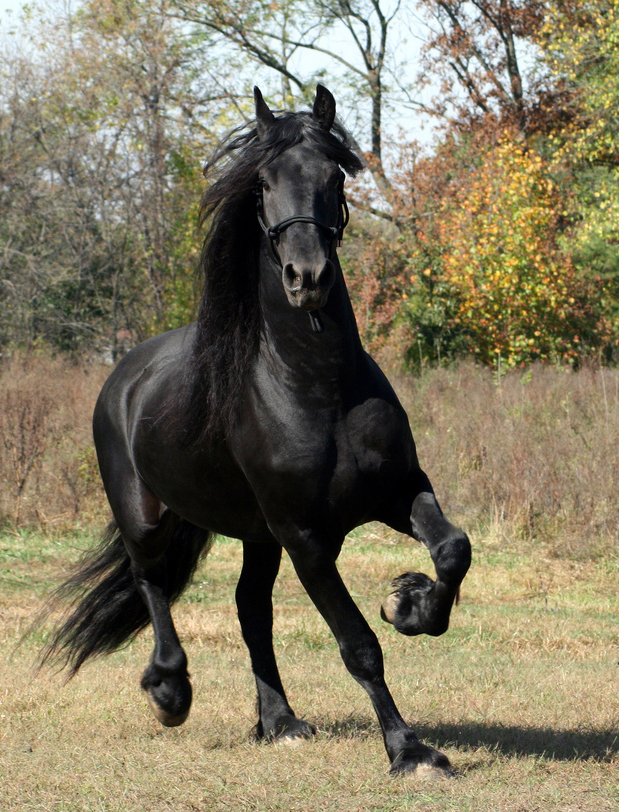
Friesland is mainly an agricultural province. The black and white Frisian cattle, black and white Stabyhoun and the black Frisian horse originated here. Tourism is another important source of income: the principal tourist destinations include the lakes in the southwest of the province and the islands in the Wadden Sea to the north. There are 195 windmills in the province of Friesland, out of a total of about 1200 in the entire country.
The gross domestic product (GDP) of the region was 19.8 billion € in 2018, accounting for 2.6% of the Netherlands economic output. GDP per capita adjusted for purchasing power was €26,700 or 89% of the EU27 average in the same year.
Culture
Languages
Friesland is one of the twelve provinces of the Netherlands to have its national language that is recognized as such, West Frisian. Before the 18th century, varieties of Frisian were also spoken in the provinces of North Holland and Groningen, and together with the Frisian speakers in East Friesland and North Friesland a continuous linguistic area existed between Amsterdam and the present day Danish-German border.
The mutual intelligibility in reading between Dutch and Frisian is limited. A cloze test in 2005 revealed native Dutch speakers understood 31.9% of a West Frisian newspaper, 66.4% of an Afrikaans newspaper and 97.1% of a Dutch newspaper. In 2007, West Frisian is the native language of 54.3% of the inhabitants of the province of Friesland, followed by Dutch with 34.7%, and speakers of other regional languages, most of these restricted to Friesland, with 9.7%, and in the end other foreign languages with 1.4%. Frisian speakers are traditionally underrepresented in urban areas, and predominant in the countryside.
West Frisian is also spoken in a small adjacent part of the province of Groningen. Up to the 18th century Frisian was spoken in the, at that time Prussian and Hanoverian, lordships of East Friesland). Since then the East Frisian population switched to East Frisian (Ostfriesisch), a Low German dialect. Only in some, formerly remoted, East Frisian villages (Saterland) a variety of historically East Frisian (Seeltersk) is still in use but by an older generation. A collection of dialects named North Frisian, is or was spoken in North Friesland, alongside the North Sea coast and on the islands of Schleswig-Holstein. The named Frisian languages are historically related to Old English, which points towards the fact that Angles and Saxons, eventually accompanied by Frisians, came from these areas.
In Stellingwerf, in south-east Friesland, a dialect of Low Saxon is spoken, as is in the northeast in Kollumerpomp.
In the former municipality of het Bildt the Hollandic dialect of Bildts is spoken. It contains a lot of Frisian influence. In most of the cities of Leeuwarden, Town Frisian is spoken. As with Bildts, these variants are Hollandic dialects with Frisian influence.
The language policy in Friesland is preservation. West Frisian is a mandatory subject in Friesland in primary and secondary schools of the Frisian speaking districts. Bilingual (Dutch–Frisian) and trilingual (Dutch–English–Frisian) schools in the province of Friesland use West Frisian as a language of instruction in some lessons, besides Dutch in most other lessons and alongside them English. Literacy in Frisian however, is not often a core aim and that makes the number of Frisians speakers able to write in Frisian only 12%.
The provincial government takes various initiatives to preserve the West Frisian language. All parents in Friesland receive, at their children's birth, information about language and multilingualism (e.g. 'taaltaske'). To support the use of Frisian in public and at public events, the province also invests in the development of speech pathology materials and strives to create information technology devices for the West Frisian language. The Frisian government subsidizes the Afûk organization, which offers language courses and actively promotes Frisian in all sectors of society as well as the corporate domain which as a rule is dominated by Dutch and English. The province also promotes a wide range of art and entertainment in Frisian.
Sports

The province is famous for its speed skaters, with mass participation in cross-country ice skating when weather conditions permit. When winters are cold enough to allow the freshwater canals to freeze hard, the province holds its traditional Elfstedentocht (Eleven cities tour), a 200 km ice skating tour. A traditional sport is Frisian handball. Another Frisian practice is fierljeppen, a sport with some similarities to pole vaulting. A jump consists of an intense sprint to the pole (polsstok), jumping and grabbing it, then climbing to the top while trying to control the pole's forward and lateral movements over a body of water and finishing with a graceful landing on a sand bed opposite to the starting point. Because of all the diverse skills required in fierljeppen, fierljeppers are considered to be very complete athletes with superbly developed strength and coordination. In the warmer months, many Frisians practice wadlopen, the traditional art of wading across designated sections of the Wadden Sea at low tide. Friesland has lots of waterways and lakes there for Sailcontests with a Skutsje or frisian Tjalk is done during the summer on various lakes.
There are currently two professional football clubs playing in Friesland: SC Cambuur from Leeuwarden (home stadium Cambuur Stadion) active in de keuken kampioen divisie(2nd div.) and SC Heerenveen (home stadium Abe Lenstra Stadion) active in de Eredivisie(1st div.).
Music
Music in Friesland (Friese Muziek) reflects the region’s distinct cultural and linguistic identity, blending folk traditions, regional language and modern influences.
Friesland has been made more popular in the media thanks to Fryslân musician and rapper Joost Klein, who participated in the Eurovision Song Contest in 2024. He has released a number of songs about his home province, such as a cover of the 1993 song Friesenjung () and also often mentions it in his lyrics.
Politics

The King's Commissioner of Friesland is Arno Brok. The Provincial Council of Friesland has 43 seats. The Provincial Executive was a coalition of the Christian Democratic Appeal, the People's Party for Freedom and Democracy, the Labour Party and the Frisian National Party (FNP), until 2023 when new provincial elections saw a different composition in the provincial council.
|-style="background:#E9E9E9;" !colspan="2" align="left"|Party !Votes !Seats |- |49.704
| 8 |
|---|
| 40.055 |
| 6 |
| - |
| 39.976 |
| 6 |
| - |
| 28.073 |
| 4 |
| - |
| |23.662
| 4 |
|---|
| 22.935 |
| 3 |
| - |
| 19.673 |
| 3 |
| - |
| 17.287 |
| 3 |
| - |
| 15.426 |
| 2 |
| - |
| 12.284 |
| 2 |
| - |
| 9.618 |
| 1 |
| - |
| 7.595 |
| 1 |
| - |
| -style="background:#E9E9E9;" |
| !colspan="2" align="left" |
| ! 298.241 |
| !align="center" |
| } |
Transport

The four motorways in the province are A6, A7 (E22), A31, and A32.
The main railway station of Friesland is Leeuwarden, which connects the railways Arnhem–Leeuwarden, Harlingen–Nieuweschans, and Leeuwarden–Stavoren which are all (partially) located in the province.
| Route | Railway stations in Friesland |
|---|---|
| Arnhem–Leeuwarden | Overijssel – Wolvega – Heerenveen IJsstadion – Heerenveen – Akkrum – Grou-Jirnsum – Leeuwarden |
| Harlingen–Nieuweschans | Harlingen Haven – Harlingen – Franeker – Dronryp – Deinum – Leeuwarden – Leeuwarden Camminghaburen – Hurdegaryp – Feanwâlden – De Westereen – Buitenpost – Groningen |
| Leeuwarden–Stavoren | Leeuwarden – Mantgum – Sneek Noord – Sneek – IJlst – Workum – Hindeloopen – Koudum-Molkwerum – Stavoren |
Ameland Airport near Ballum and Drachten Airfield near Drachten are the two small general aviation airports in the province. The Royal Netherlands Air Force uses Vlieland Heliport and the Leeuwarden Air Base.
Literature
- Helma Erkelens, Taal fen it hert. Language of the Heart. About Frisian Language and Culture, province of Fryslân, Leeuwarden 2004
- John Hines & Nelleke IJssennagger (eds.), Frisians and their North Sea Neighbours: From the Fifth Century to the Viking Age, Boydell & Brewer, Woodbridge/Rochester 2017
- Goffe Jensma, 'Minorities and Kinships. The Case of Ethnolinguistic Nationalism in Friesland’, in: P. Broomans et al. (eds.), The Beloved Mothertongue. Ethnolinguistic Nationalism in Small Nations: Inventories and Reflections, Peeters, Louvain-Paris-Dudley 2008, p. 63-78
- Horst Haider Munske (ed.), Handbuch des Friesischen / Handbook of Frisian Studies, Max Niemeyer, Tübingen 2001
- Oebele Vries, 'Frisonica libertas: Frisian Freedom as an Instance of Medieval Liberty', in: Journal of Medieval History 41 (2015), nr. 2, p. 229-248
Media
Friesch Dagblad and Leeuwarder Courant are daily newspapers mainly written in Dutch. Omrop Fryslân is the public broadcaster with radio and TV programs mainly in Frisian.
Notes
References
Sources
References
- [https://allecijfers.nl/provincie/friesland/#100-onderwerpen Statistieken provincie Friesland - Gegevens over meer dan 100 onderwerpen!] {{Webarchive. link. (23 February 2024 , AlleCijfers.nl)
- "CBS Statline".
- "CBS Statline".
- "EU regions by GDP, Eurostat".
- "Sub-national HDI - Area Database - Global Data Lab".
- "CBS Statline".
- (2023-10-16). "Frisians in the Netherlands".
- "Multilingualism and language teaching in Europe: the case of Frisian and the work of the Mercator European Research Centre".
- "CBS Statline".
- (28 March 1996). "Beslut fan Provinsjale Staeten van Friesland". Provinciaal Blad van Friesland.
- (10 November 2004). "Ook voor rijk heet Friesland Fryslân". [[Leeuwarder Courant]].
- (2011). "Ethnic Groups of Europe: An Encyclopedia". ABC-Clio.
- "provinsje Fryslan, provincie fryslan English". provinsje Fryslan/provincie fryslan.
- {{Harvcolnb. Pliny the Elder. 79_3
- {{Harvcolnb. Tacitus. 117
- {{Harvcolnb. Tacitus. 117
- {{Harvcolnb. Tacitus. 98
- {{Harvcolnb. Tacitus. 117
- Minahan, James. (2000). "One Europe, many nations : a historical dictionary of European national groups". Greenwood Press.
- Grane, Thomas. (2007). "The Roman Empire and Southern Scandinavia–a Northern Connection! (PhD thesis)". University of Copenhagen.
- Looijenga, Jantina Helena. (1997). "Runes Around the North Sea and on the Continent AD 150–700; Texts and Contexts (PhD dissertation)". Groningen University.
- {{Harvcolnb. Bazelmans. 2009
- Halbertsma, Herrius. (1982). "Frieslands Oudheid". Rijksuniversiteit Groningen.
- Homans, George C.. (1957). "The Frisians in East Anglia". Wiley.
- Blok, Dirk P.. (1968). "De Franken : hun optreden in het licht der historie". Fibula-Van Dishoeck.
- (2003). "Geschiedenis van het volk der Friezen".
- (2005). "Who Killed New Orleans?: Mother Nature Vs. Human Nature". iUniverse.
- Heinrich Schmidt: ''Politische Geschichte Ostfrieslands.'' 1975, p. 22 ff.
- Medieval Germany: An Encyclopedia, John M. Deep, Pub. 2001, Germany.
- Markus Meumann, Jörg Rogge (Hg.). Die besetzte "res publica". Zum Verhältnis von ziviler Obrigkeit und militärischer Herrschaft in besetzten Gebieten vom Spätmittelalter bis zum 18. Jahrhundert, Pg. 137. Papers from a conference held 20–21 Sep 2001, at the Martin-Luther-Universität Halle-Wittenberg. By Markus Meumann, Jörg Rogge. Published 2006 LIT Verlag Berlin -Hamburg-Münster.
- The New Encyclopædia Britannica, Published by Encyclopædia Britannica Inc., 1993, p. 214.
- ''The Dutch Republic in the Seventeenth Century: The Golden Age'' by Maarten Prak, Pub 2005
- "Greate Pier fan Wûnseradiel". Gemeente Wûnseradiel.
- Kalma, J.J.. (1970). "Grote Pier Van Kimswerd".
- CBS Statline 2018.
- {{Dutch municipality population. dataref
- {{Dutch municipality total area. dataref
- {{in lang. nl [http://www.knmi.nl/klimatologie/normalen1971-2000/per_station/stn270/5-extremen/270_extremen.pdf Leeuwarden extremen tijdvak 1971 t/m 2000], [[Royal Netherlands Meteorological Institute]]. Retrieved on 26 April 2014.
- {{in lang. nl [http://www.klimaatatlas.nl/tabel/stationsdata/klimtab_8110_270.pdf Leeuwarden, langjarige gemiddelden, tijdvak 1981–2010] {{Webarchive. link. (26 April 2014 , [[Royal Netherlands Meteorological Institute]]. Retrieved on 26 April 2014.)
- {{in lang. link. (12 May 2014 .)
- {{in lang. nl [https://web.archive.org/web/20060208040725/http://www2.tresoar.nl/bs/Inwoners%20Friesland.pdf Overzicht aantal inwoners Provincie Friesland 1714–2000], [[Tresoar]].
- {{in lang. link. (12 August 2011 , [[Statistics Netherlands]], 2014.)
- (2017). "The encyclopedia of Medieval literature in Britain".
- Alighieri, Dante. ''Divine Comedy'', "Inferno", Canto 31, line 64, in ''The Portable Dante'', ed. Paolo Milano, trans. Laurence Binyon, Penguin, 1975 {{ISBN. 0-14-015032-3
- [https://www.cbs.nl/nl-nl/nieuws/2016/51/helft-nederlanders-is-kerkelijk-of-religieus Helft Nederlanders is kerkelijk of religieus] {{Webarchive. link. (15 August 2020 , CBS, 22 December 2016)
- Centraal Bureau voor de Statistiek. "Helft Nederlanders is kerkelijk of religieus".
- "Regional GDP per capita ranged from 30% to 263% of the EU average in 2018".
- (2005). "How easy is it for speakers of Dutch to understand Frisian and Afrikaans, and why?". Linguistics in the Netherlands.
- "Rapportage quick scan Friese taal 2007 Provincie Fryslân - PDF".
- {{Glottolog. stel1238. Stellingwerfs
- (Hilton, 2013)
- (Afûk 2011)
- Hilton, N. H., & Gooskens, C. (2013). Language policies and attitudes towards Frisian in the Netherlands. Phonetics in Europe: Perceptions and production, 139-157.
- "Friese Muziek – Artists & Genre Overview". Recent Music.
- "[http://www.fryslan.frl/bestuur/de-heer-arno-brok_41597/ De heer Arno Brok] {{Webarchive. link. (2017-03-07 " (in Dutch), ''Province of Friesland''. Retrieved 7 March 2017.)
- {{in lang. nl [https://www.verkiezingsuitslagen.nl/verkiezingen/detail/PS20190320/684844 Provinciale Staten 20 maart Fryslân] {{Webarchive. link. (2 May 2019 , Retrieved on 9 Augustus 2019.)
- {{in lang. nl [http://rijksmonumenten.nl/monument/24369/station+leeuwarden/leeuwarden/ Station Leeuwarden in Leeuwarden] {{Webarchive. link. (26 April 2014 , Rijksmonumenten.nl. Retrieved on 26 April 2014.)
- {{in lang. nl [http://www.rijkswaterstaat.nl/wegen/feiten_en_cijfers/wegenoverzicht/index.aspx Wegenoverzicht] {{Webarchive. link. (15 March 2014 , [[Rijkswaterstaat]]. Retrieved on 27 April 2014.)
- {{in lang. nl [http://www.ehal.nl/ Algemene informatie] {{Webarchive. link. (17 May 2014 , [[Ameland Airport]]. Retrieved on 27 April 2014.)
- {{in lang. nl [http://www.rijksoverheid.nl/bestanden/documenten-en-publicaties/besluiten/2009/02/26/atlas-drachten-december-2008/drachten.pdf Aanwijzingsbesluit Luchthaven Drachten] {{Webarchive. link. (28 April 2014 , 2007. Retrieved on 27 April 2014.)
- {{in lang. link. (19 April 2014 , ''[[Friesch Dagblad]]''. Retrieved on 27 April 2014.)
- {{in lang. nl [http://www.lc.nl/service/article14593713.ece Over de LC] {{webarchive. link. (17 September 2013 , ''[[Leeuwarder Courant]]''. Retrieved on 27 April 2014.)
- {{in lang. fy [http://www.omropfryslan.nl/oer-de-omrop Oer de Omrop] {{Webarchive. link. (27 May 2014 , [[Omrop Fryslân]]. Retrieved on 27 April 2014.)
This article was imported from Wikipedia and is available under the Creative Commons Attribution-ShareAlike 4.0 License. Content has been adapted to SurfDoc format. Original contributors can be found on the article history page.
Ask Mako anything about Friesland — get instant answers, deeper analysis, and related topics.
Research with MakoFree with your Surf account
Create a free account to save articles, ask Mako questions, and organize your research.
Sign up freeThis content may have been generated or modified by AI. CloudSurf Software LLC is not responsible for the accuracy, completeness, or reliability of AI-generated content. Always verify important information from primary sources.
Report