From Surf Wiki (app.surf) — the open knowledge base
Frederick Stanley, 16th Earl of Derby
British politician and Governor General of Canada (1841–1908)

British politician and Governor General of Canada (1841–1908)
| Field | Value |
|---|---|
| honorific-prefix | The Right Honourable |
| name | The Earl of Derby |
| honorific-suffix | KG GCB GCVO PC |
| image | Lord Stanley of Preston.jpg |
| caption | Stanley in May 1889 |
| signature | Lord Stanley Signature.svg |
| order2 | President of the Board of Trade |
| predecessor2 | A. J. Mundella |
| primeminister2 | The Marquess of Salisbury |
| party | Conservative |
| monarch1 | Victoria |
| office1 | Governor General of Canada |
| order1 | 6th |
| predecessor1 | The Marquess of Lansdowne |
| primeminister1 | John A. Macdonald |
| John Abbott | |
| John Thompson | |
| successor1 | The Earl of Aberdeen |
| successor2 | Sir Michael Hicks Beach, Bt |
| birth_name | Hon. Frederick Arthur Stanley |
| birth_date | |
| birth_place | St James's, Westminster, England |
| death_date | |
| death_place | Holwood, Kent, England |
| nationality | |
| spouse | |
| children | 10, including: |
| {{Plainlist | |
| parents | |
| alma_mater | Harrow |
| Royal Military College, Sandhurst | |
| allegiance | UK |
| branch | |
| serviceyears | 1862–1908 |
| rank | Captain |
| Lieutenant Colonel Commandant | |
| Honorary Colonel | |
| unit | Grenadier Guards |
| 1st Royal Lancashire Militia | |
| 5th Battalion, King's Regiment (Liverpool) | |
| term_start1 | 1 May 1888 |
| term_end1 | 18 September 1893 |
| term_start2 | 3 August 1886 |
| term_end2 | 21 February 1888 |
| order3 | Secretary of State for the Colonies |
| term_start3 | 24 June 1885 |
| term_end3 | 28 January 1886 |
| primeminister3 | The Marquess of Salisbury |
| predecessor3 | The Earl of Derby |
| successor3 | The Earl Granville |
| order4 | Secretary of State for War |
| term_start4 | 2 April 1878 |
| term_end4 | 21 April 1880 |
| primeminister4 | The Earl of Beaconsfield |
| predecessor4 | Gathorne Hardy |
| successor4 | Hugh Childers |
| honorific-prefix = The Right Honourable | honorific-suffix = KG GCB GCVO PC John Abbott John Thompson {{Plainlist|
- Edward Stanley, 17th Earl of Derby
- Victor Stanley
- Arthur Stanley
- George Stanley
- Lady Isobel Gathorne-Hardy Royal Military College, Sandhurst Lieutenant Colonel Commandant Honorary Colonel 1st Royal Lancashire Militia 5th Battalion, King's Regiment (Liverpool)
Frederick Arthur Stanley, 16th Earl of Derby (known as Hon. Frederick Stanley until 1886 and Lord Stanley of Preston between 1886–1893; 15 January 1841 – 14 June 1908) was a Conservative Party politician in the United Kingdom who served as Colonial Secretary from 1885 to 1886 and Governor General of Canada from 1888 to 1893. An avid sportsman, he built Stanley House Stables in England and is famous in North America for presenting Canada with the Stanley Cup, the championship trophy in ice hockey. Stanley was also one of the original inductees of the Hockey Hall of Fame.
Early life and education
Stanley was born in St James's Square, Westminster, the second surviving son of Edward Smith-Stanley, Lord Stanley, and the Hon. Emma Caroline, Lady Stanley, daughter of Edward Bootle-Wilbraham, 1st Baron Skelmersdale. He was educated at Harrow and Sandhurst.
In 1851, his father succeeded as 14th Earl of Derby. The longest-serving leader of the Conservative Party (1846–68), the 14th Earl served as Prime Minister on three occasions, from February to December 1852, 1858–1859, and 1866–1868.
Military career
Stanley received a commission in the Grenadier Guards, rising to the rank of Captain before leaving the army for politics. He later served as Lieutenant-Colonel Commandant of the part-time 1st Royal Lancashire Militia (The Duke of Lancaster's Own) from 23 June 1874 (though his political duties often kept him away from the regiment's annual training) and became Honorary Colonel of its successor, the 3rd and 4th Battalions, King's Own (Royal Lancaster Regiment), from 27 February 1886 until his death. He also followed his father and grandfather as Hon Colonel of the 1st Volunteer Battalion, King's (Liverpool Regiment), being appointed on 15 January 1894. After his death he was succeeded in this appointment by his son in turn.
Political career
Stanley served as a Conservative Member of Parliament for Preston (1865–68), North Lancashire (1868–85) and Blackpool (1885–86). In government, he served as a Civil Lord of the Admiralty (1868), Financial Secretary to the War Office (1874–78), Secretary to the Treasury (1878), War Secretary (1878–80) and Colonial Secretary (1885–86). In 1886, he was created Baron Stanley of Preston, in the County Palatine of Lancaster. He served as President of the Board of Trade (1886–88), remaining in that office until he was appointed Governor General of Canada.
Derby was a Freemason.
Governor General of Canada
Stanley was appointed the Governor General of Canada and Commander in Chief of Prince Edward Island on 1 May 1888. During his term as Governor General, he travelled often and widely throughout the country. His visit to western Canada in 1889 gave him a lasting appreciation of the region's great natural beauty as well as permitting him to meet the people of Canada's First Nations and many western ranchers and farmers. During his visit, he dedicated Stanley Park, which is named after him. He also experienced the joys of fishing and avidly pursued the sport whenever his busy schedule allowed. As governor general, Stanley was the third holder of that office to whom Queen Victoria granted the power of granting pardons to offenders or remitting sentences and fines and the power of mitigating capital or any other sentence.
When Prime Minister John A. Macdonald died in office of heart failure on 6 June 1891, Stanley lost the close friendship he had enjoyed with Macdonald. He asked John Abbott to take over as prime minister. Once the government was in place, Abbott resigned for health reasons and turned the government over to John Thompson. Stanley helped cement the non-political role of the governor general when, in 1891, he refused to agree to a controversial motion in the House of Commons. The motion called on him as governor general to disallow the government of Quebec's Jesuit Estates Act, which authorized paying as compensation for land granted to the Jesuits by the King of France. The opposition to the bill was introduced by the other provinces who were motivated by mistrust of the Roman Catholic Church in Quebec. Stanley declined to interfere, citing the proposed disallowance as unconstitutional. In holding to this decision, he gained popularity by refusing to compromise the viceregal position of political neutrality.
Stanley's wife, whom Wilfrid Laurier described as "an able and witty woman", made a lasting contribution during her husband's term of office. In 1891, she founded the Lady Stanley Institute for Trained Nurses on Rideau Street, the first nursing school in Ottawa. She was also an enthusiastic fan of hockey games at the Rideau Rink.
Stanley Cup

Main article: Stanley Cup
Stanley's sons became avid ice hockey players in Canada, playing in amateur leagues in Ottawa, and Lord and Lady Stanley became staunch hockey fans. In 1892, Stanley bequeathed to Canada a trophy today named in his honour as the Stanley Cup, known originally as the Dominion Hockey Challenge Cup. He originally donated the trophy as a challenge cup for Canada's best amateur hockey club, but in 1909, it became contested for by professional teams exclusively. Since 1926, only teams of the National Hockey League have competed for the trophy. This now-famous cup bears his name as a tribute to his encouragement and love of outdoor life and sport in Canada and in recognition, he was inducted into the Hockey Hall of Fame in 1945 in the "Honoured Builders" category. The original size of the trophy was 7 in and is now around 36 in and weighs 35 lb.
Later years
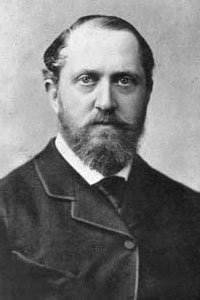
Stanley's term as Governor General of Canada was due to end in September 1893 but in April of that year, his elder brother, the 15th Earl of Derby, died. Stanley succeeded him as the 16th Earl of Derby. As a result, Stanley, now known as Lord Derby, left Canada on 15 July 1893 and returned to England. An administrator was appointed to fulfil his duties until Lord Aberdeen was sworn in that September.
Also in 1893, Toronto's "New Fort York" (built in 1841) was renamed The Stanley Barracks in honour of Lord Stanley. Back with his family in England, he soon became the Lord Mayor of Liverpool and the first Chancellor of the University of Liverpool. Stanley Park, Liverpool is also named after him. In November 1901 Lord Derby was elected Mayor of Preston for the following year, and took part in the 1902 Preston Guild. He later received the honorary freedom of the borough of Preston, with which his family had been associated for centuries.
During the last years of his life, he increasingly dedicated himself to philanthropic work. He was founder president of the committee for the building of Liverpool Cathedral in 1901, and helped fund the Coronation Park, Ormskirk, in 1905.
Marriage and issue
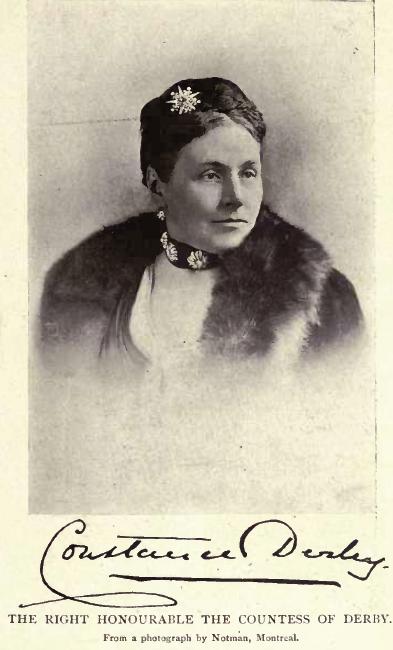

Derby married Lady Constance Villiers, daughter of George Villiers, 4th Earl of Clarendon, on 31 May 1864. She was born in 1840. They had eight sons and two daughters:
- Edward George Villiers Stanley (1865–1948), who succeeded his father as 17th Earl of Derby.
- Hon. Sir Victor Albert Stanley (1867–1934), was an Admiral in the Royal Navy who married a Canadian lady, the daughter of Hon. C. E. Pooley, KC, of British Columbia.
- Katharine Mary Stanley (21 April 1868 – 21 October 1871), died in childhood
- Hon. Sir Arthur Stanley (1869–1947), twin
- Geoffrey Stanley (18 November 1869 – 16 March 1871), twin, died in childhood
- Hon. Ferdinand Charles Stanley (28 January 1871 – 17 March 1935), was educated at Wellington and Sandhurst, before joining the King's Royal Rifle Corps in 1891, rising to the rank of Brigadier-General. He married the Hon. Alexandra Fellowes, the eldest daughter of William Henry Fellowes, Baron de Ramsey; they lived at 8 Cornwall Terrace, Regent's Park, London, now renamed Stanley House.
- Lt.-Col. Rt. Hon. Sir George Frederick Stanley (1872–1938), Royal Horse Artillery, MP, junior minister and Governor of Madras. Married Lady Beatrix Taylour (died 1944), daughter of Thomas Taylour, 3rd Marquess of Headfort; they had a daughter.
- Hon. Col. Algernon Francis Stanley (8 January 1874 – 10 February 1962), married the widow Mary Cavendish Crichton (her late husband Lt-Col. Henry William, son of John Crichton, 4th Earl Erne was KIA in 1914 on the Western Front), daughter of Hugh Grosvenor, 1st Duke of Westminster. They had one son and a daughter.
- Lady Isobel Gathorne-Hardy (1875–1963), who was instrumental in convincing her father to create the Stanley Cup. She is mentioned in one of the first games of women's hockey, played at Rideau Skating Rink in 1899. Her role as a women's hockey pioneer is recognized in women's hockey with both the Isobel Gathorne-Hardy Award, given across women's hockey in Canada, and the Isobel Cup, the Premier Hockey Federation's championship trophy.
- Lt.-Col. Hon. Frederick William Stanley (27 May 1878 – 9 August 1942), married Lady Alexandra Louise Elizabeth Acheson, the daughter of Archibald Acheson, 4th Earl of Gosford and Louisa Acheson, Countess of Gosford on 17 June 1905. They had one son and two daughters, one of whom married the son of Lieutenant-General Sir George Sidney Clive. He would go on to serve and be wounded in the Second Boer War, and later the First World War.
Her Ladyship remained and several of their children lived in Canada throughout his term as Governor-General. She was responsible for the foundation of the Lady Stanley Institute for Trained Nurses in Ottawa, Ontario, as well as a Maternity Hospital. She was president of the $4,000 fund instituted by the women of Canada for the presentation of a wedding gift to the present Prince and Princess of Wales: a sleigh, robes, harnesses and horses and a canoe. In 1890 Prince George of Wales (the future King George V) was their guest at Rideau Hall. In 1903 King Edward VII was their guest at their residence in St James's Square.
Derby died on 14 June 1908, aged 67, and was succeeded by his eldest son, Edward, who also became a distinguished politician. Lady Derby died on 17 April 1922.
Legacy
After Edward Whymper made the first ascent of Stanley Peak in 1901, he named the mountain after Lord Derby. Vancouver's Stanley Park and Stanley Theatre were also named after him, as was Stanley Park, Blackpool.
The Preston Squadron of cadets at the Royal Military College Saint-Jean was named in his honour. Stanley Park, Liverpool, an area that famously separates Anfield and Goodison Park, the home grounds of English Premier League football teams Liverpool F.C. and Everton F.C., was named after him. Stanley House Inn, named for Lord Stanley and was built as his summer residence in 1888 along the Cascapedia River.
The Dominion Hockey Challenge Cup is today known as the Stanley Cup and is awarded to the winning team of the National Hockey League playoffs each season. In October 2017, Lord Stanley's Gift Monument was erected in Ottawa at Sparks Street and Elgin Street, near the location of the dinner party announcing the Cup at the Russell House, which has since been demolished.
Stanley Quay, later renamed Stanley Street, in Brisbane, Australia, was named after him when he was Colonial Secretary.
In popular culture
In Mrs Brown (1997), Lord Stanley was portrayed by actor Jason Morell.
Honorary degrees
- Queen's University in Kingston, Ontario (LL.D) in 1889
Honorific eponyms
- Stanley, New Brunswick
- Stanley, Nova Scotia
- Port Stanley, Ontario
- Stanley (Oliver Paipoonge), Ontario
- Stanley Park, Vancouver, British Columbia
- Stanley Park, Liverpool, UK
- Stanley Peak (Ball Range) (British Columbia)
- Rue Stanley, Montréal, Québec
- Stanley Avenue, Victoria, British Columbia
- Stanley Street, Brisbane, Queensland
- Stanley Street, Townsville, Queensland
- Stanley Glacier, British Columbia
- Stanleycaris, a fossil genus whose type species was first found there
Arms
Notes
References
References
- (23 January 1841). "Births.". [[Manchester Courier]].
- (2003). "[[Burke's Peerage". Burke's Peerage & Gentry.
- [https://query.nytimes.com/gst/abstract.html?res=9C04E3D7123AE533A25756C0A9679D94609ED7CF "Canada's Executive Head; Power and Emoluments of the Governor General. Almost Unlimited Authority Granted to Him – An Expensive Luxury for Canadians Who Want to Choose Their Own Governor"], ''[[The New York Times]]'', 5 November 1891.
- ''Army List''.
- Williamson & Whalley, pp. 329–30; Appendix B.
- Grand Lodge of British Columbia and Yukon: [http://freemasonry.bcy.ca/textfiles/famous.html A few famous freemasons.]
- (11 November 1901). "Election of Mayors".
- (22 November 1902). "Court Circular".
- Riley, Ken. (1987). "Liverpool Cathedral". Fine Art Publications.
- (21 June 2015). "Ormskirk Nostalgia: Happy birthday to Coronation Park – 120 years old this month". Southport Visitor.
- (1901). "The Peerage and Baronetage of the British Empire as at Present Existing: Arranged and Printed from the Personal Communications of the Nobility". Hurst and Blackett Limited.
- (1903). "Types of Canadian Women and of Women who are or have been Connected with Canada". Williams Briggs.
- "Cornwall Terrace".
- "Biographies". CBC.ca.
- Mathison, Emily. [http://www.where.ca/vancouver/article_feature~listing_id~119.htm "Things That Go Bump in the Night: Unearthly spirit sightings at a local landmark"] {{webarchive. link. (29 December 2006 Retrieved on 9 May 2008.)
- (18 October 2017). "Invitation: Monument Unveiling".
- "Jason Morell".
- "Archived copy".
- "Stanley Peak British Columbia #1538". Bivouac.com.
- {{cite peakware
- "Stanley Peak".
- [[Stanley Street (Montreal)]]
- (1899). "Burke's Peerage and Baronetage".
This article was imported from Wikipedia and is available under the Creative Commons Attribution-ShareAlike 4.0 License. Content has been adapted to SurfDoc format. Original contributors can be found on the article history page.
Ask Mako anything about Frederick Stanley, 16th Earl of Derby — get instant answers, deeper analysis, and related topics.
Research with MakoFree with your Surf account
Create a free account to save articles, ask Mako questions, and organize your research.
Sign up freeThis content may have been generated or modified by AI. CloudSurf Software LLC is not responsible for the accuracy, completeness, or reliability of AI-generated content. Always verify important information from primary sources.
Report