From Surf Wiki (app.surf) — the open knowledge base
Frankfurt Book Fair
World's largest book fair, organized annually in Germany
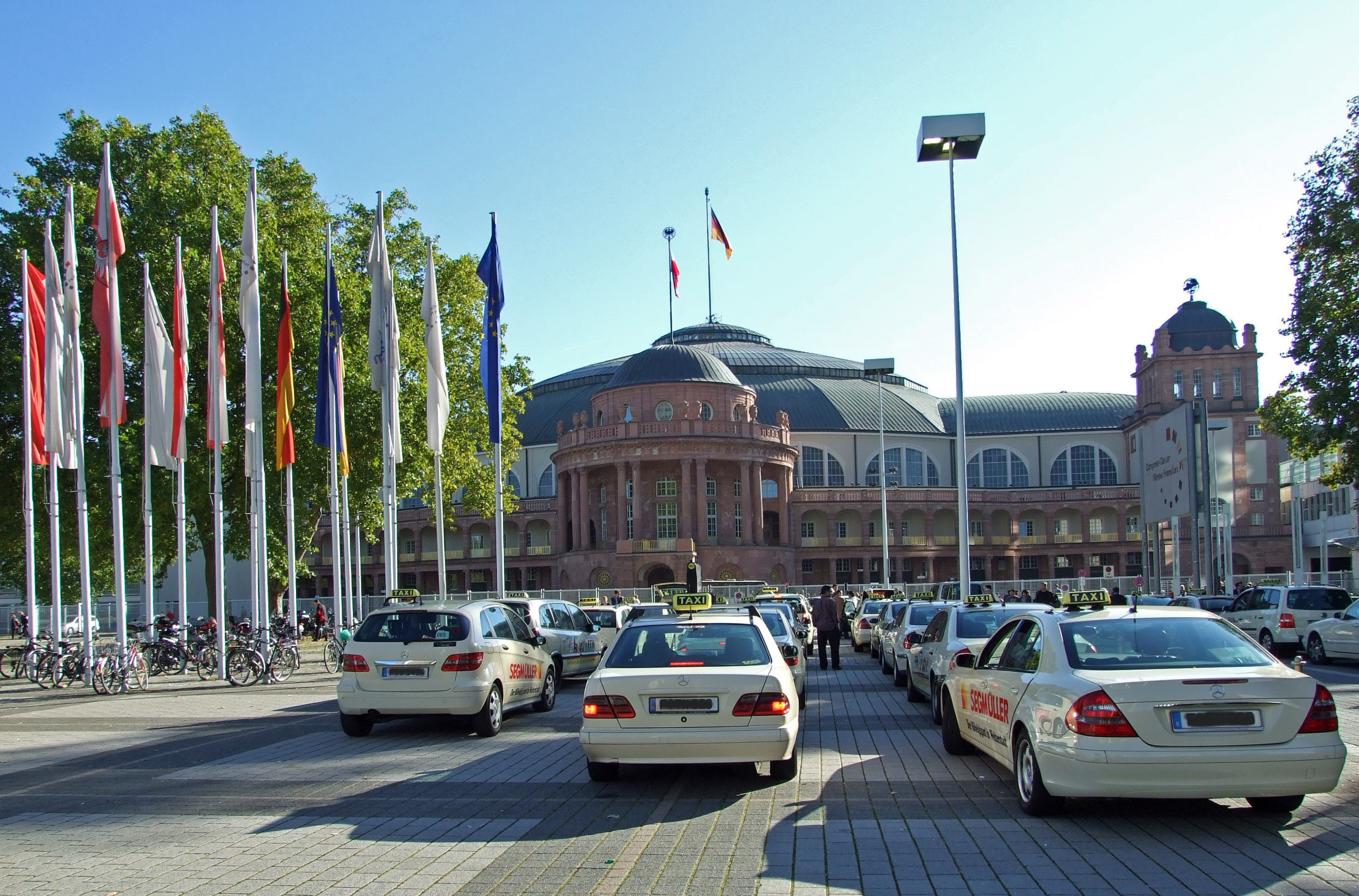
World's largest book fair, organized annually in Germany
| Field | Value | |
|---|---|---|
| name | Frankfurter Buchmesse | |
| logo | Frankfurter Buchmesse 2011 logo.svg | |
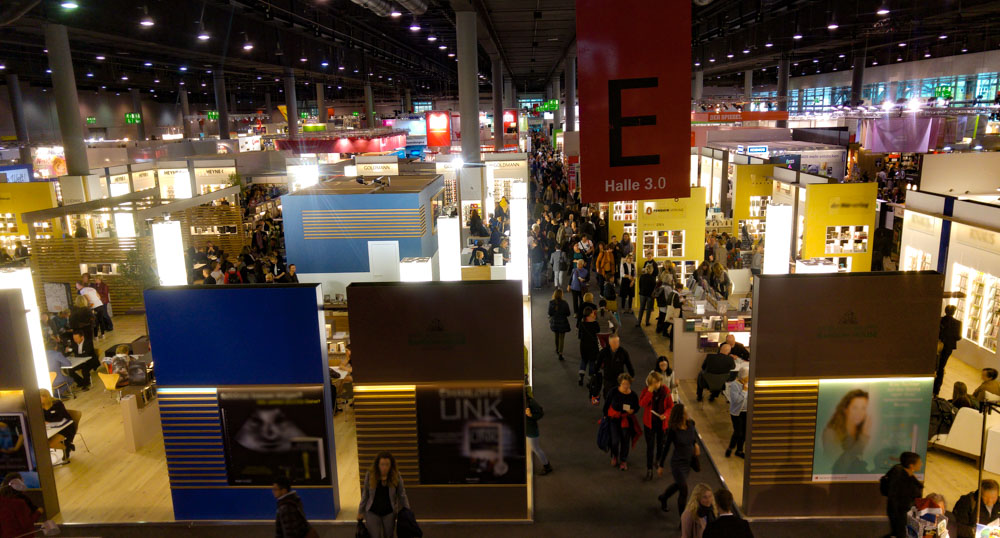
| image | [[File:FrankfurterBuchmesse2008.JPG | 250px]] |
| caption | Exhibition hall in 2008 | |
| status | Active | |
| genre | Multi-genre | |
| venue | Frankfurt Trade Fair grounds | |
| location | Frankfurt am Main | |
| country | Germany | |
| first | 17th century | |
| modern era: 1949 | ||
| attendance | 286,000 | |
| frequency | Annually, in mid-October | |
| website |
modern era: 1949
The Frankfurt Book Fair (German: Frankfurter Buchmesse, abbr. FBM) is the world's largest trade fair for books, based on the number of publishing companies represented. The five-day annual event in mid-October is held at the Frankfurt Trade Fair grounds in Frankfurt am Main, Germany. The first three days are restricted exclusively to professional visitors; the general public attend the fair on the weekend.
Several thousand exhibitors representing book publishing, multimedia and technology companies, as well as content providers from all over the world gather in order to negotiate international publishing rights and license fees. The fair is organised by Frankfurter Buchmesse GmbH, a subsidiary of the German Publishers and Booksellers Association. More than 7,300 exhibitors from over 100 countries and more than 286,000 visitors took part in the year 2017.
History

The Frankfurt Book Fair has a tradition spanning more than 500 years. Before the advent of printed books, the general trade fair in Frankfurt was the place for selling handwritten books, as early as the 12th century. A printers' and publishers' fair became established sometime in the decades after Johannes Gutenberg developed printing in movable letters in Mainz near Frankfurt; although no official founding date of the Frankfurt Book Fair is documented, it had definitely been established by 1462, the year that the printers Johann Fust and Peter Schöffer, who had taken over Gutenberg's printing operations after a legal dispute, moved their operations to Frankfurt.
The fair became the primary point for book marketing, but also a hub for the diffusion of written texts. During the Reformation, the fair was attended by merchants testing the market for new books and by scholars looking for newly available scholarship.
Until the end of the 17th century, the Frankfurt Book Fair was the most important book fair in Europe. It was eclipsed in 1632 by the Leipzig Book Fair during the Enlightenment as a consequence of political and cultural developments. After World War II, the first book fair was held again in 1949 at the St. Paul's Church. Since then, it has regained its preeminent position.
Significance
The Frankfurter Buchmesse is the world's largest trade fair for books, based on the number of publishing companies represented. It is considered to be the most important book fair in the world for international deals and trading. It is a critical marketing event for launching books and to facilitate the negotiation of the international sale of rights and licences. Book publishing-, multimedia- and technology companies, as well as content providers from all over the world gather. Publishers, agents, booksellers, librarians, academics, illustrators, service providers, film producers, translators, professional and trade associations, institutions, artists, authors, antiquarians, software and multimedia suppliers all participate in the events. Visitors take the opportunity to obtain information about the publishing market, to network, and to do business.
Organisation
The fair is organised by Frankfurter Buchmesse GmbH, a subsidiary of the German Publishers and Booksellers Association. The five-day annual event in mid-October is held at the Frankfurt Trade Fair grounds in Frankfurt am Main, Germany. The first three days are restricted exclusively to trade visitors; the general public can attend on the weekend, for a fee.
In 2009, 7,314 exhibitors from some 100 countries presented over 400,000 books. Some 300,000 visitors attended the fair.
In 2016, more than 10,000 journalists from 75 countries reported on the fair, which brought together 7,135 exhibitors from 106 countries, and more than 172,296 trade visitors.
Events and joint ventures
The Peace Prize of the German Book Trade has been awarded at the fair each year since 1950 during a ceremony in the Frankfurter Paulskirche.
The fair awards the Bookseller/Diagram Prize for Oddest Title of the Year, humoring the book with the oddest title.
Certain initiatives would not exist without the Frankfurter Buchmesse and are closely linked to its goals and, up to a point, management structure.
On the occasion of the 1980 Fair, Litprom was founded – the Society for the Promotion of African, Asian and Latin American Literature. As a non profit association, it monitors literary trends and selects the best examples of creative writing from Africa, Asia and Latin America for translation into German. It promotes them in Germany, Switzerland and Austria by encouraging contacts between authors and publishers from the Third World and those in German-speaking countries. It serves as an information hub and clearing house about literature from Africa, Asia and Latin America, establishing a forum of debate about "Third World" literature.
In 2006, Litcam, a campaign against illiteracy was founded. In this context, the 2007 Frankfurt Book Fair also started a short story project named "Who's on the line? Call for free" by and for people with migration background.
Guest of honour, focus of interest

Since 1976, a guest of honour, or a focus of interest is named for the fair. A special literary programme is organised for the occasion (readings, arts exhibitions, public discussion panels, theatre productions, and radio and TV programmes). A special exhibition hall is set up for the guest country, and the major publishing houses are present at the fair. Canada's presentation as 2020 guest of honour was postponed to 2021 due to the COVID-19 pandemic.
| Year | Guest of honour | Focus of interest | Motto | |||||||
|---|---|---|---|---|---|---|---|---|---|---|
| 1976 | Latin America | Latin American literature | ||||||||
| 1978 | Kind und Buch (Child and book) | |||||||||
| 1980 | Subsaharan Africa | |||||||||
| 1982 | Religions | |||||||||
| 1984 | George Orwell | |||||||||
| 1986 | India | Indian literature | ||||||||
| 1988 | Italy | Italian literature | ||||||||
| 1989 | France | French literature | ||||||||
| 1990 | Japan | Japanese literature | ||||||||
| 1991 | Spain | Spanish literature | ||||||||
| 1992 | Mexico | Mexican literature | ||||||||
| 1993 | Flanders and the Netherlands | Flemish and Dutch literature | ||||||||
| 1994 | Brazil | Brazilian literature | ||||||||
| 1995 | Austria | Austrian literature | ||||||||
| 1996 | Ireland | Irish literature | ||||||||
| 1997 | Portugal | Portuguese literature | ||||||||
| 1998 | Switzerland | Swiss literature | ||||||||
| 1999 | Hungary | Hungarian literature | ||||||||
| 2000 | Poland | Polish literature | ||||||||
| 2001 | Greece | Greek literature | ||||||||
| 2002 | Lithuania | Lithuanian literature | ||||||||
| 2003 | Russia | Russian literature | ||||||||
| 2004 | Arab world | Arab literature | ||||||||
| 2005 | Korea | Korean literature | ||||||||
| 2006 | India | Indian literature | ||||||||
| 2007 | Catalan countries | Catalan literature | ||||||||
| 2008 | Turkey | Turkish literature | ||||||||
| 2009 | China | Chinese literature | ||||||||
| 2010 | Argentina | Argentine literature | ||||||||
| 2011 | Iceland | Icelandic literature | ||||||||
| 2012 | New Zealand | New Zealand literature | ||||||||
| 2013 | Brazil | Brazilian literature | ||||||||
| 2014 | Finland | Finnish literature | ||||||||
| 2015 | Indonesia | Indonesian literature | ||||||||
| 2016 | Flanders and the Netherlands | Flemish and Dutch literature | ||||||||
| 2017 | France | French literature | ||||||||
| 2018 | Georgia | Georgian literature | ||||||||
| 2019 | Norway | Norwegian literature | ||||||||
| 2020 | Canada | Canadian literature | ||||||||
| 2021 | Canada | Canadian literature | ||||||||
| title=Rede: Eröffnung der Frankfurter Buchmesse | website=Der Bundespräsident | date=22 October 2022 | url=https://www.bundespraesident.de/SharedDocs/Reden/DE/Frank-Walter-Steinmeier/Reden/2022/10/221018-Frankfurter-Buchmesse.html | language=de | access-date=1 December 2022 | archive-date=1 December 2022 | archive-url=https://web.archive.org/web/20221201102449/https://www.bundespraesident.de/SharedDocs/Reden/DE/Frank-Walter-Steinmeier/Reden/2022/10/221018-Frankfurter-Buchmesse.html | url-status=live }} | Spain | Spanish literature |
| 2023 | Slovenia | Slovenian literature | ||||||||
| 2024 | Italy | Italian literature | ||||||||
| 2025 | Philippines | Philippine literature | ||||||||
| 2026 | Czech Republic | Czech literature | ||||||||
| 2027 | Chile | Chilean literature |
Controversy
The 2007 fair attracted criticism from both the Spanish and German media. German news magazine Der Spiegel described it as "closed-minded" for its policy of not including the many Catalans who write in Spanish in its definition of Catalan literature. The decision to exclude any element of "Spanishness", defined as literature exclusively done in Spanish, from the fair was made in spite of the fact that the Spanish government contributed more than €6 million towards the cost of the fair.
In 2023 Litprom cancelled the LiBeraturpreis Literature Prize award ceremony for Adania Shibli, a Palestinian author for her novel about the rape and murder of a Palestinian girl in 1949 by Israeli soldiers. In response the Emirates Publishers Association and the Arab Publishers’ Association withdrew from the Fair. In the opening ceremony of the book fair, the Slovenian philosopher Slavoj Žižek criticised Litprom and the book fair for this: "Here we are approaching the paradoxes of cancel culture. All that cancel culture does is exclude those who don't fit your [ì.e. the book fair's] notion of inclusion and diversity."
In 2024, critical authors Roberto Saviano and Antonio Scurati are not on the list of 100 Italian authors attending Frankfurt Book Fair where Italy is special guest.
References
References
- Elm, Karina. (December 4, 2018). "Meet the German Booksphere! Facts & Figures for Europe's largest book market".
- Weidhaas, Peter (2007). ''A History of the Frankfurt Book Fair''. Translated and edited by Carolyn Gossage and W A. Wright. Toronto, Ontario: Dundurn Press. pp. 11, 23–24. {{ISBN. 978-1-55002-744-0.
- Weidhaas, Peter. (2007-10-31). "A History of the Frankfurt Book Fair". Dundurn Press.
- Fried, Johannes. (1996). "Il mercante e la scienza: sul rapporto tra sapere ed economia nel Medioevo". Vita e Pensiero.
- "The Frankfurt Book Fair – The World's Biggest, Oldest Book Event". The Balance.
- "Debates on cultural identity and on intellectual property set the tone at FBM16".
- "Get to know Frankfurter Buchmesse".
- "Litprom - Society for the Promotion of Literature from Africa, Asia and Latin America {{!}} World University Service".
- "Guest of Honour – Canada 2020". Frankfurter Buchmesse.
- (22 October 2022). "Rede: Eröffnung der Frankfurter Buchmesse".
- Knapp, Margit. (2007-10-09). "A Controversial Homage to Catalonia: Commerce Replaces Politics at the Frankfurt Book Fair". Der Spiegel.
- (6 January 2006). "Economía/Empresas.- Industria destinará 6 millones para promocionar el sector editorial de cara a la Feria de Frankfurt".
- Kavi, Aishvarya. (2023-10-13). "Award Ceremony for Palestinian Author at Frankfurt Book Is Canceled". The New York Times.
- "Emirates Publishers Association pulls out of the Frankfurt Book Fair".
- (18 October 2023). "Slavoj Zizek brands Frankfurt Book Fair 'scandalous' for cancelling Palestinian's award".
- (28 May 2024). "Saviano, Scurati not on guest list at Frankfurt Book Fair".
This article was imported from Wikipedia and is available under the Creative Commons Attribution-ShareAlike 4.0 License. Content has been adapted to SurfDoc format. Original contributors can be found on the article history page.
Ask Mako anything about Frankfurt Book Fair — get instant answers, deeper analysis, and related topics.
Research with MakoFree with your Surf account
Create a free account to save articles, ask Mako questions, and organize your research.
Sign up freeThis content may have been generated or modified by AI. CloudSurf Software LLC is not responsible for the accuracy, completeness, or reliability of AI-generated content. Always verify important information from primary sources.
Report