From Surf Wiki (app.surf) — the open knowledge base
Franc
Name of several currency units
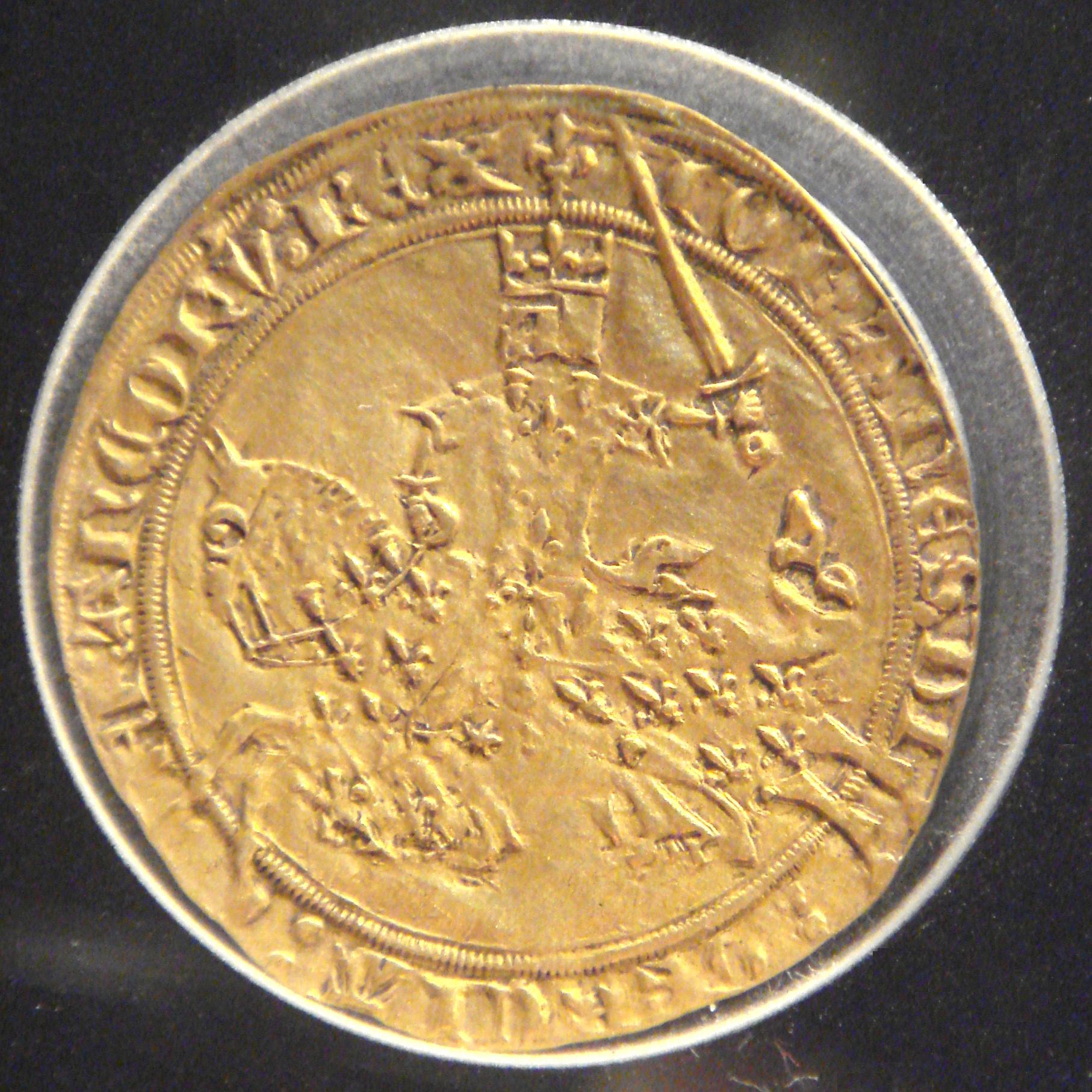
Name of several currency units
The franc is any of various units of currency. One franc is typically divided into 100 centimes. The name is said to derive from the Latin inscription francorum rex (King of the Franks) used on early French coins and until the 18th century, or from the French franc, meaning "frank" (and "free" in certain contexts, such as coup franc, "free kick").
The countries that use francs today include Switzerland, Liechtenstein, and most of Francophone Africa. The Swiss franc is a major world currency today due to the prominence of Swiss financial institutions.
Before the introduction of the euro on 1 January 1999, francs were also used in France, Belgium and Luxembourg, while Andorra and Monaco accepted the French franc as legal tender (Monégasque franc). The franc was also used in former French colonies including Algeria and Cambodia. The franc is sometimes Italianised or Hispanicised as the franco, for instance in Luccan franco.
Origins
The franc was originally a French gold coin of 3.87 g minted in 1360 on the occasion of the release of King John II ("the Good"), held by the English since his capture at the Battle of Poitiers four years earlier. It was equivalent to one livre tournois (Tours pound).
French franc
Main article: French franc
The French franc was originally a gold coin issued in France from 1360 until 1380, then a silver coin issued between 1575 and 1641. The franc finally became the national currency from 1795 until 1999 (franc coins and notes were legal tender until 2002). Though abolished as a legal coin by King Louis XIII in 1641 in favor of the gold louis and silver écu, the term franc continued to be used in common parlance for the livre tournois. The franc was also minted for many of the former French colonies, such as Morocco, Algeria, French West Africa, and others. Today, after independence, many of these countries continue to use the franc as their standard denomination.
The value of the French franc was locked to the euro at 1 euro = 6.55957 FRF on 31 December 1998, and after the introduction of the euro notes and coins, ceased to be legal tender after 28 February 2002, although they were still exchangeable at banks until 19 February 2012.
CFA and CFP francs
Fourteen African countries use the franc CFA (in west Africa, Communauté financière africaine; in equatorial Africa, Coopération financière en Afrique centrale), originally (1945) worth 1.7 French francs and then from 1948, 2 francs (from 1960: 0.02 new franc) but after January 1994 worth only 0.01 French franc. Therefore, from January 1999, 1 CFA franc is equivalent to €0.00152449.
A separate (franc CFP) circulates in France's Pacific territories, worth €0.0084 (formerly 0.055 French franc).
Comorian franc
In 1981, the Comoros established an arrangement with the French government similar to that of the CFA franc. Originally, 50 Comorian francs were worth 1 French franc. In January 1994, the rate was changed to 75 Comorian francs to the French franc. Since 1999, the currency has been pegged to the euro.
Belgian franc and Luxembourg franc
Main article: Belgian franc, Luxembourg franc
The conquest of most of western Europe by Revolutionary and Napoleonic France led to the franc's wide circulation. Following independence from the Kingdom of the Netherlands, the new Kingdom of Belgium in 1832 adopted its own Belgian franc, equivalent to the French one, followed by Luxembourg adopting the Luxembourgish franc in 1848 and Switzerland in 1850. Newly unified Italy adopted the lira on a similar basis in 1862.
In 1865, France, Belgium, Switzerland and Italy created the Latin Monetary Union (to be joined by Spain and Greece in 1868): each would possess a national currency unit (franc, lira, peseta, drachma) worth 4.5 g of silver or of gold (fine), all freely exchangeable at a rate of 1:1. In the 1870s the gold value was made the fixed standard, a situation which was to continue until 1914.
In 1926, Belgium as well as France experienced depreciation and an abrupt collapse of confidence, leading to the introduction of a new gold currency for international transactions, the belga of 5 francs, and the country's withdrawal from the monetary union, which ceased to exist at the end of the year. The 1921 monetary union of Belgium and Luxembourg survived and formed the basis for full economic union in 1932.
Like the French franc, the Belgian and Luxembourg francs ceased to exist on 1 January 1999, when they became fixed at 1 EUR = 40.3399 BEF/LUF, thus a Belgian or Luxembourg franc was worth €0.024789. Old franc coins and notes lost their legal tender status on 28 February 2002.
One Luxembourg franc was equal to one Belgian franc. Belgian francs were legal tender inside Luxembourg, and Luxembourg francs were legal tender in the whole of Belgium. (In reality, Luxembourg francs were only accepted as means of payment by shops and businesses in the Belgian province of Luxembourg adjacent to the independent Grand Duchy of Luxembourg, this for historical reasons.)
The equivalent name of the Belgian franc in Dutch and German, Belgium's other official languages, was frank. As mentioned before, in Luxembourg the franc was called Frang (plural Frangen) in Luxembourgish.
Swiss franc and Liechtenstein franc
The Swiss franc (ISO code: CHF or 756; ; ), which appreciated significantly against the new European currency from April to September 2000, remains one of the world's strongest currencies, worth just over one euro. The Swiss franc is used in Switzerland and in Liechtenstein. Liechtenstein retains the ability to mint its own currency, the Liechtenstein franc, which it does from time to time for commemorative or emergency purposes.
The name of the country "Swiss Confederation" is found on some of the coins in Latin (Confoederatio Helvetica), as Switzerland has four official languages, all of which are used on the notes. The denomination is abbreviated "Fr." on the coins which is the abbreviation in all four languages.
Saar franc
The Saar franc, linked at par to the French franc, was introduced in the Saar Protectorate in 1948. On 1 January 1957, the territory joined the Federal Republic of Germany, nevertheless, in its new member state of Saarland, the Saar franc continued to be the currency until 6 July 1959.
The name of the Saar franc in German, the main official language in the Protectorate, was Franken. Coins displaying German inscriptions and the coat of arms of the Protectorate were circulated and used together with French francs. As banknotes, only French franc bills existed.
Countries that use a franc
Countries using a franc
As of 2023
| Countries | Currency | ISO 4217 code |
|---|---|---|
| Benin | West African CFA franc | XOF |
| Burkina Faso | ||
| Burundi | Burundian franc | BIF |
| Cameroon | Central African CFA franc | XAF |
| Central African Republic | ||
| Chad | ||
| Republic of the Congo | ||
| Democratic Republic of the Congo | Congolese franc | CDF |
| Comoros | Comorian franc | KMF |
| Côte d'Ivoire | West African CFA franc | XOF |
| Djibouti | Djiboutian franc | DJF |
| Equatorial Guinea | Central African CFA franc | XAF |
| Gabon | ||
| Guinea | Guinean franc | GNF |
| Guinea-Bissau | West African CFA franc | XOF |
| Liechtenstein | Swiss franc | CHF |
| Mali | West African CFA franc | XOF |
| Niger | ||
| Rwanda | Rwandan franc | RWF |
| Senegal | West African CFA franc | XOF |
| Switzerland | Swiss franc | CHF |
| Togo | West African CFA franc | XOF |
Collectivities franc
| Countries | Currency | ISO 4217 code |
|---|---|---|
| French Polynesia French Polynesia | CFP franc | XPF |
| New Caledonia New Caledonia | ||
| France Wallis and Futuna |
Selected obsolete
| Countries | Former currency | Replaced by | Since |
|---|---|---|---|
| Algeria | Algerian franc | Algerian dinar | 1964 |
| Andorra | French franc and Spanish peseta | euro | 2002 |
| Belgium | Belgian franc | ||
| France (Overseas collectivities) | French franc | ||
| Luxembourg | Luxembourgish franc | ||
| Madagascar | Malagasy franc | Malagasy ariary | 2005 |
| Mauritania | CFA franc | Mauritanian ouguiya | 1973 |
| Monaco | French franc and Monégasque franc | euro | 2002 |
| Morocco | Moroccan franc | Moroccan dirham | 1960 |
| Saar | Saar franc (used from 1947 -1959) | Deutsche Mark | 1959 |
| Tunisia | Tunisian franc | Tunisian dinar | 1958 |
References
References
- L. Ciani, Les Mones Royales Françaises (1926) p.77 and p.92
- L. Ciani, Les Monnaies Royales Françaises (1926) p.314 and p.356
- (2018). "A History of France". John Murray Publishers.
- Harris, Elinor. (April 20, 1954). "The Value of the French Franc".
- "West Africa renames CFA franc but keeps it pegged to euro". Reuters.
This article was imported from Wikipedia and is available under the Creative Commons Attribution-ShareAlike 4.0 License. Content has been adapted to SurfDoc format. Original contributors can be found on the article history page.
Ask Mako anything about Franc — get instant answers, deeper analysis, and related topics.
Research with MakoFree with your Surf account
Create a free account to save articles, ask Mako questions, and organize your research.
Sign up freeThis content may have been generated or modified by AI. CloudSurf Software LLC is not responsible for the accuracy, completeness, or reliability of AI-generated content. Always verify important information from primary sources.
Report