From Surf Wiki (app.surf) — the open knowledge base
Fragment antigen-binding region
Part of an antibody that binds to antigens
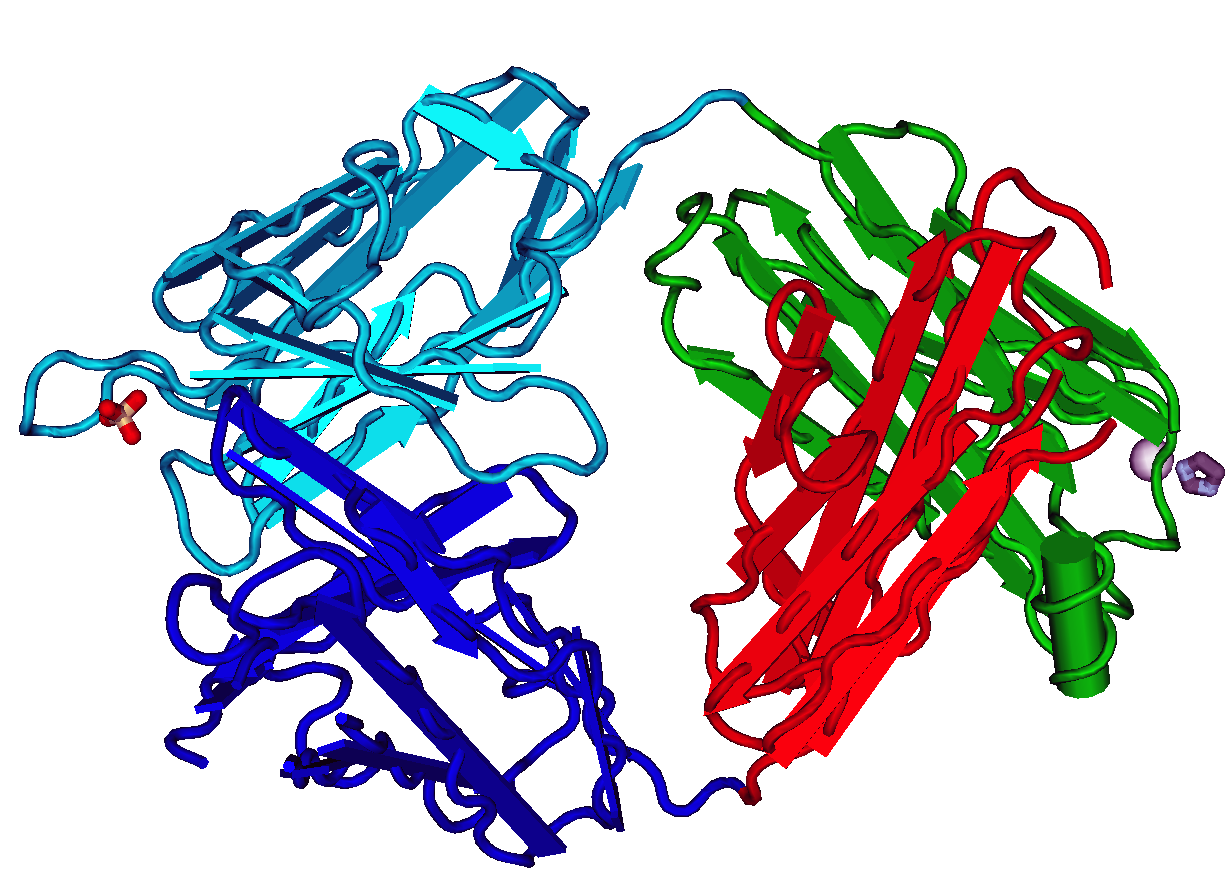
Part of an antibody that binds to antigens
The fragment antigen-binding region (Fab region) is a region on an antibody that binds to antigens. It is composed of one constant and one variable domain of each of the heavy and the light chain. The variable domain contains the paratope (the antigen-binding site), comprising a set of complementarity-determining regions, at the amino terminal end of the monomer. Each arm of the Y thus binds an epitope on the antigen.
Preparation
In an experimental setting, Fc and Fab fragments can be generated in the laboratory. The enzyme papain can be used to cleave an immunoglobulin monomer into two Fab fragments and an Fc fragment. Conversely, the enzyme pepsin cleaves below the hinge region, so the result instead is a F(ab')2 fragment and a pFc' fragment. Recently another enzyme for generation of F(ab')2 has been commercially available. The enzyme IdeS (Immunoglobulin degrading enzyme from Streptococcus pyogenes, trade name FabRICATOR) cleaves IgG in a sequence specific manner at neutral pH. The F(ab')2 fragment can be split into two '''Fab'''' fragments by mild reduction.
File:Antibody je2.png|Heavy and light chains, variable and constant regions of an antibody. File:2fab fc.svg|An antibody digested by papain yields three fragments: two Fab fragments and one Fc fragment File:F ab2 pFc.png|An antibody digested by pepsin yields two fragments: a F(ab')2 fragment and a pFc' fragment
The variable regions of the heavy and light chains can be fused together to form a single-chain variable fragment (scFv), which is only half the size of the Fab fragment, yet retains the original specificity of the parent immunoglobulin.
Applications
Therapeutics
Fabs have seen some therapeutic use in emergency medicine as an antidote. Marketed applications include digoxin immune fab and Crofab, a mixture of Fabs for rattlesnake bites. Fabs against colchicine and tricyclic antidepressants has also been produced but are yet to see approval. Compared to whole non-human antibodies, Fab' and F(ab')2 antibodies are less likely to trigger anaphylaxis, as the species-related Fc region is removed.
Fabs are a common form-factor for monoclonal antibodies designated for therapeutic use. The Fab abciximab, which inhibits blood clotting, works by disabling glycoprotein IIb/IIIa found on platelets. Ranibizumab, a treatment for macular degeneration, targets vascular endothelial growth factor A, a protein involved in the growth of blood vessels. Certolizumab pegol is a Fab chemically linked to PEG, and it treats various inflammatory disorders by binding away TNFα.
Diagnostics
Fab antibodies also have diagnostic use. Arcitumomab is a mouse antibody that recognizes carcinoembryonic antigen, an antigen over-expressed in 95% of colorectal cancers. It is conjugated to a radioactive element, which will label the tumors when viewed with single-photon emission computed tomography. Sulesomab, an antigen that recognizes proteins on the surface of granulocytes, is used to label out infections, again using the 99mTc isotope.
Fab fragments are often fused to small proteins (
References
References
- Larsson, Lars-Inge. (September 1988). "Immunocytochemistry: Theory and practice". Crc Press.
- Janeway, CA Jr.. (2001). "Immunobiology". Garland Publishing.
- Flanagan RJ, Jones AL. (2004). "Fab antibody fragments: some applications in clinical toxicology". [[Drug Saf]].
- Seger D, Kahn S, Krenzelok EP. (2005). "Treatment of US crotalidae bites: comparisons of serum and globulin-based polyvalent and antigen-binding fragment antivenins". Toxicol Rev.
- (October 2010). "Principles of antidote pharmacology: an update on prophylaxis, post‐exposure treatment recommendations and research initiatives for biological agents". British Journal of Pharmacology.
- Fachinformation Lucentis. Novartis Pharma. Stand 15. November 2007.
- W. J. Köstler, C. C. Zielinski. (November 2000). "Diagnostische und therapeutische Antikörper in der Onkologie — State of the Art". Acta Chirurgica Austriaca.
This article was imported from Wikipedia and is available under the Creative Commons Attribution-ShareAlike 4.0 License. Content has been adapted to SurfDoc format. Original contributors can be found on the article history page.
Ask Mako anything about Fragment antigen-binding region — get instant answers, deeper analysis, and related topics.
Research with MakoFree with your Surf account
Create a free account to save articles, ask Mako questions, and organize your research.
Sign up freeThis content may have been generated or modified by AI. CloudSurf Software LLC is not responsible for the accuracy, completeness, or reliability of AI-generated content. Always verify important information from primary sources.
Report