From Surf Wiki (app.surf) — the open knowledge base
Fort Bend County, Texas
County in Texas, United States
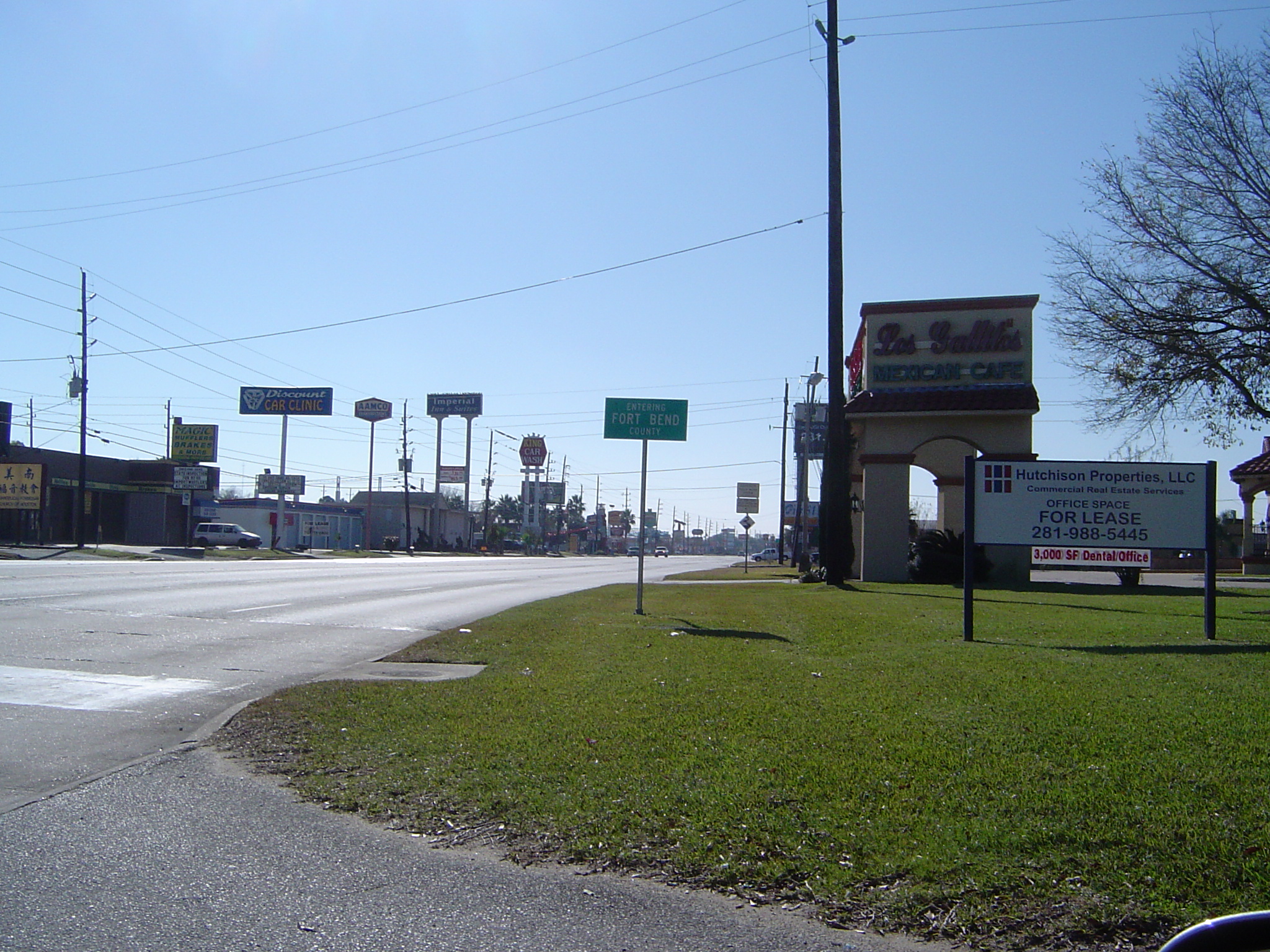
_(12819388513).jpg)
County in Texas, United States
| Field | Value |
|---|---|
| county | Fort Bend County |
| state | Texas |
| ex image | Fort bend courthouse.jpg |
| ex image size | 300px |
| ex image cap | Fort Bend County Courthouse, Richmond, November 2008 |
| type | County |
| seal | FortBendCountySeal.jpg |
| coordinates | |
| founded | 1837 (created) |
| January 13, 1838 (organized) | |
| named for | A blockhouse positioned in a bend of the Brazos River |
| seat wl | Richmond |
| largest city wl | Sugar Land |
| area_total_sq_mi | 885.250 |
| area_land_sq_mi | 861.785 |
| area_water_sq_mi | 23.465 |
| area percentage | 2.65% |
| population_as_of | 2020 |
| population_total | 822779 |
| pop_est_as_of | 2024 |
| population_est | 958434 |
| density_sq_mi | 1112.141 |
| time zone | Central |
| district | 7th |
| district2 | 9th |
| district3 | 22nd |
| website |
January 13, 1838 (organized)
Fort Bend County is a county located in the U.S. state of Texas. The county was founded on December 29, 1837, and organized the next year. It is named for a blockhouse at a bend of the Brazos River. The community developed around the fort in early days. The county seat is Richmond. The largest city located entirely within the county borders is Sugar Land. The largest city by population in the county is Houston, but most of Houston's population is located in neighboring Harris County.
Fort Bend County is included in the Houston–The Woodlands–Sugar Land metropolitan statistical area. As of the 2020 census, its population was 822,779, making it the state's eighth-most populous county, and was estimated to be 958,434 in 2024. In 2017, Forbes ranked it the fifth-fastest growing county in the United States.
History
Before European settlement, the area was inhabited by Karankawa Indians. Spanish colonists generally did not reach the area during their colonization, settling more in South Texas.

After Mexico achieved independence from Spain, Anglo-Americans started entering from the east. In 1822, a group of Stephen F. Austin's colonists, headed by William Travis, built a fort at the present site of Richmond. The fort was called Fort Bend because it was built in the bend of the Brazos River. The city of Richmond was incorporated under the Republic of Texas, along with 19 other towns, in 1837. Fort Bend County was created from parts of Austin, Harris, and Brazoria Counties in 1838.
Fort Bend developed a plantation economy based on cotton as the commodity crop. Planters had numerous African-American slaves as laborers. By the 1850s, Fort Bend was one of six majority-black counties in Texas. In 1860, the slave population totaled 4,127, more than twice that of the 2,016 whites. Few free Blacks lived there, as Texas refused them entry.
While the area began to attract White immigrants in the late 19th century, it remained majority-Black during and after Reconstruction. Whites endeavored to control freedmen and their descendants through violence and intimidation. Freedmen and their sympathizers supported the Republican Party because of emancipation, electing their candidates to office. The state legislature was still predominately White. By the 1880s, most White residents belonged to the Democratic Party. Factional tensions were fierce, as political elements split largely along racial lines. The Jaybirds, representing the majority of the Whites, struggled to regain control from the Woodpeckers, who were made up of some Whites who were consistently elected to office by the majority of African Americans, as several had served as Republican officials during Reconstruction.
Fort Bend County was the site of the Jaybird–Woodpecker War in 1888–89. After a few murders were committed, the political feud culminated in a gun battle at the courthouse on August 16, 1889, when several more people were killed and the Woodpeckers were routed from the county seat.
Governor Lawrence Sullivan Ross sent in militia forces and declared martial law. With his support, the Jaybirds ordered a list of certain Blacks and Woodpecker officials out of the county, overthrowing the local government. The Jaybirds took over county offices and established a "White-only pre-primary", disenfranchising African Americans from the only competitive contests in the county. This device lasted until 1950, when Willie Melton and Arizona Fleming won a lawsuit against the practice in United States District Court, though it was overturned on appeal. In 1953, they ultimately won their suit when the Supreme Court of the United States declared the Jaybird primary unconstitutional in Terry v. Adams, the last of the White primary cases.
20th century to present
In the 1960s, the first of several master-planned communities that came to define the county were developed, marking the beginning of its transformation from a largely rural county dominated by railroad and oil and gas interests to a major suburban county dominated by service and manufacturing industries. Among the earliest such developments were Sugar Land's Sugar Creek and Missouri City's Quail Valley, whose golf course hosted the Houston Open during the 1973 and 1974 seasons of the PGA Tour. Another was First Colony in Sugar Land, a 9,700-acre development commenced in the 1970s by Houston developer Gerald D. Hines that eventually became the southwest Greater Houston area's main retail hub, anchored by First Colony Mall and Sugar Land Town Square.
Since the 1980s, new communities have continued to develop, with Greatwood, New Territory, and Sienna (originally Sienna Plantation) among the more recent notable developments. In addition to continued development in the eastern part of the county around Sugar Land and Missouri City, the Greater Katy area began to experience rapid growth and expansion into Fort Bend County in the 1990s, led by the development of Cinco Ranch. By 2010, the county's population exceeded 500,000, and it had become the second-largest county in the greater Houston area (behind Harris County).
In 2017, Hurricane Harvey caused significant flooding in Fort Bend County, leading to the evacuation of 200,000 residents and over 10,000 rescues. The unprecedented flooding, the result of record rainfall and overflow from the Brazos River and Barker Reservoir, resulted in damage to or destruction of over 6,800 homes in the county.
Geography
According to the United States Census Bureau, the county has a total area of 885.250 sqmi, of which 23.465 sqmi (2.65%) are covered by water. It is the 181st-largest of the 236 counties in Texas by total area.
Adjacent counties
- Waller County (north)
- Harris County (northeast)
- Brazoria County (southeast)
- Wharton County (southwest)
- Austin County (northwest)
Communities
Cities (multiple counties)
- Houston (mostly in Harris County and a small part in Montgomery County)
- Katy (partly in Harris and Waller Counties)
- Missouri City (small part in Harris County)
- Pearland (mostly in Brazoria County and a small part in Harris County)
- Stafford (small part in Harris County)
Cities
- Arcola
- Beasley
- Fulshear
- Kendleton
- Meadows Place
- Needville
- Orchard
- Richmond (county seat)
- Rosenberg
- Simonton
- Sugar Land
- Weston Lakes
Town
- Thompsons
Villages
- Fairchilds
- Pleak
Census-designated places
- Cinco Ranch (small part in Harris County)
- Cumings
- Fifth Street
- Four Corners
- Fresno
- Greatwood
- Mission Bend (partly in Harris County)
- Pecan Grove
- Sienna
Former census-designated places
- Town West (Townwest)
Unincorporated communities
- Booth
- Clodine
- Crabb
- Foster
- Guy
- Juliff
- Long Point
- Powell Point
- Riverstone
- Tavener
Ghost towns
- Duke
- Pittsville
Demographics
From 1930 to 1950, the county showed a decline in the rate of expansion and even a decrease in population. This was a period when many African Americans migrated in the second wave of the Great Migration from Texas and other parts of the South to the West Coast, where a buildup in the defense industry provided more job opportunities. Other minorities settled in the county during its residential development, and African Americans are now a minority. |align-fn=center 1850–1900 1910 1920 1930 1940
1950 1960 1970 1980 1990 2000 2010 2020
Recent estimates
As of the third quarter of 2024, the median home value in Fort Bend County was $395,730.
As of the 2023 American Community Survey, an estimated 281,259 households are in Fort Bend County, with an average of 3.04 persons per household. The county has a median household income of $113,409. About 8.5% of the county's population lives at or below the poverty line. Fort Bend County has an estimated 66.7% employment rate, with 49.3% of the population holding a bachelor's degree or higher and 91.9% holding a high-school diploma.
The top-five reported ancestries (people were allowed to report up to two ancestries, thus the figures will generally add to more than 100%) were English (57.2%), Spanish (18.3%), Indo-European (9.5%), Asian and Pacific Islander (11.9%), and other (3.0%). The median age in the county was 37.6 years.
Racial and ethnic composition
| Race / Ethnicity (NH = Non-Hispanic) | Pop 1980 | Pop 1990 | Pop 2000 | title=P2 Hispanic or Latino, and Not Hispanic or Latino by Race – 2010: DEC Redistricting Data (PL 94-171) - Fort Bend County, Texas | url=https://data.census.gov/cedsci/table?q=p2&g=0500000US48157&tid=DECENNIALPL2010.P2 | website=United States Census Bureau}} | % 1980 | % 1990 | % 2000 | % 2010 |
|---|---|---|---|---|---|---|---|---|---|---|
| White alone (NH) | 79,549 | 121,245 | 163,788 | 211,680 | 243,726 | 60.80% | 53.79% | 46.21% | ||
| Black or African American alone (NH) | 20,132 | 45,678 | 69,579 | 123,267 | 167,964 | 15.39% | 20.26% | 19.63% | ||
| Native American or Alaska Native alone (NH) | 276 | 411 | 621 | 1,159 | 1,269 | 0.21% | 0.18% | 0.18% | ||
| Asian alone (NH) | 3,694 | 13,978 | 39,545 | 98,762 | 181,522 | 2.82% | 6.20% | 11.16% | ||
| Native Hawaiian or Pacific Islander alone (NH) | 31 | 52 | 97 | 174 | 276 | 0.02% | 0.02% | 0.03% | ||
| Other race alone (NH) | 508 | 217 | 165 | 1,341 | 4,055 | 0.39% | 0.07% | 0.15% | ||
| Mixed race or Multiracial (NH) | x | x | 5,407 | 10,025 | 25,387 | x | x | 1.53% | ||
| Hispanic or Latino (any race) | 26,656 | 43,892 | 74,871 | 138,967 | 198,580 | 20.37% | 19.47% | 21.12% | ||
| Total | 130,846 | 225,421 | 354,452 | 585,375 | 822,779 | 100.00% | 100.00% | 100.00% |
2020 census
As of the 2020 census, the county had a population of 822,779, 263,128 households, and 215,579 families. The median age was 37.1 years, 27.4% of residents were under the age of 18, and 12.1% were 65 years of age or older. For every 100 females there were 94.8 males, and for every 100 females age 18 and over there were 91.4 males age 18 and over.
Of those households, 45.5% had children under the age of 18 living in them, 63.4% were married-couple households, 11.4% were households with a male householder and no spouse or partner present, and 21.5% were households with a female householder and no spouse or partner present. About 15.3% of all households were made up of individuals and 5.8% had someone living alone who was 65 years of age or older.
The population density was 954.8 PD/sqmi, and the 277,910 housing units had an average density of 322.5 /sqmi. Of those units, 5.3% were vacant, 77.1% of occupied housing units were owner-occupied, 22.9% were renter-occupied, the homeowner vacancy rate was 2.1%, and the rental vacancy rate was 8.6%.
The racial makeup of the county was 34.3% White, 20.78% Black or African American, 0.56% American Indian and Alaska Native, 22.18% Asian, 0.05% Native Hawaiian and Pacific Islander, 9.1% from some other race, and 13.0% from two or more races. Hispanic or Latino residents of any race comprised 24.14% of the population.
95.2% of residents lived in urban areas, while 4.8% lived in rural areas.
2000 census
As of the 2000 census, 354,452 people, 110,915 households, and 93,057 families resided in the county. The population density was 405.0 PD/sqmi. The 115,991 housing units had an average density of 133.0 /sqmi. The racial makeup of the county was 56.96% White, 19.85% African American, 0.30% Native American, 11.20% Asian, 9.14% from some other race, and 2.56% from two or more races. Hispanic or Latino people of any race were 21.12% of the population. Other self-identifications were 8.8% of German ancestry, 6.3% American, and 5.8% English ancestry.
Of the110,915 households, 49.8% had children under 18 living with them, 68.8% were married couples living together, 11.4% had a female householder with no husband present, and 16.10% were not families. About 13.5% of all households were made up of individuals, and 3.10% had someone living alone who was 65 or older. The average household size was 3.14 and the average family size wass 3.46.
In the county, the age distribution of the population was 32.0% under 18, 7.6% from 18 to 24, 32.3% from 25 to 44, 22.4% from 45 to 64, and 5.7% who were 65 or older. The median age was 33 years. For every 100 females, there were 99.1 males. For every 100 females 18 and over, there were 96.30 males.
The median income for a household in the county was $63,831, and that for a family was $69,781. Males had a median income of $47,979 versus $32,661 for females. The per capita income for the county was $24,985; 7.1% of the population and 5.5% of families were below the poverty line. Of the total population, 8.5% of those under 18 and 9.4% of those 65 and older were living below the poverty line.
Ethnic backgrounds
Since the 1970s, Fort Bend County has been attracting people from all ethnic backgrounds. According to a 2001 Claritas study, it was the fifth-most diverse U.S. county, among counties with a population of 100,000 or more.
It is one of a growing number of U.S. counties with no single ethnic group forming a majority of the population. Fort Bend County has the highest percentage of Asian-American residents in the Southern United States; the largest groups are of Vietnamese, Chinese, Indian, and Filipino ancestry. By 2011, Fort Bend was ranked the fourth-most racially diverse county in the United States by USA Today. The newspaper based the ranking on calculating the probability that two persons selected at random would be of different ethnic groups or races. According to the USA Today methodology, the chance of people of being two different ethnic groups/races being selected was 75%. Karl Eschbach, a former demographer with the State of Texas, has said that many people from Houston neighborhoods and communities with clear racial identities, such as the East End, Sunnyside, and the Third Ward, moved to suburban areas that were too new to have established racial identities. Eschbach explained, "[a]s a large minority middle class started to emerge, Fort Bend was virgin territory that all groups could move to."
In 2020, Fort Bend County had the highest percentage of Asian Americans of any county in Texas. In 2019, Indian Americans made up almost 50% of the Asian Americans in the county, with the second- and third-largest subsets being Chinese Americans and Vietnamese Americans. From 2010 to 2020, the percentage of non-Hispanic White residents declined by 4.8% (though this population grew in absolute numbers), the Asian-American community grew by 83,167 (83.7% increase), the percentage of Hispanic people increased by 42.9%, and the percentage of Black people increased by 35.9%. Fort Bend County also has the highest percentage of Filipino Americans in the Greater Houston area and in state of Texas. Filipinos are also the fourth-largest Asian subset in the county.
Economic characteristics
According to the 2008 American Community Survey, the median income for a household in the county was $81,456, and for a family was $90,171. Males had a median income of $54,139 versus $41,353 for females. The per capita income for the county was $30,862. About 5.5% of families and 7.1% of the population were below the poverty line, including 8.5% of those under 18 and 9.4% of those 65 or over.
As of 2006, Fort Bend County was the wealthiest county in Texas, with a median household income of $95,389 and a median family income of $105,944, having surpassed Collin and Rockwall Counties since the 2000 census. However, the Council for Community and Economic Research ranked Fort Bend County America's third-wealthiest county when the local cost of living was factored in. This estimate did not include property taxes and local taxes, as effective tax rates and home insurance were not measured. Along with other Texas counties, Fort Bend County has one of the nation's highest property-tax rates. In 2007, it was ranked fifth in the nation for property taxes as a percentage of the homes' value on owner-occupied housing. The list includes only counties with a population over 65,000. Fort Bend County also ranked in the top 100 in property taxes paid and percentage of taxes of income. Part of this is due to Texas's complex Robin Hood plan school financing law.
Government and politics
County politics in Fort Bend County, as in all Texas counties, center around a commissioners' court. It is composed of four popularly elected county commissioners, one representing each precinct drawn decennially on the basis of population, and a county judge elected to represent the entire county. Other county officials include a sheriff, district attorney, tax assessor-collector, county clerk, district clerk, county treasurer, and county attorney.
For decades, Fort Bend County was a stronghold for the Democratic Party, having achieved disenfranchisement of Blacks at the county level in 1889 in the aftermath of the Jaybird–Woodpecker War. The state effectively disfranchised them with a poll tax and White primaries; the latter device was declared unconstitutional in 1944. By 1960, so few Republicans resided in Fort Bend County that the county's Republican chair once received a letter addressed simply to "Mr. Republican".
As the 1960s progressed, though, rapid suburban-style development in west and southwest Houston began to overflow into Fort Bend County, where the development of numerous master-planned communities attracted many upper-middle-class families to developments in the eastern portion of the county. This development, along with the shift of conservative white Democrats towards the Republican Party in the wake of the Voting Rights Act of 1965, led to increased support for the GOP in the following years. Richard Nixon narrowly carried the county in 1968, making it the only county in greater Houston outside of Harris County to go Republican that year, and carried it again in 1972. In 1976, conservative physician Ron Paul of Brazoria County, noted for his opposition to most government programs, which earned him the nickname "Dr. No", captured the 22nd district in the United States House of Representatives in a special election, before narrowly losing re-election in the November election in which Gerald Ford also won Fort Bend, despite losing Texas to Jimmy Carter.
Beginning in 1978, Republicans began to win several offices within the county, with William P. Clements carrying the county in his successful run for governor. That same year, Paul was returned to Congress, while businessman Tom DeLay captured the county's seat in the Texas House of Representatives. In 1984 DeLay succeeded Paul in Congress after the latter ran an unsuccessful U.S. Senate campaign, and became House majority leader by 2002. Beginning in 1982, Republicans won a number of county-level offices and judicial benches, and Fort Bend County's new reputation as a Republican stronghold culminated in the 1994 election of a Republican county judge to the commissioners' court for the first time since Reconstruction. As of 2019, five of Fort Bend County's eight countywide offices, including two precinct-level positions, are held by Republicans. The remaining three are held by Democrats.
With growing populations of minorities and more socially moderate suburban voters who often break Republican on fiscal and economic issues, Fort Bend County has recently become more competitive. In 2008, Democrat Barack Obama came very close to winning the county, with 48.6% of the vote to Republican John McCain's 50.9%. In 2016, Hillary Clinton became the first Democrat to carry the county since Lyndon B. Johnson in 1964, largely due to the unpopularity of Republican nominee Donald Trump amongst the county's largely suburban electorate (not unlike the situation with other similarly suburban counties during the Trump era), with many voters splitting their tickets between Clinton and Republicans for other offices; Republicans won every elected countywide office by a margin similar to Clinton's, while also defeating an incumbent Democrat on the Fort Bend County Commissioners' Court. In 2018, significant enthusiasm for U.S. Senate candidate Beto O' Rourke and strong Democratic infrastructure resulted in Democratic control of the commissioners' court (including county judge) and a number of countywide administrative and judicial posts, with Fort Bend Independent School District board trustee K.P. George becoming Texas's first Asian-American county judge. The county would continue its Democratic trend in the 2020 election, with Joe Biden winning Fort Bend County over Trump by a margin of over 10 percent and Democrats sweeping all countywide races. In 2024, the diverse county swung slightly more Republican, with Vice President Kamala Harris only winning a narrow plurality over Trump and Republicans winning a majority of contested countywide and state judicial races.
Today, Fort Bend County is often considered a swing county, with election results usually tilting more Democratic than statewide results, which continue to favor Republicans. Elections within the county are often decided by margins in more Republican-leaning areas in Sugar Land, Rosenberg, and Sienna, with Republicans dominating in the Katy, Fulshear, and rural southern areas of the county and Democrats in the county's northeast corner around Missouri City and Fresno, as well as heavily Hispanic Mission Bend.
Fort Bend County is one of six "reverse pivot counties", counties that voted Republican in 2008 and 2012 before voting Democratic in 2016 onward.
Since the passage of the Voting Rights Act of 1965, the federal government has enforced it by regularly reviewing voting patterns and local practices, and plaintiffs have sometimes sued state or local governments over discriminatory practices. In April 2009, as part of a settlement with the United States Department of Justice, officials of Fort Bend County agreed to increase assistance to Spanish-speaking Latino voters in elections held in the county.
Commissioners' court
| Commissioners | Name | Party | First Elected | Communities Represented |
|---|---|---|---|---|
| Judge | KP George | Republican | 2018 | |
| Precinct 1 | Vincent Morales | Republican | 2016 | |
| Precinct 2 | Grady Prestage | Democratic | 1990 | |
| Precinct 3 | Andy Meyers | Republican | 1996 | |
| Precinct 4 | Dexter L. McCoy | Democratic | 2022 |
County officials
| Office | Name | Party |
|---|---|---|
| County Attorney | Bridgette Smith-Lawson | |
| County Clerk | Laura Richard | |
| District Attorney | Brian Middleton | |
| District Clerk | Beverley McGrew Walker | |
| Sheriff | Eric Fagan | |
| Tax Assessor-Collector | Carmen Turner | |
| Treasurer | Bill Rickert |
United States Congress
Source:
| Senators | Name | Party | First Elected | Level | Representatives | Name | Party | First Elected | Area(s) of Fort Bend County Represented |
|---|---|---|---|---|---|---|---|---|---|
| Senate Class 1 | Ted Cruz | Republican | 2012 | Junior Senator | |||||
| Senate Class 2 | John Cornyn | Republican | 2002 | Senior senator | |||||
| District 7 | Lizzie Fletcher | Democratic | 2018 | Mission Bend, Four Corners, western portions of Sugar Land, and unincorporated portions of the north-central part of the county | |||||
| District 9 | Al Green | Democratic | 2004 | Northeastern corner of the county, including Fresno and most of Stafford, Missouri City, and the county's portion of Houston | |||||
| District 22 | Troy Nehls | Republican | 2020 | Greater Katy areas, Fulshear, Richmond, Rosenberg, Sienna, eastern portion of Sugar Land, and southwestern Missouri City |
Texas Legislature
Texas Senate
| District | Name | Party | First Elected | Area(s) of Fort Bend County Represented |
|---|---|---|---|---|
| 13 | Borris Miles | Democratic | 2016 | |
| 17 | Joan Huffman | Republican | 2008 | |
| 18 | Lois Kolkhorst | Republican | 2015 (special) |
Texas House of Representatives
| District | Name | Party | First Elected | Area(s) of Fort Bend County Represented |
|---|---|---|---|---|
| 26 | Matt Morgan | Republican | 2024 | |
| 27 | Ron Reynolds | Democratic | 2010 | |
| 28 | Gary Gates | Republican | 2020 | |
| 76 | Suleman Lalani | Democratic | 2022 | |
| 85 | Stan Kitzman | Republican | 2022 |
Corrections
The Fort Bend County Jail is at 1410 Richmond Parkway in Richmond.
Texas Department of Criminal Justice operates the following facilities in Fort Bend County, all at the Jester State Prison Farm site:
Prisons for men:
- Jester III Unit (unincorporated area) (co-located with the Jester units)
- Carol Vance Unit (unincorporated area) (co-located with the Jester units)
Other facilities:
- Jester I Unit – Substance Abuse Felony Punishment Facility (unincorporated area) (co-located with the Jester units)
- Wayne Scott Unit (formerly Jester IV Unit) – Psychiatric Facility (unincorporated area) (co-located with the Jester units), renamed in 2021
The TDCJ announced that the Central Unit in Sugar Land was closing in 2011. The City of Sugar Land is exploring the property for future economic development, including light industrial uses, as well as a potential expansion of Sugar Land Regional Airport.
County buildings
File:Richmond TX FBC Service Center.jpg|Fort Bend County Justice Center at 1422 Eugene Heimann Cir. File:Richmond TX Wm Travis Bldg.jpg|William B. Travis Building is just east of the courthouse. File:FortBendRosenAnnex.jpg|Fort Bend County Rosenberg Annex
Economy
In contrast to greater Houston in general, Fort Bend County's economy is more diverse, with numerous service-sector jobs in healthcare, energy, education, hospitality, and other areas. Major companies with a presence in the county include Schlumberger, Minute Maid, Fluor, and Sunoco's logistics operations in Sugar Land. The Houston Business Journal reported in 2010 that the diversity of industries promoted decades of rapid population growth. After Memorial Hermann Hospital and St. Luke's Episcopal Hospital opened facilities in Fort Bend County, already home to local facilities for Houston Methodist Hospital in Sugar Land, as well as locally based OakBend Medical Center in Richmond, many doctors moved their offices to the county. Compared to Montgomery County, which has experienced rapid growth in corporate employment following ExxonMobil's decision to move its greater Houston operations to an area directly south of The Woodlands, Fort Bend County has yet to experience significant corporate growth, though Schlumberger recently announced plans to move its North American headquarters to Sugar Land.
Healthcare
The county does not have a hospital district. OakBend Medical Center serves as the county's charity hospital, with which the county contracts.
Education
Public school districts
School districts in the county include:
- Brazos Independent School District (formerly Wallis-Orchard ISD)
- Fort Bend Independent School District
- Katy Independent School District
- Lamar Consolidated Independent School District
- Needville Independent School District
- Stafford Municipal School District
Kendleton Independent School District, which formerly served parts of the county, closed in 2010 and merged into LCISD.
Higher education
- University of Houston Sugar Land campus
The Texas Legislature assigns these community college districts to the following:
- Houston Community College System: Katy ISD, Stafford MSD, and portions of FBISD in the Houston, Missouri City, and Pearland city limits, and areas not in Wharton County Junior College (in other words, not in Sugar Land, not in Sugar Land's extraterritorial jurisdiction)
- Wharton County Junior College: The City of Sugar Land and its extraterritorial jurisdiction, Lamar CISD (including the former Kendleton ISD), Needville ISD, and Brazos ISD (stated in the legislation as Wallis-Orchard)
Technical school
- Texas State Technical College
Libraries
Fort Bend County Libraries operates many libraries in the county.
Houston Public Library operates one branch in the county, the Stimley Blue Ridge Neighborhood Library in Blue Ridge, Houston.
Media
Local newspapers in the county include three weeklies: the Fort Bend Star, headquartered in Stafford; the Fort Bend Independent; and the Fort Bend Sun, headquartered in Sugar Land. The daily Fort Bend Herald and Texas Coaster focuses on news coverage in the Richmond-Rosenberg area. Fort Bend County is also a major service area for the Houston Chronicle, which provides separate local coverage for the Sugar Land and Katy areas.
Transportation
Major highways
- [[Image:I-10 (TX).svg|20px]] Interstate 10
- [[Image:I-69 (TX).svg|20px]] Interstate 69
- [[Image:US 59.svg|20px]] U.S. Route 59
- [[Image:Alternate plate.svg|20px]]
- [[Image:Texas 6.svg|20px]] State Highway 6
- [[Image:Texas 36.svg|20px]] State Highway 36
- [[Image:Texas 99.svg|20px]] State Highway 99 — Grand Parkway (Under Construction)
- [[Image:Fort Bend Toll Road.svg|20px]] Fort Bend Parkway
- [[File:Westpark Tollway.svg|20px]] Westpark Tollway
Major Farm to Market Roads
- [[Image:Texas FM 359.svg|20px]] Farm to Market Road 359
- [[Image:Texas FM 442.svg|20px]] Farm to Market Road 442
- [[Image:Texas FM 521.svg|20px]] Farm to Market Road 521
- [[Image:Texas FM 762.svg|20px]] Farm to Market Road 762
- [[Image:Texas FM 1092.svg|20px]] Farm to Market Road 1092
- [[Image:Texas FM 1093.svg|20px]] Farm to Market Road 1093
- [[Image: Texas FM 1462.svg|20px]] Farm to Market Road 1462
- [[Image:Texas FM 1463.svg|20px]] Farm to Market Road 1463
- [[Image:Texas FM 1464.svg|20px]] Farm to Market Road 1464
- [[Image:Texas FM 1876.svg|20px]] Farm to Market Road 1876
- [[Image:Texas FM 2234.svg|20px]] Farm to Market Road 2234
- [[Image:Texas FM 2759.svg|20px]] Farm to Market Road 2759
- [[Image:Texas FM 2977.svg|20px]] Farm to Market Road 2977
- [[Image:Texas FM 3345.svg|20px]] Farm to Market Road 3345
Airports
The sole publicly owned airport in the county is Sugar Land Regional Airport in Sugar Land.
Privately owned airports for public use include:
- Houston Fort Bend Airport in an unincorporated area east of Beasley
- Houston Southwest Airport in Arcola
- Westheimer Air Park in an unincorporated area between Fulshear and Houston
Privately owned for private use:
- Cardiff Brothers Airport in an unincorporated area near Fulshear and Katy
- Dewberry Heliport is a general-aviation heliport (privately owned, for private use) in unincorporated areas between Fulshear and Katy.
The closest airport with regularly scheduled commercial service is Houston's William P. Hobby Airport in Harris County. Fort Bend County is also within the primary service area of George Bush Intercontinental Airport in Houston.
Mass transit
Fort Bend County officially created a department of public transportation in 2005 that provides commuter buses to Uptown, Greenway Plaza, and Texas Medical Center. It also provides demand-and-response buses to senior citizens and the general public that travel only in Fort Bend County. Parts of the county, such as Katy and Missouri City, participate in the Metropolitan Transit Authority of Harris County and are served by several park-and-ride routes.
Freeway system
The TTC-69 component (recommended preferred) of the once-planned Trans-Texas Corridor went through Fort Bend County.
Toll roads
The Fort Bend County Toll Road Authority in Sugar Land manages and operates tolled portions of these toll roads operating in the county:
- Fort Bend Parkway
- Westpark Tollway
- Grand Parkway Toll Road
Notable people
- Brittney Karbowski, American voice actress
- CeeDee Lamb, Wide Receiver for the Dallas Cowboys
References
References
- (2008). "Texas: Individual County Chronologies". The [[Newberry Library]].
- "Explore Census Data". [[United States Census Bureau]].
- Kotkin, Joel. "No 5: Fort Bend County, Texas - pg.5".
- Gannett, Henry. (1905). "The Origin of Certain Place Names in the United States". Govt. Print. Off..
- Alvarez, Elizabeth Cruce. (November 8, 2011). "Texas Almanac 2012–2013". Texas A&M University Press.
- "FORT BEND COUNTY | the Handbook of Texas Online| Texas State Historical Association (TSHA)".
- Yelderman, Pauline. (2010). "Handbook of Texas Online: JAYBIRD-WOODPECKER WAR". [[Texas State Historical Association]].
- Hayes, Bonni C.. (2010). "Handbook of Texas Online: ARIZONA FLEMING". Texas State Historical Association.
- Johnson, Paul. (2000). "A History of the American People". Orion Publishing Group, Limited.
- "Quail Valley's History: Golf, Special Events & Restaurant".
- "First Colony". [[Hines (company).
- "History {{!}} Fort Bend County, TX".
- E., JASINSKI, LAURIE. (June 12, 2010). "CINCO RANCH, TX".
- (March 14, 2018). "Hurricane Harvey damaged or destroyed 6,800 homes in Fort Bend, officials say". Houston Chronicle.
- "2024 County Gazetteer Files – Texas". [[United States Census Bureau]].
- "County Population Totals and Components of Change: 2020-2024".
- "Decennial Census by Decade".
- "1900 Census of Population - Population of Texas By Counties And Minor Civil Divisions".
- "1910 Census of Population - Supplement for Texas".
- "1920 Census of Population - Number of Inhabitants - Texas".
- "1930 Census of Population - Number of Inhabitants - Texas".
- "1940 Census of Population - Number of Inhabitants - Texas".
- "1950 Census of Population - Number of Inhabitants - Texas".
- "1960 Census of Population - Number of Inhabitants - Texas".
- "1970 Census of Population - Number of Inhabitants - Texas".
- "1980 Census of Population - Number of Inhabitants - Texas".
- "1990 Census of Population - Population and Housing Unit Counts - Texas".
- "2000 Census of Population - Population and Housing Unit Counts - Texas".
- "2010 Census of Population - Population and Housing Unit Counts - Texas".
- "County Median Home Price". [[National Association of Realtors]].
- "U.S. Census Bureau QuickFacts: Fort Bend County, Texas".
- "General Population Characteristics: Texas".
- "Texas: 1990, Part 1".
- "Texas: 2000".
- "P2 Hispanic or Latino, and Not Hispanic or Latino by Race – 2010: DEC Redistricting Data (PL 94-171) - Fort Bend County, Texas".
- "P2 Hispanic or Latino, and Not Hispanic or Latino by Race – 2020: DEC Redistricting Data (PL 94-171) - Fort Bend County, Texas".
- Compiliation of American Indian, Eskimo, Aleut categories
- Compiliation of Japanese, Chinese, Filipino, Korean, Asian Indian, and Vietnamese categories. Other Asian groups would be included in the Some Other Race category
- Compiliation of Hawaiian, Guamanian, and Samoan categories. Other Pacific Islander groups would be included in the Some Other Race category
- Calculated as the difference between the total population and all other categories
- Not an option in the 1980 Census
- Not an option in the 1990 Census
- (2021). "2020 Decennial Census Demographic Profile (DP1)".
- "How many people live in Fort Bend County, Texas". USA Today.
- (2021). "2020 Decennial Census Redistricting Data (Public Law 94-171)".
- (2023). "2020 Decennial Census Demographic and Housing Characteristics (DHC)".
- (July 23, 2001). "Claritas Study Ranks Racial/Ethnic Diversity in Counties Nationwide; Analysis Shows California Leads Nation In Diversity Among Counties Of 100,000-Plus Population". Business Wire.
- Kever, Jeannie. "[http://www.chron.com/disp/story.mpl/metropolitan/7590873.html FACING A CROSSROADS] {{webarchive. link. (June 5, 2011." ''[[Houston Chronicle]]''. June 1, 2011. Retrieved on June 3, 2011.)
- Bauman, Anna. (September 26, 2021). "Asian Americans are the fastest growing demographic in Houston's suburbs. Here's why.". [[Houston Chronicle]].
- "State of Asian American and Pacific Islander Health in Houston/Harris County and Surrounding Areas".
- American FactFinder, United States Census Bureau. "Fort Bend County, Texas - Selected Economic Characteristics: 2006–2008". Factfinder.census.gov.
- [http://www.coli.org/COLIAdjustedMHI.asp Cost of Living Can Significantly Affect "Real" Median Household Income] {{webarchive. link. (July 2, 2008, Council for Community and Economic Research website. Retrieved December 9, 2007.)
- (September 22, 2009). "Property Taxes on Owner-Occupied Housing by County, 2005 - 2008, Ranked by Taxes as Percentage of Home Value". The Tax Foundation.
- Postrel, Virginia. (October 7, 2004). "Economic Scene; A Texas experiment that shifts money from rich to poor school districts is turning into a major policy disaster". The New York Times.
- Leip, David. "Dave Leip's Atlas of U.S. Presidential Elections".
- (November 5, 2024). "2024 Senate Election (Official Returns)".
- (November 20, 2002). "Party History".
- Bernstein, Alan and Zen T. C. Zheng. "[http://www.chron.com/disp/story.mpl/front/6368568.html Fort Bend accepts vote decree] {{webarchive. link. (April 12, 2009," ''[[Houston Chronicle]]''. April 10, 2009. Retrieved on April 11, 2009.)
- Quinn, Kevin. (November 10, 2016). "Political shift in Ft. Bend leans toward Clinton". ABC13 Houston.
- Kadifa, Margaret. (November 14, 2016). "Clinton wins FB County, Republicans dominate local races". Houston Chronicle.
- Gray, Lisa. (January 2, 2019). "Indian-American K.P. George takes historic place as Fort Bend County judge". Houston Chronicle.
- "Reverse-Pivot Counties: The counties that voted McCain-Romney-Clinton from 2008-2016".
- (November 9, 2016). "Commissioner's defeat leaves 1 Dem on Fort Bend County board".
- "PLANC2193 - Capitol Data Portal".
- "PLANS2168 - Capitol Data Portal".
- "PLANH2316 - Capitol Data Portal".
- "[https://web.archive.org/web/20061003124955/http://www.co.fort-bend.tx.us/getSitePage.asp?sitePage=5527 Detention]." ''Fort Bend County''. October 3, 2006.
- "[http://www.tdcj.state.tx.us/stat/unitdirectory/j3.htm JESTER III (J3)] {{webarchive. link. (August 21, 2008." [[Texas Department of Criminal Justice]]. Retrieved September 14, 2008.)
- "[http://www.tdcj.state.tx.us/stat/unitdirectory/j2.htm VANCE (J2)] {{webarchive. link. (August 21, 2008." [[Texas Department of Criminal Justice]]. Retrieved September 14, 2008.)
- "[http://www.tdcj.state.tx.us/stat/unitdirectory/j1.htm JESTER I (J3)] {{webarchive. link. (August 21, 2008." ''[[Texas Department of Criminal Justice]]''. Retrieved September 14, 2008.)
- "[http://www.tdcj.state.tx.us/stat/unitdirectory/j4.htm JESTER IV (J4)] {{webarchive. link. (August 21, 2008." [[Texas Department of Criminal Justice]]. Retrieved September 14, 2008.)
- (June 2021). "TDCJ to Rename Three Prison Units". [[Texas Department of Criminal Justice]].
- link. (April 1, 2012 ." ''[[Austin American-Statesman]]'' at KDH News. Wednesday August 3, 2011. Retrieved on September 23, 2011.)
- Houston Business Journal]]''. Tuesday February 2, 2010. Retrieved on February 8, 2010.
- Latson, Jennifer. "[http://www.chron.com/disp/story.mpl/business/chron10010/7011022.html Businesses finding the suburbs superb] {{webarchive. link. (September 12, 2010 ." ''[[Houston Chronicle]]''. May 18, 2010. Retrieved on May 24, 2010.)
- Knipp, Bethany. (November 2, 2016). "Fort Bend County lacks hospital district". [[Community Impact Newspaper]].
- Geography Division. (December 22, 2020). "2020 Census - School District Reference Map: Fort Bend County, TX". [[United States Census Bureau]].
- [[Texas Education Agency]]: See map of [https://web.archive.org/web/20040613080503/http://penick.tea.state.tx.us/SchoolDistrictLocator/adobe/counties/fort_bend.pdf Fort Bend County]. Retrieved on July 3, 2022.
- "CONSOLIDATIONS, ANNEXATIONS AND NAME CHANGES FOR TEXAS PUBLIC SCHOOLS". [[Texas Education Agency]].
- [https://statutes.capitol.texas.gov/Docs/ED/htm/ED.130.htm Texas Education Code Sec. 130.182. HOUSTON COMMUNITY COLLEGE SYSTEM DISTRICT SERVICE AREA. Sec. 130.211. WHARTON COUNTY JUNIOR COLLEGE DISTRICT SERVICE AREA.]. Retrieved on March 10, 2024.
- "HCC Single Member Districts 2023". [[Houston Community College]].
- "Stimley-Blue Ridge Neighborhood Library". [[Houston Public Library]].
- link. (July 11, 2011." ''George Bush Intercontinental Airport Master Plan''. [[Houston Airport System]]. December 2006. 2-1 (23/130). Retrieved on December 14, 2010.)
- http://www.FBCTransit.org Fort Bend County Transit
- [ftp://ftp.dot.state.tx.us/pub/txdot-info/i_69/maps/ TxDoT, TTC Section C & S, Detailed Maps 2 & 3, December 17, 2007]{{dead link. (May 2025)
This article was imported from Wikipedia and is available under the Creative Commons Attribution-ShareAlike 4.0 License. Content has been adapted to SurfDoc format. Original contributors can be found on the article history page.
Ask Mako anything about Fort Bend County, Texas — get instant answers, deeper analysis, and related topics.
Research with MakoFree with your Surf account
Create a free account to save articles, ask Mako questions, and organize your research.
Sign up freeThis content may have been generated or modified by AI. CloudSurf Software LLC is not responsible for the accuracy, completeness, or reliability of AI-generated content. Always verify important information from primary sources.
Report