From Surf Wiki (app.surf) — the open knowledge base
Formic acid
Simplest carboxylic acid (HCOOH)

Simplest carboxylic acid (HCOOH)
Partially soluble in benzene, toluene, xylenes sensitizer | NFPA-H = 3 | NFPA-F = 2 | NFPA-R = 0 1857% (90% solution) 3246ppm (mouse, 15min) Propionic acid Methanol}}
Formic acid (), systematically named methanoic acid, is the simplest carboxylic acid. It has the chemical formula HCOOH and structure . This acid is an important intermediate in chemical synthesis and occurs naturally, most notably in some ants. Esters, salts, and the anion derived from formic acid are called formates. Industrially, formic acid is produced from methanol.
Natural occurrence
Formic acid, which has a pungent, penetrating odor, is found naturally in insects, weeds, fruits and vegetables, and forest emissions. It appears in most ants and in stingless bees of the genus Oxytrigona. Wood ants from the genus Formica can spray formic acid on their prey or to defend the nest. The puss moth caterpillar (Cerura vinula) sprays it as well when threatened by predators. It is also found in the trichomes of stinging nettle (Urtica dioica). Apart from that, this acid is incorporated in many fruits such as pineapple (0.21 mg per 100 g), apple (2 mg per 100 g) and kiwi (1 mg per 100 g), and in many vegetables, namely onion (45 mg per 100 g), eggplant (1.34 mg per 100 g), and in extremely low concentrations, cucumber (0.11 mg per 100 g). Formic acid is a naturally occurring component of the atmosphere primarily due to forest emissions.
History
As early as the 15th century, some alchemists and naturalists were aware that ant hills give off an acidic vapor. The first person to describe the isolation of this substance (by the distillation of large numbers of ants) was English naturalist John Ray, in 1671. Ants secrete the formic acid for attack and defense purposes. Formic acid was first synthesized from hydrocyanic acid by French chemist Joseph Gay-Lussac. In 1855, another French chemist, Marcellin Berthelot, developed a synthesis from carbon monoxide similar to the process used today.
Formic acid was long considered a chemical compound of only minor interest in the chemical industry. In the late 1960s, significant quantities became available as a byproduct of acetic acid production. It now finds increasing use as a preservative and antibacterial in livestock feed.
Properties
Formic acid is a colorless liquid having a pungent, penetrating odor at room temperature, comparable to the related acetic acid. Formic acid is about 10 times stronger of an acid than acetic acid; its (logarithmic) dissociation constant (pKa) is 3.745, compared to the pKa of 4.756 for acetic acid.
It is miscible with water and most polar organic solvents, and is somewhat soluble in hydrocarbons. In hydrocarbons and in the vapor phase, it consists of hydrogen-bonded dimers rather than individual molecules. Owing to its tendency to hydrogen-bond, gaseous formic acid does not obey the ideal gas law. Solid formic acid, which can exist in either of two polymorphs, consists of an effectively endless network of hydrogen-bonded formic acid molecules. Formic acid forms a high-boiling azeotrope with water (107.3 °C; 77.5% formic acid). Liquid formic acid tends to supercool.
Chemical reactions
Decomposition
Formic acid readily decomposes by dehydration in the presence of concentrated sulfuric acid to form carbon monoxide and water: :HCO2H → H2O + CO
Treatment of formic acid with sulfuric acid is a convenient laboratory source of CO.
In the presence of platinum, it decomposes with a release of hydrogen and carbon dioxide. :HCO2H → H2 + CO2 Soluble ruthenium catalysts are also effective for producing carbon monoxide-free hydrogen.
Reactant
Formic acid shares most of the chemical properties of other carboxylic acids. Because of its high acidity, solutions in alcohols form esters spontaneously; in Fischer esterifications of formic acid, it self-catalyzes the reaction and no additional acid catalyst is needed. Formic acid shares some of the reducing properties of aldehydes, reducing solutions of metal oxides to their respective metal.
Formic acid is a source for a formyl group for example in the formylation of N-methylaniline to N-methylformanilide in toluene.
In synthetic organic chemistry, formic acid is often used as a source of hydride ion, as in the Eschweiler–Clarke reaction:
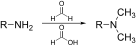
It is used as a source of hydrogen in transfer hydrogenation, as in the Leuckart reaction to make amines and (in aqueous solution or in its azeotrope with triethylamine) for hydrogenation of ketones.
Addition to alkenes
Formic acid is unique in its ability to participate in addition reactions with alkenes. Formic acids and alkenes readily react to form formate esters. In the presence of certain acids, including sulfuric and hydrofluoric acids, however, a variant of the Koch reaction occurs instead, and formic acid adds to the alkene to produce a larger carboxylic acid.
Formic acid anhydride
An unstable formic anhydride, H(C=O)−O−(C=O)H, can be obtained by dehydration of formic acid with N,**-dicyclohexylcarbodiimide in ether at low temperature.
Production
In 2009, the worldwide capacity for producing formic acid was 720 e3t per year, roughly equally divided between Europe (350 e3t, mainly in Germany) and Asia (370 e3t, mainly in China) while production was below 1 e3t per year in all other continents. It is commercially available in solutions of various concentrations between 85 and 99 w/w %. , the largest producers are BASF, Eastman Chemical Company, LC Industrial, and Feicheng Acid Chemicals, with the largest production facilities in Ludwigshafen (200 e3t per year, BASF, Germany), Oulu (105 e3t, Eastman, Finland), Nakhon Pathom (n/a, LC Industrial), and Feicheng (100 e3t, Feicheng, China). 2010 prices ranged from around €650/tonne (equivalent to around $800/tonne) in Western Europe to $1250/tonne in the United States.
Regenerating CO2 to make useful products that displace incumbent fossil fuel-based pathways is a more impactful process than CO2 sequestration.
Both formic acid and CO (carbon monoxide) are one-carbon (C1) molecules. It is a hydrogen-rich liquid that can be transported and easily donates its hydrogen to enable a variety of condensation and esterification reactions to make a wide variety of derivative molecules. CO, while more difficult to transport as a gas, is also one of the primary constituents of syngas useful in synthesizing a wide variety of molecules.
CO2 electrolysis is distinct from photosynthesis and offers a promising alternative to accelerate decarbonization. By converting CO2 into products using clean electricity, CO2 emissions are reduced in two ways - first and most simply by the amount of CO2 that is regenerated, but the second way is less obvious but even more consequential by avoiding the CO2 emissions otherwise generated by making these same products from fossil fuels. This is known as carbon displacement or abatement.
CO2 electrolysis holds promise for reducing atmospheric CO2 levels and providing a sustainable method for producing chemicals, materials, and fuels. Its efficiency and scalability are active areas of research, but now also commercialization, aiming to make it a viable commercial technology for both carbon management and molecule production.
From methyl formate and formamide
When methanol and carbon monoxide are combined in the presence of a strong base, the result is methyl formate, according to the chemical equation: :CH3OH + CO → HCO2CH3
In industry, this reaction is performed in the liquid phase at elevated pressure. Typical reaction conditions are 80 °C and 40 atm. The most widely used base is sodium methoxide. Hydrolysis of the methyl formate produces formic acid: :HCO2CH3 + H2O → HCOOH + CH3OH
Efficient hydrolysis of methyl formate requires a large excess of water. Some routes proceed indirectly by first treating the methyl formate with ammonia to give formamide, which is then hydrolyzed with sulfuric acid: :HCO2CH3 + NH3 → HC(O)NH2 + CH3OH :2 HC(O)NH2 + 2H2O + H2SO4 → 2HCO2H + (NH4)2SO4
A disadvantage of this approach is the need to dispose of the ammonium sulfate byproduct. This problem has led some manufacturers to develop energy-efficient methods of separating formic acid from the excess water used in direct hydrolysis. In one of these processes, used by BASF, the formic acid is removed from the water by liquid-liquid extraction with an organic base.
Niche and obsolete chemical routes
By-product of acetic acid production
A significant amount of formic acid is produced as a byproduct in the manufacture of other chemicals. At one time, acetic acid was produced on a large scale by oxidation of alkanes, by a process that cogenerates significant formic acid. This oxidative route to acetic acid has declined in importance, so the aforementioned dedicated routes to formic acid have become more important.
Hydrogenation of carbon dioxide
The catalytic hydrogenation of CO2 to formic acid has long been studied. This reaction can be conducted homogeneously.
Oxidation of biomass
Formic acid can also be obtained by aqueous catalytic partial oxidation of wet biomass by the OxFA process. A Keggin-type polyoxometalate (H5PV2Mo10O40) is used as the homogeneous catalyst to convert sugars, wood, waste paper, or cyanobacteria to formic acid and CO2 as the sole byproduct. Yields of up to 53% formic acid can be achieved.
Laboratory methods
In the laboratory, formic acid can be obtained by heating oxalic acid in glycerol followed by steam distillation. Glycerol acts as a catalyst, as the reaction proceeds through a glyceryl oxalate intermediate. If the reaction mixture is heated to higher temperatures, allyl alcohol results. The net reaction is thus: :C2O4H2 → HCO2H + CO22H5NC) using HCl solution. :C2H5NC + 2 H2O → C2H5NH2 + HCO2H The isonitrile can be obtained by reacting ethyl amine with chloroform (note that the fume hood is required because of the overpoweringly objectionable odor of the isonitrile).-- Another illustrative method involves the reaction between lead formate and hydrogen sulfide, driven by the formation of lead sulfide. :Pb(HCOO)2 + H2S → 2HCOOH + PbS
Electrochemical production
Formate is formed by the electrochemical reduction of CO2 (in the form of bicarbonate) at a lead cathode at pH 8.6: : + + 2e− → + 2 or : + + 2e− → + If the feed is and oxygen is evolved at the anode, the total reaction is: : + → + 1/2
Biosynthesis
Formic acid is named after ants which have high concentrations of the compound in their venom, derived from serine through a 5,10-methenyltetrahydrofolate intermediate. The conjugate base of formic acid, formate, also occurs widely in nature. An assay for formic acid in body fluids, designed for determination of formate after methanol poisoning, is based on the reaction of formate with bacterial formate dehydrogenase.
Uses
Agriculture
A major use of formic acid is as a preservative and antibacterial agent in livestock feed. It arrests certain decay processes and causes the feed to retain its nutritive value longer.
In Europe, it is applied on silage, including fresh hay, to promote the fermentation of lactic acid and to suppress the formation of butyric acid; it also allows fermentation to occur quickly, and at a lower temperature, reducing the loss of nutritional value. and is sometimes added to poultry feed to kill E. coli bacteria. Use as a preservative for silage and other animal feed constituted 30% of the global consumption in 2009.
Beekeepers use formic acid as a miticide against the tracheal mite (Acarapis woodi) and the Varroa destructor mite and Varroa jacobsoni mite.
Energy
Formic acid can be used directly in formic acid fuel cells or indirectly in hydrogen fuel cells.
Electrolytic conversion of electrical energy to chemical fuel has been proposed as a large-scale source of formate by various groups. The formate could be used as feed to modified E. coli bacteria for producing biomass. Natural methylotroph microbes can feed on formic acid or formate.
Formic acid has been considered as a means of hydrogen storage. The co-product of this decomposition, carbon dioxide, can be rehydrogenated back to formic acid in a second step. Formic acid contains 53 g/L hydrogen at room temperature and atmospheric pressure, which is three and a half times as much as compressed hydrogen gas can attain at 350 bar pressure (14.7 g/L). Pure formic acid is a liquid with a flash point of 69 °C, much higher than that of gasoline (−40 °C) or ethanol (13 °C).
It is possible to use formic acid as an intermediary to produce isobutanol from using microbes.
Soldering
Formic acid has a potential application in soldering. Due to its capacity to reduce oxide layers, formic acid gas can be blasted at an oxide surface to increase solder wettability.
Chromatography
Formic acid is used as a volatile pH modifier in HPLC and capillary electrophoresis. Formic acid is often used as a component of mobile phase in reversed-phase high-performance liquid chromatography (RP-HPLC) analysis and separation techniques for the separation of hydrophobic macromolecules, such as peptides, proteins and more complex structures including intact viruses. Especially when paired with mass spectrometry detection, formic acid offers several advantages over the more traditionally used phosphoric acid.
Other uses
Formic acid is also significantly used in the production of leather, including tanning (23% of the global consumption in 2009), and in dyeing and finishing textiles (9% of the global consumption in 2009) because of its acidic nature. Use as a coagulant in the production of rubber consumed 6% of the global production in 2009.
Formic acid is also used in place of mineral acids for various cleaning products, such as limescale remover and toilet bowl cleaner. Some formate esters are artificial flavorings and perfumes.
Formic acid application has been reported to be an effective treatment for warts.
In the nuclear industry, formic acid is used as the main component for the decomposition of residual nitric acid in denitrification during spent nuclear fuel reprocessing . The process can be carried out either chemically or using catalysts.
Safety
Formic acid has low toxicity (hence its use as a food additive), with an of 1.8g/kg (tested orally on mice). The concentrated acid is corrosive to the skin.
Formic acid is readily metabolized and eliminated by the body. Nonetheless, it has specific toxic effects; the formic acid and formaldehyde produced as metabolites of methanol are responsible for the optic nerve damage, causing blindness, seen in methanol poisoning. Some chronic effects of formic acid exposure have been documented. Some experiments on bacterial species have demonstrated it to be a mutagen. Chronic exposure in humans may cause kidney damage. Another possible effect of chronic exposure is development of a skin allergy that manifests upon re-exposure to the chemical.
Concentrated formic acid slowly decomposes to carbon monoxide and water, leading to pressure buildup in the containing vessel. For this reason, formic acid is stored with degassing caps in a well-ventilated area.
The hazards of solutions of formic acid depend on the concentration. The following table lists the Globally Harmonized System of Classification and Labelling of Chemicals for formic acid solutions:
| Concentration (weight percent) | Pictogram | H-Phrases |
|---|---|---|
| 2–10% | ||
| 10–90% | ||
| 90% |
Formic acid in 85% concentration is flammable, and diluted formic acid is on the U.S. Food and Drug Administration list of food additives. The principal danger from formic acid is from skin or eye contact with the concentrated liquid or vapors. The U.S. OSHA Permissible Exposure Level (PEL) of formic acid vapor in the work environment is 5 parts per million (ppm) of air.
References
References
- (2014). "Nomenclature of Organic Chemistry: IUPAC Recommendations and Preferred Names 2013 (Blue Book)". [[Royal Society of Chemistry.
- (1989). "Critical Stability Constants Volume 6: Second Supplement". Plenum Press.
- (4 December 2014). "Formic acid". National Institute for Occupational Safety and Health.
- {{PGCH. 0296
- "Formic acid".
- (2010). "Ant venoms". Current Opinion in Allergy and Clinical Immunology.
- (1987). "Formic acid in caustic cephalic secretions of stingless bee,Oxytrigona (Hymenoptera: Apidae)". J Chem Ecol.
- (2012). "Phenolic compounds analysis of root, stalk, and leaves of nettle". ScientificWorldJournal.
- (1991). "Emission of formic and acetic acids from tropical Savanna soils". Geophysical Research Letters.
- (1670). "Extract of a Letter, Written by Mr John Wray to the Publisher January 13. 1670. Concerning Some Un-Common Observations and Experiments Made with an Acid Juyce to be Found in Ants". Philosophical Transactions of the Royal Society of London.
- (1803). "History of the process and present state of animal chemistry".
- "What is Formic Acid?".
- "OSHA Occupational Chemical Database – Occupational Safety and Health Administration".
- (2000). "Ullmann's Encyclopedia of Industrial Chemistry".
- Roman M. Balabin. (2009). "Polar (Acyclic) Isomer of Formic Acid Dimer: Gas-Phase Raman Spectroscopy Study and Thermodynamic Parameters". The Journal of Physical Chemistry A.
- (1964). "1-Adamantanecarboxylic Acid". Organic Syntheses.
- Coleman, G. H.. (1932). "''p''-Tolualdehyde".
- (2008). "A Viable Hydrogen-Storage System Based on Selective Formic Acid Decomposition with a Ruthenium Catalyst". Angewandte Chemie International Edition.
- (1989). "Vogel's Textbook of Practical Organic Chemistry". Longman Scientific & Technical.
- (October 2016). "2016 11th International Microsystems, Packaging, Assembly and Circuits Technology Conference (IMPACT)".
- L. F. Fieser. (1955). "''N''-Methylformanilide".
- Zhou, Xiaowei. (2012). "Varying the ratio of formic acid to triethylamine impacts on asymmetric transfer hydrogenation of ketones". Journal of Molecular Catalysis A: Chemical.
- (1966). "Die Synthese sekundärer Carbonsäuren nach der Ameisensäure-Methode". Chemische Berichte.
- (1995). "Formic Anhydride in the Gas Phase, Studied by Electron Diffraction and Microwave and Infrared Spectroscopy, Supplemented with Ab-Initio Calculations of Geometries and Force Fields". The Journal of Physical Chemistry.
- (June 2010). "CEH Marketing Research Report: FORMIC ACID". SRI consulting.
- "Rethinking CO2 in a Circular Economy {{!}} Carbon Capture Magazine".
- P. G. Jessop. (2007). "Handbook of Homogeneous Hydrogenation". Wiley-VCH.
- (2004). "Recent advances in the homogeneous hydrogenation of carbon dioxide". Coordination Chemistry Reviews.
- Sampson, Joanna. (2 August 2020). "Wireless device makes clean fuel from sunlight, CO2 and water".
- (2011). "Selective catalytic conversion of biobased carbohydrates to formic acid using molecular oxygen". Green Chemistry.
- (2012). "Selective oxidation of complex, water-insoluble biomass to formic acid using additives as reaction accelerators". Energy & Environmental Science.
- (1914). "XX.—Interaction of glycerol and oxalic acid". [[Journal of the Chemical Society, Transactions]].
- Cohen, Julius B.. (1930). "Practical Organic Chemistry". MacMillan.
- Arthur Sutcliffe. (1930). "Practical Chemistry for Advanced Students". John Murray.
- (Feb 2009). "Electro-reduction of carbon dioxide to formate on lead electrode in aqueous medium". Journal of Applied Electrochemistry.
- (1 November 1978). "Biosynthesis of formic acid by the poison glands of formicine ants". Biochimica et Biophysica Acta (BBA) - General Subjects.
- (1975). "Formate assay in body fluids: Application in methanol poisoning". Biochemical Medicine.
- It is widely used to preserve winter feed for [[cattle]],[https://books.google.com/books?id=7IrGwQTt1aMC&dq=formic+acid++winter+feed+for+cattle&pg=PA31 Organic Acids and Food Preservation], Maria M. Theron, J. F. Rykers Lues
- (2005). "Alternatives to Antibiotics for Organic Poultry Production". The Journal of Applied Poultry Research.
- (2007). "Effect of Formic Acid and Plant Extracts on Growth, Nutrient Digestibility, Intestine Mucosa Morphology, and Meat Yield of Broilers". The Journal of Applied Poultry Research.
- Hoppe, H.. (1989). "The control of parasitic bee mites: Varroa jacobsoni, Acarapis woodi and Tropilaelaps clareae with formic acid". American Bee Journal.
- (2005). "Performance characterization of Pd/C nanocatalyst for direct formic acid fuel cells". Journal of Power Sources.
- Jorn Madslien. (27 June 2017). "Ant power: Take a ride on a bus that runs on formic acid". [[BBC News]].
- (December 2016). "The formate bio-economy". Current Opinion in Chemical Biology.
- (Nov 2019). "Conversion of ''Escherichia coli'' to Generate All Biomass Carbon from CO2". Cell.
- (2020-02-10). "Growth of E. coli on formate and methanol via the reductive glycine pathway". Nature Chemical Biology.
- (2008). "Breakthroughs in Hydrogen Storage-Formic Acid as a Sustainable Storage Material for Hydrogen". ChemSusChem.
- (30 March 2012). "UCLA Researchers Use Electricity and CO2 to Make Butanol".
- (30 March 2012). "Integrated Electromicrobial Conversion of CO2 to Higher Alcohols". Science.
- Lin, Wei. (30 November 1999). "Study of fluxless soldering using formic acid vapor". IEEE Transactions on Advanced Packaging.
- (November 2017). "Archived copy".
- (1982). "Reversed-phase high-performance liquid chromatography of virus proteins and other large hydrophobic proteins in formic acid containing solvents". Journal of Chromatography A.
- (2001). "Topical formic acid puncture technique for the treatment of common warts". International Journal of Dermatology.
- "Electrochemical Denitrification of Nuclear Wastewater".
- Kuznetsov, V. V.. (2025-02-15). "Preparation of Pd(Mo2C) composites by palladium deposition under open-circuit conditions, their corrosion resistance and catalytic activity". Journal of Electroanalytical Chemistry.
- (2002). "Mitochondrial optic neuropathies". Journal of Neurology, Neurosurgery, and Psychiatry.
- "Occupational Safety and Health Guideline for Formic Acid". OSHA.
- "Information on formic acid".
- {{CodeFedReg. 21. 186. 1316, {{CodeFedReg. 21. 172. 515
- "CDC - NIOSH Pocket Guide to Chemical Hazards - Formic acid".
This article was imported from Wikipedia and is available under the Creative Commons Attribution-ShareAlike 4.0 License. Content has been adapted to SurfDoc format. Original contributors can be found on the article history page.
Ask Mako anything about Formic acid — get instant answers, deeper analysis, and related topics.
Research with MakoFree with your Surf account
Create a free account to save articles, ask Mako questions, and organize your research.
Sign up freeThis content may have been generated or modified by AI. CloudSurf Software LLC is not responsible for the accuracy, completeness, or reliability of AI-generated content. Always verify important information from primary sources.
Report