From Surf Wiki (app.surf) — the open knowledge base
Foreign relations of France
none

none
the foreign relations of France since 1981
In the 19th century France built a new French colonial empire second only to the British Empire. It was humiliated in the Franco-Prussian War of 1870–71, which marked the rise of Germany to dominance in Europe. France allied with Great Britain and Russia and was on the winning side of the First World War. Although it was initially easily defeated early in the Second World War, Free France, through its Free French Forces and the Resistance, continued to fight against the Axis powers as an Allied nation and was ultimately considered one of the victors of the war, as the allocation of a French occupation zone in Germany and West Berlin testifies, as well as the status of permanent member of the United Nations Security Council. It fought losing colonial wars in Indochina (ending in 1954) and Algeria (ending in 1962). The Fourth Republic collapsed and the Fifth Republic began in 1958 to the present. Under Charles de Gaulle it tried to block American and British influence on the European community. Since 1945, France has been a founding member of the United Nations, of NATO, and of the European Coal and Steel Community (the European Union's predecessor). As a charter member of the United Nations, France holds one of the permanent seats in the Security Council and is a member of most of its specialized and related agencies.
France is also a founding member of the Union for the Mediterranean and the La Francophonie and plays a key role, both in regional and in international affairs.
On February 14, 2023, as part of their foreign policy in human rights, France showed its support for international justice by signing the Ljubljana-Hague Convention on International Cooperation in the Investigation and Prosecution of Genocide, Crimes against Humanity, War Crimes, and other International Crimes.
Fifth Republic since 1981
François Mitterrand: 1981–1995
Main article: Foreign policy of François Mitterrand
François Mitterrand, a Socialist, emphasized European unity and the preservation of France's special relationships with its former colonies in the face of "Anglo-Saxon influence." A part of the enacted policies was formulated in the Socialist Party's 110 Propositions for France, the electoral program for the 1981 presidential election. He had a warm and effective relationship with the conservative German Chancellor Helmut Kohl. They promoted French-German bilateralism in Europe and strengthened military cooperation between the two countries.
According to Wayne Northcutt, certain domestic circumstances helped shape Mitterrand's foreign policy in four ways: he needed to maintain a political consensus; he kept an eye on economic conditions; he believed in the nationalistic imperative for French policy; and he tried to exploit Gaullism and its heritage that is on political advantage.
Jacques Chirac
Main article: Jacques Chirac#Foreign policy
Chrirac's foreign policy featured continuity. His most prominent move was a break with Washington. Along with his friend Vladimir Putin of Russia, Hu Jintao of China, and Gerhard Schröder of Germany, Chirac emerged as a leading voice against the Iraq War of 2003. They opposed George W. Bush (U.S.) and Tony Blair (Britain) during the organisation and deployment of a "Coalition of the willing" to forcibly remove the government of Iraq controlled by the Ba'ath Party under the dictatorship of Saddam Hussein. Despite British and American pressure, Chirac threatened to veto a resolution in the UN Security Council that would authorise the use of military force to rid Iraq of alleged weapons of mass destruction. He rallied other governments to his position. "Iraq today does not represent an immediate threat that justifies an immediate war", Chirac said on 18 March 2003. Future Prime Minister Dominique de Villepin acquired much of his popularity for his speech against the war at the United Nations (UN).
Nicolas Sarkozy
Main article: Presidency of Nicolas Sarkozy#Foreign policy decisions
Shortly after taking office, President Sarkozy began negotiations with Colombian president Álvaro Uribe and the left-wing guerrilla FARC, regarding the release of hostages held by the rebel group, especially Franco-Colombian politician Íngrid Betancourt. According to some sources, Sarkozy himself asked for Uribe to release FARC's "chancellor" Rodrigo Granda. Furthermore, he announced on 24 July 2007, that French and European representatives had obtained the extradition of the Bulgarian nurses detained in Libya to their country. In exchange, he signed with Gaddafi security, health care and immigration pacts – and a $230 million (168 million euros) MILAN antitank missile sale. The contract was the first made by Libya since 2004, and was negotiated with MBDA, a subsidiary of EADS. Another 128 million euros contract would have been signed, according to Tripoli, with EADS for a TETRA radio system. The Socialist Party (PS) and the Communist Party (PCF) criticized a "state affair" and a "barter" with a "Rogue state". The leader of the PS, François Hollande, requested the opening of a parliamentary investigation.
On 8 June 2007, during the 33rd G8 summit in Heiligendamm, Sarkozy set a goal of reducing French CO2 emissions by 50% by 2050 in order to prevent global warming. He then pushed forward the important Socialist figure of Dominique Strauss-Kahn as European nominee to the International Monetary Fund (IMF). Critics alleged that Sarkozy proposed to nominate Strauss-Kahn as managing director of the IMF to deprive the Socialist Party of one of its more popular figures.
Sarkozy normalised what had been strained relations with NATO. In 2009, France again was a fully integrated NATO member. François Hollande has continued the same policy.
François Hollande
Socialist François Hollande won election in 2012 as president. He adopted a generally hawkish foreign-policy, in close collaboration with Germany in regard to opposing Russian moves against Ukraine, and in sending the military to fight radical Islamists in Africa. He took a hard line with regard to the Greek debt crisis. François Hollande launched two military operations in Africa: Operation Serval in Mali (the French armed forces stopped an Islamist takeover of Bamako, the nation's capital city); and Operation Sangaris (to restore peace there as tensions between different religious communities had turned into a violent conflict). France was also the first European nation to join the United States in bombing the Islamic State of Iraq and the Levant. Under President Hollande, France's stances on the civil war in Syria and Iran's nuclear program have been described as "hawkish".
Emmanuel Macron, 2017–present
.jpg)
.jpg)
On 31 May 2022, due to the reforms pushed by the president and perceived lack of recognition, the French diplomats will go on a strike for the first time in 20 years. This is a bad timing for President Emmanuel Macron as the France is holding the EU Presidency until the end of June.
Reputation
Sophie Meunier in 2017 analyzed the causes of decline in France's former reputation as a major player in world affairs: France does not have as much relative global clout as it used to. Decolonization ... diminished France's territorial holdings and therefore its influence. Other countries acquired nuclear weapons and built up their armies. The message of "universal" values carried by French foreign policy has encountered much resistance, as other countries have developed following a different political trajectory than the one preached by France. By the 1990s, the country had become, in the words of Stanley Hoffmann, an "ordinary power, neither a basket case nor a challenger." Public opinion, especially in the United States, no longer sees France as an essential power....[However in 2015 France] mattered in world environmental affairs with....the Paris Agreement, a global accord to reduce carbon emissions.
International organization participation
ACCT, AfDB, AsDB, Australia Group, BDEAC, BIS, CCC, CDB (non-regional), CE, CERN, EAPC, EBRD, ECA (associate), ECE, ECLAC, EIB, EMU, ESA, ESCAP, EU, FAO, FZ, G-5, G-7, G-10, IADB, IAEA, IBRD, ICAO, ICC, ICC, ICRM, IDA, IEA, IFAD, IFC, IFRCS, IHO, ILO, IMF, International Maritime Organization, Inmarsat, InOC, Intelsat, Interpol, IOC, IOM, ISO, ITU, ITUC, MINURSO, MIPONUH, MONUC, NAM (guest), NATO, NEA, NSG, OAS (observer), OECD, OPCW, OSCE, PCA, SPC, UN, UN Security Council, UNCTAD, UNESCO, UNHCR, UNIDO, UNIFIL, UNIKOM, UNITAR, UNMIBH, UNMIK, UNOMIG, UNRWA, UNTSO, UNU, UPU, WADB (nonregional), WEU, WFTU, WHO, WIPO, WMO, WToO, WTrO, Zangger Committee
International border disputes
- Madagascar claims Bassas da India, Europa Island, Glorioso Islands and Juan de Nova Island
- Comoros claims Mayotte
- Mauritius claims Tromelin Island
- territorial dispute on the boundary between Suriname and French Guiana
- territorial claim in Antarctica (Adélie Land) under the Antarctic Treaty System
- Matthew Island and Hunter Island east of New Caledonia claimed by France and Vanuatu
Middle East
.png)
France established relations with the Middle East during the reign of Louis XIV. To keep Austria from intervening into its plans regarding Western Europe he lent limited support to the Ottoman Empire, though the victories of Prince Eugene of Savoy destroyed these plans. In the nineteenth century France together with Great Britain tried to strengthen the Ottoman Empire, the now "Sick man of Europe", to resist Russian expansion, culminating in the Crimean War.
France also pursued close relations with the semi-autonomous Egypt. In 1869 Egyptian workers -under the supervision of France- completed the Suez Canal. A rivalry emerged between France and Britain for control of Egypt, and eventually Britain emerged victorious by buying out the Egyptian shares of the company before the French had time to act.
After the unification of Germany in 1871, Germany successfully attempted to co-opt France's relations with the Ottomans. In World War I the Ottoman Empire joined the Central Powers, and was defeated by France and Britain. After the collapse of the Ottoman Empire France and Britain divided the Middle East between themselves. France received Syria and Lebanon.
1945–1958
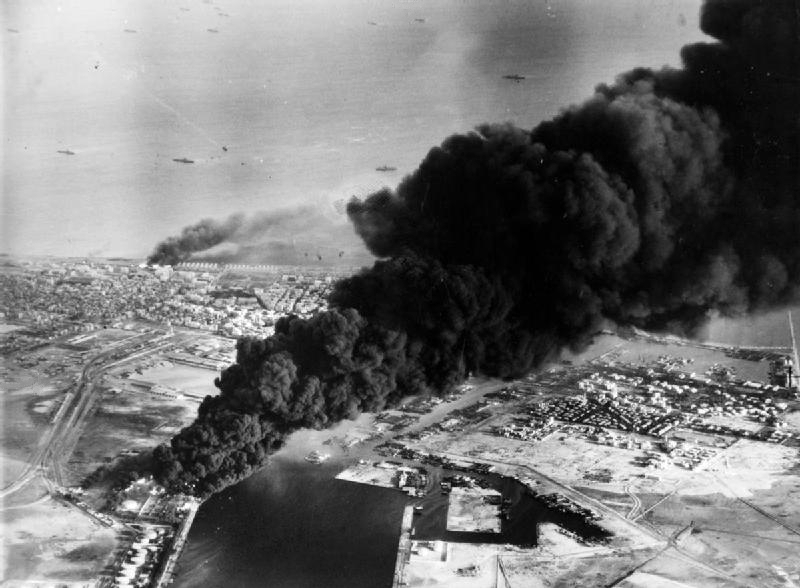
These colonies were granted independence after 1945, but France still tried to forge cultural and educational bonds between the areas, particularly with Lebanon. Relationships with Syria are more strained, due to the policies of that country. In 2005, France, along with the United States, pressured Syria to evacuate Lebanon. In the post-World War II era French relations with the Arab Middle East reached a very low point. The war in Algeria between Muslim fighters and French colonists deeply concerned the rest of the Muslim world. The Algerian fighters received much of their supplies and funding from Egypt and other Arab powers, much to France's displeasure.
Most damaging to Franco-Arab relations, however, was the Suez Crisis. It greatly diminished France's reputation in the region. France openly supported the Israeli attack on the Sinai Peninsula, and was working against Nasser, then a popular figure in the Middle East. The Suez Crisis also made France and the United Kingdom look again like imperialist powers attempting to impose their will upon weaker nations. Another hindrance to France's relations with the Arab Middle East was its close alliance with Israel during the 1950s.
De Gaulle's policies
This all changed with the coming of Charles de Gaulle to power. De Gaulle's foreign policy was centered around an attempt to limit the power and influence of both superpowers, and at the same time increase France's international prestige. De Gaulle hoped to move France from being a follower of the United States to becoming the leading nation of a large group of non-aligned countries. The nations de Gaulle looked at as potential participants in this group were those in France's traditional spheres of influence: Africa and the Middle East. The former French colonies in eastern and northern Africa were quite agreeable to these close relations with France. These nations had close economic and cultural ties to France, and they also had few other suitors amongst the major powers. This new orientation of French foreign policy also appealed strongly to the leaders of the Arab nations. None of them wanted to be dominated by either of the superpowers, and they supported France's policy of trying to balance the US and the USSR and to prevent either from becoming dominant in the region. The Middle Eastern leaders wanted to be free to pursue their own goals and objectives, and did not want to be chained to either alliance bloc. De Gaulle hoped to use this common foundation to build strong relations between the nations. He also hoped that good relations would improve France's trade with the region. De Gaulle also imagined that these allies would look up to the more powerful French nation, and would look to it in leadership in matters of foreign policy.
The end of the Algerian conflict in 1962 accomplished much in this regard. France could not portray itself as a leader of the oppressed nations of the world if it still was enforcing its colonial rule upon another nation. The battle against the Muslim separatists that France waged in favour of the minority of French settlers was an extremely unpopular one throughout the Muslim world. With the conflict raging it would have been close to impossible for France to have had positive relations with the nations of the Middle East. The Middle Eastern support for the FLN guerillas was another strain on relations that the end of the conflict removed. Most of the financial and material support for the FLN had come from the nations of the Middle East and North Africa. This was especially true of Nasser's Egypt, which had long supported the separatists. Egypt is also the most direct example of improved relations after the end of hostilities. The end of the war brought an immediate thaw to Franco-Egyptian relations, Egypt ended the trial of four French officers accused of espionage, and France ended its trade embargo against Egypt.
In 1967 de Gaulle completely overturned France's Israel policy. De Gaulle and his ministers reacted very harshly to Israel's actions in the Six-Day War. The French government and de Gaulle condemned Israel's treatment of refugees, warned that it was a mistake to occupy the West Bank and Gaza Strip, and also refused to recognize the Israeli control of Jerusalem. The French government continued to criticize Israel after the war and de Gaulle spoke out against other Israeli actions, such as the operations against the Palestine Liberation Organization in Lebanon. France began to use its veto power to oppose Israel in the UN, and France sided with the Arab states on almost all issues brought to the international body. Most importantly of all, however, de Gaulle's government imposed an arms embargo on the Israeli state. The embargo was in fact applied to all the combatants, but very soon France began selling weaponry to the Arab states again. As early as 1970 France sold Libya a hundred Dassault Mirage fighter jets. However, after 1967 France continued to support Israel's right to exist, as well as Israel's many preferential agreements with France and the European Economic Community.
Foreign aid
In the second half of the 20th century, France increased its expenditures in foreign aid greatly, to become second only to the United States in total aid amongst the Western powers and first on a per capita basis. By 1968 France was paying out $855 million per year in aid far more than either West Germany or the United Kingdom. The vast majority of French aid was directed towards Africa and the Middle East, usually either as a lever to promote French interests or to help with the sale of French products (e.g. arms sales). France also increased its expenditures on other forms of aid sending out skilled individuals to developing countries to provide technical and cultural expertise.
The combination of aid money, arms sales, and diplomatic alignments helped to erase the memory of the Suez Crisis and the Algerian War in the Arab world and France successfully developed amicable relationships with the governments of many of the Middle Eastern states. Nasser and de Gaulle, who shared many similarities, cooperated on limiting American power in the region. Nasser proclaimed France as the only friend of Egypt in the West. France and Iraq also developed a close relationship with business ties, joint military training exercises, and French assistance in Iraq's nuclear program in the 1970s. France improved relations with its former colony Syria, and eroded cultural links were partially restored.
In terms of trade France did receive some benefits from the improved relations with the Middle East. French trade with the Middle East increased by over fifty percent after de Gaulle's reforms. The weaponry industries benefited most as France soon had lucrative contracts with many of the regimes in the Middle East and North Africa, though these contracts account for a negligible part of France's economy.
De Gaulle had hoped that by taking a moderate path and not strongly supporting either side France could take part in the Middle East peace process between Israel and the Arab nations. Instead it has been excluded from any major role.
Nicolas de Rivière, the Permanent Representative of France to the United Nations, thanked to Mesdames Bahous, Russell and Kanem for their briefings in Gaza war, and to reiterate France's full support for UN Women, UNICEF and UNFPA in their engagement to help the people of Gaza. Furthermore, France welcomed the agreement, which led to the release of dozens of hostages and a truce.
Modern history
The Middle East has been a major factor of France's foreign policy. Over a decade since 2000, France successfully built an influential presence across the MENA region where the major focus had been on Saudi Arabia, the United Arab Emirates and Qatar. The Middle East policy of France was essential from the strategic, cultural and economic point of view, where the focus remained on proving itself as an international power. The country invested years in maintaining a strong foothold in the region on the lines of trade, security interests, and cultural and social exchanges. Even in 2021, Macron continued taking initiatives towards strengthening relations with the Kingdom and the Emirates. During his visit to the region in November 2021, Macron signed a weapons deal worth 16 billion euros with the UAE. The agreement involved transfer of 80 upgraded Rafale warplanes, along with 12 Airbus-built combat helicopters. While France viewed it as a way to deepen ties with the Emirates, rights organizations criticized and raised concerns around the UAE's involvement in the Yemen and Libyan wars. They objected the deal stating that the Gulf leaders have reflected a constant failure in improving their human rights records.
Despite the improving relations between the Emirates and France, the UAE made extensive efforts towards to showcase its image in a positive light. In light of it, a Franco-Tunisian businessman, Elyes Ben Chedly reportedly ran promotion for two of the Emirates' cultural campaigns. Reports revealed that the middleman worked to promote the UAE's "Year of Tolerance" campaign, and was also involved in running the "year Zayed" program in Paris. Reports also revealed that Ben Chedly also used his network of arms contracts to mediate weapons deal between the UAE and other nations.
A report in March 2023 by Mediapart revealed that the UAE had been interfering in France by the means of a Switzerland-based intelligence firm Alp Services. A French journalist, Roland Jacquard connected Alp's head Mario Brero with the Emirati secret services client, identified as Mohammed. Jacquard maintained a close contact with a network of politicians and diplomats. He was directly in contact with Mohammed, whose emails revealed that Jacquard was supplying the UAE with information from the security services, Emmanuel Macron and the Élysée.
France and Qatar have maintained diplomatic relations since Qatar declared independence in 1971. The bilateral partnership began to flourish in the early 1990s, focusing on security and hydrocarbon cooperation. TotalEnergies, present in Qatar since 1936, quickly emerged as a key collaborator with QatarEnergies in the extraction and development of the nation's hydrocarbon reserves. Additionally, various agreements have been executed between Qatar and France to bolster security measures for 2024 Summer Olympics in Paris. In preparation for the significant security demands of the event, Poland has pledged to contribute troops, including sniffer dog handlers, to support international efforts aimed at ensuring the safety of the Olympic Games in France.
Diplomatic relations
List of countries which France maintains diplomatic relations with:
| [[File:Diplomatic relations of France.svg | frameless | 425x425px]] | # | Country | Date |
|---|---|---|---|---|---|
| 1 | United Kingdom | ||||
| 2 | Portugal | ||||
| 3 | Spain | ||||
| 4 | Denmark | ||||
| – | Holy See | s | |||
| 5 | Switzerland | ||||
| 6 | Sweden | ||||
| 7 | Russia | ||||
| 8 | Iran | ||||
| 9 | United States | ||||
| 10 | Netherlands | ||||
| 11 | Haiti | ||||
| 12 | Brazil | ||||
| 13 | Guatemala | ||||
| 14 | Bolivia | ||||
| 15 | Belgium | ||||
| 16 | Chile | ||||
| 17 | Greece | ||||
| 18 | Venezuela | ||||
| 19 | Argentina | ||||
| 20 | Uruguay | ||||
| 21 | Mexico | ||||
| 22 | Ecuador | ||||
| 23 | Costa Rica | ||||
| 24 | Liberia | ||||
| 25 | Dominican Republic | ||||
| 26 | Paraguay | ||||
| 27 | Honduras | ||||
| 28 | Thailand | ||||
| 29 | Japan | ||||
| 30 | Nicaragua | ||||
| 31 | El Salvador | ||||
| 32 | Peru | ||||
| 33 | Italy | ||||
| 34 | Monaco | ||||
| 35 | Serbia | ||||
| 36 | Bulgaria | ||||
| 37 | Romania | ||||
| 38 | Luxembourg | ||||
| 39 | Colombia | ||||
| 40 | Ethiopia | ||||
| 41 | Cuba | ||||
| 42 | Panama | ||||
| 43 | Norway | ||||
| 44 | Finland | ||||
| 45 | Czech Republic | ||||
| 46 | Poland | ||||
| 47 | Austria | ||||
| 48 | Hungary | ||||
| 49 | Afghanistan | ||||
| 50 | Egypt | ||||
| 51 | Albania | ||||
| 52 | Turkey | ||||
| 53 | Canada | ||||
| 54 | Ireland | ||||
| 55 | South Africa | ||||
| 56 | Saudi Arabia | ||||
| 57 | Yemen | ||||
| 58 | Australia | ||||
| 59 | New Zealand | ||||
| 60 | Iceland | ||||
| 61 | Lebanon | ||||
| 62 | Syria | ||||
| 63 | Iraq | ||||
| 64 | Philippines | ||||
| 65 | India | ||||
| 66 | Pakistan | ||||
| 67 | Jordan | ||||
| 68 | Myanmar | ||||
| 69 | Sri Lanka | ||||
| 70 | South Korea | ||||
| 71 | Nepal | ||||
| 72 | Israel | ||||
| 73 | Indonesia | ||||
| 74 | Laos | ||||
| 75 | Germany | ||||
| 76 | Libya | ||||
| 77 | Cambodia | ||||
| 78 | Morocco | ||||
| 79 | Tunisia | ||||
| 80 | Sudan | ||||
| 81 | Ghana | ||||
| 82 | Malaysia | ||||
| 83 | Guinea | ||||
| 84 | Cameroon | ||||
| 85 | Togo | ||||
| 86 | Madagascar | ||||
| 87 | Democratic Republic of the Congo | ||||
| 88 | Somalia | ||||
| 89 | Benin | ||||
| 90 | Niger | ||||
| 91 | Burkina Faso | ||||
| 92 | Ivory Coast | ||||
| 93 | Chad | ||||
| 94 | Central African Republic | ||||
| 95 | Republic of the Congo | ||||
| 96 | Cyprus | ||||
| 97 | Gabon | ||||
| 98 | Mali | ||||
| 99 | Senegal | ||||
| 100 | Nigeria | ||||
| 101 | Mauritania | ||||
| 102 | Sierra Leone | ||||
| 103 | Tanzania | ||||
| 104 | Burundi | ||||
| 105 | Rwanda | ||||
| 106 | Algeria | ||||
| 107 | Jamaica | ||||
| 108 | Trinidad and Tobago | ||||
| 109 | Uganda | ||||
| 110 | Kenya | ||||
| 111 | China | ||||
| 112 | Kuwait | ||||
| 113 | Malawi | ||||
| 114 | Malta | ||||
| 115 | Zambia | ||||
| 116 | Mongolia | ||||
| 117 | San Marino | ||||
| 118 | Gambia | ||||
| 119 | Singapore | ||||
| 120 | Botswana | ||||
| 121 | Guyana | ||||
| 122 | Lesotho | ||||
| 123 | Barbados | ||||
| 124 | Mauritius | ||||
| 125 | Eswatini | ||||
| 126 | Maldives | ||||
| 127 | Equatorial Guinea | ||||
| 128 | Fiji | ||||
| 129 | Samoa | ||||
| 130 | Tonga | ||||
| 131 | Bahrain | ||||
| 132 | Oman | ||||
| 133 | Qatar | ||||
| 134 | United Arab Emirates | ||||
| 135 | Bangladesh | ||||
| 136 | Vietnam | ||||
| 137 | Bahamas | ||||
| 138 | Grenada | ||||
| 139 | Guinea-Bissau | ||||
| 140 | São Tomé and Príncipe | ||||
| 141 | Cape Verde | ||||
| 142 | Mozambique | ||||
| 143 | Suriname | ||||
| 144 | Seychelles | ||||
| 145 | Papua New Guinea | ||||
| 146 | Angola | ||||
| 147 | Djibouti | ||||
| 148 | Nauru | ||||
| 149 | Comoros | ||||
| 150 | Solomon Islands | ||||
| 151 | Dominica | ||||
| 152 | Tuvalu | ||||
| 153 | Saint Lucia | ||||
| 154 | Zimbabwe | ||||
| 155 | Vanuatu | ||||
| 156 | Belize | ||||
| 157 | Antigua and Barbuda | ||||
| 158 | Saint Vincent and the Grenadines | ||||
| 159 | Kiribati | ||||
| 160 | Brunei | ||||
| 161 | Saint Kitts and Nevis | ||||
| 162 | Namibia | ||||
| 163 | Lithuania | ||||
| 164 | Estonia | ||||
| 165 | Latvia | ||||
| 166 | Ukraine | ||||
| 167 | Belarus | ||||
| 168 | Kazakhstan | ||||
| 169 | Azerbaijan | ||||
| 170 | Armenia | ||||
| 171 | Kyrgyzstan | ||||
| 172 | Tajikistan | ||||
| 173 | Uzbekistan | ||||
| 174 | Turkmenistan | ||||
| 175 | Moldova | ||||
| 176 | Slovenia | ||||
| 177 | Croatia | ||||
| 178 | Georgia (country) | ||||
| 179 | Liechtenstein | ||||
| 180 | Bosnia and Herzegovina | ||||
| 181 | Marshall Islands | ||||
| 182 | Slovakia | ||||
| 183 | Federated States of Micronesia | ||||
| 184 | Andorra | ||||
| 185 | North Macedonia | ||||
| 186 | Eritrea | ||||
| 187 | Palau | ||||
| – | Cook Islands | ||||
| 188 | Timor-Leste | ||||
| 189 | Montenegro | ||||
| – | Kosovo | ||||
| 190 | South Sudan | ||||
| – | Niue | or before |
Bilateral relations
Africa
Main article: France–Africa relations
France plays a significant role in Africa, especially in its former colonies, through extensive aid programs, commercial activities, military agreements, and cultural impact. In those former colonies where the French presence remains important, France contributes to political, military, and social stability. Many think that French policy in Africa – particularly where British interests are also involved – is susceptible to what is known as 'Fashoda syndrome'. Others have criticized the relationship as neocolonialism under the name Françafrique, stressing France's support of various dictatorships, among others: Omar Bongo, Idriss Déby, and Denis Sassou Nguesso. The Defense Agreements between France and French-speaking African countries established close cooperation, particularly in defense and security matters. Often accompanied by secret clauses, they allowed France to intervene militarily: to rescue regimes in order to establish the legitimacy of political powers favorable to its interests, to fight jihadism, particularly in the Sahel, or to put an end to civil wars. The departure of French troops from the African continent signals the end of a world, that of interventions in Chad, Togo, Gabon, Rwanda, Djibouti, Zaire, Somalia, Ivory Coast, Mali, Libya, and Cameroon. It also marks the end of Françafrique.
| Country | Formal relations began | Notes |
|---|---|---|
| Algeria | See Algeria–France relations | |
| Angola | See Angola–France relations | |
| Benin | ||
| Burkina Faso | See Burkina Faso–France relations | |
| Burundi | See France–Burundi relations | |
| Cameroon | ||
| Cape Verde | See Cape Verde–France relations | |
| Central African Republic | See Central African Republic–France relations | |
| Chad | See Chad–France relations | |
| Congo | See Republic of the Congo–France relations | |
| Comoros | ||
| Democratic Republic of the Congo | ||
| Djibouti | See Djibouti–France relations | |
| Egypt | See Egypt–France relations | |
| Equatorial Guinea | ||
| Ethiopia | ||
| Gabon | See France–Gabon relations | |
| Ghana | ||
| Guinea | ||
| Ivory Coast | See France–Ivory Coast relations | |
| Kenya | See France–Kenya relations | |
| Lesotho | See France–Lesotho relations | |
| Liberia | 1852 | See France–Liberia relations |
| Libya | See France–Libya relations | |
| Madagascar | See France–Madagascar relations | |
| Mali | See France–Mali relations | |
| Mauritania | See France–Mauritania relations | |
| Mauritius | See France–Mauritius relations | |
| Morocco | See France–Morocco relations | |
| Mozambique | See France–Mozambique relations | |
| Namibia | ||
| Niger | 4 August 1960 | See France–Niger relations. |
| Nigeria | ||
| Rwanda | See France–Rwanda relations | |
| Senegal | See France–Senegal relations | |
| Seychelles | ||
| Somalia | See France–Somalia relations | |
| Sudan | 1= Though published in 2015, this work covers events in the whole of Sudan (including present-day South Sudan) until the 2011 secession of South Sudan.}} A French company was one of the prime contractors on the ill-fated Jonglei Canal. In the early 1980s, Sudan awarded a concession to the French oil company, TotalFinaElf, for development of the oil reserves in Block Five in South Sudan. Although the company stopped work there following the resumption of civil war, it retained the concession and initiated steps in 2004 to return. France also sided with the government of Sudan in 2004 when it asserted that the situation in Darfur should not be described as genocide. Chad, a former French colony and in recent years a country with which it had close relations, tended to influence France's view of the situation in Darfur. French policy on Darfur became more critical following the election in 2007 of President Nicolas Sarkozy. France hosted in June 2007 the United States, China, and some 15 other countries at a major conference intended to launch a new international effort to end the atrocities in Darfur. The government of Sudan, angry that it was not consulted, boycotted the conference. In recent years, France has shown less interest in Sudan while its policy seemed to depend on which official was speaking. French oil companies have a continuing interest in the development of oil in South Sudan. | |
| South Africa | See France–South Africa relations | |
| Tanzania | ||
| Togo | See France–Togo relations | |
| Tunisia | See France–Tunisia relations | |
| Uganda | ||
| Zimbabwe |
Americas
Main article: France–Americas relations
| Country | Formal relations began | Notes |
|---|---|---|
| Argentina | 1829 | See Argentina–France relations |
| Barbados | See Barbados–France relations | |
| Belize | ||
| Bolivia | ||
| Brazil | See Brazil–France relations | |
| Canada | See Canada–France relations | |
| Chile | 1846 | See Chile–France relations |
| Colombia | 1830 | See Colombia–France relations |
| Costa Rica | ||
| Cuba | See Cuba–France relations | |
| Commonwealth of Dominica | See Commonwealth of Dominica–France relations | |
| Dominican Republic | ||
| Ecuador | ||
| El Salvador | See El Salvador–France relations | |
| Guatemala | ||
| Guyana | ||
| Haiti | 1825 | See France–Haiti relations |
| Honduras | ||
| Mexico | See France–Mexico relations | |
| Nicaragua | ||
| Panama | ||
| Paraguay | 1853 | |
| Peru | 1826 | See France–Peru relations |
| Saint Lucia | ||
| Suriname | See France–Suriname relations | |
| Trinidad and Tobago | See France–Trinidad and Tobago relations | |
| United States | See France–United States relations | |
| Uruguay | 1825 | See France–Uruguay relations |
| Venezuela | See France–Venezuela relations |
Asia
Main article: France–Asia relations
France has extensive political and economical relations with Asian countries, including China, India, Japan, South Korea and Southeast Asia as well as an increasing presence in regional fora. France was instrumental in launching the Asia–Europe Meeting (ASEM) process which could eventually emerge as a competitor to APEC. France is seeking to broaden its commercial presence in China and will pose a competitive challenge to U.S. business, particularly in aerospace, high-tech, and luxury markets. In Southeast Asia, France was an architect of the Paris Peace Accords.
France does not have formal diplomatic relationships with North Korea. North Korea however maintains a delegation (not an embassy nor a consulate) near Paris. As most countries, France does not recognize, nor have formal diplomatic relationships with Taiwan, due to its recognition of China; however, Taiwan maintains a representation office in Paris which is similar to an embassy. Likewise, the French Institute in Taipei has an administrative consular section that delivers visas and fulfills other missions normally dealt with by diplomatic outposts.
| Country | Formal relations began | Notes |
|---|---|---|
| Afghanistan | 1922 | See Afghanistan–France relations |
| Armenia | See Armenia–France relations | |
| Azerbaijan | See Azerbaijan-France relations | |
| Bangladesh | See Bangladesh–France relations | |
| Cambodia | See Cambodia–France relations | |
| China | See China–France relations | |
| Georgia (country) | See France–Georgia relations | |
| India | See France–India relations | |
| Indonesia | See France–Indonesia relations | |
| Iran | See France–Iran relations | |
| Iraq | See France–Iraq relations | |
| Israel | See France–Israel relations | |
| Japan | See France–Japan relations | |
| Kazakhstan | See France–Kazakhstan relations | |
| Kuwait | ||
| Laos | See France–Laos relations | |
| Lebanon | See France–Lebanon relations | |
| Malaysia | 1957 | See France–Malaysia relations |
| Myanmar | See France–Myanmar relations | |
| North Korea | See France–North Korea relations | |
| Pakistan | See France–Pakistan relations | |
| Philippines | See France–Philippines relations | |
| Qatar | See France–Qatar relations | |
| Saudi Arabia | See France–Saudi Arabia relations | |
| Singapore | See France–Singapore relations | |
| South Korea | See France–South Korea relations | |
| Sri Lanka | ||
| Syria | See France–Syria relations | |
| Thailand | See France–Thailand relations | |
| Turkey | See France–Turkey relations | |
| Turkmenistan | See France–Turkmenistan relations | |
| United Arab Emirates | See France–United Arab Emirates relations | |
| Vietnam | See France–Vietnam relations | |
| Yemen | France began to show increasing interest in Saudi Arabia and the United Arab Emirates, particularly. The country became actively supportive towards the two Arab nations in their involvement in the Yemen civil war, becoming one of the crucial arms suppliers. There had been a number of calls from the human rights organizations for France to halt their arms sales to both Saudi and the UAE, which were known for causing a humanitarian crisis in Yemen. |
Europe
France has maintained its status as key power in Western Europe because of its size, location, strong economy, membership in European organizations, strong military posture and energetic diplomacy. France generally has worked to strengthen the global economic and political influence of the EU and its role in common European defense and collective security.
France supports the development of a European Security and Defence Identity (ESDI) as the foundation of efforts to enhance security in the European Union. France cooperates closely with Germany and Spain in this endeavor.
| Country | Formal relations began | Notes |
|---|---|---|
| Albania | See Albania–France relations | |
| Andorra | See Andorra–France relations | |
| Austria | See Austria–France relations | |
| Belarus | ||
| Belgium | See Belgium–France relations | |
| Bosnia and Herzegovina | ||
| Bulgaria | See Bulgaria–France relations | |
| Croatia | See Croatia–France relations | |
| Cyprus | See Cyprus–France relations | |
| Czech Republic | See Czech Republic–France relations | |
| Denmark | See Denmark–France relations | |
| Estonia | See Estonia–France relations | |
| Finland | See Finland–France relations | |
| Germany | See France–Germany relations | |
| Greece | 1833 | See France-Greece relations |
| Holy See | See France–Holy See relations | |
| Hungary | See France–Hungary relations | |
| Iceland | See France–Iceland relations | |
| Ireland | 1922 | See France–Ireland relations |
| Italy | See France–Italy relations | |
| Kosovo | See France–Kosovo relations | |
| Latvia | See France–Latvia relations | |
| Lithuania | See France–Lithuania relations | |
| Luxembourg | See France–Luxembourg relations | |
| Malta | ||
| Moldova | ||
| Monaco | See France–Monaco relations | |
| Montenegro | ||
| Netherlands | See France–Netherlands relations | |
| North Macedonia | ||
| Norway | See France–Norway relations | |
| Poland | See France–Poland relations | |
| Portugal | See France–Portugal relations | |
| Romania | 1396 | See France–Romania relations |
| Russia | See France–Russia relations | |
| Serbia | See France–Serbia relations | |
| Slovakia | 1993 | |
| Slovenia | ||
| Spain | See France–Spain relations | |
| Sweden | See France–Sweden relations | |
| Switzerland | 1798 | See France–Switzerland relations |
| Ukraine | See France–Ukraine relations | |
| United Kingdom | See France–United Kingdom relations |
Oceania
| Country | Formal relations began | Notes |
|---|---|---|
| Australia | See Australia–France relations | |
| Fiji | See Fiji–France relations | |
| Kiribati | See France–Kiribati relations | |
| Nauru | ||
| New Zealand | See France–New Zealand relations | |
| Papua New Guinea | 1976 | See France–Papua New Guinea relations |
| Solomon Islands | ||
| Vanuatu | See France–Vanuatu relations |
References
References
- "Fight against impunity – Signing of the Ljubljana-Hague Convention on International Cooperation in the Investigation and Prosecution of the Crime of Genocide, Crimes against Humanity, War Crimes and other International Crimes (14 Feb. 2024)".
- Simon J. Nuttall, ''European Foreign Policy'' (2000) p. 41.
- [http://news.independent.co.uk/europe/article2730430.ece Mitterrand's role revealed in Rwandan genocide warning] {{webarchive. link. (6 July 2008 , 3 July 2007/ ''The Independent'')
- Wayne Northcutt. "The domestic origins of Mitterrand's foreign policy, 1981-1985." ''Contemporary French Civilization'' (1986), 10#2 pp 233-267
- Michael Sutton, "Chirac's foreign policy: continuity-with adjustment." The World Today 51.7 (1995): 135-138.
- Stefano Recchia, "Did Chirac Say 'Non'? Revisiting UN Diplomacy on Iraq, 2002-03." ''Political Science Quarterly'' 130.4 (2015): 625-654 [https://www.jstor.org/stable/43828728 online].
- [http://www.lacronica.com/EdicionEnLinea/Notas/Internacional/08062007/244942.aspx Llama G8 a FARC contribuir a liberación de rehenes] {{webarchive. link. (25 December 2008, ''La Cronica'', 8 June 2007 {{in lang). es
- Molly Moore, [https://www.washingtonpost.com/wp-dyn/content/article/2007/08/03/AR2007080301950.html France's Sarkozy Off to a Running Start], ''[[The Washington Post]]'', 4 August 2007
- (30 March 2011). "Tripoli annonce un contrat d'armement avec la France, l'Elysée dans l'embarras". Le Monde.
- (20 April 2011). "FMI : Strauss-Kahn candidat officiel de l'Union européenne". Le Figaro.
- [[Reuters]], "France's Sarkozy wants Strauss-Kahn as IMF head" Sat 7 Jul 2007 2:38 pm EDT [https://www.reuters.com/article/worldNews/idUSPAB00331220070707 read here]
- Frédéric Bozo, "Explaining France's NATO 'normalisation' under Nicolas Sarkozy (2007–2012)." ''Journal of Transatlantic Studies'' (2014) 12#4 pp: 379–391. [http://www.tandfonline.com/doi/abs/10.1080/14794012.2014.962737#.VPQ7MPnF-uQ Abstract]
- Brinton Rowdybush, and Patrick Chamorel, "Aspirations and reality: French foreign policy and the 2012 elections." ''The Washington Quarterly'' (2012) 35#1 pp: 163–177.
- Tony Chafer, "Hollande and Africa Policy." ''Modern & Contemporary France'' (2014) 22#4 pp: 513–531.
- Kenneth R. Weinstein, "Hollande the hawk?." ''World Affairs'' 177.1 (2014): 87–96.
- [https://www.economist.com/news/europe/21635009-france-has-emerged-americas-closest-european-ally-security-policy-cheese-eating-warriors Cheese-eating warriors], [[The Economist]]
- Irish, John. (31 May 2022). "Reforms, cost cutting and malaise push French diplomats to strike". Reuters.
- Sophie Meunier, "Is France Still Relevant?." ''French Politics, Culture & Society'' 35.2 (2017): 59-75, quoting pp 61-62.
- William Roosen, ''The age of Louis XIV: the rise of modern diplomacy'' (1976).
- Lynn Marshall Case, ''French opinion on war and diplomacy during the Second Empire'' (1954).
- F. Robert Hunter, ''Egypt under the khedives, 1805–1879: from household government to modern bureaucracy'' (American Univ in Cairo Press, 1999)
- Jan Karl Tanenbaum, "France and the Arab Middle East, 1914–1920." ''Transactions of the American Philosophical Society'' (1978): 1–50. [https://www.jstor.org/stable/1006273 in JSTOR]
- N. Méouchy et al. ''The British and French mandates in comparative perspectives'' (Brill, 2004)
- Martin Alexander, and John FV Keiger. "France and the Algerian War: strategy, operations and diplomacy." ''Journal of Strategic Studies'' 25.2 (2002): 1–32. [http://www.tandfonline.com/doi/abs/10.1080/01402390412331302635 Online]
- Edward E. Azar, "Conflict escalation and conflict reduction in an international crisis: Suez, 1956". ''Journal of Conflict Resolution'' (1972): 183–201. {{JSTOR. 173313.
- [[Alfred Grosser]], ''French Foreign Policy under De Gaulle'' (Greenwood Press, 1977)
- Robert D. McKinlay, "The Aid Relationship A Foreign Policy Model and Interpretation of the Distributions of Official Bilateral Economic Aid of the United States, the United Kingdom, France, and Germany, 1960–1970." ''Comparative Political Studies'' (1979) 11#4 pp: 411–464.
- Furniss, Edgar S.. (1961). "De Gaulle's France and NATO: An Interpretation". International Organization.
- "Iraq's Reconstitution of Its Nuclear Weapons Program". Arms Control Association.
- (2018-10-31). "In Pursuit of a Grand Strategy".
- "France welcomes agreement to free dozens of hostages and establish truce".
- (10 April 2018). "Alone in the desert? How France can lead Europe in the Middle East".
- (3 December 2021). "Why France and the Middle East have such a deep and lingering past".
- (29 January 2020). "Information report (...) on France and the Middle East".
- (22 March 2018). "Pressure mounts on Macron over arms sales to Saudi Arabia, UAE".
- (2 December 2021). "France Should Stop Selling Arms to the United Arab Emirates, Saudi Arabia".
- (3 December 2021). "France signs weapons mega-deal with UAE as Macron tours Gulf".
- (28 November 2021). "An arms sales middleman behind the UAE's 'tolerance' campaign".
- (4 March 2023). "Leaked data shows extent of UAE's meddling in France".
- étrangères, Ministère de l'Europe et des Affaires. "France and Qatar".
- Salari, Fatemeh. (2024-02-29). "Qatari forces to help France secure Paris Olympics".
- (28 March 2024). "Poland to send troops to Paris Olympics amid security challenge".
- "Liste Chronologique des Ambassadeurs, Envoyés Extraordinaires, Ministres Plénipotentiaires et Chargés D'Affaires de France à L'Étranger Depuis 1945". Diplomatie.gouv.fr.
- (1840). "The Gentleman's Magazine (London, England), 168". F. Jefferies.
- Pereira, António dos Santos. (2003). "Portugal o imperio urgente, 1475-1525: Os espaços, os homens". Imprensa Nacional-Casa da Moeda.
- "França". Portal Diplomático.
- Schoell, Frédéric. (1833). "Cours d'histoire des états européens: depuis le bouleversement de l'empire romain d'occident jusqu'en 1789, 35.".
- (January 1911). "Bulletin de l'année... / Société normande de géographie". Rotomagus.
- (1992). "August Strindbergs samlade verk. 30. Svensk-romanska studier".
- "Diplomatic Relations Of The Holy See".
- (29 November 2016). "L'amitié franco-suisse célébrée à Fribourg".
- Ulrik Wrangel, Fredrik. (1891). "Liste des diplomates français en Suède, 1541-1891".
- (2010). "L'incident diplomatique (XVIe-XVIIIe siècle)". Editions Pedone.
- "L'audience donnée par Louis XIV à l'ambassadeur de Perse à Versailles".
- "All Countries".
- (1893). "Annuaire diplomatique et consulaire de la République Française, 15". Imprimerie Nationale.
- "La première ambassade française en Haïti".
- (25 October 2025). "Relação França-Brasil começou há 200 anos com afago real ao 'irmão e primo' dom Pedro 1º".
- "Relaciones Diplomáticas de Guatemala".
- (19 June 2025). "El Estado Plurinacional de Bolivia y la República de Francia conmemoran 194 años del establecimiento de relaciones diplomáticas, vínculo iniciado el 19 de junio de 1831 y sostenido a lo largo del tiempo gracias a la voluntad compartida de fortalecer la amistad, el respeto mutuo.".
- (1893). "Annuaire diplomatique et consulaire de la République Française, 15". Imprimerie Nationale.
- "Promulgación: 07-JUN-1832".
- "Greece liberated".
- (1847). "Llave de Cronologia matemática é histórica, formada con arreglo á los mejores autores, etc.". Bartolome Isidoro Milá de la Roca y Valenzuela.
- (15 May 2024). "Hoy celebramos 190 años del establecimiento de relaciones diplomáticas con Francia".
- (8 April 2025). "Hoy cumplimos 189 años de relaciones diplomáticas con la República Francesa.".
- "1839 Firma del Tratado de Paz y Amistad Perpetua con Francia".
- (1896). "Annuaire diplomatique et consulaire de la République Française".
- "Relación de Costa Rica con Francia".
- "Recueil des traités de la France, 6".
- (8 May 2025). "República Dominicana y la República Francesa celebran hoy 8 de mayo, 173 años de amistad".
- (1 March 2023). "Conmemoración de los 170 años de las relaciones diplomáticas entre Paraguay y Francia".
- (1880). "Recueil des traités de la France, 7.". A. Durand et Pedone-Lauriel.
- "France and Thailand".
- "160th anniversary of diplomatic relations between France and Japan (9 October 2018)".
- (1858). "Nouveau recueil général de traités: conventions et autres transactions remarquables, servant à la connaissance des relations étrangères des puissances et états dans leurs rapports mutnels. Rédigé sur des copies authentiques, 16".
- "REGISTRO DE FECHAS DE ESTABLECIMIENTO DE RD".
- (1832). "Annales du commerce extérieur 23". mpr. et librairie administratives.
- (1893). "Annuaire diplomatique et consulaire de la République Française, 15". Imprimerie Nationale.
- "Rapport de Politique Extérieure 2007".
- "Bilateral political relations".
- "Установяване, прекъсване u възстановяване на дипломатическите отношения на България (1878-2005)".
- "Relaţii bilaterale - Scurt istoric".
- "Présentation et historique".
- ((Bureau)), Jacques. (1997). "France Éthiopie - Cent ans de relations: Prologue diplomatique". Centre français des études éthiopiennes.
- "Cuba celebra el 120 aniversario del establecimiento de relaciones diplomáticas con la República Francesa".
- "RELACIONES DIPLOMÁTICAS DE LA REPÚBLICA DE PANAMÁ".
- (27 April 1999). "Norges opprettelse af diplomatiske forbindelser med fremmede stater".
- "France".
- (1995). "Československá zahraniční politika 1918-1938 : kapitoly z dějin mezinárodních vztahů". Institut pro středoevropskou kulturu a politiku.
- "La Pologne en France".
- "Archives rapatriées de la légation de France à Vienne (1770) 1816-1939".
- "Légation puis ambassade de France à Budapest".
- Adamec, Ludwig W.. (1967). "Afghanistan, 1900-1923: A Diplomatic History". [[University of California Press]].
- (1984). "Sources de l'histoire du Proche-Orient et de l'Afrique du Nord dans les archives et bibliothèques françaises: Archives (3 v.)". Commission française du Guide des sources de l'histoire des nations, Unesco.
- (1984). "Les Affaires étrangères et le corps diplomatique français Volume 2". Editions du Centre national de la recherche scientifique.
- (22 June 2021). "Ja kush janë 32 ambasadorët e Francës në Shqipëri nga viti 1922 kur u vendosën marrëdhëniet diplomatike".
- "Hariciye Vekâleti Yıllığı 1959". Ministry of Foreign Affairs of the Republic of Türkiye.
- Linwood DeLong. (January 2020). "A Guide to Canadian Diplomatic Relations 1925-2019".
- (1930). "Liste de MM. les membres du Corps diplomatique".
- (1934). "Journal officiel de la République française".
- (4 November 2024). "Celebrating 80 years of French-Australian diplomatic relations".
- "Iceland - Establishment of Diplomatic Relations".
- Juan Miguel F. Zubiri. (11 September 1998). "S. No. 1549".
- "Diplomatic relations".
- "Israel".
- (11 December 2024). "75ème anniversaire des relations diplomatiques entre la France et I'Indonésie".
- "Diplomatic Relations".
- "Länder".
- "List of Member States of the United Nations (193) Having Diplomatic Relations With Cambodia".
- Thompson. (1969). "Ghana's Foreign Policy, 1957-1966: Diplomacy Ideology, and the New State". [[Princeton University Press]].
- "France and China".
- Lang, Peter. (2020). "Documents Diplomatiques Français: 1968 - Tome II (2 Juillet - 31 Décembre) (2)". Ministère des Affaires étrangères.
- "List of Countries Maintaining Diplomatic Relations With Mongolia".
- "Rapporti bilaterali della Repubblica di San Marino".
- "L'île Maurice dans le journal Le Monde 1959 - 2017".
- (2012). "Archives de Charles de Gaulle, président de la République (19591969)".
- (30 March 2021). "Countries with which the Republic of Maldives has established Diplomatic Relations".
- (1972). "Année 1972 Index chronologique des documents intéressant le droit et les relations internationales parus à la Documentation française. p.1274". Annuaire Français de Droit International.
- (15 April 2019). "Entre la France et le Vietnam, une relation toujours plus florissante".
- (31 July 1975). "DIPLOMATIC RELATIONS WITH SAO TOME AND PRINCIPE".
- "Treaty of friendship and co-operation. Signed at Djibouti on 27 June 1977".
- (3 July 1978). "LA FRANCE ET LES COMORES ÉTABLISSENT DES RELATIONS DIPLOMATIQUES".
- (1980). "La politique étrangère de la France textes et documents". France. Direction de la documentation.
- (1982). "Chronologie des faits internationaux d'ordre juridique 1982".
- "List of countries with which Lithuania has established diplomatic relations".
- "Diplomaatiliste suhete (taas)kehtestamise kronoloogia".
- (17 February 2021). "Dates of establishment and renewal of diplomatic relations".
- "European countries".
- "Bélarus - France".
- (September 2023). "Events calendar - 25 January 2022".
- "Relations entre l'Azerbaïdjan et la France - Introduction".
- "Bilateral relations - France".
- "Список стран, с которыми КР установил дипломатические отношения".
- "Tajikistan diplomacy: The past and the present I".
- "States with Which the Republic of Uzbekistan Established Diplomatic Relations".
- "States with which Turkmenistan diplomatic relations".
- "Bilateral relations".
- "Priznanja samostojne Slovenije (in Slovenian)".
- "Bilateral relations - Date of Recognition and Establishment of Diplomatic Relations".
- "Relations between Georgia and the Republic of France". [[Ministry of Foreign Affairs (Georgia)]].
- (9 October 1992). "Akkreditierung von Botschaftern".
- (30 March 2020). "Lista zemalja koje su priznale Bosnu i Hercegovinu i datumi uspostavljanja diplomatskih odnosa".
- "Francúzsko".
- "Diplomatic relations". Ministry of Foreign Affairs of Andorra.
- "Bilateral relations".
- "Eritrea Update, August 1993-2". Provisional Government of Eritrea (EPLF), Mission to the USA and Canada.
- "Tabela priznanja i uspostavljanja diplomatskih odnosa". Montenegro Ministry of Foreign Affairs and European Integration.
- (2018). "Acting Like a State: Kosovo and the Everyday Making of Statehood". Routledge.
- "Autres pays d'accréditation". Embassy of France in Wellington.
- "Accredited Countries". Embassy of France in Wellington.
- (2025-07-22). "The end of the Defense agreements between France and its former African colonies".
- (23 May 2008). "Sarkozy to mend fences with Angola – News – Mail & Guardian Online". Mail & Guardian.
- (2023-01-04). "Paris says Burkina Faso requested withdrawal of French ambassador". Reuters.
- "Embassy of Burkina Faso in France".
- "Embassy of France in Burkina Faso".
- "Ambassade de Centrafrique à Paris :: Accueil".
- "La France en République Centrafricaine".
- "Ambassade de la République du Tchad à Paris".
- "Ambassade de France au Tchad".
- (5 January 2013). "Moland og French har fått egen celle etter hjelp fra François Hollande". VG.
- [https://www.reuters.com/article/rbssEnergyNews/idUSL0493323920080304 Gabon threatens France with tit-for-tat deportation] by Antoine Lawson, [[Reuters]], 4 March 2008
- "France embassies in Lesotho".
- "Embassy of Liberia in Paris".
- (1987). "Libya: France". [[Library of Congress Country Studies]].
- [https://www.bbc.co.uk/news/world-africa-12699183 "France recognises Libyan rebels"], BBC, 10 March 2011
- "La France à Madagascar".
- "Embassy of Madagascar in Paris (in French)".
- "Embassy of France in Dakar (in French)".
- "Embassy of Senegal in Paris (in French)".
- (15 January 2014). "France sends new ambassador to Somalia". SomaliCurrent.
- Shinn, David H.. (2015). "European Union, Britain, and France". [[Federal Research Division]], [[Library of Congress]].
- "Argentine embassy in Paris".
- "French embassy in Buenos Aires".
- "Archived copy".
- "France and Brazil – Political relations". Ministry of Foreign Affairs of France.
- "Government of Canada - Gouvernement du Canada".
- "Voici le Québec - Délégation générale du Québec à Paris".
- "La France au Canada".
- [http://edition.cnn.com/2008/WORLD/americas/02/28/colombia.hostages/index.html France pleads for Colombian hostage who may be ill] {{webarchive. link. (7 May 2008)
- "Archived copy".
- "French ministry of foreign affairs (in French)".
- "Embassy of France in Port-au-Prince".
- "Embassy of Haiti in Paris (in French)".
- "La France au Mexique – Francia en México".
- "Bienvenidos a la portada".
- [http://www.ambafran.gov.py/ French embassy in Asuncion (in French and Spanish only)] {{webarchive. link. (2 January 2010)
- "Lijst van Diplomatieke betrekkingen en visum afschaffing".
- (2001). "The Foreign Relations of Trinidad and Tobago (1962–2000)". [[Lexicon]].
- ''World trade and arbitration materials'' v. 11, nos. 1–3 (Werner Pub. Co., 1999), 24.
- <[http://www.ambafranceuruguay.org/ French embassy in Montevideo (in French and Spanish only)] {{Webarchive. link. (22 January 2011)
- "Embassy of Afghanistan in Paris".
- "Embassy of France in Kabul".
- "France".
- (2023-04-10). "France-China Relations: Trade, Investment, and Recent Developments".
- Santolo, Alessandra Scotto di. (2024-04-01). "Macron cosies up to Xi Jinping as EU plans hammer blow to Chinese economy".
- "CNS – World Reaction to the Indian Nuclear Tests".
- David Styan, "Jacques Chirac's 'non': France, Iraq and the United Nations, 1991–2003." ''Modern & Contemporary France'' (2004) 12#2 pp: 371–385.
- (12 July 2004). "France and Iraq Restore Relations". BBC.
- "Embassy of France in Astana".
- "Embassy of Kazakhstan in Paris".
- "B. Sagintayev, representatives of the Chamber of Commerce and Industry "France-Kazakhstan" discuss prospects for expanding cooperation".
- (2011). "Malaysia and the European Union: Perspectives for the Twenty-first Century". LIT Verlag Münster.
- "Official website of the French National Assembly". Questions.assemblee-nationale.fr.
- [http://www.abm.fr/fiche/cdn2a.html Address of the North Korean diplomatic representation in France] {{webarchive. link. (4 January 2010)
- "French nuclear 'offer'".
- Dominique Lagarde. (27 February 2009). "Le Qatar, un émirat francophile". L'Express.
- "Agreements and Treaties". French Embassy in Doha.
- (24 June 2001). "Qatari exports to France double over 2000".
- "La France en Corée - Ambassade de France à Séoul".
- "주 프랑스 대한민국 대사관".
- Andrew Rettman. (24 October 2011). "France recognises Syrian council, proposes military intervention". EUObserwer.
- "La France en Bosnie-Herzégovine".
- "WWW.MALRAUX.BA".
- "Efmlfsarajevo.org".
- "Bosnie Herzégovine – Organisation internationale de la Francophonie".
- "Ambassade de Bosnie-Herzégovine en France".
- V.Todorov. "Bulgarian embassy in Paris (in French only)". Amb-bulgarie.fr.
- "French embassy in Sofia (in French and Bulgarian only)". Ambafrance-bg.org.
- The French Ministry of Foreign affairs. "Greece". France Diplomatie :: The French Ministry of Foreign affairs.
- [http://www.mfa.gr/www.mfa.gr/en-US/Policy/Geographic+Regions/Europe/Relationships+with+EU+Member+States/France/ Greek Ministry of Foreign Affairs about relations with France] {{webarchive. link. (30 September 2007)
- "Ambassade de France en Grèce – Πρεσβεία της Γαλλίας στην Ελλάδα – La France en Grèce".
- "Nouvelle page 2".
- "France embassy in Reykjavík". Ambafrance.is.
- [http://www.iceland.org/fr/english/about-the-embassy/ Iceland embassy in Paris] {{webarchive. link. (1 January 2011)
- "Irish embassy in Paris". Embassyofireland.fr.
- "Ambassades et consulats français à l'étranger".
- "French embassy in Riga (in French and Latvian only)". Ambafrance-lv.org.
- "Latvian embassy in Paris (in French and Latvian only)". Am.gov.lv.
- "French embassy in Vilnius (in French and Lithuanian only)". Ambafrance-lt.org.
- "Lithuanian embassy in Paris (in French and Lithuanian only)". Fr.mfa.lt.
- (7 March 2024). "Moldova signs defence pact with France amid Russia fears".
- (6 March 2024). "France and Moldova set to sign a defense cooperation pact".
- "French embassy in Podgorica (in French only)". Ambafrance-me.org.
- "Embassy of France in The Hague, Netherlands". EmbassyPages.com.
- "Embassy of the Netherlands in Paris, France". EmbassyPages.com.
- "Embassy of France in Lisbon".
- "Embassy of Portugal in Paris". Embaixada de Portugal Em França.
- "Macron to tackle 'means to ensure Russia's defeat' at Munich security summit" ''France 24'' Feb. 15, 2023. [https://www.france24.com/en/europe/20230215-live-un-appeals-for-5-6-billion-in-aid-for-ukraine-in-2023-as-war-rages-on online]
- "French embassy in Belgrade (in French and Serbian only)". Ambafrance-srb.org.
- "Serbian embassy in Paris(in French and Serbian only)". Amb-serbie.fr.
- "Coordonnées, horaires et jours fériés. - La France en Slovaquie". Ambassade de France en Slovaquie.
- "Kontakt {{!}} Veľvyslanectvo Slovenskej republiky v Paríži". Ministry of Foreign and European Affairs.
- "French embassy in Ljubljana (in French and Slovenian only)". Ambafrance.si.
- "Embassy of France in Sweden".
- "Embassy of Sweden in France".
- "French embassy in Kyiv (in French and Ukrainian only)". Ambafrance-ua.org.
- "Ukrainian embassy in Paris". Mfa.gov.ua.
- [[Embassy of France, London. "The Embassy".
- "British Embassy Paris".
- [[HM Revenue and Customs]]. (7 January 2010). "France: tax treaties".
- [https://www.thetimes.com/article/president-sarkozy-to-make-history-on-visit-to-australia-jmcllvbbbcz "President Sarkozy to make history on visit to Australia"], ''The Times'', 26 May 2009
- [http://www.news.com.au/couriermail/story/0,23739,25529329-954,00.html "French President Nicolas Sarkozy to visit Australia"] {{Webarchive. link. (27 May 2009 , ''Courier Mail'', 24 May 2009)
- "Iles Fidji – France-Diplomatie-Ministère des Affaires étrangères et européennes". Diplomatie.gouv.fr.
- "Présentation – France-Diplomatie-Ministère des Affaires étrangères et européennes". Diplomatie.gouv.fr.
- AFP news agency 12 December 1997 [http://nl.newsbank.com/nl-search/we/Archives?p_product=NewsLibrary&p_multi=BBAB&d_place=BBAB&p_theme=newslibrary2&p_action=search&p_maxdocs=200&p_topdoc=1&p_text_direct-0=0F99F68FB6B9EAF3&p_field_direct-0=document_id&p_perpage=10&p_sort=YMD_date:D&s_trackval=GooglePM Micronesian state of Nauru re-establishes diplomatic relations with France]
- (19 March 1987). "UN calls on France to give Caledonians chance of having independence.". [[The Sydney Morning Herald]].
- "France and Solomon islands".
This article was imported from Wikipedia and is available under the Creative Commons Attribution-ShareAlike 4.0 License. Content has been adapted to SurfDoc format. Original contributors can be found on the article history page.
Ask Mako anything about Foreign relations of France — get instant answers, deeper analysis, and related topics.
Research with MakoFree with your Surf account
Create a free account to save articles, ask Mako questions, and organize your research.
Sign up freeThis content may have been generated or modified by AI. CloudSurf Software LLC is not responsible for the accuracy, completeness, or reliability of AI-generated content. Always verify important information from primary sources.
Report