From Surf Wiki (app.surf) — the open knowledge base
Foreign relations of Armenia
none
none
Since its independence, Armenia has maintained a policy of trying to have positive and friendly relations with Iran, Greece, and the West, including the United States and the European Union. It has full membership status in a number of international organizations, such as the Council of Europe and the Eurasian Economic Union, and observer status, etc. in some others. However, the dispute over the Armenian genocide of 1915 and the ongoing Nagorno-Karabakh conflict have created tense relations with two of its immediate neighbors, Azerbaijan and Turkey.
The Ministry of Foreign Affairs implements the foreign policy agenda of the Government of Armenia and organizes and manages diplomatic services abroad. Since August 2021, Ararat Mirzoyan has served as the Minister of Foreign Affairs of Armenia.
Foreign relations
Armenia is a member of more than 70 different international organizations, including the following:
- Asian Development Bank
- Collective Security Treaty Organization and the Commonwealth of Independent States
- Council of Europe
- The EU's Eastern Partnership and the Euronest Parliamentary Assembly
- The UN's Eastern European Group
- Eurocontrol
- European Bank for Reconstruction and Development
- European Political Community
- Eurasian Economic Union
- Eurasian Development Bank and the Eurasian Customs Union
- Federation of Euro-Asian Stock Exchanges
- International Bank for Reconstruction and Development
- International Monetary Fund
- Interpol
- La Francophonie
- NATO's Euro-Atlantic Partnership Council, Individual Partnership Action Plan, and Partnership for Peace
- Organization for Security and Cooperation in Europe
- Organization of the Black Sea Economic Cooperation
- TRACECA
- United Nations
- World Bank, the World Customs Organization, and the World Trade Organization
Armenia is also an observer member of the ASEAN Inter-Parliamentary Assembly, the Community of Democratic Choice, the Non-Aligned Movement, the Organization of American States, the Pacific Alliance, the Arab League, the Community of Democracies, a dialogue partner in the Shanghai Cooperation Organisation, and a regional member of the Asian Infrastructure Investment Bank.
Armenian genocide recognition
]]
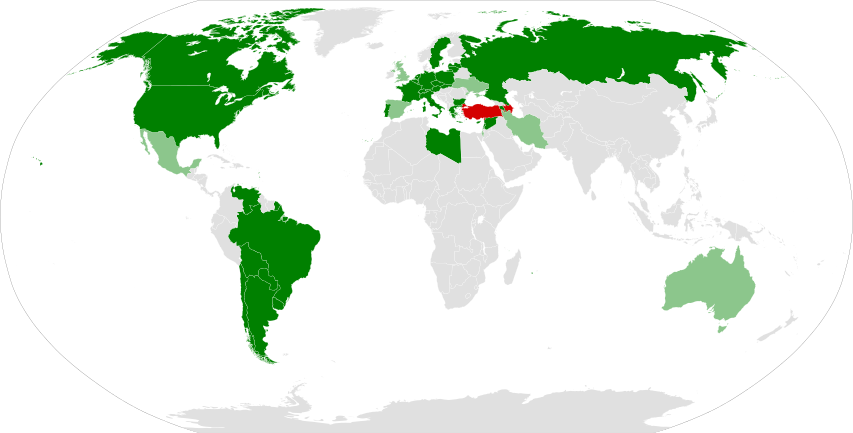
As of 2025, 34 states have officially recognized the historical events as genocide. Parliaments of countries that recognize the Armenian genocide include Argentina, Armenia, Austria, Belgium, Bolivia, Brazil, Bulgaria, Canada, Chile, Cyprus, Czech Republic, France, Germany, Greece, Italy, Latvia, Lebanon, Libya, Lithuania, Luxembourg, Mexico, the Netherlands, Paraguay, Poland, Portugal, Russia, Slovakia, Sweden, Switzerland, Syria, United States, Uruguay, Vatican City and Venezuela. Additionally, some regional governments of countries recognize the Armenian genocide too, such as New South Wales and South Australia in Australia as well as Scotland, Northern Ireland and Wales in the United Kingdom. US House Resolution 106 was introduced on 30 January 2007, and later referred to the House Committee on Foreign Affairs. The bill has 225 co-sponsors. The bill called for former President George W. Bush to recognize and use the word genocide in his annual 24 April speech which he never used. His successor President Barack Obama expressed his desire to recognize the Armenian genocide during the electoral campaigns, but after being elected, did not use the word "genocide" to describe the events that occurred in 1915. The US House of Representatives formally recognized the Armenian genocide with House Resolution 296 on 29 October 2019. The United States Senate unanimously recognized the genocide with Senate Resolution 150 on 12 December 2019. In 2021, President Joe Biden became the first U.S. president to formally recognize the Armenian genocide. As of 2022, all 50 U.S. states have also recognized the events as genocide.
Disputes
Nagorno-Karabakh conflict
Armenia provides political, material and military support to the Republic of Artsakh in the longstanding Nagorno-Karabakh conflict.
The current conflict over Nagorno-Karabakh began in 1988 when Armenian demonstrations against Azerbaijani rule broke out in Nagorno–Karabakh and later in Armenia. The Nagorno-Karabakh Autonomous Oblast voted to secede from Azerbaijan and join Armenia. Soon, violence broke out against Armenians in Azerbaijan and Azeris in Armenia. In 1990, after violent episodes in Nagorno–Karabakh and Azerbaijani cities like Baku, Sumgait and Kirovabad, Moscow declared a state of emergency in Karabakh, sending troops to the region, and forcibly occupied Baku, killing over a hundred civilians. In April 1991, Azerbaijani militia and Soviet forces targeted Armenian populations in Karabakh, known as Operation Ring. Moscow also deployed troops to Yerevan. Following the collapse of the Soviet Union, conflict escalated into a full-scale war between the Nagorno-Karabakh Republic (supported by Armenia), and Azerbaijan. Military action was influenced by the Russian military, which manipulated the rivalry between the two neighbouring sides in order to keep both under control.
More than 30,000 people were killed in the fighting during the period of 1988 to 1994. In May 1992, Armenian forces seized Shusha and Lachin (thereby linking Nagorno-Karabakh to Armenia). By October 1993, Armenian forces succeeded in taking almost all of former NKAO, Lachin and large areas in southwestern Azerbaijan. In 1993, the UN Security Council adopted four resolutions calling for the cessation of hostilities, unimpeded access for international humanitarian relief efforts, and the eventual deployment of a peacekeeping force in the region. Fighting continued, however, until May 1994 at which time Russia brokered a cease-fire between the three sides.
Negotiations to resolve the conflict peacefully have been ongoing since 1992 under the Minsk Group of the Organization for Security and Co-operation in Europe. The Minsk Group is co-chaired by Russia, France, and the United States and has representation from Turkey, the U.S., several European nations, Armenia and Azerbaijan. Despite the 1994 cease-fire, sporadic violations, sniper-fire and land mine incidents continue to claim over 100 lives each year.
Since 1997, the Minsk Group co-chairs have presented three proposals to serve as a framework for resolving the conflict. Each proposal was rejected. Beginning in 1999, the presidents of Azerbaijan and Armenia initiated a direct dialogue through a series of face-to-face meetings, often facilitated by the Minsk Group Co-Chairs. The OSCE sponsored a round of negotiations between the presidents in Key West, Florida. U.S. Secretary of State Colin Powell launched the talks on 3 April 2001, and the negotiations continued with mediation by the U.S., Russia and France until 6 April 2001. The Co-Chairs are still continuing to work with the two presidents in the hope of finding lasting peace.
The two countries were technically still at war until 2025. Citizens of Armenia, as well as citizens of any other country who are of Armenian descent, are forbidden entry to Azerbaijan. If a person's passport shows evidence of travel to Nagorno–Karabakh, they are forbidden entry to Azerbaijan.
In 2008, in what became known as the 2008 Mardakert Skirmishes, Armenian forces and Azerbaijan clashed over Nagorno-Karabakh. The fighting between the sides was brief, with few casualties on either side.
The 2020 Nagorno-Karabakh war and the 2023 Azerbaijani offensive in Nagorno-Karabakh were the latest escalations of the unresolved conflict.
On 8 August 2025, in a press conference at the White House, the leaders of Armenia and Azerbaijan agreed to a peace deal, ending the conflict after over three decades.
Countries without diplomatic relations
Armenia does not have diplomatic relations with the following countries (organized by continent):
Africa
- São Tomé and Príncipe, South Sudan
The Americas
- Barbados
Asia
- Azerbaijan, Turkey
Oceania
- Marshall Islands, Papua New Guinea, Samoa, Tonga
Armenia also has no diplomatic relations with states with limited recognition except for the now defunct Republic of Artsakh and the State of Palestine.
Countries with diplomatic relations
List
List of countries which Armenia maintains diplomatic relations with:
| [[File:Diplomatic relations of Armenia.svg | frameless | 425x425px]] | # | Country | Date |
|---|---|---|---|---|---|
| 1 | Lithuania | ||||
| 2 | Romania | ||||
| 3 | Ukraine | ||||
| 4 | United States | ||||
| 5 | Denmark | ||||
| 6 | Mexico | ||||
| 7 | Australia | ||||
| 8 | Argentina | ||||
| 9 | Bulgaria | ||||
| 10 | Greece | ||||
| 11 | United Kingdom | ||||
| 12 | Austria | ||||
| 13 | Spain | ||||
| 14 | Netherlands | ||||
| 15 | Canada | ||||
| 16 | Germany | ||||
| 17 | Iran | ||||
| 18 | Sri Lanka | ||||
| 19 | Brazil | ||||
| 20 | Mongolia | ||||
| 21 | North Korea | ||||
| 22 | South Korea | ||||
| 23 | France | ||||
| 24 | Hungary | ||||
| 25 | Poland | ||||
| 26 | Lebanon | ||||
| 27 | Syria | ||||
| 28 | Egypt | ||||
| 29 | Belgium | ||||
| 30 | Italy | ||||
| 31 | Cyprus | ||||
| 32 | Finland | ||||
| 33 | Cuba | ||||
| 34 | Czech Republic | ||||
| 35 | Russia | ||||
| 36 | Israel | ||||
| 37 | China | ||||
| 38 | Tanzania | ||||
| 39 | Switzerland | ||||
| 40 | Cambodia | ||||
| 41 | Equatorial Guinea | ||||
| 42 | Philippines | ||||
| — | Holy See | ||||
| 43 | Portugal | ||||
| 44 | Uruguay | ||||
| 45 | Burundi | ||||
| 46 | Ghana | ||||
| 47 | Norway | ||||
| 48 | New Zealand | ||||
| 49 | Luxembourg | ||||
| 50 | South Africa | ||||
| 51 | Morocco | ||||
| 52 | Zimbabwe | ||||
| 53 | Singapore | ||||
| 54 | Paraguay | ||||
| 55 | Oman | ||||
| 56 | Thailand | ||||
| 57 | Sweden | ||||
| 58 | Vietnam | ||||
| 59 | Georgia | ||||
| 60 | Moldova | ||||
| 61 | Bolivia | ||||
| 62 | Latvia | ||||
| 63 | Estonia | ||||
| 64 | Guinea | ||||
| 65 | Kazakhstan | ||||
| 66 | India | ||||
| 67 | Guinea-Bissau | ||||
| 68 | Japan | ||||
| 69 | Peru | ||||
| 70 | Burkina Faso | ||||
| 71 | Indonesia | ||||
| 72 | Turkmenistan | ||||
| 73 | Tajikistan | ||||
| 74 | Bangladesh | ||||
| 75 | Sudan | ||||
| 76 | Algeria | ||||
| 77 | Kyrgyzstan | ||||
| 78 | Slovakia | ||||
| 79 | Nigeria | ||||
| 80 | Albania | ||||
| 81 | Cape Verde | ||||
| 82 | Malaysia | ||||
| 83 | Nepal | ||||
| 84 | Chile | ||||
| 85 | Antigua and Barbuda | ||||
| 86 | Malta | ||||
| 87 | Belarus | ||||
| 88 | Madagascar | ||||
| 89 | Kenya | ||||
| 90 | Zambia | ||||
| 91 | Venezuela | ||||
| 92 | Ethiopia | ||||
| 93 | Mali | ||||
| 94 | Gabon | ||||
| 95 | Nicaragua | ||||
| 96 | Croatia | ||||
| 97 | Kuwait | ||||
| 98 | Serbia | ||||
| 99 | Slovenia | ||||
| 100 | Angola | ||||
| 101 | Eritrea | ||||
| 102 | Colombia | ||||
| 103 | Maldives | ||||
| 104 | Yemen | ||||
| 105 | Mozambique | ||||
| 106 | Uzbekistan | ||||
| 107 | Jamaica | ||||
| 108 | Jordan | ||||
| 109 | Ireland | ||||
| 110 | Afghanistan | ||||
| 111 | Bahrain | ||||
| 112 | Costa Rica | ||||
| 113 | Iceland | ||||
| 114 | Ecuador | ||||
| 115 | Bosnia and Herzegovina | ||||
| 116 | Qatar | ||||
| 117 | Laos | ||||
| 118 | Ivory Coast | ||||
| — | Sovereign Military Order of Malta | ||||
| 119 | United Arab Emirates | ||||
| 120 | Guatemala | ||||
| 121 | Panama | ||||
| 122 | Haiti | ||||
| 123 | Belize | ||||
| 124 | El Salvador | ||||
| 125 | Suriname | ||||
| 126 | Iraq | ||||
| 127 | Libya | ||||
| 128 | Saint Lucia | ||||
| 129 | Somalia | ||||
| 130 | Brunei | ||||
| 131 | Tunisia | ||||
| 132 | Guyana | ||||
| 133 | Togo | ||||
| 134 | Andorra | ||||
| 135 | Timor-Leste | ||||
| 136 | Sierra Leone | ||||
| 137 | Rwanda | ||||
| 138 | Senegal | ||||
| 139 | Saint Vincent and the Grenadines | ||||
| 140 | San Marino | ||||
| 141 | Seychelles | ||||
| 142 | Namibia | ||||
| 143 | Montenegro | ||||
| 144 | Chad | ||||
| 145 | Republic of the Congo | ||||
| 146 | Cameroon | ||||
| 147 | Benin | ||||
| 148 | Dominican Republic | ||||
| 149 | Mauritania | ||||
| 150 | Liechtenstein | ||||
| 151 | Comoros | ||||
| 152 | Monaco | ||||
| 153 | Fiji | ||||
| 154 | Honduras | ||||
| 155 | Malawi | ||||
| 156 | Tuvalu | ||||
| 157 | Grenada | ||||
| 158 | Bhutan | ||||
| 159 | Myanmar | ||||
| 160 | Eswatini | ||||
| 161 | Mauritius | ||||
| 162 | Uganda | ||||
| 163 | Vanuatu | ||||
| 164 | Democratic Republic of the Congo | ||||
| 165 | Niger | ||||
| 166 | Bahamas | ||||
| 167 | Central African Republic | ||||
| 168 | Federated States of Micronesia | ||||
| 169 | Palau | ||||
| 170 | Saint Kitts and Nevis | ||||
| 171 | Liberia | ||||
| 172 | Nauru | ||||
| 173 | Kiribati | ||||
| 174 | Gambia | ||||
| 175 | Dominica | ||||
| 176 | Djibouti | ||||
| 177 | North Macedonia | ||||
| 178 | Trinidad and Tobago | ||||
| 179 | Saudi Arabia | ||||
| 180 | Botswana | ||||
| — | State of Palestine | ||||
| 181 | Solomon Islands | ||||
| 182 | Pakistan | ||||
| 183 | Lesotho |
Multilateral relations
Notes on some of Armenia's multilateral relations follow:
| Organization | Formal Relations Began | Notes | |
|---|---|---|---|
| African Union | Armenia established diplomatic relations with the African Union on 25 October 2010. | ||
| Arab League | Armenia was granted Observer Status in the Arab League in 2004 after a Syrian invitation. | ||
| Organization of the Black Sea Economic Cooperation | See Armenia–BSEC relations | ||
| Flag of the Collective Security Treaty Organization.svg Collective Security Treaty Organization | See Armenia–CSTO relations | ||
| Logo of the Council of Europe (no lettering).svg Council of Europe | See Armenia in the Council of Europe | ||
| Flag of the Eurasian Economic Union.svg Eurasian Economic Union | See Member states of the Eurasian Economic Union and Enlargement of the Eurasian Economic Union | ||
| European Union | See Armenia–European Union relations and Potential enlargement of the European Union | ||
| NATO | See Armenia–NATO relations |
Bilateral relations
Notes on some of Armenia's bilateral relations follow (organized by continent):
Africa
| Country | Formal Relations Began | Notes |
|---|---|---|
| Djibouti | See Armenia–Djibouti relationsIn October 2015, both countries Foreign Ministers met to discuss establishing diplomatic relations and possible ways of developing bilateral ties. Both countries officially established diplomatic relations on 22 May 2019 at the United Nations. | |
| Egypt | See Armenia–Egypt relations | |
| Ethiopia | See Armenia–Ethiopia relations | |
| South Africa | See Armenia–South Africa relationsDiplomatic relations between Armenia and South Africa were established on 23 June 1993. | |
| South Sudan | See Armenia–South Sudan relationsArmenia and South Sudan have not yet established diplomatic relations. | |
| Sudan | See Armenia–Sudan relationsBoth countries established diplomatic relations on 8 December 1992. |
The Americas
| Country | Formal Relations Began | Notes |
|---|---|---|
| Argentina | See Argentina–Armenia relations | |
| Bolivia | See Armenia–Bolivia relationsBoth countries established diplomatic relations on 27 July 1992. | |
| Brazil | See Armenia–Brazil relations | |
| Canada | See also Armenia–Canada relations, Embassy of Armenia in Ottawa, Armenian Canadians | |
| Chile | See Armenia–Chile relations | |
| Colombia | See Armenia–Colombia relationsBoth countries established diplomatic relations on 22 December 1994. | |
| Cuba | See Armenia–Cuba relations | |
| Ecuador | See Armenia–Ecuador relations | |
| Mexico | See Armenia–Mexico relations | |
| Paraguay | See Armenia–Paraguay relationsBoth countries established diplomatic relations on 2 July. 1992. | |
| Peru | See Armenia–Peru relations | |
| United States | 1920 & 1991 | See Armenia–United States relationsThe dissolution of the Soviet Union in December 1991 brought an end to the Cold War and created the opportunity for bilateral relations with the New Independent States (NIS) as they began a political and economic transformation. The U.S. recognized the independence of Armenia on 25 December 1991, and opened an embassy in Yerevan in February 1992. |
| Uruguay | See Armenia–Uruguay relations | |
| Venezuela | See Armenia–Venezuela relations |
Asia
| Country | Formal relations began | Notes | |
|---|---|---|---|
| Afghanistan | See Afghanistan–Armenia relationsBoth countries established diplomatic relations on 5 September 1996.Relations suspended following the 2021 Taliban offensive. | ||
| Azerbaijan | No diplomatic relations | See Armenia–Azerbaijan relations, First Nagorno-Karabakh War, Sumgait pogrom, Baku pogrom, Maraga massacre, Khachkar destruction in Nakhichevan, Second Nagorno-Karabakh War | |
| Bangladesh | See Armenia–Bangladesh relationsBoth countries established diplomatic relations on 11 November 1992. | ||
| Cambodia | See Armenia–Cambodia relationsBoth countries established diplomatic relations on 14 May 1992. | ||
| China | See Armenia–China relations | ||
| Georgia | See Armenia–Georgia relationsArmenians and Georgians have a lot in common. Both are ancient Christian civilizations with their own distinct alphabets. Both use the terms "Apostolic" and "Orthodox" in the full titles of their respective churches. They also use the term "Catholicos" to refer to their church patriarchs. Despite all this, however, Armenians and Georgians have tended to have a tenuous relationship (at times, sharing close bonds while at other times regarding each other as rivals).Today, relations with Georgia are of particular importance for Armenia because, under the economic blockade imposed by Turkey and Azerbaijan due to the ongoing Nagorno-Karabakh conflict, Georgia offers Armenia its only land connection with Europe and access to its Black Sea ports. However, because of Armenia's reliance on Russia and Georgia, both of whom fought the 2008 South Ossetia war and severed diplomatic and economic relations as a result; and as 70% of Armenia's imports entered via Georgia especially from Russia which has imposed an economic blockade on Georgia, Armenia also has been indirectly affected from this blockade as well. The development of close relations between Turkey and Georgia (such as the Baku-Tbilisi-Ceyhan oil pipeline and South Caucasus natural gas pipeline) have also weighed on the mutual relations. For example, on 20 March 2006, Georgian Ambassador to Armenia Revaz Gachechiladze stated, "We sympathize with the sister nation but taking decisions of the kind we should take into account the international situation. When the time comes Georgia will do everything within the limits of the possible for the recognition of the Armenian genocide by the international community including Georgia." However, Armenian-Georgian relations have begun to improve. On 10 May 2006, Armenia and Georgia agreed on the greater part of the lines of the state border between the two countries. The Javakheti region in southern Georgia contains a large Armenian population and although there have been local civic organizations (such as United Javakhk) pushing for autonomy, there has been no violence between Armenians and Georgians in the area. | ||
| India | See Armenia–India relations | ||
| Indonesia | See Armenia–Indonesia relations | ||
| Iran | See Armenia–Iran relationsDespite religious and ideological differences, relations between Armenia and the Islamic Republic of Iran remain cordial and Armenia and Iran are strategic partners in the region. Armenia and Iran enjoy cultural and historical ties that go back thousands of years. There are no border disputes between the two countries and the Christian Armenian minority in Iran enjoys official recognition. Of special importance is the cooperation in the field of energy security which lowers Armenia's dependence on Russia and can in the future also supply Iranian gas to Europe through Georgia and the Black Sea. | ||
| Iraq | See Armenia–Iraq relationsBoth countries established diplomatic relations in the year 2000 | ||
| Israel | See Armenia–Israel relationsSince independence, Armenia has received support from Israel. While both countries have diplomatic relations, neither maintained an embassy in the other country, until Armenia opened an embassy in Tel Aviv in 2020. Ehude Moshe Eytam, the Israeli ambassador to Armenia is based in Tbilisi, Georgia, and visits Yerevan twice a month. Israel has recognized 24 Armenians as Righteous Among the Nations for risking their lives to save Jews during the Holocaust. | ||
| Japan | See Armenia–Japan relations | ||
| Jordan | See Armenia–Jordan relationsBoth countries established diplomatic relations on 18 June 1996. | ||
| Kazakhstan | See Armenia–Kazakhstan relations | ||
| Kuwait | See Armenia–Kuwait relations | ||
| Kyrgyzstan | 1993 | See Armenia–Kyrgyzstan relations | |
| Lebanon | See Armenia–Lebanon relationsDiplomatic relations between Armenia and Lebanon were established on 4 March 1992.Armenian-Lebanese relations are very friendly. Lebanon is host to the eighth largest Armenian population in the world with around 160,000 Armenians in the country. Lebanon is the only member of the Arab League, much less of the Middle East and the Islamic World that recognizes the Armenian genocide. During the 2006 Lebanon War, Armenia announced that it would send humanitarian aid to Lebanon. According to the Armenian government, an unspecified amount of medicines, tents and fire-fighting equipment was allocated to Lebanese authorities on 27 July 2006.In September 2009 Mr. Ashot Kocharian was appointed the Ambassador of Armenia in Lebanon. On 18 April 2013, the newly appointed Ambassador of Lebanon to Armenia Mr. Jean Makaron presented his credentials to the President of Armenia.On 4 March 2016, Mr. Samvel Mkrtchyan was appointed the Ambassador Extraordinary and Plenipotentiary of Armenia to the Lebanese Republic. | ||
| Mongolia | 1992 | See Armenia–Mongolia relations* Both countries established diplomatic relations on 11 February 1992. | |
| Oman | See Armenia–Oman relationsBoth countries established diplomatic relations in July 1992. | ||
| Pakistan | See Armenia–Pakistan relationsPrior to 2025, Armenia-Pakistan relations were poor owing to disagreements between the two countries. The main issue was the Nagorno-Karabakh conflict. Pakistan is a major supporter of Azerbaijan in the Nagorno-Karabakh conflict. Pakistan also did not recognize Armenia despite Armenia recognizing Pakistan. Pakistan does not recognize the Armenian genocide and maintains that during the war large number of Armenians and Muslims were killed. Armenia also has friendly relations with India, which Pakistan heavily opposes. | ||
| Palestine | See Armenia–Palestine relationsOn 21 June 2024, the Armenian government recognized the State of Palestine. On 27 September 2024, diplomatic relations were established. | ||
| Qatar | See Armenia–Qatar relationsBoth countries established diplomatic relations on 5 November 1997. | ||
| Saudi Arabia | See Armenia–Saudi Arabia relationsBoth countries established diplomatic relations on 25 November 2023. | ||
| South Korea | 21 February 1992 | See Armenia–South Korea relationsThe establishment of diplomatic relations between the Republic of Armenia and the Republic of Korea began on 21 February 1992. | |
| Flag of the Syrian revolution.svg Syria | See Armenia–Syria relations | ||
| Tajikistan | 1992 | See Armenia–Tajikistan relations | |
| Thailand | 1992 | See Armenia–Thailand relations | |
| Turkey | No formal diplomatic relations | See Armenia–Turkey relationsTurkey was one of the first countries to recognize Armenia's independence in 1991. Despite this, for most of the 20th century and early 21st century, relations remain tense and there are no formal diplomatic relations between the two countries for numerous reasons. Some bones of contention include the unresolved Karabakh conflict between Armenia and Azerbaijan (which has resulted in Turkey imposing a blockade on Armenia that is still in effect today), the treatment of Armenians in Turkey, the Baku-Tbilisi-Ceyhan oil pipeline, and the Armenian claim of Turkey's holding of historic Armenian lands (ceded to them in the Treaty of Kars, a treaty which Armenia refuses to recognize to this day since it was signed between the Soviet Union and Turkey, and not between Armenia and Turkey proper). At the forefront of all disputes, however, is the issue surrounding the Armenian Genocide. The killing and deportation of between one and one-and-a-half million Armenians from the Ottoman Empire orchestrated by the Young Turks is a taboo subject in Turkey itself as the Turkish government refuses to acknowledge that a genocide ever happened. However, since Turkey has become a candidate to join the European Union, limited discussion of the event is now taking place in Turkey. Some in the European Parliament have even suggested that one of the provisions for Turkey to join the E.U. should be the full recognition of the event as genocide.On 5 June 2005, Armenian President Robert Kocharian announced that he was ready to "continue dialogue with Azerbaijan for the settlement of the Nagorno-Karabakh conflict and with Turkey on establishing relations without any preconditions." Armenia has also stated that as a legal successor to the Armenian SSR, it is loyal to the Treaty of Kars and all agreements inherited by the former Soviet Armenian government. Yet Turkey continues to lay preconditions on relations, insisting that Armenia abandon its efforts to have the Genocide recognized, which official Yerevan is not willing to do.In the wake of the 2008 South Ossetia war between Georgia and Russia, Armenia and Turkey have shown signs of an inclination to reconsider their relationship. According to The Economist magazine, 70% of Armenia's imports enter via Georgia. Because of the apparently belligerent posture of the Russian state, economic ties with Turkey appear especially attractive.In 2021, Armenia and Turkey appointed their special representatives as part of the normalization process. It is estimated that around 70,000 Armenians live in Turkey today, down from nearly 2 million before the start of the Armenian genocide in 1915. See Armenians in Turkey. | |
| Turkmenistan | See Armenia–Turkmenistan relations | ||
| United Arab Emirates | See Armenia–United Arab Emirates relations | ||
| Uzbekistan | See Armenia–Uzbekistan relations | ||
| Vietnam | See Armenia–Vietnam relations |
Europe
| Country | Formal relations began | Notes | |
|---|---|---|---|
| Albania | See Albania–Armenia relations | ||
| Austria | See Armenia–Austria relations | ||
| Belarus | See Armenia–Belarus relations | ||
| Belgium | See Armenia–Belgium relations | ||
| Bosnia and Herzegovina | See Armenia–Bosnia and Herzegovina relations | ||
| Bulgaria | See Armenia–Bulgaria relations | ||
| Croatia | See Armenia–Croatia relations | ||
| Cyprus | See Armenia–Cyprus relations | ||
| Czech Republic | See Armenia–Czech Republic relations | ||
| Denmark | See Armenia–Denmark relations | ||
| Estonia | See Armenia–Estonia relations | ||
| Finland | See Armenia–Finland relations | ||
| France | See Armenia–France relationsFranco-Armenian relations have existed since the French and the Armenians established contact in the Armenian Kingdom of Cilicia and are close to this day. 2006 was proclaimed the Year of Armenia in France. | ||
| Germany | See Armenia–Germany relations | ||
| Greece | See Armenia–Greece relationsGreece was one of the first countries to recognize Armenia's independence on 21 September 1991, and one of those that have officially recognized the Armenian Genocide. Since the independence of Armenia the two countries have been partners within the framework of international organizations (United Nations, OSCE, Council of Europe, BSEC), whilst Greece firmly supports the community programs aimed at further developing relations between the EU and Armenia.Continuous visits of the highest level have shown that both countries want to continue to improve the levels of friendship and cooperation (Visit by the President of Armenia Levon Ter-Petrossian to Greece in 1996, visit by the President of the Hellenic Republic Costis Stephanopoulos in 1999, visit by the President of Armenia Robert Kocharyan to Greece in 2000 and 2005 and visit by Greek president Karolos Papoulias to Armenia in June 2007).Greece is, after Russia, the major military partner of Armenia. Armenian officers are trained in Greek military academies, and various technical assistance is supplied by Greece. Since 2003, an Armenian platoon has been deployed in Kosovo as part of KFOR, where they operate as a part of the Greek battalion of KFOR. It is estimated that around 80,000 Armenians live in Greece. | ||
| Holy See | See Armenia–Holy See relations | ||
| Hungary | See Armenia–Hungary relations | ||
| Iceland | See Armenia–Iceland relations | ||
| Ireland | See Armenia–Ireland relations | ||
| Italy | See Armenia–Italy relations | ||
| Latvia | See Armenia–Latvia relations | ||
| Lithuania | See Armenia–Lithuania relations | ||
| Luxembourg | See Armenia–Luxembourg relations | ||
| Malta | See Armenia–Malta relations | ||
| Moldova | See Armenia–Moldova relations | ||
| Montenegro | See Armenia–Montenegro relations | ||
| Netherlands | See Armenia–Netherlands relations and Armenians in the Netherlands | ||
| Norway | See Armenia–Norway relations | ||
| Poland | See Armenia–Poland relations | ||
| Portugal | See Armenia–Portugal relations | ||
| Romania | See Armenia–Romania relations | ||
| Russia | See Armenia–Russia relationsArmenia's most notable recent foreign policy success came with 29 August treaty with Russia on friendship, cooperation and mutual assistance, in which Moscow committed itself to the defense of Armenia should it be attacked by a third party. Russia is the key regional security player, and has proved a valuable historical ally for Armenia. Although it appeared as a response to Aliyev's US trip, the treaty had probably long been under development. However, it is clear from the wider context of Armenian foreign policy that—while Yerevan welcomes the Russian security guarantee—the country does not want to rely exclusively on Moscow, nor to become part of a confrontation between Russian and US-led alliances in the Transcaucasus. | ||
| San Marino | See Armenia–San Marino relations | ||
| Serbia | See Armenia–Serbia relations | ||
| Slovakia | See Armenia–Slovakia relations | ||
| Slovenia | See Armenia–Slovenia relations | ||
| Spain | See Armenia–Spain relations | ||
| Sweden | See Armenia–Sweden relations | ||
| Switzerland | See Armenia–Switzerland relations | ||
| Ukraine | See Armenia–Ukraine relationsArmenian–Ukrainian relations have lasted for centuries and today are cordial. Relations between Armenia and Ukraine have deflated since Armenia recognized the disputed referendum in Crimea and its subsequent annexation by Russia, and Ukraine has withdrawn its ambassador to Armenia for consultations. The Ukrainian government has asserted that this is temporary and that diplomatic relations between the two states shall indeed continue. | ||
| United Kingdom | See Armenia–United Kingdom relations |
Oceania
| Country | Formal Relations Began | Notes |
|---|---|---|
| Australia | See Armenia–Australia relations | |
| New Zealand | See Armenia–New Zealand relationsBoth countries established diplomatic relations on 6 June 1992. |
Other international organizations
Armenia is additionally a full member, unless otherwise noted, in the following international organizations, programs and treaties:
- Ancient Civilizations Forum
- Artemis Accords
- Assembly of European Regions
- Berne Convention on the Conservation of European Wildlife and Natural Habitats
- Black Sea Trade and Development Bank
- Bologna Process
- British Council
- Commonwealth of Independent States Free Trade Area
- Comprehensive Nuclear-Test-Ban Treaty Organization
- Energy Charter Treaty
- Eurasian Patent Organization
- Eurimages
- Eurojust (Cooperation agreement)
- European Athletic Association
- European Atomic Energy Community (Cooperation agreement)
- European Audiovisual Observatory
- European Aviation Safety Agency (Pan-European Partner)
- European Broadcasting Union
- European Civil Aviation Conference
- European Charter for Regional or Minority Languages
- European Committee for Standardization (Affiliate member)
- European Common Aviation Area
- European Convention for the Prevention of Torture
- European Cooperation in Science and Technology
- European Court of Human Rights and the European Convention on Human Rights
- European Cultural Convention
- European Higher Education Area
- European Neighbourhood Policy
- European Olympic Committees
- European Organization for Nuclear Research (Cooperation agreement)
- European Organization of Supreme Audit Institutions
- European Social Charter
- European Telecommunications Satellite Organization
- European University Association
- Europol (Cooperation agreement)
- FIFA and UEFA
- Food and Agriculture Organization
- Framework Convention for the Protection of National Minorities
- Freedom Online Coalition
- Geneva Phonograms Convention
- Horizon 2020 and Horizon Europe
- ICRANet
- International Anti-Corruption Academy
- International Atomic Energy Agency
- International Centre for Settlement of Investment Disputes
- International Chamber of Commerce
- International Civil Aviation Organization
- International Committee of the Red Cross
- International Covenant on Civil and Political Rights
- International Criminal Court (Signatory)
- International Development Association
- International Finance Corporation
- International Labour Organization
- International Olympic Committee
- International Organization for Migration
- International Organization for Standardization
- International Organization of Supreme Audit Institutions
- International Renewable Energy Agency
- International Road Transport Union and the TIR Convention
- International Solar Alliance
- International Telecommunications Satellite Organization
- International Telecommunication Union
- International Union of Railways (Associate member)
- Interparliamentary Assembly on Orthodoxy
- Inter-Parliamentary Union
- Intra-European Organisation of Tax Administrations
- Multilateral Investment Guarantee Agency
- Open Government Partnership
- Organisation for the Prohibition of Chemical Weapons
- Paris Convention for the Protection of Industrial Property
- Parliamentary Assembly of the Council of Europe
- Patent Cooperation Treaty
- PostEurop
- Swiss Agency for Development and Cooperation
- TRIPS Agreement
- UNESCO
- United Nations Committee on the Peaceful Uses of Outer Space
- United Nations Conference on Trade and Development
- United Nations Development Programme
- United Nations Economic Commission for Europe
- United Nations Industrial Development Organization
- Universal Postal Union
- U.S. European Command State Partnership Program
- Treaty on Conventional Armed Forces in Europe
- Treaty on the Non-Proliferation of Nuclear Weapons
- Venice Commission
- Warsaw Declaration
- WIPO Copyright Treaty
- World Health Organization
- World Intellectual Property Organization
- World Meteorological Organization
- World Organisation for Animal Health
- World Peace Council
- World Sports Alliance
- World Tourism Organization
Footnotes
References
References
- [http://times.am/2010/03/29/armenian-foreign-policy-between-russia-iran-and-u-s/ – "Armenian Foreign Policy Between Russia, Iran And U.S." – 29 March 2010] {{webarchive. link. (24 July 2011)
- "Armenia granted observer status at Pacific Alliance".
- "Secretary General's meeting with Ambassador of Armenia to Poland – CoD".
- "Resolutions, Laws, and Declarations".
- Hairenik. (25 March 2009). "South Australia Passes Armenian Genocide Motion".
- (19 January 2012). "Armenian Genocide Commemoration – 17/04/1997 – NSW Parliament".
- "Scotland, North Ireland and Wales recognize Armenian Genocide".
- "Parliament of Scotland passes motion on Armenian Genocide".
- (27 September 2007). "The top news headlines on current events from Yahoo! News".
- hyebiz. (30 January 2008). "Sen. Barack Obama Discusses Armenian Genocide ...".
- "Recognize the Armenian genocide".
- (30 October 2019). "US House votes to recognize Armenian genocide".
- Menendez, Robert. (2019-04-09). "S.Res.150 – 116th Congress (2019–2020): A resolution expressing the sense of the Senate that it is the policy of the United States to commemorate the Armenian genocide through official recognition and remembrance.".
- (2021-04-24). "Statement by President Joe Biden on Armenian Remembrance Day".
- (14 April 2016). "Azerbaijan Business and Investment Opportunities Yearbook Volume 1 Strategic, Practical Information and Opportunities". IBP Inc.
- "Azerbaijan Country Page of the ''NCSJ'' (advocates on behalf of Jews in Russia, Ukraine, the Baltic States & Eurasia) accessed 23 May 2010".
- "Azerbaijan doesn't allow Armenians in the country". PanARMENIAN.Net.
- (17 January 2008). "Azerbaijani president: Armenians are guests in Yerevan". [[REGNUM News Agency]].
- Cancryn, Alejandra Jaramillo, Adam. (2025-08-08). "Trump touts his favorite type of foreign deal — promoting peace in Armenia-Azerbaijan with some personal branding {{!}} CNN Politics".
- "State of Palestine - Bilateral Relations".
- "Bilateral relations".
- "Ficha de paises y territorios".
- "30th anniversary of establishment of diplomatic relations between the Republic of Armenia and the Syrian Arab Republic".
- "Republica Armenia".
- (9 September 2022). "Armenia y el Perú celebran hoy el 30 aniversario de relaciones diplomáticas".
- "Armenia - Diplomatic Relations Agreement".
- "Diplomatic relations between Armenia and ...".
- "Tabela priznanja i uspostavljanja diplomatskih odnosa". Montenegro Ministry of Foreign Affairs and European Integration.
- (3 October 2012). "Establishment of diplomatic relations between the Kingdom of Bhutan and the Republic of Armenia". Ministry of Foreign Affairs of Bhutan.
- "Armenia, African Union to develop relations". PanArmenian.net.
- (19 January 2005). "Observer status for Armenia in the Arab League". azad-hye.Blogspot.ca.
- (20 January 2005). "Armenia, Arab League sign memo on mutual understanding". ArmenianDiaspora.com.
- "JOINT MOTION FOR A RESOLUTION on closer ties between the EU and Armenia and the need for a peace agreement between Azerbaijan and Armenia | RC-B9-0163/2024 | European Parliament".
- "Armenia and Djibouti plan to develop relations". news.am.
- "Armenia, Djibouti establish diplomatic relations".
- LLC, Helix Consulting. "Ethiopia – Bilateral Relations – Ministry of Foreign Affairs of Armenia". mfa.am.
- "Embassy of Armenia in Ethiopia".
- LLC, Helix Consulting. "South Africa – Bilateral Relations – Ministry of Foreign Affairs of Armenia". mfa.am.
- "Armenia (Republic of)". dirco.gov.za.
- LLC, Helix Consulting. "SouthSudan – Bilateral Relations – Ministry of Foreign Affairs of Armenia". mfa.am.
- "Statement by the Minister of Foreign Affairs Edward Nalbandian 09.07.2011". [[Ministry of Foreign Affairs (Armenia)]].
- LLC, Helix Consulting. "Sudan – Bilateral Relations – Ministry of Foreign Affairs of Armenia". mfa.am.
- LLC, Helix Consulting. "Bolivia – Bilateral Relations – Ministry of Foreign Affairs of Armenia". MFA.am.
- (30 November 2014). "The Two Chambers of the Legislative Assembly (Parliament) of Bolivia Adopted a Resolution on the Recognition and Condemnation of the Armenian Genocide".
- LLC, Helix Consulting. "Embassy of Armenia to Canada". mfa.am.
- "Canada opens embassy in Armenia".
- (21 May 2007). "El Consejo Nacional Armenio del Uruguay fue recibido en la Embajada de Chile". [[International Armenian Network]].
- Sassounian, Harut. (16 June 2007). "Chile Proves Genocide Recognition is Based on Truth, Not Lobbying". Armenian Weekly.
- "Archived copy".
- LLC, Helix Consulting. "Colombia – Bilateral Relations – Ministry of Foreign Affairs of Armenia". mfa.am.
- http://www.soyarmenio.com.ar/2014/01/el-nombre-armenia-en-colombia-por.html {{Webarchive. link. (22 October 2018 29 January 2014)
- LLC, Helix Consulting. "Cuba – Bilateral Relations – Ministry of Foreign Affairs of Armenia". mfa.am.
- LLC, Helix Consulting. "Ecuador – Bilateral Relations – Ministry of Foreign Affairs of Armenia". mfa.am.
- Helix Consulting LLC. "Mexico – Bilateral Relations – Ministry of Foreign Affairs of Armenia". MFA.am.
- LLC, Helix Consulting. "Mexico – By country – Ministry of Foreign Affairs of Armenia". MFA.am.
- "Inicio". SRE.gob.mx.
- "Honorary Consulate of Mexico opens in Armenia".
- Hayk. "ArmeniaDiaspora.com – News from Armenia, Events in Armenia, Travel and Entertainment – Armenian Population in the World". ArmeniaDiaspora.com – News from Armenia, Events in Armenia, Travel and Entertainment.
- "Mexico Senate recognizes the Armenian Genocide".
- LLC, Helix Consulting. "Paraguay – Bilateral Relations – Ministry of Foreign Affairs of Armenia". mfa.am.
- (30 October 2015). "Statement of Foreign Minister Nalbandian on the recognition of the Armenian Genocide by the Senate of Paraguay".
- LLC, Helix Consulting. "Embassy of Armenia to the United States of America". MFA.am.
- "Home – Yerevan, Armenia – Embassy of the United States". USEmbassy.gov.
- "Armenia and Uruguay will open embassies".
- LLC, Helix Consulting. "Afghanistan – Bilateral Relations – Ministry of Foreign Affairs of Armenia". MFA.am.
- Cancryn, Alejandra Jaramillo, Adam. (2025-08-08). "Trump touts his favorite type of foreign deal — promoting peace in Armenia-Azerbaijan with some personal branding {{!}} CNN Politics". [[CNN]].
- LLC, Helix Consulting. "Bangladesh – Bilateral Relations – Ministry of Foreign Affairs of Armenia". MFA.am.
- LLC, Helix Consulting. "Cambodia – Bilateral Relations – Ministry of Foreign Affairs of Armenia". MFA.am.
- "Chinese embassy in Yerevan (in Chinese and Russian only)". Am.ChineseEmbassy.org.
- "Chinese Ministry of Foreign Affairs about relations with Armenia". Fmprc.gov.cn.
- "indianembassy.am".
- "Armenia – India Bilateral Relations". Indianembassy.am.
- LLC, Helix Consulting. "Indonesia – Bilateral Relations – Ministry of Foreign Affairs of Armenia". MFA.am.
- "Association of Southeast Asian Nations – In International Organizations".
- LLC, Helix Consulting. "Iraq – Bilateral Relations – Ministry of Foreign Affairs of Armenia". MFA.am.
- LLC, Helix Consulting. "Jordan – Bilateral Relations – Ministry of Foreign Affairs of Armenia". MFA.am.
- "Kyrgyzstan - Bilateral Relations".
- LLC, Helix Consulting. "Kyrgyzstan – Embassies – Ministry of Foreign Affairs of Armenia". MFA.am.
- LLC, Helix Consulting. "Kyrgyzstan – Consulates – Ministry of Foreign Affairs of Armenia". MFA.am.
- LLC, Helix Consulting. "Kyrgyzstan – By country – Ministry of Foreign Affairs of Armenia". MFA.am.
- [http://www.armenialiberty.org/armeniareport/report/en/2006/07/EB9E5465-7B17-4A96-B513-03AA0567FAB0.ASP Armenia To Provide Relief To Lebanon] {{Webarchive. link. (7 October 2007 , Armenialiberty.org.)
- link. (27 September 2007 , PanArmenian.Net)
- LLC, Helix Consulting. "Mongolia – Bilateral Relations – Ministry of Foreign Affairs of Armenia". MFA.am.
- LLC, Helix Consulting. "Oman – Bilateral Relations – Ministry of Foreign Affairs of Armenia". MFA.am.
- (30 April 2025). "Armenia to open embassy in Oman". [[Armenpress]].
- "Pakistan - Bilateral Relations".
- "Phone conversation between the Foreign Ministers of Armenia and Pakistan".
- (21 June 2024). "Statement by the Foreign Ministry of the Republic of Armenia on the recognition of the State of Palestine".
- (25 November 2023). "Establishment of diplomatic relations between the Republic of Armenia and the Kingdom of Saudi Arabia".
- "Saudi Arabia – Bilateral Relations – Ministry of Foreign Affairs of Armenia". MFA.am.
- Korea, Ministry of Foreign Affairs, Republic of. "Countries and Regions > Europe > List of the Countries". MOFA.go.kr.
- Korea, Ministry of Foreign Affairs, Republic of. "Press > Press Releases". MOFA.go.kr.
- "Armenian Ministry of Foreign Affairs: direction of the Armenian embassy in Damascus". ArmeniaForeignMinistry.com.
- "Armenian Ministry of Foreign Affairs: direction of the Syrian embassy in Yerevan". Archive.org.
- LLC, Helix Consulting. "Tajikistan – Bilateral Relations – Ministry of Foreign Affairs of Armenia". mfa.am.
- LLC, Helix Consulting. "Tajikistan – Embassies – Ministry of Foreign Affairs of Armenia". MFA.am.
- LLC, Helix Consulting. "Tajikistan – Consulates – Ministry of Foreign Affairs of Armenia". MFA.am.
- LLC, Helix Consulting. "Tajikistan – By country – Ministry of Foreign Affairs of Armenia". MFA.am.
- LLC, Helix Consulting. "Thailand – Bilateral Relations – Ministry of Foreign Affairs of Armenia". mfa.am.
- LLC, Helix Consulting. "Thailand – Consulates – Ministry of Foreign Affairs of Armenia". mfa.am.
- LLC, Helix Consulting. "Thailand – By country – Ministry of Foreign Affairs of Armenia". mfa.am.
- (5 June 2006). "Yerevan Ready to Continue Dialogue with Baku for Karabakh Settlement". PanArmenian.net.
- (13 December 2006). "In Vartan Oskanian's Words, Turkey Casts Doubt on the Treaty of Kars With Its Actions". All Armenian Mass Media Association.
- "Turkey and Armenia; Friends and Neighbors, rising hopes of better relations between two historic enemies", ''The Economist'', 27 September 2008, p. 67.
- "ARMENIAN POPULATION IN THE WORLD".
- "Armenian Ministry of Foreign Affairs: direction of the Armenian embassy in Abu Dhabi". ArmeniaForeignMinistry.com.
- "Diaspora - United Arab Emirates". Office of the High Commissioner for Diaspora Affairs.
- (27 September 2004). "Ambassador of United Arab Emirates Presents Credentials". Archive.org.
- "Ministry of Foreign Affairs of the Republic of Uzbekistan — States with which the Republic of Uzbekistan established diplomatic relations". MFA.uz.
- LLC, Helix Consulting. "Uzbekistan – Bilateral Relations – Ministry of Foreign Affairs of Armenia". MFA.am.
- LLC, Helix Consulting. "Uzbekistan – By country – Ministry of Foreign Affairs of Armenia". MFA.am.
- "Ministry of Foreign Affairs of Vietnam".
- LLC, Helix Consulting. "Vietnam – Bilateral Relations – Ministry of Foreign Affairs of Armenia". MFA.am.
- "Embassies of Albania".
- "Bulgarian embassy in Yerevan".
- "Armenian Parliament ratifies agreement on Armenian-Czech military-technical cooperation".
- "Hungarian Ministry of Foreign Affairs: direction of the Hungarian honorary consulate in Yerevan". Kulugyminiszterium.hu.
- "Iceland – Consulates".
- "Armenian embassy in London (also accredited to Ireland)". Armenianembassy.org.uk.
- (15 June 2011). "Irish embassy in Sofia (also accredited to Armenia)". Embassyofireland.bg.
- "Armenian embassy in Rome". Xoomer.alice.it.
- "Italian embassy in Yerevan". Ambjerevan.esteri.it.
- National, Global. (19 April 2006). "Harper affirms Canadian position on Armenian Genocide". Canada.com.
- "Polish embassy in Yerevan (in Armenian and Polish only)". Erewan.polemb.net.
- "Armenians embassies around the world". Armenian Ministry of Foreign Affairs.
- (21 July 1955). "Calouste Gulbenkian Dies at 86. One of the Richest Men in the World. Oil Financier, Art Collector Lived in Obscurity, Drove in Rented Automobile.". New York Times.
- (23 July 1958). "Solid Gold Scrooge".
- "Romanian Ministry of Foreign Affairs: direction of the Armenian embassy in Bucharest". Mae.ro.
- "Romanian Ministry of Foreign Affairs: direction of the Romania embassy in Yerevan". Mae.ro.
- "Slovak Ministry of Foreign Affairs about Ján Kubiš's visit to Armenia". Mzv.sk.
- (13 June 2009). "Armenia opens embassy in Spain | Armenia News". NEWS.am.
- "ABOUT US".
- "World Trade Organization – In International Organizations".
- "Swiss representation in Armenia". Admin.ch.
- (26 March 2014). "Armenian Consul Denies Labeling Crimea 'Reunification'". RadioFreeEurope/RadioLiberty.
- "United Kingdom of Great Britain and Northern Ireland".
- Diplomat Magazine. (3 February 2022). "Armenia".
- "British Embassy Yerevan".
- [[HM Revenue & Customs]]. (27 February 2014). "Armenia: tax treaties".
- "Armenia - United Kingdom BIT (1993)".
- British Embassy Yerevan. (28 August 2025). "UK Minister visits Armenia to advance strategic partnership".
- LLC, Helix Consulting. "New Zealand – Bilateral Relations – Ministry of Foreign Affairs of Armenia". mfa.am.
- (7 January 2020). "Our Member States".
This article was imported from Wikipedia and is available under the Creative Commons Attribution-ShareAlike 4.0 License. Content has been adapted to SurfDoc format. Original contributors can be found on the article history page.
Ask Mako anything about Foreign relations of Armenia — get instant answers, deeper analysis, and related topics.
Research with MakoFree with your Surf account
Create a free account to save articles, ask Mako questions, and organize your research.
Sign up freeThis content may have been generated or modified by AI. CloudSurf Software LLC is not responsible for the accuracy, completeness, or reliability of AI-generated content. Always verify important information from primary sources.
Report