From Surf Wiki (app.surf) — the open knowledge base
Ford Taunus V4 engine
Automobile engine
Automobile engine
| Field | Value | |||||
|---|---|---|---|---|---|---|
| name | Ford Taunus V4 | |||||
| aka | Taunus V4 | |||||
| manufacturer | Ford Motor Company | |||||
| image | File:Saab Sonett III Ford V4 engine.jpg | |||||
| caption | Ford Taunus V4 in a Saab Sonett III | |||||
| configuration | 60° V4 | |||||
| displacement | {{ubl | |||||
| {{cvt | 1183 | cc | L | 1 | disp | flip}} |
| {{cvt | 1288 | cc | L | 1 | disp | flip}} |
| {{cvt | 1498 | cc | L | 1 | disp | flip}} |
| {{cvt | 1699 | cc | L | 1 | disp | flip}} |
| bore | 80 mm | |||||
| 84 mm | ||||||
| 90 mm | ||||||
| stroke | 58.86 mm | |||||
| 66.8 mm | ||||||
| block | Cast iron | |||||
| head | Cast iron | |||||
| valvetrain | OHV 2 valves per cylinder | |||||
| supercharger | Naturally aspirated (stock) | |||||
| turbocharger | None | |||||
| fuelsystem | Carbureted | |||||
| fueltype | Gasoline (Leaded) | |||||
| oilsystem | Wet sump | |||||
| coolingsystem | Jacketed block (stock) | |||||
| production | 1962 – 1981 | |||||
| power | 40–240 hp | |||||
| torque | 80–137 Nm | |||||
| predecessor | Ford Sidevalve engine (1.2) | |||||
| Ford Taunus straight-four (1.5, 1.7) | ||||||
| successor | Ford Kent engine | |||||
| Ford Pinto engine |
| 1183 cc | 1288 cc | 1498 cc | 1699 cc 84 mm 90 mm 66.8 mm Ford Taunus straight-four (1.5, 1.7) Ford Pinto engine The Ford Taunus V4 engine is a 60° V4 piston engine with one balance shaft, introduced by Ford Motor Company in Germany in 1962. The German V4 was built in the Cologne plant and powered the Ford Taunus and German versions of the Consul, Capri, and Transit.
Design
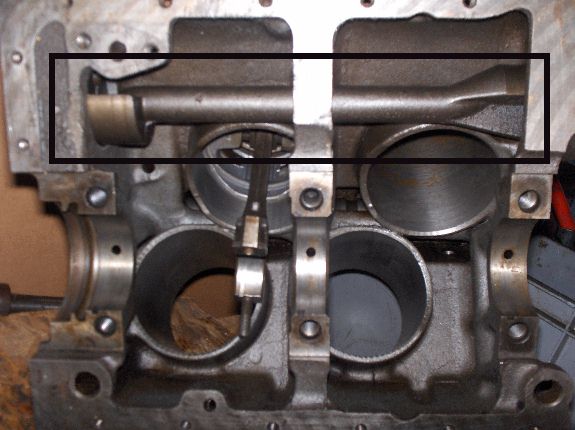
In common with other V4 and V6 engines, but unlike longer V engines with more cylinders, the connecting rods do not share a crankpin on the crankshaft.
The V4 was later expanded into the Ford Cologne V6 engine that was used in the Ford Capri, Ford Taunus, Ford Cortina, Ford Consul, Ford Granada, Ford Sierra, Ford Scorpio, Ford Ranger, Ford Explorer, Ford Mustang, Mercury Capri, and many other cars. The V4 engine was also used in industrial applications: pumps, electrical generators, agricultural machinery and snowcats. In automobiles, the Taunus V4 was replaced by the Ford OHC/Pinto engine.
The V4 engine was originally designed by Ford for a new entry-level compact car intended for the US market to be called the Ford "Cardinal", which eventually evolved into the Taunus 12m P4. Ford abandoned the "Cardinal" project and instead built the Ford Falcon for North America, then sought other uses for the V4 engine. Ford bought several Saab 96s for early testing, and eventually sold the cars back to Saab with the V4 engines in them. Saab tested the V4s at their Trollhättan test track, which led Saab to acquire the V4 engine for their 95, 96, and 97 (Sonett) introduced in August 1966 (1967 production model). The V4 engine eliminated the need to mix oil with the fuel as in the two-cycle Saab "Shrike" engine, and produced better low end torque. Saab dealers offered the first owner a "Lifetime Warranty" for the V4 for US$50.
Applications:
- Ford Taunus
- Ford Consul
- Ford Transit
- Ford Capri
- Saab 95
- Saab 96
- Saab Sonett (II-V4 and III)
- Matra 530
- Ford Mustang I
1.2
The 1183 cc version features an 80x58.86 mm bore and stroke. Output was 40 hp and 80 Nm or 45 hp and 82 Nm.
Applications:
- 1962 – 1966 Ford Taunus 12M P4
- 1967 – 1968 Ford Taunus 12M P6
1.3
The 1288 cc version had an 84x58.86 mm bore and stroke. Output was 50 hp and 95 Nm or 53 hp and 98 Nm.
Applications:
- 1966 – 1970 Ford Taunus 12M P6
- 1969 – 1972 Ford Capri (Mercury Capri)
- Ford Transit 600
1.5
The 1498 cc V4 had a 90x58.86 mm bore and stroke. It produced 55 hp and 107 Nm, 60 hp and 114 Nm or 65 hp and 117 Nm at 2500 rpm.
- 1962–1966 Ford Taunus 12M P4
- 1966–1970 Ford Taunus 12M P6
- 1966–1970 Ford Taunus 15M P6
- 1964–1967 Ford Taunus 17M P5
- 1967–1971 Ford Taunus 17M P7
- 1969–1972 Ford Capri
- Ford Transit 1000
- 1967–1980 Saab 95 and Saab 96 (European market)
- 1967–1974 Saab 95, Saab 96 and Saab Sonett (USA market)
- The 1962 "Mustang I" Concept car (tuned to 90 hp)
- 1970s Thiokol 1404 Imp snowcat
1.7
The 1699 cc V4 had a 90x66.8 mm bore and stroke. It produced 65 hp and 129 Nm, 70 hp and 137 Nm or 75 hp and 130 Nm.
- 1966–1970 Ford Taunus 12M P6
- 1966–1970 Ford Taunus 15M P6
- 1964–1967 Ford Taunus 17M P5
- 1967–1971 Ford Taunus 17M P7
- 1965–1972 Ford Transit Mark I
- 1967–1972 Matra 530
- 1969–1972 Ford Capri
- 1972–1975 Ford Consul (German version)
- 1975–1981 Ford Granada (German version)
- 1971–1974 Saab 95, Saab 96 and Saab Sonett, low compression version with 65 hp (same as its contemporary 1500 cc 95/96) for USA market Some DKW Munga, a Jeep-like vehicle used by the German army, were retrofitted with the Taunus V4 to replace its original two-stroke engine.
Since the Saab 96 was used for rallying it was also tuned. In the rally versions it was bored and stroked to 1815 and giving around 150 hp in the naturally aspirated version and 200 hp DIN at 7000 rpm in the Saab 96 RC Turbo version, doing 0 to 100 km/h in five seconds. SAAB also tuned the engine to 240 hp.
References
References
- Becker, Clauspeter. (1971). "Fiat 128". Verlag Internationale Automobil-Parade AG.
- "Bilsport: Okristligt snabb turbo-Saab med 200 frampiskade hästar (advertisement)".
- Granlund, Olle. (17 October 2010). "Minnesanteckningar från införandet av fyrtaktsmotorn i Saab 95/96 1966.".
This article was imported from Wikipedia and is available under the Creative Commons Attribution-ShareAlike 4.0 License. Content has been adapted to SurfDoc format. Original contributors can be found on the article history page.
Ask Mako anything about Ford Taunus V4 engine — get instant answers, deeper analysis, and related topics.
Research with MakoFree with your Surf account
Create a free account to save articles, ask Mako questions, and organize your research.
Sign up freeThis content may have been generated or modified by AI. CloudSurf Software LLC is not responsible for the accuracy, completeness, or reliability of AI-generated content. Always verify important information from primary sources.
Report