From Surf Wiki (app.surf) — the open knowledge base
Forced induction
Concept in engine design
.jpg)
Concept in engine design
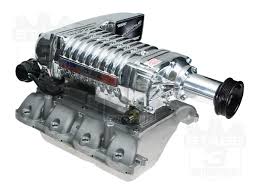
In an internal combustion engine, forced induction is where turbocharging or supercharging is used to increase the density of the intake air. Engines without forced induction are classified as naturally aspirated.
Operating principle
Overview
Forced induction is often used to increase the power output of an engine. This is achieved by compressing the intake air, to increase the mass of the air-fuel mixture present within the combustion chamber. A naturally aspirated engine is limited to a maximum intake air pressure equal to its surrounding atmosphere; however a forced induction engine produces "boost", whereby the air pressure is higher than the surrounding atmosphere. Since the density of air increases with pressure, this allows a greater mass of air to enter the combustion chamber.
Theoretically, the vapour power cycle analysis of the second law of thermodynamics would suggest that increasing the mean effective pressure within the combustion chamber would also increase the engine's thermal efficiency. However, considerations (such as cooling the combustion chamber, preventing engine knock and limiting NOx exhaust emissions) can mean that forced induction engines are not always more fuel efficient, particularly in the case of high-performance engines.
Diesel engines
Four-stroke diesel engines are well suited to forced induction, since the lack of fuel in the intake air means that higher compression ratios can be used without a risk of pre-ignition. Therefore, the use of turbochargers on diesel engines is relatively commonplace.
Two-stroke diesel engines have a significantly different operating principle to two-stroke petrol engines, and require some form of forced induction - generally a supercharger - in order to function.
High altitude uses
A reduced density of intake air is caused by the loss of atmospheric density seen with elevated altitudes. Therefore, an early use of forced induction was in aircraft engines. At 18000 ft, the air is at half the pressure of sea level, which means that an engine without forced induction would produce less than half the power at this altitude. Forced induction is used to artificially increase the density of the intake air, in order to reduce the loss of power at higher altitudes.
Systems that use a turbocharger to maintain an engine's sea-level power output are called "turbo-normalized" systems. Generally, a turbo-normalized system attempts to maintain a manifold pressure of 29.5 inHg.
Types of compressors
Main article: Turbocharger, Supercharger
The most commonly used forced-induction devices are turbochargers and superchargers. A turbocharger drives its compressor using a turbine powered by the flow of exhaust gases, whereas a supercharger is mechanically powered by the engine (usually using a belt from the engine's crankshaft).
Associated technologies
Intercooling is often used to reduce the temperature of the intake air after it is compressed. Another less commonly used method is water injection (or methanol injection).
References
References
- (23 September 2013). "How Forced Induction Works".
- Elisabeth H. Dorries. (December 2004). "TechOne: Automotive Engine Repair". Cengage Learning.
- Don Fuller. (December 1982). "Turbocharging - This time it's here to stay". Hearst Magazines.
- (2008). "Thermodynamics: An Engineering Approach". McGraw-Hill.
- Knuteson, Randy. "Boosting Your Knowledge of Turbocharging". Aircraft Maintenance Technology.
This article was imported from Wikipedia and is available under the Creative Commons Attribution-ShareAlike 4.0 License. Content has been adapted to SurfDoc format. Original contributors can be found on the article history page.
Ask Mako anything about Forced induction — get instant answers, deeper analysis, and related topics.
Research with MakoFree with your Surf account
Create a free account to save articles, ask Mako questions, and organize your research.
Sign up freeThis content may have been generated or modified by AI. CloudSurf Software LLC is not responsible for the accuracy, completeness, or reliability of AI-generated content. Always verify important information from primary sources.
Report