From Surf Wiki (app.surf) — the open knowledge base
Football Australia
Sports governing body
Sports governing body
- 2004 (current format) }}
Football Australia is the governing body of Soccer in Australia, headquartered in Sydney. Although the first governing body of the sport was founded in 1911, Football Australia in its current form was only established in 1961 as the Australian Soccer Federation. It was later reconstituted in 2003 as the Australian Soccer Association before adopting the name of Football Federation Australia in 2005. The name was changed to Football Australia in December 2020.
Football Australia oversees the men's, women's, youth, Paralympic, beach and futsal national teams in Australia, the national coaching programs and the state governing bodies for the sport. It sanctions professional, semi-professional and amateur soccer in Australia. Football Australia made the decision to leave the Oceania Football Confederation (OFC), for which it was a founding member, and become a member of the Asian Football Confederation (AFC) in 2006 and ASEAN Football Federation (AFF) in 2013.
History
In 1911 the Commonwealth Football Association was formed. This body was then superseded by the Australian Soccer Football Association, which was formed in 1921, with its headquarters in Sydney. The Australian Soccer Football Association operated for forty years, was given FIFA provisional membership in November 1954 and this was confirmed in June 1956. In 1960, the association disbanded after being suspended from FIFA for the poaching of players from overseas, and in 1961 the Australian Soccer Federation was formed as a potential successor governing body. This association was refused re-admittance to FIFA until outstanding fines had been paid, which was done in 1963, seeing the new national body admitted to FIFA.
Isolated from international football, Australia repeatedly applied to join the Asian Football Confederation in 1960, and in 1974 but were denied in all requests. Australia with New Zealand eventually formed the Oceania Football Federation (now Oceania Football Confederation) in 1966. Australia resigned as an OFC member in 1972 to pursue membership with the AFC, but they rejoined in 1978.
In 1995, the Australian Soccer Federation formally changed its name to Soccer Australia.
Soccer Australia had remained affiliated with the Football Association (FA) even after becoming a full member of FIFA. In 1997, Soccer Australia tried to nominate Australian head coach Terry Venables to replace former Victorian Soccer Federation chairman Sir David Hill-Wood as their representative on the FA Council, though this approach was rejected and Australian representation on the body was discontinued after his exit.
In 2003, following Australia's failure to qualify for the 2002 FIFA World Cup, allegations of fraud and mismanagement were levelled at Soccer Australia by elements within the Australian Press including the ABC. Soccer Australia commissioned an independent inquiry known as the Crawford Report as a result of the Australian Government's threat to withdraw funding to the sport. The Australian Government could not interfere as any political interference would have constituted a breach of FIFA Statutes. The findings of the report were critically analysed by the board of Soccer Australia who believed that the recommendations contained therein were not capable of being implemented. The report recommended, among other things, the reconstitution of the governing body with an interim board headed by prominent businessman Frank Lowy. Some three months after Lowy's appointment Soccer Australia was placed into liquidation and Australia Soccer Association (ASA) was created without encompassing the Crawford Report recommendations and effectively disenfranchising all parties who had an interest in Soccer Australia. The Australian Government provided approximately $15 million to the ASA.
On 1 January 2005, ASA renamed itself to Football Federation Australia (FFA), aligning with the general international usage of the word "football", in preference to "soccer", and to also distance itself from the failings of the old Soccer Australia. It coined the phrase "old soccer, new football" to emphasise this.
On 1 January 2006, Football Federation Australia moved from the OFC to the AFC. The move was unanimously endorsed by the AFC Executive Committee on 23 March 2005, and assented by the OFC on 17 April. The FIFA Executive Committee approved the move on 29 June, noting that "as all of the parties involved ... had agreed to the move, the case did not need to be discussed by the FIFA Congress", and was unanimously ratified by the AFC on 10 September. Football Australia hoped that the move would give Australia a fairer chance of qualifying for the FIFA World Cup and allow A-League clubs to compete in the AFC Champions League, thereby improving the standard of Australian football at both international and club levels with improved competition in the region.
In February 2008, the Football Federation Australia formally announced their intention to bid for the 2018 FIFA World Cup, 2022 FIFA World Cup and the 2015 AFC Asian Cup.{{cite news|url=http://www.theage.com.au/news/soccer/world-cup-bid/2008/02/23/1203467459939.html?page=fullpage|title=Let's land the World Cup|date=24 February 2008|access-date=25 February 2008
On 27 August 2013, Australia was admitted as a full member to the ASEAN Football Federation (AFF), after they formally joined as an invite affiliation to the regional body in 2006. However, its men's national team has not played the ASEAN Championship as part of the initial agreement.
On 29 January 2015, after the defeat of Iraq and the United Arab Emirates during the 2015 AFC Asian Cup, West Asian Football Federation members reportedly sought to remove Australia from the AFC primarily due to "Australia benefiting hugely from Asian involvement without giving much in return".
In November 2018 with numerous board positions coming to the end of their 3-year term, the bulk of the board of directors were replaced at an annual general meeting, as well as the departure of Steven Lowy as chair of the board, which he did in protest at major changes to the governance and voting structure in the overarching Football Australia Congress that elects the Board. His position was filled by Chris Nikou.
On 25 June 2020, Australia won the rights to co-host the 2023 FIFA Women's World Cup alongside New Zealand.
On 25 November 2020, the FFA Annual General Meeting (AGM) was held. The FFA voted to rename itself to Football Australia. The name change was seen as a way to unify the branding with the state member federations.
On 31 December 2020, it was announced that the A-League, W-League and Y-League would no longer be under the jurisdiction of Football Australia in an 'unbundling' process. The newly formed Australian Professional Leagues would take over the running of top-level football. As part of the unbundling, the Australian Professional Leagues would also obtain the exclusive right to use the intellectual property rights associated with the A-League brand. These competitions are now known as the A-League Men, A-League Women and A-League Youth.
On 15 May 2024, Australia won the rights to host the 2026 AFC Women's Asian Cup.https://www.espn.com/football/story/_/id/40151172/australia-wins-right-host-2026-women-asian-cup
On 11 February 2025, the second tier ‘Australian Championship’ was announced.
On 15 January 2026, Football Australia announced former Stan CEO Martin Kugeler as its new CEO, taking over from interim CEO Heather Garriock who took the role in May 2025, following the departure of James Johnson.
Administration
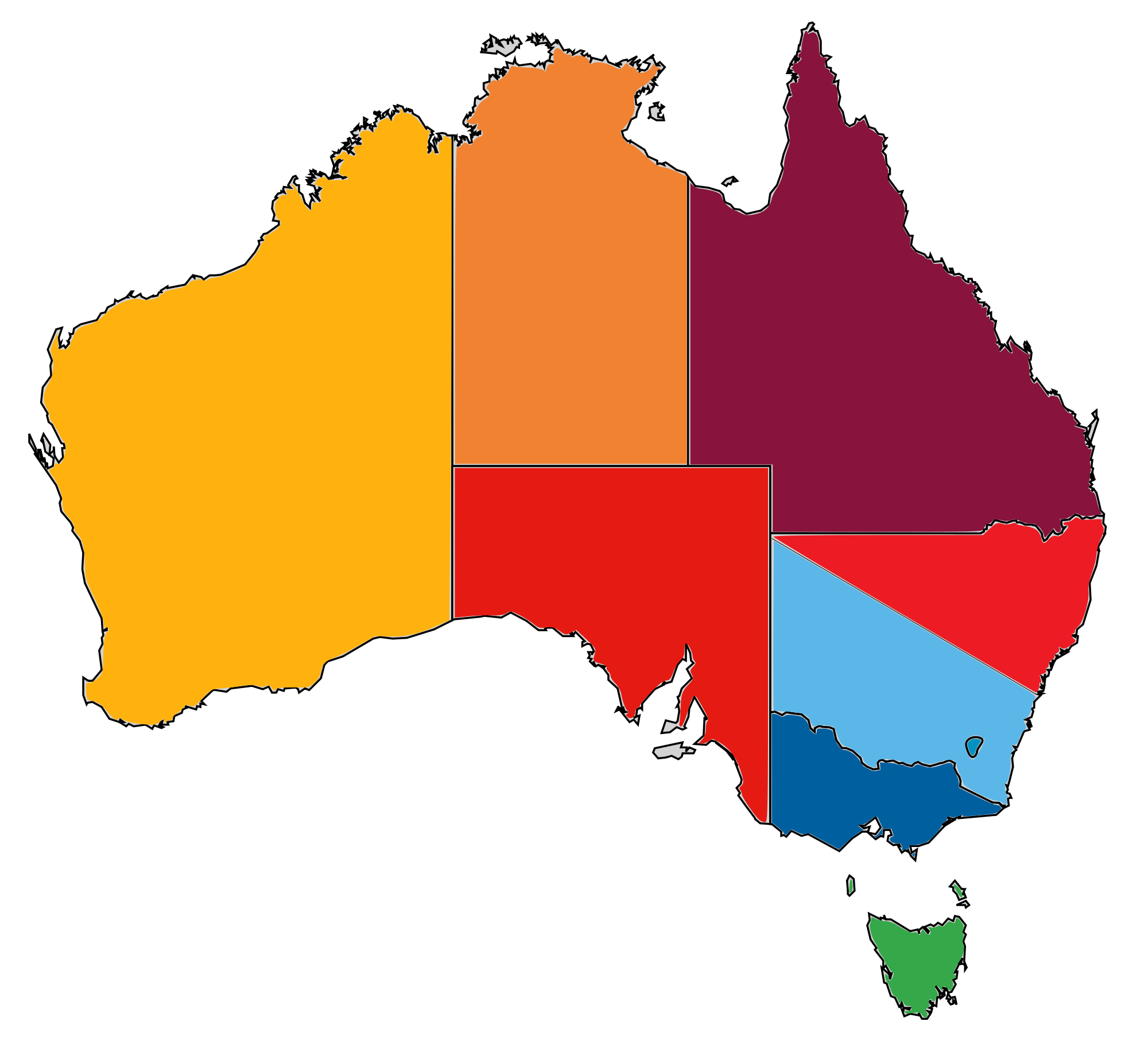
Soccer in Australia has used a federated model of national, states and territories governing bodies since the first state body was established in New South Wales in 1882. Local associations and regional zones were set up within the states and territories as soccer expanded and from time to time informal groups of clubs have augmented the formal structures. Today, there is one national governing body, nine state and territory member federations and over 100 district, regional and local zones and associations.
- Capital Football
- Northern NSW Football
- Football NSW
- Football Northern Territory
- Football Queensland
- Football South Australia
- Football Tasmania
- Football Victoria
- Football West
Corporate structure
Board of directors
| title=Football Australia Governance | url=https://www.footballaustralia.com.au/about/football-australia-governance | access-date=24 October 2024 | publisher=Football Australia | language=en}} | Position |
|---|---|---|---|---|---|
| Anter Isaac | Chair | ||||
| Jaclyn Lee-Joe | Deputy Chair | ||||
| Stuart Corbishley | Company Secretary | ||||
| Joseph Carrozzi | Director | ||||
| Sam Ciccarello | Director | ||||
| Catriona Noble | Director | ||||
| Spiro Pappas | Director |
Senior management team
| url=https://football-news24.com/a-league/james-johnson-is-the-new-president-of-the-football-federation-australia/ | title=James Johnson is the new President of the Football Federation Australia | date=6 December 2019 | work=Football News 24 | access-date=19 April 2020 | language=en-US}} | Position |
|---|---|---|---|---|---|---|
| Martin Kugeler | Chief Executive Officer | |||||
| Heather Garriock | Deputy Chief Executive Officer, Executive Director of Football | |||||
| George Houssos | Head of Corporate Affairs | |||||
| Gary Moretti | Head of National Teams | |||||
| Peter Giurissevich | Interim General Counsel | |||||
| Vacant | Chief Financial Officer | |||||
| Annette Delaney | Interim Chief People Officer | |||||
| Vacant | Head of People and Culture | |||||
| Sarah Walsh | Head of Community, Women's Football and Football Development, Head of AFC Women’s Asian Cup™ 2026 Office | |||||
| Vacant | Head of Marketing, Communications, Corporate Affairs | |||||
| Tom Rischbieth | Head of Commercial and Events, Chief Revenue Officer | |||||
| Paul Suters | Chief Technology Officer | |||||
| Vacant | Head of Member Federation Relations and Community | |||||
| Vacant | Head of Professional Football & Competitions | |||||
| Chris Burke | Governance Advisor | |||||
| Nathan Magill | Head of Referees |
Team staff
| title=DOWNLOADS: Football Australia Constitution | url=https://www.the-afc.com/afc-home/member-associations/australia/football-federation-australia-limited/ | access-date=21 August 2020 | website=the-afc.com | publisher=Asian Football Confederation | language=en-GB}} | Position |
|---|---|---|---|---|---|---|
| Anter Isaac | Chairman | |||||
| Vacant | General Secretary | |||||
| Trevor Morgan | Technical Director | |||||
| Tony Popovic | Men's national team head coach | |||||
| Joe Montemurro | Women's national team head coach | |||||
| Mathew Cheeseman | Referee Coordinator |
National Indigenous Advisory Group
In November 2021, Football Australia created the inaugural National Indigenous Advisory Group (NIAG), an advisory body NIAG is an advisory body for Football Australia, comprising 9 members of First Nations communities.
The inaugural members of the group are drawn from all levels of football as well as media, academia, and government: Frank Farina OAM, Karen Menzies (the first Indigenous Matilda), Tanya Oxtoby, Kyah Simon, Jade North (former Socceroos defender), Courtney Hagan, Kenny Bedford, Selina Holtze, Professor John Maynard, Narelda Jacobs, and Football Australia's Head of Women's Football, Sarah Walsh. North and Walsh are co-chairs of the group.
The initial focus of NIAG is on supporting and retaining First Nations players and other staff involved in the game, reviewing pathways and programs to football that impact social outcomes, fostering strategic partnerships, as well as developing employment strategies and the organisation's reconciliation action plan (RAP).
Competitions
Main article: Australian soccer league system
Football Australia organises several national competitions, with state-based competitions organised by the respective state governing soccer bodies.
- A-League Men (ceased ownership of the competition in July 2021)
- Australia Cup
- Australian Championship
- National Premier Leagues
- A-League Women, formerly W-League (ceased ownership of the competition in July 2019)
- Women's Australia Cup (a proposed competition due to start in 2024)
- A-League Youth, formerly Y-League (ceased ownership of the competition in July 2019)
- FFA State Institute Challenge
- F-League
References
References
- "Who We Are".
- (16 April 1914). "Football – Commonwealth Association". The Brisbane Courier.
- "Timeline of Australian Football". migrationheritage.nsw.gov.au.
- Roy Hay, Bill Murray. (2014). "A History of Football in Australia: A Game of Two Halves". Hardie Grant Books.
- (11 June 1956). "Come back in 2 years, says FIFA". [[The Straits Times]].
- (8 August 1960). "AFC turns down an application by Australia". [[The Straits Times]].
- (15 September 1974). "AFC turn down Aussie application". [[The Straits Times]].
- "History". oceaniafootball.com.
- link. (* oceaniafootball.com)
- (1 March 1976). "Oceania admit Taiwan and Aussies quit". [[The Straits Times]].
- (9 July 1997). "Hill quizzes FA over El Tel; Council don't want Venables". Illawarra Mercury.
- (18 July 1997). "Venables, the blond Bondi Beach bum, is making big waves with the Socceroos". Evening Standard.
- Curry, Steve. (6 July 1997). "Prodigal is set to rejoin the FA fold". The Sunday Telegraph.
- (December 2023). "The World Today – Soccer Australia reforms".
- "Soccer Australia officially canned".
- (17 December 2004). "Soccer's Australian name change". The Age.
- (29 June 2005). "Other executive decisions". FIFA.
- "FIFA approves Australia move". FIFA.
- (11 September 2005). "Put Asian football first: Bin Hammam". AFC Asian Football Confederation.
- (16 June 2005). "Australia gets President's blessing to join AFC in 2006". Australian Broadcasting Corporation.
- Smithies, Tom. (23 February 2008). "Lowy's vision for soccer". [[The Daily Telegraph (Sydney).
- (12 June 2010). "Australia to focus on 2022 Bid". [[FIFA]].
- "FFA receive A$45m for World Cup bid". Sport Business.
- "Australia joins ASEAN family". theworldgame.sbs.com.au.
- Hassett, Sebastian. (29 January 2015). "Angry Gulf nations leading charge to kick Australia out of Asian Football Confederation". [[The Sydney Morning Herald]].
- (17 August 2018). "Steven Lowy to quit as Football Federation Australia leader". [[Associated Press]].
- (19 November 2018). "A-League expansion first order of business for new Football Australia chair Nikou". SBS News.
- Wrack, Suzanne. (25 June 2020). "Australia and New Zealand win race to host Women's World Cup in 2023". The Guardian.
- Chadwick, Justin. (25 November 2020). "Football Australia forecast $7.3m loss". ftbl.com.au.
- (25 November 2020). "FFA rebranding to Football Australia 'won't cost a cent' as it prepares for $7.3M loss". [[The World Game]].
- (31 December 2020). "Australian Professional Leagues to be unbundled from Football Australia". www.a-league.com.au.
- (31 December 2020). "A-League and W-League unbundle from Football Australia in 'historic moment' for game". The Guardian.
- (31 December 2020). "Australian Professional Leagues to be unbundled from Football Australia".
- (28 September 2021). "The W-League is no more — say hello to A-League Men and A-League Women". ABC News.
- (2025-02-12). "Football Australia unveils the "Australian Championship" {{!}} Football Australia".
- (2026-01-15). "A New Era for Football Australia - Martin Kugeler Appointed New CEO {{!}} Football Australia".
- Rugari, Vince. (2026-01-15). "‘Rare combination’: Football Australia picks former Stan boss as new chief executive".
- "Football Australia Governance". Football Australia.
- (6 December 2019). "James Johnson is the new President of the Football Federation Australia". Football News 24.
- "Member Association – Australia". Fédération Internationale de Football Association.
- (1 May 2025). "Executive Leadership Team - Football Australia". Football Australia.
- "DOWNLOADS: Football Australia Constitution". Asian Football Confederation.
- (19 August 2020). "Trevor Morgan appointed National Technical Director, Ron Smith takes role as Technical Consultant".
- (2024-09-23). "Football Australia appoints Tony Popovic as Head Coach of the Subway Socceroos {{!}} Socceroos".
- (2025-06-01). "Joe Montemurro to coach Matildas after 10-month search to replace Tony Gustavsson". ABC News.
- Cloos, Teisha. (10 November 2021). "Football Australia Establishes National Indigenous Advisory Group".
- (9 November 2021). "National Indigenous Advisory Group".
- Lewis, Samantha. (24 November 2021). "Meet Karen Menzies, Australia's first Indigenous Matilda". [[Australian Broadcasting Corporation]].
- Lewis, Samantha. (25 November 2021). "How Indigenous Matildas star Kyah Simon is using her voice to fight racism". [[Australian Broadcasting Corporation]].
- Monteverde, Marco. (9 November 2021). "Group to give First Nations people a say".
- Rugari, Vince. (8 November 2021). "'It's groundbreaking': Football is finally getting serious about Indigenous Australia".
- (12 March 2025). "Football Australia unveils the "Australian Championship"".
- (2 March 2023). "Football Australia opens expressions of interest for National Second Tier Men's Competition". ABC News.
- (10 March 2023). "Football Australia to launch Women's Australia Cup in 2024 as part of Women's World Cup legacy". ABC News.
This article was imported from Wikipedia and is available under the Creative Commons Attribution-ShareAlike 4.0 License. Content has been adapted to SurfDoc format. Original contributors can be found on the article history page.
Ask Mako anything about Football Australia — get instant answers, deeper analysis, and related topics.
Research with MakoFree with your Surf account
Create a free account to save articles, ask Mako questions, and organize your research.
Sign up freeThis content may have been generated or modified by AI. CloudSurf Software LLC is not responsible for the accuracy, completeness, or reliability of AI-generated content. Always verify important information from primary sources.
Report