From Surf Wiki (app.surf) — the open knowledge base
Football at the 1936 Summer Olympics

| Field | Value |
|---|---|
| tourney_name | Men's Olympic Football Tournament |
| year | 1936 |
| size | 150px |
| country | Germany |
| dates | 3–15 August 1936 |
| num_teams | 16 |
| confederations | 4 |
| venues | 4 |
| cities | 1 |
| champion_other | |
| count | 1 |
| second_other | |
| third_other | |
| fourth_other | |
| matches | 16 |
| goals | 78 |
| attendance | 507469 |
| top_scorer | ITA Annibale Frossi (7 goals) |
| prevseason | 1928 |
| nextseason | 1948 |
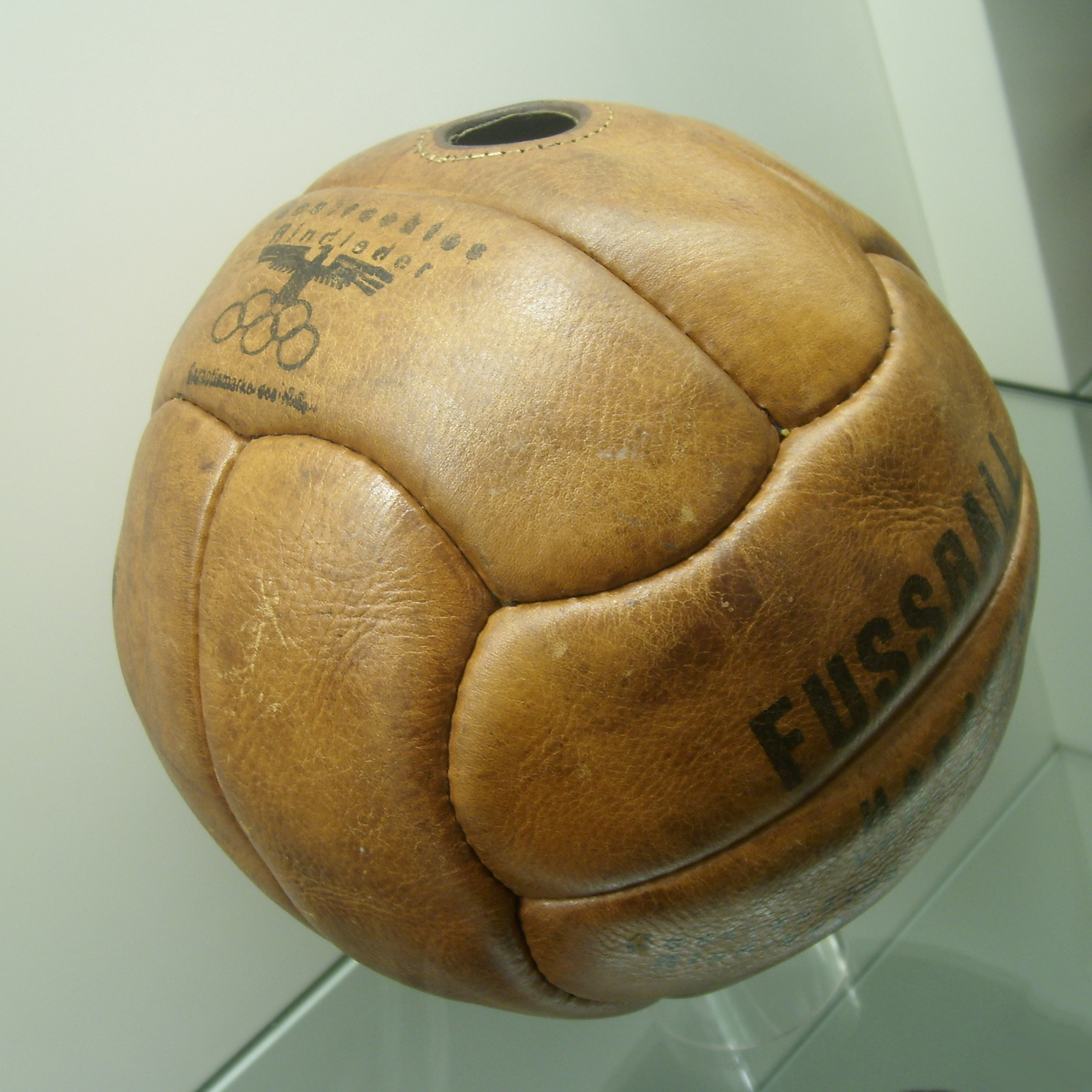
The 1936 Summer Olympic Games, hosted by Germany, were the first to feature a football tournament since the creation of the World Cup by FIFA in 1930. Football was not featured in the 1932 Olympics due to a dispute between FIFA and the International Olympic Committee regarding whether participation should be restricted to professional or amateur players. The International Olympic Committee felt that only amateur players should be allowed to compete, while FIFA argued that professional athletes should be included. Inevitability, without FIFAs involvement, the tournament return to amateur players only. Additionally, FIFA expressed concern that if a football tournament were included in the Olympic Games, it would downplay the importance of their newly created World Cup. The tournament was structured as a standard single-elimination bracket and featured sixteen participating countries. The competitors included Austria, China, Egypt, Finland, Germany, Great Britain, Hungary, Italy, Japan, Luxembourg, Norway, Peru, Poland, Sweden, Turkey, and the United States.
Controversies
Despite the tensions caused by the fact that the Hitler Regime was sponsoring the Berlin Olympics, many teams still chose to go. It was decided that it would be purely a sporting event, with no politics involved. However, the Dutch Football Federation (KNVB), did decide to stay home in 1936. This was not because of any political controversies, but rather due to the fact that the International Olympic Committee’s rules were too nonprofessional, compared to what they were used to. France also decided not to send a football team to the Berlin Olympics, due to the disputes of allowing professional players in the Olympic Football Games.
Other countries debated on whether or not to boycott the 1936 Olympics. Avery Brundage, president of the IOC at that time, had urged the United States to participate in the games, despite many questioning the morality of attending games hosted by the Nazi Regime. In the end, Brundage would argue that due to promises of non-discrimination from the hosts, that America and other countries should go.
Venues
| Berlin | {{Location map+ | Germany Berlin | float= | width=300 | caption= | places= | Berlin | Berlin | Berlin |
|---|---|---|---|---|---|---|---|---|---|
| Olympic Stadium | Gesundbrunnen Stadium | ||||||||
| Capacity: 100,000 | Capacity: 35,239 | ||||||||
| [[File:Bundesarchiv Bild 183-R82532, Berlin, Olympia-Stadion (Luftaufnahme).jpg | 150px]] | [[File:Hertha BSC Plumpe.jpg | 150px]] | ||||||
| Post Stadium | Mommsen Stadium | ||||||||
| Capacity: 45,000 | Capacity: 15,005 | ||||||||
| [[File:Poststadion main stand far.jpg | 150px]] | [[File:WestendMommsenstadion-4.JPG | 150px]] |
Squads
Medalists
First Round
The Italians, who had emerged victorious over the Austrians at the 1934 World Cup now found the Olympic tournament to be a completely different landscape, as it featured several differences in structure and rules compared to the World Cup. Italy's national team, The Azzurri included players such as Alfredo Foni, Pietro Rava and Ugo Locatelli, who would all play in their World Cup victory in Paris two years later. Italy's progression through the first round was partly due to two incidents: the first when their bespectacled forward Frossi scored, the second when Weingartner, the German referee, was literally restrained from sending off Archille Piccini after fouling two Americans. Italian players held both his arms and covered his mouth in protest of the ejection. Ultimately, Piccini stayed on the pitch, and Italy won. The same day, Norway eliminated Turkey 4-0. This was something more than Sweden managed in their tie with Japan the next day in Berlin. With a score of 2-0 in the first 45 minutes, their loss was recorded by the Swedish commentator, Sven Jerring, calling "Japanese, Japanese, Japanese, Japanese all over" (Japaner, japaner, japaner, överallt japaner) during the final minutes as the Japanese defenders held out to emerge as the winners 3–2 with one incident of Takeshi Kamo leaving the match with an injury. This marked the first time an Asian team had participated in either the World Cup or Olympic Games football competition, and the first time an Asian team emerged victorious. The same day, Germany beat Luxembourg by a large margin of 9-0. The following day, on August 5th, Poland defeated Hungary 3-0, and Egypt was eliminated by Austria 3-1. On August 6th, Peru won against Finland with a score of 7-3, and China lost to Great Britain 2-0.{{football box
Brustad Kvammen
Ukon Matsunaga
Simetsreiter Gauchel Elbern
Wodarz
Laudon
Villanueva Grönlund Larvo
Finch
Quarter-finals

Italy defeated Japan after Pozzo's decision to include Biagi, who scored goals. The same day at the Poststadion, Berlin before a crowd that included Goebbels, Göring, Hess and Hitler, Germany were knocked out 2–0 by Norway. Goebbels wrote: "The Führer is very excited, I also can barely contain myself. A real bath of nerves." Norway went on to draw with Italy in the first round of the 1938 FIFA World Cup. Germany lost 2–0 and Hitler, who had never seen a football match before, and had originally planned to watch the rowing, left early in a huff.
The following day at the Hertha Platz, Austria played Peru. The match was highly contested, and the game went into overtime when the Peruvians drew with the Austrians after being two goals behind. Peru 'scored' five goals during extra time, of which three were disallowed by the referee, and won 4–2. The Austrians demanded a rematch on the grounds that Peruvian fans had stormed the field, and because the field did not meet the requirements for a football game. Austria further claimed that the Peruvian players had manhandled the Austrian players and that spectators, one holding a revolver, had "swarmed down on the field." Peru was notified of this situation, and they attempted to go to the assigned meeting but were delayed by a German parade. In the end, the Peruvian defense was never heard, and the Olympic Committee and FIFA sided with the Austrians. The rematch was scheduled to be replayed behind closed doors on 10 August, and later rescheduled to be taken on 11 August.
As a sign of protest against these actions, which the Peruvians deemed as insulting and discriminatory, the complete Olympic delegations of Peru and Colombia left Germany. Argentina, Chile, Uruguay, and Mexico expressed their solidarity with Peru. Michael Dasso, a member of the Peruvian Olympic Committee, stated: "We've no faith in European athletics. We have come here and found a bunch of merchants." The game was awarded to Austria by default. In Peru, angry crowds protested against the decisions of the Olympic Committee by tearing down an Olympic flag, throwing stones at the German consulate, refusing to load German vessels in the docks of Callao, and listening to inflammatory speeches, which included President Oscar Benavides Larrea's mention of "the crafty Berlin decision." To this day, it is not known with certainty what exactly happened at Germany, but it is popularly believed that Adolf Hitler and the Nazi authorities might have had some involvement in this situation.
In the last of the quarter-finals Poland, assisted by their forward, Hubert Gad, played out a nine-goal party to defeat the British side; at one time they were 5–1 to the better. The Casual's Bernard Joy scored two as Britain fought back gamely but they ran out of time. Prior to the Games Daniel Pettit received a letter from the Football Association which dealt mostly with the uniform he would wear. As he explained to the academic Rachel Cutler there was a handwritten PS that said: 'As there is a month to go before we leave for Berlin kindly take some exercise.' Pettit ran around his local park.
Biagi Cappelli
Wodarz Piec Shearer Joy
Villanueva Fernández Steinmetz Walkover for Austria.
Semi-finals
The 1936 finals began on August 10th, 1936, with about 95,000 people in attendance. An Austrian report gave the attendance as 90,000. Alfonso Negro scored the initial first goal for Italy, while Norway tied the game with a goal by Brustad (Number 57). Italy takes the win in their match against Norway, with Frossi (Number 15) credited on official reports for the final goal. The next semi-finals match, Austria vs Poland, ended 3-1, with Austria winning the match. Austria scored three goals, firstly by K. Kainberger (Number 17), Werginz (Number 54), and Mandl (Number 88), scoring the winning goal. Other reports credit the last goal to Laudon. Poland scored with 1 goal by Brustad (Number 57).{{football box Frossi
Laudon Mandl
Bronze medal match
Peterek
Final (gold medal match)
In the final, Italy overcame Austria in a match refereed by Peco Bauwens. The defenses of both amateur teams created a deadlock in the first half of the match. Midway through the second half, Frossi scored first for the Azzurri. Kain Berger equalized for Austria, ten minutes before the end of regulation time. This is debated however, most modern sources crediting the Austrian goal to K. Kainberger, but contemporary Austrian newspapers listed Fuchsberger, with Kainberger providing the assist. Frossi got the winning goal for Italy just as extra time got underway and, failing to catch up in the remaining minutes, the Austrians lost. This win gave Italy its very first Olympic Football win in its first Olympic Football tourament.
| {{Football kit | pattern_la =_Italia1927-1943h | pattern_b = _colour vneck | pattern_ra =_Italia1927-1943h | pattern_sh =_Italiah | pattern_so =_Italia1927-1943h | leftarm = 426DA5 | body = 426DA5 | rightarm = 426DA5 | shorts = ffffff | socks = 000000 | title = Italy | {{Football kit | pattern_la = | pattern_b = _collar | pattern_ra = | pattern_sh = | pattern_so = _2_white_stripes | leftarm = ffffff | body = ffffff | rightarm = ffffff | shorts = 000000 | socks = 000000 | title = Austria |
|---|
| ITA Vittorio Pozzo |
|---|
| ENG Jimmy Hogan |
|---|
|}
Bracket
|4 August – Berlin| **** |9| |0 |3 August – Berlin| **** |4| |0 |3 August – Berlin| **** |1| |0 |4 August – Berlin| **** |3| |2 |6 August – Berlin| **** |7| |3 |5 August – Berlin| **** |3| |1 |5 August – Berlin| **** |3| |0 |6 August – Berlin| **** |2||0 |7 August – Berlin| |0 | **** |2 |7 August – Berlin| **** |8| |0 |8 August – Berlin| ||****|w/o |8 August – Berlin| **** |5| |4 |10 August – Berlin| |1 | ** **|2 |11 August – Berlin| **** |3| |1 |15 August – Berlin| ** **|2| |1 |13 August – Berlin| **** |3| |2|
Goalscorers
;7 goals
- ITA Annibale Frossi (Italy)
;6 goals
- PER Teodoro Fernández (Peru)
;5 goals
- NOR Arne Brustad (Norway)
- POL Gerard Wodarz (Poland)
;4 goals
- ITA Carlo Biagi (Italy)
- PER Alejandro Villanueva (Peru)
- POL Hubert Gad (Poland)
;3 goals
- AUT Klement Steinmetz (Austria)
- GER Wilhelm Simetsreiter (Germany)
- GER Adolf Urban (Germany)
;2 goals
- AUT Karl Kainberger (Austria)
- AUT Adolf Laudon (Austria)
- GER Josef Gauchel (Germany)
- GBR Bernard Joy (Great Britain)
- NOR Magnar Isaksen (Norway)
- NOR Alf Martinsen (Norway)
- SWE Erik Persson (Sweden)
;1 goal
- AUT Franz Mandl (Austria)
- AUT Walter Werginz (Austria)
- EGY Abdel-Karim Sakr (Egypt)
- FIN Ernst Grönlund (Finland)
- FIN William Kanerva (Finland)
- FIN Pentti Larvo (Finland)
- GER Franz Elbern (Germany)
- GBR Bertram Clements (Great Britain)
- GBR John Dodds (Great Britain)
- GBR Lester Finch (Great Britain)
- GBR Edgar Shearer (Great Britain)
- ITA Giulio Cappelli (Italy)
- ITA Alfonso Negro (Italy)
- JPN Taizo Kawamoto (Japan)
- JPN Akira Matsunaga (Japan)
- JPN Tokutaro Ukon (Japan)
- NOR Reidar Kvammen (Norway)
- PER Jorge Alcalde (Peru)
- POL Teodor Peterek (Poland)
- POL Ryszard Piec (Poland)
References
References
- "Football at the 1936 Berlin Summer Games".
- "FIFA describes each Olympic Football tournament".
- (2003). "The Nazi Olympics: sport, politics, and appeasement in the 1930s". University of Illinois Press.
- Marvin, Carolyn. (1982). "Avery Brundage and American Participation in the 1936 Olympic Games". Journal of American Studies.
- "The Movement to Boycott the Berlin Olympics of 1936 {{!}} Holocaust Encyclopedia". Holocaust Encyclopedia.
- Korr, Charles P.. (1984). "Review of The Games Must Go On: Avery Brundage and the Olympic Movement". The American Historical Review.
- "Olympic Games : Football Facts - Knowledge Quest - by Snehal".
- "Olympic Football Tournament 1936 (Game details)".
- This goal belongs to [[Taizo Kawamoto]] according to [http://www.japannationalfootballteam.com/en/1936/0804.html this website] {{webarchive. link. (19 March 2016)
- English football statistics said that in this game played Daniel Pettit (instead of John Sutcliffe)
- "Hitler, huffs and Kanu's 'beautiful moment' - Special reports - guardian.co.uk".
- Doyle, Paul. (24 November 2011). "The forgotten story of … football, farce and fascism at the 1936 Olympics - Paul Doyle".
- "Las épocas doradas del fútbol peruano y las Olimpiadas de 1936". Beta.upc.edu.pe.
- (24 August 1936). "Sport: Olympic Games (Concl'd)".
- (4 July 2007). "BERLIN, 1936...¡ITALIA CAMPIONE!".
- (24 August 1936). "Sport: Olympic Games (Concl'd)".
- "Football Tournament 1936 Olympiad".
- Velasco, Santiago. "VI Olympic Football Tournament (Berlin 1936) Game Details".
This article was imported from Wikipedia and is available under the Creative Commons Attribution-ShareAlike 4.0 License. Content has been adapted to SurfDoc format. Original contributors can be found on the article history page.
Ask Mako anything about Football at the 1936 Summer Olympics — get instant answers, deeper analysis, and related topics.
Research with MakoFree with your Surf account
Create a free account to save articles, ask Mako questions, and organize your research.
Sign up freeThis content may have been generated or modified by AI. CloudSurf Software LLC is not responsible for the accuracy, completeness, or reliability of AI-generated content. Always verify important information from primary sources.
Report