From Surf Wiki (app.surf) — the open knowledge base
Folding carton
Type of paperboard packaging
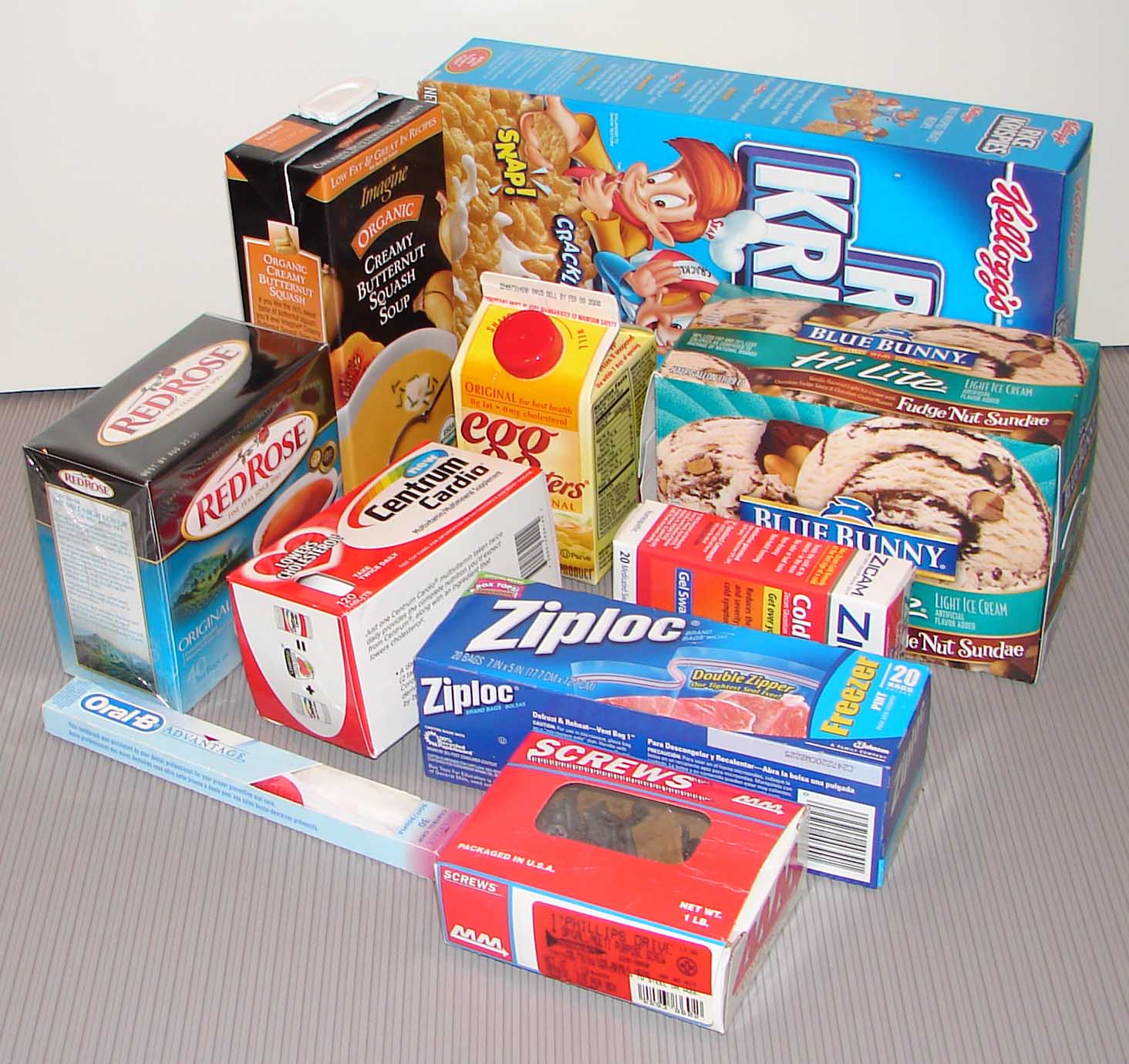
Type of paperboard packaging
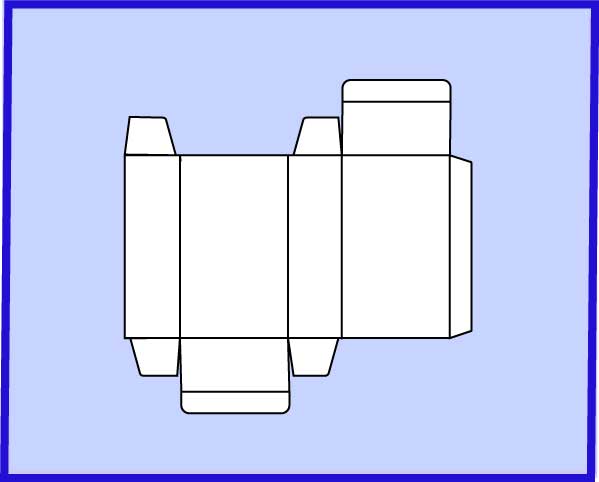
The folding carton created the packaging industry as it is known today, beginning in the late 19th century. The process involves folding carton made of paperboard that is printed, laminated, cut, then folded and glued. The cartons are shipped flat to a packager, which has its own machinery to fold the carton into its final shape as a container for a product.{{Citation | editor-last = Yam | editor-first = K L | publication-date = 2010
The folding carton industry does not figure importantly in world trade, although the United States exports considerable quantities of canned foods and other products in folding cartons. The volume of folding carton exports shipped flat is relatively low, amounting to less than 0.5 percent of U.S. production.
Invention and development
In the 1840s, cartons were made by hand and held together with tacks and string, and used only for expensive items (such as jewelry). Although Charles Henry Foyle is described by some as the "inventor" of the paper carton, mass production of the cartons was invented, partly by accident, at the Robert Gair Company in Brooklyn, New York. Machinery at the end of the press had been set up carelessly by a pressman, and machinery cut through the material. This ruined the press but gave them an idea: printing and cutting could be done with one machine. Previously, cutting of printed cardboard had been done manually. From the mistake in 1879, Gair developed a process for mass production of boxes. In 1897, the National Biscuit Company (Nabisco) became the first large company to adopt the new cartons, for Uneeda Biscuits.

Other manufacturers soon followed. With inexpensive packaging now even common items could be placed in a showy carton and each carton became its own advertisement. The product was also protected, and the contents had a longer shelf life. This trend was to continue with force, through the 20th century. This could be seen as a contributing factor in the so-called 'throwaway' culture of America. The environmental impact of product packaging has gained attention from consumers and businesses alike, and this awareness has created a steady trend since the mid to late 1990s, on the part of manufacturers, to use recycled material and/or reduce overall materials usage.
Product characteristics
Folding cartons was an estimated $141.1 billion industry in 2024. Typically, cylinder board made from pulp from reprocessed scrap paper is used for most packages. Cartons for food are made from a higher grade and lighter solid sulfate board with plastic coating. Because of the limitations of cutting machinery, the thickness of the board is limited to 0.81 mm (0.032 in), and folding cartons are generally limited to holding a few pounds or kilograms of material. Hundreds of design options are available.{{Cite book
Folding cartons are frequently tall and wide but very thin. For example a typical breakfast cereal box has a poor material to volume ratio and is very inefficient; it is wasteful and can be considered overpackaging. Package designers are aware of this opportunity to save packaging costs, materials, and waste but marketing and merchandising people want the "billboard" style package for advertising and graphics. An optimized folding carton would use much less paperboard for the same volume of cereal, but with reduced room for graphics.{{cite journal https://www.proquest.com/openview/d6c3b4c65fccd6512f3b55eb005fdd7b/1.pdf?pq-origsite=gscholar&cbl=182
Cartons need to be compatible with the expected packaging machinery; cartoner, conveyors, etc. Some factors can be simulated;{{citation | access-date = 12 June 2024 | access-date = 12 June 2024
Opening
Opening a carton can be accomplished by opening an access flap, cutting, use of tear tapes or perforations.{{cite journal
Security features for folding cartons
With the general growth of the counterfeiting trends, the folding cartons, used widely in industries like cosmetics, pharmaceuticals, food and beverages, and electronics, are increasingly incorporating advanced security features. Protected QR codes enhance traditional QR codes with additional copy-detection layer to protect against counterfeiting, tampering, and unauthorized printing of cartons that can be used to package dangerous counterfeit products. Secure QR code generator introduce high-grade security features to conventional folding carton applications, ensuring product integrity and authenticity for wider range of brand owners.
References
- Hanlon, Kelsey, and Forcinio; Handbook of Package Engineering (CRC Press, 1998)
- Soroka, W, "Fundamentals of Packaging Technology", IoPP, 2002,
- Yam, K. L., "Encyclopedia of Packaging Technology", John Wiley & Sons, 2009,
- PPP-B-566E, FEDERAL SPECIFICATION: BOXES, FOLDING, PAPERBOARD (02 AUG 1974)
References
- Conference, National Food Processors Association (U S. ). (1984). "Packaging Alternatives for Food Processors: Proceedings of the National Food Processors Association Conference, April 25–26, 1984, Washington, D.C.". Food Processors Institute.
- Sand, Claire. (2010). "The Packaging Value Chain". DEStech Publications, Inc.
- Yam, Kit L.. (2010-01-05). "The Wiley Encyclopedia of Packaging Technology". John Wiley & Sons.
- (2014-10-21). "FUNDAMENTALS OF PACKAGING TECHNOLOGY". PHI Learning Pvt. Ltd..
- Pidl, R.. (2022). "The Effect of Side Wall Cutout Sizes on Corrugated Box Compression Strength". Applied Sciences.
- (1970). "U.S. Industrial Outlook". Business and Defense Services Administration.
- Hanlon, Joseph F.. (1984). "Handbook of Package Engineering". McGraw-Hill.
- (1958). "Barron's National Business and Financial Weekly". Barron's.
- Cahn, William L.. "Out of the cracker barrel; the Nabisco story, from animal crackers to zuzus".
- (2025). "Folding Carton Packaging Market (2025 - 2030)".
This article was imported from Wikipedia and is available under the Creative Commons Attribution-ShareAlike 4.0 License. Content has been adapted to SurfDoc format. Original contributors can be found on the article history page.
Ask Mako anything about Folding carton — get instant answers, deeper analysis, and related topics.
Research with MakoFree with your Surf account
Create a free account to save articles, ask Mako questions, and organize your research.
Sign up freeThis content may have been generated or modified by AI. CloudSurf Software LLC is not responsible for the accuracy, completeness, or reliability of AI-generated content. Always verify important information from primary sources.
Report