From Surf Wiki (app.surf) — the open knowledge base
Fluorescent-lamp formats
Types of lamp

Types of lamp
Since their introduction as a commercial product in 1939, many different types of fluorescent lamp have been introduced. Systematic nomenclature identifies mass-market lamps as to overall shape, power rating, length, color, and other electrical and illuminating characteristics.
Tube designations
In the United States and Canada, lamps are typically identified by a code such as FxxTyy, where F is for fluorescent, and the first number (xx) indicates either the power in watts for bi-pin lamps, length in inches for single-pin and high-output lamps, and for circular bulbs, the diameter of the circular bulb. The T indicates that the shape of the bulb is tubular, and the last number (yy) is the diameter in eighths of an inch (sometimes in millimeters, rounded up to the nearest millimeter). Typical diameters are T12 or T38 (1+1/2 in) for larger, often less efficient lamps, T8 or T26 (1 in) for smaller and often energy-saving lamps, and T5 or T16 (5/8 in) for very small lamps, which may even operate from a battery-powered device.
| Designation | Tube diameter | Extra | (in) | (mm) | Socket | Notes |
|---|---|---|---|---|---|---|
| T2 | approx. | 7 | WP4.5×8.5d | |||
| T4 | 12.7 | G5 bi-pin | Slim lamps. Power ratings and lengths not standardized (and not the same) between different manufacturers | |||
| T5 | T16 | 15.9 | ||||
| T6 | 19.05 | |||||
| T8 | T26 | 1 | 25.4 | One of the first diameters of fluorescent lamps, with the 15W T8 and 30W T8 having been introduced in 1938. The European energy-saving krypton T8 lamps were introduced by Thorn EMI during the 1970s. The North American energy-saving argon T8 lamps weren't introduced until the 1980s. | ||
| T9 | T29 | 28.6 | ||||
| T10 | 31.75 | |||||
| T12 | T38 | 38.1 | One of the first diameters of fluorescent lamps, with the 15W T12 and 20W T12 having been introduced in 1938. These aren't as efficient as newer lamp options. | |||
| T17 | 54 | G20 Mogul bi-pin | Large size for 90W T17 (preheat) and 40W T17 (instant start) | |||
| PG17 | 54 | R17d Recessed double contact | General Electric's Power Groove tubes |
For T2–T12 and T17, the number indicates the tube diameter in inches, e.g. T2 → in and T17 → in. Whereas for T16 and T26–T38, the number indicates the approximate tube diameter in millimeters.
Reflectors
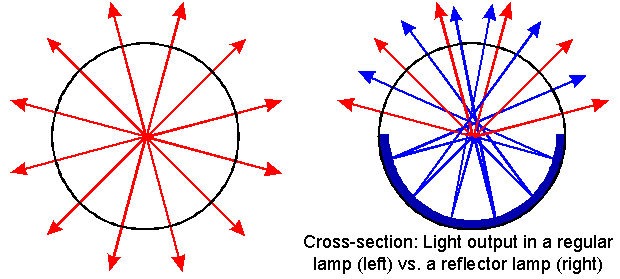
Some lamps have an internal opaque reflector. Coverage of the reflector ranges from 120° to 310° of the lamp's circumference.
Reflector lamps are used when light is only desired to be emitted in a single direction, or when an application requires the maximum amount of light. For example, these lamps can be used in tanning beds or in backlighting electronic displays. An internal reflector is more efficient than standard external reflectors. Another example is color matched aperture lights (with about 30° of opening) used in the food industry for robotic quality control inspection of cooked goods.
Aperture lamps have a clear break in the phosphor coating, typically of 30°, to concentrate light in one direction and provide higher brightness in the beam than can be achieved by uniform phosphor coatings. Aperture lamps include reflectors over the non-aperture area. Aperture lamps were commonly used in photocopiers in the 1960s and 1970s where a bank of fixed tubes was arranged to light up the image to be copied, but are rarely found nowadays. Aperture lamps can produce a concentrated beam of light suitable for edge-lit signs.
Single-pin lamps
Single-pin lamps (Also generically called "Slimline" in the United States) operate on an instant start ballast in the United States and Canada or on a series choke without a starter in 220-240V countries.
High-output/very high output lamps
High-output lamps are brighter and are driven at a higher electric current. They have a recessed double contact (R17d) base on each end, rather than a standard bi-pin base, which prevents them from being installed into the wrong fixture. Since about the early to mid-1950s to today, General Electric has developed and improved the Power Groove lamp. These lamps are recognizable by their large diameter (2+1/8 in) and grooved tube shape.
Colors
Colors using a calcium halophosphate formulation are usually indicated by WW for warm white, W for (neutral) white, CW for cool white, and D for the bluish daylight white.
Philips and Osram use numeric color codes for tri-phosphor and multi-phosphor colors. The first digit indicates the color rendering index (CRI) of the lamp. If the first digit on a lamp says 8, then the CRI of that lamp will be approximately 85. The last two digits indicate the color temperature of the lamp in kelvins (K). For example, if the last two digits on a lamp say 41, that lamp's color temperature will be 4100 K, which is a common tri-phosphor cool white fluorescent lamp.
BL is used for ultraviolet lamps commonly used in bug zappers. BLB is used for blacklight-blue lamps employing a Wood's glass envelope to filter out most visible light, commonly used in nightclubs. Other non-standard designations apply for plant lights or grow lights.
| Calcium halophosphate tubes | Japanese color code | Numeric color code | Alphabetic color code | Color | Approximate CRI | Color temperature (K) | Deluxe halophosphate tubes | Japanese color code | Numeric color code | Alphabetic color code | Color | Approximate CRI | Color temperature (K) | 700-series tubes (Calcium halophosphate and rare-earths tri-phosphor blend) | Numeric color code | Alphanumeric color code | Color | Approximate CRI | Color temperature (K) | 800-series rare-earth tri-phosphor tubes | Japanese Color Code | Numeric color code | Color | Approximate CRI | Color temperature (K) | 900-series deluxe rare-earth phosphors tubes | Numeric color code | Color | Approximate CRI | Color temperature (K) | Special purpose tubes | Numeric code | Alphabetic Code | Fluorescent | Notes |
|---|---|---|---|---|---|---|---|---|---|---|---|---|---|---|---|---|---|---|---|---|---|---|---|---|---|---|---|---|---|---|---|---|---|---|---|
| N/A | 29 | WW | Warm white | ≈52 | 3000 | ||||||||||||||||||||||||||||||
| WW | 35 | W | White | ≈56 | 3500 | ||||||||||||||||||||||||||||||
| W | 33 | CW | Cool White | ≈62 | 4000-4300 | ||||||||||||||||||||||||||||||
| N/A | 25 | N/A | Neutral/Universal White | ≈75 | 4000 | ||||||||||||||||||||||||||||||
| N | N/A | N/A | Natural Daylight | ≈70 | 5000 | ||||||||||||||||||||||||||||||
| D | 54 | D | Daylight | ≈75 | 6500 | ||||||||||||||||||||||||||||||
| L-EDL | 27 | N/A | Deluxe Extra Warm White | ≈95 | 2700 | ||||||||||||||||||||||||||||||
| N/A | 32 | WWX | Deluxe Warm White | ≈77 | 3000 | ||||||||||||||||||||||||||||||
| N/A | N/A | WX | Sylvania White Deluxe | ≈85 | 3500 | ||||||||||||||||||||||||||||||
| N/A | 79 | N | Natural | ≈90 | 3600 | ||||||||||||||||||||||||||||||
| N/A | 34 | N/A | Deluxe White | ≈85 | 3850 | ||||||||||||||||||||||||||||||
| W-SDL | 38 | CWX | Deluxe Cool White/ | ≈90 | 4000 | ||||||||||||||||||||||||||||||
| N/A | N/A | C41 | GE Cool White Utility (Enhanced CWX) | ≈87 | 4100 | ||||||||||||||||||||||||||||||
| N-SDL, N-EDL | N/A | C50/DSGN50 | GE Chroma 50/Philips Colortone 50/Sylvania Design 50 | ≈90-99 | 5000 | ||||||||||||||||||||||||||||||
| D-SDL, D-EDL | 55 | DX | Deluxe Daylight/Northlight/Colour Matching | ≈88-98 | 6500 | ||||||||||||||||||||||||||||||
| N/A | N/A | C75 | GE Chroma 75/Philips Colortone 75 | ≈92 | 7500 | ||||||||||||||||||||||||||||||
| 730 | SP30/D30/TL730 | Warm White | ≈75 | 3000 | |||||||||||||||||||||||||||||||
| 735 | SP35/D35/TL735 | Neutral White | ≈75 | 3500 | |||||||||||||||||||||||||||||||
| 741 | SP41/D41/TL741 | Cool White | ≈75 | 4100 | |||||||||||||||||||||||||||||||
| 750 | SP50/TL750 | Natural Daylight | ≈75 | 5000 | |||||||||||||||||||||||||||||||
| 765 | SP65/TL765 | Cool Daylight | ≈75 | 6500 | |||||||||||||||||||||||||||||||
| ELX | 825 | Extra Warm White | ≈85 | 2500 | |||||||||||||||||||||||||||||||
| ELR, ELC | 827, 828 | Warm White | ≈85 | 2700, 2800 | |||||||||||||||||||||||||||||||
| EX-L, EL, ELK | 830 | Warm White | ≈85 | 3000 | |||||||||||||||||||||||||||||||
| ELW | 832 | Warm White | ≈85 | 3200 | |||||||||||||||||||||||||||||||
| EX-WW, EWW | 835 | Neutral White | ≈85 | 3500 | |||||||||||||||||||||||||||||||
| EW38 | 838 | Neutral White | ≈85 | 3800 | |||||||||||||||||||||||||||||||
| EX-W, EW | 840, 841, 842 | Cool White | ≈85 | 4000, 4100, 4200 | |||||||||||||||||||||||||||||||
| EX-N, EN | 850 | Natural Daylight | ≈85 | 5000 | |||||||||||||||||||||||||||||||
| ENW, ENM, ENC | 852, 853 | Natural Daylight | ≈85 | 5200, 5300 | |||||||||||||||||||||||||||||||
| ENK | 855 | Natural Daylight | ≈85 | 5500 | |||||||||||||||||||||||||||||||
| ENX | 858 | Natural Daylight | ≈85 | 5800 | |||||||||||||||||||||||||||||||
| EDW | 862 | Cool Daylight | ≈85 | 6200 | |||||||||||||||||||||||||||||||
| EX-D, ED | 865, 867 | Cool Daylight | ≈85 | 6500, 6700 | |||||||||||||||||||||||||||||||
| ECW, EDK, EDC | 872, 874 | Cool Daylight | ≈85 | 7200, 7400 | |||||||||||||||||||||||||||||||
| EDF, EDX | 880 | Skywhite | ≈85 | 8000 | |||||||||||||||||||||||||||||||
| 930 | Warm white | ≈95 | 3000 | ||||||||||||||||||||||||||||||||
| 941 | Cool white | ≈95 | 4100 | ||||||||||||||||||||||||||||||||
| 950 | Natural Daylight | ≈98 | 5000 | ||||||||||||||||||||||||||||||||
| 965 | Cool daylight | ≈95 | 6500 | ||||||||||||||||||||||||||||||||
| 05 | N/A | Germicidal lamps | No phosphors used in these lamps at all, and the enveplope is made of fused quartz instead of glass. | ||||||||||||||||||||||||||||||||
| 08 | BLB | Black-Light Blue lamps | These lamps are similar to the regular black light lamps, except they use wood's glass as a filter to reduce the amount of visible light emitted. These lamps are used for fluorescence effects where less visible light is ideal. | ||||||||||||||||||||||||||||||||
| 09 | N/A | Sun-tanning lamps | These lamps produce wide or narrow band UV-B radiation | ||||||||||||||||||||||||||||||||
| 10 | BL | Black-Light lamps | Black light lamps give off long-wave UV-A radiation of around 350-400 nm. They are often used to attract insects to traps. Unlike black light blue lamps, these lamps do not use wood's glass. They use regular soda-lime glass and emit more visible light than BLB lamps. |
Common tube ratings
This section lists the more common tube ratings for general lighting. Many more tube ratings exist, often country-specific. The Nominal Length may not exactly match any measured dimension of the tube. For some tube sizes, the nominal length (in feet) is the required spacing between centers of the lighting fixtures to create a continuous run, so the tubes are a little shorter than the nominal length.
| Tube diameter in 1/8 in | Nominal length | Nominal power (W) | Lamp Code |
|---|---|---|---|
| T5 Miniature | 0.5 ft | 4 | F4T5 |
| T5 Miniature | 0.75 ft | 6 | F6T5 |
| T5 Miniature | 1 ft | 8 | F8T5 |
| T5 Miniature | 1.75 ft | 13 | F13T5 |
| T5/HE | 1.83 ft | 14 | F14T5 |
| T5/HE | 2.83 ft | 21 | F21T5 |
| T5/HE | 3.83 ft | 28 | F28T5 |
| T5/HE | 4.83 ft | 35 | F35T5 |
| T5/HO | 1.83 ft | 24 | F24T5/HO |
| T5/HO | 2.83 ft | 39 | F39T5/HO |
| T5/HO | 3.83 ft | 54 | F54T5/HO |
| T5/HO | 4.83 ft | 80 | F80T5/HO |
| T8 | 1.25 ft | 14 | F14T8 |
| T8 | 1.5 ft | 15 | F15T8 |
| T8 | 2 ft | 17 | F17T8 |
| T8 | 2 ft (610 mm) | 18 | N/A |
| T8 | 3 ft | 25 | F25T8 |
| T8 | 3 ft (914 mm) | 30 | F30T8 |
| T8 | 4 ft | 32 | F32T8 |
| T8 | 4 ft (1,219 mm) | 36 | N/A |
| T8 | 5 ft | 40 | F40T8 |
| T8 | 5 ft (1,524 mm) | 58 | N/A |
| T8 | 6 ft | 70 | N/A |
| T8 single-pin | 6 ft | 38 | F72T8 |
| T8 single-pin | 8 ft (2,438 mm) | 51 | F96T8 |
| T8 single-pin | 8 ft | 59 | F96T8 |
| T8/HO | 4 ft | 44 | F48T8/HO |
| T8/HO | 5 ft | 55 | F60T8/HO |
| T8/HO | 6 ft | 65 | F72T8/HO |
| T8/HO | 8 ft | 86 | F96T8/HO |
| T12 | 1.25 ft | 14 | F14T12 |
| T12 | 1.5 ft | 15 | F15T12 |
| T12 | 2 ft | 20 | F20T12 |
| T12 | 3 ft | 30 | F30T12 |
| T12 | 4 ft | 40 | F40T12 |
| T12 | 5 ft | 65 | N/A |
| T12 | 5 ft (1,524 mm) | 80 | N/A |
| T12 | 6 ft | 75 | N/A |
| T12 | 6 ft (1,829 mm) | 85 | N/A |
| T12 | 8 ft | 125 | N/A |
| T12 single-pin | 4 ft | 39 | F48T12 |
| T12 single-pin | 6 ft | 55 | F72T12 |
| T12 single-pin | 8 ft | 75 | F96T12 |
| T12/HO | 4 ft | 60 | F48T12/HO |
| T12/HO | 5 ft | 75 | F60T12/HO |
| T12/HO | 6 ft | 85 | F72T12/HO |
| T12/HO | 8 ft | 110 | F96T12/HO |
| T12/VHO | 4 ft | 115 | F48T12/VHO |
| T12/VHO | 6 ft | 160 | F72T12/VHO |
| T12/VHO | 8 ft | 215 | F96T12/VHO |
European energy-saving tubes
In the 1970s, Thorn Lighting introduced an energy-saving 8 ft retrofit tube in Europe. Designed to run on the existing 125 W (240 V) series ballast but with a different gas fill and operating voltage, the tube operated at only 100 W. Increased efficiency meant that the tube produced only 9% lumen reduction for a 20% power reduction. This first energy-saving tube design remains a T12 tube even today. However, follow-on retrofit replacements for all the other original T12 tubes were T8, which helped with creating the required electrical characteristics and saving on the then new (and more expensive) polyphosphor/triphosphor coatings, and these were even more efficient. Note that because these tubes were all designed as retrofit tubes to be fitted in T12 fittings running on series ballasts on 220–240 V supplies, they could not be used in 120 V mains countries with inherently different control gear designs.
| Type | Diameter (in, mm) | Nominal length (ft, m) | Nominal power (W) | Notes |
|---|---|---|---|---|
| T8 | 1.0, 25 | 2, 0.6 | 18 | Retrofit replacement for 2 ft T12 20 W |
| T8 | 1.0, 25 | 4, 1.2 | 36 | Retrofit replacement for 4 ft T12 40 W |
| T8 | 1.0, 25 | 5, 1.5 | 58 | Retrofit replacement for 5 ft T12 65 W |
| T8 | 1.0, 25 | 6, 1.8 | 70 | Retrofit replacement for 6 ft T12 75 W |
| T12 | 1.5, 38 | 8, 2.4 | 100 | Retrofit replacement for 8 ft T12 125 W |
Around 1980 (in the UK, at least), some new fluorescent fittings were designed to take only the newer, retrofit tubes (the lamp holders are designed not to take T12 tubes, except for 8 ft length). The earlier T12 halophosphate tubes still remained available as spares until 2012. They fit in older fittings and some modern fittings that employ twist lock lamp holders, even though the modern fittings were not electrically designed for them.
US energy-saving tubes
In the 1970s, 34-watt energy-saving F40T12 fluorescent lamps were intoroduced in the United States. In the 1980s, T8 32-watt lamps were introduced, but unlike the T8 tubes introduced in Europe, these T8s are not retrofits and require new matching ballasts to drive them. These ballasts were originally magnetic, but most today are electronic. The energy-saving T12 lamps are made to operate on ballasts designed for 40-watt F40T12 lamps, though some F40T12 ballasts are not be designed to operate these lamps, and can overheat if energy-saving lamps are used. Running an energy-saving T8 tube with a ballast for T12 will reduce lamp life and can increase energy consumption.{{cite web|url=http://www.lightingdesignlab.com/commercial/articles/Energy_Code.htm|title=Energy Codes
| Type | Diameter (in, mm) | Nominal length (ft) | Nominal power (W) | Lamp Code | Notes |
|---|---|---|---|---|---|
| T5 | 0.625, 16 | 4 | 49 | F49T5 | Retrofit replacement for 45.8 in T5HO 54 W |
| T8 | 1.0, 25 | 4 | 25 | F32T8/25w | Retrofit replacement for 4 ft T8 32 W |
| T8 | 1.0, 25 | 4 | 28 | F28T8 | Retrofit replacement for 4 ft T8 32 W |
| T8 | 1.0, 25 | 4 | 30 | F32T8/ES | Retrofit replacement for 4 ft T8 32 W |
| T8 | 1.0, 25 | 2 | 17 | F17T8 | Ballast-swap replacement for 2 ft T12 20 W |
| T8 | 1.0, 25 | 3 | 25 | F25T8 | Ballast-swap replacement for 3 ft T12 30 W |
| T8 | 1.0, 25 | 4 | 32 | F32T8 | Ballast-swap replacement for 4 ft T12 40 W |
| T8 | 1.0, 25 | 8 | 59 | F96T8 | Ballast-swap replacement for 8 ft T12 75 W single-pin |
| T12 | 1.5, 38 | 4 | "25" | F40UTSL | Retrofit replacement for 4 ft T12 40 W on underpowered residential-grade rapid start magnetic ballasts. These are F40CW lamps made with |
| T12 | 1.5, 38 | 4 | 32 | F40T12/ESP | Retrofit replacement for 4 ft T12 40 W |
| T12 | 1.5, 38 | 4 | 34 | F34T12 | Retrofit replacement for 4 ft T12 40 W |
| T12 | 1.5, 38 | 8 | 60 | F96T12/ES | Retrofit replacement for 8 ft T12 75 W single-pin |
| T12 | 1.5, 38 | 8 | 95 | F96T12/HO/ES | Retrofit replacement for 8 ft T12 110 W high-output |
T5 tubes
In the 1990s, longer T5 tubes were designed in Europe (making it to North America in the 2000s), in addition to the shorter ones (mentioned above) already in use worldwide. Like the European modular furniture, display cabinets, ceiling tile grids, etc. they were designed for, these are based on multiples of the 300 mm "metric foot" instead of the 12 in imperial foot, but are all 37 mm shorter to allow space for the lampholder connections within the 300 mm modular units, and for much easier insertion into and removal from troffer lights within a grid.
| Tube diameter is 5/8 in | Length | Nominal power (W) | Notes | High-efficiency | High-output |
|---|---|---|---|---|---|
| T5 | 563 mm | 14 | 24 | Fits within a 0.6 m modular unit | |
| T5 | 863 mm | 21 | 39 | Fits within a 0.9 m modular unit | |
| T5 | 1163 mm | 28 | 54 | Fits within a 1.2 m modular unit | |
| T5 | 1463 mm | 35 | 80 | Fits within a 1.5 m modular unit |
The T5 diameter is nearly 40% smaller than T8 lamps and almost 60% smaller than T12 lamps. T5 lamps have a G5 base (bi-pin with 5 mm spacing), even for high-output (HO and VHO) tubes.
Electrical parameters of linear tubes
| 215W | 145V | 1,500A |
|---|
References
de:Leuchtstofflampe#Standardisierte Baugrößen
References
- Funke and Oranje, "Gas Discharge Lamps"; ''N.V Philips' Gloeilampenfabrieken'' (1951)
- (2003-09-01). "The T5 Fluorescent Lamp: Coming on Strong".
- "Covington, E. J. The Story Behind This Account of Fluorescent Lamp Development".
- "The Fluorescent Lamp – Gas Fillings".
- "Lawrence Berkeley National Laboratory: T-8 lamp retrofits".
- "Lawrence Berkeley National Laboratory: History and problems of T12 fluorescent lamps".
- Thorn Lighting Technical Handbook
- "4-Foot T-8 Fluorescent Lamp Upgrading".
- Lighting Research Center, "T5 Fluorescent Systems", [http://www.lrc.rpi.edu/programs/nlpip/lightingAnswers/lat5/abstract.asp], accessed 11-30-2009.
This article was imported from Wikipedia and is available under the Creative Commons Attribution-ShareAlike 4.0 License. Content has been adapted to SurfDoc format. Original contributors can be found on the article history page.
Ask Mako anything about Fluorescent-lamp formats — get instant answers, deeper analysis, and related topics.
Research with MakoFree with your Surf account
Create a free account to save articles, ask Mako questions, and organize your research.
Sign up freeThis content may have been generated or modified by AI. CloudSurf Software LLC is not responsible for the accuracy, completeness, or reliability of AI-generated content. Always verify important information from primary sources.
Report