From Surf Wiki (app.surf) — the open knowledge base
Fluminense FC
Brazilian football club
Brazilian football club
| Field | Value | |
|---|---|---|
| clubname | Fluminense | |
| image | Fluminense Football Club.svg | |
| image_size | 180px | |
| fullname | Fluminense Football Club | |
| nickname | Tricolor | |
| Flu | ||
| Fluzão (Big Flu) | ||
| Nense | ||
| Pó de Arroz (Rice Powder) | ||
| Time de Guerreiros (Team of Warriors) | ||
| founded | ||
| stadium | Maracanã | |
| capacity | 78,838 | |
| chrtitle | President | |
| chairman | Mattheus Montenegro | |
| mgrtitle | Head coach | |
| manager | Luis Zubeldía | |
| league | ||
| season | ||
| position | ||
| website | ||
| American | true | |
| current | 2025 Fluminense FC season | |
| pattern_la1 | _fluminense26h | |
| pattern_b1 | _fluminense26h | |
| pattern_ra1 | _fluminense26h | |
| pattern_sh1 | _fluminense26h | |
| pattern_so1 | _fluminense26hl | |
| leftarm1 | 800000 | |
| body1 | 800000 | |
| rightarm1 | 800000 | |
| shorts1 | FFFFFF | |
| socks1 | FFFFFF | |
| pattern_la2 | _fluminense26a | |
| pattern_b2 | _fluminense26a | |
| pattern_ra2 | _fluminense26a | |
| pattern_sh2 | _fluminense26a | |
| pattern_so2 | _fluminense26al | |
| leftarm2 | FFFFFF | |
| body2 | FFFFFF | |
| rightarm2 | FFFFFF | |
| shorts2 | 9F0000 | |
| socks2 | 9F0000 |
Flu Fluzão (Big Flu) Nense Pó de Arroz (Rice Powder) Time de Guerreiros (Team of Warriors) Fluminense Football Club () is a Brazilian football club based in the neighbourhood of Laranjeiras, in Rio de Janeiro, being the oldest football club in the state since its foundation in 1902. It competes in the Campeonato Brasileiro Série A, the first tier of Brazilian football, and the Campeonato Carioca, the state league of Rio de Janeiro. The word "fluminense" is the gentilic given to people born in the state of Rio de Janeiro.
Fluminense have won numerous titles throughout its history, including the Copa Libertadores in 2023 and the Recopa Sudamericana in 2024. The club has also claimed four Brazilian championships (1970, 1984, 2010, and 2012), the Copa do Brasil in 2007, and 33 Rio de Janeiro state titles. Other notable achievements include winning the 1952 Copa Rio – regarded by the club as a world title – and being the first football club to receive the Olympic Cup from the International Olympic Committee, in 1949, for its pioneering role in sports. In 2023, Fluminense also reached the FIFA Club World Cup final, finishing as runners-up to Manchester City. In 2025, Fluminense reached the 2025 FIFA Club World Cup semi-final, achieving notable victories against Inter Milan and Al-Hilal.
Fluminense’s first home kit originally featured a shirt split in half vertically, with one side in white and the other in grey. However, due to the difficulty of sourcing these colours – particularly during a trip to England in 1904, where club members sought new kits – the club opted to change its colours. A vote was held, and Fluminense adopted its now-iconic home kit: a vertically striped shirt in burgundy, white, and green, with thinner white pinstripes flanked by broader burgundy and green stripes, typically paired with white shorts and white socks.
The club holds several long-standing rivalries with other clubs, most notably with Flamengo (Clássico Fla-Flu), Botafogo (Clássico Vovô) and Vasco da Gama (Clássico dos Gigantes). The Fla–Flu in particular is widely considered one of the greatest football derbies in Brazil and South America, having eventually set the still-standing world record for the highest attendance in a match between football clubs (nearly 200,000 spectators in the stadium of Maracanã).
Fluminense is recognized as the birthplace of the Brazil national football team, which played its first-ever match at the club’s Estádio de Laranjeiras in 1914, during Fluminense’s 12th anniversary celebrations. It was there that Brazil scored its first goal and won its first trophy. To this day, Fluminense ranks among the top contributors to the national team, having provided the fifth most players in Brazil’s history.
History
Main article: History of Fluminense FC
Rio's football pioneering
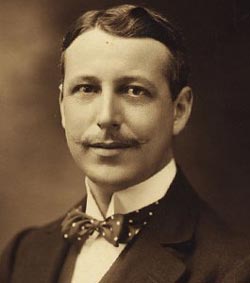
Fluminense Football Club was founded on 21 July 1902, in the neighbourhood of Laranjeiras, in the city of Rio de Janeiro, by a group of young of brazilian aristocracy and football enthusiasts led by Oscar Cox, an English citizen born in Brazil, who had come into contact with the sport whilst studying in Lausanne, where he got acquainted with the practice of football. Cox was subsequently elected as the first president. Therefore, it was the first football club to be founded in the city, whose most popular sport at the time was rowing.

The first official match was played against now defunct Rio Football Club, and Fluminense won 8–0. The club's first title came in 1906, when Fluminense won the state championship (Campeonato Carioca).
In 1911, disagreement between Fluminense players led to the formation of Flamengo's football team. The so-called Fla-Flu derby is considered one of the biggest in the history of Brazilian football. Three years later, in Fluminense's stadium, the Brazil national football team debuted, against touring English club Exeter City. It was also there that they won their debut title, in 1919.
By 1922, Fluminense had 4,000 members, a stadium for 25,000 people, and facilities that impressed clubs in Europe.
Construction of Maracanã
The 1950 World Cup strengthened football in the country, and as a result, the country's biggest teams, which basically only competed in state tournaments, began to measure their strength in tournaments and matches against teams from other states. To hold the competition, the Maracanã was built, the largest stadium in the world at that time, and which became the main stadium for Fluminense's games.
In the context of the World Cup held in the country in 1950, CBD, accompanied by FIFA and IFAB, decided to hold a competition that pitted the champion clubs from the main FIFA-affiliated countries against each other, thus creating the International Champions Club Tournament, better known as Copa Rio. The competition brought together the Champion clubs from countries in South America (Brazil, Paraguay and Uruguay) and Europe (Austria, France, Germany, Italy, Portugal, Switzerland and Yugoslavia), its first edition was in 1951, being won by Palmeiras.
In 1951, Fluminense won the Carioca championship, which meant that the team qualified for the 1952 Copa Rio. The team had great players who represented the Brazilian team, such as Carlos Castilho, Píndaro, Pinheiro, Didi, Orlando Pingo de Ouro and Telê Santana.
In the first phase of the competition, the teams were divided into two groups, the first played their matches at Maracanã, and the second played their matches at Pacaembu, Fluminense was in the first group and faced Grasshopper (Switzerland), Sporting Lisboa (Portugal) and Peñarol (Uruguay), and qualified in first place. In the semi final they beat Austria Wien (Austria), and in the final they defeated Corinthians.
From the 1950s, with the creation of the Rio-São Paulo Tournament, the forerunner of what eventually would become the national championship, Fluminense established itself regionally by winning the tournament title in 1957 and 1960.
National achievements
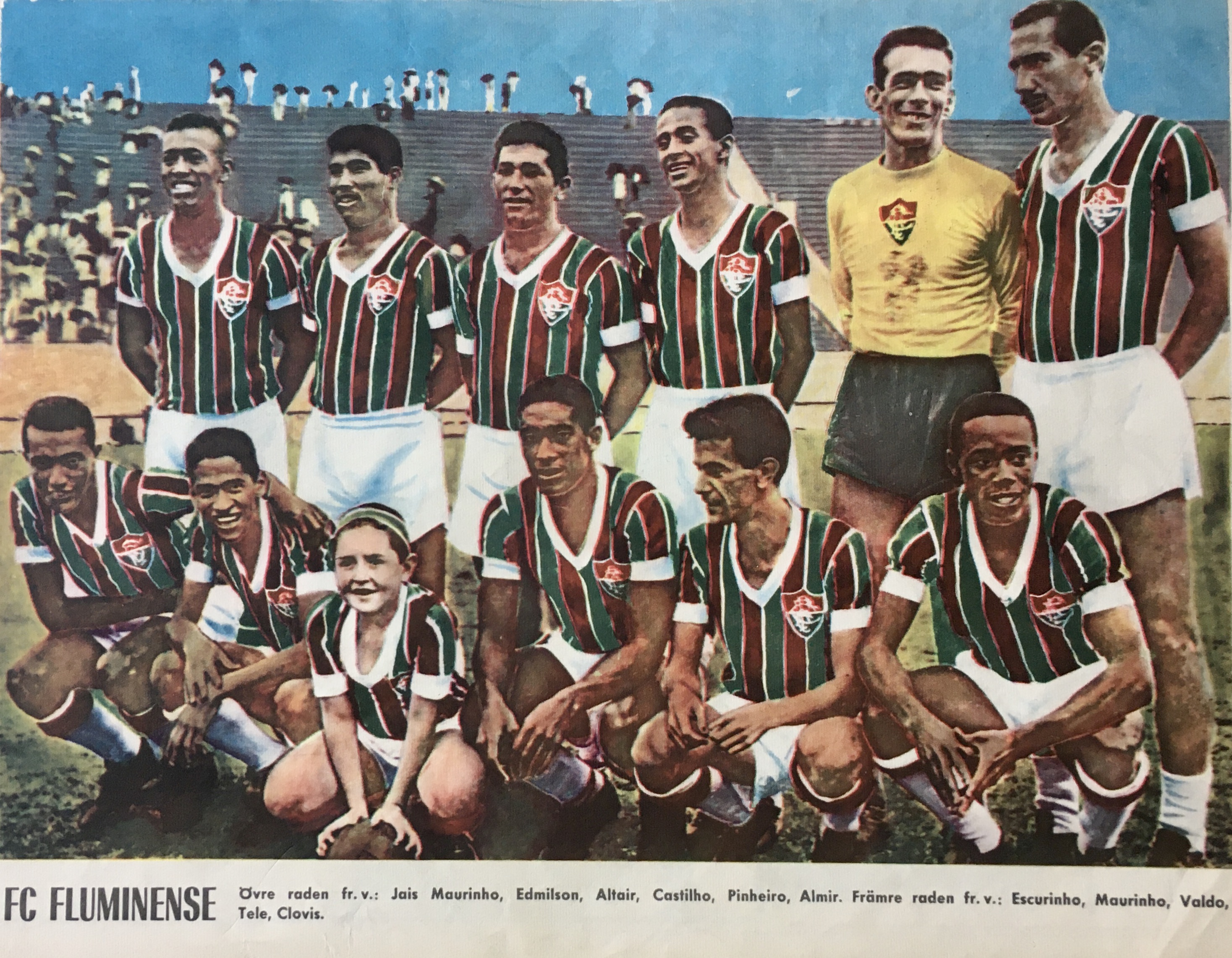
In the 1970s, Fluminense signed several famous players such as Carlos Alberto Torres, Dirceu, Gil, Narciso Doval, Pintinho and Roberto Rivellino. This team, called "Tricolor Machine", won the state championship in 1975 and 1976. In the national championship, Fluminense lost in the semifinals to Internacional in 1975 and Corinthians in 1976.
Fluminense became Brazilian champions again in 1984, playing in the final against Rio rivals Vasco da Gama. During the decade, they also won three state championships in a row, in 1983, 1984 and 1985, defeating their main rival Flamengo, in the final of the first two. These titles were won by great players such as Branco, Delei, Edinho, Ricardo Gomes, Romerito and the “Casal Vinte”: Assis and Washington.
At the end of the 1980s, Copa do Brasil was created, inspired by cup tournaments played in European countries. Fluminense reached the final of the Copa do Brasil for the first time in 1992, but lost to Internacional in a penalty shootout, in a controversial match in Porto Alegre.
Double relegation and return to the top flight
A disastrous campaign led to Fluminense's relegation from Brasileirão Série A in 1996. However, a set of off-field political manoeuvres not performed by the club allowed them to remain in Brazil's top domestic league, only to be relegated the next year. Completely out of control, the club was relegated from Série B to Série C in 1998. In 1999, Fluminense won the Série C championship and were to be promoted to Série B when they were invited to take part in Copa João Havelange, a championship that replaced the traditional Série A in 2000. In 2001, it was decided that all clubs which took part in Copa João Havelange's so-called Blue Group should be kept in Série A.
2000s: Copa do Brasil title, first Libertadores final

Fluminense had good campaigns in the 2000, 2001, and 2002 Serie A, finishing in the top four each of these times. Fluminense's first title of the 21st century was the 2002 Campeonato Carioca. In 2005, Fluminense won the Campeonato Caroica and the Taca Rio, and finished fifth in the Brasileirao. Later that year, they reached the final of the Copa do Brasil again, but lost to Serie B club Paulista 2–0, marking one of the few times that a Serie B club won the Copa do Brasil.
In 2007, Fluminense won the Copa do Brasil beating Figueirense in the final, and was admitted to the Copa Libertadores again after 23 years. In the 2007 Serie A, the club finished fourth, and Thiago Neves won the Golden Ball for the league's best player.
The club's 2008 Copa Libertadores campaign saw them reach the finals and included a remarkable 6–0 victory against Arsenal de Sarandí in the group stage, winning both games against Colombian club Atlético Nacional in R16, a comeback against São Paulo in the QF, and disposing of defending champions Boca Juniors in the SF with a 3–1 victory. Fluminense eventually finished runner-up, losing the finals to LDU Quito on penalties after a 5–5 draw on aggregate, despite a hat-trick from Thiago Neves in the second leg. Fluminense had already faced LDU in the group stage, winning 1-0 and drawing 0-0. The club finished fourteenth in the Serie A that season, and only finished one point away from relegation, but curiously still qualifying for the following years Copa Sudamericana.
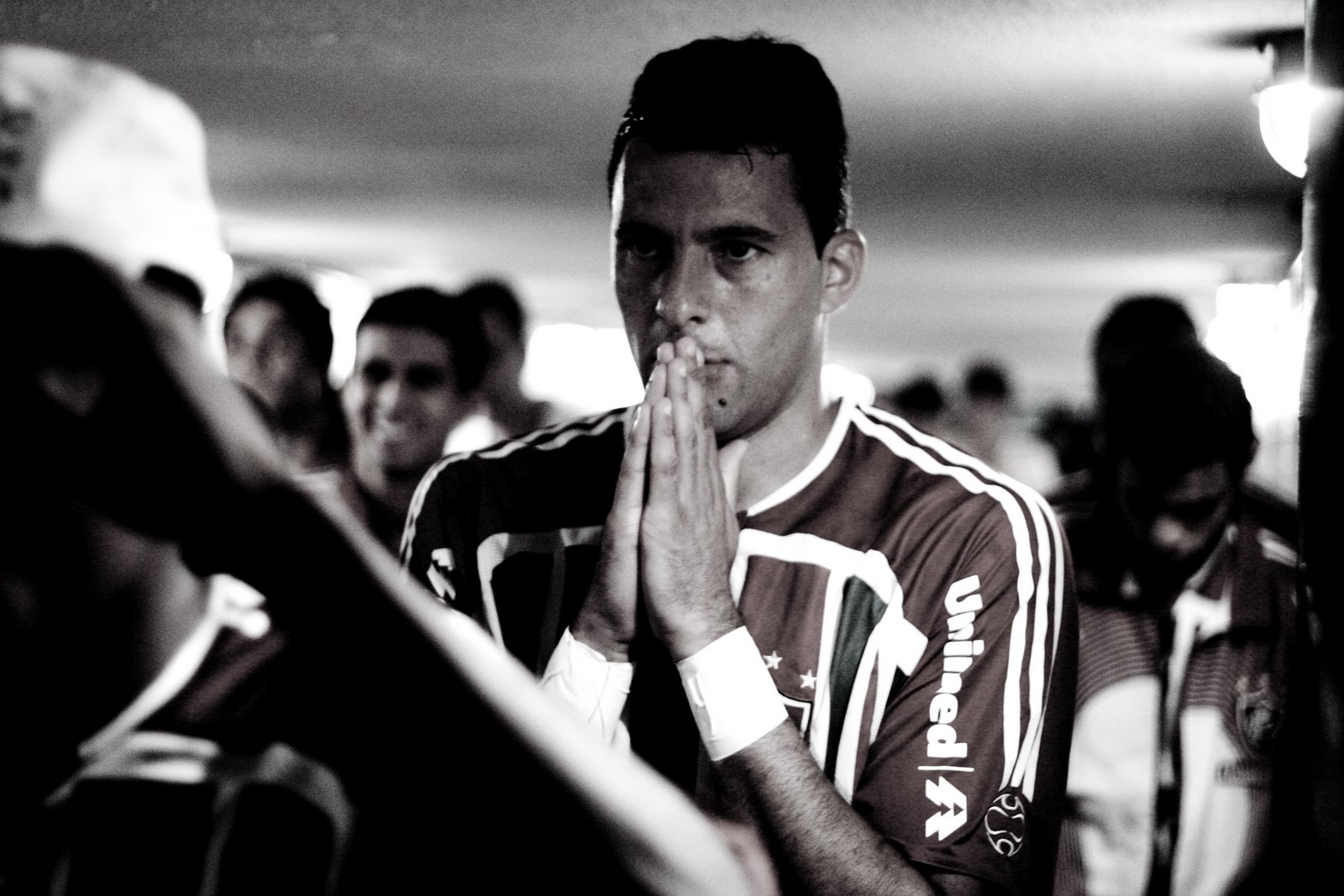
After signing 27 players and going through 5 different managers in 2009, Fluminense found themselves struggling to avoid another relegation from Série A. With less than one-third of the championship left, the mathematical probability of the club's relegation was 98%. At this point, manager Cuca decided to dispense with some of the more experienced players and gave Fluminense's youngsters a chance. That, along with Fred's recovery from a serious injury and substantial support from the fans, allowed not only a sensational escape from relegation with five matches remaining, but also placed Fluminense in the Copa Sudamericana finals, having eliminated rivals Flamengo. For the second year in a row, the club contested a continental cup. In a repeat of the previous year's Copa Libertadores, Fluminense lost the finals to LDU Quito.
2010s: Two Brazilian championships
For 2010, Muricy Ramalho replaced Cuca. His first task was in the 2010 Copa do Brasil quarter-finals against Grêmio, where Flumiense were eliminated 5–3 on aggregate. However, this elimination was not considered a "failure", in part because with this elimination the club was not participating in any other competitions and could fully focus on the Brasileirao. Eventually, the elimination helped the club, and that year, with Ramalho's effective defensive block conceding the fewest number of goals in the league, Fluminense won the Brazilian championship for the third time in their history after 26 years, securing it with a 1–0 victory at home to already relegated Guarani. It was also the fourth title for coach Ramalho in a decade: Ramalho had won the title three times in a row with São Paulo from 2006 to 2008. Darío Conca was named the Brazilian Championship's Player of the Season, playing all 38 league matches, while Fred, Washington, and Deco were decisive players in Fluminense's title-winning campaign.
For the 2011 season, Fluminense appointed Abel Braga, who led the team to a third-placed finish in the Serie A and qualification for the following year's Copa Libertadores, despite being eliminated in the round of 16 of the aforementioned competition by Club Libertad. The club decided to keep Abel Braga for 2012 and made big investments for the squad, bringing back Thiago Neves and signing youngster Wellington Nem. On 13 May 2012, Fluminense won the Campeonato Carioca, beating Rio rivals Botafogo 5–1 on aggregate for their first title of the 2012 season. In the Copa Libertadores, Fluminense was eliminated in the quarter-finals by powerhouse Boca Juniors, losing 2–1 on aggregate. Later that year, on 11 November, they won their fourth Brazilian championship after defeating near-relegated Palmeiras 3–2, with three matchdays left. Striker Fred was also the competition's top scorer, with 20 goals, and received the CBF Best Player award. Goalkeeper Diego Cavalieri had a phenomenal season and won the Bola de Prata as the league's best goalkeeper, and Abel Braga was chosen as best coach.
2013: Close call
In 2013, Fluminense was eliminated in the Copa Libertadores quarter-finals again, this time to Olimpia. In the Série A, things took a turn for the worse when they lost six of their first nine matches, leading to the sacking of Abel Braga. Seven undefeated matches in September steered the club away from relegation, but an eight-match winless run put the club back into the fight for relegation, mainly due to the absences of stars Deco, Fred, Thiago Neves, Carlinhos and Wellington Nem, and in December 2013, a 2–1 victory away to Bahia in the last round of the Série A had Fluminense mathematically relegated to Série B. However, Portuguesa and Fluminense's main rivals Flamengo fielded ineligible players in their matches against Grêmio and Cruzeiro respectively, thus losing 4 points after a verdict by STJD (Brazil's governing football jury). The points lost by Flamengo and Portuguesa allowed Fluminense to stay in Série A, with Portuguesa being relegated and Flamengo ending the championship as the lowest-ranked non-relegated club.
Since 2014: Rebuild
In 2014, Fluminense brought back Darío Conca, as well as Walter and Cícero. Coupled with Fred's and Carlinhos’ recoveries from injury, Fluminense spent the majority of the 2014 Série A in the top five and fighting for one of the berths at the 2015 Copa Libertadores, ultimately failing to reach its goal after an unstable final stretch and finishing 6th. In December, Fluminense ended its partnership with its main sponsor, Unimed. For fifteen years, the health insurance company was the main investor in signing players, especially after the team won the 2007 Copa do Brasil, bringing to the club athletes such as Darío Conca, Deco, Diego Cavalieri, Fred, Rafael Sóbis, Thiago Neves and Washington. From 2015 onwards, Fluminense underwent a remodeling, with the departure of some of its main players. The club's youth categories became fundamental for its maintenance in the first division in the following years, and the sale of young players became the club's main source of income.
In 2019, Fluminense hired Fernando Diniz, a young coach with innovative ideas within Brazilian football, but political conflicts within the club forced him out. The following year, the club brought back Fred, one of the greatest idols in the club's history, and in the 2020 season qualified for the Copa Libertadores under Odair Hellmann's tutelage.
2020s: Copa Libertadores title and FIFA Club World Cup finalist
The team returns to compete in the Copa Libertadores after eight years out of the competition, and with consistent campaigns in the Brazilian championship it manages to secure places in the competitions in consecutive editions of the Libertadores. However, after Odair's departure, the club has difficulty maintaining a coach, with Marcão, Roger Machado and Abel Braga taking over the position. In 2022, after winning the Campeonato Carioca against rivals Flu, their first trophy in a decade, with Argentine striker Germán Cano being the star of the team, and being eliminated from the Libertadores, Abel Braga retires from his coaching career, and Fluminense decides to give Fernando Diniz another chance.
In 2022, Fluminense achieves its best place in the Brazilian Championship in the last ten years, a third place, with an offensive team that is noted for its fluidity and ball possession, and the team qualifies for the group stage of the 2023 Copa Libertadores. In the beginning of the season, the football played by the team is considered by many to be the best in South America, and the team reaches the Campeonato Carioca finals against Flamengo; in the first match the red-black team wins 2–0, but in the second game Fluminense achieved a 4–1 victory, winning the Campeonato Carioca for a second year in a row against its main rival, and Diniz clinching his first trophy with the club. In the 2023 Libertadores, Fluminense falls into group D, along with River Plate (Argentina), The Strongest (Bolivia) and Sporting Cristal (Peru), despite being considered one of the most difficult groups in the edition, Fluminense ranks first, inflicting the biggest defeat in River Plate's history in the competition, 5–1 at Maracanã. In the final stage of the dispute, the opponents were Argentinos Juniors, Olimpia (Paraguay) and Internacional, the team defeated all opponents without suffering any defeat.
The Maracanã was previously chosen to be the stage for the final; on the other side the opponent would be Boca Juniors, who sought to become champions of the competition for the seventh time, and with this become the greatest champion of the competition, tied to Independiente. In the final, striker Germán Cano opened the scoring for Fluminense, but Peruvian right-back Luis Advíncula tied the match for Boca; the match then went into extra time, when youngster John Kennedy, coming from the youth team, came off the bench and scored the team's second goal. The match ended 2–1 for Fluminense, who lifted the Copa Libertadores trophy for the first time. The Copa Libertadores win sent Fluminense to play in the FIFA Club World Cup semi final, where they beat African champions Al Ahly from Egypt 2–0, but lost 4–0 in the final against Manchester City.
Season statistics


Fluminense have taken part in 57 of the 68 official Serie A championships organized in Brazil since 1959.
Taça Brasil
| Year | Position | Participants | Year | Position | Participants |
|---|---|---|---|---|---|
| 1959 | - | 16 | 1964 | - | 22 |
| 1960 | 3º | 17 | 1965 | - | 22 |
| 1961 | - | 18 | 1966 | 4º | 22 |
| 1962 | - | 18 | 1967 | - | 21 |
| 1963 | - | 20 | 1968 | - | 23 |
Roberto Gomes Pedrosa Tournament
Brazilian Championship
| Year | Position | Participants | Year | Position | Participants |
|---|---|---|---|---|---|
| 1971 | 16º | 20 | 1981 | 11º | 44 |
| 1972 | 14º | 26 | 1982 | 5º | |
| 1973 | 23º | 40 | 1983 | 18º | |
| 1974 | 24º | 1984 | 1º | 41 | |
| 1975 | 3º | 42 | 1985 | 22º | 44 |
| 1976 | 4º | 54 | 1986 | 6º | 48 |
| 1977 | 26º | 62 | 1987 | 7º | 16 |
| 1978 | 22º | 74 | 1988 | 3º | 24 |
| 1979 | 52º | 94 | 1989 | 15º | 22 |
| 1980 | 11º | 44 | 1990 | 15º | 20 |
| Year | Position | Participants | Year | Position | Participants |
|---|---|---|---|---|---|
| 1991 | 4º | 20 | 2001 | 3º | 28 |
| 1992 | 14º | 2002 | 4º | 26 | |
| 1993 | 28º | 32 | 2003 | 19º | 24 |
| 1994 | 15º | 24 | 2004 | 9º | |
| 1995 | 4º | 2005 | 5º | 22 | |
| 1996 | 23º | 2006 | 15º | 20 | |
| 1997 | 25º | 26 | 2007 | 4º | |
| 1998 | 19º (Série B) | 24 | 2008 | 14º | |
| 1999 | 1º (Série C) | 36 | 2009 | 16º | |
| 2000 | 3º | 25 | 2010 | 1º |
Records
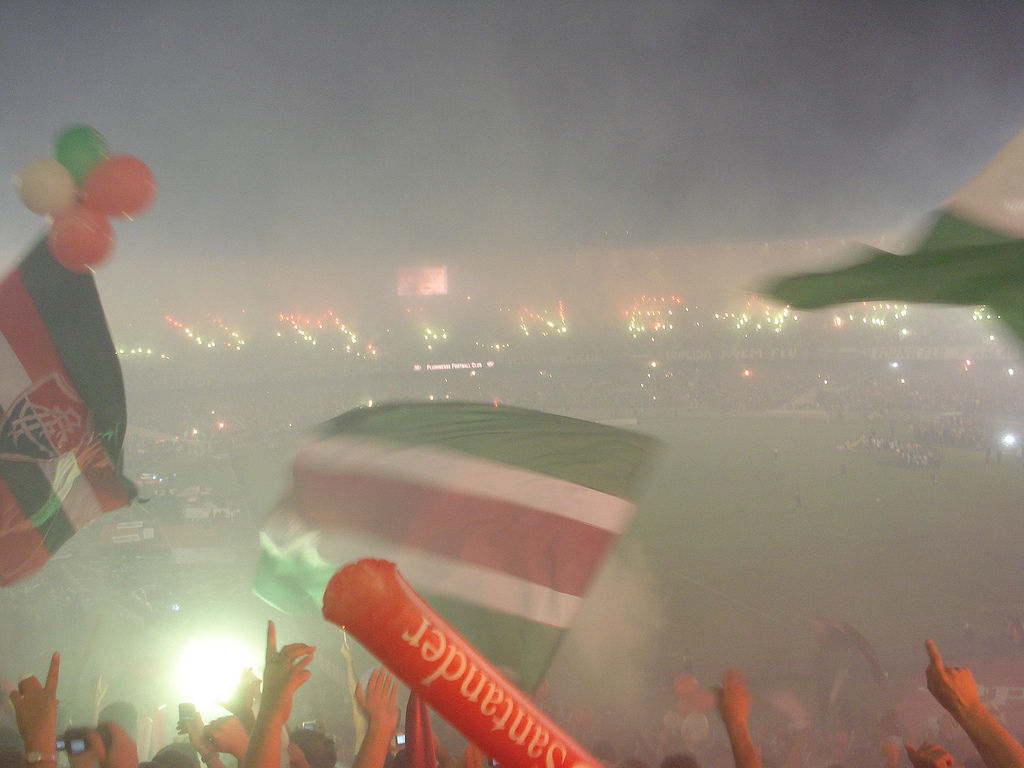

Highest attendances – Maracanã
According to the RSSSF, these were the highest attendances in Fluminense matches:
-
- Fluminense 0-0 Flamengo (1963): 194,603
-
- Fluminense 3–2 Flamengo (1969): 171,599
-
- Fluminense 1–0 Botafogo (1971): 160,000
-
- Fluminense 0–0 Flamengo (1976): 155,116
-
- Fluminense 1–0 Flamengo (1984): 153,520
-
- Fluminense 1–1 Corinthians (1976): 146,043
Highest average attendance at public competition for Fluminense
- Largest average attendance in the Copa Libertadores (RJ): 59,759 (54,912 paying, 2023)
- Largest average attendance in the Copa Sudamericana (RJ): 29,357 (27,318 paying, 2009)
- Largest average attendance in international tournaments (RJ): 48,797 (37,541 paying, Copa Rio, 1952)
- Largest average attendance in national championships (RJ): 43,541 paying (1976)
- Largest average attendance in the Tournament Roberto Gomes Pedrosa (RJ): 40,408 paying (1970)
- Largest average attendance in the Brazil Cup (RJ): 27,123 paying (2007)
- Largest average attendance in the Rio-São Paulo Tournament (RJ): 33,018 paying (1960)
- Largest average attendance in the state championship: 47,814 paying (1969, all stages)
- Largest average attendance in the state championship in the Maracanã Stadium: 93,560 paying (1969, 10 matches)
Supporters

The supporters of Fluminense Football Club are usually related to the upper classes of Rio de Janeiro. However, the popularity of the club reaches beyond the city limits. Recent polls have estimated the number of supporters to be between 1.3% and 3.7% of the Brazilian population, and between the 11th and 15th most popular club in the nation, falling behind Rio rivals Vasco, but slightly above Botafogo. Considering a population of 203 million people, that would account for numbers between 2.6 and 7.5 million. According to the club's official website, Flu has over 5 million supporters worldwide.
The best attendance ever observed in a Fluminense match was registered on 15 December 1963 in a derby against Flamengo. On that day, an impressive number of 194,603 people showed up at Maracanã stadium. This occasion remains as the stadium's record for a match between clubs.
Notable supporters of Fluminense include composers Cartola and Chico Buarque, musicians Elis Regina, Ivan Lins, Pixinguinha, Renato Russo and Tom Jobim, actors Breno Mello, Chico Díaz, Dalton Vigh, Hugo Carvana, and Thiago Fragoso, and actresses Deborah Secco, Leticia Spiller, and Sheron Menezzes, poet Mário Lago, journalist and songwriter Nelson Motta, dramatist, journalist and writer Nelson Rodrigues, modernist architect Oscar Niemeyer, FIFA president of honor João Havelange, 1970 FIFA World Cup winners Gérson and Carlos Alberto Torres, former Chelsea central defender Thiago Silva, Left-back legend Marcelo, racing driver Cacá Bueno, sailors Maertine Grael and Torben Grael, former Minister of Culture Gilberto Gil, inventor and aeronaut Santos Dumont, Silvio Santos, the owner of SBT, the second largest Brazilian television network, Golden Globe Award winner Fernanda Torres and her mother, Academy Award nominee Fernanda Montenegro.
Honours

Official tournaments
| Intercontinental | Competitions | Titles | Seasons | Copa Rio (international tournament) | Continental | Competitions | Titles | Seasons | Copa Libertadores | 1 | Recopa Sudamericana | 1 | National | Competitions | Titles | Seasons | Campeonato Brasileiro Série A | 4 | Copa do Brasil | 1 | Campeonato Brasileiro Série C | 1 | Inter-state | Competitions | Titles | Seasons | Torneio Rio–São Paulo | 2 | State | Competitions | Titles | Seasons | Campeonato Carioca | 33 | Copa Rio | 1 | Torneio Início | 9 | Torneio Aberto | Torneio Municipal | 2 | Torneio Extra | 1 | Taça Guanabara (independent tournament) |
|---|---|---|---|---|---|---|---|---|---|---|---|---|---|---|---|---|---|---|---|---|---|---|---|---|---|---|---|---|---|---|---|---|---|---|---|---|---|---|---|---|---|---|---|---|
| 1 | 1952(1) | |||||||||||||||||||||||||||||||||||||||||||
| 2023 | ||||||||||||||||||||||||||||||||||||||||||||
| 2024 | ||||||||||||||||||||||||||||||||||||||||||||
| 1970, 1984, 2010, 2012 | ||||||||||||||||||||||||||||||||||||||||||||
| 2007 | ||||||||||||||||||||||||||||||||||||||||||||
| 1999 | ||||||||||||||||||||||||||||||||||||||||||||
| 1957, 1960(2) | ||||||||||||||||||||||||||||||||||||||||||||
| 1906, 1907, 1908, 1909, 1911, 1917, 1918, 1919, 1924, 1936, 1937, 1938, 1940, 1941, 1946, 1951, 1959, 1964, 1969, 1971, 1973, 1975, 1976, 1980, 1983, 1984, 1985, 1995, 2002, 2005, 2012, 2022, 2023 | ||||||||||||||||||||||||||||||||||||||||||||
| 1998 | ||||||||||||||||||||||||||||||||||||||||||||
| 1916, 1924, 1925, 1940, 1941, 1943, 1954, 1956, 1965(3) | ||||||||||||||||||||||||||||||||||||||||||||
| 1 | 1935 | |||||||||||||||||||||||||||||||||||||||||||
| 1938, 1948 | ||||||||||||||||||||||||||||||||||||||||||||
| 1941 | ||||||||||||||||||||||||||||||||||||||||||||
| 3 | 1966, 1969, 1971 |
- shared record
(1) FIFA recognized the Copa Rio as an Inter-Confederations Cup during the 2025 FIFA Club World Cup.
(2) In 1940 the competition was interrupted with Fluminense and Flamengo in the lead, without the CBD making the title official, however, the clubs and newspapers at the time considered the result definitive and declared the Fluminense and Flamengo as the legitimate champions of the competition.{{cite web |url=https://rsssfbrasil.com/tablesr/rjsp1940.htm |title=Torneio Rio-São Paulo 1940
(3) In 1927, having won the title on the field, Fluminense asked for its annulment for having failed to comply with the regulations, by including two substitutes in its ranks, in a letter sent to AMEA, which resulted in the subsequent annulment of the title.
Others tournaments
International
- Torneio Internacional do Rio de Janeiro (1): 1973
- Copa Ciudad Viña del Mar (1): 1976
- Tournoi de Paris (2): 1976, 1987
- Teresa Herrera Trophy (1): 1977
- Seoul Tournament (1): 1984
- Kirin Cup (1): 1987
- Kiev Tournament (1): 1989
National and Inter-state
- Taça Ioduran (1): 1919
- Torneio José de Paula Júnior (1): 1952
- Copa das Municipalidades do Paraná (1): 1953
- Torneio Quadrangular Pará-Guanabara (1): 1966
- Torneio Quadrangular de Cachoeiro de Itapemirim (1): 1969
- Torneio José Macedo Aguiar (1): 1971
- Copa Governador Faria Lima (1): 1977
- Copa Vale do Paraíba (1): 1977
- Torneio de Maceió (1): 1994
- Troféu Osmar Santos (1): 2010
- Troféu João Saldanha (1): 2011
- Primeira Liga (1): 2016
State Tournament Rounds and Stages
- Taça Guanabara - tournament round (9): 1975, 1983, 1985, 1991, 1993, 2012, 2017, 2022, 2023
- Taça Rio (4): 1990, 2005, 2018, 2020
- Other Campeonato Carioca rounds (6): 1970, 1972, 1973, 1976, 1980, 2012
- Campeonato da Capital do Rio de Janeiro - Copa Rio stage (1): 1994
Runners-up
- FIFA Club World Cup (1): 2023
- Copa Libertadores (1): 2008
- Copa Sudamericana (1): 2009
- Campeonato Brasileiro Série A (1): 1937
- Copa do Brasil (2): 1992, 2005
- Torneio Rio–São Paulo (1): 1954
- Campeonato Carioca (26): 1910, 1915, 1920, 1925, 1927, 1933, 1935, 1943, 1949, 1952, 1953, 1956, 1957, 1960, 1963, 1970, 1972, 1979-II, 1991, 1993, 2003, 2011, 2017, 2020, 2021, 2025
- Copa Rio (2): 1992, 1994
Youth team
- Campeonato Brasileiro Sub-20 (1): 2015
- Campeonato Brasileiro Sub-17 (2): 2020, 2024
- Copa do Brasil Sub-17 (1): 2024
- Copa São Paulo de Juniores (5): 1971, 1973, 1977, 1986, 1989
- Copa Santiago de Futebol Juvenil (1): 1999
- Copa Macaé de Juvenis (2): 2002, 2003
Awards
- Olympic Cup (1): 1949
- Carioca Champion of the 20th Century: 1906–2000
- Taça Eficiência (14): 1935, 1941, 1948, 1951, 1952, 1953, 1957, 1959, 1963, 1964, 1969, 1970, 1976 e 1984
- Taça Disciplina (7): 1946, 1948, 1956, 1958, 1963, 1972 e 1977
Chronology of main titles


| Competition | Season | N.º |
|---|---|---|
| Carioca Championship | 1906 | 1º |
| Carioca Championship | 1907 | 2º |
| Carioca Championship | 1908 | 3º |
| Carioca Championship | 1909 | 4º |
| Carioca Championship | 1911 | 5º |
| Carioca Championship | 1917 | 6º |
| Carioca Championship | 1918 | 7º |
| Carioca Championship | 1919 | 8º |
| Carioca Championship | 1924 | 9º |
| Carioca Championship | 1936 | 10º |
| Carioca Championship | 1937 | 11º |
| Carioca Championship | 1938 | 12º |
| Rio–São Paulo Tournament | 1940 | 13º |
| Carioca Championship | 1940 | 14º |
| Carioca Championship | 1941 | 15º |
| Carioca Championship | 1946 | 16º |
| Carioca Championship | 1951 | 17º |
| Rio Cup (International) | 1952 | 18º |
| Rio–São Paulo Tournament | 1957 | 19º |
| Carioca Championship | 1959 | 20º |
| Rio–São Paulo Tournament | 1960 | 21º |
| Carioca Championship | 1964 | 22º |
| Carioca Championship | 1969 | 23º |
| Brazilian Championship | 1970 | 24º |
| Carioca Championship | 1971 | 25º |
| Carioca Championship | 1973 | 26º |
| Carioca Championship | 1975 | 27º |
| Carioca Championship | 1976 | 28º |
| Carioca Championship | 1980 | 29º |
| Carioca Championship | 1983 | 30º |
| Brazilian Championship | 1984 | 31º |
| Carioca Championship | 1984 | 32º |
| Carioca Championship | 1985 | 33º |
| Carioca Championship | 1995 | 34º |
| Carioca Championship | 2002 | 35º |
| Carioca Championship | 2005 | 36º |
| Brazil Cup | 2007 | 37º |
| Brazilian Championship | 2010 | 38º |
| Carioca Championship | 2012 | 39º |
| Brazilian Championship | 2012 | 40º |
| First League (Brazil) | 2016 | 41º |
| Carioca Championship | 2022 | 42º |
| Carioca Championship | 2023 | 43º |
| Copa Libertadores | 2023 | 44º |
| Recopa Sudamericana | 2024 | 45º |
Source:
Rivalries
.jpg)
Grandpa Derby
Grandpa Derby or Grandfather Derby (Clássico Vovô), played with Botafogo. The name comes from being the two oldest practicing football clubs among the great clubs of Rio de Janeiro, and this is also the oldest derby in Brazil, because its first game was on 22 October 1905, friendly that Fluminense won by 6–0. Along with six other clubs, they were responsible for creating the Carioca Football Championship in 1906.
Fla-Flu
Fla–Flu Derby, also called Derby of Crowds (Clássico das Multidões), played with Flamengo. It is considered by football experts and much of the sports media as one of the greatest classics in the world. According to writer Nelson Rodrigues, the derby was engendered by resentment. On the tricolor side, the fact that their starting players deserted and went to form Flamengo's football department, and on the red-black side, the fact that Fluminense still won the first match, circumstances that have been fundamental in generating the derby's mystique.
Giants' Derby
Giants' Derby (Clássico dos Gigantes), played with Vasco da Gama. The derby gets its name because of the "giant" matches that have been played between the two, these being the final for the 1984 Campeonato Brasileiro Série A, which was won by Fluminense, and the 1985 Copa Libertadores, which had two draws, in addition to several decisions Carioca Championship: 1949, 1956, 1970, 1972, 1975, 1976, 1980, 1984, 1993, 1994 and 2003.
Silvio Santos Derby
Silvio Santos Derby (Clássico Silvio Santos), played with Corinthians. It is perhaps the most representative among the various interstate confrontations with big Brazilian clubs played by Fluminense, given the fact that these clubs often intersect at decisive moments in their seasons. The Derby dates back to 1933, in a friendly match that marked both Fluminense's first match as a professional team and Corinthians' first inter-state match as a professional.
The fixture's name was given on 17 August 2024, after the Brazilian television host of the same name, died on the same day. Santos was a supporter of both clubs.
Rivalry with LDU
Since L.D.U. Quito defeated Fluminense in the 2008 Copa Libertadores final and the Copa Sudamericana final of the following year, a strong international rivalry has developed between the two teams. This rivalry reached new heights when the two teams met on a third international final for the 2024 Recopa Sudamericana, which was won by Fluminense. This has been the only case of two CONMEBOL teams facing each other on each of the three continental tournaments.
Statistics

Players with most appearances
| Name | Matches |
|---|---|
| 1st | Brazil Castilho |
| 2nd | Brazil Pinheiro |
| 3rd | Brazil Telê Santana |
| 4th | Brazil Altair |
| 5th | Brazil Escurinho |
| 6th | Brazil Rubens Galaxe |
| 7th | Brazil Denílson |
| 8th | Brazil Assis |
| 9th | Brazil Gum |
| 10th | Brazil Waldo |
Top goalscorers
| Name | Goals | Years |
|---|---|---|
| 1st | Brazil Waldo | 319 |
| 2nd | Brazil Fred | 199 |
| 3rd | Brazil Orlando Pingo de Ouro | 184 |
| 4th | Brazil Hércules | 165 |
| 5th | Brazil Telê Santana | 164 |
| 6th | England Henry Welfare | 163 |
| 7th | Argentina Russo | 149 |
| 8th | Brazil Preguinho | 128 |
| 9th | Brazil Washington César | 124 |
| 10th | Brazil Magno Alves | 121 |
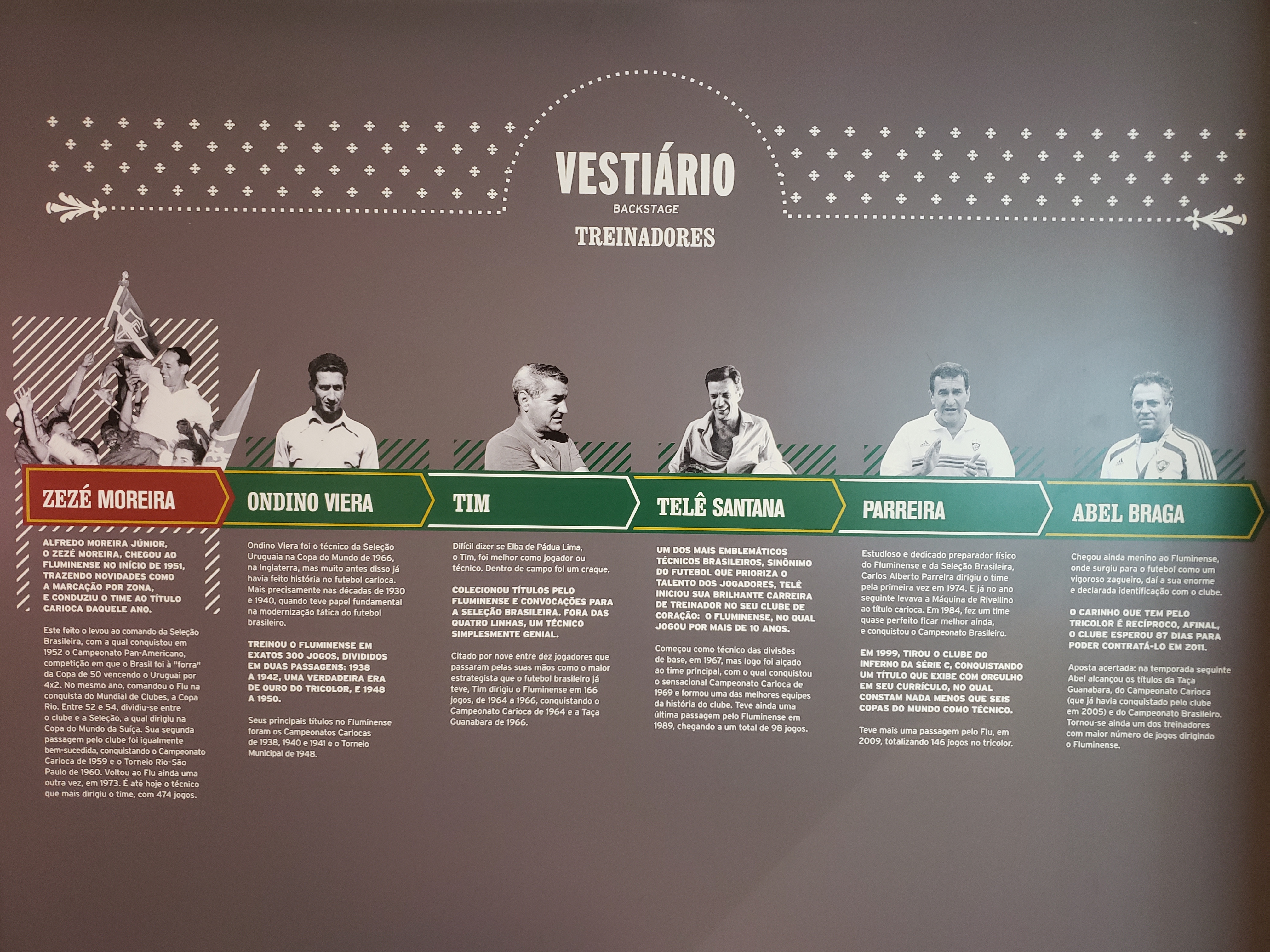
Coaches with most games
| Name | Matches |
|---|---|
| 1st | Brazil Zezé Moreira |
| 2nd | Brazil Abel Braga |
| 3rd | Uruguay Ondino Viera |
| 4th | Brazil Renato Gaúcho |
| 5th | Brazil Fernando Diniz |
| 6th | Brazil Tim |
| 7th | Brazil Nelsinho Rosa |
| 8th | Brazil Carlos Alberto Parreira |
| 9th | Brazil Sylvio Pirillo |
| 10th | Brazil Luís Vinhaes |
Correct as of June 25, 2025
Sponsors
Companies that Fluminense Football Club has had sponsorship deals with include:
Sports Equipment
| Years | Kit manufacturer |
|---|---|
| 1976–1980 | DEU Adidas |
| 1981–1985 | FRA Le Coq Sportif |
| 1985–1994 | Brazil Penalty |
| 1994–1996 | UK Reebok |
| 1996–2015 | DEU Adidas |
| 2016–2017 | CAN Dryworld |
| 2017–2019 | USA Under Armour |
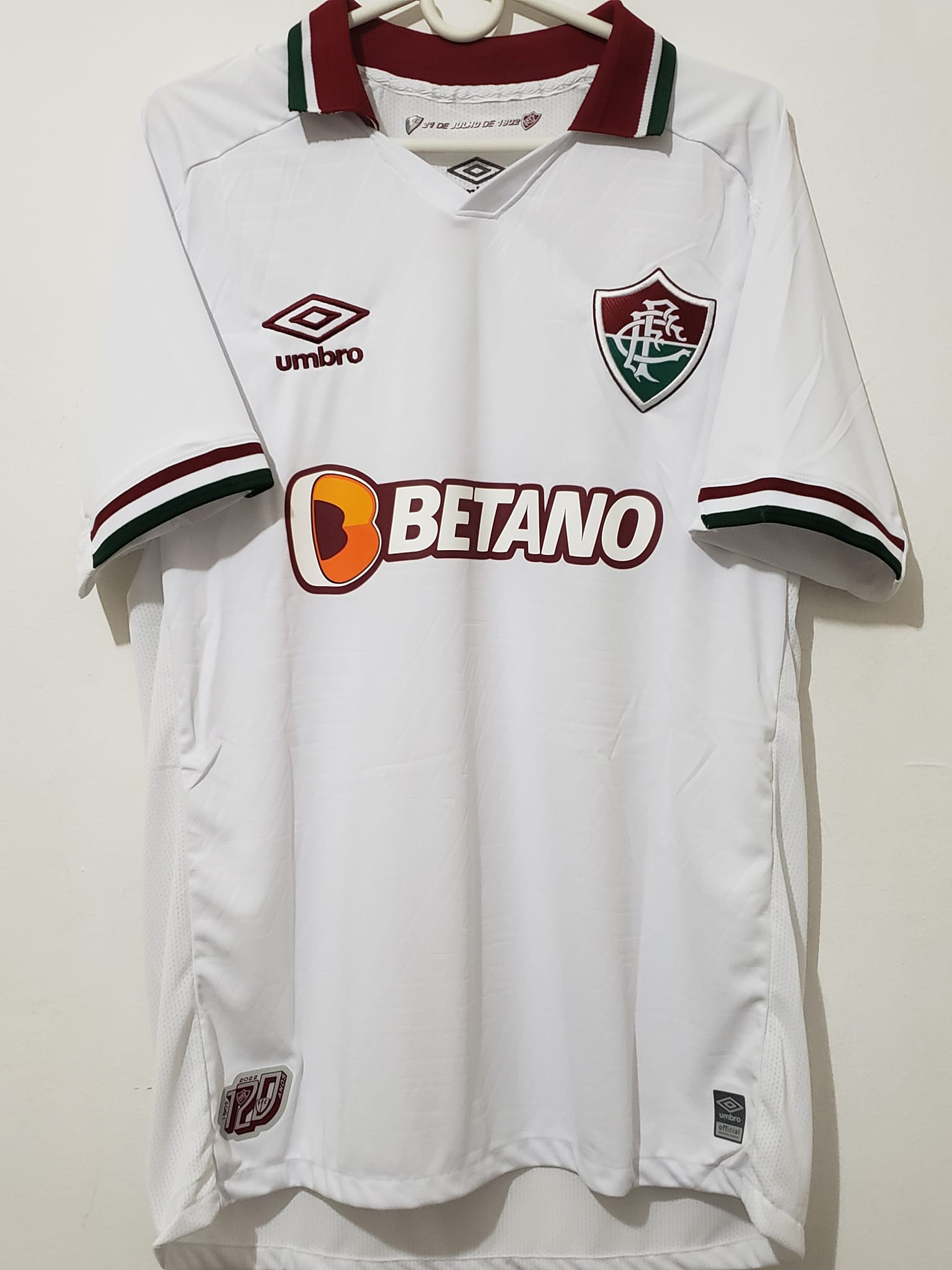
| 2020–2025 | UK Umbro |
| 2026– | DEU Puma |
Main Sponsor
| Years | Sponsor(s) | |||||||
|---|---|---|---|---|---|---|---|---|
| 1984 | SUI Mondaine | |||||||
| 1985 | Brazil SulAmérica Seguros | |||||||
| 1986 | USA Heart Line | |||||||
| 1987 | Brazil 1001 Turismo | |||||||
| 1987–1994 | USA Coca-Cola | |||||||
| 1995 | Brazil Ame o Rio | |||||||
| 1995–1996 | KOR Hyundai | |||||||
| 1997 | Brazil SporTV | |||||||
| 1997–1998 | Brazil SporTV | |||||||
| 1999 | UK Sonrisal | |||||||
| 1999–2014 | Brazil Unimed{{cite news | author = | title = Depois de 15 anos, parceria entre Fluminense e Unimed chega ao fim | url = http://www.espn.com.br/noticia/466998_depois-de-15-anos-parceria-entre-fluminense-e-unimed-chega-ao-fim | work = ESPN | date = 10 December 2024 | access-date = 8 May 2024 | language=Portuguese |
| 2015–2017 | Brazil Viton 44 | |||||||
| 2017 | USA Universal Orlando Resort{{cite news | author = | title = Universal Orlando Resort é o novo patrocinador do Fluminense | url = https://www.fluminense.com.br/noticia/universal-orlando-resort-e-o-novo-patrocinador-do-fluminense | work = Fluminense | date = 25 October 2017 | access-date = 8 May 2024 | language=Portuguese |
| 2018 | Brazil Valle Express{{cite news | author = | title = Fluminense anuncia Valle Express como patrocinadora Master | url = https://www.fluminense.com.br/noticia/fluminense-anuncia-valle-express-como-patrocinadora-master | work = Fluminense | date = 19 January 2018 | access-date = 8 May 2024 | language=Portuguese |
| 2021–2024 | GRE Betano{{cite news | author = | title = Betano é a nova patrocinadora master do Fluminense | url = https://www.fluminense.com.br/noticia/betano-e-a-nova-patrocinadora-master-do-fluminense | work = Fluminense | date = 1 June 2021 | access-date = 8 May 2024 | language=Portuguese |
| 2024– | ROM Superbet{{cite news | author = | title = Fluminense anuncia Superbet como nova patrocinadora master | url = https://oglobo.globo.com/esportes/noticia/2024/04/08/fluminense-anuncia-supebet-como-nova-patrocinadora-master.ghtml | work = O Globo | date = 8 April 2024 | access-date = 8 May 2024 | language=Portuguese |
Stadiums
Laranjeiras Stadium

Flu's first match at the Laranjeiras Stadium was the 4–1 victory over Vila Isabel, in the 1919 Carioca Championship, with the Tricolor goals having been scored by Harry Welfare (3) and Machado. Opened in 1919 with a capacity for 18,000 people and having had its capacity expanded to 25,000 people since 1922, in some games this stadium had estimated audiences greater than its capacity.
The record for paying audiences was in the Fluminense 3-1 Flamengo match, on 14 June 1925, when 25,718 spectators paid for tickets, although today the audience for Fluminense's match against Sporting, held on 15 July, is unknown. 1928, in the Vulcain Cup dispute, with the stadium full and over 2,000 chairs being placed on the athletics track to accommodate the public present.

Currently, Fluminense does not play its games at its stadium, at the club's option, as it would no longer have the security conditions and capacity to host large events, and is currently only used for training, small commemorative events, social and educational projects, games of the women's football team and the youth teams. The last time an official match for Fluminense's main team took place at Laranjeiras Stadium was in 2003, where Flu drew 3–3 with Americano, in the Carioca Championship.
The renovation of the stadium has been a long-standing demand of the club, however a series of problems make this difficult, such as technical issues linked to the historical preservation of the building, the small area for the construction of a modern stadium and the opposition of the surrounding residents. The current project, at a more advanced stage, foresees a revitalization of Laranjeiras, with the stadium remaining with a small audience capacity, being able to host lower demand games, such as the first phases of the state championship and women's football.
Maracanã Stadium
Since its construction for the 1950 World Cup, the Maracanã has primarily served as the home ground for the four biggest Rio de Janeiro clubs. The stadium was officially completed in 1965, 17 years after construction began. In 1963, more than 194,000 people attended a match between Flamengo and Fluminense at the Maracanã, Rio Championship final.
At the stadium, Fluminense won some of the most important titles, such as the 1952 Copa Rio, for many the most important in its history, it won its first Brazilian Championship in 1970, the Tricolor Machine was twice champion of Carioca (1975–76), led by Roberto Rivellino, it was Brazilian champion over its rival Vasco da Gama, in 1984, was three-time Rio champion against Flamengo (1983–85), he was Carioca champion in 1995 with Renato Gaúcho's belly goal, against Romário's Flamengo (at the time named FIFA World Player of the Year). In this century he won the 2007 Copa do Brasil and the 2023 Copa Libertadores.
Following its 50th anniversary and aiming to hold the 2000 FIFA Club World Cup in Brazil, the stadium underwent renovations which would increase its full capacity to around 103,000. After years of planning and nine months of closure between 2005 and 2006, the stadium was reopened in January 2007 with an all-seated capacity of 87,000. For the 2014 FIFA World Cup and the 2016 Olympics and Paralympics, a major expedition project was started in 2010. The original stand, with a two-level configuration, was demolished, making way for a new single-level stand, and the stadium had its capacity reduced to 78,838 seats.
From 2013 onwards, the stadium was managed by the Brazilian conglomerate Odebrecht. Corruption scandals, the high rents charged by the company and the abandonment of the stadium, meant that Flamengo and Fluminense came together to manage it. Although clubs have kept the stadium in good condition since 2016 and covered its maintenance costs, it was only in 2019 that the government canceled contracts with Odebrecht. Flamengo and Fluminense then created a joint company, "Fla-Flu S.A." opened especially to manage Maracanã and its entire sports complex.
Players
Current squad
Reserve team
Out on loan
Staff
Current staff
| Position | Name | Nationality |
|---|---|---|
| Head coach | Luis Zubeldía | Argentina |
| Assistant coaches | Maxi Cuberas | Argentina |
| Carlos Gruezo | Argentina | |
| Marcão | Brazil | |
| Alejandro Escobar | Argentina | |
| Cadu Antunes | Brazil | |
| Technical assistant | Marco Salgado | Brazil |
| Fitness coaches | Lucas Vivas | Argentina |
| Ricardo Henriques | Brazil | |
| Flávio Vignoli | Brazil | |
| Igor Cotrim | Brazil | |
| Goalkeeper coach coordinator | Flavio Tenius | Brazil |
| Goalkeeper coaches | André Carvalho | Brazil |
| Josmiro de Góes | Brazil |
Head coaches
- Ground Committeé (1902–10)
- England Charlie Williams (1911–12)
- Ground Committeé (1913–16)
- England Quincey Taylor (1917–18)
- Uruguay Ramón Platero (1919)
- Denmark Pode Pedersen (1920–23)
- England Charlie Williams (1924–26)
- Hungary Eugênio Medgyessy (1927–28)
- Brazil Luiz Vinhaes (1929–33)
- England Quincey Taylor (1934–36)
- Uruguay Héctor Cabelli (1936)
- Uruguay Carlos Carlomagno (1936–38)
- Brazil Carlos Nascimento (1938)
- Uruguay Ondino Viera (1938–43)
- Uruguay Athuel Velázquez (1943–1944)
- Uruguay Humberto Cabelli (1944–1945)
- Brazil Gentil Cardoso (1945–47)
- Uruguay Ondino Viera (1948–50)
- Brazil Otto Vieira (1950–51)
- Brazil Zezé Moreira (1951–54)
- Brazil Gradim (1955–56)
- Brazil Sylvio Pirillo (1956–58)
- Brazil Zezé Moreira (1958–62)
- Paraguay Fleitas Solich (1963–64)
- Brazil Tim (1964–67)
- Brazil Telê Santana (1967–68)
- Brazil Evaristo de Macedo (1968)
- Brazil Telê Santana (1969–70)
- Brazil Paulo Amaral (1970)
- Brazil Mário Zagallo (1971–72)
- Brazil Zezé Moreira (1973)
- Brazil Duque (1973–74)
- Brazil Carlos Alberto Parreira (1974)
- Brazil Paulo Emilio (1975)
- Brazil Didi (1975–76)
- Brazil Mário Travaglini (1976–77)
- Brazil Pinheiro (1977)
- Brazil Paulo Emilio (1978)
- Brazil Nelsinho Rosa (1979–81)
- Brazil Dino Sani (1981–82)
- Brazil Lula (1982)
- Brazil Cláudio Garcia (1983)
- Brazil José Luiz Carbone (1983–84)
- Brazil Carlos Alberto Parreira (1984–85)
- Argentina José Omar Pastoriza (1985)
- Brazil Nelsinho Rosa (1985–86)
- Brazil Antônio Lopes (1986–87)
- Brazil José Luiz Carbone (1987)
- Brazil Ismael Kurtz (1988)
- Brazil Sérgio Cosme (1988–89)
- Brazil Procópio Cardoso (1989)
- Brazil Paulo Emilio (1990)
- Brazil Gílson Nunes (1990–91)
- Brazil Edinho (1991)
- Brazil Arthur Bernardes (1992)
- Brazil Nelsinho Rosa (1993)
- Brazil Delei (1994)
- Brazil Pinheiro (1994)
- Brazil Joel Santana (1995)
- Brazil Jair Pereira (1996)
- Brazil Renato Portaluppi (1996)
- Brazil Júlio César Leal (1997)
- Brazil Valdir Espinosa (1997)
- Uruguay Hugo de León (1997)
- Brazil José Luiz Carbone (1997)
- Brazil Arturzinho (1997)
- Brazil Edinho (1998)
- Brazil Delei (1998)
- Brazil Sérgio Cosme (1998)
- Brazil Carlos Alberto Parreira (1999–00)
- Brazil Valdir Espinosa (2000–01)
- Brazil Oswaldo de Oliveira (2001–02)
- Brazil Renato Portaluppi (2 September 2002 – 11 July 2003)
- Brazil Joel Santana (18 July 2003 1 October 2003)
- Brazil Renato Portaluppi (1 October 2003 – 28 December 2003)
- Brazil Ricardo Gomes (4 March 2004 – 15 August 2004)
- Brazil Alexandre Gama(16 August 2004 - 31 December 2004)
- Brazil Abel Braga (1 January 2005 – 10 December 2005)
- Brazil Ivo Wortmann (11 December 2005 – 19 February 2006)
- Brazil Paulo Campos (22 February 2006 – 12 March 2006)
- Brazil Oswaldo de Oliveira (2006)
- Brazil Antônio Lopes (23 August 2006 – 29 September 2006)
- Brazil PC Gusmão (29 September 2006 – 11 February 2007)
- Brazil Renato Portaluppi (24 April 2007 – 10 August 2008)
- Brazil Cuca (11 August 2008 – 2 October 2008)
- Brazil Renê Simões (2 October 2008 – 6 March 2009)
- Brazil Carlos Alberto Parreira (7 March 2009 – 13 July 2009)
- Brazil Vinícius Eutrópio (14 July 2009 – 19 July 2009)
- Brazil Renato Portaluppi (20 July 2009 – 1 September 2009)
- Brazil Cuca (1 September 2009 – 19 April 2010)
- Brazil Muricy Ramalho (25 April 2010 – 13 March 2011)
- Brazil Enderson Moreira (int.) (21 March 2011 – 31 May 2011)
- Brazil Abel Braga (8 June 2011 – 29 July 2013)
- Brazil Vanderlei Luxemburgo (30 July 2013 – 12 November 2013)
- Brazil Dorival Júnior (12 November 2013 – 26 December 2013)
- Brazil Renato Portaluppi (28 December 2013 – 2 April 2014)
- Brazil Cristóvão Borges (2 April 2014 – 23 March 2015)
- Brazil Ricardo Drubscky (23 March – 17 May 2015)
- Brazil Enderson Moreira (18 May 2015 – 16 September 2015)
- Brazil Eduardo Baptista (17 September 2015 – 25 February 2016)
- Brazil Levir Culpi (4 March 2016 – 6 November 2016)
- Brazil Marcão (6 November 2016 – 1 December 2016)
- Brazil Abel Braga (1 December 2016 – June 2018)
- Brazil Marcelo Oliveira (June 2018 - 29 November 2018)
- Brazil Fábio Moreno (last game in Brazilian Championship)
- Brazil Fernando Diniz (2018-2019)
- Brazil Marcão (one game)
- Brazil Oswaldo de Oliveira (2019)
- Brazil Marcão (2019)
- Brazil Odair Hellmann (2020)
- Brazil Marcão (2020–2021)
- Brazil Roger Machado (2021)
- Brazil Marcão (2021)
- Brazil Abel Braga (2022 – 30 April 2022)
- Brazil Fernando Diniz (1 May 2022 – 24 June 2024)
- Brazil Marcão (24 June 2024 – 1 July 2024)
- Brazil Mano Menezes (1 July 2024 – 30 March 2025)
- Brazil Renato Portaluppi (3 April 2025 - 23 September 2025)
- Argentina Luis Zubeldía (26 September 2025 - present)
Notes
References
References
- "Estádio Maracanã - Rio de Janeiro".
- (8 July 2012). "Um milagre, um recorde, um estádio que não cai: O Fla-Flu de 1963".
- (15 September 2018). "Número de jogadores cedidos por cada clube brasileiro na história da Seleção Brasileira".
- "Oscar Cox". Fluminense Football Club.
- (18 May 2009). "How football conquered Brazil".
- "Fluminense – Forever Flu". Fédération Internationale de Football Association (FIFA).
- (13 July 2001). "Passion, carnival and crazy goals". Fédération Internationale de Football Association (FIFA).
- "Southamerican Championship 1919".
- Mason, Tony. (1995). "Passion of the people? Football in South America". Verso.
- "1950 FIFA World Cup Brazil".
- (February 2003). "Santos and sinners". When Saturday Comes (WSC).
- "Brazil 1997 Championship". Rec. Sport. Soccer Statistics Foundation (RSSSF).
- "Brazil 1998 Championship - Second Level (Série B)". Rec. Sport. Soccer Statistics Foundation (RSSSF).
- "Brazil 1999 Third Level (Série C)". Rec. Sport. Soccer Statistics Foundation (RSSSF).
- "Brazil 2001 Championship". Rec. Sport. Soccer Statistics Foundation (RSSSF).
- (6 June 2007). "Fluminense volta à Libertadores após 23 anos". UOL Esporte.
- (2022-01-14). "Esquadrão Imortal – Fluminense 2007-2012".
- (5 March 2008). "Flu massacra Arsenal em noite de gala". globoesporte.com.
- (21 May 2008). "Flu leva a melhor no Maraca e está na semifinal da Taça Libertadores". globoesporte.com.
- Leach, Conrad. (6 June 2008). "Flu flay Boca as Brazilians fly into final". The Guardian.
- Duarte, Fernando. (4 July 2008). "Fluminense in mourning after Maracana party turns to tears". The Guardian.
- (5 October 2009). "Balcão de negócios e alta rotatividade ajudam a explicar desespero do Flu". globoesporte.com.
- (9 October 2009). "Degola mais próxima: Fluminense tem 98% de chances de rebaixamento". globoesporte.com.
- (4 November 2009). "Por xeque-mate contra queda, Cuca celebra troca de peças no Tricolor". globoesporte.com.
- "Fred saves the day for Flu". Fédération Internationale de Football Association (FIFA).
- (8 December 2009). "A média de público final do Campeonato Brasileiro 2009". O Globo.
- (3 December 2009). "Fluminense luta até o fim, mas título fica novamente com a LDU, verdadeiro algoz". globoesporte.com.
- "Fluminense está eliminado da Libertadores". Bagarai.com.
- Lavieri, Danilo. (11 November 2012). "Fluminense vence com gols de Fred, vira tetra brasileiro e deixa Palmeiras a um jogo da queda". [[Universo Online.
- (12 November 2012). "Fluminense crowned champions". Goal.com.
- (2012-11-26). "Campeão e quase artilheiro, Fred faz balanço geral de 2012: 'Inesquecível'".
- (2012-11-23). "Fred eleito melhor jogador do campeonato brasileiro".
- (2013-07-29). "Flu demite Abel mesmo sem opção de consenso para assumir o time".
- "Mais de R$ 1 bilhão em 12 anos: Xerém é o que faz o Fluminense sobreviver competitivo {{!}} Blogs".
- (3 November 2023). "Is Fluminense the team of the future?". The New York Times.
- (22 December 2023). "Manchester City 4-0 Fluminense: Julian Alvarez scores twice as English side win Fifa Club World Cup". BBC Sport.
- "RECORDS OF FLUMINENSE IN MAJOR COMPETITIONS". Rec. Sport. Soccer Statistics Foundation (RSSSF).
- Berwanger, Alexandre Magno Barreto. (28 July 2016). "Best attendances in matches of Fluminense".
- "Perfil dos torcedores do Rio". Jornal O Globo.
- "Brazilian Clubs with Most Fans". RSSSF Brazil.
- (2023-06-28). "De 2010 a 2022, população brasileira cresce 6,5% e chega a 203,1 milhões {{!}} Agência de Notícias".
- "English - Fluminense Football Club".
- "Best attendances in matches of Fluminense". Rec. Sport. Soccer Statistics Foundation (RSSSF).
- "Best Attendances in Brazil". Rec. Sport. Soccer Statistics Foundation (RSSSF).
- (27 December 2000). "Brasil está em débito com Cartola". O Estado de S. Paulo.
- Hunt, Jemima. (18 July 2004). "The lionised king of Rio". The Guardian.
- (25 June 2008). "Tricolor Skylab se desespera com show na mesma hora da final em Quito". globoesporte.com.
- (31 May 2002). "MST e Fluminense presentes na última homenagem a Mário Lago". Jornal do Brasil Online.
- (2004). "Fluminense: a breve e gloriosa história de uma máquina de jogar bola". Geração Editorial.
- (17 December 2001). "Fluminense homenageia grandes torcedores". Terra.
- (11 December 2010). "Fernanda Montenegro leva os netos ao Engenhão". Extra.
- (June 18, 2025). "Did FIFA recognize Fluminense and Palmeiras as world champions? Understand the document and the explanation.".
- (June 18, 2025). "FIFA equates Flamengo's Intercontinental Cup title to Palmeiras and Fluminense's Copa Rio titles in a document.".
- (July 5, 2012). "1940 Rio-São Paulo Tournament: The divided trophy of Fla and Flu is forgotten".
- "Principais Títulos".
- "Principais Títulos".
- "Estatísticas Fluminense".
- Livro "Fla-Flu... E as Multidões Despertaram", de Nélson Rodrigues e Mário Filho (Edição Europa, 1987).
- Soldo, Ivan. "Top 20 Greatest Football Derbies In The World".
- (10 July 2012). "Corinthians é visto como o maior rival no futebol nacional, diz pesquisa (apontando as principais ''rivalidades'' para cada clube, não a importância dos clássicos).". [[GloboEsporte.com]].
- (2024-08-17). "Silvio Santos vira apelido de clássico do Brasileirão; entenda".
- (February 29, 2024). "Liga de Quito vs. Fluminense, un clásico sudamericano". Primicias.
- (22 October 2016). "Em meio à críticas e quase barração, Gum chega a 350 jogos pelo Tricolor".
- (2007-12-10). "History".
- "Decisões de Títulos No Estádio de Laranjeiras.".
- "Exeter City draw with Fluminense U23s". BBC Sport.
- (2020-04-12). "Flu nas Laranjeiras? Saiba quando foi a última vez que o Tricolor atuou no estádio".
- (31 January 2021). "Mário explica plano de reforma de Laranjeiras e diz que Fluminense não fará 'loucuras'".
- Schreef, Wojciech. (2017-11-10). "Maracana - Rio de Janeiro - The Stadium Guide".
- "Maiores Públicos do Fla-Flu.".
- Reidy, Paul. (2023-11-02). "Copa Libertadores: which teams have won the most times? Complete list of winners".
- (2017-02-01). "Why the legendary Maracana now looks like a ghost stadium".
- "Elenco".
This article was imported from Wikipedia and is available under the Creative Commons Attribution-ShareAlike 4.0 License. Content has been adapted to SurfDoc format. Original contributors can be found on the article history page.
Ask Mako anything about Fluminense FC — get instant answers, deeper analysis, and related topics.
Research with MakoFree with your Surf account
Create a free account to save articles, ask Mako questions, and organize your research.
Sign up freeThis content may have been generated or modified by AI. CloudSurf Software LLC is not responsible for the accuracy, completeness, or reliability of AI-generated content. Always verify important information from primary sources.
Report