From Surf Wiki (app.surf) — the open knowledge base
Float (nautical)
Pontoon, an airtight flotation device
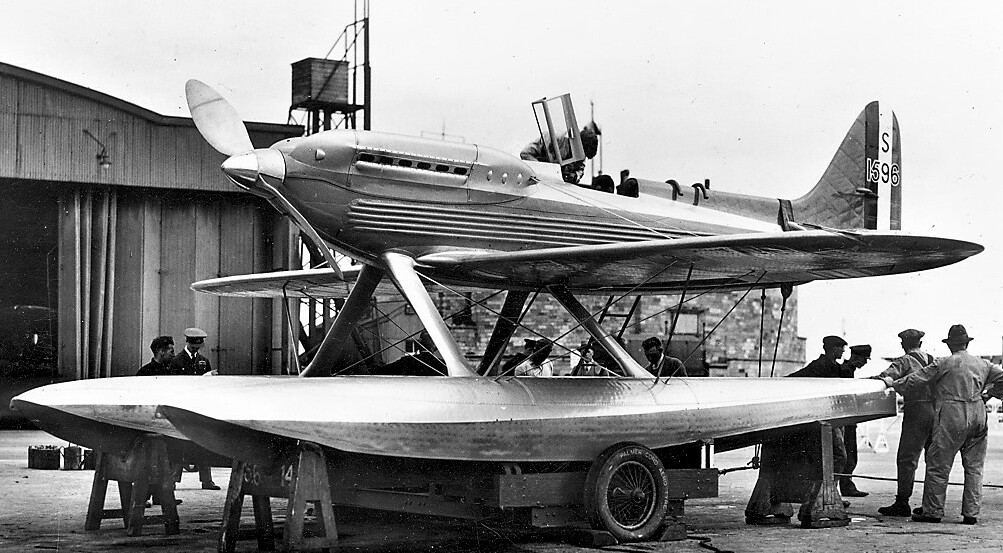
Pontoon, an airtight flotation device
A float (also called a pontoon) is an airtight hollow structure, similar to a pressure vessel, designed to provide buoyancy in water. Its principal applications are in watercraft hulls, aircraft floats, floating piers, aquaculture, pontoon bridges, and marine engineering applications such as salvage.
Applications
Floats make up the multipart hulls of catamarans and trimarans and provide buoyancy for floatplanes, seaplanes and houseboats. They are used in pontoon bridges, floating piers, and floats anchored to the seabed for recreation or dockage. They are also used in shipbuilding and marine salvage, often deployed uninflated and then pressurized to raise sunken objects. In military applications, floats are used as pontoon bridges or transportation platforms for heavy vehicles or machinery.
In popular usage, the term pontoon can refer to any of several of the following objects that make use of nautical floats.
Pontoon boat
Main article: Pontoon boat
A pontoon boat is a flattish boat that relies on nautical floats for buoyancy. Common boat designs are a catamaran with two pontoons, or a trimaran with three. In many parts of the world, pontoon boats are used as small vehicle ferries to cross rivers and lakes.
Anchored platform
_taken_at_Port_Vincent,_South_Australia.jpg)
Floats are used as floating commercial docks and work areas, and as rafts for swimming, diving, and other recreational activities. Most familiarly, they are anchored seasonally at beaches and lake shores, or year-round where weather permits. They are variously supported by foam-filled plastic floats, closed cell foam, or air-filled vessels (such as used 55-gallon drums). Known as "swim floats" in North America, they are known simply as "pontoons" in Australia and New Zealand.
In aquaculture

Various forms of floating platforms, tanks, growing cages, and work areas are used in aquaculture, all employing some form of artificial buoyancy generically known as "floats".
Floating dock
Main article: Floating dock (jetty)
A floating dock, floating pier or floating jetty consists of a platform or ramp supported by nautical floats. It is sometimes joined to the shore with a gangway but can be laid out the whole way from the shore to the end. This type of pier maintains a fixed vertical relationship to watercraft secured to it.
Salvage pontoon
A salvage pontoon, sometimes known as a lift bag, is a pontoon used to raise a sunken watercraft, or provide additional buoyancy. Salvage pontoons can be either flexible and inflatable, or a fixed size. Usually cylindrical in shape, they can be used either in a ship's internal spaces, or externally. In addition to raising sunken vessels, they are also commonly used for long tows, for providing buoyancy to cables and so on.
Pontoon bridge
Main article: Pontoon bridge
A pontoon bridge (also known as a ponton bridge or floating bridge) uses floats or shallow-draft boats to support a continuous deck for pedestrian and vehicle travel. Most, but not all, pontoon bridges are temporary, used in wartime and civil emergencies. Seattle in the US and Kelowna in British Columbia, Canada are two places with permanent pontoon bridges, see William R. Bennett Bridge in British Columbia and these in Seattle: Lacey V. Murrow Memorial Bridge, Evergreen Point Floating Bridge and Homer M. Hadley Memorial Bridge.
Floatplane
Main article: Floatplane
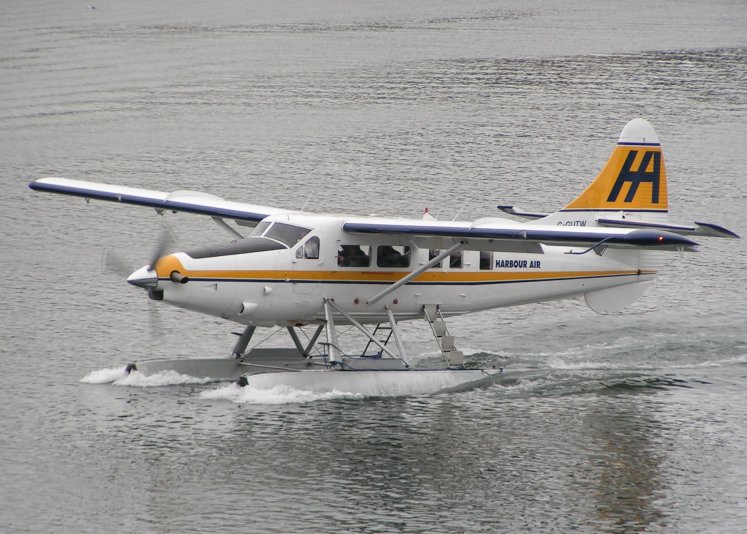
A floatplane (float plane or pontoon plane) is a type of seaplane with one or more floats mounted under the fuselage to provide buoyancy. Floats are streamlined to be both hydro- and aerodynamic.
Construction
Pontoons for marine industrial uses are usually fabricated from steel. Pontoons as parts of watercraft and aircraft are more typically molded in glass-reinforced plastic. Other techniques include those of traditional wooden boatbuilding as well as plywood over wooden ribs or metal sheets over metal ribs (aluminium or steel), reflecting the prevailing practice in aircraft and boats. In most cases, the decking surface on top of the pontoon is made from glass-reinforced plastic (GRP) or composite lumber. In model building, floats can easily be carved out of solid blocks or laminated sheets of foam.
Gallery
Image:Catamaranedan.jpg|Small open catamaran Image:Dragonflyextended.jpg|Foldable trimaran with the floats in extended position File:Port pontoon of a Sikorsky Sea King.jpg|A helicopter pontoon that may be augmented by an inflatable emergency pontoon shown in black File:RV Chetlo pontoon boat contruction.jpg|The underside of a pontoon boat during construction
References
References
- (1996). "The Cruising Multihull". International Marine/Ragged Mountain Press.
- Hearst Magazines. (January 1990). "Popular Mechanics". Hearst Magazines.
- Bonnier Corporation. (July 1931). "Popular Science". Bonnier Corporation.
- (12 January 2016). "Murray Rose Pool - formerly Redleaf Pool, Double Bay 2028".
- Leonardo Fernández Troyano. (2003). "Bridge Engineering: A Global Perspective". Thomas Telford.
- Gregory P. Tsinker. (2004). "Port Engineering: Planning, Construction, Maintenance, and Security". John Wiley & Sons.
- "rchomepage.com".
This article was imported from Wikipedia and is available under the Creative Commons Attribution-ShareAlike 4.0 License. Content has been adapted to SurfDoc format. Original contributors can be found on the article history page.
Ask Mako anything about Float (nautical) — get instant answers, deeper analysis, and related topics.
Research with MakoFree with your Surf account
Create a free account to save articles, ask Mako questions, and organize your research.
Sign up freeThis content may have been generated or modified by AI. CloudSurf Software LLC is not responsible for the accuracy, completeness, or reliability of AI-generated content. Always verify important information from primary sources.
Report