From Surf Wiki (app.surf) — the open knowledge base
Fleet Air Arm (RAN)
Naval aviation arm of the Royal Australian Navy

Naval aviation arm of the Royal Australian Navy
| Field | Value | |||
|---|---|---|---|---|
| unit_name | Fleet Air Arm | |||
| start_date | 3 July 1947 | |||
| country | Australia | |||
| image | [[File:RAN aviation crest.gif | 170 px]] | ||
| caption | Fleet Air Arm emblem | |||
| type | Naval Aviation | |||
| command_structure | ||||
| garrison | HMAS Albatross | |||
| garrison_label | Airbase | |||
| motto | Unrivalled | |||
| website | Royal Australian Navy – Fleet Air Arm | |||
| current_commander | Commodore Don Dezentje | |||
| current_commander_label | Commander, Fleet Air Arm | |||
| identification_symbol | [[File:Roundel of Australia.svg | 75px]] [[File:Roundel of Australia - Low Visibility.svg | 75px]] | |
| identification_symbol_label | Roundels | |||
| identification_symbol_2 | [[File:Naval Ensign of Australia.svg | centre | border | 100px]] |
| identification_symbol_2_label | White Ensign | |||
| identification_symbol_3 | ||||
| identification_symbol_3_label | Badge | |||
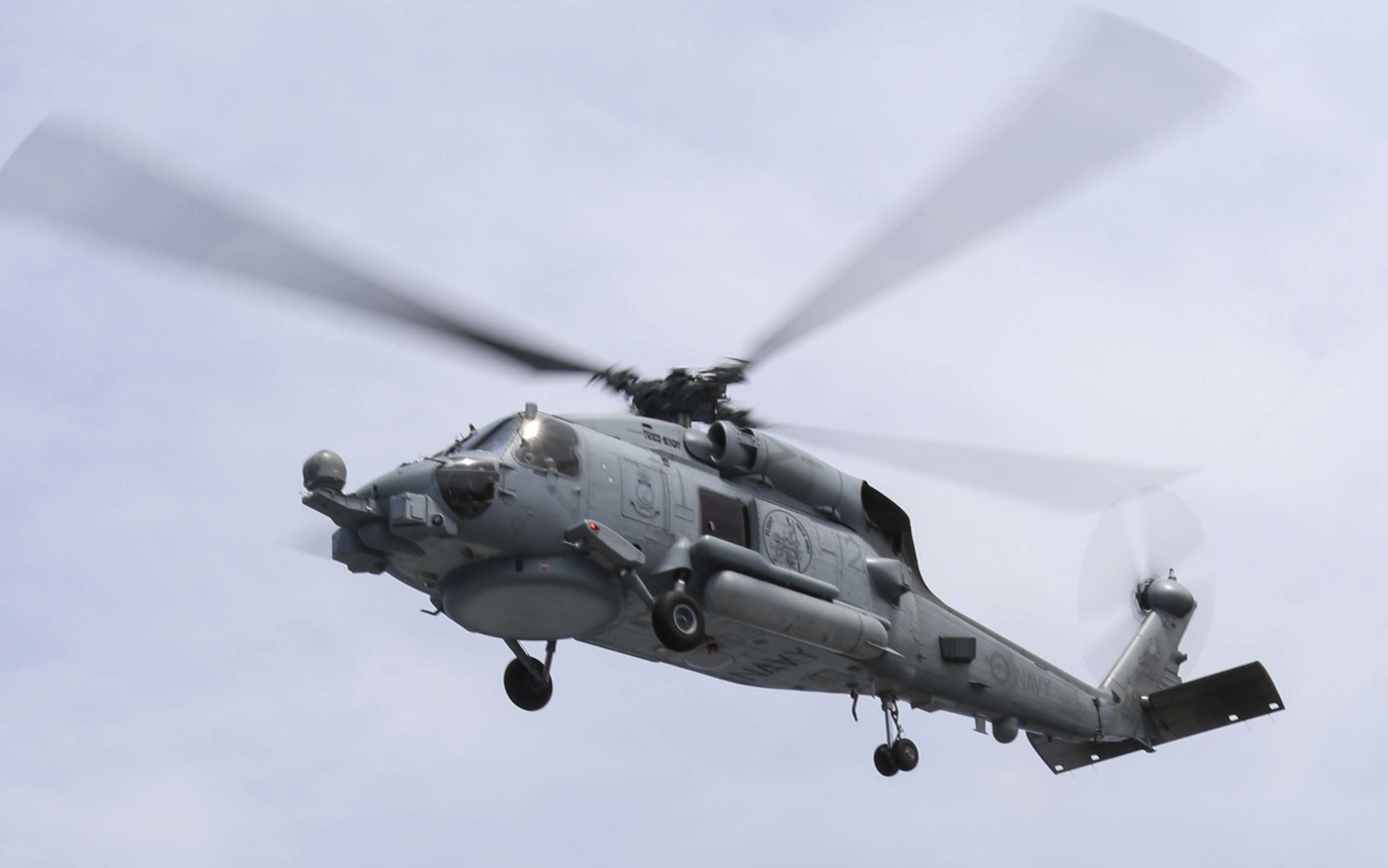
| aircraft_attack | MH-60R Seahawk | |||
| aircraft_trainer | Eurocopter EC135 |
The Fleet Air Arm (FAA), known formerly as the Australian Navy Aviation Group, is the division of the Royal Australian Navy (RAN) responsible for the operation of aircraft. The FAA was founded in 1947 following the purchase of two aircraft carriers from the Royal Navy. FAA personnel fought in the Korean War (operating from the carrier ) and the Vietnam War (attached to a Royal Australian Air Force squadron and a United States Army Aviation company), and participated in later conflicts and operations from host warships.
Initially operating only fixed-wing aircraft, helicopters were first acquired by the FAA in 1952, forming Australia's first helicopter squadron. Helicopter usage increased over time, particularly after 1982, when the carrier was decommissioned and not replaced. In 2000, following the removal from service of the land-based Hawker Siddeley HS 748 aircraft, the FAA became an all-helicopter force, operating in the anti-submarine warfare and maritime support roles. As of 2018, the FAA consists of five active squadrons, operating four helicopter types and two types of UAVs.
History
Main article: History of Australian naval aviation
During the 1920s, the RAN attempted to acquire government support for an Australian Fleet Air Arm, modelled loosely on the Royal Naval Air Service and its Royal Air Force-controlled successor, the Fleet Air Arm. This was approved as part of improvements to Australia's military, but opposition by the Royal Australian Air Force (RAAF) prompted the Cabinet to disband the organisation in January 1928, shortly after its establishment. The RAAF assumed responsibility for naval aviation, which consisted primarily of amphibious aircraft flown by No. 101 Flight RAAF (and its successors, No. 5 Squadron, then No. 9 Squadron) from the RAN's cruisers and the seaplane tender .
The successes of naval aviation during World War II reignited the idea of a RAN-controlled aviation force, with suggestions that Australia provide the personnel to operate a British aircraft carrier and the attached squadrons voiced during 1944, although the offer was withdrawn in mid 1945 because of manpower shortages. A review by the Australian Government's Defence Committee held after World War II recommended that the post-war forces of the RAN be structured around a Task Force incorporating multiple aircraft carriers. Initial plans were for three carriers, with two active and a third in reserve, although funding cuts led to the purchase of the light fleet carriers, Majestic and Terrible from the Royal Navy in June 1947. A Fleet Air Arm was established on 3 July 1947 by the Commonwealth Defence Council to operate aircraft from these two carriers, and also maintain two former Royal Australian Air Force bases as support facilities: these became at Nowra, New South Wales, and at Schofields, New South Wales. As Terrible was the closer of the two ships to completion, construction was finished without major modification. The ship was commissioned into the RAN as on 16 December 1948. Sydneys maiden voyage saw the delivery of the first two squadrons operated by the Fleet Air Arm: 805 Squadron with Hawker Sea Furies, and 816 Squadron with Fairey Fireflies. The two squadrons operated as the 20th Carrier Air Group (CAG).
During the Korean War, Sydney was deployed to Korean waters in late 1951, with a wartime CAG of 805, 808, and 817 Squadrons embarked. The Fleet Air Arm operated in a strike, ground support, and escort role during the deployment, which saw three RAN pilots killed and a fourth seriously wounded, while thirteen aircraft were lost. Nine of these were shot down by North Korean flak artillery, with aircraft damaged by flak on at least ninety other occasions. The other four were lost in deck accidents, or crashed because of foul weather. To allow the RAN to operate as a two-carrier force while Majestic was completed, the Royal Navy loaned the light carrier to the RAN in late 1952. Vengeance arrived in Australia with three Bristol Sycamore helicopters for the Fleet Air Arm. Although not the first helicopters to see military service in Australia (that title belonging to a Sikorsky S-51 of the Royal Australian Air Force), the Sycamores formed the first Australian military helicopter squadron, and prompted the establishment of Australia's first helicopter pilot school.
_in_May_1958.jpg)
Vengeance was returned to the United Kingdom in 1955, with the crew transferred to Majestic, which was commissioned into the RAN as on 28 October 1955. The new carrier delivered new aircraft to the Fleet Air Arm: the de Havilland Sea Venom jet fighter-bomber for 805 and 808 Squadrons, and the turboprop-driven Fairey Gannet anti-submarine aircraft for 816 and 817 Squadrons. By the end of the 1950s, with Sydney decommissioned from service and refitted as a troop transport, it was decided that fixed-wing naval aviation would be replaced by a force of 27 Westland Wessex anti-submarine helicopters, to operate from Melbourne. This decision was rescinded in 1963, with Grumman S-2E Tracker anti-submarine aircraft and McDonnell Douglas A-4G Skyhawk fighter aircraft ordered for the Fleet Air Arm. Although Melbourne and her air group played no role in the Vietnam War, Australian naval aviators saw action as part of Royal Australian Navy Helicopter Flight Vietnam (a component of the joint Australian-American Experimental Military Unit) and the RAN Detachment, 9 Squadron Vietnam (attached to No. 9 Squadron RAAF).
In 1972, the Fleet Air Arm's Wessex helicopters were replaced with Westland Sea King anti-submarine helicopters, although a small number of Wessexes continued to serve in utility and search-and-rescue roles. Melbourne remained in service until mid-1982, when she was placed in reserve. The Australian government initially planned to purchase from the Royal Navy and operate Harriers and helicopters from her, but the British withdrew the offer after the ship's performance in the Falklands War, and the 1983 election of the Australian Labor Party saw the cancellation of plans to replace Melbourne. With no aircraft carrier, carrier-borne fixed-wing aviation in the RAN ended on 30 June 1983 with the decommissioning of several squadrons, and many RAN pilots joined the Army and RAAF, or transferred to the aviation branches of other nations' navies. The RAN Skyhawks were sold to the Royal New Zealand Air Force, and the Trackers were removed from service and sold to a private company for disposal.

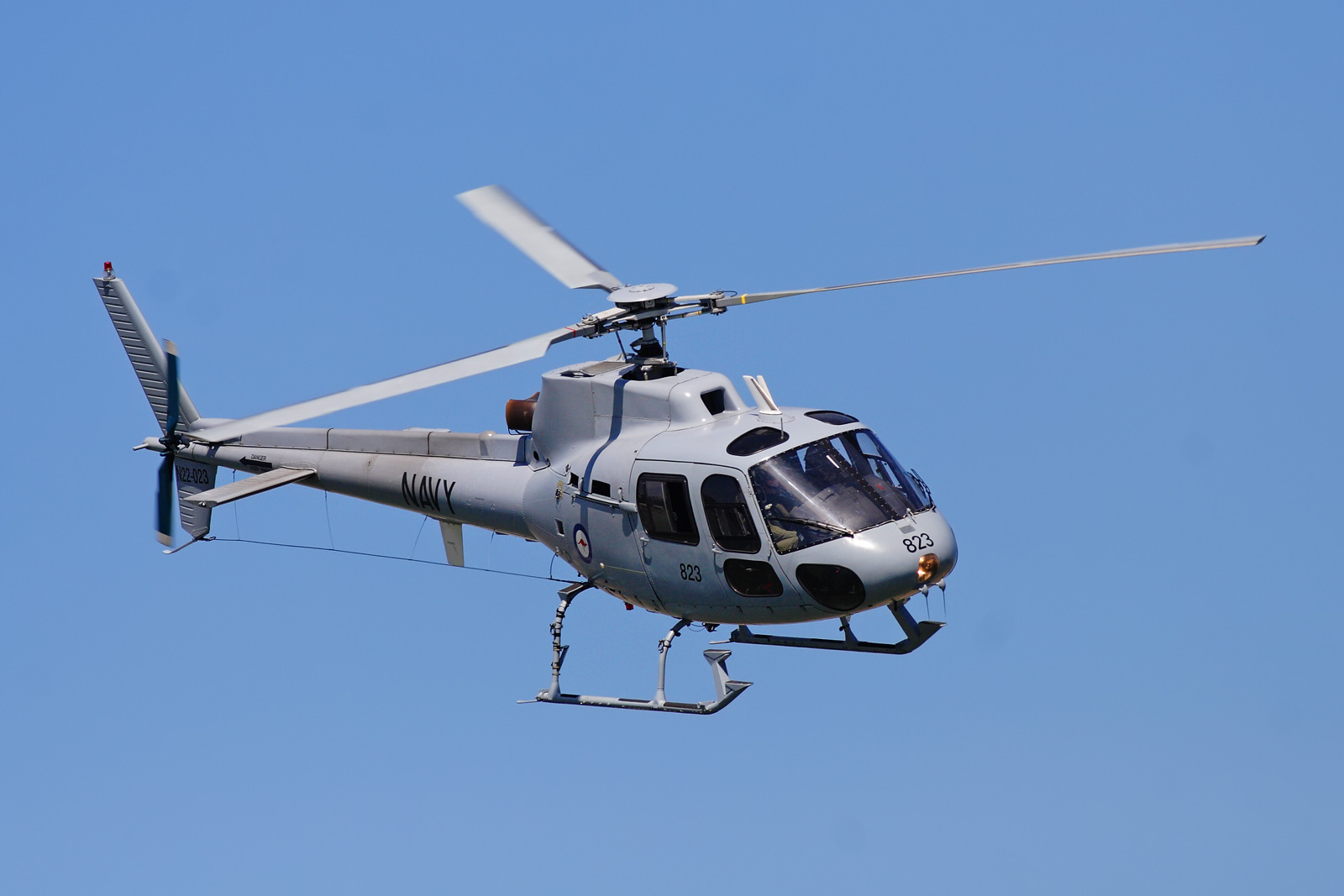
Before being sold off, the RAN Trackers were flown from land bases as patrol and surveillance aircraft, and HS 748 aircraft continued on in the electronic warfare training and transport roles after all other fixed-wing assets were disposed of. The shift from full, carrier-embarked squadrons to single- or two-helicopter flights operating from frigates forced overhauls of the management and organisational style of the FAA, with squadrons made to act with increasing independence and less experienced junior officers taking greater responsibility for the aviation activities of their assigned ship. During the 1980s, the Eurocopter Ecureuil (Squirrel) and Sikorsky S-70 Seahawk were acquired to operate from the frigates. During the early 1990s, these helicopters operated aboard Australian ships deployed to support the international coalition during the Gulf War; they were used for anti-air surveillance and surface search, to deliver boarding parties to interdicted ships, and provide search-and-rescue capabilities. During 1992, FAA Sea Kings were embarked aboard for Operation Solace, part of the famine-relief operation in Somalia.
During the 1990s, the FAA ordered several refurbished Kaman SH-2G Super Seasprite helicopters to operate from the frigates in the anti-submarine and anti-surface roles. Although due to enter service in the early 2000s, the helicopters were not operational until 2006, and were grounded shortly after with concerns over their airworthiness, flight control system, crash survivability, and inability to operate in poor weather. The delays and problems with the acquisition led to the cancellation of the project in March 2008, and the completed helicopters were returned to Kaman.
Since 2000, when the last pair of HS 748s were retired, the Fleet Air Arm has been an entirely rotary-winged force. The Fleet Air Arm became responsible for the operation and maintenance of the RAN's helicopter force from the frigates of the Adelaide and Anzac classes and from the RAN's amphibious and support ships.
Current squadrons
Main article: List of Australian Fleet Air Arm flying squadrons
RAN squadrons follow the same numbering system as those of the Royal Navy, with operational units numbered from 800 onwards and training units numbered from 700 onwards:
| Squadron | Type | Aircraft | Base | Role | Notes | ||||||||||||
|---|---|---|---|---|---|---|---|---|---|---|---|---|---|---|---|---|---|
| 723 Squadron | Rotary | url=http://www.navy.gov.au/Aviation_Group | title=Aviation Group | publisher=Royal Australian Navy | access-date=6 January 2011 | url-status=dead | archive-url=https://web.archive.org/web/20110309234725/http://www.navy.gov.au/Aviation_Group | archive-date=9 March 2011 }} | Nowra | Helicopter Aircrew Training System Retention and Motivation Initiative II | Also provides the RAN helicopter display team | ||||||
| 725 Squadron | Rotary | MH-60R Romeo Seahawk | Nowra | last=Clare | first=Jason | title=Joint Media Release – Capability Update – Air Projects | url=http://www.minister.defence.gov.au/2012/12/13/minister-for-defence-and-minister-for-defence-materiel-joint-media-release-capability-update-%E2%80%93-air-projects/ | work=Minister of Defence Material | publisher=Department of Defence | access-date=13 December 2012 | url-status=dead | archive-url=https://web.archive.org/web/20130308051648/http://www.minister.defence.gov.au/2012/12/13/minister-for-defence-and-minister-for-defence-materiel-joint-media-release-capability-update-%E2%80%93-air-projects/ | archive-date=8 March 2013}} | title=Milestone moments in MH60R training | date=15 August 2013 | work=Navy News | page=10}} |
| 808 Squadron | Rotary | Nowra | Tactical Transport/ Small ship flights | Flight numbers 801- 807 | |||||||||||||
| 816 Squadron | Rotary | Nowra | Small ship flights | Flight numbers 601 - 607 | |||||||||||||
| 822X Squadron | UAV | Insitu ScanEagle | Nowra | Trials unit | |||||||||||||
| Camcopter S-100 |
723 Squadron was the last unit in the Fleet Air Arm to operate fixed wing aircraft, when it withdrew its pair of HS 748s in June 2000. The last operational fixed wing squadron was 851 Squadron, which operated both HS 748s and S-2 Trackers until it was disbanded in August 1984. 816 Squadron was one of the FAA's two carrier-based fixed wing units, operating the Tracker (the other being 805 Squadron operating the A-4 Skyhawk) when HMAS Melbourne was decommissioned in 1982.
An additional flying unit of the Royal Australian Navy was the Laser Airborne Depth Sounder Flight, based at Cairns, which, following the withdrawal of the HS748, operated the only remaining fixed-wing aircraft in the RAN's inventory. This unit was not under the operational control of the Fleet Air Arm, but was instead part of the Australian Hydrographic Service, with both RAN and civilian personnel. The LADS flight was disbanded in 2019.
_JP442971.jpg)
Flying training
The RAN is not responsible for the initial basic and advanced flying training of its new aircrew. Basic flying training is undertaken by the tri-service Basic Flying Training School at Tamworth Airport, while advanced training for RAN pilots and training for observers is run by the Royal Australian Air Force:
- Advanced training for pilots is undertaken by No.2 Flying Training School at RAAF Base Pearce.
- Training for observers is undertaken by No.32 Squadron at RAAF Base East Sale.
Once RAN aircrew have passed through this process, they are posted to 723 Squadron for helicopter conversion training, before joining one of the two operational squadrons. 725 Squadron has been reformed to serve as a conversion unit for the new MH-60R Romeo Seahawk.
1: Described as "Maritime Aviation Warfare Officers"
Aircraft
Main article: List of aircraft of the Royal Australian Navy
Current
Since 2000, when the last pair of HS 748s were retired, the Fleet Air Arm has been an entirely rotary winged force. Air defence of the fleet is primarily the task of the Hobart-class guided missile destroyers, armed with the SM-2 Standard SAM; these are supported when possible by the F/A-18 Hornets of the RAAF. The Department of Defence in the 2020 Force Structure Plan reported it planned to expand and rationalise the RAN's helicopter fleet. In October 2021, the US approved a Foreign Military Sale (FMS) to Australia of 12+1 additional MH-60Rs. On 13 October 2021, an MH-60R was lost in the Philippine Sea with the 3 crew only suffering minor injuries. The remaining 23 were temporarily grounded as a result.
| Aircraft | Origin | Type | Variant | In service | Notes | Maritime Patrol | Trainer Aircraft | ||||
|---|---|---|---|---|---|---|---|---|---|---|---|
| MH-60R Seahawk | United States | ASW / SAR | 23 | Originally 24. 1 lost. In 2021, the US approved a potential sale of 12 additional MH-60Rs. An additional MH-60 will be purchased to replace the one lost. | |||||||
| Eurocopter EC135 | Germany | rotorcraft trainer | url= https://www.flightglobal.com/news/articles/analysis-2019-world-air-forces-directory-454126/ | title = World Air Forces 2019 | publisher= Flightglobal Insight | year= 2019 | access-date= 12 May 2019}} | Shared with Army |
Past plans
In the 2009 Defence White Paper, Defending Australia in the Asia Pacific Century: Force 2030, the government stated that the RAN needed 24 new naval combat helicopters by 2014, to replace the Seahawks and compensate for the cancelled Super Seasprite acquisition. The requirement called for a helicopter capable of both anti-submarine and anti-surface warfare, as well as search-and-rescue and troop transport (primarily of boarding parties) roles. Two aircraft were considered: the NATO Frigate Helicopter variant of the NH90, and the MH-60 Romeo, a version of the Sikorsky SH-60 Seahawk. On 1 June 2011, Defence Minister Stephen Smith announced that the MH-60 Romeo had been chosen, and the 24 helicopters would be delivered between 2014 and 2020.
Under current plans, the Royal Australian Navy's amphibious vessels can accommodate up to eighteen helicopters. Although the ships are potentially capable of operating STOVL fixed-wing aircraft, such as the F-35B Lightning and the V-22 Osprey, the operation of fixed-wing aircraft was not a tender criterion, and despite numerous suggestions, the Australian Government indicated that it did not intend to purchase fixed wing aircraft for the Fleet Air Arm to operate from the Canberra class. However, in 2014, both Tony Abbott, the Prime Minister, and David Johnston, the Minister for Defence indicated that the 2015 Defence White Paper could potentially consider the purchase of a number of F-35B aircraft as part of the final tranche of F-35 orders for Australia. In mid-2015, following evidence presented to a committee of the Australian Senate in which the Department of Defence conceded that there would be significant costs in adapting the two Canberra-class ships to operate the F-35B, the plan was dropped from the intended list of proposals that would be included in the government's upcoming defence white paper.
Retired
Examples of many aircraft operated by the Fleet Air Arm are on display at the Fleet Air Arm Museum at HMAS Albatross
_1972.jpeg)


| Aircraft | Origin | Type | Variant | In service | Notes | Combat Aircraft | Transport | Helicopters | Trainer Aircraft | Drone | ||||
|---|---|---|---|---|---|---|---|---|---|---|---|---|---|---|
| Fairey Firefly | United Kingdom | fighter-bomber | 108 | carrier-based aircraft - retired in 1958 | ||||||||||
| Hawker Sea Fury | United Kingdom | fighter-bomber | url= https://www.flightglobal.com/pdfarchive/view/1955/1955%20-%200618.html | title = World Air Forces 1955 pg. 618 | publisher= Flightglobal Insight | year= 1955 | access-date= 4 June 2019}} | carrier-based aircraft - retired in 1962 | ||||||
| Fairey Gannet | United Kingdom | fighter-bomber / ASW | 36 | carrier-based aircraft - retired in 1967 | ||||||||||
| de Havilland Sea Venom | United Kingdom | fighter-bomber / ASW | 39 | carrier-based aircraft – retired in 1967 | ||||||||||
| Grumman S-2 | United States | ASuW / ASW | 32 | carrier-based aircraft - retired in 1984 | ||||||||||
| A-4 Skyhawk | United States | fighter-bomber | TA-4G/A-4G | 20 | carrier-based aircraft - retired in 1984 | |||||||||
| Supermarine Sea Otter | United Kingdom | SAR / transport | 3 | in service from 1948 to 1954 | ||||||||||
| Douglas C-47 | United States | transport | 4 | in service from 1949 to 1977 | ||||||||||
| Auster Autocar | United Kingdom | transport / communications | 2 | in service from 1953 to 1965 | ||||||||||
| Hawker Siddeley HS 748 | United Kingdom | transport / EW | 2 | in service from 1973 to 2000 | ||||||||||
| Bristol Sycamore | United Kingdom | utility / liaison | 13 | in service from 1953 to 1965 | ||||||||||
| Westland Wessex | United Kingdom | ASW / SAR | 27 | in service from 1962 to 1989 | ||||||||||
| Westland Scout | United Kingdom | patrol / SAR | 2 | in service from 1963 to 1977 | ||||||||||
| Bell UH-1 | United States | utility | UH-1D/C | 7 | in service from 1964 to 1987 | |||||||||
| Bell OH-58 | United States | utility | OH-58B | 4 | in service from 1974 to 2000 | |||||||||
| Eurocopter AS350 Écureuil | France | in service from 1984 to 2017 | ||||||||||||
| Westland Sea King | United Kingdom | ASW / SAR | Mk 50A | 12 | in service from 1976 to 2011 | |||||||||
| SH-2G Super Seasprite | United States | ASW / SAR | 15 | in service from 2001 to 2008 | ||||||||||
| S-70 Seahawk | United States | ASW / SAR | S-70B | 16 | in service from 1989 to 2017 | |||||||||
| CAC Wirraway | Australia | trainer | 17 | in service from 1948 to 1957 | ||||||||||
| de Havilland Tiger Moth | Australia | trainer | 3 | in service from 1948 to 1957 | ||||||||||
| de Havilland Vampire | United Kingdom | jet trainer | 13 | in service from 1954 to 1972 | ||||||||||
| Aermacchi MB-326 | Italy | jet trainer | MB-326H | 10 | in service from 1970 to 1983 | |||||||||
| Eurocopter AS350 | France | rotorcraft trainer | Squirrel AS350BA | 24 | in service from 1984 to 2017 | |||||||||
| Bell 429 | United States | rotorcraft trainer | Bell 429 | 3 | in service from 2012 to 2019 | |||||||||
| Northrop KD2R-5 | United States | target drone | in service from 1965 to 1973 | |||||||||||
| GAF Turana | Australia | target drone | in service from 1966 to 2000 | |||||||||||
| GAF Jindivik | Australia | target drone | in service from 1966 to 2000 | |||||||||||
| Beechcraft MQM-107 | United States | target drone | MQM-107E | in service from 1998 to 2008 |
Weapons and equipment
Current
- AGM-114 Hellfire
- Mark 46 torpedo
- Mark 54 Lightweight Torpedo
Notes
A LADS-equipped Bombardier Dash 8 is owned by the RAN, but this is attached to the Royal Australian Navy Hydrographic Service, not the FAA.
Refers to the number of individual aircraft operated by the FAA over the entire service life, not the number of aircraft in operation at any point within that service life.
References
Sources
Books
Journal articles and reports
References
- Royal Australian Navy. "Fleet Air Arm".
- ANAM, ''Flying Stations'', pp. 15–6
- ANAM, ''Flying Stations'', pp. 16–7
- ANAM, ''Flying Stations'', pp. 16–21
- ANAM, ''Flying Stations'', pp. 29–35
- Donohue, ''From Empire Defence to the Long Haul'', p. 33
- Donohue, ''From Empire Defence to the Long Haul'', pp. 38, 45–47
- ANAM, ''Flying Stations'', pp. 43–4
- Wright, ''Australian Carrier Decisions'', p. 151
- Hobbs, in ''The Navy and the Nation'', p. 211
- McCaffrie, in ''Sea power ashore and in the air'', p. 173
- ''Sydney'' returned to England in 1950 to collect the [[21st Carrier Air Group]]: [[808 Squadron RAN. 808]] and [[817 Squadron RAN. 817]] Squadrons, with Sea Furies and Fireflies, respectively.McCaffrie, in ''Sea power ashore and in the air'', pp. 173–4
- McCaffrie, in ''Sea power ashore and in the air'', pgs. 174, 177
- Cooper, in ''The Royal Australian Navy'', p. 177
- McCaffrie, in ''Sea power ashore and in the air'', p. 178
- Meanwhile, ''Majestic'' was undergoing major upgrades during construction to operate jet aircraft, including the installation of an [[Flight deck#Angled flight deck
- Donohue, ''From Empire Defence to the Long Haul'', p. 94
- Australian Naval Aviation Museum, ''Flying Stations'', p. 111
- Wright, ''Australian Carrier Decisions'', p. 160
- These aircraft were due to become obsolete in the late 1950s, and the RAN considered purchasing modern aircraft of French or Italian design, which were smaller than British developments and better suited to light carrier operations.Cooper, ''The Royal Australian Navy'', p. 187.
- Cooper, ''The Royal Australian Navy'', p. 193.
- Cooper, in ''The Royal Australian Navy'', pp. 193–194.
- "Naval Operations in Vietnam". Royal Australian Navy.
- Bishop & Chant, ''Aircraft carriers'', p. 62
- Jones, in ''The Royal Australian Navy'', p. 227
- Wright, ''Australian Carrier Decisions'', p. 167.
- Hobbs, ''HMAS Melbourne – 25 Years On'', p. 9
- Jones, in ''The Royal Australian Navy'', pp. 227–8
- Mison, Graham. "Sea Harrier Down Under". Harrier.org.uk.
- ANAM, ''Flying Stations'', p. 256
- ANAM, ''Flying Stations'', pgs. 241-3, 256, 258
- ANAM, ''Flying Stations'', pgs. 259, 272
- ANAM, ''Flying Stations'', pp. 259–60
- ANAM, ''Flying Stations'', pp. 266–71
- ANAM, ''Flying Stations'', p. 272
- Walters, Patrick. (10 February 2007). "Seasprite headed for the junk pile". The Australian.
- Walters, Patrick. (18 June 2009). "$1.4bn wasted on cancelled Seasprite". The Australian.
- "Seasprite helicopter project approved". beehive.govt.nz.
- Dennis, et al., ''The Oxford Companion to Australian Military History'', p. 210
- "Aviation Group". Royal Australian Navy.
- Clare, Jason. "Joint Media Release – Capability Update – Air Projects". Department of Defence.
- (15 August 2013). "Milestone moments in MH60R training". Navy News.
- (26 October 2018). "Navy Commissions 822X Squadron to Operate UAVs". Australian Aviation.
- "723 Squadron History". Royal Australian Navy.
- "851 Squadron History". Royal Australian Navy.
- [http://www.navy.gov.au/history/squadron-histories/816-squadron-history 816 Squadron History] {{Webarchive. link. (2 January 2016 – Royal Australian Navy website)
- . ["Laser Airborne Depth Sounder"](http://www.navy.gov.au/fleet/aircraft/laser-airborne-depth-sounder).
- McPherson, James. (8 November 2019). "Last sortie for LADS". Australian Government.
- Ferguson, Gregor. (1 September 2009). "Training: BAE looks at their flight training options". Yaffa Publishing Group.
- [http://www.airforce.gov.au/Technology/Aircraft/King-Air-350/?RAAF-1UXcfkRioyHXoz1xqhxeNjse8bCU06lw KA350 King Air] {{Webarchive. link. (12 September 2015 – Royal Australian Air Force)
- (19 June 2006). "MR90H to replace Sea King and Blackhawk helicopters". Office of the Minister of Defence.
- (2020). "2020 Force Structure Plan". Commonwealth of Australia.
- (8 October 2021). "Australia – MH-60R Multi-Mission Helicopters and related defense services".
- Andrew McLaughlin. (2021-10-18). "RAN MH-60R Romeos return to flight".
- (2019). "World Air Forces 2019". Flightglobal Insight.
- Department of Defence, ''Defending Australia in the Asia Pacific Century'', p. 72
- Norris, ''Battling Behemoths'', p. 130
- Johnstone, ''AIR 900 Phase 8'', pp. 5–9
- Walters, Patrick. (23 October 2009). "Military opts for US chopper". The Australian.
- Thompson, Jeremey. (16 June 2011). "Smith announces $3b chopper deal". ABC News.
- . ["Amphibious Assault Ship (LHD)"](http://www.navy.gov.au/fleet/ships-boats-craft/lhd).
- Borgu, Aldo. (2004). "Capability of First Resort? Australia's Future Amphibious Requirement". [[Australian Strategic Policy Institute]].
- Joint Standing Committee on Foreign Affairs Defence and Trade (2004) [http://www.aph.gov.au/house/committee/jfadt/maritime/report/chapter5.pdf Australia's Maritime Strategy] {{webarchive. link. (29 June 2011 . Page 95.)
- Gillis, Kim. (2007). "Interview. Landing Helicopter Dock Project – Canberra Class". DefenceToday.
- (23 May 2014). "White Paper to consider F-35Bs for LHDs – report". australianaviation.com.au.
- (7 July 2015). "PM's floating fighter jet plan quietly sunk by Defence". Australian Financial Review.
- "RAN N1 Fairey Firefly". adf-serials.com.au.
- (1955). "World Air Forces 1955 pg. 618". Flightglobal Insight.
- "Bell 429 Global Ranger {{!".
This article was imported from Wikipedia and is available under the Creative Commons Attribution-ShareAlike 4.0 License. Content has been adapted to SurfDoc format. Original contributors can be found on the article history page.
Ask Mako anything about Fleet Air Arm (RAN) — get instant answers, deeper analysis, and related topics.
Research with MakoFree with your Surf account
Create a free account to save articles, ask Mako questions, and organize your research.
Sign up freeThis content may have been generated or modified by AI. CloudSurf Software LLC is not responsible for the accuracy, completeness, or reliability of AI-generated content. Always verify important information from primary sources.
Report