From Surf Wiki (app.surf) — the open knowledge base
Flea allergy dermatitis
Skin disease of dogs and cats
Skin disease of dogs and cats
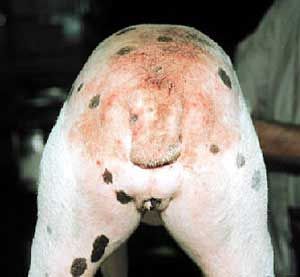
Flea allergy dermatitis is an eczematous itchy skin disease of dogs and cats. For both of these domestic species, flea allergy dermatitis is the most common cause of skin disease. Affected animals develop allergic reactions to chemicals in flea saliva. Symptoms of this reaction include erythema (redness), papules (bumps), pustules (pus-filled bumps), and crusts (scabs). If severe, hair loss will occur in the affected area. Dogs with flea allergy dermatitis often show hair loss and eczematous skin rash on the lower back, upper tail, neck, and down the back of the legs. Cats with flea allergy dermatitis may develop a variety of skin problems, including feline eosinophilic granuloma, miliary dermatitis, or self-inflicted alopecia from excessive grooming.
Cause
The flea found most commonly on both dogs and cats with a flea infestation is the cat flea, Ctenocephalides felis. Flea allergy dermatitis is a hypersensitive reaction to antigens in the saliva of fleas. In some individuals just a single bite that cause a reaction.
Symptoms
Animals with a hypersensitivity to flea saliva will develop a dermatitis characterised by pruritus, papules, self-induced partial alopecia, and crusted skin in cats. Lesions develop on the medial hind limbs and the dorsal posterior area.
Diagnosis
The diagnosis of flea allergy dermatitis is complicated by the grooming habits of pets. Cats in particular are very efficient at grooming out fleas, often removing any evidence of infestation. Fleas begin biting within 5 minutes of finding a host, and there are no flea treatments that kill fleas before biting occurs.
Treatment
The aim of treatment is to relieve the allergy-induced itch and to remove the fleas from the pet and its home environment. The majority of animals will lose their hypersensitivity to the antigen in flea saliva. In severe cases or to relieve symptoms more quickly, a pulicide is used. To treat the symptoms corticosteroids are used.
References
References
- (April 22, 2014). "Flea Allergy Dermatitis in Cats and Dogs".
- Durden, Lance A.. (2019). "Medical and Veterinary Entomology". Elsevier.
- (March 1994). "The cat flea: biology, ecology and control". Veterinary parasitology.
- (2010). "Textbook of veterinary internal medicine". Saunders.
This article was imported from Wikipedia and is available under the Creative Commons Attribution-ShareAlike 4.0 License. Content has been adapted to SurfDoc format. Original contributors can be found on the article history page.
Ask Mako anything about Flea allergy dermatitis — get instant answers, deeper analysis, and related topics.
Research with MakoFree with your Surf account
Create a free account to save articles, ask Mako questions, and organize your research.
Sign up freeThis content may have been generated or modified by AI. CloudSurf Software LLC is not responsible for the accuracy, completeness, or reliability of AI-generated content. Always verify important information from primary sources.
Report