From Surf Wiki (app.surf) — the open knowledge base
Flavonoid
Class of plant and fungus secondary metabolites

Class of plant and fungus secondary metabolites
Flavonoids (or bioflavonoids; from the Latin word flavus, meaning yellow, their color in nature) are a class of polyphenolic secondary metabolites found in plants. Blackberry, black currant, chokeberry, and red cabbage are examples of plants with rich contents of flavonoids. In plant biology, flavonoids fulfill diverse functions, including attraction of pollinating insects, antioxidant protection against ultraviolet light, deterrence of environmental stresses and pathogens, and regulation of cell growth.
Although commonly consumed in human and animal plant foods and in dietary supplements, flavonoids are not considered to be nutrients or biological antioxidants essential to body functions, and have no established effects on human health or prevention of diseases.
Chemically, flavonoids have the general structure of a 15-carbon skeleton consisting of two phenyl rings (A and B) and a heterocyclic ring (C, the ring containing the embedded oxygen). This carbon structure can be abbreviated C6-C3-C6. According to the IUPAC nomenclature, they can be classified into flavonoids or bioflavonoids, isoflavonoids, derived from 3-phenylchromen-4-one (3-phenyl-1,4-benzopyrone) structure, and neoflavonoids, derived from 4-phenylcoumarin (4-phenyl-1,2-benzopyrone) structure.
As ketone-containing compounds, the three flavonoid classes are grouped as anthoxanthins (flavones and flavonols). This class was the first to be termed bioflavonoids. The terms flavonoid and bioflavonoid have also been more loosely used to describe non-ketone polyhydroxy polyphenol compounds, which are more specifically termed flavanoids.
History
In the 1930s, Albert Szent-Györgyi and other scientists discovered that vitamin C alone was not as effective at preventing scurvy as the crude yellow extract from oranges, lemons or paprika. They attributed the increased activity of this extract to the other substances in this mixture, which they referred to as "citrin" (referring to citrus) or "vitamin P" (a reference to its effect on reducing the permeability of capillaries). The substances in question (hesperidin, eriodictyol, hesperidin methyl chalcone and neohesperidin) were later shown not to fulfil the criteria of a vitamin, so that the term "vitamin P" is now obsolete. File:Flavon.svg|Molecular structure of the flavone backbone (2-phenyl-1,4-benzopyrone) File:Isoflavan.svg|Isoflavan structure File:4-phenylcoumarin.svg|Neoflavonoids structure
Biosynthesis
Main article: Flavonoid biosynthesis
Flavonoids are secondary metabolites synthesized mainly by plants. The general structure of flavonoids is a fifteen-carbon skeleton, containing two benzene rings connected by a three-carbon linking chain. Therefore, they are depicted as C6-C3-C6 compounds. Depending on the chemical structure, degree of oxidation, and unsaturation of the linking chain (C3), flavonoids can be classified into different groups, such as anthocyanidins, flavonols, flavanones, flavan-3-ols, flavanonols, flavones, and isoflavones. Chalcones, also called chalconoids, although lacking the heterocyclic ring, are also classified as flavonoids. Furthermore, flavonoids can be found in plants in glycoside-bound and free aglycone forms. The glycoside-bound form is the most common flavone and flavonol form consumed in the diet.
Functions in plants
Numbering some 5,000 individual compounds, flavonoids are widely distributed in plants, fulfilling numerous functions, including attraction of pollinating insects, deterrence of environmental stresses, and regulation of cell growth. They are the most important plant pigments for flower coloration, producing yellow, red or blue pigmentation in petals evolved to attract pollinators.
In higher plants, they are involved in antioxidant roles in plant cells, filtration of ultraviolet light, symbiotic nitrogen fixation, and defense against pathogens and pests. They also act as plant chemical messengers, physiological regulators, and cell cycle inhibitors.
Subgroups
Flavonoids have been classified according to their chemical structure, and are usually subdivided into the following subgroups:
Anthocyanidins
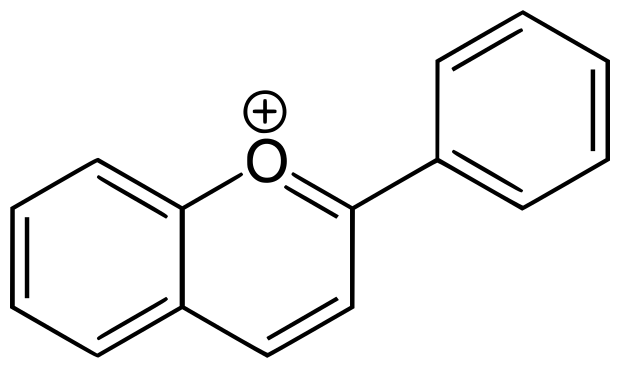
Anthocyanidins are the aglycones of anthocyanins; they use the flavylium (2-phenylchromenylium) ion skeleton. :Examples: cyanidin, delphinidin, malvidin, pelargonidin, peonidin, petunidin
Anthoxanthins
Anthoxanthins are divided into two groups:
:{| class="wikitable" !rowspan=3|Group !colspan=4|Skeleton !rowspan=3|Examples |- !rowspan=2|Description !colspan=2|Functional groups !rowspan=2|Structural formula |- !|3-hydroxyl !|2,3-dihydro |- ||[[Image:Flavone skeleton colored.svg]] ||Luteolin, Apigenin, Tangeritin |- or ||[[Image:Flavonol skeleton colored.svg]] ||Quercetin, Kaempferol, Myricetin, Fisetin, Galangin, Isorhamnetin, Pachypodol, Rhamnazin, Pyranoflavonols, Furanoflavonols, |}
Flavanones
Flavanones
| Group | Skeleton | Examples | Description | Functional groups | Structural formula | 3-hydroxyl | 2,3-dihydro | ||
|---|---|---|---|---|---|---|---|---|---|
| [](flavanones) | -- | ✗ | ✓ | [[Image:Flavanone skeleton colored.svg]] | Hesperetin, Naringenin, Eriodictyol, Homoeriodictyol |
Flavanonols
Flavanonols
| Group | Skeleton | Examples | Description | Functional groups | Structural formula | 3-hydroxyl | 2,3-dihydro | ||
|---|---|---|---|---|---|---|---|---|---|
| [](flavanonols) | |||||||||
| or | |||||||||
| **** | |||||||||
| or | |||||||||
| **** | --- | ✓ | ✓ | [[Image:Flavanonol skeleton colored.svg]] | Taxifolin (or Dihydroquercetin), Dihydrokaempferol |
Flavans

Include flavan-3-ols (flavanols), flavan-4-ols, and flavan-3,4-diols.
| Skeleton | Name | ||
|---|---|---|---|
| [[File:Flavan-3-ol.svg | 100px | Flavan-3-ol]] | Flavan-3-ol (flavanol) |
| [[File:Flavan-4-ol.svg | 100px | Flavan-4ol]] | Flavan-4-ol |
| [[File:Flavan-3,4-diol.svg | 100px | Flavan-3,4-diol]] | Flavan-3,4-diol (leucoanthocyanidin) |
- Flavan-3-ols (flavanols)
- Flavan-3-ols use the 2-phenyl-3,4-dihydro-2H-chromen-3-ol skeleton
- :Examples: catechin (C), gallocatechin (GC), catechin 3-gallate (Cg), gallocatechin 3-gallate (GCg), epicatechins (EC), epigallocatechin (EGC), epicatechin 3-gallate (ECg), epigallocatechin 3-gallate (EGCg)
- Theaflavin
- :Examples: theaflavin-3-gallate, theaflavin-3'-gallate, theaflavin-3,3'-digallate
- Thearubigin
- Proanthocyanidins are dimers, trimers, oligomers, or polymers of the flavanols
Isoflavonoids
- Isoflavonoids
- Isoflavones use the 3-phenylchromen-4-one skeleton (with no hydroxyl group substitution on carbon at position 2)
- :Examples: genistein, daidzein, glycitein
- Isoflavanes
- Isoflavandiols
- Isoflavenes
- Coumestans
- Pterocarpans
Dietary sources


Flavonoids (specifically flavanoids such as the catechins) are "the most common group of polyphenolic compounds in the human diet and are found ubiquitously in plants". Flavonols, the original bioflavonoids such as quercetin, are also found ubiquitously, but in lesser quantities. The widespread distribution of flavonoids, their variety and their relatively low toxicity compared to other active plant compounds (for instance alkaloids) mean that many animals, including humans, ingest significant quantities in their diet.
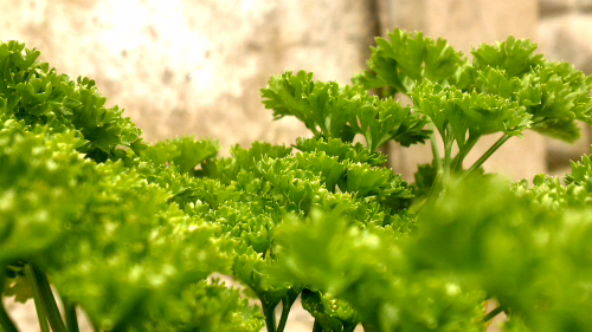
Foods with a high flavonoid content include blackberries, black currants, parsley, onions, blueberries and strawberries, red cabbage, black tea, dark chocolate, and citrus fruits. One study found high flavonoid content in buckwheat.
Citrus flavonoids include hesperidin (a glycoside of the flavanone hesperetin), quercitrin, rutin (two glycosides of quercetin, and the flavone tangeritin.
Peanut (red) skin contains significant polyphenol content, including flavonoids.
Dietary intake
_in_the_European_Union.png)
Food composition data for flavonoids were provided by the USDA database on flavonoids. In the United States NHANES survey, mean flavonoid intake was 190 mg per day in adults, with flavan-3-ols as the main contributor. In the European Union, based on data from the European Food Safety Authority (EFSA), mean flavonoid intake was 140 mg/d, although there were considerable differences among individual countries. The main type of flavonoids consumed in the EU and USA were flavan-3-ols (80% for USA adults), mainly from tea or cocoa in chocolate, while intake of other flavonoids was considerably lower.
_in_the_European_Union.png)
Non-nutrient status in humans
Flavonoids are not considered as nutrients because there is no evidence for a cause-and-effect on specific cells or organs in vivo. The European Food Safety Authority determined that dietary flavonoids do not have the characteristics of nutrients, as they do not reduce disease risk, affect physiological or behavioral functions, improve satiety, contribute calories, or influence the growth and development of children. The bioavailability of flavonoids is low because they are extensively metabolized in the stomach, small intestine and liver, and are rapidly excreted.
In the United States, flavonoids and other polyphenols are not included on the FDA list of nutrients.
Metabolism and excretion
Flavonoids are poorly absorbed in the human body (less than 5%), then are quickly metabolized into smaller fragments with unknown properties, and rapidly excreted. Flavonoids have negligible antioxidant activity in the body, and the increase in antioxidant capacity of blood seen after consumption of flavonoid-rich foods is not caused directly by flavonoids, but by production of uric acid resulting from flavonoid depolymerization and excretion.
Safety
Likely due to the low bioavailability and rapid metabolism and excretion of flavonoids, there are no safety concerns and no adverse effects associated with high dietary intakes of flavonoids from plant foods.
Regulatory status
Due to the absence of proof for flavonoid health effects in clinical research, neither the United States FDA nor the European Food Safety Authority has approved any flavonoids as prescription drugs.
The FDA has warned numerous dietary supplement and food manufacturers, including Unilever, producer of Lipton tea in the U.S., about illegal advertising and misleading health claims regarding flavonoids, such as that they lower cholesterol or relieve pain.
From 2020 to 2023, the FDA issued 11 warning letters to American manufacturers of flavonoid dietary supplements for false advertising of health claims and illegal misbranding of products.
Research
Antioxidant research
Although flavonoids inhibit free radical activity in vitro, high dietary intakes in humans would be 100 to 1,000 times less than circulating concentrations of dietary and endogenous antioxidants, such as vitamin C, glutathione, and uric acid. Further, after digestion and metabolism in the body, flavonoid derivatives would have lower antioxidant activity than the parent flavonoid, rendering the smaller flavonoid metabolite with negligible antioxidant function.
Clinical research
Although numerous preliminary clinical studies have been conducted to assess the potential for dietary flavonoid intake to affect disease risk, research has been inconclusive due to limitations of experimental design and absence of cause-and-effect evidence.
Inflammation
Inflammation has been implicated as a possible origin of numerous local and systemic diseases, such as cancer, cardiovascular disorders, diabetes mellitus, and celiac disease. There is no clinical evidence that dietary flavonoids affect any of these diseases.
Cancer
Clinical studies investigating the relationship between flavonoid consumption and cancer prevention or development are conflicting for most types of cancer, probably because most human studies have weak designs, such as a small sample size. There is little evidence to indicate that dietary flavonoids affect human cancer risk in general.
Cardiovascular diseases
Although no significant association has been found between flavan-3-ol intake and cardiovascular disease mortality, clinical trials have shown improved endothelial function and reduced blood pressure (with a few studies showing inconsistent results).
In 2013, the EFSA decided to permit health claims that 200 mg/day of cocoa flavanols "help[s] maintain the elasticity of blood vessels." The FDA followed suit in 2023, stating that there is "supportive, but not conclusive" evidence that 200 mg per day of cocoa flavanols can reduce the risk of cardiovascular disease. This is greater than the levels found in typical chocolate bars, which can also contribute to weight gain, potentially harming cardiovascular health.{{cite report |author=Kavanaugh C |date=February 1, 2023 |title=RE: Petition for a Qualified Health Claim – for Cocoa Flavanols and Reduced Risk of Cardiovascular Disease (Docket No. FDA-2019-Q-0806)
Synthesis, detection, quantification, and semi-synthetic alterations
Color spectrum
Flavonoid synthesis in plants is induced by light color spectrums at both high and low energy radiations. Low energy radiations are accepted by phytochrome, while high energy radiations are accepted by carotenoids, flavins, cryptochromes in addition to phytochromes. The photomorphogenic process of phytochrome-mediated flavonoid biosynthesis has been observed in Amaranthus, barley, maize, Sorghum and turnip. Red light promotes flavonoid synthesis.
Availability through microorganisms
Research has shown production of flavonoid molecules from genetically engineered microorganisms.
Tests for detection
Shinoda test
Four pieces of magnesium filings are added to the ethanolic extract followed by few drops of concentrated hydrochloric acid. A pink or red colour indicates the presence of flavonoid. Colours varying from orange to red indicated flavones, red to crimson indicated flavonoids, crimson to magenta indicated flavonones.
Sodium hydroxide test
About 5 mg of the compound is dissolved in water, warmed, and filtered. 10% aqueous sodium hydroxide is added to 2 ml of this solution. This produces a yellow coloration. A change in color from yellow to colorless on addition of dilute hydrochloric acid is an indication for the presence of flavonoids.
p-Dimethylaminocinnamaldehyde test
A colorimetric assay based upon the reaction of A-rings with the chromogen p-dimethylaminocinnamaldehyde (DMACA) has been developed for flavanoids in beer that can be compared with the vanillin procedure.
Quantification
Lamaison and Carnet have designed a test for the determination of the total flavonoid content of a sample (AlCI3 method). After proper mixing of the sample and the reagent, the mixture is incubated for ten minutes at ambient temperature and the absorbance of the solution is read at 440 nm. Flavonoid content is expressed in mg/g of quercetin.
Semi-synthetic alterations
Immobilized Candida antarctica lipase can be used to catalyze the regioselective acylation of flavonoids.
References
References
- (2025). "Flavonoids". Micronutrient Information Center, Linus Pauling Institute, Oregon State University, Corvallis, Oregon.
- (May 2011). "The biological relevance of direct antioxidant effects of polyphenols for cardiovascular health in humans is not established". The Journal of Nutrition.
- Panel on Dietetic Products, Nutrition and Allergies, [[European Food Safety Authority]]. (8 April 2011). "Scientific Opinion on the substantiation of health claims related to: flavonoids and ascorbic acid in fruit juices, including berry juices (ID 1186); flavonoids from citrus (ID 1471); flavonoids from Citrus paradisi Macfad. (ID 3324, 3325); flavonoids (ID 1470, 1693, 1920); flavonoids in cranberry juice (ID 1804); carotenoids (ID 1496, 1621, 1622, 1796); polyphenols (ID 1636, 1637, 1640, 1641, 1642, 1643); rye bread (ID 1179); protein hydrolysate (ID 1646); carbohydrates with a low/reduced glycaemic load (ID 476, 477, 478, 479, 602) and carbohydrates which induce a low/reduced glycaemic response (ID 727, 1122, 1171); alfalfa (ID 1361, 2585, 2722, 2793); caffeinated carbohydrate‐containing energy drinks (ID 1272); and soups (ID 1132, 1133) pursuant to Article 13(1) of Regulation (EC) No 1924/2006". EFSA Journal.
- (1997). "IUPAC Compendium of Chemical Terminology". Blackwell Scientific.
- (1949). "Vitamins and Hormones, Volume 7". Academic Press.
- (January 10, 2018). "Vitamin C: Volume I". CRC Press.
- (November 15, 2012). "Isolation of a UDP-glucose: Flavonoid 5-''O''-glucosyltransferase gene and expression analysis of anthocyanin biosynthetic genes in herbaceous peony (''Paeonia lactiflora'' Pall.)". Electronic Journal of Biotechnology.
- (1996). "Flavonoids and Antioxidative Activities in Buckwheat". Journal of Agricultural and Food Chemistry.
- (2015). "Gamma-irradiation induced changes in microbiological status, phenolic profile and antioxidant activity of peanut skin". Journal of Functional Foods.
- (November 2009). "Peanut skin color: a biomarker for total polyphenolic content and antioxidative capacities of peanut cultivars". International Journal of Molecular Sciences.
- (May 2007). "Estimated dietary flavonoid intake and major food sources of U.S. adults". The Journal of Nutrition.
- (2015). "Flavonoid intake in European adults (18 to 64 years)". PLoS One.
- (5 March 2024). "Daily Value on the Nutrition and Supplement Facts Labels - Reference Guide: Daily Values for Nutrients". US Food and Drug Administration.
- (April 2004). "Flavonoids: antioxidants or signalling molecules?". Free Radical Biology & Medicine.
- "FDA approved drug products". US Food and Drug Administration.
- "Health Claims Meeting Significant Scientific Agreement". US Food and Drug Administration.
- Hensley S. (September 7, 2010). "FDA To Lipton: Tea Can't Do That".
- . (November 1, 2005). ["Cherry companies warned by FDA against making health claims"](https://theproducenews.com/cherry-companies-warned-fda-against-making-health-claims).
- (28 August 2025). "Warning letters to US supplement manufacturers (search "flavonoid")". US Food and Drug Administration.
- (December 2013). "Flavonoids as prospective compounds for anti-cancer therapy". The International Journal of Biochemistry & Cell Biology.
- (February 2005). "Polyphenols and prevention of cardiovascular diseases". Current Opinion in Lipidology.
- (November 2013). "Recent advances in understanding the anti-diabetic actions of dietary flavonoids". The Journal of Nutritional Biochemistry.
- (April 2012). "Celiac disease, inflammation and oxidative damage: a nutrigenetic approach". Nutrients.
- . (June 27, 2012). ["Scientific Opinion on the substantiation of a health claim related to cocoa flavanols and maintenance of normal endothelium-dependent vasodilation pursuant to Article 13(5) of Regulation (EC) No 1924/2006"](https://www.efsa.europa.eu/pt/efsajournal/pub/2809). *EFSA Journal*.
- . (September 4, 2013). ["Cocoa flavanol health claim becomes EU law"](https://www.confectionerynews.com/Article/2013/09/04/Cocoa-flavanol-health-claim-becomes-EU-law).
- Aubrey A. (February 12, 2023). "Is chocolate good for your heart? Finally the FDA has an answer – kind of".
- (January 2004). "Modern Plant Physiology". CRC Press.
- (November 2009). "Metabolic engineering of the complete pathway leading to heterologous biosynthesis of various flavonoids and stilbenoids in Saccharomyces cerevisiae". Metabolic Engineering.
- (October 2007). "Biotechnology of flavonoids and other phenylpropanoid-derived natural products. Part II: Reconstruction of multienzyme pathways in plants and microbes". Biotechnology Journal.
- (2009). "Phytochemical Analysis and Antimicrobial Activity of ''Scoparia dulcis'' and ''Nymphaea lotus''". Australian Journal of Basic and Applied Sciences.
- (October 2011). "A bioactive flavonoid from ''Pavetta crassipes'' K. Schum.". Organic and Medicinal Chemistry Letters.
- (1985). "A New Colourimetric Assay for Flavanoids in Pilsner Beers". Journal of the Institute of Brewing.
- (1991). "Teneurs en principaux flavonoïdes des fleurs de ''Cratageus monogyna'' Jacq. et de ''Cratageus laevigata'' (Poiret D.C.) en fonction de la végétation". Plantes Medicinales: Phytotherapie.
- (January 2020). "Chromatographic characterization on flavonoids and triterpenes of leaves and flowers of 15 crataegus L. species". Natural Product Research.
- (July 2004). "Regioselective acylation of flavonoids catalyzed by immobilized ''Candida antarctica'' lipase under reduced pressure". Biotechnology Letters.
This article was imported from Wikipedia and is available under the Creative Commons Attribution-ShareAlike 4.0 License. Content has been adapted to SurfDoc format. Original contributors can be found on the article history page.
Ask Mako anything about Flavonoid — get instant answers, deeper analysis, and related topics.
Research with MakoFree with your Surf account
Create a free account to save articles, ask Mako questions, and organize your research.
Sign up freeThis content may have been generated or modified by AI. CloudSurf Software LLC is not responsible for the accuracy, completeness, or reliability of AI-generated content. Always verify important information from primary sources.
Report