From Surf Wiki (app.surf) — the open knowledge base
FK Vojvodina
Association football club in Novi Sad, Serbia

Association football club in Novi Sad, Serbia
| Field | Value |
|---|---|
| clubname | Vojvodina |
| fullname | Fudbalski Klub Vojvodina |
| current | 2025–26 FK Vojvodina season |
| image | FK Vojvodina logo.svg |
| image_size | 130px |
| nickname | |
| short name | FKV, VOJ |
| founded | |
| ground | Karađorđe Stadium |
| capacity | 14,458 |
| chrtitle | President |
| chairman | Dragoljub Zbiljić |
| mgrtitle | Head coach |
| manager | Miroslav Tanjga |
| league | Serbian SuperLiga |
| season | 2024–25 |
| position | Serbian SuperLiga, 6th of 16 |
| website | |
| pattern_la1 | _redcuffpiping |
| pattern_b1 | _vojvodina1112h |
| pattern_ra1 | _whitecuffpiping |
| leftarm1 | FFFFFF |
| body1 | FFFFFF |
| rightarm1 | FF0000 |
| shorts1 | FF0000 |
| socks1 | FF0000 |
| pattern_la2 | _jomagold6n |
| pattern_b2 | _jomagold6n |
| pattern_ra2 | _jomagold6n |
| leftarm2 | 324AB2 |
| body2 | 324AB2 |
| rightarm2 | 324AB2 |
| shorts2 | 000000 |
| socks2 | 000000 |
Fudbalski klub Vojvodina (Фудбалски клуб Војводина), commonly known as Vojvodina and colloquially as Voša (Воша), is a Serbian professional football club based in Novi Sad, Serbia, the second largest city in Serbia, and one of the most popular clubs in the country. The club is the major part of the Vojvodina multi-sport club and currently the third oldest football club in the Serbian SuperLiga and the most successful football club in Serbia next to the rivals Crvena zvezda and Partizan.
In its long history, Vojvodina were one of the most successful clubs in the former Yugoslavia, winning two First League titles, in 1966 and 1989, were runners-up in 1957, 1962 and 1975, achieved 3rd place in 1992 and finished 5th in the competition's all-time table. Vojvodina were also runners-up in the Yugoslav Cup in 1951. They won the UEFA Intertoto Cup in 1976, the Mitropa Cup in 1977 and were also runners-up of the Mitropa Cup in 1957 and the UEFA Intertoto Cup in 1998. From 1993 to 1997, Vojvodina achieved in the national championship 3rd place five times in a row and were runners-up in the domestic cup in 1997. They were runners-up in the Serbian SuperLiga in 2008–09 Serbian SuperLiga and 3rd place in 2007, 2008, 2011, 2012, 2013, 2017 and 2020. Vojvodina were also runners-up of the Serbian Cup in 2007, 2010, 2011 and 2013. They have won the Serbian Cup twice, winning their first title in 2014 and their second in 2020.
History
Main article: History of FK Vojvodina
On 6 March 1914, in Sava Šijakov's weaving mill in the Temerinska Street 12, a group of students of the Serbian Orthodox high school established with the help of intellectuals and craftsmen a football club in Novi Sad. The club was founded in secrecy, because the former Austro-Hungarian authorities banned larger organized gatherings of juveniles in the Vojvodina region which was inhabited mostly by Serbs. The club took the name Vojvodina, in order to emphasize the memory of the political-territorial unit of the Serbs in the "Serbian Vojvodina" in which the Serbs, at least on paper, get the same rights as all other citizens in the Habsburg Empire for which they have fought for years. The name Vojvodina means in Serbian a type of duchy, more specifically, a voivodeship. It derives from the word "vojvoda", and means "one who leads warriors" or "war leader".
Among the club founders on that day were the future textile industrialist Milenko Šijakov, the future university professor Vladimir Milićević, the future chemists Milenko Hinić, the future lawyers Radenko Rakić and Kamenko Ćirić, Gojko Tosić, Đorđe Živanov, Branko Gospođinački, the future doctor of law Kosta Hadži and others. The new club played its first match in the village of Kovilj against local club FK Šajkaš. Vojvodina played in bright blue colours and white shorts and won by 5–0. Svetozar Jocković, Jovan Ljubojević, Milorad Milićević, Dušan Kovačev, Jovan Jocković, Ozren Stojanović, Sava Ignjačev, Gavanski, Predrag Stojanović Ciga, Živojin Đeremov and Uroš Čakovac entered the record books as the first players in the history of Vojvodina. The players were mainly pupils and students, who came from Prague in the summer holidays and played only that one match, because shortly before World War I broke out. The strict hand of the Austro-Hungarian authorities stopped all Serbian organizations in Novi Sad and Vojvodina was the first time in the situation to be shut down.
In 1962, Vojvodina was runners-up. However, the results deteriorated in the following seasons and Vojvodina even started fighting against relegation. In 1964 everything changed with Vujadin Boškov as the technical director and Branko Stanković as coach. Vujadin Boškov remodeled and modernized the club. The infrastructure was improved and a new sports center was built. It also organized a successful scouting network and the administration, headed by president Arsa Kovačević, was able to provide all necessary conditions for the competition. Coach Branko Stanković changed the style of play and shifted the emphasis on discipline and running. The only player who had a free hand was Silvester Takač, one of the best players of this generation. In 1966, Vojvodina won the Yugoslav first league for the first time with eight points ahead of second placed Dinamo Zagreb. Members of this generation were Silvester Takač, Ilija Pantelić, Žarko Nikolić, Ivica Brzić, Rajko Aleksić, Đorđe Pavlić, Dobrivoje Trivić, Stevan Sekereš, Đorđe Milić and Stevan Nešticki.
In 1989, under the new coach Ljupko Petrović, Vojvodina spent almost the whole championship as league leaders. During the season, Vojvodina won at home against all top four Yugoslav clubs. Partizan Belgrade was defeated by goals by 3–2, Dinamo Zagreb by 4–1, Hajduk Split by 2–0 and finally Red Star by 3–1 in front of more than 27,000 spectators. Vojvodina played the decisive game for the championship against Sloboda Tuzla and needed a win to clinch the title ahead of rival Red Star. Vojvodina won in front of 27.000 spectator by goals from Šestić (twice), Vorkapić and Vujačić with 4–2. The final whistle sparked off a huge celebration inside the stadium as well as a massive celebratory pitch invasion. The second championship trophy was finally won with three points ahead, after 23 years of waiting, by the new generation of players, such as Siniša Mihajlović, Miloš Šestić, Slaviša Jokanović, Budimir Vujačić, Ljubomir Vorkapić, Miroslav Tanjga, Goran Kartalija, Dušan Mijić, Svetozar Šapurić, Čedo Maras, Stevan Milovac, Dragan Punišić and Zoran Mijucić. The following season, Vojvodina fell unhappily in the first round of European Cup against Honvéd Budapest, although most of the key players from the previous league-winning season remained. Losing the first leg by 1–0 at Honvéd was extremely disappointing. During the second leg, things went much better as Vojvodina got up 2–0 by goals from Siniša Mihajlović and Miroslav Tanjga, however a late own goal by defender Dragan Gaćeša dashed Vojvodina hopes of progressing further.
In 1990, Vojvodina failed to defend the previously acquired title and finished the season as 11th. The disintegration of Yugoslavia, the civil war (1992–1995), the inflation and the UN sanctions have hit the Yugoslav football teams hard. The difficult situation forced Vojvodina to sell its best players and the champions team broke up in the early nineties. However, Vojvodina's management, led by Milutin Popivoda, succeeded to assemble a new team. The coaches, mainly Milorad Kosanović, made also a great combination of players from Vojvodina's excellent youth like, Jovo Bosančić, Goran Šaula, Radoslav Samardžić, Goran Ćurko and Srđan Bajčetić, and players from other areas like Aleksandar Kocić, Dejan Govedarica, Goran Jezdimirović, Miodrag Pantelić, Vesko Mihajlović and Zoltan Sabo. From 1992, Vojvodina achieved in the championship always the 3rd place, 6 times in a row, and received the call of the eternal third. In 1995, they finished the first half of the season on the first place. Because of the UN sanctions, in this period Vojvodina, as all the rest of the clubs from FR Yugoslavia, was not allowed to compete in European competitions and the question on how this generation would have played on the international scene was left. However, in 1995, Vojvodina played a friendly match in Amsterdam against Ajax, in the season when they won the UEFA Champions League, where the "old lady" of Serbian football defeated them by 3–2. In 1997, Vojvodina achieved also the cup final, but lost against Red Star. In 1998, Vojvodina started one after another victory in UEFA Intertoto Cup. After eliminating Stabæk (2–0, 2–2), Örebro SK (3–0, 1–0) and Baltika Kaliningrad (3–0, 1–0) in the first three rounds, Vojvodina played the semi-final against SC Bastia. In the first leg, held in Bastia, Vojvodina suffered a 2–0 defeat. Although they were not given any chances in the return leg in Novi Sad, Vojvodina pulled off a convincing 4–0 win. The cup final was played against Werder Bremen. The first match in Bremen was lost by 1–0 and the return game ended with 1–1. Vojvodina coach was Tomislav Manojlović and the red-white jersey was worn by players like Nikola Lazetić, Zdravko Drinčić, Vidak Bratić, Jovan Tanasijević, Vladimir Mudrinić, Zoran Janković, Dragan Žilić, Mićo Vranješ, Saša Cilinšek, Vladimir Matijašević and Leo Lerinc.
| Vojvodina's team of the decade 2000–2010, elected by the fans. |
|---|
In the 2000/01 season, Vojvodina fought unexpectedly for competitive survival in the elite and the club ran into financial problems. The departure of the club director Svetozar Šapurić opened the descent and Vojvodina entered into a several-year long crisis. In a short period of time, numerous managers and coaches were changed regularly and the situation deteriorated more and more. This was a period of mediocre results and the circle of selling the best players to richer European clubs after just a couple of seasons of first-team football and replacing them with fresh young talents. Despite that, at that period, a large number of class players worn the jersey of Vojvodina like Miloš Krasić, Milan Jovanović, Milan Stepanov, Ranko Despotović, Vlada Avramov, Bojan Neziri, Vidak Bratić, Jovan Tanasijević, Radoslav Batak, Milan Vještica, Milan Belić and Miodrag Stošić. In 2005, as a final act of desperation, the organised supporters, the Firmaši and Vojvodina's oldest supporters, called the Stara Garda (English: Old Guard), gathered and took over the assembly of the club to make the public aware on their dissatisfaction and the bad situation in the club. In the same year, the newly arrived club president Ratko Butorović announced a better future for club. The squad was improved and in fact followed the stabilization and the rise of the club, both financial and in terms of results. Also, the management announced large reconstructions of the stadium and training facility, which were realized in the following years.
Many players contributed to these successes, some of them are Gojko Kačar, Dušan Tadić, Dragan Mrđa, Marcelo Pletsch, Aboubakar Oumarou, Ranko Despotović, Željko Brkić, Daniel Mojsov, Slobodan Medojević, Miroslav Stevanović, Vlatko Grozdanoski, Giorgi Merebashvili, Miroslav Vulićević, Brana Ilić, Branislav Trajković, Vuk Mitošević, Damir Kahriman, Janko Tumbasević, Darko Lovrić, Savo Pavićević, Joseph Kizito, Danijel Aleksić, Mario Gjurovski, Aleksandar Katai, Nino Pekarić, Vladimir Buač, Nikola Petković and Stephen Appiah.
Club colours and crest
Vojvodina played its first match in bright blue colours and white shorts. Some of the first Vojvodina players and management studied in Prague and were also members of football club Slavia Prague. The Czech club supported the Vojvodina members during the difficult times before and during World War I and contributed in the development of the club. In 1920, was brought from Prague the first set of red and white jerseys. At the club meeting held on 23 July 1922, it was decided that in honour of Slavia Prague the red and white colors adorn the jerseys of Vojvodina. The coat of arms was also partially modeled after Slavia Prague's coat of arms, where the red star of the Czech club was replaced with the blue star, so that Vojvodina's coat of arms had all the colors of the Serbian flag.
File:Old logo of FK Vojvodina.png| File:Old logo of FK Vojvodina 2.gif|
Stadium and training facility
Stadium
Main article: Karađorđe Stadium
The home field of Vojvodina is the Karađorđe Stadium. It is named after Karađorđe, the leader of the First Serbian uprising against the Ottoman occupation. Formerly, it was known as the City Stadium or Vojvodina Stadium, but it was renamed on request of the Vojvodina fans in 2007 to Karađorđe Stadium. However, it was in fact the older and original name of the stadium that was used from its foundation until the end of World War II. With a total capacity of about 20 000, of which 15 000 seats, it is one of the largest football stadiums in Serbia. The stadium has a new athletic track, and it is equipped with new Philips LED lights and 1700 lux strong floodlights. The stadium features a VIP sector with 150 seats, VIP café-restaurant, press center, and 14 fully equipped broadcast cabins. It is also the home ground for the Serbian U-21 football team.
In 2012, the executive board announced further reconstructions of Karadjordje Stadium. These will include a new South stand, the reconstruction of Eastern and Southwest stands, and the covering of the whole stadium. The reconstruction will increase the stadium's capacity approximately to 19,500 seats.
Training facility
Main article: FC Vujadin Boškov
The FC Vujadin Boškov is the club's training facility and youth academy base. The sports complex is located in Veternik, Novi Sad and was named after football legend Vujadin Boškov. The center has over 85,000 square meters of sports facilities and 2,000 square meters of enclosed space. It has six courts, one with artificial grass and two surrounded by bleachers. It has 8 double rooms and 2 luxury suites, and each unit have most modern equipment. A kitchen supplies the senior team and all the younger categories. The sports complex has also a changing room, gym, medical center, laundry facilities and in the main building houses two press centers. Recreational facility and amusement at both facilities include TV, billiards, table football, computers, air conditioners and other equipment. The sport complex is today among the highest value in Southeast Europe.
Youth academy
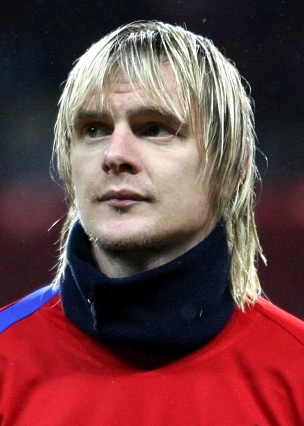
Famous for its excellent football youth work, its good scout network, the modern club's training ground and the youth academy base FC Vujadin Boškov, which is well equipped and one of the most prestigious in the Southeast Europe, Vojvodina has developed renowned professional footballers such as Miloš Krasić, Gojko Kačar, Milan Stepanov, Srđan Bajčetić, Dušan Tadić, Željko Brkić, Danijel Aleksić, Slobodan Medojević, Aleksandar Katai, Goran Šaula, Jovo Bosančić, Damir Stojak, Miroslav Stevanović, Sergej Milinković-Savić, Mijat Gaćinović, Milan Jovanović among others. In 2008 and 2009, Vojvodina organized together with the A.C. Milan a training camp at the FC Vujadin Boškov. The Vojvodina junior players were trained there by Milan training techniques and methods. In 2012, Vojvodina's team, led by coach Milan Kosanović, won the Serbian youth championship.
Supporters
Main article: Firma (supporter group)
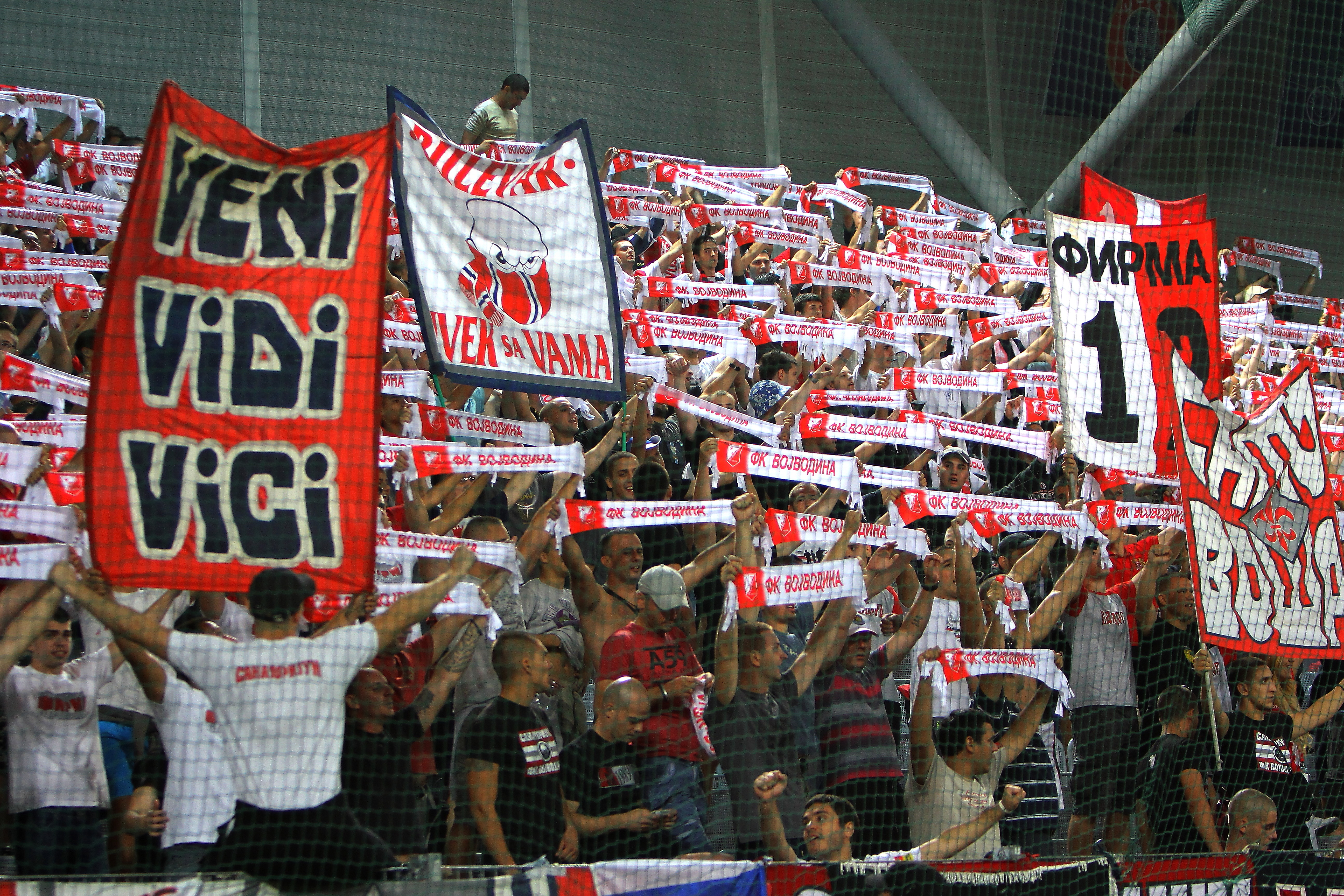
In 1931, one of the first organized supports of Vojvodina fans was recorded during an away match against Mačva Šabac. Already in 1937, the first organized supporters club was established, probably the first organized supporter group in the former Yugoslavia.
Although the club had numerous supporters throughout the history, more organized groups emerged end of the 1970s and beginning of the 1980s. In 1989, for the first time starts the idea of uniting of all the smaller supporter groups. This idea is realized and the group was named Red Firm. A few days later, several youngsters established the group Firma () as one of the subgroups, because they wanted a Serbian name for their group. The disintegration of Yugoslavia and its followers led to stagnation in all Yugoslavian supporter groups, so that in 1992, the Red Firm fell apart and the Firma took over the leadership of the organized supporters.
The members of Firma call themselves Firmaši (), the plural of the singular form Firmaš, and belong today to the top supporter groups in Serbia. They are more known as ultras, not hooligans. However, they always protected the name and honour of FK Vojvodina, Novi Sad, and Serbia – putting themselves against all who were not doing enough for the club. The Firmaši gather in the north stand of the Karađorđe Stadium, from where they fiercely support their club. Besides football, they also support other sport sections of the Vojvodina Novi Sad Sport Association. The club also has a group of their oldest supporters, called the Stara Garda () and who are for more than 40 years in the east stand of the stadium.
Honours
Domestic
League
- Yugoslav First League
- Serbian SuperLiga
- **Runners-up: (1) **2008–09
- Yugoslav Second League
- **Winners: (1): **1986–87 (West)
- Yugoslav Summer Champions League:
- ** Winners: (1)** 1970
Cups
Super Cups
- Yugoslav Super Cup
- Runners-up: 1989
International
- European Cup / UEFA Champions League
- Quarter-finalists: 1966–67
- UEFA Intertoto Cup
- Winners: 1976
- Runners-up: 1998
- Mitropa Cup
- Winners: 1976–77
- Runners-up: 1957
- Inter-Cities Fairs Cup
Individual awards
Yugoslav First League top scorers
| Season | Name | Goals |
|---|---|---|
| 1955–56 | SFR Yugoslavia Todor Veselinović | 21 |
| 1956–57 | SFR Yugoslavia Todor Veselinović | 28 |
| 1957–58 | SFR Yugoslavia Todor Veselinović | 19 |
| 1960–61 | SFR Yugoslavia Todor Veselinović | 16 |
First League of Serbia and Montenegro top scorers
| Season | Name | Goals |
|---|---|---|
| 1992–93 | FR Yugoslavia Vesko Mihajlović | 22 |
Serbian SuperLiga top scorers
| Season | Name | Goals |
|---|---|---|
| 2009–10 | Serbia Dragan Mrđa | 22 |
Serbian SuperLiga Footballer of the Year
Club records

Player records
| Name | Apps |
|---|---|
| SFR Yugoslavia Radomir Krstić | 613 |
| SFR Yugoslavia Petar Nikezić | 587 |
| SFR Yugoslavia Žarko Nikolić | 563 |
| SFR Yugoslavia Zdravko Rajkov | 555 |
| SFR Yugoslavia Todor Veselinović | 546 |
| SFR Yugoslavia Sima Milovanov | 532 |
| SFR Yugoslavia Đorđe Vujkov | 527 |
| SFR Yugoslavia Slavko Ličinar | 524 |
| SFR Yugoslavia Šandor Mokuš | 519 |
| SFR Yugoslavia Vujadin Boškov | 512 |
Club all-time European record
Main article: FK Vojvodina in European football
| Competition | P | W | D | L | GF | GA | GD |
|---|---|---|---|---|---|---|---|
| European Cup / Champions League | 9 | 5 | 1 | 3 | 10 | 9 | +1 |
| UEFA Cup / Europa League | 61 | 24 | 14 | 23 | 89 | 84 | +5 |
| UEFA Conference League | 8 | 3 | 1 | 4 | 7 | 13 | –6 |
| UEFA Intertoto Cup | 10 | 6 | 1 | 3 | 18 | 9 | +9 |
| Mitropa Cup | 37 | 13 | 11 | 13 | 57 | 51 | +6 |
| Inter-Cities Fairs Cup | 23 | 9 | 6 | 8 | 27 | 22 | +5 |
UEFA coefficient
Correct as of 1 July 2025.
| Rank | Team | Points | |
|---|---|---|---|
| 196 | GRE OFI | 7.862 | |
| 197 | ARM FC Ararat-Armenia | 7.500 | |
| 198 | SRB FK Vojvodina | 7.500 | |
| 199 | CYP AEK Larnaca FC | 7.500 | |
| 200 | AUT FK Austria Wien | 7.500 |
Best results in European competitions
| Season | Achievement | Notes | European Cup / UEFA Champions League | Mitropa Cup | UEFA Intertoto Cup |
|---|---|---|---|---|---|
| 1967 | Quarter Final | eliminated by Scotland Celtic 1–0 in Novi Sad, 0–2 in Glasgow | |||
| 1977 | Winner | First in group with Hungary Vasas, Italy Fiorentina and Czech Republic Sparta Prague | |||
| 1976 | Winner | First in group with Poland Zagłębie,Austria LASK Linz and Sweden Örebro SK | |||
| 1998 | Runner-up | lost to Germany Werder Bremen 0–1 in Bremen, 1–1 in Novi Sad |
Biggest win in UEFA competition:
| Season | Match | Score | UEFA Cup / UEFA Europa League | Inter-Cities Fairs Cup | Mitropa Cup | UEFA Intertoto Cup |
|---|---|---|---|---|---|---|
| 2015–16 | Vojvodina – Italia Sampdoria | 4–0 | ||||
| 2007–08 | Vojvodina – Malta Hibernians | 5–1 | ||||
| 1961–62 | Vojvodina – Greece Iraklis | 9–1 | ||||
| 1956–57 | Vojvodina – Slovakia Slovan Bratislava | 6–0 | ||||
| 1959–60 | Vojvodina – Austria Wacker Vienna | 5–0 | ||||
| 1987–88 | Vojvodina – Hungary MTK Budapest | 5–0 | ||||
| 1977–78 | Vojvodina – Norway IK Start | 5–1 | ||||
| 1964–65 | Vojvodina – Austria First Vienna | 5–2 |
European matches since 2010
| Season | Competition | Round | Club | Home | Away | Aggregate |
|---|---|---|---|---|---|---|
| 2011–12 | UEFA Europa League | 2Q | LIE Vaduz | 1–3 | 2–0 | 3–3 (a) |
| 2012–13 | UEFA Europa League | 2Q | LIT Sūduva | 1–1 | 4–0 | 5–1 |
| 3Q | AUT Rapid Wien | 2–1 | 0–2 | 2–3 | ||
| 2013–14 | UEFA Europa League | 1Q | Malta Hibernians | 3–2 | 4–1 | 7–3 |
| 2Q | HUN Budapest Honvéd | 2–0 | 3–1 | 5–1 | ||
| 3Q | TUR Bursaspor | 2–2 | 3–0 | 5–2 | ||
| PO | Moldova Sheriff Tiraspol | 1–1 | 1–2 | 2–3 | ||
| 2014–15 | UEFA Europa League | 2Q | SVK AS Trenčín | 3–0 | 0–4 | 3–4 |
| 2015–16 | UEFA Europa League | 1Q | HUN MTK Budapest | 3–1 | 0–0 | 3–1 |
| 2Q | LAT Spartaks Jūrmala | 3–0 | 1–1 | 4–1 | ||
| 3Q | ITA Sampdoria | 0–2 | 4–0 | 4–2 | ||
| PO | CZE Viktoria Plzeň | 0–3 | 0–2 | 0–5 | ||
| 2016–17 | UEFA Europa League | 1Q | MNE Bokelj | 5–0 | 1–1 | 6–1 |
| 2Q | Wales Connah's Quay Nomads | 1–0 | 2–1 | 3–1 | ||
| 3Q | Belarus Dinamo Minsk | 1–1 | 2–0 | 3–1 | ||
| PO | NED AZ | 0–3 | 0–0 | 0–3 | ||
| 2017–18 | UEFA Europa League | 1Q | SVK Ružomberok | 2–1 | 0–2 | 2–3 |
| 2020–21 | UEFA Europa League | 3Q | BEL Standard Liège | 1–2 | ||
| 2021–22 | UEFA Europa Conference League | 2Q | LIT Panevėžys | 1–0 | 1–0 | 2–0 |
| 3Q | AUT LASK | 0–1 | 1–6 | 1–7 | ||
| 2023–24 | UEFA Europa Conference League | 2Q | CYP APOEL | 1–2 | 1–2 | 2–4 |
| 2024–25 | UEFA Europa League | 2Q | NED Ajax | 1–3 | 0–1 | 1–4 |
| UEFA Conference League | 3Q | SLO Maribor | 1–0 | 1–2 | 2–2 (2–4 p) |
Current squad
Players with multiple nationalities
- CMR NGA John Mary
- MNE SRB Vukan Savićević
- SRB CRO Branko Nikolić
- SRB GER Marko Mladenović
- SRB SLO Vuk Boškan
On dual registration
Out on loan
Technical staff
- Kingdom of Yugoslavia Radivoj Božić
- Kingdom of Yugoslavia Svetozar Đanić
- Kingdom of Yugoslavia Rodoljub Malenčić
- Kingdom of Yugoslavia Dušan Marković
- Kingdom of Yugoslavia Ivan Medarić
- Kingdom of Yugoslavia Božidar Petrović
- Kingdom of Yugoslavia Slovakia Ján Podhradský
- Kingdom of Yugoslavia Zvonko Požega
- Kingdom of Yugoslavia Jenő Ábrahám Saraz
- Kingdom of Yugoslavia Jožef Velker
- YUG Rajko Aleksić
- YUG Stevan Bena
- YUG Vujadin Boškov
- YUG Dragan Bošnjak
- YUG Ivica Brzić
- YUG Miroslav Ćurčić
- YUG Josif Ilić
- YUG Zvonko Ivezić
- YUG Aleksandar Ivoš
- YUG Željko Jurčić
- YUG Dobrosav Krstić
- YUG Miodrag Kustudić
- YUG Čedo Maras]
- YUG Zoran Marić
- YUG Dušan Mijić
- YUG Đorđe Milić
- YUG Sima Milovanov
- YUG Zoran Mijucić
- YUG Petar Nikezić
- YUG Žarko Nikolić
- YUG Martin Novoselac
- YUG Ilija Pantelić
- YUG Slobodan Pavković
- YUG Đorđe Pavlić
- YUG Zdravko Rajkov
- YUG Vasa Rutonjski
- YUG Ratko Svilar
- YUG Svetozar Šapurić
- YUG Stevan Sekereš
- YUG Miloš Šestić
- YUG Ratko Svilar
- YUG Slavko Svinjarević
- YUG Silvester Takač
- YUG Miroslav Tanjga
- YUG Dobrivoje Trivić
- YUG Todor Veselinović
- YUG Ljubomir Vorkapić
- YUG Nebojša Vučković
- YUG Đorđe Vujkov
- YUG Miroslav Vukašinović
- YUG Josip Zemko
- YUG Marijan Zovko
- FRY Milan Belić
- FRY Nikoslav Bjegović
- FRY Igor Bogdanović
- FRY Saša Cilinšek
- FRY Ljubiša Dunđerski
- FRY Dejan Govedarica
- FRY Goran Jezdimirović
- FRY Slaviša Jokanović
- SCG Đorđe Jokić
- FRY Aleksandar Kocić
- FRY Radovan Krivokapić
- FRY Nikola Lazetić
- FRY Vladan Lukić
- FRY Siniša Mihajlović
- FRY Vesko Mihajlović
- SCG Bojan Neziri
- FRY Miodrag Pantelić
- FRY Zoltan Sabo
- FRY Radoslav Samardžić
- FRY Goran Šaula
- FRY Damir Stojak
- FRY Budimir Vujačić
- FRY Dragan Žilić
- FRY Bratislav Živković
- SRB Danijel Aleksić
- SRB Enver Alivodić
- SRB Vlada Avramov
- SRB Željko Brkić
- SRB Vladimir Buač
- SRB Ranko Despotović
- SRB Stefan Đorđević
- SRB Igor Đurić
- SRB Mijat Gaćinović
- SRB Brana Ilić
- SRB Dimitrije Injac
- SRB Milan Jovanić
- SRB Milan Jovanović
- SRB Gojko Kačar
- SRB Damir Kahriman
- SRB Andrija Kaluđerović
- SRB Aleksandar Katai
- SRB Miloš Krasić
- SRB BIH Milan Lazarević
- SRB Filip Malbašić
- SRB Sergej Milinković-Savić
- SRB Dragan Mrđa
- SRB Aleksandar Paločević
- SRB Nino Pekarić
- SRB Emil Rockov
- SRB Veljko Simić
- SRB Milan Stepanov
- SRB Dušan Tadić
- SRB Mirko Topić
- SRB Saša Todić
- SRB Branislav Trajković
- SRB Veseljko Trivunović
- SRB Jagoš Vuković
- SRB Miroslav Vulićević
- SRB Dejan Zukić
- ANG Depú
- AUT Goran Kartalija
- BIH Nemanja Bilbija
- BIH Daniel Graovac
- BIH Siniša Mulina
- BIH SRB Bojan Nastić
- BIH Miroslav Stevanović
- BIH Nemanja Supić
- BIH Amir Teljigović
- BIH Stojan Vranješ
- BUL Zoran Janković
- CAN Stefan Cebara
- CMR Aboubakar Oumarou
- CRO Veldin Karić
- TCH Josef Čapek
- DRC Jonathan Bolingi
- GAB Anselme Délicat
- GEO Giorgi Merebashvili
- GEO Guram Giorbelidze
- GHA Sadick Adams
- GHA Stephen Appiah
- GHA Yaw Antwi
- GNB POR Almami Moreira
- HUN János Borsó
- IDN Ilija Spasojević
- LUX SRB Seid Korać
- MLI Mamadou Traoré
- MKD Daniel Avramovski
- MKD Mario Đurovski
- MKD Vlatko Grozdanoski
- MKD Sašo Miloševski
- MKD Daniel Mojsov
- MKD Borislav Tomovski
- MNE Radoslav Batak
- MNE Lazar Carević
- MNE Ivan Fatić
- MNE SRB Mirko Ivanić
- MNE Asmir Kajević
- MNE Vasko Kalezić
- MNE Damir Kojašević
- MNE Šaleta Kordić
- MNE Nebojša Kosović
- MNE Risto Lakić
- MNE Savo Pavićević
- MNE SRB Andrija Radulović
- MNE Nemanja Sekulić
- MNE Jovan Tanasijević
- MNE Janko Tumbasević
- MNE Igor Vujačić
- MNE Marko Vukčević
- MNE SCG Simon Vukčević
- NGA Nnaemeka Ajuru
- ROM Alin Stoica
- SWE Niclas Nyhlén
- UGA Joseph Kizito
- UGA Eugene Sseppuya
For the list of all current and former players with Wikipedia article, please see: :Category:FK Vojvodina players.
Managerial history
Main article: List of FK Vojvodina managers
- Kingdom of Yugoslavia Kosta Hadži (1924–1926)
- Austria Otto Neczas (1926–1928)
- Kingdom of Yugoslavia Boško Simonović (1929)
- Austria Otto Neczas (1929–30)
- Austria Otto Hamacek (1930–32)
- Hungary Károly Nemes (1933)
- Federal State of Austria Willi Schürmann (1934–35)
- Federal State of Austria Fritz Levitus (1936–1938)
- Kingdom of Yugoslavia Milorad Ognjanov (1938)
- Kingdom of Hungary (1920–1946) Károly Nemes (1940)
- Kingdom of Hungary (1920–1946) János Neu (1941)
- Yugoslavia Milorad Ognjanov (1945–1947)
- Yugoslavia Bane Sekulić (1948–1951)
- Yugoslavia Ljubiša Broćić (1952)
- Yugoslavia Milorad Ognjanov (1952)
- Yugoslavia Gustav Lechner (1953–1957)
- Hungarian People's Republic Antal Lyka (1957–1959)
- Yugoslavia Ratomir Čabrić (1959–60)
- Yugoslavia Radoslav Momirski (1960–61)
- Yugoslavia Franja Hirman (1961–1964)
- Yugoslavia Branko Stanković (1964–1967)
- Yugoslavia Zdravko Rajkov (1967–68)
- Yugoslavia Ratomir Čabrić (1968–70)
- Yugoslavia Dragoljub Milošević (1970–1973)
- Yugoslavia Gojko Zec (1973–74)
- Yugoslavia Todor Veselinović (1974–1977)
- Yugoslavia Branko Stanković (1977–78)
- Yugoslavia Ivica Brzić (1978–79)
- Yugoslavia Milorad Pavić (1979)
- Yugoslavia Marko Valok (1980)
- Yugoslavia Dušan Drašković (1981–1983)
- Yugoslavia Tomislav Kaloperović (1983)
- Yugoslavia Josip Duvančić (1983–84)
- Yugoslavia Jovan Kovrlija (1984)
- Yugoslavia Vukašin Višnjevac (1985)
- Yugoslavia Tomislav Kaloperović (1985)
- Yugoslavia Vladimir Savić (1986)
- Yugoslavia Željko Jurčić (1986)
- Yugoslavia Tonko Vukušić (1986–87)
- Yugoslavia Ivica Brzić (1987–88)
- Yugoslavia Ljupko Petrović (1988–1989)
- Yugoslavia Ivica Brzić (1990–91)
- Yugoslavia Žarko Nikolić (1991)
- Yugoslavia Jovan Kovrlija (1991–92)
- FRY Milorad Kosanović (1992–95)
- MKD Gjoko Hadžievski (1995–96)
- FRY Dragoljub Bekvalac (1996)
- FRY Ljupko Petrović (1996–97)
- FRY Josip Pirmajer (1997–98)
- FRY Tomislav Manojlović (1998–00)
- FRY Dragoljub Bekvalac (2000)
- FRY Dragan Okuka (2000)
- FRY Dragoljub Bekvalac (2000–01)
- FRY Slobodan Pavković (2001–02)
- FRY Miroslav Vukašinović (2002–03)
- FRY Josif Ilić (2003)
- FRY Branko Smiljanić (2004–9 Nov 2004)
- FRY Vladimir Petrović (24 Nov 2004 – 26 Dec 2004)
- FRY Milan Đuričić (27 Dec 2004 – 14 Aug 2005)
- SRB Zoran Marić (20 Aug 2005 – 13 Aug 2006)
- SRB Milovan Rajevac (17 Aug 2006 – 17 Sep 2007)
- SRB Ivica Brzić (18 Sep 2007 – 1 Jun 2008)
- SRB Dragoljub Bekvalac (4 Jun 2008 – 20 Oct 2008)
- MNE Dragan Radojičić (21 Oct 2008 – 23 Dec 2008)
- SRB Ljupko Petrović (23 Dec 2008 – 8 Mar 2009)
- SRB Zoran Marić (9 Mar 2009 – 8 Jun 2009)
- SRB Dragoslav Stepanović (8 Jun 2009 – 2 Oct 2009)
- SRB Branko Babić (11 Oct 2009 – 9 Mar 2010)
- SRB Milan Đuričić (10 Mar 2010 – 18 May 2010)
- SRB Zoran Milinković (27 May 2010 – 30 May 2011)
- MNE Dejan Vukićević (15 Aug 2011 – 12 Apr 2012)
- SRB Spasoje Jelačić (interim) (13 Apr 2012 – 23 Apr 2012)
- BULSerbia Zlatomir Zagorčić (interim) (23 Apr 2012 – 31 May 2012)
- BULSerbia Zlatomir Zagorčić (31 May 2012 – 12 Sep 2012)
- SRB Nebojša Vignjević (12 Sep 2012 – 4 Jun 2013)
- SRB Marko Nikolić (7 Jun 2013 – 9 Dec 2013)
- SRB Branko Babić (3 Jan 2014 – 19 May 2014)
- SRB Zoran Marić (19 Jun 2014 – 16 Mar 2015)
- BULSerbia Zlatomir Zagorčić (17 Mar 2015 – 22 Oct 2015)
- SRB Nenad Lalatović (11 Nov 2015 – 17 Dec 2016)
- SRB Dragan Ivanović (23 Dec 2016 – 3 Apr 2017)
- SRB Aleksandar Veselinović (4 Apr 2017 – 21 Apr 2017)
- MNESRB Radoslav Batak (23 Apr 2017 – 29 Jun 2017)
- SRB Nenad Vanić (30 Jun 2017 – 9 Sep 2017)
- SRB Vladimir Buač (21 Sep 2017 – 30 Nov 2017)
- SRB Ilija Stolica (23 Dec 2017 – 4 Apr 2018)
- SRB Aleksandar Veselinović (9 Apr 2018 – 7 Sep 2018)
- SRB Dragan Okuka (7 Sep 2018 – 25 Nov 2018)
- SRB Radovan Krivokapić (25 Nov 2018 – 29 Jun 2019)
- SRB Nenad Lalatović (29 Jun 2019 – 26 May 2021)
- SRB Slavoljub Đorđević (26 May 2021 – 14 Mar 2022)
- MNE Dragan Radojičić (15 Mar 2022 – 30 May 2022)
- SRB Milan Rastavac (1 Jun 2022 – 25 Feb 2023)
- MNESRB Radoslav Batak (25 Feb 2023 – 8 Aug 2023)
- SRB Ranko Popović (11 Aug 2023 – 21 Dec 2023)
- MNE Božidar Bandović (28 Dec 2023 – 27 Aug 2024)
- SRB Nemanja Krtolica (27 Aug 2024 – 7 October 2024)
- SRB Nenad Lalatović (7 October 2024 – 3 March 2025)
- SRB Miroslav Tanjga (3 March 2025 –)
Kit manufacturers and shirt sponsors
Shirt sponsors and manufacturers
| Period | Kit Manufacturer | Shirt Sponsor | ||
|---|---|---|---|---|
| 1994–1996 | Reusch | |||
| 1996–2002 | NAAI | Braća Mandić | ||
| 2002–2003 | Lotto | |||
| 2003–2007 | NAAI | |||
| 2007–2012 | Joma | Aleksandar Gradnja | ||
| 2012–2015 | Volkswagen | |||
| 2015–2017 | Umbro | Volkswagen | ||
| 2017–2018 | Viskol | |||
| 2018–2019 | Srbijagas | |||
| 2019–2024 | Kelme | Srbijagas | ||
| 2024–present | Joma | MaxBet |
References
References
- ""Karađorđe" kroz decenije - FK Vojvodina – Zvanična web prezentacija".
- [http://www.bihsoccer.com/Tabele-prvi-i-drugi-liga-Jugoslavije.html Tabele-prvi-i-drugi-liga-Jugoslavije.html – Yugoslav first league all-time table] {{webarchive. link. (22 June 2012)
- (6 March 2010). "MTS Mondo, 6 March 2010".
- "fkvojvodina.com – Jedan jedini klub (1) – The one and only club (1)".
- [http://www.fkvojvodina.com/download/80_crveno_belih_godina.pdf 80 crveno belih godina] {{Webarchive. link. (6 January 2012 by Vladimir Todorović and Miroslav Gavrilović, pag. 18 {{in lang). sr
- "fkvojvodina.com – Vodja "milionera" – The leader of the "millionaires"".
- "fk.vojvodina.com – Jedan jedini klub (1)".
- "Vojvodina – Partizan 3:2 (18.12.1988)".
- "Vojvodina – Dinamo 4:1 (1988/89)".
- "Vojvodina – Hajudk Split 2:0 (14.08.1988)".
- "Vojvodina – Red Star 3:1 (19.04.1989)".
- "Vojvodina – Sloboda Tuzla 4:2 (1989)".
- link. (2 May 2020 {{in lang). sr
- "fk.vojvodina.com – Jedan jedini klub (3)".
- "UEFA Intertoto Cup final – FC Vojvodina 1–1 Werder Bremen".
- "fk.vojvodina.com – Jedan jedini klub (3)".
- [http://sport.blic.rs/vojvodina/vesti/191495/Kacar-ispred-Krasica-u-Vosinom-timu-decenije blic.rs – Vošin "tim decenije"] {{webarchive. link. (3 July 2013)
- "fk.vojvodina.com – Jedan jedini klub (3)".
- [http://www.fkvojvodina.rs/klub/istorijat/sumorne-devedesete/ fk.vojvodina.rs – Sumorne devedesete – Gloomy nineties] {{webarchive. link. (3 July 2012)
- "fk.vojvodina.com – Jedan jedini klub (1)".
- "JSL: FK Vojvodina".
- [http://www.fkvojvodina.rs/stadion/stadion-detaljno/ fk.vojvodina.rs – Stadion detaljno – Stadium details] {{webarchive. link. (2 July 2012)
- "FC Vujadin Boškov". fkvojvodina.rs.
- "Klub navijaca".
- "Supporters".
- "The Firm, FK Vojvodina".
- "Stara Garda".
- (27 May 2011). "b92.net – JSL: Izabran najbolji tim – JSL: Elected the best team".
- "fk.vojvodina – Kralj strelaca".
- "fk.vojvodina.rs – Zanimljivosti – Interesting".
- "Club coefficients". [[UEFA]].
- "Први тим – играчи". fkvojvodina.rs.
- "Tim". Mozzart Bet Super liga Srbije official website.
- "Стручни штаб". fkvojvodina.rs.
- "Управа и менаџмент". fkvojvodina.rs.
This article was imported from Wikipedia and is available under the Creative Commons Attribution-ShareAlike 4.0 License. Content has been adapted to SurfDoc format. Original contributors can be found on the article history page.
Ask Mako anything about FK Vojvodina — get instant answers, deeper analysis, and related topics.
Research with MakoFree with your Surf account
Create a free account to save articles, ask Mako questions, and organize your research.
Sign up freeThis content may have been generated or modified by AI. CloudSurf Software LLC is not responsible for the accuracy, completeness, or reliability of AI-generated content. Always verify important information from primary sources.
Report