From Surf Wiki (app.surf) — the open knowledge base
Five Easy Pieces
1970 US drama film by Bob Rafelson
1970 US drama film by Bob Rafelson
| Field | Value |
|---|---|
| name | Five Easy Pieces |
| image | Five easy pieces.jpg |
| caption | Theatrical release poster |
| director | Bob Rafelson |
| producer | |
| screenplay | Carole Eastman |
| (credited as Adrien Joyce) | |
| story | |
| starring | |
| cinematography | László Kovács |
| editing | |
| studio | |
| distributor | Columbia Pictures |
| released | |
| runtime | 98 minutes |
| country | United States |
| language | English |
| budget | $1.6 million |
| gross | $18.1 million |
the 1970 film
(credited as Adrien Joyce)
Five Easy Pieces is a 1970 American road drama film directed by Bob Rafelson, written by Rafelson and Carole Eastman (as Adrien Joyce), and starring Jack Nicholson, Karen Black, Susan Anspach, Lois Smith, and Ralph Waite. The film tells the story of surly oil rig worker Bobby Dupea (Nicholson), whose rootless blue-collar existence belies his privileged youth as a piano prodigy. When Bobby learns that his father is dying, he travels to his family home in Washington to visit him, taking along his uncouth girlfriend (Black).
The film was nominated for four Academy Awards and five Golden Globe Awards, and was inducted into the National Film Registry of the Library of Congress in 2000, being deemed "culturally, historically, or aesthetically significant".
Plot
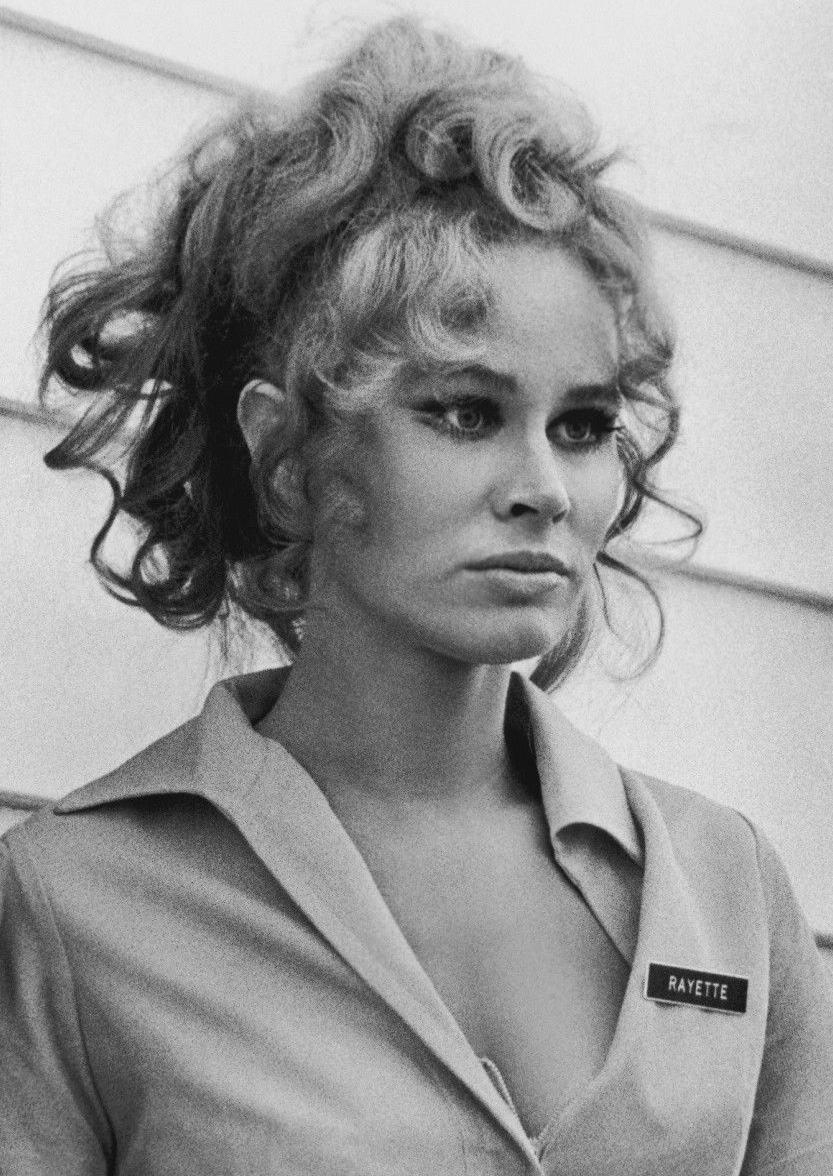
A man named Bobby Dupea works in an oil field in Kern County, California. He spends most of his time with his girlfriend Rayette, a waitress who has dreams of singing country music, or with fellow oil worker Elton, with whom he bowls, gets drunk, and philanders.
When Bobby gets Rayette pregnant and Elton is arrested, Bobby quits his job and goes to Los Angeles, where his sister Partita is making a classical piano recording. She tells Bobby, who was once also a pianist, that their father has suffered two strokes, and urges him to reconcile with the family at their home on Puget Sound, Washington.
Rayette threatens to kill herself if Bobby leaves her, so he reluctantly asks her along. Driving north, they pick up Terry and Palm, two stranded women headed for Alaska. The latter launches into a monologue about the evils of consumerism. The four are thrown out of a diner after Bobby argues with an obstinate waitress over his order. Bobby drops off Terry and Palm when they get to Washington.
Ashamed to introduce Rayette to his upper-class family, Bobby registers her in a motel before driving alone to the family home on an island in Puget Sound. He finds Partita giving their father a haircut; the old man seems completely oblivious to him. At dinner, Bobby meets Catherine Van Oost, a young pianist studying under and engaged to his amiable brother Carl, a violinist. Despite personality differences, Catherine and Bobby are immediately attracted to each other. Learning that Bobby was once a pianist, she asks him to play for her. She is moved by his rendition of Frédéric Chopin's Prelude, Op. 28, No. 4, but Bobby dismisses her, insisting that he played with "no inner feeling". Angered by Bobby's rejection, she leaves, but he follows after her and they have sex in her room.
Rayette runs out of money at the motel and comes to the Dupea estate unannounced. Her presence creates an awkward situation, but when intellectual family friend Samia Glavia ridicules her, Bobby comes to her defense. Storming out of the room in search of Catherine, he discovers his father's male nurse giving Partita a sensual massage. He picks a fight with the nurse, who easily subdues him.
Bobby tries to persuade Catherine to go away with him, but she declines, telling him he cannot ask for love when he does not love himself, or anything at all. After tearfully confessing his regrets to his unresponsive father, Bobby leaves for California with Rayette. Shortly into the trip, they stop for gas and coffee; while Rayette's view is obstructed, Bobby hitches a ride on a truck headed north.
Cast
- Jack Nicholson as Robert "Bobby" Eroica Dupea
- Karen Black as Rayette DiPesto
- Susan Anspach as Catherine Van Oost
- Lois Smith as Partita Dupea
- Ralph Waite as Carl Fidelio Dupea
- Billy "Green" Bush as Elton
- Irene Dailey as Samia Glavia
- Toni Basil as Terry Grouse
- Helena Kallianiotes as Palm Apodaca
- William Challee as Nicholas Dupea
- John Ryan as Spicer
- Fannie Flagg as "Stoney"
- Marlena MacGuire as "Twinky"
- Sally Ann Struthers as Shirley "Betty"
- Lorna Thayer as Waitress
- Richard Stahl as Recording Engineer
Production
While the film's earlier scenes were shot in California, the majority was filmed in the Pacific Northwest. Filming primarily occurred on Vancouver Island in British Columbia, with additional photography occurring in Florence and Portland, Oregon. The diner sequence, in which Robert pesters an obstinate waitress, was filmed at a Denny's along Interstate 5 near Eugene, Oregon. Screenwriter Carole Eastman based the scene on a real incident she witnessed at Pupi's Bakery and Sidewalk Café in Los Angeles, where an aggrieved Jack Nicholson pushed all the plates and cups off of a table, and on Rafelson frequently asking for substitutions at restaurants.
To prepare for his role, Jack Nicholson undertook piano lessons from Polish concert pianist Josef Pacholczyk.
In 2022, Sally Struthers revealed on actor Gilbert Gottfried's podcast that director Bob Rafelson coerced her into appearing nude on set against her stated wishes, and made a false promise that she would not appear nude in the final cut.
Music
The opening credits list the five classical piano pieces played in the film and referenced in the title. Pearl Kaufman is credited as the pianist.
- Frédéric Chopin, Fantaisie in F minor, Op. 49, played by Bobby on the back of a moving truck
- Johann Sebastian Bach, Chromatic Fantasia and Fugue, BWV 903, played by Partita in a recording studio
- Wolfgang Amadeus Mozart, Piano Concerto No. 9 in E-flat major, K. 271, played by Carl and Catherine upon Bobby's arrival at the house
- Chopin, Prelude in E minor, Op. 28, No. 4, played by Bobby for Catherine
- Mozart, Fantasy in D minor, K. 397
Also included are four songs sung by Tammy Wynette: "Stand by Your Man", "D-I-V-O-R-C-E", "Don't Touch Me", and "When There's a Fire in Your Heart".
Release
The film was shown at the New York Film Festival on September 11, 1970. It opened commercially on September 12 at the Coronet Theatre in New York.
Box office
László Kovács]] fix the scene in our minds forever: the filling station and its discreet restroom; the grey surrounding buildings; the dripping autumnal vegetation of the Pacific Northwest; the parked truck waiting to go to Alaska; the face of Nicholson, already aging and filled with premonitory shadows, fixed behind the windshield. Religion, love and family have all failed to work, leaving absolutely nothing at the end but a journey to nowhere."
In the film's opening weekend at the Coronet, it grossed $10,476. It grossed $36,710 in its first week. After ten weeks of release, it reached number one at the US box office.
The film earned $1.2 million in the United States in 1970. By 1976, it had earned $8.9 million in the United States and Canada.
Critical response
Five Easy Pieces opened to positive reviews. It currently holds an 89% positive rating on online review aggregator Rotten Tomatoes, based on 55 reviews, with an average rating of 8.60/10. The site's consensus states: "An important touchstone of the New Hollywood era, Five Easy Pieces is a haunting portrait of alienation that features one of Jack Nicholson's greatest performances."
Roger Ebert gave the film four out of four stars, describing it as "one of the best American films" and "a masterpiece of heartbreaking intensity" and deeming Bobby Dupea "one of the most unforgettable characters in American movies." Ebert named it the best film of 1970, and later added it to his "Great Movies" list.
In a mixed review, critic John Simon criticized Five Easy Pieces for its "pretentiousness" but praised the performances of Karen Black, Lois Smith, and Billy Green Bush.
The February 2020 issue of New York Magazine lists Five Easy Pieces as among "The Best Movies That Lost Best Picture at the Oscars."
In 2022 retrospective review, Polish writer Jacek Szafranowicz called the film "flawless" and "one of the masterpieces of the New Hollywood era".
Accolades
| Award | Category | Nominee(s) | Result | Ref. |
|---|---|---|---|---|
| Academy Awards | Best Picture | Bob Rafelson and Richard Wechsler | ||
| Best Actor | Jack Nicholson | |||
| Best Supporting Actress | Karen Black | |||
| Best Original Screenplay | Adrien Joyce and Bob Rafelson | |||
| Directors Guild of America Awards | Outstanding Directorial Achievement in Motion Pictures | Bob Rafelson | ||
| Fotogramas de Plata | Best Foreign Movie Performer | Jack Nicholson (also for Chinatown) | ||
| Golden Globe Awards | Best Motion Picture – Drama | |||
| Best Actor in a Motion Picture – Drama | Jack Nicholson | |||
| Best Supporting Actress – Motion Picture | Karen Black | |||
| Best Director – Motion Picture | Bob Rafelson | |||
| Best Screenplay – Motion Picture | Adrien Joyce and Bob Rafelson | |||
| Kansas City Film Circle Critics Awards | Best Film | |||
| Laurel Awards | Best Picture | |||
| Top Male Dramatic Performance | Jack Nicholson | |||
| Top Female Supporting Performance | Karen Black | |||
| Lois Smith | ||||
| Top Cinematographer | László Kovács | |||
| Star of Tomorrow – Female | Susan Anspach | |||
| Karen Black | ||||
| Nastro d'Argento | Best Foreign Director | Bob Rafelson | ||
| National Board of Review Awards | Top Ten Films | |||
| Best Supporting Actress | Karen Black | |||
| National Film Preservation Board | National Film Registry | |||
| New York Film Critics Circle Awards | Best Film | |||
| Best Director | Bob Rafelson | |||
| Best Actor | Jack Nicholson | |||
| Best Actress | Karen Black | |||
| Best Supporting Actress | ||||
| Lois Smith | ||||
| Writers Guild of America Awards | Best Drama – Written Directly for the Screen | Adrien Joyce and Bob Rafelson |
Home media
Five Easy Pieces was released on VHS by RCA/Columbia Pictures Home Video in 1988.
On November 16, 1999, Columbia TriStar Home Video released the film on two-sided DVD-Video, featuring both fullscreen (4:3) and widescreen formats.
Grover Crisp of Sony Pictures conducted a 4K restoration of the film, which was screened in DCP in 2012.
The film was released on DVD and Blu-ray by The Criterion Collection in November 2010 as part of the box set America Lost and Found: The BBS Story. This release includes audio commentary by Rafelson and interior designer Toby Rafelson; Soul Searching in "Five Easy Pieces", a 2009 video piece with Rafelson; BBStory, a 2009 documentary about Raybert/BBS Productions, with Rafelson, Nicholson, Black, Burstyn, Peter Bogdanovich, and Henry Jaglom, among others; and audio excerpts from a 1976 AFI interview with Rafelson. On June 30, 2015, the film was released as a stand-alone DVD and Blu-ray by the Criterion Collection.
References
References
- "''Five Easy Pieces'', Box Office Information".
- Tobias, Scott. (2020-09-12). "Five Easy Pieces at 50: a troubling yet thrilling arrival of a new leading man". [[The Guardian]].
- "Librarian of Congress Names 25 More Films to National Film Registry".
- "Complete National Film Registry Listing".
- "Five Easy Pieces". [[American Film Institute]].
- (March 14, 2013). "Film: Movies that make Oregon famous". [[UWIRE]].
- (20 September 2010). "'Where's the Jack Nicholson booth?'". KATU KVAL News.
- (21 April 2017). "Oregon Poetic Cinema Filmmaker Jack Nicholson Turns 80".
- Hawthorn, Tom. (February 22, 2011). "Taking a bite out Nicholson's 'hold the chicken' legend". The Globe and Mail.
- (October 7, 2012). "Hold the Chicken - ''Five Easy Pieces'' movie clip (1970)".
- (Summer 1995). "On His Own Terms". M. Shanken Communications Inc.
- (28 March 2021). "Obituary: Daniel Forge". The Malibu Times.
- (14 June 1985). "Movies: Jack Nicholson". Washington Post.
- "Pupi's Bakery and Sidewalk Café > Early Views of West Hollywood".
- (June 25, 2015). "Jack Nicholson and Bob Rafelson on Five Easy Pieces' Diner Scene".
- "Jack Nicholson: Rare, Early Photos of an Actor on the Rise".
- (10 January 2022). "Sally Struthers Part 1". [[SoundCloud]].
- (September 16, 1970). "Nicholson In N.Y.: End Of 'Riot Fad' In U.S. Features".
- Higham, Charles. (1973). "The Art of the American Film: 1900-1971". Doubleday & Company, Inc..
- (September 16, 1970). "N.Y. Fest 'Moveovers' Start Well: 'Suppose A War' $17,000, Astor But Casualty At Embassy East".
- (September 30, 1970). "50 Top-Grossing Films".
- (November 25, 1970). "50 Top-Grossing Films".
- (January 6, 1971). "Big Rental Films of 1970".
- (January 7, 1976). "All-time Film Rental Champs".
- "''Five Easy Pieces''".
- Ebert, Roger. (January 1, 1970). "Five Easy Pieces".
- Ebert, Roger. (March 16, 2003). "Five Easy Pieces".
- (1982). "Reverse Angle". Crown Publishers Inc..
- "The Best Movies That Lost Best Picture at the Oscars".
- Szafranowicz, Jacek. (January 28, 2022). "Pięć łatwych utworów".
- (October 4, 2014). "The 43rd Academy Awards (1971) Nominees and Winners". oscars.org.
- "23rd DGA Awards".
- "Five Easy Pieces – Golden Globes".
- (December 14, 2013). "KCFCC Award Winners – 1970-79".
- "1970 Award Winners".
- "Complete National Film Registry Listing".
- "1970 New York Film Critics Circle Awards".
- "Awards Winners". Writers Guild of America.
- (September 27, 1999). "Five Easy Pieces and the Loss of Sexual Innocence Come to DVD".
- "Five Easy Pieces".
- (February 10, 2012). "Leading repertory cinema Film Forum to showcase Digital Cinema Packages".
- "Five Easy Pieces".
- Tooze, Gary. "HD-Sensei: Five Easy Pieces [Blu-ray]".
This article was imported from Wikipedia and is available under the Creative Commons Attribution-ShareAlike 4.0 License. Content has been adapted to SurfDoc format. Original contributors can be found on the article history page.
Ask Mako anything about Five Easy Pieces — get instant answers, deeper analysis, and related topics.
Research with MakoFree with your Surf account
Create a free account to save articles, ask Mako questions, and organize your research.
Sign up freeThis content may have been generated or modified by AI. CloudSurf Software LLC is not responsible for the accuracy, completeness, or reliability of AI-generated content. Always verify important information from primary sources.
Report