From Surf Wiki (app.surf) — the open knowledge base
First-move advantage in chess
Advantage of White over Black in chess
.jpg)
Advantage of White over Black in chess
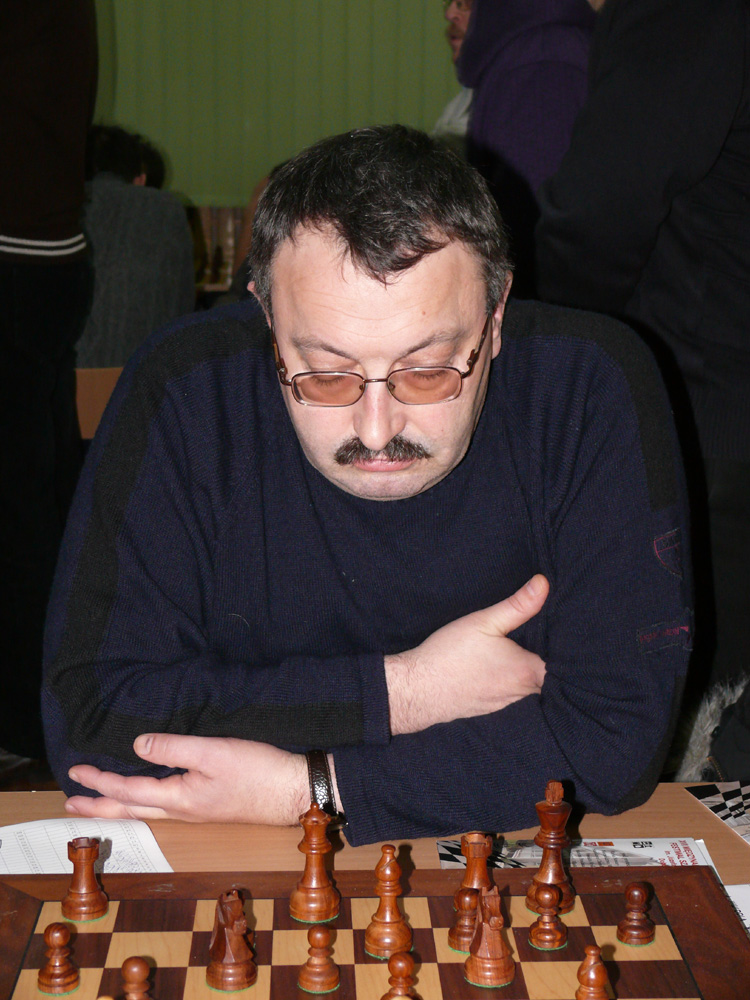
In chess, there is a consensus among players and theorists that the player who makes the first move (White) has an inherent advantage, albeit not one large enough to win with perfect play. This has been the consensus since at least 1889, when the first World Chess Champion, Wilhelm Steinitz, addressed the issue, although chess has not been solved.
Since 1851, compiled statistics support this view; White consistently slightly more often than Black, usually achieving a between 52 and 56 percent. White's advantage is less significant in blitz games and games between lower-level players, and becomes greater as the level of play rises; however, raising the level of play also increases the percentage of draws. As the standard of play rises, all the way up to top engine level, the number of decisive games approaches zero, and the proportion of White wins among those decisive games approaches 100%.
Some players, including world champions such as José Raúl Capablanca, Emanuel Lasker, Bobby Fischer, and Vladimir Kramnik, have expressed fears of a "draw death" as chess becomes more deeply analyzed, and opening preparation becomes ever more important. To alleviate this danger, Capablanca, Fischer, and Kramnik proposed chess variants to revitalize the game, while Lasker suggested changing how draws and stalemates are scored. Several of these suggestions have been tested with engines: in particular, Larry Kaufman and Arno Nickel's extension of Lasker's idea – scoring being stalemated, bare king, and causing a threefold repetition as quarter-points – shows by far the greatest reduction of draws among the options tested, and Fischer random chess (which obviates preparation by randomising the starting array) has obtained significant uptake at top level.
Some writers have challenged the view that White has an inherent advantage. András Adorján wrote a series of books on the theme that "Black is OK!", arguing that the general perception that White has an advantage is founded more in psychology than reality. Though computer analysis disagrees with his wider claim, it agrees with Adorján that some openings are better than others for Black, and thoughts on the relative strengths of openings have long informed the opening choices in games between top players. Mihai Șubă and others contend that sometimes White's initiative disappears for no apparent reason as a game progresses. The prevalent style of play for Black today is to seek unbalanced, positions with active , rather than merely trying to . Modern writers also argue that Black has certain countervailing advantages. The consensus that White should try to win can be a psychological burden for the White player, who sometimes loses by trying too hard to win. Some openings (i.e. those where Black's moves mirror White's) can lead to situations where moving first is a detriment, for either psychological or objective reasons.
Winning percentages
| White | |||||||||||
|---|---|---|---|---|---|---|---|---|---|---|---|
| wins | Drawn | Black | |||||||||
| wins | Total score | ||||||||||
| for White | 52.55% | 52.77% | 55.47% | 53.40% | 54.8% | 52.16% | 55.4% | 54.95% | |||
| Tournaments | |||||||||||
| 1851–1878 | 45.52% | 14.07% | 40.41% | ||||||||
| Tournaments | |||||||||||
| 1881–1914 | 36.89% | 31.76% | 31.35% | ||||||||
| Tournaments | |||||||||||
| 1919–1932 | 36.98% | 36.98% | 26.04% | ||||||||
| Tournaments | |||||||||||
| overall 1851–1932 | 38.12% | 30.56% | 31.31% | ||||||||
| New in Chess | |||||||||||
| database 2000 | N/A | N/A | N/A | ||||||||
| World Blitz Chess | |||||||||||
| Championship 2009 | 38.96% | 26.41% | 34.63% | ||||||||
| CEGT chess | |||||||||||
| engines results | |||||||||||
| (40/120) 2009 | 34.7% | 41.3% | 24.0% | ||||||||
| Chessgames.com | |||||||||||
| database 2015 | 37.50% | 34.90% | 27.60% |
In 1946, W.F. Streeter examined the results of 5,598 games played in 45 international chess tournaments between 1851 and 1932.{{cite news
Two decades later, statistician Arthur M. Stevens concluded in The Blue Book of Charts to Winning Chess, based on a survey of 56,972 master games that he completed in 1967, that White scores 59.1%. However, Stevens assembled his games from those that had been published in chess magazines, rather than complete collections of all the games played in particular events.
More recent sources indicate that White scores approximately 54 to 56 percent. In 2005, Grandmaster (GM) Jonathan Rowson wrote that "the conventional wisdom is that White begins the game with a small advantage and, holding all other factors constant, scores approximately 56% to Black's 44%". International Master (IM) John Watson wrote in 1998 that White had scored 56% for most of the 20th century, but that this figure had recently slipped to 55%. The website Chessgames.com holds regularly updated statistics on its games database. As of January 12, 2015, White had won 37.50%, 34.90% were drawn, and Black had won 27.60% out of 739,769 games, resulting in a total White winning percentage of 54.95%.These percentages can be found here:{{cite web | access-date=2015-01-12
New In Chess observed in its 2000 Yearbook that of the 731,740 games in its database, White scored 54.8% overall; with the two most popular opening moves, White scored 54.1% in 349,855 games beginning 1.e4 (moving the king's pawn two spaces forward), and 56.1% in 296,200 games beginning 1.d4 (moving the queen's pawn two spaces forward). The main reason that 1.e4 was less effective than 1.d4 was the Sicilian Defence (1.e4 c5), which gave White only a 52.3% score in 145,996 games.{{cite book | author-link=Gennady Sosonko |access-date = 2008-06-28 |archive-url = https://web.archive.org/web/20080416112848/http://www.newinchess.com/Yearbook/Default.aspx?PageID=226 |archive-date = 2008-04-16 |url-status = dead
Statistician Jeff Sonas, in examining data from 266,000 games played between 1994 and 2001, concluded that White scored 54.1767% plus 0.001164 times White's Elo rating advantage, treating White's rating advantage as +390 if it is better than +390, or −460 if it is worse than −460. He found that White's advantage is equivalent to 35 rating points, i.e. if White has a rating 35 points below Black's, each player will have an expected score of 50%. Sonas also found that White's advantage is smaller (53%) in rapid games than in games at a slower ("classical") time control.{{cite web | access-date=2015-08-05 | access-date=2009-11-22 | access-date=2009-11-22
Other writers conclude that there is a positive correlation between the players' ratings and White's score. According to GM Evgeny Sveshnikov, statistics show that White has no advantage over Black in games between beginners, but "if the players are stronger, White has the lead". An analysis of the results of games in ChessBase's Mega 2003 database between players with similar Elo ratings, commissioned by GM András Adorján, showed that as the players' ratings went up, the percentage of draws increased, the proportion of decisive games that White won increased, and White's overall winning percentage increased. For example, taking the highest and lowest of Adorján's rating categories of 1669 games played by the highest-rated players (Elo ratings 2700 and above), White scored 55.7% overall (W26.5 D58.4 L15.2), whereas of 34,924 games played by the lowest-rated players (Elo ratings below 2100), White scored 53.1% overall (W37.0 D32.1 L30.8). Adorján also analyzed the results of games played at World Championship matches. Of 755 games played in 34 matches between 1886 and 1990, White won 234 (31.0%), drew 397 (52.6%), and lost 124 (16.4%), for a total white winning percentage of 57.3%. In the last five matches in Adorján's survey, all between Anatoly Karpov and Garry Kasparov, White won 31 (25.8%), drew 80 (66.7%), and lost 9 (7.5%), for a total white winning percentage of 59.2%.{{cite book | author-link=Yasser Seirawan
GM Larry Kaufman notes that in amateur games, the draw rate is low, but rises above 50% (in classical games) at the master level: In top-level correspondence chess (where engine assistance is allowed), the draw rate is much higher. Since that time, the draw rate in top-level correspondence play has been rising steadily, reaching 97% in 2019. Regarding computer play, Kaufman wrote: "As the level soars past 3000, the percentage of decisive games drops ever closer to zero, while the percentage of White wins among those decisive games approaches 100. This is why engine vs. engine tournaments and rating lists have to use arbitrarily chosen openings (playing each side once) to keep things interesting."
In 2017 AlphaZero, playing 100 games against Stockfish, won 25 and drew 25 as White, but won 3 and drew 47 as Black.
Drawn with best play

Joseph Bertin wrote in his 1735 textbook The Noble Game of Chess, "He that plays first, is understood to have the attack." This is consistent with the traditional view that White, by virtue of the first move, begins with the and should try to extend it into the middlegame, while Black should strive to neutralize White's initiative and attain .{{cite book | author-link=Reuben Fine | author-link=Alexey Suetin
Chess theorists have long debated how enduring White's initiative is and whether, if both sides play perfectly, the game should end in a win for White or a draw. François-André Danican Philidor was of the opinion that White's first-move advantage should be sufficient to win. However, his contemporaries who wrote the Traité des Amateurs (published in 1786) disagreed: they wrote that White's advantage is not enough to win, that the result of a perfect game should be a draw, and that Black would seize the advantage if White made a mistake. George Walker wrote in 1846 that, "The first move is an advantage, ... but if properly answered, the first move is of little worth".{{cite book | author-link=George Walker (chess player) | author-link=Garry Kasparov | title-link=My Great Predecessors | author-link=Richard Réti | author-link=Wilhelm Steinitz | author-link=Emanuel Lasker | author-link=Reuben Fine
The view that a game of chess should end in a draw given best play prevails. Even if it cannot be proved, this assumption is considered "safe" by Rowson and "logical" by Adorján. Watson agrees that "the proper result of a perfectly played chess game ... is a draw. ... Of course, I can't prove this, but I doubt that you can find a single strong player who would disagree. ... I remember Kasparov, after a last-round draw, explaining to the waiting reporters: 'Well, chess is a draw. Eleventh World Champion Bobby Fischer thought that "it's almost definite that the game is a draw theoretically".However, Pal Benko writes of Fischer: "He believed—as have other players and theoreticians—that White's first-move advantage, properly exploited, should amount to virtually a forced win. (This idea may not be as exaggerated as it seems. Of the nineteen games I played against Fischer, I lost only one with White, missing a forced win, and seven with Black.)".{{cite book | author-link=Pal Benko
Today some of the opening variations have been analyzed so deeply that they are often used as . For example, at the highest levels, Black often uses the Marshall Attack in the Ruy Lopez. In this line Black sacrifices a pawn for strong attacking chances, to obtain an endgame where Black is still a pawn down but is able to draw with correct play.A 2009 article quoted Kasparov's view that the Marshall Attack statistically, is like a dead end.' Another top level game, another draw, and 'White has nothing. {{cite news | author-link=Bogdan Lalić | editor-link=Isaac Kashdan
| {{Chess diagram small | tright | rd | nd | bd | kd | bd | rd | pd | pd | pd | pd | pd | pd | pd | nd | bl | nl | pl | pl | qd | nl | pl | pl | ql | pl | pl | rl | kl | bl | rl | Position after 9...Qa3 | tright | bd | kd | ql | pd | pd | pd | pd | pd | pd | kl | rl | qd | pl | pl | Final position |
|---|
In 2007, GMs Kiril Georgiev and Atanas Kolev asserted that much the same was true of the so-called Poisoned Pawn Variation of the Najdorf Sicilian, which arises after 1.e4 c5 2.Nf3 d6 3.d4 cxd4 4.Nxd4 Nf6 5.Nc3 a6 6.Bg5 e6 7.f4 Qb6 This has long been considered one of the sharpest and most problematic,{{cite book |author1 = Geller, Y. |author2-link = Svetozar Gligorić |author3-link = Lubosh Kavalek |author4-link = Boris Spassky |author-link = Efim Geller | author-link=Alexey Sokolsky | author-link=Siegbert Tarrasch | access-date=2008-12-10 | author-link=Edward Winter (chess historian) | access-date=2013-11-18 | author-link=Edward Winter (chess historian)
| access-date=2008-06-27 | author-link=Tim Harding (chess)
Georgiev and Kolev's pessimistic assessment of 6.Bg5 has since been called into question, however, as White succeeded with 10.e5 (another critical line) in several later high-level games.{{cite web | access-date=2008-06-27
Draw death and proposed rule changes

Lasker and Capablanca both worried that chess would suffer a "draw death" as top-level players drew more and more of their games.{{cite news | author-link=Edward Lasker | access-date=2008-07-08
These problems could be addressed by playing rapid instead of classical, This is already done for xiangqi (Chinese chess), which is even more drawish than chess (because the elephants and advisors cannot cross the river and are hence relegated to defense only). However, this is impossible for correspondence chess, and brings a philosophical problem: Kaufman writes "For many chess players the beauty of the game is in the search for truth, and if allowing enough time to find the truth about positions makes for too many draws or makes preparation too critical that's a huge problem".
The preparation issue has also become more important in recent years; in the past, opening preparation meant the top players had to analyse by themselves, but now they only need to consult engines. Kaufman writes that "to a significant degree", the games of the top players are not "human play, but the play of engines with the humans merely choosing which engine they want to follow".
Rules prohibiting an early draw by agreement have been tried, but they do not address the problem, which is that chess is drawish enough at high levels that draws are too common even if one or both players is playing to win. Kaufman does concede that this is a "much more extreme idea" than simply penalising perpetual check (which is more like the East Asian rules), but argues for it nonetheless because engine-play experiments show that most repetition draws occur when any other move would lead to a position that is not clearly drawn.
Kaufman has tested these ideas regarding the scoring of draws with the engine Komodo, and found the following results: chess at the level of a human World Championship match would have a draw rate of 65.6%; scoring stalemate as ¾–¼ reduces the draw rate to 63.4%; scoring stalemate and bare king as ¾–¼ brings it to 55.9%; and scoring stalemate, bare king, and threefold repetition as ¾–¼ brings it all the way down to 22.6%. Kaufman and Nickel thus argue that this last extension of Lasker's rule "is the simplest and most acceptable way to reduce draws dramatically without fundamentally changing the game." (The same reduction of draws would occur if stalemate, bare king, and threefold repetition were scored as 1–0 instead of ¾–¼, but the point of the ¾–¼ scoring is to allow the weaker side to still benefit from avoiding checkmate, while giving the stronger side something to play for even when checkmate cannot be attained.) The remaining draws would mostly be by the fifty-move rule; Kaufman notes that even these could be similarly addressed by giving ¾ of a point to the last player who captured or played a pawn move, but considers this too radical, noting that "it really does change the game drastically".
Capablanca in 1926 proposed Capablanca Chess, a chess variant played on a larger 10×10 board and with additional pieces (the chancellor and archbishop, moving as rook–knight and bishop–knight combinations respectively in the same way the queen could be said to be a rook–bishop combination). (He later changed his proposal to a 10×8 board.){{cite book | author-link=Edward Lasker
|tright | |nd|nd|rd|kd|bd|rd|qd|bd |pd|pd|pd|pd|pd|pd|pd|pd | | | | | | | | | | | | | | | | | | | | | | | | | | | | | | | | |pl|pl|pl|pl|pl|pl|pl|pl |nl|nl|rl|kl|bl|rl|ql|bl |One of the 960 possible setups of Fischerandom Chess, a commonly-played variant that reduces draws in human play. Fischer advocated Fischerandom Chess, another chess variant, in which the initial position of the pieces is determined at random and identical for both players, subject to the constraints that the bishops be on opposite colours and that the king stand between the rooks.{{cite book | author-link=Andrew Soltis
Kramnik has also advocated changes to the rules of chess, such as No Castling Chess where castling is forbidden. At one point, Kramnik advocated an alternative solution to avoid the issue of openings being prepared to extreme depth with engines: using the normal starting position, but choosing openings by lot or at random from a preselected list. Computer tournaments are run this way, though with two games per chosen opening, so that each player plays White once: this arrangement with two games per chosen opening was advocated in 1928 by Frank Marshall.
Other ideas have also been suggested, such as the "football scoring": 0 for a loss, 1 for a draw, and 3 for a win, which is equivalent to giving players a third of a point each for a draw rather than half. This has been criticised, however. Kaufman argues that this solution misses the point: it reduces the incentive to draw, but the reason for the high draw rate is not one of incentives, but rather that White's first-move advantage is not enough to win. Thus Kaufman calls this solution "terrible", going against "the very nature of the game": he writes that "The inferior side should be trying to draw, and to penalize Black for obtaining a good result is crazy. It makes chess like a game of 'chicken'; who will 'blink' first and play an unsound move to avoid the mutually bad result of a draw?" and players have an easier time cheating as a team. (A team of players enters an open event; one of them is selected to obtain the maximum score and portion of the prize fund, and the others throw their games to that player; the prize is then shared among the team. This is easier to do when a win earns more points.) Kaufman speaks more favourably of an idea by Ed Epp, which is to score draws as 0.4–0.6, equalising the expected score for White and Black; but while he writes that he is "all for this idea", he also admits that "the benefit would be small, most games would have the same outcome".

Kaufman has also mentioned (but not advocated) the system used in janggi (Korean chess): in positions which otherwise would be draws, points are tallied up for the pieces and pawns remaining on the board, with the player moving second being given 1.5 points to compensate for the first-move advantage. Since every piece and pawn is given an integer number of points, the result can never be a draw, making janggi the only competitively played version of chess where draws do not exist (at least when played by the official South Korean tournament rules). He writes: "The chess analogue would perhaps be to count pawn 3, knight 10, bishop 11, rook 16, queen 31 in case of a draw by normal rules, with Black winning ties. It would probably be close to fair, but of course it would be a somewhat different chess."
The magnitude of the first-move advantage differs in other variants. In Fischerandom, as in normal chess, White has a first-move advantage that is probably insufficient to force a win. Kaufman has also mentioned the old Japanese variant chu shogi (played on a 12×12 board with 46 pieces per side) as a case where draws or opening theory should not be a problem.
White wins
Although it is very much a minority view, three prominent twentieth-century masters claimed that White's advantage should or may be decisive with best play.
White wins with 1.e4
|tright | |rd|nd|bd|qd|kd|bd|nd|rd |pd|pd|pd|pd|pd|pd|pd|pd | | | | | | | | | | | | | | | | | | | | |pl| | | | | | | | | | | |pl|pl|pl|pl| |pl|pl|pl |rl|nl|bl|ql|kl|bl|nl|rl |After 1.e4, "White ought to win", according to Adams. Weaver Adams, then one of the leading American masters, was the best-known proponent of this view, which he introduced in his 1939 book White to Play and Win, and continued to expound in later books and articles until shortly before his death in 1963. Also available on DVD (page 56 in "Chess Life 1962" PDF file on DVD). Adams opined that 1.e4 was White's strongest move, and that if both sides played the best moves thereafter, "White ought to win." Adams' claim was widely ridiculed, and he did not succeed in demonstrating the validity of his theory in tournament and match practice. The year after his book was published, at the finals of the 1940 U.S. Open tournament, he scored only one draw in his four games as White, but won all four of his games as Black. Adams also lost a match to IM I.A. Horowitz, who took the black pieces in every game. Larry Kaufman wrote in 2020 that Adams "resorted to dubious gambits that were often just winning for Black".
According to Sveshnikov, Vsevolod Rauzer, a leading Soviet player and theoretician during the 1930s, likewise "claimed in the [1930s]: '1.e4—and White wins!' and he managed to prove it quite often".
White wins with 1.d4
|tleft | |rd|nd|bd|qd|kd|bd|nd|rd |pd|pd|pd|pd|pd|pd|pd|pd | | | | | | | | | | | | | | | | | | | |pl| | | | | | | | | | | | |pl|pl|pl| |pl|pl|pl|pl |rl|nl|bl|ql|kl|bl|nl|rl |After 1.d4, Berliner claimed that White may have a winning advantage. More recently, IM Hans Berliner, a former World Champion of Correspondence Chess, claimed in his 1999 book The System that 1.d4 gives White a large, and possibly decisive, advantage. Berliner asserted that with best play White wins against the Grünfeld Defense, the Modern Benoni, the Benko Gambit and other (unnamed) "major defences", and achieves at least a large advantage in many lines of the Queen's Gambit Declined. He allowed, however, that "It is possible that the rules of chess are such that only some number of plausible-appearing defences to 1.d4 can be refuted." Berliner wrote that Adams' "theories, though looked upon with scorn by most top chess players, made an immediate and lasting impression on me. Weaver W. Adams was the first person I met who actually had theories about how chess should be played."
Berliner's thesis, like Adams', has been sharply criticized.
Modern perspectives
As explained below, chess theorists in recent decades have continued to debate the size and nature of White's advantage, if any. Apart from Berliner, they have rejected the idea that White has a forced win from the opening position. Many also reject the traditional paradigm that Black's objective should be to neutralize White's initiative and obtain equality.
White has an enduring advantage
Starting from 2004, GM Larry Kaufman has expressed a more nuanced view than Adams and Berliner, arguing that the initiative stemming from the first move can always be transformed into some sort of enduring advantage, albeit not a decisive one. This has been the consensus for almost as long as players' views on the first-move advantage in chess have been recorded. He wrote in 2020, "I don't believe that White has a forced win in chess, but I do believe that if he starts with 1.e4 and makes no mistakes, he can retain at least the preferable position without allowing an obvious draw for 30 to 40 moves or so, beyond the point to which openings can generally be analyzed. He should normally get positions where it is fairly easy to explain why White is better, even if in many cases a grandmaster can expect to hold the draw against a similar opponent. Black should at least be the one who has to be careful to get the draw." Nonetheless, Kaufman considers it necessary for White to make no mistakes to achieve this evaluation. Kaufman writes that "once White makes one or two second-rate moves I start to look for a black advantage", which is similar to the view offered by the 1786 Traité des Amateurs.
In 2021, Kaufman wrote that "it appears that White is a long way off from having a forced win in chess", but also that "White is actually quite close to having enough to play for a win without risk at [3000+ Elo] level", Kaufman has tried to compare White's first-move advantage with various positional or material advantages by having engines play games from modified versions of the opening position: he concludes that "if we define 1.00 as the advantage of a clean extra pawn in the opening with all other factors being equal, it takes above a 0.70 advantage in the opening to be more likely to win than to draw with perfect play (or at least with the most perfect play available now)", and that White's first-move advantage on this scale would be "about 0.20" (assuming he is speaking of a linear scale, an advantage of 0.20 gives White 1 win and 6 draws in 7 games, and 1.50, half a minor piece, is already more than enough to start to look for a conversion). Thus a tempo is worth 0.4 (just under half a pawn), and Kaufman remarks that this means that even allowing White to start with a whole extra move before play (1.e4 2.d4 before Black makes a move) would only result in a 0.6 advantage, not enough to win (engine tests agree). Kaufman further makes the point that if White starts without the c-pawn, engine tests suggest that Black is only barely winning (roughly a 0.75 advantage for Black, because White has compensation from moving first and having an open diagonal for the queen), supporting his contention that "White's initial advantage in chess is way too small to win the game without significant mistakes by Black".
The above conclusions are about optimal play; human play is far from optimal. A pawn down without compensation is usually lost with perfect play, but accumulated small errors mean that grandmasters have a difficult time converting games against engines when they are a clean minor piece up, and have sometimes even lost. In a knight odds for compensation 16-game rapid match (the compensation being either a pawn, castling rights, or Chess960 with the king and rooks on their normal squares; time control 15+10 with the engine always playing White) between GM Alex Lenderman and the engine Komodo in 2020, Lenderman won 9–7 (+5 −3 =8), demonstrating the difficulties involved. Komodo played a six-game match at full knight odds against GM David Smerdon at the same time control the same year; Smerdon won 5–1 (+5 −1 =0). Thus, there is a large difference between the threshold of being objectively lost, and the threshold of resignability (not being able to create practical chances) in human play.
''Black is OK!''
Starting in 1988, Adorján has argued in a series of books and magazine articles that "Black is OK!" Alone amongst modern writers, Adorján claims that White starts the game with essentially no advantage. He writes, "In my opinion, the only obvious advantage for White is that if he or she plays for a draw, and does so well, then Black can hardly avoid this without taking obvious risks." Adorján goes so far as to claim that, "The tale of White's advantage is a delusion; belief in it is based on mass psychosis." Rowson writes that Adorján's "contention is one of the most important chess ideas of the last two decades ... because it has shaken our assumption that White begins the game with some advantage, and revealed its ideological nature". Rowson rejects Adorján's claim, however, that White has essentially no advantage, reasoning that White is better' and 'Black is OK' need not be mutually exclusive claims". Kaufman writes that he has to disagree with Adorján's claim that "with the right choice of defenses Black should have roughly equal chances", but that Adorján is "correct in the sense that Black need not lose just because he moves second".
GM Lajos Portisch opined in 1994, and was quoted in one of Adorján's books, that "at least two-thirds of all 'tested' openings give White an apparent advantage." According to Portisch, for Black, "The root of the problem is that very few people know which are the openings where Black is really OK. Those who find these lines have nothing to fear, as Black is indeed OK, but only in those variations!" Rowson considers this an important point, noting that "1.d4 players struggle to get anywhere against main-line Slavs and 1.e4 players find the Najdorf and Sveshnikov Sicilians particularly tough." Kaufman likewise writes that "White gets a real advantage against all Sicilians other than the Najdorf and Sveshnikov", and that the Berlin and Marshall defenses to the Ruy Lopez are "very close to equal";
Views on the best openings for Black have played a role in determining what opening moves are more fashionable for White. Kaufman wrote in 2004 that White's "only serious [tries] for advantage in the opening" are 1.e4 and the Queen's Gambit (by which he means playing d4 and c4 in the first few moves, thus also including diverse Black responses like the King's Indian, the Nimzo-Indian, the Modern Benoni, and the Grünfeld). In the 19th century, general opinion was that 1.e4 was obviously the best move and 1...e5 obviously the best reply; but in the first half of the 20th century, the French Defence (1.e4 e6) became popular, and Kaufman speculates that this led to 1.d4 surpassing 1.e4 in popularity among masters then. is now seen as a "serious alternative" to the Ruy Lopez. As such, elite players currently prefer 1.e4 e5 to 1.e4 c5.
Dynamism
Modern writers often think of Black's role in more terms than merely trying to equalize. Rowson writes that "the idea of Black trying to 'equalize' is questionable. I think it has limited application to a few openings, rather than being an opening prescription for Black in general." Evans wrote that after one of his games against Fischer, "Fischer confided his 'secret' to me: unlike other masters, he sought to win with the Black pieces from the start. The revelation that Black has dynamic chances and need not be satisfied with mere equality was the turning point in his career, he said." Likewise, Watson surmised that Kasparov, when playing Black, bypasses the question of whether White has an opening advantage "by thinking in terms of the concrete nature of the dynamic imbalance on the board, and seeking to seize the initiative whenever possible". Watson observes that "energetic opening play by Black may ... lead to a position so complex and unclear that to speak of equality is meaningless. Sometimes we say 'dynamically balanced' instead of 'equal' to express the view that either player is as likely as the other to emerge from complications with an advantage. This style of opening play has become prevalent in modern chess, with World Champions Fischer and Kasparov as its most visible practitioners."
Modern writers also question the idea that White has an enduring advantage. Șubă, in his influential 1991 book Dynamic Chess Strategy, rejects the notion that the initiative can always be transformed into an enduring advantage. He contends that sometimes the player with the initiative loses it with no logical explanation, and that, "Sometimes you must lose it, just like that. If you try to cling to it, by forcing the issue, your dynamic potential will become exhausted and you won't be able to face a vigorous counter-attack." Rowson and Watson concur. Watson also observes, "Because of the presumption of White being better, the juncture of the game at which Black frees his game or neutralizes White's plans has often been automatically assumed to give him equality, even though in dynamic openings, the exhaustion of White's initiative very often means that Black has seized it with advantage."
Countervailing advantages
Rowson argues that both White and Black have certain advantages:
White's advantages
| tright | |rd| | |qd| |rd|kd| | |bd|pd| |bd|pd|pd|pd |pd| |nd|pd| |nd| | | |pd| | |pd| | | | | | |pl|pl| | | | |bl|pl| | |nl| |pl |pl|pl| | | |pl|pl| |rl|nl|bl|ql|rl| |kl| |Position after 12.Nf3: Black must either continue with the Zaitsev Variation (12...Re8), allowing White an immediate draw, or choose a different variation. According to Rowson, White's first advantage is that "the first move has some similarities with the first serve in tennis in that White can score an 'ace' (for instance with a powerful ), he has more control over the pace and direction of the game, and he has a 'second serve' in that when things go wrong his position is not usually losing." Second, White begins the game with some initiative, although Rowson regards this as a psychological rather than a positional advantage, "and whether it leads to a positional advantage depends on the relative skill of the players." Third, some players are able to use the initiative to "play a kind of powerful 'serve and volley' chess in which Black is flattened with a mixture of deep and prowess." Fourth, "If White wants to draw, it is often not so easy for Black to prevent this. This advantage is particularly acute in cases where there is a possible threefold repetition, because White can begin the repetition without committing to a draw and Black has to decide whether to deviate before he knows whether White is bluffing."
Rowson cites as an example of the last phenomenon the well-regarded Zaitsev Variation of the Ruy Lopez. After 1.e4 e5 2.Nf3 Nc6 3.Bb5 a6 4.Ba4 Nf6 5.0-0 Be7 6.Re1 b5 7.Bb3 0-0 8.c3 d6 9.h3 Bb7 10.d4 Re8 (initiating the Zaitsev Variation), White can repeat moves once with 11.Ng5 Rf8 12.Nf3. This gives Black an awkward choice between (a) insisting on the Zaitsev with 12...Re8, which allows White to choose whether to draw by threefold repetition with 13.Ng5 Rf8 14.Nf3, or play on with a different move, or (b) playing something other than 12...Re8 and entering an inferior variation. Kaufman mentions this draw, as well as an early one in the Italian Game (1.e4 e5 2.Nf3 Nc6 3.Bc4 Bc5 4.c3 Nf6 5.d4 exd4 6.cxd4 Bb4+ 7.Bd2 Bxd2+ 8.Nbxd2 d5 9.exd5 Nxd5 10.Qb3 Na5 11.Qa4+ Nc6 12.Qb3), in the context of arguing for his proposed rule change to penalise threefold repetition: he argues that "the majority of repetitions occur when the game isn't otherwise clearly drawn".
Black's advantages
Rowson argues that Black also has several advantages. First, "White's alleged advantage is also a kind of obligation to play for a win, and Black can often use this to his advantage." Second, "White's 'extra move' can be a burden, and sometimes White finds himself in a mild form of zugzwang ('Zugzwang Lite')." Third, although White begins the game with the initiative, if "Black retains a flexible position with good reactive possibilities, this initiative can be absorbed and often passes over to Black." Fourth, "The fact that White moves before Black often gives Black useful information". Șubă likewise argues that White's advantage is actually less than a move, since White must tip his hand first, allowing Black to react to White's plans. Șubă writes, "In terms of the mathematical games theory, chess is a game of complete information, and Black's information is always greater—by one move!"
Rowson also notes that Black's chances increase markedly by playing good openings, which tend to be those with flexibility and latent potential, "rather than those that give White fixed targets or that try to take the initiative prematurely." He also emphasizes that "White has 'the initiative', not 'the advantage'. Success with Black depends on seeing beyond the initiative and thinking of positions in terms of 'potential'." These ideas are exemplified by the Hedgehog, a dynamic modern system against the English Opening that can arise from various . A typical position arises after 1.c4 c5 2.Nf3 Nf6 3.g3 b6 4.Bg2 Bb7 5.0-0 e6 6.Nc3 Be7 7.d4 cxd4 8.Qxd4 d6 9.e4 a6. White has a , while Black often maneuvers his pieces on the last two of the board, but White "has to keep a constant eye on the possible liberating pawn thrusts ...b5 and ...d5." Watson remarks, "Black's goal is to remain elastic and flexible, with many options for his pieces, whereas White can become paralyzed at some point by the need to protect against various dynamic ." He also observes that, "White tends to be as much tied up by Black's latent activity as Black himself is tied up by White's space advantage." Moreover, attempts by White to overrun Black's position often rebound disastrously. An example of this is the following grandmaster game:
| tright | rd | rd | kd | bd | qd | bd | pd | pd | pd | pd | pd | pd | nd | nd | pd | pl | pl | pl | pl | pl | nl | nl | pl | pl | bl | ql | bl | rl | rl | kl | Position after 19.Nf3 | tright | rd | kd | bd | pd | pd | pd | pd | bd | rd | pl | ql | pl | pl | pl | qd | pl | bl | bl | rl | rl | kl | Position after 28.Rf1 |
|---|
Lev Polugaevsky vs. Ľubomír Ftáčnik, Lucerne Olympiad 1982 1. Nf3 Nf6 2. c4 c5 3. Nc3 e6 4. g3 b6 5. Bg2 Bb7 6. 0-0 Be7 7. d4 cxd4 8. Qxd4 d6 9. Rd1 a6 10. b3 Nbd7 11. e4 Qb8 12. Bb2 0-0 Șubă wrote of a similar Hedgehog position, "White's position looks ideal. That's the naked truth about it, but the 'ideal' has by definition one drawback—it cannot be improved." 13. Nd2 Rd8 14. a4 Qc7 15. Qe3 Rac8 16. Qe2 Ne5 17. h3 According to Ftáčnik, 17.f4 Neg4 18.Rf1 is better. h5 18. f4 Ng6 19. Nf3 Now Black breaks open the position in typical Hedgehog fashion. d5! 20. cxd5 Ftáčnik considers 20.e5 or 20.exd5 preferable. h4! 21. Nxh4 Nxh4 22. gxh4 Qxf4 23. dxe6 fxe6 24. e5? Ftáčnik recommends instead 24.Rxd8 Rxd8 25.Rd1. Bc5+ 25. Kh1 Nh5! 26. Qxh5 Qg3 27. Nd5 Other moves get mated immediately: 27.Bxb7 Qh3#; 27.Qe2 Qxh3#; 27.Qg4 Bxg2#. **Rxd5 28. Rf1 Qxg2+! 29. Kxg2 Rd2+ ** White resigned. After 30.Kg3 (the only legal response to the double check), 30...Rg2+ 31.Kf4 Rf8+ forces mate.
An examination of reversed and symmetrical openings illustrates White's and Black's respective advantages:
Reversed openings
In a "reversed opening", White plays an opening typically played by Black, but with colors reversed and thus an extra tempo. Evans writes of such openings, "If a defense is considered good for Black, it must be even better for White with a move in hand." Former World Champion Mikhail Botvinnik reportedly expressed the same view regarding 1.c4 e5 (a reversed Sicilian), as has Kaufman. Watson questions this idea, citing Șubă's thesis that Black, by moving second, has more complete information than White. He writes, "everyone has such difficulties playing as White against a Sicilian Defence (1.e4 c5), but ... leading masters have no qualms about answering 1.c4 with 1...e5." To explain this paradox, Watson discusses several different reversed Sicilian lines, showing how Black can exploit the disadvantages of various "extra" moves for White. He concludes, The point is, Black's set-up in the Sicilian is fine as a reactive system, but not worth much when trying to claim the initiative as White. This is true because Black is able to react to the specific plan White chooses; in Șubă's terms, his information is indeed a move greater! Furthermore, he is able to take advantage of dead equal positions which White (hoping to retain the advantage of the first move) would normally avoid.Watson 1998, p. 236. In an earlier book, Watson wrote of the position after 1.c4 e5, "More often than not, the extra tempo brings with it the drawback of committing oneself before one's opponent, and thus opening oneself to possible counterattacks and equalizing plans."
Watson also observes, "Similarly, the Dutch Defence looks particularly sterile when White achieves the reversed positions a tempo up (it turns out that he has nothing useful to do!); and indeed, many standard Black openings are not very inspiring when one gets them as White, tempo in hand." GM Alex Yermolinsky likewise notes that GM Vladimir Malaniuk, a successful exponent of the Leningrad Dutch (1.d4 f5 2.g3 g6) at the highest levels, "once made a deep impression on me by casually dismissing someone's suggestion that he should try 1.f4 (Bird's Opening) as White. He smiled and said, 'That extra move's gonna hurt me. Indeed, Kaufman's preferred response to the Bird hinges on this point: against a Leningrad Dutch white would play c2–c4 early, but with colours reversed, White's extra move after 1.f4 Nf6 2.Nf3 d5 3.g3 means that Black can exploit the unmoved c-pawn and play the strong 3...c6.
Yermolinsky also agrees with Alekhine's criticism of 1.g3 e5 2.Nf3, a reversed Alekhine's Defense, in Réti–Alekhine, Baden-Baden 1925, writing that Alekhine "understood the difference in opening philosophies for White and Black, and realized they just can't be the same! White is supposed to try for more than just obtaining a comfortable game in reversed colour opening set-ups, and, as the statistics show—surprisingly for a lot of people, but not for me—White doesn't even score as well as Black does in the same positions with his extra tempo and all." Howard Staunton, generally considered to have been the strongest player in the world from 1843 to 1851,{{cite book | author=Horowitz, I.A. | title=The World Chess Championship – A History | url=https://archive.org/details/worldchesschampi00horo | url-access=registration | publisher=Macmillan | year=1973 | pages=3–4 | author-link=Israel Horowitz | lccn=72080175 | oclc=604994
Stefan Djuric, Dimitri Komarov, and Claudio Pantaleoni make a similar point regarding Anderssen's Opening (1.a3): "[...a6 for Black] is a useful pawn move, and it is often a fundamental component in many Black defences. ... It therefore comes as little surprise that some bright spark had the idea of playing these set-ups with an extra tempo. However, it is essential to remember that ...a6 is fundamentally a reactive move that prepares counterplay on the queenside in openings where White has already taken possession of the centre. The problem here is that it is impossible to have counterplay if the other side is not attacking you." They go on to recommend (as they do for the Clemenz Opening, 1.h3) that Black, faced with such a first move, can aim for a set-up where White's rook-pawn advance is not useful or even a liability.
Watson concludes that
- "most moves have disadvantages as well as advantages, so an extra move is not always an unqualified blessing";
- "with his extra information about what White is doing, Black can better react to the new situation"; and
- because a draw is likely to be more acceptable to Black than to White, White is apt to avoid lines that allow drawish simplifications, while Black may not object to such lines.
Symmetrical openings
Rowson writes that "in general one would assume that whatever advantage White has would be revealed most clearly in symmetrical positions." Accordingly, Watson, Șubă, Evans, and the eminent player and theorist Aron Nimzowitsch (1886–1935) have all argued that it is in Black's interest to avoid symmetry.Nimzowitsch asserted that if in the symmetrical Exchange Variation of the French Defense White develops his to f3, that "must be answered" by ...Ne7, while ...Nf6 "is the necessary answer" if White develops the knight to e2. | author-link=Aron Nimzowitsch | author-link=Aron Nimzowitsch
General arguments, on the other hand, do not always stand up to concrete analysis. In the 1960s, Bobby Fischer considered the Sicilian (1.e4 c5) to be better than the Open Game (1.e4 e5), because of its asymmetry. He argued that after 1.e4 e5 2.Nf3 Nc6, White is better because he has the move and the attacking rather than defending knight, and is closer to being able to castle; whereas after 1...c5, White cannot play d4 without conceding one of his centre pawns. However, concrete analysis since then has led to the current world elite favouring the Open Game over the Sicilian.
Even symmetrical opening lines sometimes illustrate the tenuous nature of White's advantage, in several respects. It is often difficult for White to prove an advantage in symmetrical opening lines. As GM Bent Larsen wrote, annotating a game that began 1.c4 c5 2.b3 b6,{{cite web | access-date=2008-06-28 | author-link=Bent Larsen | author-link=Andrew Soltis
Moreover, symmetrical positions may be disadvantageous to White in that he has to commit himself first. Watson notes that it is even difficult for White to play noncommittally in a symmetrical position, since almost every move has certain drawbacks. Fischer once went so far as to claim that after 1.Nf3 Nf6 2.g3 g6 3.Bg2 Bg7 4.0-0 0-0 5.d3 d6 (Reinhard–Fischer, Western Open 1963), Believe it or not,' Black stands better! Now, whatever White does, Black will vary it and get an asymmetrical position and have the superior position due to his better pawn structure!"Donaldson 1999, p. 72 (based on Fischer's annotations in {{cite news | author-link=Bobby Fischer
Further, a particular extra move is sometimes more of a liability than an asset. For example, Soltis notes that the Exchange French position arising after 1.e4 e6 2.d4 d5 3.exd5 exd5 4.Nf3 Nf6 "is pretty equal". The same position, but with Black's knight moved to e4, arises in Petroff's Defense after 1.e4 e5 2.Nf3 Nf6 3.Nxe5 d6 4.Nf3 Nxe4 5.d4 d5. That position offers White better chances precisely because Black's extra move (...Ne4) allows the advanced knight to become a target for attack.{{cite news | author-link=Andrew Soltis | author-link=Vassilios Kotronias
On a guest appearance of the Lex Fridman Podcast in October 2022, grandmaster and current number-two classical chess player Hikaru Nakamura believes that Black can maintain sufficient symmetry to force a draw with perfect play.
Finally, symmetrical positions may be difficult for the white player for psychological reasons. Watson writes that anyone who tries the Exchange French, "even if he thinks he is playing for a win, assume[s] a psychological burden. White has already ceded the advantage of the first move, and knows it, whereas Black is challenged to find ways to seize the initiative." Two famous examples of White losses in the Exchange French are M. Gurevich–Short and Tatai–Korchnoi. In M. Gurevich–Short, a game between two of the world's leading players, White needed only a draw to qualify for the Candidates Matches, while Black needed to win. Gurevich played passively and was outplayed by Short, who achieved the necessary win. In Tatai–Korchnoi, the Italian IM fell victim to Korchnoi's whirlwind , losing in just 14 moves.
Rowson gives the following example of Black outplaying White from the Symmetrical Variation of the English Opening. He remarks, "there is something compelling about Black's strategy. He seems to be saying: 'I will copy all your good moves, and as soon as you make a bad move, I won't copy you any more!
| tright | rd | bd | qd | kd | nd | rd | pd | pd | pd | bd | pd | nd | pd | pd | pl | nl | pl | pl | pl | pl | bl | pl | rl | bl | ql | kl | nl | rl | Position after 9...axb5 | tright | rd | qd | rd | kd | pd | pd | pl | pd | bd | pd | pd | nd | rl | pl | pl | bl | pl | pl | bl | kl | ql | rl | Position after 24...d4 |
|---|
:Hodgson vs. Arkell, Newcastle 2001 1. c4 c5 2. g3 g6 3. Bg2 Bg7 4. Nc3 Nc6 5. a3 a6 6. Rb1 Rb8 7. b4 cxb4 8. axb4 b5 9. cxb5 axb5 (first diagram). Here Rowson remarks, "Both sides want to push their d-pawn and play Bf4/...Bf5, but White has to go first so Black gets to play ...d5 before White can play d4. This doesn't matter much, but it already points to the challenge that White faces here; his most natural continuations allow Black to play the moves he wants to. I would therefore say that White is in 'Zugzwang Lite' and that he remains in this state for several moves." 10. Nf3 d5 10...Nf6 11.0-0 0-0 12.d3 d6 13.Bd2 Bd7 would transpose to the Portisch–Tal game below. 11. d4 Nf6 12. Bf4 Rb6 13. 0-0 Bf5 14. Rb3 0-0 15. Ne5 Ne4 16. h3 h5 Finally breaking the symmetry. 17. Kh2 The position is still almost symmetrical, and White can find nothing useful to do with his extra move. Rowson whimsically suggests 17.h4!?, forcing Black to be the one to break the symmetry. 17... Re8! Rowson notes that this is a useful waiting move, covering e7, which needs protection in some lines, and possibly supporting an eventual ...e5 (see Black's twenty-second move). White cannot copy it, since after 18.Re1 Nxf2 Black would win a pawn. 18. Be3 Nxe5! 19. dxe5 Rc6! Rowson notes that with his more active pieces, "It looks like Black has some initiative." If now 20.Nxd5, Bxe5 "is at least equal for Black". 20. Nxb5 Bxe5! 20...Nxf2? 21.Qxd5! wins. 21. Nd4 Bxd4 22. Bxd4 e5 Rowson writes, "Now both sides have their trumps, but I think Black has some advantage, due to his extra central control, imposing knight and prospects for a ." 23. b5 Rc8 24. Bb2 d4 (second diagram). Now White has a difficult game: Rowson analyzes 25.e3?! Nxg3 24.fxg3 Bc2 25.Qf3 Bxb3 26.exd4 Bc4!, winning; 25.g4 hxg4 26.hxg4 Nxf2! 27.Rxf2 Bc2, winning; 25.Qe1!? Rc2! with advantage; and 25.f4 (risky-looking, but perhaps best) Nc3! 26.Bxc3 dxc3 27.Qxd8 Rexd8, and Black is better. 25. b6? Overlooking Black's threat. 25... Nxf2! 26. Qe1 If 26.Rxf2, Bc2 forks White's queen and rook. 26... Ne4 27. b7 Rb8 28. g4 hxg4 29. hxg4 Be6 30. Rb5 Nf6! 31. Rxf6 Qxf6 32. Qg3 Bc4 33. g5 Qh8+ 0–1
The opening of the following game between two world-class players, another Symmetrical English, took a similar course:
| {{Chess diagram small | tright | rd | qd | rd | kd | bd | pd | pd | bd | pd | nd | pd | nd | pd | pd | pl | nl | pl | nl | pl | bl | pl | pl | bl | pl | rl | ql | rl | kl | Position after 13...Bd7; White to play, but Black has the easier game | {{Chess diagram small | tright | rd | kd | qd | bd | pd | pd | pd | pd | nd | pd | pd | pl | nl | rd | pl | pl | ql | pl | pl | bl | pl | rl | rl | kl | Position after 19...Rc8 |
|---|
:Lajos Portisch vs. Mikhail Tal, Candidates Match 1965 1. Nf3 c5 2. c4 Nc6 3. Nc3 Nf6 4. g3 g6 5. Bg2 Bg7 6. 0-0 0-0 7. d3 a6 8. a3 Rb8 9. Rb1 b5 10. cxb5 axb5 11. b4 cxb4 12. axb4 d6 13. Bd2 Bd7 (see first diagram). Once again, White is on move in a symmetrical position, but it is not obvious what he can do with his first-move initiative.As early as 1883, James Mason wrote in annotating his game against Noa from the 1883 London tournament, an Exchange French, "Here the positions are exactly similar, and, as frequently happens, the player having the move finds himself at a loss what to do with it." | access-date=2008-07-18 | access-date=2009-03-30
Tal himself lost a famous game as White from a symmetrical position in Tal–Beliavsky, USSR Championship 1974.{{cite web | access-date=2008-06-27 | author-link=Alexander Beliavsky | author-link=Mark Taimanov
Tournament and match play
In chess tournaments and matches, the frequency with which each player receives white and black is an important consideration. In matches, the players' colors in the first game are determined by drawing lots, and alternated thereafter. In round robin tournaments with an odd number of players, each player receives an equal number of whites and blacks; with an even number of players, each receives one extra white or black. Where one or more players withdraws from the tournament, the tournament director may change the assigned colors in some games so that no player receives two more blacks than whites, or vice versa. The double-round robin tournament is considered to give the most reliable final standings, since each player receives the same number of whites and blacks, and plays both White and Black against each opponent.
In Swiss system tournaments, the tournament director tries to ensure that each player receives, as nearly as possible, the same number of games as White and Black, and that the player's color alternates from round to round. After the first round, the director may deviate from the otherwise prescribed pairings in order to give as many players as possible their equalizing or due colors. More substantial deviations are permissible to avoid giving a player two more blacks than whites (for example, three blacks in four games) than vice versa, since extra whites "cause far less player distress" than extra blacks, which impose "a significant handicap" on the affected player. Tournaments with an even number of rounds cause the most problems, since if there is a disparity, it is greater (e.g., a player receiving two whites and four blacks).
Armageddon chess is a variant of blitz chess that has often been used as a tiebreaker in recent years, such as in the Chess World Cup and in the Norway Chess tournament (where it was used for individual draws). (If there is no increment, then difficult questions arise when players must try to flag in trivial draws, With a small increment, the time odds need to be larger to keep the situation balanced: Norway Chess has used 10 minutes to 7 minutes.)
Armageddon chess does not scale well to slower time controls, as even in rapid the necessary time odds would be too large; in correspondence events or engine vs. engine events, it is simply unworkable. Larry Kaufman, Kai Laskos, and Stephen Pohl have tested using engines (Stockfish, Komodo, and Houdini) an alternative solution, allowing for equal times: Black has draw odds, but is not allowed to castle short. Engine tests suggest that this is fair, which is suggestive as to the size of White's initial advantage, although it has yet to be tried in practice by human grandmasters.
Solving chess
Main article: Solving chess
The game of chess is not solved, meaning it has not been determined with certainty whether a perfectly played game would end in a win for White, a draw, or even a win for Black. Due to its high level of complexity and the limitations of computer technology it is considered unlikely that it will be solved in the foreseeable future.
In his 1950 paper "Programming a Computer for Playing Chess", information theorist Claude Shannon argued that in principle the game of chess ought to be solvable. In practical terms, however, he argued that it is not feasible for any computer to actually do this. He estimated that a computer would need to calculate 10120 positions from the initial position, which he said would take 1090 years. It is thus theoretically possible to solve chess; however, according to Shannon, the time frame required puts this possibility beyond the limits of any feasible technology.{{cite web |access-date=2008-06-27 |archive-url=https://web.archive.org/web/20100706211229/http://archive.computerhistory.org/projects/chess/related_materials/text/2-0%20and%202-1.Programming_a_computer_for_playing_chess.shannon/2-0%20and%202-1.Programming_a_computer_for_playing_chess.shannon.062303002.pdf |archive-date=2010-07-06 |author-link=Claude Shannon |url-status=dead
Hans-Joachim Bremermann, a professor of mathematics and biophysics at the University of California at Berkeley, further argued in a 1965 paper that the "speed, memory, and processing capacity of any possible future computer equipment are limited by certain physical barriers: the light barrier, the quantum barrier, and the thermodynamical barrier. These limitations imply, for example, that no computer, however constructed, will ever be able to examine the entire tree of possible move sequences of the game of chess." Nonetheless, Bremermann did not foreclose the possibility that a computer would someday be able to solve chess. He wrote, "In order to have a computer play a perfect or nearly perfect game [of chess] it will be necessary either to analyze the game completely ... or to analyze the game in an approximate way and combine this with a limited amount of tree searching. ... A theoretical understanding of such heuristic programming, however, is still very much wanting."{{cite web | author-link=Hans-Joachim Bremermann | archive-url=https://web.archive.org/web/20010527190358/http://www.aeiveos.com/~bradbury/Authors/Computing/Bremermann-HJ/QNaI.html | archive-date=2001-05-27
Recent advances in computer science have not significantly changed that assessment. The game of checkers was solved in 2007,{{cite journal |access-date = 2009-03-21 |url-status = dead |archive-url = https://web.archive.org/web/20090325220009/http://www.spectrum.ieee.org/print/5379 |archive-date = 2009-03-25
Quotations
- "You will win with either color if you are the better player, but it takes longer with Black." — Isaac Kashdan
- "When I am White I win because I am White. When I am Black I win because I am Bogoljubow." — Efim Bogoljubow
- "To play for a draw, at any rate with White, is to some degree a crime against chess." — Mikhail Tal
Notes
References
Sources
References
- Streeter stated in the article that of the total of 5,598 games surveyed, White won 2,134, drew 1,711, and lost 1,753. These included 782 games from 7 tournaments beginning with London 1851 and ending with Paris 1878, of which White won 356, drew 110, and lost 316; 3,445 games from 22 tournaments beginning with Berlin 1881 and ending with St. Petersburg 1914, of which White won 1,271, drew 1,094, and lost 1,080; and 1,371 games from 16 tournaments beginning with Berlin 1919 and ending with London 1932, of which White won 507, drew 507, and lost 357.
- Stevens 1969, p. XXIII. Of the 56,972 games Stevens collected, White won 26,445 (46.4%), drew 14,579 (25.6%), and lost 15,948 (28.0%). ''Id.''
- Stevens 1969, p. XIV.
- Rowson 2005, p. 193.
- Adorján 2004, p. 69 (statement by Sveshnikov dated May 12, 1994).
- Adorján 2004, pp. 67–68.
- Adorján 2004, p. 68. Of the 1669 games played by the highest-rated players, White won 442, drew 974, and lost 253. Of the 34,924 games played by the lowest-rated players, White won 12,700, drew 11,015, and lost 10,579.
- Adorján 2004, p. 154.
- (January 8, 2019). "Is Classical Chess Dead From Draws?". [[Chess.com]].
- Ljubičić, Leonardo. (August 1, 2020). "Draw rate through years on #ICCF by rating groups".
- Kaufman 2021, p. 206
- "Kasparov Exclusive: His MasterClass, St. Louis, AlphaZero". Chess.com.
- (7 December 2017). "AlphaZero AI beats champion chess program after teaching itself in four hours". the Guardian.
- Hooper and Whyld 1992, p. 38.
- Evans 1970, p. 89.
- "Chess books have traditionally said that Black's goal in the opening is to obtain equality. A popular variant is that Black must first secure equality and only later search for chances to gain the advantage. ... Books from the first half of the 20th century particularly stressed the need for equalizing before all else." Watson 2006, p. 23.
- "In most cases, if White goes slightly wrong, he is likely to face an equal or slightly worse position, but if Black goes wrong he is often significantly worse." Rowson 2005, p. 217.
- Adorján 2004, pp. 69–70 (statement by Sveshnikov dated May 12, 1994). Adorján called Sveshnikov a "hypocrite" for making this statement (p. 72), noting that he is "the father of the [[Sicilian Defense#Sveshnikov Variation: 4...Nf6 5.Nc3 e5. Sveshnikov Variation]]" of the [[Sicilian Defense]], which is one of the most {{chessgloss. dynamism. dynamic, complex, and unbalanced openings (de Firmian 2008, p. 336).
- Kaufman 2021, p. 204
- [https://books.google.com/books?id=ry8CAAAAYAAJ&pg=PA19 G. Walker, "The Celebrated Traité des Amateurs" in: ''The Chess Player's Chronicle'', London 1846]
- [[La Société des Amateurs]]. (1786). "Traité théorique et pratique du jeu des échecs". Stoupe.
- Saidy 1975, pp. 20–21.
- "Capablanca ... complain[ed] that soon, when all the foremost masters had absorbed the principles of modern technique, one could no longer hope to win a game from them; chess would be played out!" Saidy 1975, p. 24.
- "From about 1936 to 1951, when he practically gave up competitive chess, Fine was among the strongest eight players in the world." Hooper and Whyld 1992, p. 135.
- "We do not know for a fact that the starting position is drawn, but it does seem like a safe assumption from a hypertheoretical point of view." Rowson 2005, p. 227. By "hypertheoretical point of view", Rowson means the viewpoint of an omniscient observer, one with a perfect understanding of chess. Rowson 2005, pp. 201–06. At the level of "hypertheory", the concept of an "advantage" for either side is meaningless, since there are only three possible assessments of a position: win for White, win for Black, or draw. Rowson 2005, p. 202.
- "The logical outcome of the game is a draw." Adorján 2004, p. 17.
- Watson 1998, p. 232. Rowson also quotes Kasparov as having said that chess is a draw. Rowson 2005, p. 202.
- (1992). "No Regrets • Fischer–Spassky 1992". International Chess Enterprises.
- (1992). "No Regrets • Fischer–Spassky 1992". International Chess Enterprises.
- [https://www.telegraph.co.uk/culture/chess/3613804/The-Sunday-chess-column.html Nigel Short, Sunday Telegraph, 14 March 2004]
- Watson 2006, pp. 161–62.
- Watson observed that 7...Qb6 "is an astonishing move that those raised with classical chess principles would simply reject as a typical beginner's mistake. Black goes running after a pawn when he is undeveloped and already under attack." Watson 2006, p. 199.
- "Referring to this Poisoned Pawn Variation ... the brilliant, classically-oriented grandmaster [[Salo Flohr]] commented, even as late as 1972: 'In chess, there is an old rule: in the opening, one must make haste to develop the pieces, and must not move the same piece several times, particularly the queen. This ancient law holds good even for Bobby Fischer'." Watson 1998, p. 18.
- Watson 2006, p. 199.
- Georgiev and Kolev 2007, p. 10.
- Georgiev & Kolev 2007, p. 11.
- "Francisco Vallejo Pons vs. Garry Kasparov, Moscow 2004".
- "Yangyi Yu vs Wei Yi (2014)".
- Andriasyan, Zaven. (2013). "Winning with the Najdorf Sicilian: An Uncompromising Repertoire for Black". New in Chess.
- Saidy 1975, p. 24.
- Kaufman 2021, p. 106
- Kaufman 2021, pp. 211–217
- Winter, Edward. (27 September 2023). "Chess Variants and Rule Changes".
- Kramnik (VladimirKramnik), Vladimir. (2019-12-02). "Kramnik And AlphaZero: How To Rethink Chess".
- Simonite, Tom. "AI Ruined Chess. Now, It's Making the Game Beautiful Again".
- Friedel, Frederic. (6 November 2007). "The Bilbao Draw – feedback from our readers". ChessBase.
- Kaufman 2021, p. 104
- "Losing Chess: 1. e3 wins for White".
- (1995). "The Bobby Fischer I Knew and Other Stories". Hypermodern Press.
- Adams 1939.
- Adams 1939, p. 5.
- Adams 1939, p. 10.
- Berliner 1999, p. 39.
- Evans, L.. (May 1962). "White to Play and Win?". Chess Life.
- Evans 1970, pp. 146–47 (quoting Evans' above-cited ''Chess Life'' article).
- Sturgis, G.. (October 1940). "Chess at Dallas". Chess Review.
- Chernev 1955, p. 461.
- Hooper and Whyld 1992, pp. 332–33.
- Berliner 1999, p. 8.
- Berliner 1999, p. 11.
- "Review by Randy Bauer". JeremySilman.com.
- Kingston, T. "Selling the Stairway to Heaven or, Weaver Was a Bargain". [[ChessCafe.com]].
- "Review by Jeremy Silman". JeremySilman.com.
- Kaufman 2020, p. 17
- Kaufman 2020, p. 198
- and that "with powerful hardware and long time limits" [[Stockfish NNUE]] may already be "almost unbeatable", "even against a similar engine".Kaufman 2021, p. 168
- Kaufman, pp. 145–166
- Kaufman, p. 190
- Kaufman, Larry. (January 2024). "Against All Odds". New in Chess.
- Adorján 1988; Adorján 1998; Adorján 2004; Adorján 2005.
- As of 2005, Adorján had published theoretical articles on the "Black is OK!" theme in 59 chess periodicals around the world. Adorján 2005, p. 8.
- Adorján 1988, p. 1.
- Adorján 2004, p. 5 (emphasis deleted).
- Rowson 2005, pp. 226–27.
- Rowson 2005, p. 227.
- In 2021, Kaufman noted that the number of openings considered playable at the top level has shrunk further, because engines have shown that space advantages are worth more than had been previously supposed: consequently, he writes that "many defenses formerly considered to be playable, if slightly worse for Black, are now viewed as practically, if not theoretically, losing to a well prepared opponent", listing the [[King's Indian Defense]] as an example.Kaufman 2021, pp. 180–182
- Adorján 2005, p. 109, statement by Portisch dated May 27, 1994 (boldface type changed to italics).
- Rowson 2005, p. 228.
- indeed, he had to write a new edition of his opening repertoire book (switching from 1.d4 to 1.e4) because "it became nearly impossible to show a consistent advantage for White [after 1.d4], especially against the [[Grünfeld Defence. Grünfeld]] and [[Nimzo-Indian Defence. Nimzo]]/[[Queen's Gambit Declined#Ragozin Variation
- (2020). "Kaufman's New Repertoire for Black and White". New in Chess.
- Kaufman 2004, p. 377
- Kaufman 2020, chapter 5
- Mednis, E.. (1997). "How to Beat Bobby Fischer". Dover Publications.
- Watson 1998, p. 231.
- Watson 2006, p. 23.
- Șubă's book is described as "superlative" (Rowson 2005, p. 218) and "marvellous" (Watson 1998, p. 231). Both Rowson and Watson discuss Șubă's theories at length.
- Suba 1991, p. 64. Șubă in this passage does not specifically tie "the initiative" to White. Rowson makes that connection explicit, however, stating in his discussion of this passage that "my personal view is that 'White's advantage' in practical play is 'the initiative.'" Rowson 2005, p. 219.
- Rowson 2005, p. 219.
- Watson 1998, p. 239.
- Watson 1998, p. 232.
- Rowson 2005, pp. 217–24 (White), 225–45 (Black).
- Șubă's view is similar to Rowson's: "The initiative is a subjective advantage. It creates promises of gaining an objective advantage when the opponent goes wrong, which is an event likely to happen when one's position is under pressure. Initiative is also a dynamic advantage when it helps you to gain time, provoking passive moves by active moves. Above all the initiative is a psychological advantage, exploiting human nature as well as the possibilities contained in the position." Suba 1991, p. 64.
- Rowson 2005, p. 224.
- Watson 2006, p. 137.
- Kaufman 2020, chapter 23. Consistent with his point about the narrowing of acceptable openings, he notes that the Breyer (9...Nb8) and Zaitsev are the best defenses to the Spanish with 9.h3 (whereas in 2003 they were simply two among many defenses), and that he cannot recommend the Zaitsev because of the immediate draw problem. He suggests either playing the Breyer, or deviating earlier with 8...d5 (the Marshall Gambit) or 5...Bc5 (the Møller Defence).
- Rowson 2005, p. 245.
- Suba 1991, p. 134.
- Watson, J.. (1988). "Symmetrical English 1...c5". Collier Books.
- Hansen, C.. (2000). "The Symmetrical English". Gambit Publications.
- Watson 1998, p. 229.
- Adorján observes, "The hedgehog is a peaceful creature. But those who try to hurt it soon experience the sharpness of its quills." Adorján 1988, p. 58.
- Suba 1991, p. 20.
- "Lev Polugaevsky vs. Ľubomír Ftáčnik (1982)".
- Notes by Ftáčnik from ''[[Chess Informant]]'', Volume 35, Šahovski Informator, 1983, p. 35 (Game 50). This was voted the second-best game of the 724 games in Volume 35. ''Chess Informant'', Volume 36, Šahovski Informator, 1984, p. 6.
- Brace, E.. (1977). "An Illustrated Dictionary of Chess". David McKay.
- Hooper and Whyld 1992, p. 339.
- Evans, L.. (1975). "The Chess Opening for You". R.H.M. Press.
- (2003). "English ...e5". Everyman Chess.
- GM [[Bent Larsen]] recalled playing a {{chessgloss. blitz chess. blitz game where Botvinnik {{chessgloss. kibitz. kibitzed after 1.c4 e5 that Black should take his move back because the "Sicilian is so strong that you cannot let your opponent play it with an extra tempo." Andrew Soltis, "Chess to Enjoy" column, "KIBITZER: {{em. one who gives good advice to your opponent", ''[[Chess Life]]'', May 1995, p. 18.
- Kaufman 2020, chapter 10. "The best move is supposed to be 1...e5, but if I'm not keen to take on the Sicilian as White with 1.e4 how happy can I be playing against it a tempo down?" (He recommends 1.c4 g6 instead.)
- Watson 1998, p. 233.
- Watson 1998, pp. 234–36.
- "Kasparov–Malaniuk, Moscow 1988".
- "Karpov–Malaniuk, Keres Memorial rapid 2005".
- Yermolinsky, A.. (1999). "The Road to Chess Improvement". Gambit Publications.
- Kaufman 2020, chapter 9
- Alekhine, A.. (1996). "Alexander Alekhine's Best Games". Henry Holt and Company.
- "Réti–Alekhine, Baden-Baden 1925".
- Yermolinsky, A.. (1999). "The Road to Chess Improvement". Gambit Publications.
- [[Raymond Keene. (1975). "Howard Staunton – The English World Chess Champion". British Chess Magazine.
- Soltis, A.. (1975). "The Great Chess Tournaments and Their Stories". Chilton Book Company.
- Staunton, H.. (1847). "The Chess-Player's Handbook". George Bell & Sons.
- [[John Nunn]], [[Graham Burgess]], [[John Emms (chess player). (1999). "Nunn's Chess Openings". Everyman.
- (2010). "Chess Opening Essentials: Volume 4 – 1.c4 / 1.Nf3 / Minor Systems". New in Chess.
- Rowson 2005, p. 230.
- Watson 1998, pp. 236–37.
- Șubă contends that Black should strive for "[e]lastic and non-symmetrical pawn structures." Suba 1991, p. 24.
- "To win with the Black pieces you must assume risks and avoid symmetrical positions." Evans 1970, p. 21.
- White can play more aggressively with 3.Bc4 Bc5 4.Qg4, when the symmetrical 4...Qg5{{chesspunc. ?? would lose Black's [[queen (chess). queen]], and the natural 4...Qf6{{chesspunc. ? is strongly met by 5.Nd5! Qxf2+ 6.Kd1 Kf8 7.Nh3 Qd4 8.d3 Bb6 9.Qf3 (de Firmian 2008, p. 119). Black can break the symmetry, however, with 3...Nf6 4. Nf3 Nxe4! 5.Nxe4 d5 (Bologan 2014, pp. 285-89; de Firmian 2008, p. 40) or, after 4.d3, either 4...Bb4 (de Firmian 2008, p. 115) or 4...Na5 (Bologan 2014, pp. 92-94; Kaufman 2004, pp. 368–72).
- Alternatively, Black can break the symmetry with either the {{chessgloss. sharp 4...Nd4, the [[Akiba Rubinstein. Rubinstein]] Variation, which GM de Firmian considers "Black's best winning attempt" (de Firmian 2008, pp. 121–22), or the bizarre-looking but solid 4...Bd6{{chesspunc. !?, which avoids White's threat to win a pawn with Bxc6 followed by Nxe5, and prepares ...0-0, possibly followed by ...Re8 and ...Bf8, or by ...b6 and ...Bb7 (Bologan 2014, pp. 325-29; Kaufman 2004, pp. 339–40).
- Bologan recommends breaking the symmetry with 6...Bxc3 7.bxc3 d6, thereby avoiding 6...d6 7.Ne2, which he considers "tricky to play for Black" (Bologan 2014, p. 332).
- According to de Firmian, 8.Bxf6 gxf6 9.Nd5 favors White (de Firmian 2008, p. 123).
- After 9.Bc4, Black successfully broke the symmetry with 9...Qd7 10.Bxf6 Bxf3 11.gxf3 Qh3 12.Ne7+ Kh8 13.Bxg7+ Kxg7 14.Nf5+ Nxf5 15.exf5 Kh8 {{chesspunc. −+ in Berman–[[Arthur Bisguier. Bisguier]], [[New York City]], 1947. If 16.Kh1, Rg8 17.Rg1 Rxg1+ 18.Qxg1 Rg8 wins White's queen (Chernev 1955, pp. 162–63).
- Rowson writes that GM [[Jonathan Speelman]] once joked "that the initial position was a decisive [[Zugzwang#Reciprocal zugzwang. reciprocal zugzwang]] and that White was losing. ... [L]ike all jokes it contained some interesting truth for the discerning person." Rowson 2005, p. 203.
- Șubă has observed, "Even the symmetrical variations of some openings present White with a critical moment at an early stage and he cannot progress without making concessions to Black." Suba 1991, p. 134.
- Watson writes of the Exchange Variation of the French Defense that, "It is actually difficult for White to even {{em. waste a move without effect, e.g. a3 or h3 will discourage him from [[castling]] on the wing where he has made that advance." Watson 1986, p. 28.
- "Reinhard vs. Fischer, Western Open 1963".
- Donaldson 1999, p. 72.
- (17 October 2022). "Hikaru Nakamura: Chess, Magnus, Kasparov, and the Psychology of Greatness {{!}} Lex Fridman Podcast #330".
- Watson 1986, p. 29.
- "Mikhail Gurevich–Nigel Short, Manila Interzonal 1990".
- The [[FIDE]] International Rating List issued on July 1, 1990 ranked the top active players in the world as follows (by Elo rating): 1. Kasparov 2800; 2. Karpov 2730; 3–4. [[Boris Gelfand. Gelfand]], [[Vassily Ivanchuk. Ivanchuk]] 2680; 5. [[Jan Timman. Timman]] 2660; 6–7. [[Jaan Ehlvest. Ehlvest]], [[Valery Salov. Salov]] 2655; '''8.''' [[Mikhail Gurevich (chess player). M. Gurevich]] 2640; 9. [[Yasser Seirawan. Seirawan]] 2635; 10–12. [[Ulf Andersson. Andersson]], Korchnoi, [[Rafael Vaganian. Vaganian]] 2630; 13–15. [[Sergey Dolmatov. Dolmatov]], [[Alexey Dreev. Dreev]], [[Alexander Khalifman. Khalifman]] 2615; '''16–20.''' [[Viswanathan Anand. Anand]], [[John Nunn. Nunn]], [[Lev Polugaevsky. Polugaevsky]], [[Zoltán Ribli. Ribli]], [[Nigel Short. Short]] 2610. ''Chess Informant'', Volume 49, Šahovski Informator, 1990, pp. 426–58.
- Aagaard 2004, p. 139.
- Aagaard 2004, pp. 139–42.
- "Stefano Tatai–Viktor Korchnoi, Beer Sheva 1978".
- Rowson 2005, pp. 230–34.
- [[Mikhail Tal]] was World Champion from 1960–61. Hooper and Whyld 1992, p. 409. [[Lajos Portisch]] was a [[Candidates Tournament. Candidate]] for the world championship eight times. ''Id.'', p. 315.
- Kažić 1980, p. 11.
- Goichberg, Jarecki, and Riddle 1993, pp. 126–27, 236–37.
- Kažić 1980, p. 56.
- Goichberg, Jarecki, and Riddle 1993, pp. 80, 105.
- Goichberg, Jarecki, and Riddle 1993, pp. 103, 106.
- Goichberg, Jarecki, and Riddle 1993, p. 108.
- Goichberg, Jarecki, and Riddle 1993, p. 125.
- PeterDoggers. (19 September 2015). "World Cup: Nakamura Wins Armageddon, Nepomniachtchi Appeal Rejected". chess.com.
- In Armageddon chess, [[draw (chess). drawn]] games are counted as wins for Black (i.e. Black has [[handicap (chess)
- (31 August 2008). "Appeal's Committee Ruling". Official website of the Championship.
- Shannon's calculation was based on a computer calculating 1000 positions per second. Modern processors are considerably faster than this, however the effect of multiplying the processor speed by (for example) one million would simply be to reduce the figure to 1084 years.
- ''[[Chess Life & Review]]'', September 1969, p. 504.
- [http://www.chesshistory.com/winter/winter36.html#CN_5063 Bogoljubow quotation]
- Tal, Mikhail. (1976). "The Life and Games of Mikhail Tal". RHM Press.
This article was imported from Wikipedia and is available under the Creative Commons Attribution-ShareAlike 4.0 License. Content has been adapted to SurfDoc format. Original contributors can be found on the article history page.
Ask Mako anything about First-move advantage in chess — get instant answers, deeper analysis, and related topics.
Research with MakoFree with your Surf account
Create a free account to save articles, ask Mako questions, and organize your research.
Sign up freeThis content may have been generated or modified by AI. CloudSurf Software LLC is not responsible for the accuracy, completeness, or reliability of AI-generated content. Always verify important information from primary sources.
Report