From Surf Wiki (app.surf) — the open knowledge base
First contact (anthropology)
First meeting of two cultures previously unaware of one another
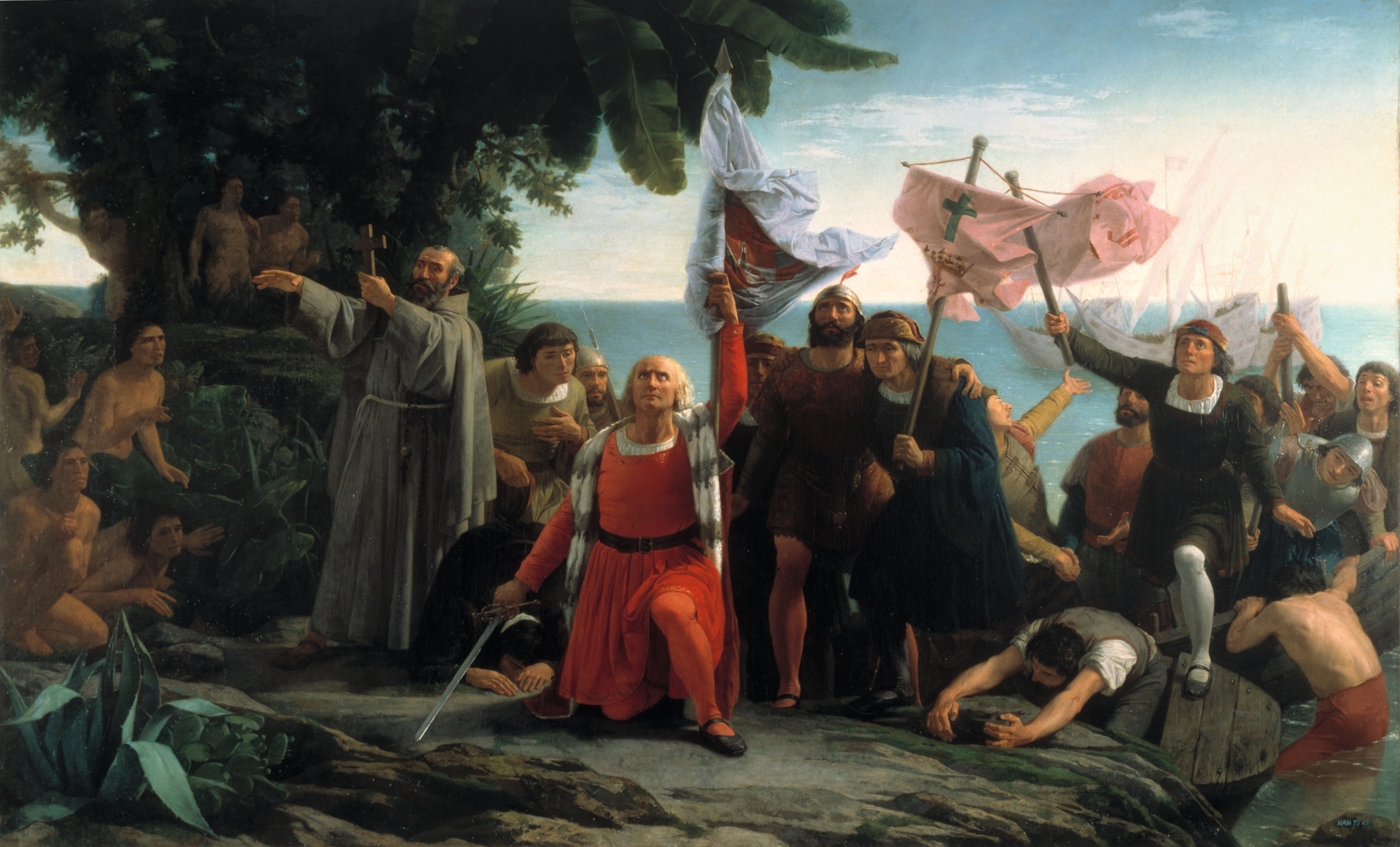
First meeting of two cultures previously unaware of one another
In anthropology, first contact is the first meeting of two communities previously without contact with one another. Notable examples of first contact are those between the Norse and Native North Americans circa 1000 CE, the Spanish Empire and the Arawak in 1492; and the Aboriginal Australians with Europeans in 1788 when the First Fleet arrived in Sydney.
Such contact is sometimes described as a "discovery", such as the British and United States did by creating the legal theory of the "Doctrine of Discovery". It is generally the more technologically complex society that is able to travel to new geographic regions to make contact with those more isolated, less technologically complex societies. However, some object to the application of such a word to human beings, which is why "first contact" is generally preferred. The use of the term "discovery" tends to occur more in reference to geography than cultures; for an example of a common discovery debate, see Discoverer of the Americas.
The fascination with first contact has gone through many transformations since the Age of Discovery, one of the earliest narratives being about contacting the Ten Lost Tribes and Prester John, and continues today as a trope in science fiction about extraterrestrial first contact, as well as being manifest in contemporary space exploration (for example the Pioneer plaque).
Establishing contact with uncontacted peoples is still attempted, despite the negative effects, history and opposition by indigenous peoples, advocacy groups and specialized institutions like FUNAI.
Consequences
The historical record has repeatedly demonstrated that when one culture is significantly more technologically advanced than the other, this side is usually favored by the disruptive nature of conflict, often with dire consequences for the other society, though the transmission of diseases between cultures also plays a critical role in the process. More isolated peoples who lived across broader territories at lower population densities have generally succumbed to the illnesses brought from the comparatively higher densities of Eurasian peoples. Indigenous populations simply did not have time to develop immunity to the foreign diseases, all introduced at once, to which the more urbanised European populations had had many generations to develop some partial immunity. The relative sizes of the contact populations can influence the process of inter-cultural development, as seen in Viking Greenland or in the Roanoke Colony.
Possible outcomes of contact for the groups involved may include:
- social integration
- colonization
- elimination (genocide)
History
Long before contemporary uncontacted peoples, there were many more cases of communities and states being isolated from each other, sometimes only having poor knowledge of each other and poor contact. One such case is the poor formal contact between Europe and China in the course of the long history of the Silk Road trade and later contact with the Mongol Empire. Frustration with the lack of contact gave rise to the characterization of China as isolationist, and after being identified with Greater India and Prester John, the European powers, such as the Portuguese Prince Henry the Navigator, attempted to reach the isolated Greater India by travelling westward. The European colonial powers thereby mistakenly identified the Americas as the West Indies - a part of Greater India - and named the indigenous peoples of the Americas incorrectly as "Indians". This contacting has been called one-sided "discovery" as is the case with discovery doctrine, and has been reinvented contemporarily by narratives of first contact beyond Earth finding its way into actual space exploration (for example the Pioneer plaque). It has been argued that, for colonialism, this seeking out of first contact proved to be a crucial element to gain control over knowledge and representation of the other, fetishizing and objectifying contact and its place on the frontier drawing a long history of one-sided contact, until today with indigenous peoples and specifically uncontacted peoples.
Notable examples
Numerous important instances of first contact have occurred without detailed contemporary recordings across Eurasia and Africa, including the 330 BCE invasions of Alexander the Great from Persia to India and the establishment of Romano-Chinese relations in the 2nd century CE. However, well-established trade routes from prehistoric times meant that many of the cultures would have been aware of the other before they met.
| Date | Indigenous | Expedition / Leader | Exploring group | Location | Description of first contact | |
|---|---|---|---|---|---|---|
| ~1000 | Beothuk | Leif Erikson | Vikings | L'Anse Aux Meadows, Vinland (present-day Canada) | Viking settlement was established at L'Anse Aux Meadows in approximately 1000 CE. The vikings referred to the indigenous people as Skræling, who were in actuality likely the proto-Beothuk, with whom they had contact. It is debated whether this contact was peaceful or violent. Archaeological estimates for the Norse population of L'Anse Aux Meadows range from 30 to 120 people. | |
| 12 October 1492 | Taíno, Galibi and Ciboney etc. | First Voyage of Christopher Columbus | Spanish Empire | Guanahani (modern Bahamas); Cuba, Hispaniola | Violent, led to numerous deaths and enslavement of many indigenous inhabitants of the West Indies and their subjugation to extreme violence and brutality. | |
| 17 June 1579 | Coast Miwok | Francis Drake's Circumnavigation | English | Drake's Bay, Northern California | Drake and his crew remained at Drake’s Bay for about one month to repair their ship during which time relations with the Miwok remained peaceful. Ceremoniously, Drake claimed the land for England as Nova Albion but after he sailed away from the area, contact was lost for the next two centuries. | |
| 21 July 1595 | Polynesians | Álvaro de Mendaña de Neira | Spanish Empire | Marquesas Islands, French Polynesia | Initially friendly, but turning violent in the first encounter and leading to 200 local deaths in the first two weeks. | |
| 19 December 1642 | Ngāti Tūmatakōkiri | First Voyage of Abel Tasman | Dutch | Tasman District, New Zealand | Four Dutch killed, one Māori wounded, no other communication. | |
| 19 January 1788 | Native Hawaiians | James Cook's Third Voyage | British Empire | Kauai, Hawaii | General friendly trade; one Indigenous Hawaiian killed. | |
| 21 January 1788 | Cadigal and Bidjigal etc. | First Fleet | British Empire | Sydney, Australia | Friendly, reserved, one aborigine likely beaten. | |
| 29 November 1791 | Moriori | William R. Broughton | British Empire | Chatham Island, New Zealand | Shows of aggression by Moriori followed quickly by peaceful relations. Then a fight leading to the death of one Moriori. | |
| 1930 | Papuan people | Mick Leahy | Australian | New Guinea Highlands, Papua New Guinea | Friendly, some Highland people thought they were ancestors and attempted to rub off their white skins. |
Footnotes
Strictly, the first recorded contact between Europeans and Indigenous Australians on the East Coast of Australia was the visit by Captain James Cook in 1770. However, interaction with Indigenous people at that time was short and minimal whereas the later arrival of the First Fleet was the beginning of sustained European settlement on the continent.
References
References
- Serge Tcherkezoff. (2008). "First Contacts in Polynesia – the Samoan Case (1722–1848): Western Misunderstandings about Sexuality and Divinity". ANU E Press.
- (2013). "Recreating First Contact: Expeditions, Anthropology, and Popular Culture". Smithsonian.
- Suzan Shown Harjo. (2014). "Nation to Nation: Treaties Between the United States and American Indian Nations". Smithsonian.
- Jean Stockard. (2000). "Sociology: Discovering Society". Wadsworth.
- Grande, Alexander. (2014). "Erst-Kontakt". University of Vienna.
- Nuwer, Rachel. (2014-08-04). "Future – Anthropology: The sad truth about uncontacted tribes". BBC.
- (2014). "Historical Archaeology, Contact, and Colonialism in Oceania". Journal of Archaeological Research.
- Millar, Ashley Eva. (2011). "Encountering Otherness. Diversities and Transcultural Experiences in Early Modern European Culture.". EUT Edizioni Università di Trieste.
- Baum, Wilhelm. (1999). "Die Verwandlungen des Mythos vom Reich des Priesterkönigs Johannes. Rom, Byzanz und die Christen des Orients im Mittelalter.".
- Kolodny, Annette (2012). ''In Search of First Contact: The Vikings of Vinland, the Peoples of the Dawnland, and the Anglo-American Anxiety of Discovery''. Duke University Press. p. 95. {{ISBN. 978-0-8223-5286-0.
- Linda S. Cordell; Kent Lightfoot; Francis McManamon; George Milner (2008). ''Archaeology in America: An Encyclopedia'' [4 volumes]. ABC-CLIO. pp. 82–83. {{ISBN. 978-0-313-02189-3.
- "Christopher Columbus: How The Explorer's Legend Grew– and Then Drew Fire".
- Wilson, Derek. (1977). "The World Encompassed: Drake's Great Voyage 1577-1580". The Trinity Press.
- Thompson, Christina. (2019). "Sea People: The Puzzle of Polynesia". HarperCollins.
- Taonga, New Zealand Ministry for Culture and Heritage Te Manatu. "2. – European discovery of New Zealand – Te Ara Encyclopedia of New Zealand".
- Hough, Richard. (1997). "Captain James Cook: a biography". Norton.
- Derrincourt, Robin. "Camp Cove". Dictionary of Sydney.
- King, Michael. (2017). "Moriori: A People Rediscovered". Penguin UK.
- Griffin, James. "Leahy, Michael James (Mick) (1901–1979)". National Centre of Biography, Australian National University.
This article was imported from Wikipedia and is available under the Creative Commons Attribution-ShareAlike 4.0 License. Content has been adapted to SurfDoc format. Original contributors can be found on the article history page.
Ask Mako anything about First contact (anthropology) — get instant answers, deeper analysis, and related topics.
Research with MakoFree with your Surf account
Create a free account to save articles, ask Mako questions, and organize your research.
Sign up freeThis content may have been generated or modified by AI. CloudSurf Software LLC is not responsible for the accuracy, completeness, or reliability of AI-generated content. Always verify important information from primary sources.
Report