From Surf Wiki (app.surf) — the open knowledge base
Fine Gael
Irish political party
.jpg)
Irish political party
| Field | Value | |||||||||||||||||
|---|---|---|---|---|---|---|---|---|---|---|---|---|---|---|---|---|---|---|
| logo | Fine Gael logo 2009.svgclass=skin-invert | |||||||||||||||||
| logo_size | 225 | |||||||||||||||||
| colorcode | ||||||||||||||||||
| leader | Simon Harris | |||||||||||||||||
| general_secretary | John Carroll | |||||||||||||||||
| founders | ||||||||||||||||||
| foundation | ||||||||||||||||||
| ideology | ||||||||||||||||||
| {{ubl | class | nowrap | ||||||||||||||||
| Liberal conservatism{{refn | <ref name | "HamannKelly2010"}} | ||||||||||||||||
| Christian democracy{{refn | <ref name | "Nordsieck"}} | ||||||||||||||||
| headquarters | 51 Mount Street Upper, Dublin, Ireland | |||||||||||||||||
| international | Centrist Democrat International | |||||||||||||||||
| website | ||||||||||||||||||
| country | the Republic of Ireland | |||||||||||||||||
| country_dab1 | Politics of the Republic of Ireland | |||||||||||||||||
| parties_dab1 | List of political parties in the Republic of Ireland | |||||||||||||||||
| elections_dab1 | Elections in the Republic of Ireland | |||||||||||||||||
| leader1_title | Deputy leader | |||||||||||||||||
| leader1_name | Helen McEntee | |||||||||||||||||
| leader2_title | Chairperson | |||||||||||||||||
| leader2_name | Micheál Carrigy | |||||||||||||||||
| leader3_title | Seanad leader | |||||||||||||||||
| leader3_name | Seán Kyne | |||||||||||||||||
| membership_year | 2020 | |||||||||||||||||
| position | Centre-right{{refn | |||||||||||||||||
| {{cite web | url | https://www.proquest.com/openview/0009941e2ad867dc8a17a0ad384e671a/1?pq-origsite=gscholar&cbl=7030806 | title=Left-Wing Prospects: A Sinn Féin Model | first=Thomas | last=O'Neill | work=Brown Political Review | date=2021-03-16 | quote=... the country's political landscape has remained dominated by a duopoly of centre-right parties: Fianna Fáil and Fine Gael.}} | ||||||||||
| {{cite web | url | https://ujpps.com/index.php/ujpps/announcement/view/59 | title=Shifting to the Left: The Rise of Sinn Féin in the 2020 Irish General Election | first=Kennedy | last=Fiorella | date=2022-06-13 | quote=The two longstanding centre-right political parties are Fine Gael ...}} | |||||||||||
| {{cite web | url | https://hal.science/hal-05293273/document | title=THE LONG ROAD TO THE EMERGENCE OF A LEFT-RIGHT DIVIDE IN IRELAND, 1922-2020 | first=Olivier | last=Coquelin | quote=Since its inception in 1922, [...] The Irish party system thus consisted of two nationalist-inspired organisations, Cumann na nGaedheal / Fine Gael and Fianna Fáil, which could be situated, ideologically speaking, either on the right or on the centre-right of the political spectrum. | date=2022}} | |||||||||||
| {{cite web | url | https://link.springer.com/chapter/10.1007/978-3-031-93795-8_9 | title=The Results Analysed: The Centre Strikes Back | date=2025-10-01 | first=Michael | last=Gallagher | doi=10.1007/978-3-031-93795-8_9 | isbn=978-3-031-93795-8 | quote=The domination of the post-election government by centre-right parties and the mainly left-wing orientation of the opposition suggests that the party system may be moving towards a clearer left–right competition than Ireland has experienced in the past.}} | |||||||||
| {{cite book | author | Richard Dunphy | chapter=Ireland | editor=Donatella M. Viola | title=Routledge Handbook of European Elections | chapter-url=https://books.google.com/books?id=7stgCgAAQBAJ&pg=PA247 | date=2015 | publisher=Routledge | isbn=978-1-317-50363-7 | page=247 | access-date=17 March 2016 | archive-date=26 December 2018 | archive-url=https://web.archive.org/web/20181226015850/https://books.google.com/books?id=7stgCgAAQBAJ&pg=PA247 | url-status=live}} | ||||
| {{cite book | author1 | Michael Holmes | author2=Kathryn Simpson | title=Ireland and the European Union | url=https://www.manchesterhive.com/display/9781526159601/9781526159601.xml | year=2021 | publisher=Manchester University Press | isbn=9781526159601 | page=73 | access-date=11 March 2025}} | ||||||||
| {{cite book | author1 | Nicholas Rees | author2=Brid Quinn | author3=Bernadette Connaughton | chapter=Ireland and the European Union | editor1=Nicholas Rees | editor2=Brid Quinn | editor3=Bernadette Connaughton | title=Europeanisation and New Patterns of Governance in Ireland | chapter-url=https://books.google.com/books?id=e4zLCgAAQBAJ&pg=PA47 | year=2010 | publisher=Manchester University Press | isbn=978-1-84779-336-2 | page=47 | access-date=17 March 2016 | archive-date=26 December 2018 | archive-url=https://web.archive.org/web/20181226015847/https://books.google.com/books?id=e4zLCgAAQBAJ&pg=PA47 | url-status=live}} |
| {{cite book | author | Kate Nicholls | title=Mediating Policy: Greece, Ireland, and Portugal Before the Eurozone Crisis | url=https://books.google.com/books?id=HdAqBwAAQBAJ&pg=PA80 | year=2015 | publisher=Routledge | isbn=978-1-317-64273-2 | page=80 | access-date=17 March 2016 | archive-date=26 December 2018 | archive-url=https://web.archive.org/web/20181226015850/https://books.google.com/books?id=HdAqBwAAQBAJ&pg=PA80 | url-status=live}}}}}} | ||||||
| membership | 25,000 | |||||||||||||||||
| youth_wing | Young Fine Gael | |||||||||||||||||
| european | European People's Party | |||||||||||||||||
| europarl | European People's Party Group | |||||||||||||||||
| colours | {{ublist | |||||||||||||||||
| merger | {{plainlist | |||||||||||||||||
| seats1_title | Dáil Éireann | |||||||||||||||||
| seats1 | ||||||||||||||||||
| seats2_title | Seanad Éireann | |||||||||||||||||
| seats2 | ||||||||||||||||||
| seats3_title | European Parliament | |||||||||||||||||
| seats3 | ||||||||||||||||||
| seats4_title | Councillors | |||||||||||||||||
| seats4 | ||||||||||||||||||
| wing1_title | LGBT wing | |||||||||||||||||
| wing1 | Fine Gael LGBT |
the political party founded in 1933
|Liberal conservatism |Christian democracy | | | | | | |}}}} | Dark blue (official) | Blue (customary)
- Cumann na nGaedheal
- Army Comrades Association
- National Centre Party}} Fine Gael (; ; ) is a centre-right, liberal-conservative, Christian democratic political party in Ireland. Fine Gael is currently the third-largest party in the Republic of Ireland in terms of members of Dáil Éireann. The party had a membership of 25,000 in 2021. Simon Harris succeeded Leo Varadkar as party leader on 24 March 2024.
Fine Gael was founded on 8 September 1933, following the merger of its parent party Cumann na nGaedheal, the National Centre Party and the Blueshirts. Its origins lie in the struggle for Irish independence and the pro-Treaty side in the Irish Civil War, with the party claiming the legacy of Michael Collins. In its early years, the party was commonly known as Fine Gael – The United Ireland Party, abbreviated UIP, and its official title in its constitution remains Fine Gael (United Ireland).
Fine Gael holds a pro-European stance and is generally considered to be more of a proponent of economic liberalism than its traditional rival, Fianna Fáil. Fine Gael describes itself as a "party of the progressive centre" which it defines as acting "in a way that is right for Ireland, regardless of dogma or ideology". It lists its core values as "equality of opportunity, free enterprise and reward, security, integrity and hope." In international politics, the party is highly supportive of the European Union, along with generally supporting strengthened relations with the United Kingdom and opposition to physical force Irish republicanism. The party's autonomous youth wing, Young Fine Gael (YFG), was formed in 1977.
Fine Gael governed in coalition with the Labour Party between 2011 and 2016, and in a minority government along with independent TDs from 2016 to 2020. It formed part of a historic coalition government with its traditional rival, Fianna Fáil, and the Green Party, with Simon Harris serving as Taoiseach until January 2025. Since January 2025, Fine Gael has been in a coalition with Fianna Fáil and independents, with Simon Harris serving as Tánaiste.
History
Main article: History of Fine Gael
Foundation
Fine Gael was created in 1933 following the merger of three political organisations; Cumann na nGaedhael (CnaG) led by W. T. Cosgrave, the National Centre Party led by Frank MacDermot and James Dillon, and the National Guard (better known as the Blueshirts), led by Eoin O'Duffy. Cumann na nGaedhael, born out of the pro-Anglo-Irish Treaty side in the Irish Civil War, had been the party of government from the creation of the Irish Free State in 1922 until the 1932 general election, which it lost to the newly emergent Fianna Fáil. The National Centre Party was a new party that had done well at the 1932 election, and represented the interests of farmers. The National Guard were not a political party, but a militant group made up of former pro-Treaty Irish Army soldiers, and was previously known as the Army Comrades Association. Following the disruption of Cumann na nGaedhael meetings by members of the Irish Republican Army, the ACA had begun providing security at their events. This led to the leadership of the ACA being taken over by a number of CnaG TDs, including Thomas F. O'Higgins. In early 1933, Eoin O'Duffy took over the ACA, renamed them the National Guard, and began instilling the organisation with elements of European fascism. However, in August 1933 the Fianna Fáil government banned the National Guard, fearing a planned parade in Dublin might be an attempt to emulate the March on Rome, which saw Benito Mussolini rise to power in Italy.
In September 1933, the three groups combined forces and merged to form Fine Gael. The National Guard (referred to informally by this point as "the Blueshirts") were to serve as the youth wing of the new party, "The League of Youth". CnaG members dominated the new party. However, to avoid the perception that Fine Gael was simply Cumann na nGaedhael under a new name, O'Duffy was made leader of the new party. Following poor results at the 1934 local elections and concerns over his increasingly rabid rhetoric, O'Duffy resigned from the leadership after the party attempted to control what he said in public. He was replaced by W. T. Cosgrave, with James Dillon becoming deputy leader. O'Duffy attempted to regain control of the Blueshirts, but was rebuffed by the majority of them, who chose to stay with Fine Gael. Under the stewardship of Cosgrave and Dillon, the party returned to the more traditional conservatism espoused by Cumann na nGaedhael, with the moribund League of Youth disbanded by 1936.
Finding success with coalitions with Labour
Fine Gael remained out of government and at a low ebb for a prolonged period until the aftermath of the 1948 general election, which saw the party form a grand coalition with several other parties in order to oust Fianna Fáil and place Fine Gael member John A. Costello as Taoiseach. The coalition was short-lived but revived again between 1954 and 1957. However, following this stint Fine Gael returned to opposition for 16 years. The party went through a period of soul-searching during the 1960s, in which a new generation of Fine Gael politicians led by Declan Costello sought to revitalise Fine Gael with new ideas. In what has later been hailed as a landmark moment in Fine Gael history, Costello proposed moving the party to the left in a social democratic direction with a document entitled "Towards a Just Society". The document was adopted as the basis for the party's manifesto for the 1965 general election; however, when the party failed to make headway at the polls the momentum behind the Just Society document wilted and faded.
It was not until leader Liam Cosgrave secured an election pact with the Labour Party that Fine Gael returned to government in 1973. This period also saw Fine Gael becoming increasingly liberal in ethos, particularly under the leadership of Garret FitzGerald who took the reins of the party in 1977; It was during this time that Fine Gael campaigned in a number of referendums: the party supported Irish entry into the European Economic Community, supported lowering the voting age from 21 to 18, and supported a proposal to remove the "special position" of the Roman Catholic Church from the constitution. It was on the successful side in all three of these campaigns. The party also began to take a more liberal approach to the introduction of contraceptives to Ireland, although an attempt by the Fine Gael/Labour coalition to legalise contraceptives in 1974 stumbled after six members of Fine Gael, most prominently Taoiseach Liam Cosgrave, voted against the government's own bill.
The arrangement between Fine Gael and Labour proved pleasing to both parties and their election pacts remained throughout the rest of the 1970s and into the 1980s, seeing the pair enter government a number of times together. In 1985, Fine Gael/Labour voted to liberalise access to contraceptives. That same year FitzGerald signed the Anglo-Irish Agreement with Margaret Thatcher, paving the way to devolved government in Northern Ireland. In 1986 the party campaigned for a Yes in that year's referendum on legalising divorce, which was defeated, with the No side obtaining 63.5% of the vote.
Decline and rebuilding
The 1980s had proven fruitful electorally for Fine Gael, but the 1990s and early 2000s saw this momentum decline quickly. One of the first signs of this was the party's poor result in the 1990 presidential election, in which their candidate Austin Currie obtained just 17% of the first preference vote.
Fine Gael formed a government between 1994 and 1997 with the Labour Party and the Democratic Left. This government legalised divorce after a successful referendum in 1995. The party's share of TDs fell from 54 in 1997 to only 31 in the 2002 general election, its second-worst result ever at that point. It was at this point Enda Kenny took over leadership of the party and began the process of rebuilding it. At the 2007 general election Kenny was able to bring Fine Gael back to its 1997 levels with 51 TDs.
Recovery
The collapse of the Celtic Tiger resulted in the post-2008 Irish economic downturn, which threw Ireland not only into economic turmoil but also political upheaval. The 2011 Irish general election saw the governing Fianna Fáil collapse at the polls, while Fine Gael and the Labour Party returned with their best results ever. For the first time in its history, Fine Gael became the largest party in Dáil Eireann. Once more Fine Gael and Labour paired up to form a government, their tenure marked by the difficulty of trying to guide Ireland towards economic recovery. In 2013, a number of Fine Gael parliamentary party members, including Lucinda Creighton, were expelled from the party for defying the party whip on anti-abortion grounds to oppose the Protection of Life During Pregnancy Bill. These members subsequently formed a political party called Renua.
Since 2015
In 2015, the Fine Gael/Labour government held a referendum to allow gay marriage under the constitution. The government campaigned for a yes vote and were successful. Following the 2016 general election, Fine Gael retained control of the government as a minority government, made possible by a confidence and supply agreement with Fianna Fáíl, who agreed to abstain in confidence votes. Enda Kenny resigned as party leader in 2017. Following a leadership contest, Leo Varadkar became his successor as well as Taoiseach. In doing so, Varadkar became one of the first openly LGBT heads of government in the world. In 2018 the Fine Gael government held a referendum on the Eighth Amendment, the provision in the Irish constitution which forbid abortion. The party campaigned to repeal the amendment and was successful.
After the 2020 general election, for the first time in history, Fine Gael entered into a coalition government with its traditional rival Fianna Fáil, as well as the Green Party, with Leo Varadkar serving as Tánaiste for the first half of the government's five-year term, then becoming Taoiseach in December 2022. Leo Varadkar resigned as leader of Fine Gael on 20 March 2024, and was succeeded by Simon Harris, who was elected unopposed on 24 March.
Ideology and policies
As a political party of the centre-right, Fine Gael has been described as liberal-conservative, Christian-democratic, liberal, conservative liberal, conservative, and pro-European, with an ideological base combining elements of cultural conservatism and economic liberalism.
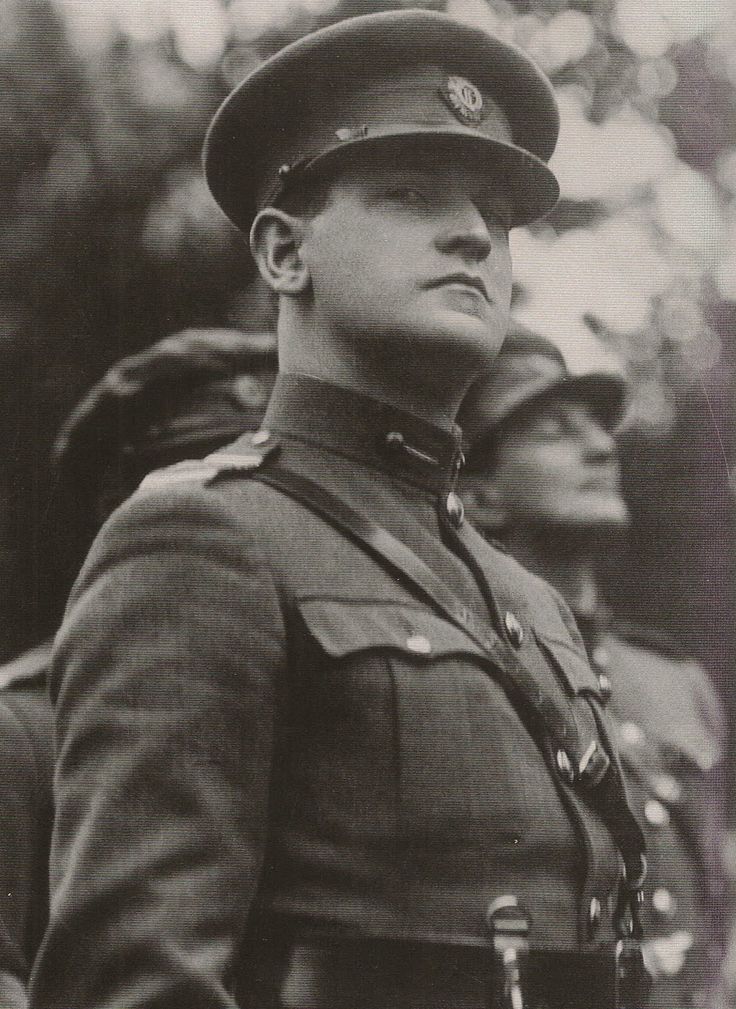
Although Ireland's political spectrum was traditionally divided along Civil War lines, rather than the traditional European left–right spectrum, Fine Gael is described generally as a centre-right party, with a focus on "fiscal rectitude". As the descendant of the pro-Treaty factions in the Irish Civil War, Fine Gael cites Michael Collins as an inspiration and claims his legacy. He remains a symbol for the party, and the anniversary of his death is commemorated each year in August.
Although Fine Gael was historically a Catholic party, it became the de facto home for Irish Protestants. Its membership base had a higher proportion of Protestants than that of Fianna Fáil or Labour. The party promoted a strong Catholic image and depicted itself as a defender of Catholicism against Atheistic Communism, of which it accused the two aforementioned parties of being sympathetic to.
Social policies
Fine Gael adopted the "Just Society" policy statement in the 1960s, based on principles of social justice and equality. It was created by the emerging social democratic wing of the party, led by Declan Costello. The ideas expressed in the policy statement had a significant influence on the party in the years to come.
While Fine Gael was traditionally socially conservative for most of the twentieth century due to the conservative Christian ethos of Irish society during this time, its members are variously influenced by social liberalism, social democracy and Christian democracy on issues of social policy. Under Garret FitzGerald, the party's more socially liberal, or pluralist, wing gained prominence. Proposals to allow divorce were put to referendum by two Fine Gael–led governments, in 1986 under FitzGerald, and in 1995 under John Bruton, passing very narrowly on this second attempt. Its modern supporters have shown a preference for postmaterialist values.
LGBT+ issues
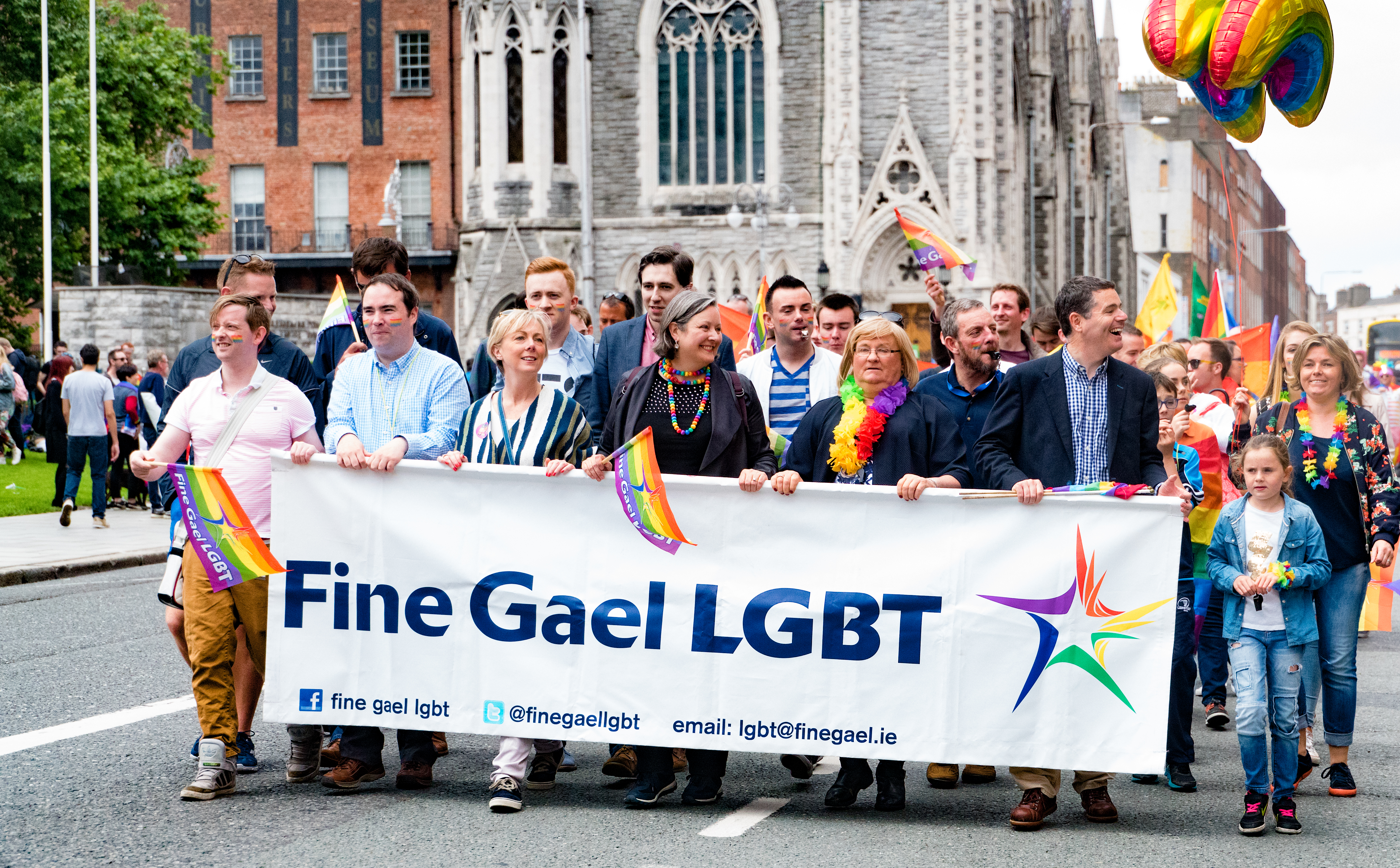
Fine Gael supported civil unions for same-sex couples from 2003, voting for the Civil Partnership and Certain Rights and Obligations of Cohabitants Bill 2010. In 2012, the party approved a motion at its Ardfheis to prioritise the consideration of same-sex marriage in the upcoming constitutional convention. In 2013, party leader and Taoiseach Enda Kenny declared his support for same-sex marriage. The Fine Gael–led government held a referendum on the subject on 22 May 2015. The referendum passed, with the electorate voting to extend full marriage rights to same-sex couples, with 62.1% in favour and 37.9% opposed.
In 2015, months before the marriage equality referendum, Leo Varadkar became the first Irish government minister to come out as gay. In May 2019, former Rose of Tralee Maria Walsh, was elected as a Fine Gael MEP for the Midlands-Northwest constituency in the 2019 European Parliament election, running alongside Mairéad McGuinness MEP. Walsh was Fine Gael's first openly lesbian candidate.
Fine Gael has an LGBT+ section, Fine Gael LGBT, and in 2017, Leo Varadkar became the first Taoiseach to march in Dublin Pride.
Abortion
In 1983, the Eighth Amendment to the Constitution, which proposed to protect the life of the unborn, was put to a referendum. Fine Gael initially supported the proposal, but then came out in opposition to it. Under leader and Taoiseach Garret FitzGerald, the party campaigned for a 'No' vote, arguing, on the advice of the Attorney General Peter Sutherland, that the wording, which had been drafted under the previous government, was ambiguous and open to many interpretations. Its stance conflicted with that of the Pro-Life Amendment Campaign (PLAC) and Catholic bishops, and Fianna Fáil, the largest party in the State at the time, but then in opposition. The amendment resulted in the addition of Article 40.3.3° to the Constitution, giving the unborn child a qualified equal right to life to that of the mother.
In 1992, in the X Case, the Supreme Court held that a risk to the life of woman from suicide was a permissible ground under Article 40.3.3° for abortion. In 2002, Fine Gael campaigned against the Twenty-fifth Amendment to the Constitution, which proposed to remove suicide as a grounds for granting a termination of a pregnancy. The amendment was rejected by Irish voters.
In 2013 it proposed, and supported, the enactment of the Protection of Life During Pregnancy Act 2013, which implemented in statute law the X case ruling of the Supreme Court, granting access to a termination of a pregnancy where there is a real and substantial risk to the life, not the health, of the mother, including a threat of suicide. Five TDs and two Senators, including Minister of State Lucinda Creighton, lost the Fine Gael party whip for voting against the legislation. Creighton later left Fine Gael to found Renua. The Act was criticised by various anti-abortion groups and Catholic bishops, but supported by a majority of the electorate in opinion polls, with many indicating they wished to see a more liberal law on abortion.
Enda Kenny's Fine Gael–led minority government took office after the 2016 election with a programme which promised a randomly selected Citizens' Assembly to report on possible changes to the Eighth Amendment, which would be considered by an Oireachtas committee, to whose report the government would respond officially in debates in both houses of the Oireachtas. Fine Gael Oireachtas members were promised a free vote on the issue. Leo Varadkar succeeded Enda Kenny as Taoiseach on 14 June 2017 and promised to hold a referendum on abortion in 2018. Several Fine Gael TDs, notably Health Minister Simon Harris and Kate O'Connell, were prominent supporters of the pro-choice side before and during the referendum. While the party was divided, the majority of Fine Gael TDs and Senators, as well as most members, were in favour of repealing the Eighth Amendment. A referendum to repeal the Eighth Amendment was held on 25 May 2018 and was approved by 66.4% of voters.
Drug policies
The party has traditionally held a strong stance against the decriminalisation of drugs. In 2007, Fine Gael's leader at the time Enda Kenny called for drug and alcohol testing to be performed in schools, saying cocaine usage at schools was "rampant" in some areas.
At the party's 2014 Ard Fheis, a proposed motion to support the legalisation of cannabis was voted down by the membership.
In 2016, the Fine Gael health minister James Reilly said that they would not be changing their policy on the legalisation of cannabis, due to "serious concerns about the health impacts" of cannabis.
Economic policies
Fine Gael has, since its inception, portrayed itself as a party of fiscal rectitude and minimal government interference in economics, advocating pro-enterprise policies. In that they followed the line of the previous pro-Treaty government that believed in minimal state intervention, low taxes and social expenditures. Newly elected politicians for the party in the Dáil have strongly advocated liberal economic policies. Lucinda Creighton (who has since left the party) and Leo Varadkar in particular have been seen as strong advocates of a neoliberal approach to Ireland's economic woes and unemployment problems. Varadkar in particular has been a strong proponent of small, indigenous business, advocating in 2008 that smaller firms should have benefitted from the government's recapitalisation program. Its former finance spokesman Richard Bruton's proposals were seen as approaching problems from a pro-enterprise point of view. Its fairer budget website in 2011 suggested that its solutions are "tough but fair". Other solutions conform generally to conservative governments' policies throughout Europe, focusing on cutting numbers in the public sector, while maintaining investment in infrastructure.
Fine Gael's proposals have sometimes been criticised mostly by smaller political groupings in Ireland, and by some of the trade unions, who have raised the idea that the party's solutions are more conscious of business interests than the interests of the worker. In 2008 the SIPTU trade union stated its opposition to then-Taoiseach Enda Kenny's assertion, in response to Ireland's economic crisis, that the national wage agreement ought to have been suspended. Kenny's comments had support however and the party attributed its significant rise in polls in 2008 to this.
Fine Gael's Simon Coveney launched what the party termed a radical re-organisation of the Irish semi-state company sector. Styled the New Economy and Recovery Authority (or NewERA), Coveney said that it is an economic stimulus plan that will "reshape the Irish economy for the challenges of the 21st century". Requiring an €18.2 billion investment in Energy, Communications and Water infrastructure over a four-year period, it was promoted as a way to enhance energy security and the digital reputation of Ireland. A very broad-ranging document, it proposed the combined management of a portfolio of semi-state assets, and the sale of all other, non-essential services. The release of equity through the sale of the various state resources, including electricity generation services belonging to the ESB, Bord na Móna and Bord Gáis, in combination with use of money in the National Pensions Reserve Fund, was Fine Gael's proposed funding source for its national stimulus package.
The plan was seen as the longer term contribution to Fine Gael's economic agenda and the basis of its program for government. It was publicised in combination with a more short term policy proposal from Leo Varadkar. This document, termed "Hope for a Lost Generation", promised to bring 30,000 young Irish people off the Live Register in a year by combining a National Internship Program, a Second Chance Education Scheme, an Apprenticeship Guarantee and Community Work Program, as well as instituting a German style Workshare program.
Constitutional reform policies
In 2010, Fine Gael's Phil Hogan published the party's proposals for political and constitutional reform. In a policy document entitled New Politics, Hogan suggested creating a country with "a smaller, more dynamic and more responsive political system" by reducing the size of the Dáil by 20, changing the way the Dáil works, and by abolishing the Irish senate, Seanad Éireann.
The question of whether to abolish the Seanad or not was put to a referendum in 2013, with voters voting 51% to 49% to retain bicameralism in Ireland.
In 2022, Fine Gael Spokesperson on European Affairs, Neale Richmond, said the debate on Irish unity must transition from aspirational to achievable. Young Fine Gael members are reportedly supportive of a United Ireland. In 2024, Simon Harris said his party's aspires a united Ireland but it is not a priority for him.
Health policies
The Irish health system, being administered centrally by the Health Service Executive, is seen to be poor by comparison to other countries in Europe, ranking outside expected levels at 25th according to the Euro Health Consumer Index 2006.
Fine Gael has long wanted Ireland to break with the system of private health insurance, public medical cards and what it calls the two tiers of the health system and has launched a campaign to see the system reformed. Speaking in favour of the campaign, Fine Gael then health spokesman James Reilly stated "Over the last 10 years the health service has become a shambles. We regularly have over 350 people on trolleys in A&E, waiting lists that go on for months, outpatient waiting lists that go on for years and cancelled operations across the country..."
Fine Gael launched its FairCare campaign and website in April 2009, which stated that the health service would be reformed away from a costly ineffective endeavour, into a publicly regulated system where compulsory universal health insurance would replace the existing provisions.
This strategy was criticised by Fianna Fáil's then-Minister for Children, Barry Andrews. The spokesperson for family law and children, Alan Shatter TD, robustly defended its proposals as the only means of reducing public expenditure, and providing a service in Ireland more akin to the Canadian, German, Dutch and Austrian health systems.
Fine Gael's current healthcare policy revolves around the implementation of Sláintecare, a cross-party plan for the reform of the Irish health system. Sláintecare is focused on introducing "a universal single-tiered health service, which guarantees access based on need, not income… through Universal Health Insurance".
Pro-Europeanism and defence policies
Fine Gael is among the most pro-European integration parties in Ireland, having supported the European Constitution, the Lisbon Treaty, and advocating participation in European common defence. The party have been supportive of NATO. In 1998, party leader John Bruton called on Ireland to join the NATO-led Partnership for Peace. The party's youth wing, Young Fine Gael, passed a motion in 2016 calling on the government to apply for membership of NATO.
Under Enda Kenny, the party called on the state to end Irish neutrality and to sign up for a European defence structure, with Kenny claiming that "the truth is, Ireland is not neutral. We are merely unaligned." Following the 2022 Russian invasion of Ukraine, Fine Gael called for an increase in defence spending, with Minister for Foreign Affairs Simon Coveney proposing an increase of €500 million a year and suggesting Ireland needed a "fundamental rethink" of its security approach.
Since Brexit, Fine Gael has taken a strong pro-European stance, stating that Ireland's place is "at the heart of Europe". In government, the party has launched the "Global Ireland" plan to develop alliances with other small countries across Europe and the world.
European affiliations
Fine Gael is a founding member of the European People's Party (EPP), the largest European political party comprising liberal conservative and Christian democratic national-level parties from across Europe. Fine Gael's MEPs sit with the EPP Group in the European Parliament, and Fine Gael parliamentarians also sit with the EPP Groups in the Parliamentary Assembly of the Council of Europe and Committee of the Regions. Young Fine Gael is a member of the Youth of the European People's Party (YEPP).
It is inferred from the party's relationship with its European counterparts via membership of the European People's Party that Fine Gael belongs on the centre-right. The party conforms generally with European political parties that identify themselves as being Christian democratic.
Planning and payment tribunals
The Moriarty Tribunal has sat since 1997 and has investigated the granting of a mobile phone license to Esat Telecom by Michael Lowry when he was Fine Gael Minister for Transport, Energy and Communications in the Rainbow Coalition of the mid-1990s. Lowry resigned from the Cabinet after it was revealed at the Moriarty Tribunal that businessman Ben Dunne had paid for an IR£395,000 extension to Lowry's County Tipperary home. Lowry, now an independent TD, supported the Fianna Fáil–Green Party government in Dáil Éireann until March 2011.
It was also revealed in December 1996 that Fine Gael had received some £180,000 from Ben Dunne in the period 1987 to 1993. This was composed of £100,000 in 1993, £50,000 in 1992 and £30,000 in 1989. In addition, Michael Noonan received £3,000 in 1992 towards his election campaign, Ivan Yates received £5,000, Michael Lowry received £5,000 and Sean Barrett received £1,000 in the earlier 1987 election. John Bruton said he had received £1,000 from Dunne in 1982 towards his election campaign, and Dunne had also given £15,000 to the Labour Party during the 1990 Presidential election campaign.
Following revelations at the Moriarty Tribunal on 16 February 1999, in relation to Charles Haughey and his relationship with AIB, former Taoiseach Garret Fitzgerald confirmed that AIB and Ansbacher wrote off debts of almost £200,000 that he owed in 1993, when he was in financial difficulties because of the collapse of the aircraft leasing company, GPA, in which he was a shareholder. The write-off occurred after Fitzgerald left politics. Fitzgerald also said he believed his then Fine Gael colleague, Peter Sutherland, who was chairman of AIB at the time, was unaware of the situation.
Leadership
The leader of the Fine Gael party is Simon Harris. The position of deputy leader has been held since 2024 by Helen McEntee TD, the Minister for Education and Skills.
Party leader
Main article: Leader of Fine Gael
The following are the terms of office as party leader, and as Taoiseach (bolded) if applicable:
| Leader | Portrait | Period | Constituency | Periods in office (Taoiseach unless otherwise noted) |
|---|---|---|---|---|
| Eoin O'Duffy | 1933–1934 | Monaghan | ||
| W. T. Cosgrave | 1934–1944 | Carlow–Kilkenny | President of the Executive Council (for Cumann na nGaedheal) | |
| Richard Mulcahy | 1944–1959 | Tipperary | John A. Costello as Taoiseach | |
| James Dillon | 1959–1965 | Monaghan | ||
| Liam Cosgrave | 1965–1977 | Dún Laoghaire | 1973–1977 | |
| (14th Government of Ireland) | ||||
| Garret FitzGerald | 1977–1987 | Dublin South-East | 1981 – Feb 1982; Nov 1982–1987 | |
| (17th and 19th Government of Ireland) | ||||
| Alan Dukes | 1987–1990 | Kildare South | ||
| John Bruton | 1990–2001 | Meath | 1994–1997 | |
| (24th Government of Ireland) | ||||
| Michael Noonan | 2001–2002 | Limerick East | ||
| Enda Kenny | 2002–2017 | Mayo | 2011–2017 | |
| (29th and 30th Government of Ireland) | ||||
| Leo Varadkar | 2017–2024 | Dublin West | 2017–2020; as Tánaiste 2020–2022 | |
| (31st, 32nd and 33rd Government of Ireland) | ||||
| Simon Harris | 2024–present | Wicklow | 2024–present | |
| (34th Government of Ireland) |
Deputy leader
| Name | Period | Constituency |
|---|---|---|
| Tom O'Higgins | 1972–1977 | Dublin County South |
| Peter Barry | 1977–1987 | Cork South-Centrall |
| John Bruton | 1987–1990 | Meath |
| Peter Barry | 1991–1993 | Cork South-Central |
| Nora Owen | 1993–2001 | Dublin North |
| Jim Mitchell | 2001–2002 | Dublin Central |
| Richard Bruton | 2002–2010 | Dublin North-Central |
| James Reilly | 2010–2017 | Dublin North |
| Simon Coveney | 2017–2024 | Cork South-Central |
| Heather Humphreys | Apr.–Oct. 2024 | Cavan–Monaghan |
| Helen McEntee | 2024–present | Meath East |
Seanad leader
| Name | Period | Panel |
|---|---|---|
| Michael J. O'Higgins | 1973–1977 | Nominated member of Seanad Éireann |
| Patrick Cooney | 1977–1981 | Cultural and Educational Panel |
| Gemma Hussey | 1981–1982 | National University of Ireland |
| James Dooge | 1982–1987 | National University of Ireland |
| Maurice Manning | 1987–2002 | Cultural and Educational Panel |
| Brian Hayes | 2002–2007 | Cultural and Educational Panel |
| Michael Finucane | 2007 (acting) | Labour Panel |
| Frances Fitzgerald | 2007–2011 | Labour Panel |
| Maurice Cummins | 2011–2016 | Labour Panel |
| Jerry Buttimer | 2016–2020 | Labour Panel |
| Regina Doherty | 2020–2024 | Nominated member of Seanad Éireann |
| Seán Kyne | 2024–present | Cultural and Educational Panel |
Election results
Dáil Éireann
| Election | Leader | FPv | % | Seats | % | ± | Dáil | Government | 1937 | 1938 | 1943 | 1944 | 1948 | 1951 | 1954 | 1957 | 1961 | 1965 | 1969 | 1973 | 1977 | 1981 | Feb. 1982 | Nov. 1982 | 1987 | 1989 | 1992 | 1997 | 2002 | 2007 | 2011 | 2016 | 2020 | 2024 |
|---|---|---|---|---|---|---|---|---|---|---|---|---|---|---|---|---|---|---|---|---|---|---|---|---|---|---|---|---|---|---|---|---|---|---|
| W. T. Cosgrave | 461,171 | 34.8 (#2) | 34.8 (#2) | 11 | 9th | |||||||||||||||||||||||||||||
| 8th executive, | ||||||||||||||||||||||||||||||||||
| 1st government | ||||||||||||||||||||||||||||||||||
| (FF minority) | ||||||||||||||||||||||||||||||||||
| 428,633 | 33.3 (#2) | 32.6 (#2) | 3 | 10th | ||||||||||||||||||||||||||||||
| 2nd government | ||||||||||||||||||||||||||||||||||
| (FF majority) | ||||||||||||||||||||||||||||||||||
| 307,490 | 23.1 (#2) | 23.2 (#2) | 12 | 11th | ||||||||||||||||||||||||||||||
| 3rd government | ||||||||||||||||||||||||||||||||||
| (FF minority) | ||||||||||||||||||||||||||||||||||
| Richard Mulcahy | 249,329 | 20.5 (#2) | 21.7 (#2) | 2 | 12th | |||||||||||||||||||||||||||||
| 4th government | ||||||||||||||||||||||||||||||||||
| (FF majority) | ||||||||||||||||||||||||||||||||||
| 262,393 | 19.8 (#2) | 21.1 (#2) | 1 | 13th | ||||||||||||||||||||||||||||||
| 5th government | ||||||||||||||||||||||||||||||||||
| *(FG-Lab-CnP-CnT- | ||||||||||||||||||||||||||||||||||
| NL-MR-Ind majority)* | ||||||||||||||||||||||||||||||||||
| 349,922 | 25.8 (#2) | 27.2 (#2) | 9 | 14th | ||||||||||||||||||||||||||||||
| 6th government | ||||||||||||||||||||||||||||||||||
| (FF minority) | ||||||||||||||||||||||||||||||||||
| 427,031 | 32.0 (#2) | 34.0 (#2) | 10 | 15th | ||||||||||||||||||||||||||||||
| 7th government | ||||||||||||||||||||||||||||||||||
| (FG-Lab-CnT minority) | ||||||||||||||||||||||||||||||||||
| 326,699 | 26.6 (#2) | 27.2 (#2) | 10 | 16th | ||||||||||||||||||||||||||||||
| 8th, 9th government | ||||||||||||||||||||||||||||||||||
| (FF majority) | ||||||||||||||||||||||||||||||||||
| James Dillon | 374,099 | 32.0 (#2) | 32.6 (#2) | 7 | 17th | |||||||||||||||||||||||||||||
| 10th government | ||||||||||||||||||||||||||||||||||
| (FF minority) | ||||||||||||||||||||||||||||||||||
| 427,081 | 34.1 (#2) | 32.6 (#2) | 18th | |||||||||||||||||||||||||||||||
| 11th, 12th government | ||||||||||||||||||||||||||||||||||
| (FF majority) | ||||||||||||||||||||||||||||||||||
| Liam Cosgrave | 449,749 | 34.1 (#2) | 34.7 (#2) | 3 | 19th | |||||||||||||||||||||||||||||
| 13th government | ||||||||||||||||||||||||||||||||||
| (FF majority) | ||||||||||||||||||||||||||||||||||
| 473,781 | 35.1 (#2) | 37.5 (#2) | 4 | 20th | ||||||||||||||||||||||||||||||
| 14th government | ||||||||||||||||||||||||||||||||||
| (FG-Lab majority) | ||||||||||||||||||||||||||||||||||
| 488,767 | 30.5 (#2) | 29.1 (#2) | 11 | 21st | ||||||||||||||||||||||||||||||
| 15th, 16th government | ||||||||||||||||||||||||||||||||||
| (FF majority) | ||||||||||||||||||||||||||||||||||
| Garret FitzGerald | 626,376 | 36.5 (#2) | 39.2 (#2) | 22 | 22nd | |||||||||||||||||||||||||||||
| 17th government | ||||||||||||||||||||||||||||||||||
| (FG-Lab minority) | ||||||||||||||||||||||||||||||||||
| 621,088 | 37.3 (#2) | 38.0 (#2) | 2 | 23rd | ||||||||||||||||||||||||||||||
| 18th government | ||||||||||||||||||||||||||||||||||
| (FF minority) | ||||||||||||||||||||||||||||||||||
| 662,284 | 39.2 (#2) | 42.2 (#2) | 7 | 24th | ||||||||||||||||||||||||||||||
| 19th government | ||||||||||||||||||||||||||||||||||
| (FG-Lab majority) | ||||||||||||||||||||||||||||||||||
| 481,127 | 27.1 (#2) | 30.7 (#2) | 19 | 25th | ||||||||||||||||||||||||||||||
| 20th government | ||||||||||||||||||||||||||||||||||
| (FF minority) | ||||||||||||||||||||||||||||||||||
| Alan Dukes | 485,307 | 29.3 (#2) | 33.1 (#2) | 4 | 26th | |||||||||||||||||||||||||||||
| 21st, 22nd government | ||||||||||||||||||||||||||||||||||
| (FF-PD majority) | ||||||||||||||||||||||||||||||||||
| John Bruton | 422,106 | 24.5 (#2) | 27.1 (#2) | 10 | 27th | |||||||||||||||||||||||||||||
| 23rd government | ||||||||||||||||||||||||||||||||||
| (FF-Lab majority) | ||||||||||||||||||||||||||||||||||
| 24th government | ||||||||||||||||||||||||||||||||||
| (FG-Lab-DL majority) | ||||||||||||||||||||||||||||||||||
| 499,936 | 27.9 (#2) | 32.5 (#2) | 9 | 28th | ||||||||||||||||||||||||||||||
| 25th government | ||||||||||||||||||||||||||||||||||
| (FF-PD minority) | ||||||||||||||||||||||||||||||||||
| Michael Noonan | 417,619 | 22.5 (#2) | 18.7 (#2) | 23 | 29th | |||||||||||||||||||||||||||||
| 26th government | ||||||||||||||||||||||||||||||||||
| (FF-PD majority) | ||||||||||||||||||||||||||||||||||
| Enda Kenny | 564,428 | 27.3 (#2) | 30.7 (#2) | 20 | 30th | |||||||||||||||||||||||||||||
| 27th, 28th government | ||||||||||||||||||||||||||||||||||
| (FF-GP-PD/Ind majority) | ||||||||||||||||||||||||||||||||||
| 801,628 | 36.1 (#1) | 45.8 (#1) | 25 | 31st | ||||||||||||||||||||||||||||||
| 29th government | ||||||||||||||||||||||||||||||||||
| (FG-Lab supermajority) | ||||||||||||||||||||||||||||||||||
| 544,410 | 25.5 (#1) | 31.7 (#1) | 26 | 32nd | ||||||||||||||||||||||||||||||
| 30th, 31st government | ||||||||||||||||||||||||||||||||||
| (FG-Ind minority) | ||||||||||||||||||||||||||||||||||
| Leo Varadkar | 455,568 | 20.9 (#3) | 21.9 (#3) | 15 | 33rd | |||||||||||||||||||||||||||||
| 32nd, 33rd, 34th government | ||||||||||||||||||||||||||||||||||
| (FF-FG-GP majority) | ||||||||||||||||||||||||||||||||||
| Simon Harris | 458,134 | 20.8 (#2) | 21.8 (#3) | 3 | 34th | |||||||||||||||||||||||||||||
| 35th government | ||||||||||||||||||||||||||||||||||
| (FF-FG-Ind majority) |
Presidential elections
| Election | Candidate | FPv | % | +/– | Position |
|---|---|---|---|---|---|
| 1938 | Supported Douglas Hyde as an independent | ||||
| 1945 | Seán Mac Eoin | 335,539 | 30.9 | 2 | |
| 1952 | Did not contest the election | ||||
| 1959 | Seán Mac Eoin | 417,536 | 43.7 | 12.8 | 2 |
| 1966 | Tom O'Higgins | 548,144 | 49.5 | 5.8 | 2 |
| 1973 | Tom O'Higgins | 587,771 | 48.0 | 1.5 | 2 |
| 1974 | Supported Cearbhall Ó Dálaigh with Fianna Fáil per agreement | ||||
| 1976 | Did not contest the election | ||||
| 1990 | Austin Currie | 267,902 | 17.0 | 31.0 | 3 |
| 1997 | Mary Banotti | 372,002 | 29.3 | 12.3 | 2 |
| 2004 | Supported Mary McAleese as an independent | ||||
| 2011 | Gay Mitchell | 113,321 | 6.4 | 22.9 | 4 |
| 2018 | Endorsed Michael D Higgins as an independent | ||||
| 2025 | Heather Humphreys | 424,987 | 29.5 | 23.1 | 2 |
European Parliament
| Election | Leader | FPv | % | Seats | % | +/− | EP Group | EP Party | 1979 | 1984 | 1989 | 1994 | 1999 | 2004 | 2009 | 2014 | 2019 | 2024 | ||
|---|---|---|---|---|---|---|---|---|---|---|---|---|---|---|---|---|---|---|---|---|
| Garret FitzGerald | 464,451 | 33.1 (#2) | 26.7 (#2) | New | European People's Party Group}}" | EPP | European People's Party}}" | EPP | ||||||||||||
| 361,034 | 32.2 (#2) | 40.0 (#2) | 2 | |||||||||||||||||
| Alan Dukes | 353,094 | 21.6 (#2) | 26.7 (#2) | 2 | ||||||||||||||||
| John Bruton | 276,095 | 24.3 (#2) | 26.7 (#2) | |||||||||||||||||
| 342,171 | 24.6 (#2) | 26.7 (#2) | European People's Party-European Democrats}}" | EPP-ED | ||||||||||||||||
| Enda Kenny | 494,412 | 27.8 (#1) | 38.5 (#1) | 1 | European People's Party Group}}" | EPP | ||||||||||||||
| 532,889 | 29.1 (#1) | 33.3 (#1) | 1 | |||||||||||||||||
| 369,120 | 38.5 (#1) | 36.4 (#1) | ||||||||||||||||||
| Leo Varadkar | 496,459 | 29.6 (#1) | 38.5 (#1) | 1 | ||||||||||||||||
| Simon Harris | 362,766 | 20.8 (#1) | 28.6 (#1) | 1 |
Electoral performance since 2009
In the 2009 local elections held on 5 June 2009, Fine Gael won 556 seats, surpassing Fianna Fáil which won 407 seats, and making Fine Gael the largest party of local government nationally. They gained 88 seats from their 2004 result.
In the 2009 European Parliament election held on the same day as the local elections, which saw a reduction in the number seats from 13 to 12 for Ireland, the party won four seats, retaining the largest number of seats of an Irish party in the European Parliament. This was a loss of one seat from its 2004 result.
In the 2011 general election, Fine Gael gained 25 seats bringing them to a total of 76. The party ran candidates in all 43 constituencies and had candidates elected in every constituency except Dublin North-West. Fine Gael won 19 seats in Seanad Éireann following the 2011 election, a gain of four from the previous election in 2007.
While Fine Gael was responsible for the initial nomination of the uncontested, first President of Ireland, Douglas Hyde, a Fine Gael candidate has never won an election to the office of president. The Fine Gael presidential candidate, Gay Mitchell, finished fourth in the 2011 presidential election, with 6.4% of the vote. In 2004, Fine Gael supported the re-election of President Mary McAleese. Similarly, it supported the re-election of Michael D. Higgins in the 2018 presidential election.
In the 2016 general election the outgoing government consisting of Fine Gael and its partner the Labour Party was defeated. The previous government had the largest majority in the history of the state with a combined 113 seats out of the 166-seat Dáil Éireann. The aftermath of the general election resulted in months of negotiations for an agreement of government. A deal was reached with the main opposition and traditional rival Fianna Fáil to facilitate a minority Fine Gael-led government. Fine Gael governed Ireland alone with eight Independent members of the Dáil until 2020, when the party emerged as the third party following the general election. After governing for several months in a caretaker capacity, Fine Gael agreed to serve in a historic coalition government along with its traditional rival, Fianna Fáil, and the Green Party, with Fianna Fáil leader Micheál Martin serving as Taoiseach and Leo Varadkar serving as Tánaiste. As per the agreed Programme for Government, on 17 December 2022, Leo Varadkar returned to the role of Taoiseach with Micheál Martin as Tánaiste.
Front bench
Main article: Fine Gael Front Bench
Young Fine Gael
Main article: Young Fine Gael
Young Fine Gael (YFG) is the autonomous youth movement of Fine Gael. It was founded in 1976 by the then leader Garret FitzGerald. It caters for young people under 35 with an interest in Fine Gael and politics, in cities, towns and third level colleges throughout Ireland. YFG is led by its national executive consisting of ten members elected on a regional basis, and on a national panel.
Notes
References
Bibliography
- Nealon's Guide to the 29th Dáil and Seanad (Gill and Macmillan, 2002) ()
- Stephen Collins, "The Cosgrave Legacy" (Blackwater, 1996) ()
- Garret FitzGerald, "Garret FitzGerald: An Autobiography" (Gill and Macmillan, 1991) ()
- Jack Jones, In Your Opinion: Political and Social Trends in Ireland through the Eyes of the Electorate (Townhouse, 2001) ()
- Maurice Manning, James Dillon: A Biography (Wolfhound, 1999–2000) ()
- Stephen O'Byrnes, Hiding Behind a Face: Fine Gael under FitzGerald (Gill and Macmillan: 1986) ()
- Raymond Smith, Garret: The Enigma (Aherlow, 1985) (no ISBN)
References
- (2010). "Parties, Elections, and Policy Reforms in Western Europe: Voting for Social Pacts". Routledge.
- (2009). "Political Parties and European Integration". Peter Lang.
- Eva Wall. (26 June 2020). "End to century of civil war politics as Fianna Fáil and Fine Gael to enter historic coalition with Greens".
- Nordsieck, Wolfram. (2020). "Ireland".
- (2021). "Campaigning on Facebook in the 2019 European Parliament election : informing, interacting with, and mobilising voters". Palgrave Macmillan.
- (2018). "Constitutional acceleration within the European Union and beyond". Routledge.
- (26 February 2025). "Micheál Carrigy TD elected Chair of Fine Gael Parliamentary Party".
- Keena, Colm. (5 March 2020). "Sinn Féin is the richest political party in Ireland". [[Irish Times]].
- "2019 Local contents".
- (22 June 2020). "Progressive Programme for Government will improve rights and equality for LGBTI+ people".
- "Fine Gael". [[Oxford University Press]].
- "Fine Gael". [[Longman]].
- (2010-11-02). "Parties, Elections, and Policy Reforms in Western Europe: Voting for Social Pacts". Routledge.
- Prat, Cesáreo R. Aguilera de. (2009). "Political Parties and European Integration". Peter Lang.
- Wall, Eva. (26 June 2020). "End to century of civil war politics as Fianna Fail and Fine Gael to enter historic coalition with Greens". Extra.ie.
- (1999). "Legitimacy and the European Union: The Contested Polity". Psychology Press.
- Slomp, Hans. (2011-09-30). "Europe, A Political Profile: An American Companion to European Politics". ABC-CLIO.
- McAuliffe, Nora-Ide. (10 February 2020). "'Seismic break for two-party system': UK and US media react to Election 2020". [[The Irish Times]].
- (February 7, 2020). "Ireland's two-party system shaken by Sinn Fein surge".
- "Join Fine Gael".
- Brennan, Eve. (24 March 2024). "Ireland set for youngest-ever PM after Simon Harris wins leadership of governing party". CNN.
- "History of Fine Gael". Generalmichaelcollins.com.
- Farrell, Mel. (June 22, 2020). "The evolution of Fianna Fáil and Fine Gael".
- Foley, Frank. (5 February 2013). "Controversy and the Cult of Collins".
- "History of Fine Gael".
- "Fine Gael {{!}} History, Policy, & Structure".
- Duffy, Rónán. (6 February 2020). "Q+A: Here's where the parties stand on a united Ireland and holding a border poll". The Journal.
- (2014). "Fine Gael Constitution". Fine Gael.
- Dunphy. (2015). "Routledge Handbook of European Elections". Routledge.
- Fox, Benjamin. (24 February 2011). "Ireland's politics on the brink of a seismic shift". EUobserver.
- Gael, Fine. "Our Values".
- "FG Values". David Stanton website.
- (7 November 2020). "Without the Blueshirts, there would have been no Fine Gael". The Irish Times.
- Maurice Manning, "The Blueshirts", Dublin, 1970
- McGarry, Fearghal. (2005). "Eoin O'Duffy: A Self-Made Hero". Oxford University Press.
- Byrne, Elaine. (15 November 2008). "Titans of political history reflect on Fine Gael's role". [[Irish Times]].
- Clavin, Terry. (June 2018). "Costello, (David) Declan".
- Meehan, Ciara. (11 June 2014). "Policy changes conceived in Costello's 'Just Society'". [[Irish Examiner]].
- (17 July 1974). "Access to Contraceptives Denied, 1974". RTÉ News.
- Marsh, Michael. "Fine Gael". [[Britannica]].
- McConnell, Daniel. (3 July 2021). "Garret FitzGerald's positive impact is one worth recalling". [[Irish Examiner]].
- . ["1997 general election"](http://irelandelection.com/elections.php?detail=yes&tab=summary&elecid=4&electype=1).
- . ["2002 general election"](http://irelandelection.com/elections.php?elecid=4&elecbutton=Next&tab=summary&detail=yes&electype=1).
- . ["2007 general election"](http://irelandelection.com/elections.php?elecid=3&elecbutton=Next&tab=summary&detail=yes&electype=1).
- McDonald, Henry. (26 February 2011). "Fianna Fáil trounced as Fine Gael and Labour set to form coalition". [[The Guardian]].
- Taggart, Peter. (5 March 2011). "Irish parties agree to form coalition government". CNN.
- McGee, Harry. (13 March 2015). "Renua: the making of a political party". [[Irish Times]].
- . (27 April 2015). ["Fine Gael launches campaign for Yes vote in Marriage Equality Referendum"](https://www.finegael.ie/fine-gael-launches-campaign-for-yes-vote-in-marriage-equality-referendum/).
- McDonald, Henry. (3 May 2016). "Ireland to have minority Fine Gael government after deal agreed". [[The Guardian]].
- McDonald, Henry. (17 May 2017). "Enda Kenny announces resignation as Fine Gael leader". [[The Guardian]].
- (14 July 2017). "Leo Varadkar becomes youngest ever Taoiseach". [[Irish Times]].
- Linehan, Hugh. (3 June 2017). "Is having a gay taoiseach a big deal for Ireland?". [[Irish Times]].
- Kelly, Fiach. (3 April 2018). "Madigan to lead Fine Gael group seeking repeal of abortion law". [[Irish Times]].
- Carroll, Rory. (15 June 2020). "Fine Gael, Fianna Fáil and Greens agree deal to form Irish coalition". [[The Guardian]].
- "Simon Harris pledges to win back trust of voters who no longer support Fine Gael as new leader". The Irish Times.
- Murphy, Paul Hosford and Greg. (24 March 2024). "Simon Harris commits to 'renewal' of party in first speech as Fine Gael leader".
- (2021). "Health Politics in Europe: A Handbook". Oxford University Press.
- Richard Dunphy. (2015). "Routledge Handbook of European Elections". Routledge.
- (2021). "Ireland and the European Union". Manchester University Press.
- (1998). "Ireland and the Politics of Change". Routledge.
- (2010). "Europeanisation and New Patterns of Governance in Ireland". Manchester University Press.
- Kate Nicholls. (2015). "Mediating Policy: Greece, Ireland, and Portugal Before the Eurozone Crisis". Routledge.
- (2018). "The European Neutrals and NATO: Non-alignment, Partnership, Membership?". Palgrave Macmillan UK.
- (2021). "Campaigning on Facebook in the 2019 European Parliament Election: Informing, Interacting with, and Mobilising Voters". Palgrave Macmillan.
- Alexiadou. (2016). "Ideologues, Partisans, and Loyalists: Ministers and Policymaking in Parliamentary Cabinets". Oxford University Press.
- Banchoff. (1999). "Legitimacy and the European Union". Taylor & Francis.
- Slomp. (2011). "Europe, a Political Profile: An American Companion to European Politics". ABC-CLIO.
- Tabeling, Petra. (20 May 2002). "Wahl auf der grünen Insel".
- Gallagher. (1985). "Political Parties in the Republic of Ireland". Manchester University Press.
- Bell. (28 June 2005). "Broadcasting and Politics in Western Europe". Routledge.
- Reidy. (2010). "The Europeanization of Party Politics in Ireland, North and South". Routledge.
- (2019). "European Party Politics in Times of Crisis". Cambridge University Press.
- O'Connell, Hugh. (17 February 2016). "The TrailFix: What on earth has gone wrong with Fine Gael?". The Journal.
- (21 September 2005). "Michael Collins' view of life in Achill Gaeltacht". The Hogan Stand.
- Kieran, Allen. (16 December 2019). "Michael Collins: patriot hero or counterrevolutionary?". Socialist Workers Network.
- Bowen, Kurt Derek. (1983). "Protestants in a Catholic State". McGill-Queen's Press – MQUP.
- (2006). "Encyclopedia of Modern Christian Politics". Greenwood Publishing Group.
- Patterson, Henry. (2007-08-02). "Ireland Since 1939". Penguin UK.
- "Just Society". AskAboutIreland.ie.
- "Referendum 26 June 1986 Dissolution of Marriage". ElectionsIreland.org.
- (24 November 1995). "Referendum 24 November 1995 Dissolution of Marriage". ElectionsIreland.org.
- Sinnott, Richard. (1995). "Irish Voters Decide: Voting Behaviour in Elections and Referendums Since 1918". Manchester University Press.
- Moreno, Alejandro. (2019-06-04). "Political Cleavages: Issues, Parties, And The Consolidation Of Democracy". Routledge.
- Whelan, Christopher T.. (1994). "Values and Social Change in Ireland". Gill & Macmillan.
- "Leo Varadkar". Fine Gael.
- Zaw, Yolanda. (17 May 2018). "Maria Walsh on being the 'gay' Rose: 'Some people can never know that part of me'".
- Capon, Felicity. (2014-09-15). "Meet Ireland's first lesbian winner of the Rose of Tralee 'beauty pageant'". [[The Daily Telegraph]].
- Sheahan, Fionnán. (26 June 2017). "It's not enough to be the example, Leo, you have to lead by example too". Irish Independent.
- Muldowney, Mary. (2013). "Breaking the silence on abortion : the 1983 referendum campaign". Wordwell.
- Through the words "as far as practicable". ''Attorney General v X'', [1992] IESC 1; [1992] 1 IR 1. Also reflected in ''A, B, C v Ireland''.
- (7 October 1983). "[[Eighth Amendment of the Constitution of Ireland".
- "2002 referendum".
- McGreevy, Ronan. (1 February 2018). "Creighton attacks media over 'progressive consensus' on abortion". [[The Irish Times]].
- (2013). "[[Protection of Life During Pregnancy Act 2013]]".
- (30 July 2013). "Irish abortion bill becomes law". BBC News.
- Sheehy, Clodagh. (9 August 2013). "Abortion law doesn't go far enough – poll". Herald.ie.
- McDonald, Karl. (15 June 2017). "Ireland's new leader announces abortion referendum despite Pope visit". [[i (British newspaper).
- Kelly, Olivia. (5 February 2007). "FG leader plans drugs and alcohol testing in schools". The Irish Times.
- O'Connell, Hugh. (1 March 2014). "Fine Gael says 'yes' to same-sex marriage but 'no' to legalising cannabis". The Journal.
- Ryan, Órla. (13 February 2016). "Where do Ireland's political parties stand on decriminalising cannabis?". The Journal.
- Gallagher, Michael. (1985). "Political Parties in the Republic of Ireland". [[Manchester University Press]].
- "Lucinda CREIGHTON TD – Economy Vision". Lucindacreighton.ie.
- (16 December 2008). "Leo Varadkar – Small Business Fund must be included in recapitalisation plan". Leovaradkar.ie.
- "fairerbudget.com". fairerbudget.com.
- (23 November 2008). "Union criticises FG on wage agreements position while FG gains 35% in polls". RTÉ.ie.
- (26 March 2009). "Fine Gael launches stimulus plan".
- (2 April 2009). "FG Launches 11bn Euro Stimulus Plan". RTÉ News.
- (November 2019). "Hope for a Lost Generation". [[Young Fine Gael]] }}{{Dead link.
- (20 Mar 2010). "Kenny address to Fine Gael conference". The Irish Times.
- (5 October 2013). "Seanad Results". [[The Irish Times]].
- Richmond, Neale. (2022-07-29). "Fine Gael must map out a vision for Irish unity – Richmond".
- Poll, Irish Border. (2024-03-21). "Young Fine Gael members pushing for Irish Unity - Irish Border Poll".
- (2024-11-24). "Simon Harris says ‘entirely possible’ there will be Irish unity in his lifetime".
- "Euro Health Consumer Index 2006".
- (27 April 2009). "FG pledges health service reform". The Irish Times.
- "Fine Gael launch Fair Care Website and campaign". Faircare.ie.
- "Department of the Taoiseach".
- (26 October 2006). "Enda Kenny calls for Unified EU Approach to Immigration".
- (3 April 2003). "Should we back a pledge to defend others if they come under attack?".
- Cullen, Paul. (24 January 1998). "FG urges Ireland to join group led by NATO". The Irish Times.
- "Securing Ireland in an Uncertain World".
- Brennock, Mark. (30 May 2003). "FG calls for State to abandon neutrality". The Irish Times.
- Staines, Michael. (3 March 2022). "Fine Gael calls for increased military spending 'entirely disingenuous'".
- McGreevy, Ronan. (17 May 2022). "Simon Coveney: Ireland will not be joining Nato 'any time soon'". The Irish Times.
- Creamer, Nora. (9 March 2022). "Ireland needs to have 'fundamental rethink' over security, says Coveney". The Journal.
- (25 January 2018). "Varadkar: 'Ireland's place is at the heart of Europe". [[Irish Times]].
- "Global Ireland". Merrion Street.
- (July 2024). "Member Organizations".
- "Fine Gael – MSN Encarta".
- (2000). "Encyclopedia of British and Irish Political Organizations: Parties, Groups and Movements of the 20th Century". A&C Black.
- Harris. (7 January 2007). "What Fine Gael needs to do is find its bottom". Irish Independent.
- "Fine Gael's European Strategy – EAST WEST EUROPE | Ireland and the Wider Europe, 2008".
- "Irish Times article". The Irish Times.
- (17 February 1999). "AIB and Ansbacher wrote off Fitzgerald's £200,000 debt". RTÉ News.
- "2009 Local Elections". ElectionsIreland.org.
- "Elections 2009 – European Elections: National Summary". [[RTÉ News]].
- "2011 Presidential Election". ElectionsIreland.org.
- (17 December 2022). "As it happened: Leo Varadkar becomes Taoiseach and announces new Cabinet". [[The Irish Times]].
This article was imported from Wikipedia and is available under the Creative Commons Attribution-ShareAlike 4.0 License. Content has been adapted to SurfDoc format. Original contributors can be found on the article history page.
Ask Mako anything about Fine Gael — get instant answers, deeper analysis, and related topics.
Research with MakoFree with your Surf account
Create a free account to save articles, ask Mako questions, and organize your research.
Sign up freeThis content may have been generated or modified by AI. CloudSurf Software LLC is not responsible for the accuracy, completeness, or reliability of AI-generated content. Always verify important information from primary sources.
Report