From Surf Wiki (app.surf) — the open knowledge base
Film still
Photograph taken during production of a movie or television

Photograph taken during production of a movie or television
A film still (sometimes called a publicity still or a production still) is a photograph, taken on or off the set of a movie or television program during production. These photographs are also taken in formal studio settings and venues of opportunity such as film stars' homes, film debut events, and commercial settings. The photos were taken by studio photographers for promotional purposes. Such stills consisted of posed portraits, used for public display or free fan handouts, which are sometimes autographed. They can also consist of posed or candid images taken on the set during production, and may include stars, crew members or directors at work.
The main purpose of such publicity stills is to help studios advertise and promote their new films and stars. Studios therefore send those photos along with press kits and free passes to as many movie-related publications as possible so as to gain free publicity. Such photos were then used by newspapers and magazines, for example, to write stories about the stars or the films themselves. Hence, the studio gains free publicity for its films, while the publication gains free stories for its readers.
Types
Shots can be taken as part of the filming or separately posed. During the course of filming, the still photographer takes shots of on-stage scenes. These photographs are called production stills. Another type of still generated during filming is the off-stage shot. The photographer takes these while actors are between takes, still in costume. Separately posed stills include a wide variety of shots. Many of these have self-explanatory designations: seasonal gag shots, leg art, fashion stills, commercial tie-ups, poster art, clinch shots (special posing for print advertising) candids (done normally with one source lighting—think snapshot) and in-costume studies (most economically done off-stage in a sound stage corner or more formally in a studio setting). By far the most popular of these many kinds of film stills are those portraying glamour, menace or gag interpretations.
Other separately posed images include "set" stills, make-up stills and wardrobe stills. These stills are used for matching from scene to scene, or for recreating a scene later for a re-take. All details of the set, the costume and the cast make-up have to be exact, and these stills serve as a useful resource to get that accomplished. Background "plates" or "stereos" (not a reference to stereoscopic 3D, but to large-format stereopticon 2D slide projection), another type of still, enable the studio to create location scenes without leaving the premises, thus reducing the ultimate cost of production.
Still photographers

Main article: Unit still photographer
Movie still photography is considered a separate branch of movie making, that of marketing: "a still photographer usually works on set but is not directly involved in the making of a film. Their role is to publicize the film and actors, through their pictures on magazines, newspapers and other media." Film producer and cinematographer Brian Dzyak explains that the group of people who work on a film are referred to as the "company" or "unit." Among the professionals who are assigned to the unit, one is a "unit still photographer," whose job is to take still photos that the studios will later use for marketing. They may take photos during rehearsals or while standing next to the cameraman during filming of takes. For glamour publicity stills, given out to the public and press to promote a particular star, "special shoots" are made in separate studios, containing controlled lighting, backgrounds, clothing and furnishings.
Although the still photographer shares a number of skills and functions with the cinematographer, their work is essentially very different. The cinematographer is concerned with filming short scenes that will later be edited into an entire movie. The still photographer is primarily concerned with capturing dramatic photos that will draw attention when used on posters, DVD covers, and advertising. Studios would therefore assign a still photographer to a production, and in some cases as many as five still photographers worked on the same film.
Some stars, including Rita Hayworth, chose which photographer they wanted, in her case, Robert Coburn. Other notable still photographers were George Hurrell and Clarence Bull, known for being Greta Garbo's chosen photographer. Katharine Hepburn recalls her feelings when he also photographed her:
Purposes
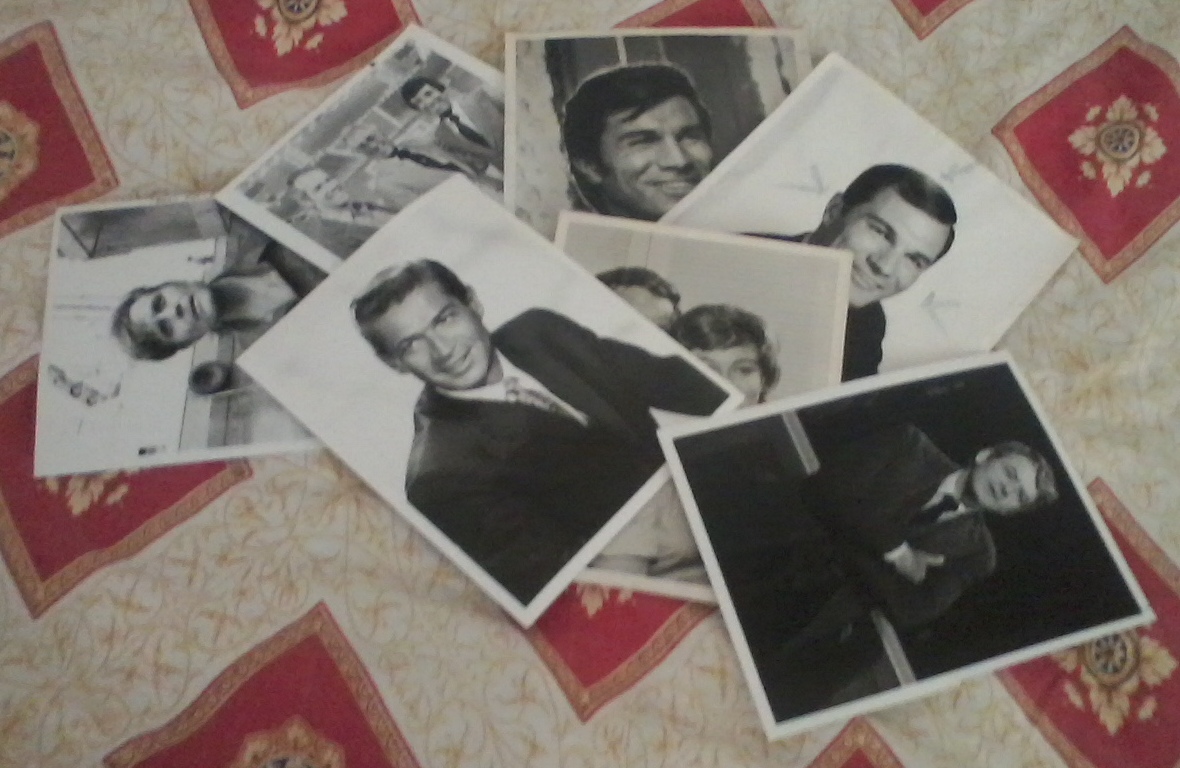
The major and minor film studios have always used still photos of stars, typically in a posed portrait, to send to the media to create "a buzz" for both their stars and any new films they were appearing in. Studios "sent out tens of thousands of scene stills and portraits to newspapers, magazines, and fans each year. Such photographs were rarely marked with the photographer's name or with a credit line."
Accordingly, the studio publicity departments used the stills "to sell a product," namely, a "particular film or an individual actor or actress." The distinction is relevant: "While the scene stills and on-the-set candid shots would be used to sell the movie, the portraits could be used to introduce a would-be star to an international audience. . . . The portrait photographer's function was to create and sell the image created by a publicity department around the life and look of a real person." The photos portrayed a star "without a role to hide behind. . . [and the photographer] had to recognize the image which would serve as the essence of a lengthy publicity campaign, capturing it in a fraction of a second." The glamour close-up would become "Hollywood's principal contribution to still portraiture."
Beyond basic publicity purposes, film stills were given to the actors themselves to send, signed or unsigned, to their fans and fan clubs. At various special events, stars might bring along a stack of these studio photos to sign in the presence of admirers, much like book signings by authors today.
In addition, directors and casting directors involved with placing appropriate actors in the film roles still rely on film stills to help them recall the detailed looks of actors. This is similar to the way magazine or TV advertisers rely on stills taken of professional models. Typically, a film still included a separate profile sheet describing the physical details of the actor along with a brief bio. The directors would then collect their best choices and schedule interviews and auditions.
Artistic significance
Maxine Ducey, film archive director, has summarized the significance and contributions of the early film stills to the film industry:
Copyright
United States
Public domain
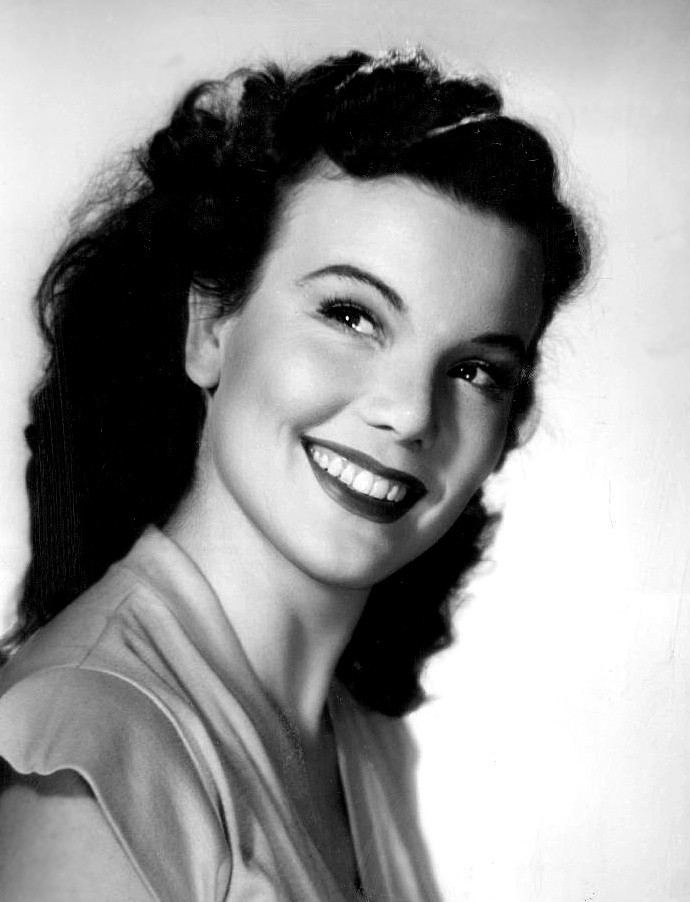
As explained by film production manager Eve Light Honthaner, prior to 1989 publicity photos taken to promote a film actor or other celebrity were not usually copyrighted, and were intended to remain free for publications to use wherever possible:
Honathaner distinguishes "Publicity Photos (star headshots)" from "Production Stills (photos taken on the set of the film or TV show during the shooting)", noting that production stills "must be cleared with the studio".
In 2007, media lawyer Nancy Wolff, wrote with respect to the "photo archive of entertainment industry publicity pictures, historic still images widely distributed by the studios to advertise and promote their then new releases":
It has been assumed that these images are most likely in the public domain or owned by studios that freely distributed the images without any expectation of compensation. Archives will lend these images for a fee to publishers and producers of documentaries for 'editorial' uses, in keeping with the original intent to publicize the movie or promote the actor. Seeing these images in print years later, some photographers, or their heirs, attempt to assert rights that most believed to be extinguished or abandoned.
As a result, she indicates:
There is a vast body of photographs, including but not limited to publicity stills, that have no notice as to who may have created them.... Without knowing where the photos came from, or what long lost parent may appear and claim the 'orphaned work,' licensing the work becomes risky business. For publishers, museums, and other archives that are risk-averse, this leads to a large body of works that will never be published.
Film historian Gerald Mast explains how the new 1989 copyright revisions only protected publicity works that complied with all earlier requirements in addition to filing a copyright registration within five years of first publication:
According to the old copyright act, such production stills were not automatically copyrighted as part of the film and required separate copyrights as photographic stills. The new copyright act similarly excludes the production still from automatic copyright but gives the film's copyright owner a five-year period in which to copyright the stills. Most studios have never bothered to copyright these stills because they were happy to see them pass into the public domain, to be used by as many people in as many publications as possible."
In the 2011 Eighth Circuit case Warner Bros. Entertainment v. X One X Productions, the court recognized that a selection of publicity stills from two 1939 films were in the public domain because they had not been published with the required notice, or because their copyrights had not been renewed. Although Warner Bros. argued otherwise, the court found that these stills did not share the films' valid copyrights, and that the images' dissemination constituted general publication without notice. Other arguments related to derivative uses of the images were upheld, and an injunction against X One X was granted because certain "products combining extracts from the public domain materials in a new arrangement infringe the copyright in the corresponding film". The decision quoted from Nimmer on Copyright, which explains that, while films were generally registered for copyright protection, "much less care was typically exercised during production and in the publicity office" with photographs taken of the actors on set being "sent off to newspapers before the film's release, in order to generate a buzz about its opening."
Fair use
Kristin Thompson, reporting as the chair of an ad hoc committee on fair use organized by the Society for Cinema and Media Studies, contends "that it is not necessary for authors to request permission to reproduce frame enlargements. . . [and] some trade presses that publish educational and scholarly film books also take the position that permission is not necessary for reproducing frame enlargements and publicity photographs."
Thompson also notes that even if such images are not already public domain, they could be considered "fair use" under provisions of US law:
In addition, Thompson refers to the argument that the burden of proof of copyright for such publicity images would fall on the studios producing them:
References
References
- (1943). "Still Photography in the Motion Picture Industry". The Ned Scott Archive.
- Ferrari, Angelo. ''PROCEEDINGS 4th International Congress on "Science and Technology for the Safeguard of Cultural Heritage in the Mediterranean Basin" VOL. I'', (2009) p. 355
- Dzyak, Brian. ''What I Really Want to Do on Set in Hollywood'', Random House (2008) p. 303-304
- Jones, Chris. ''The Guerilla Film Makers Handbook'' Continuum International Publishing Group (2006) p. 345
- Editors of Photopreneur. ''99 Ways TO Make Money From Your Photos'', New Media Entertainment, Ltd. (2009) p. 294
- Pepper, Terence, and Kobal, John. ''The Man Who Shot Garbo'', Simon and Schuster (1989)
- ''Heritage Vintage Movie Photography & Stills Auction #7003'', Heritage Auctions (2009)
- ''Hollywood glamour, 1924-1956'', Elvehjem Museum of Art, Univ. of Wisconsin-Madison (1987)
- Kobal, John. ''Movie-star portraits of the forties: 163 glamor photos'', Dover Publ., 1977
- Ms. Honthaner has held production management positions at Orion Pictures and Dream works and taught at USC School of Cinematic Arts. She is also the founder of the Los Angeles-based organization Film Industry Network. See [https://www.imdb.com/name/nm0393414/otherworks IMDB Eve Light Honthaner Other works] and [http://www.writersstore.com/authors/eve-light-honthaner Eve Light Honthaner] {{Webarchive. link. (2011-09-30)
- Honathaner, Eve Light. ''The Complete Film Production Handbook'', Focal Press, (2001) p. 211
- Creative Clearance. "Photography Clearance". Clearance Guidelines for Producers.
- Ms. Wolff represents many media companies and has lectured widely on copyright issues [http://cdas.com/attorneys/nancy_wolff/ Website of Law firm of CDAS] She is the author of ''The Professional Photographer's Legal Handbook'' [https://www.amazon.com/Professional-Photographers-Legal-Handbook/dp/1581154771]
- Wolff, Nancy E.. (29 May 2007). "The Professional Photographer's Legal Handbook". Skyhorse Publishing Inc..
- Wolff, Nancy E.. (29 May 2007). "The Professional Photographer's Legal Handbook". Skyhorse Publishing Inc..
- Dr. Mast was an author, film historian and chairman of the English department at the University of Chicago [https://www.nytimes.com/1988/09/02/obituaries/gerald-mast-48-dies-wrote-histories-of-film.html NYTimes obituary for Gerald Mast]
- Mast, Gerald. "Film Study and the Copyright Law", from ''Cinema Journal'', Winter 2007, pp. 120-127
- ''[http://media.ca8.uscourts.gov/opndir/11/07/101743P.pdf Warner Bros. Entertainment, Inc.; Warner Bros. Consumer Products v. X One X Productions, Doing Business As X One X Movie Archives, Inc]'' 644 F. 3d 584 - Court of Appeals, 8th Circuit 2011
- Citing Nimmer, David. [[David Nimmer. Nimmer on Copyright]],§ 4.13[A][3]
- Thompson, Kristin. [http://www.cmstudies.org/resource/resmgr/docs/fairusefilmstills.pdf] "Report of the Ad Hoc Committee of the Society For Cinema Studies, "Fair Usage Publication of Film Stills" "Society for Cinema and Media Studies", 1993 conference
This article was imported from Wikipedia and is available under the Creative Commons Attribution-ShareAlike 4.0 License. Content has been adapted to SurfDoc format. Original contributors can be found on the article history page.
Ask Mako anything about Film still — get instant answers, deeper analysis, and related topics.
Research with MakoFree with your Surf account
Create a free account to save articles, ask Mako questions, and organize your research.
Sign up freeThis content may have been generated or modified by AI. CloudSurf Software LLC is not responsible for the accuracy, completeness, or reliability of AI-generated content. Always verify important information from primary sources.
Report