From Surf Wiki (app.surf) — the open knowledge base
Filipino Americans
Americans of Filipino descent
.jpg)
Americans of Filipino descent
| Field | Value |
|---|---|
| group | Filipino Americans |
| Mga Pilipinong Amerikano | |
| image | Map of Filipino Americans in 2023.png |
| caption | Map depicting Filipino Americans percentage-wise by PUMA and state in 2023 |
| pop | 4,640,313 (2023) |
| (ancestry or ethnic origin) | |
| 2,051,900 (2023) | |
| (born in the Philippines) | |
| popplace | Western United States, Hawaii, especially in metropolitan areas and elsewhere as of 2010 |
| region1 | California |
| pop1 | 1,651,933 |
| ref1 | |
| region2 | Hawaii |
| pop2 | 367,364 |
| ref2 | |
| region3 | Texas |
| pop3 | 194,427 |
| ref3 | |
| region4 | Washington |
| pop4 | 178,300 |
| ref4 | |
| region5 | Nevada |
| pop5 | 169,462 |
| ref5 | |
| region6 | Illinois |
| pop6 | 159,385 |
| ref6 | |
| region7 | New York |
| pop7 | 144,436 |
| ref7 | |
| region8 | Florida |
| pop8 | 143,481 |
| ref8 | |
| region9 | New Jersey |
| pop9 | 129,514 |
| ref9 | |
| region10 | Virginia |
| pop10 | 108,128 |
| ref10 | |
| langs | English (American, Philippine), |
| Tagalog (Filipino), | |
| Ilocano, Pangasinan, Kapampangan, Bikol, Visayan languages (Cebuano, Hiligaynon, Waray, Chavacano), and other languages of the Philippines | |
| Spanish, Chinese (Minnan and Fujien) | |
| rels | 65% Roman Catholicism |
| 21% Protestantism | |
| 8% Irreligion | |
| 1% Buddhism | |
| related | Overseas Filipinos, Southeast Asians, Austronesian |
people of Filipino descent in the United States
Mga Pilipinong Amerikano (ancestry or ethnic origin) 2,051,900 (2023) (born in the Philippines) Tagalog (Filipino), Ilocano, Pangasinan, Kapampangan, Bikol, Visayan languages (Cebuano, Hiligaynon, Waray, Chavacano), and other languages of the Philippines Spanish, Chinese (Minnan and Fujien) 21% Protestantism 8% Irreligion 1% Buddhism
Filipino Americans () are Americans of Filipino ancestry. Filipinos in North America were first documented in the 16th century and other small settlements beginning in the 18th century. Mass migration did not begin until after the end of the Spanish–American War at the end of the 19th century, when the Philippines was ceded from Spain to the United States in the Treaty of Paris.
As of 2022, there were almost 4.5 million Filipino Americans in the United States with large communities in California, Hawaii, Illinois, Texas, Florida, Nevada, and the New York metropolitan area. Around one third of Filipino Americans identify as multiracial or multiethnic, with 3 million reporting only Filipino ancestry and 1.5 million reporting Filipino in combination with another group.
Terminology
The term Filipino American is sometimes shortened to Fil-Am or Pinoy. Another term which has been used is Philippine Americans. The earliest appearance of the term Pinoy (feminine Pinay), was in a 1926 issue of the Filipino Student Bulletin. Some Filipinos believe that the term Pinoy was coined by Filipinos who came to the United States to distinguish themselves from Filipinos living in the Philippines. Beginning in 2017, started by individuals who identify with the LGBT+ Filipino-American population, there is an effort to adopt the term FilipinX; this new term has faced opposition within the broader overseas Filipino diaspora, within the Philippines, and in the United States, with some who are in opposition believing it is an attempt of a "colonial imposition".
Background
Main article: Demographics of Filipino Americans, History of Filipino Americans
Filipino were among the first Asians in North America. The first documented presence of Filipinos in what is now the United States dates back to a visit made by a Novohispanic ship sailing back to modern day Mexico in October 1587 around Morro Bay, California, with the first settlement of a handful of Filipinos who deserted Spanish ships being in Saint Malo, Spanish Louisiana, in 1763, the settlers there were called "Manilamen" and they served in the Battle of New Orleans during the closing stages of the War of 1812, after the Treaty of Ghent had already been signed. Some Filipinos worked as ranch hands in the 1800s. There was also a settlement in Plaquemines Parish, which became known as "Manila Village". This area was the center of the shrimp drying industry in Louisiana, and its workforce was composed predominantly of Filipino migrants. Mass migration began in the early 20th century when, for a period following the 1898 Treaty of Paris, the Philippines was a territory of the United States. By 1904, Filipino peoples of different ethnic backgrounds were imported by the US government onto the Americas and were displayed at the Louisiana Purchase Exposition as part of a human zoo. During the 1920s, many Filipinos immigrated to the United States as unskilled labor, to provide better opportunities for their families back at home.
Philippine independence was recognized by the United States on July 4, 1946. After independence in 1946, Filipino-American numbers continued to grow. Immigration was reduced significantly during the 1930s, except for those who served in the United States Navy, and increased following immigration reform in the 1960s. The majority of Filipinos who immigrated after the passage of the Immigration and Nationality Act of 1965 were skilled professionals and technicians.
The 2010 census counted 3.4 million Filipino Americans; the United States Department of State in 2011 estimated the total at 4 million, or 1.1% of the US population. They are the country's second-largest self-reported Asian ancestry group after Chinese Americans according to 2010 American Community Survey. They are also the largest population of Overseas Filipinos. Significant populations of Filipino Americans can be found in California, Florida, Texas, Hawaii, the New York metropolitan area, and Illinois.
Demographics
Some Filipinos have traditional Philippine surnames, such as Bacdayan or Macapagal, while others have surnames derived from Japanese, Indian, and Chinese and reflect centuries of trade with these merchants preceding European and American rule. Reflecting its 333 years of Spanish rule, many Filipinos adopted Hispanic surnames, and celebrate fiestas.
Despite being from Asia, Filipinos are sometimes called "Latinos" due to their historical relationship to Spanish colonialism; this view is not universally accepted. The Philippines experienced both Spanish and American colonial territorial status, with its population seen through each nation's racial constructs. This shared history may also contribute to why some Filipinos choose to also identify as Hispanic or Latino, while others may not and identify more as Asian Americans. In a 2017 Pew Research Survey, only 1% of immigrants from the Philippines identified as Hispanic.
Language

Filipino and English are constitutionally established as official languages in the Philippines, and Filipino is designated as the national language, with English in wide use. Many Filipinos speak Philippine English, a dialect derived from American English due to American colonial influence in the country's education system and due to limited Spanish education. Among Asian Americans in 1990, Filipino Americans had the smallest percentage of individuals who had problems with English. In 2000, among US-born Filipino Americans, three quarters responded that English is their primary language; nearly half of Filipino Americans speak English exclusively.
In 2003, Tagalog was the fifth-most-spoken language in the United States, with 1.262 million speakers; by 2011, it was the fourth most-spoken language in the United States. Tagalog usage is significant in California, Nevada, and Washington, while Ilocano usage is significant in Hawaii. Many of California's public announcements and documents are translated into Tagalog. Tagalog is also taught in some public schools in the United States, as well as at some colleges. Other significant Filipino languages are Ilocano and Cebuano. Other languages spoken in Filipino-American households include Pangasinan, Kapampangan, Hiligaynon, Bicolano and Waray. However, fluency in Philippine languages tends to be lost among second- and third-generation Filipino Americans. Other languages of the community include Spanish and Chinese (Hokkien and Mandarin). The demonym, Filipinx, is a gender-neutral term that is applied only to those of Filipino heritage in the diaspora, specifically Filipino Americans. The term is not applied to Filipinos in the Philippines.
Religion
The Philippines is 90% Christian, one of only two predominantly Christian countries in Southeast Asia, alongside East Timor. Following the European arrival to the Philippines by Ferdinand Magellan, Spaniards made a concerted effort to convert Filipinos to Catholicism; outside of the Muslim sultanates and animist societies, missionaries were able to convert large numbers of Filipinos. and the majority are Roman Catholic, giving Catholicism a major impact on Filipino culture. Other Christian denominations include Protestants (Aglipayan, Episcopalian, and others), and nontrinitarians (Iglesia ni Cristo and Jehovah's Witnesses). Additionally there are those Filipinos who are Muslims, Buddhist or nonreligious; religion has served as a dividing factor within the Philippines and Filipino-American communities.
During the early part of the United States governance in the Philippines, there was a concerted effort to convert Filipinos into Protestants, and the results came with varying success. As Filipinos began to migrate to the United States, Filipino Roman Catholics were often not embraced by their American Catholic brethren, nor were they sympathetic to a Filipino-ized Catholicism, in the early 20th century. This led to creation of ethnic-specific parishes; one such parish was St. Columban's Church in Los Angeles. In 1997, the Filipino oratory was dedicated at the Basilica of the National Shrine of the Immaculate Conception, owing to increased diversity within the congregations of American Catholic parishes. The first-ever American Church for Filipinos, San Lorenzo Ruiz Church in New York City, is named after the first saint from the Philippines, San Lorenzo Ruiz. This was officially designated as a church for Filipinos in July 2005, the first in the United States, and the second in the world, after a church in Rome.
In 2010, Filipino American Catholics were the largest population of Asian American Catholics, making up more than three fourths of Asian American Catholics. In 2015, a majority (65%) of Filipino Americans identify as Catholic; this is down slightly from 2004 (68%). Filipino Americans, who are first-generation immigrants were more likely to attend mass weekly, and tended to be more conservative, than those who were born in the United States. Culturally, some traditions and beliefs rooted from the original indigenous religions of Filipinos are still known among the Filipino diaspora.
Politics

Filipino Americans have traditionally been socially conservative, particularly with "second wave" immigrants; the first Filipino American elected to office was Peter Aduja. In the 2004 US presidential election Republican president George W. Bush won the Filipino-American vote over John Kerry by nearly a two-to-one ratio, which followed strong support in the 2000 election. However, during the 2008 US presidential election, Filipino Americans voted majority Democratic, with 50% to 58% of the community voting for President Barack Obama and 42% to 46% voting for Senator John McCain. The 2008 election marked the first time that a majority of Filipino Americans voted for a Democratic presidential candidate.
According to the 2012 National Asian American Survey, conducted in September 2012, 45% of Filipinos were independent or nonpartisan, 27% were Republican, and 24% were Democrats. Additionally, Filipino Americans had the largest proportions of Republicans among Asian Americans polled, a position normally held by Vietnamese Americans, leading up to the 2012 election, and had the lowest job approval opinion of Obama among Asian Americans. In a survey of Asian Americans from thirty-seven cities conducted by the Asian American Legal Defense and Education Fund, it found that of the Filipino-American respondents, 65% voted for Obama. According to an exit poll conducted by the Asian American Legal Defense and Education Fund, it found that 71% of responding Filipino Americans voted for Hillary Clinton during the 2016 general election.
In a survey conducted by the advocacy group Asian Americans Advancing Justice in September 2020, of the 263 Filipino American respondents, 46% identified as Democrats, 28% identified as Republicans, and 16% as independent. According to interviews conducted by academic Anthony Ocampo, Filipino American supporters of Donald Trump cited their support for the former President based on support for building a border wall, tax cuts to businesses, legal immigration, school choice, opposition to abortion, opposition to affirmative action, antagonism towards the People's Republic of China, and viewing Trump as a non-racist. There was an age divide among Filipino Americans, with older Filipino Americans more likely to support Trump or be Republicans, and younger Filipino Americans more likely to support Biden or be Democrats. In the 2020 presidential election, Philippines Ambassador Jose Manuel Romualdez alleged that 60% of Filipino Americans reportedly voted for Joe Biden. Filipino Americans were among the largest non White groups who were at the 2021 United States Capitol attack. The news site Rappler reported the next day that Filipino-American media has heavily repeated QAnon conspiracies. Rappler further reported that many Filipino Americans who voted for Trump and adhere to QAnon cite similar political opinions in the Philippines regarding Philippine President Rodrigo Duterte and anti-Chinese sentiment since China has been building artificial reefs in the South China Sea near the Philippines in the 2010s, and have recently seen the Republican Party as more hardline against the Chinese government's actions. Filipino Americans have also been more receptive to gun rights compared to other Asian-American ethnic groups. This is in part due to the lax gun laws in the Philippines.
In the 2024 election, most Filipino Americans have responded to a survey indicating 59% of them found Vice President Kamala Harris more favorably, while 29% found former President Donald Trump favorable.
Due to scattered living patterns, it is nearly impossible for Filipino American candidates to win an election solely based on the Filipino-American vote. Filipino-American politicians have increased their visibility over the past few decades. Ben Cayetano (Democrat), former governor of Hawaii, became the first governor of Filipino descent in the United States. The number of Congressional members of Filipino descent doubled to numbers not reached since 1937, two when the Philippine Islands were represented by non-voting Resident Commissioners, due to the 2000 senatorial election. In 2009 three Congress-members claimed at least one-eighth Filipino ethnicity; the largest number to date. Since the resignation of Senator John Ensign in 2011 (the only Filipino American to have been a member of the Senate), and Representative Steve Austria (the only Asian Pacific American Republican in the 112th Congress) choosing not to seek reelection and retire, Representative Robert C. Scott was the only Filipino American in the 113th Congress. In the 116th United States Congress, Scott was joined by Rep. TJ Cox, bringing the number of Filipino Americans in Congress to two. In the 117th United States Congress, Scott once again became the sole Filipino-American Representative after Cox was defeated in a rematch against David Valadao.
Most Filipino-American registered voters identify with or lean to the Democratic Party. About two-thirds of Filipino-American voters (68%) are Democrats or lean Democratic, while 31% are Republicans or lean Republican.
Socioeconomic demographics
Economics
Filipino Americans are largely middle class with 62% of households being middle income.https://www.pewresearch.org/race-and-ethnicity/2024/05/31/the-state-of-the-asian-american-middle-class/ However, only 21% of Filipino-American households are Upper Income compared to 27% for all Asian households. They are less likely to be Upper Income than all Asians. Filipino Americans have high labor force participation rates and 67% of Filipino Americans are employed.
Filipino Americans are more likely to live in larger, overcrowded (8.7% of Filipino housing units compared to 3.5% of total population), multi-generational (34%) households compared to the general population. The average household size for Filipino Americans in 2023 was 2.99 compared to 2.49 for the general population.
The impressive annual median household income and low poverty rates must be approached with caution, for median household income represents the combined earnings of several family or household members often living in crowded and less than adequate houses.
While the median household income for Filipino alone was high, per capita income for Filipino Americans was $47,819 which was significantly lower than for all Asians ($55,561) and Non-Hispanic Whites ($50,675). Individual earnings for both Filipino males and females were significantly lower than all Asians, suggesting multiple earners in a household. Filipino-American full-time, year-round workers were paid lower than the US average and had a lower average hourly wage of $29.35 than the US average of $29.95 and AAPI average of $30.73
Only 39% of Filipino American men (ages 25–34) had attained a Bachelor’s degree, in comparison to 87% of Asian Indian American men, 69% of Chinese American men, 63% of Japanese American men, 62% of Korean American men, and 42 percent of Vietnamese American men. The same study showed that Filipino, Korean and Cambodian men with Bachelor's degrees have lower median wages of $30 an hour compared to Chinese and Indian immigrant men who had median wages of $40 an hour
Filipino American households in Los Angeles had a net worth of $243,000 with $5,000 in debts compared to a net worth of $355,000 for White households, $595,000 for Japanese households, $408,500 for Chinese households and $460,000 for Indian American households.
Filipino Americans had a significantly higher rate of food insecurity (11%) than all Asians and White Americans (6%).
Filipino Americans had a lower poverty rate (7%) than the total population, this correlates with the Filipino-American unemployment rate being only 3% and a high labor force participation rate of 67%.
There is a trend of second-generation Filipino Americans moving back to the Philippines, finding the American Dream more and more unattainable. They cite lower cost of living as the main reasons they would move back to the Philippines. There is also a trend of Filipino Americans relocating from Hawaii and California to Nevada due to rising cost of living and housing prices.
Per capita income
| Ethnicity | Per capita income | As of 2023 |
|---|---|---|
| Indian | $72,389 | |
| Chinese | $62,605 | |
| Japanese | $61,568 | |
| Korean | $58,560 | |
| White (Non Hispanic) | $50,675 | |
| Filipino | $47,819 | |
| Vietnamese | $40,037 | |
| Total US Population | $43,313 |
Average hourly wages for full-time, year-round workers in 2019
| Group | Hourly wage | Indian | Chinese | Pakistani | Japanese | Korean | Sri Lankan | Malaysian | Indonesian | Fijian | Mongolian | AAPI average | US average | Bangladeshi | Vietnamese | Filipino | Nepalese | Thai | Tongan | Hawaiian | Samoan | Laotian | Cambodian | Guamanian/Chamorro | Burmese | Bhutanese |
|---|---|---|---|---|---|---|---|---|---|---|---|---|---|---|---|---|---|---|---|---|---|---|---|---|---|---|
| $ 51.19 | ||||||||||||||||||||||||||
| $ 43.35 | ||||||||||||||||||||||||||
| $ 40.50 | ||||||||||||||||||||||||||
| $ 39.51 | ||||||||||||||||||||||||||
| $ 39.47 | ||||||||||||||||||||||||||
| $ 36.06 | ||||||||||||||||||||||||||
| $ 35.25 | ||||||||||||||||||||||||||
| $ 32.49 | ||||||||||||||||||||||||||
| $ 31.21 | ||||||||||||||||||||||||||
| $ 31.13 | ||||||||||||||||||||||||||
| $ 30.73 | ||||||||||||||||||||||||||
| $ 29.95 | ||||||||||||||||||||||||||
| $ 29.70 | ||||||||||||||||||||||||||
| $ 29.38 | ||||||||||||||||||||||||||
| $ 29.35 | ||||||||||||||||||||||||||
| $ 28.44 | ||||||||||||||||||||||||||
| $ 27.53 | ||||||||||||||||||||||||||
| $ 25.99 | ||||||||||||||||||||||||||
| $ 25.75 | ||||||||||||||||||||||||||
| $ 23.72 | ||||||||||||||||||||||||||
| $ 23.61 | ||||||||||||||||||||||||||
| $ 23.12 | ||||||||||||||||||||||||||
| $ 23.12 | ||||||||||||||||||||||||||
| $ 21.63 | ||||||||||||||||||||||||||
| $ 15.36 |
Industry and jobs
The representation of Filipino Americans employed in health care is high.
Other sectors of the economy where Filipino Americans have significant representation are in the public sector,
and in the service sector.
Compared to Asian-American women of other ethnicities, and women in the United States in general, Filipina Americans are more likely to be part of the work force;
a large population, nearly one fifth (18%), of Filipina Americans worked as registered nurses.
Alt URL There is also a large number of Filipino domestic workers and care-givers in the US. More than 60% of Filipino Americans work in low-wage and/or service-sector work.https://filipinostudies.wordpress.com/wp-content/uploads/2014/04/buenavista.pdf
Filipino Americans own a variety of businesses, making up 10.5% of all Asian owned businesses in the United States in 2007. In 2002, according to the Survey of Business Owners, there were over 125,000 Filipino-owned businesses; this increased by 30.4% to over 163,000 in 2007. By then, 25.4% of these businesses were in the retail industry, 23% were in the health care and social assistance industries, and they employed more than 142,000 people and generated almost $15.8 billion in revenue. Of those, just under three thousand (1.8% of all Filipino-owned businesses) were million dollar or more businesses. This means Filipino-owned businesses are significantly less likely to be million dollar or more than all Asians (5%). California had the largest number of Filipino-owned businesses, with the Los Angeles metropolitan area having the largest number of any metropolitan area in the United States.
The Philippines is the largest exporters of Nurses and this is something that can be traced back to US colonialism. America has been relying on Filipino nurses on the frontlines since the AIDs pandemic. Despite being comprised only 4% of registered nurses in the US, they were nearly a third of Covid-related deaths among registered nurses.
American schools have also hired and sponsored the immigration of Filipino teachers and instructors.
Some of these teachers were forced into labor outside the field of education, and mistreated by their recruiters.
Among Overseas Filipinos, Filipino Americans are the largest remitters of US dollars to the Philippines. In 2005, their combined dollar remittances reached a record-high of almost $6.5 billion. In 2006, Filipino Americans sent more than $8 billion, which represents 57% of the total foreign remittances received by the Philippines. By 2012, this amount had reached $10.6 billion, but made up only 43% of total remittances. In 2021, the United States was the largest source of remittances to the Philippines, making up 40.5% of the $31.4 billion remittances received by the Philippines.
Culture
The history of Spanish and American rule and contact with merchants and traders culminated in a unique blend of Eastern and Western cultures in the Philippines. Filipino-American cultural identity has been described as fluid, adopting aspects from various cultures; however, there has not been significant research into the culture of Filipino Americans. Fashion, dance, music, theater and arts have all had roles in building Filipino-American cultural identities and communities.
In areas of sparse Filipino population, they often form loosely-knit social organizations aimed at maintaining a "sense of family", which is a key feature of Filipino culture. These organizations generally arrange social events, especially of a charitable nature, and keep members up-to-date with local events. Organizations are often organized into regional associations. The associations are a small part of Filipino-American life. Filipino Americans formed close-knit neighborhoods, notably in California and Hawaii. A few communities have "Little Manilas", civic and business districts tailored for the Filipino-American community. In a Filipino party, shoes should be left in the front of the house and greet everyone with a hi or hello. When greeting older relatives, po and opo must be said in every sentence to show respect.
Due to history, the Philippines and the United States are connected culturally. In 2016, there was $16.5 billion worth of trade between the two countries, with the United States being the largest foreign investor in the Philippines, and more than 40% of remittances came from (or through) the United States. In 2004, the amount of remittances coming from the United States was $5 billion; this is an increase from the $1.16 billion sent in 1991 (then about 80% of total remittances being sent to the Philippines), and the $324 million sent in 1988. Some Filipino Americans have chosen to retire in the Philippines, buying real estate. Filipino Americans, continue to travel back and forth between the United States and the Philippines, making up more than a tenth of all foreign travelers to the Philippines in 2010; when traveling back to the Philippines they often bring cargo boxes known as a balikbayan box.
Cuisine
Main article: Filipino cuisine, Filipino-American cuisine


The number of Filipino restaurants does not reflect the size of the population. Due to the restaurant business not being a major source of income for the community, few non-Filipinos are familiar with the cuisine. Although American cuisine influenced Filipino cuisine, it has been criticized by non-Filipinos. Even on Oahu where there is a significant Filipino-American population, Filipino cuisine is not as noticeable as other Asian cuisines. One study found that Filipino cuisine was not often listed in food frequency questionnaires. On television, Filipino cuisine has been criticized, such as on Fear Factor, and praised, such as on Anthony Bourdain: No Reservations, and Bizarre Foods America.
While "new" Filipino restaurants and fusion-type places have been opening up, traditionally, "native cuisine proved itself strong and resistant to 'fraternization' with foreign invaders. The original dishes have retained their ingredients, cooking methods, and spirit."
Filipino cuisine is much like its culture, a blend of many influences through the years of colonization. Popular Filipino dishes such as pancit has Hokkien roots, adobo from Spain and Mexico, and the use of bagoong and patis, fermented sauces that stem from Malay origins.
Filipino-American chefs cook in many fine dining restaurants, including Cristeta Comerford who is the executive chef in the White House, though many do not serve Filipino cuisine in their restaurants. Reasons given for the lack of Filipino cuisine in the US include colonial mentality, lack of a clear identity, a preference for cooking at home, a continuing preference of Filipino Americans for cuisines other than their own, and the nebulous nature of Filipino cuisine itself due to its historical influences. Filipino cuisine remains prevalent among Filipino immigrants, with restaurants and grocery stores catering to the Filipino-American community, including Jollibee, a Philippines-based fast-food chain.
In the 2010s, successful and critically reviewed Filipino-American restaurants were featured in The New York Times. That same decade began a Filipino Food movement in the United States; it has been criticized for gentrification of the cuisine. Bon Appetit named Bad Saint in Washington, D.C. "the second best new restaurant in the United States" in 2016. Food & Wine named Lasa, in Los Angeles, one of its restaurants of the year in 2018. With this emergence of Filipino-American restaurants, food critics like Andrew Zimmern have predicted that Filipino food will be "the next big thing" in American cuisine. Yet in 2017, Vogue described the cuisine as "misunderstood and neglected"; SF Weekly in 2019, later described the cuisine as "marginal, underappreciated, and prone to weird booms-and-busts".
Family
Filipino Americans undergo experiences that are unique to their own identities. These experiences derive from both the Filipino culture and American cultures individually and the dueling of these identities as well. These stressors, if great enough, can lead Filipino Americans into suicidal behaviors. Members of the Filipino community learn early on about kapwa, which is defined as "interpersonal connectedness or togetherness".
With kapwa, many Filipino Americans have a strong sense of needing to repay their family members for the opportunities that they have been able to receive. An example of this is a new college graduate feeling the need to find a job that will allow them to financially support their family and themselves. This notion comes from "utang na loob", defined as a debt that must be repaid to those who have supported the individual.
With kapwa and utang na loob as strong forces enacting on the individual, there is an "all or nothing" mentality that is being played out. In order to bring success back to one's family, there is a desire to succeed for one's family through living out a family's wants as opposed to one's own true desires. This can manifest as one entering a career path that they are not passionate in, but select in order to help support their family.
Despite many of the stressors for these students deriving from family, it also becomes apparent that these are the reasons that these students are resilient. When family conflict rises in Filipino-American families, there is a negative association with suicide attempts. This suggests that though family is a presenting stressor in a Filipino American's life, it also plays a role for their resilience. In a study conducted by Yusuke Kuroki, family connectedness, whether defined as positive or negative to each individual, served as one means of lowering suicide attempts.
Media
Beginning in the late 1800s, Filipino Americans began publishing books in the United States. The growth of publications for the masses in the Philippines accelerated during the American period. Ethnic media serving Filipino Americans dates back to the beginning of the 20th century. In 1905, pensionados at University of California, Berkeley published The Filipino Students' Magazine. One of the earliest Filipino-American newspapers published in the United States, was the Philippine Independent of Salinas, California, which began publishing in 1921. Newspapers from the Philippines, to include The Manila Times, also served the Filipino diaspora in the United States. In 1961, the Philippine News was started by Alex Esclamado, which by the 1980s had a national reach and at the time was the largest English-language Filipino newspaper. While many areas with Filipino Americans have local Filipino newspapers, one of the largest concentrations of these newspapers occur in Southern California. Beginning in 1992, Filipinas began publication, and was unique in that it focused on American-born Filipino Americans of the second and third generations. Filipinas ended its run in 2010, however it was succeeded by Positively Filipino in 2012 which included some of the staff from Filipinas. The Filipino diaspora in the United States are able to watch programming from the Philippines on television through GMA Pinoy TV and The Filipino Channel.
Sports
Community issues
Immigration
.jpeg)

The Citizenship Retention and Re-Acquisition Act of 2003 (Republic Act No. 9225) made Filipino Americans eligible for dual citizenship in the United States and the Philippines. Overseas suffrage was first employed in the May 2004 elections in which Philippine President Gloria Macapagal Arroyo was reelected to a second term.
By 2005, about 6,000 Filipino Americans had become dual citizens of the two countries. One effect of this act was to allow Filipino Americans to invest in the Philippines through land purchases, which are limited to Filipino citizens, and, with some limitations, former citizens.), vote in Philippine elections, retire in the Philippines, and participate in representing the Philippine flag. In 2013, for the Philippine general election there were 125,604 registered Filipino voters in the United States and Caribbean, of which only 13,976 voted.
Dual citizens have been recruited to participate in international sports events including athletes representing the Philippines who competed in the 2004 Olympic Games in Athens, and the Olympic Games in Beijing 2008.
The Philippine government actively encourages Filipino Americans to visit or return permanently to the Philippines via the "Balikbayan" program and to invest in the country.
Filipinos remain one of the largest immigrant groups to date with over 40,000 arriving annually since 1979. The United States Citizenship and Immigration Services (USCIS) has a preference system for issuing visas to non-citizen family members of US citizens, with preference based generally on familial closeness. Some non-citizen relatives of US citizens spend long periods on waiting lists. Petitions for immigrant visas, particularly for siblings of previously naturalized Filipinos that date back to 1984, were not granted until 2006. , over 380 thousand Filipinos were on the visa wait list, second only to Mexico and ahead of India, Vietnam and China. Filipinos have the longest waiting times for family reunification visas, as Filipinos disproportionately apply for family visas; this has led to visa petitions filed in July 1989 still waiting to be processed in March 2013.
Illegal immigration
It has been documented that Filipinos were among those naturalized due to the Immigration Reform and Control Act of 1986. In 2009, the Department of Homeland Security estimated that 270,000 Filipino were "unauthorized immigrants". This was an increase of 70,000 from a previous estimate in 2000. In both years, Filipinos accounted for 2% of the total. , Filipinos were the fifth-largest community of illegal immigrants behind Mexico (6.65 million, 62%), El Salvador (530,000, 5%), Guatemala (480,000, 4%), and Honduras (320,000, 3%). In January 2011, the Department of Homeland Security estimate of "unauthorized immigrants" from the Philippines remained at 270,000. By 2017, the number of Filipinos who were in the United States illegally increased to 310,000. Filipinos who reside in the United States illegally are known within the Filipino community as "TnT's" (tago nang tago 'hide and hide').
Health
Main article: Mental health of Filipino Americans
Filipino Americans experience significant health disparities and are more likely to have diabetes, heart disease, high blood pressure and other issues. Filipino Americans also experience food insecurity at a significantly higher rate then other Asian-American groups. In Hawaii the rate of low food security and very low food security for Filipino people were 11.7% and 22.3%.
Identity
Main article: List of ethnic slurs#F
Filipino Americans may be mistaken for members of other racial/ethnic groups, such as Latinos or Pacific Islanders; this may lead to "mistaken" discrimination that is not specific to Asian Americans. Filipino Americans, additionally, have had difficulty being categorized, termed by one source as being in "perpetual absence".
In the period, prior to 1946, Filipinos were taught that they were American, and presented with an idealized America. They had official status as United States nationals. When ill-treated and discriminated by other Americans, Filipinos were faced with the racism of that period, which undermined these ideals. Carlos Bulosan later wrote about this experience in America is in the Heart. Even pensionados, who immigrated on government scholarships, were treated poorly.
In Hawaii, Filipino Americans often have little identification with their heritage, and it has been documented that many disclaim their ethnicity. This may be due to the "colonial mentality", or the idea that Western ideals and physical characteristics are superior to their own. Although categorized as Asian Americans, Filipino Americans have not fully embraced being part of this racial category due to marginalization by other Asian-American groups and or the dominant American society. This created a struggle within Filipino American communities over how far to assimilate. The term "white-washed" has been applied to those seeking to further assimilate. Those who disclaim their ethnicity lose the positive adjustment to outcomes that are found in those who have a strong, positive, ethnic identity.
Of the ten largest immigrant groups, Filipino Americans have the highest rate of assimilation, with the exception of cuisine. Filipino Americans have been described as the most "Americanized" of the Asian-American ethnicities. However, even though Filipino Americans are the second-largest group among Asian Americans, community activists have described the ethnicity as "invisible", claiming that the group is virtually unknown to the American public, and is often not seen as significant even among its members. Another term for this status is forgotten minority.
This description has also been used in the political arena, given the lack of political mobilization. In the mid-1990s it was estimated that some one hundred Filipino Americans have been elected or appointed to public office. This lack of political representation contributes to the perception that Filipino Americans are invisible.
The concept is also used to describe how the ethnicity has assimilated. Few affirmative action programs target the group although affirmative action programs rarely target Asian Americans in general. Assimilation was easier given that the group is majority religiously Christian, fluent in English, and have high levels of education. The concept was in greater use in the past, before the post-1965 wave of arrivals.
The term invisible minority has been used for Asian Americans as a whole, and the term "model minority" has been applied to Filipinos as well as other Asian-American groups. Filipino critics allege that Filipino Americans are ignored in immigration literature and studies.
As with fellow Asian Americans, Filipino Americans are viewed as "perpetual foreigners", even for those born in the United States. This has resulted in physical attacks on Filipino Americans, as well as non-violent forms of discrimination.
In college and high school campuses, many Filipino-American student organizations put on annual Pilipino Culture Nights to showcase dances, perform skits, and comment on issues such as identity and lack of cultural awareness due to assimilation and colonization.
Filipino-American gay, lesbian, transgender, and bisexual identities are often shaped by immigration status, generation, religion, and racial formation.
Suicide ideation and depression
Mental health is a topic that is seldom spoken about among the Filipino-American community because of the stigma that is attached to it. In the documentary "Silent Sacrifices: Voices of the Filipino American Family" Patricia Heras points out that a lack of communication between first-generation and second-generation Filipino-American immigrants can lead to family members not understanding the personal hardships that each one goes through. Some of the main topics of discussion in this documentary are depression and suicide ideation experienced by the second-generation youth. These topics are supported by a study that was conducted in 1997 by the Federal Centers for Disease Control and Prevention (CDC) that revealed that 45.6% of Filipina American teenage students in San Diego public schools had seriously thought about committing suicide. Half of those students had actually attempted suicide. Although depression cannot be said to cause suicide, the high scores of depression and low self-esteem show a relation to the high scores of suicidal thoughts among Filipinos.
Depression in Filipinos can sometimes be difficult to notice without digging deeper into their feelings. Filipinos can display their depression in many ways such as showing extreme suffering or smiling even when it may not seem authentic. Some of the common causes of depression include: financial worries, family separation during the immigration process, and cultural conflict. One of these cultural conflicts is the belief that one must base decisions on what will "save face" for the family. A study was published in 2018 by Janet Chang and Frank Samson about Filipino American youth and their non-Filipino friends. They had found that Filipino American youth with three or more close non-Filipino friends were more likely to experience depression and anxiety more so than Filipino American youth with two or less non-Filipino friends that they considered to be close. Although having friends of diverse backgrounds gave these Filipinos a sense of inclusion among their peers, they also gained a heightened awareness of discrimination.
Veterans
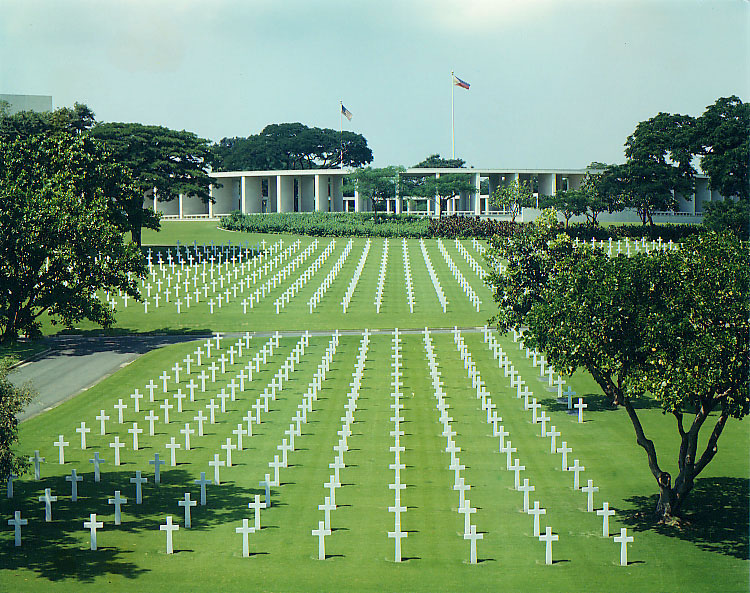
During World War II, some 250,000 to 400,000 Filipinos served in the United States Military, in units including the Philippine Scouts, Philippine Commonwealth Army under US Command, and recognized guerrillas during the Japanese Occupation. In January 2013, ten thousand surviving Filipino-American veterans of World War II lived in the United States, and a further fourteen thousand in the Philippines, although some estimates found eighteen thousand or fewer surviving veterans.
The US government promised these soldiers all of the benefits afforded to other veterans. However, in 1946, the United States Congress passed the Rescission Act of 1946 which stripped Filipino veterans of the promised benefits. One estimate claims that monies due to these veterans for back pay and other benefits exceeds one billion dollars. Of the sixty-six countries allied with the United States during the war, the Philippines is the only country that did not receive military benefits from the United States. The phrase "Second Class Veterans" has been used to describe their status.
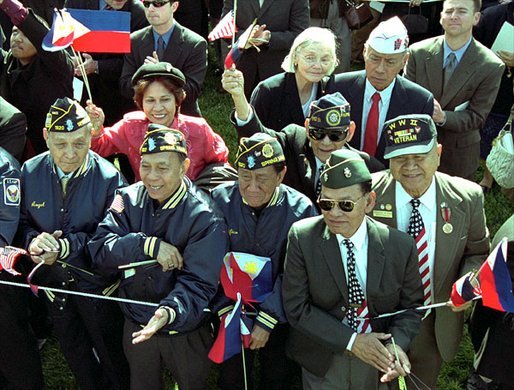
Many Filipino veterans traveled to the United States to lobby Congress for these benefits. Since 1993, numerous bills have been introduced in Congress to pay the benefits, but all died in committee. As recently as 2018, these bills have received bipartisan support.
Representative Hanabusa submitted legislation to award Filipino Veterans with a Congressional Gold Medal. Known as the Filipino Veterans of World War II Congressional Gold Medal Act, it was referred to the Committee on Financial Services and the Committee on House Administration. As of February 2012 had attracted 41 cosponsors. In January 2017, the medal was approved.
There was a proposed lawsuit to be filed in 2011 by The Justice for Filipino American Veterans against the Department of Veterans Affairs.
In the late 1980s, efforts towards reinstating benefits first succeeded with the incorporation of Filipino veteran naturalization in the Immigration Act of 1990. Over 30,000 such veterans had immigrated, with mostly American citizens, receiving benefits relating to their service.
Similar language to those bills was inserted by the Senate into the American Recovery and Reinvestment Act of 2009 which provided a one time payment of at least 9,000 USD to eligible non-US Citizens and US$15,000 to eligible US Citizens via the Filipino Veterans Equity Compensation Fund. These payments went to those recognized as soldiers or guerrillas or their spouses. The list of eligibles is smaller than the list recognized by the Philippines. Additionally, recipients had to waive all rights to possible future benefits. As of March 2011, 42 percent (24,385) of claims had been rejected; By 2017, more than 22,000 people received about $226 million in one time payments.
In the 113th Congress, Representative Joe Heck reintroduced his legislation to allow documents from the Philippine government and the US Army to be accepted as proof of eligibility. Known as H.R. 481, it was referred to the Committee on Veterans' Affairs. In 2013, the US released a previously classified report detailing guerrilla activities, including guerrilla units not on the "Missouri list".
In September 2012, the Social Security Administration announced that non-resident Filipino World War II veterans were eligible for certain social security benefits; however an eligible veteran would lose those benefits if they visited for more than one month in a year, or immigrated.
Beginning in 2008, a bipartisan effort started by Mike Thompson and Tom Udall an effort began to recognize the contributions of Filipinos during World War 2; by the time Barack Obama signed the effort into law in 2016, a mere fifteen thousand of those veterans were estimated to be alive. Of those living Filipino veterans of World War II, there were an estimated 6,000 living in the United States. Finally in October 2017, the recognition occurred with the awarding of a Congressional Gold Medal. When the medal was presented by the Speaker of the United States House of Representatives, several surviving veterans were at the ceremony. The medal now resides in the National Museum of American History.
Marriages
In the mid 19th to 20th century, Filipino men often dated and cohabited white women, some married white females while most married black females due to miscegenation laws. Filipino population in all over United States was made up overwhelmingly of men. For example, in California the Filipino population was 30,470 and in mainland leapt from 5,603 in 1920 to 45,208 ten years later.
Some 250,000 to 400,000 Filipino soldiers served in the United States Military. Many Filipino soldiers were in cohabitations with white american females, but miscegenations laws prevented Filipinos from marrying white women. For example, the state of California refused to grant licenses for Filipino soldiers to marry what the state calls "white women". Chapain Noury said to the Chief of Chaplains said "It jus happens that there are very few filipina girls here and consequently they have to out with white girls. As I said there is great number of our Filipino soldiers are now living for several years with white girls and were never married..... and they have children."
Holidays

Congress established Asian Pacific American Heritage Month in May to commemorate Filipino American and other Asian American cultures. Upon becoming the largest Asian American group in California, October was established as Filipino American History Month to acknowledge the first landing of Filipinos on October 18, 1587 in Morro Bay, California. It is widely celebrated by Filipino Americans.
| Date | Name | Region | |||||
|---|---|---|---|---|---|---|---|
| January | Winter Sinulog | Philadelphia | |||||
| April | PhilFest | Tampa, FL | |||||
| May | Asian Pacific American Heritage Month | Nationwide, USA | |||||
| May | Asian Heritage Festival | New Orleans | |||||
| May | Filipino Fiesta and Parade | Honolulu | |||||
| May | FAAPI Mother's Day | Philadelphia | |||||
| May | Flores de Mayo | Nationwide, USA | |||||
| June | Philippine Independence Day Parade | New York City | |||||
| June | Philippine Festival | Washington, D.C. | |||||
| June | Philippine Day Parade | Passaic, NJ | |||||
| June | Pista Sa Nayon | Vallejo, CA | |||||
| June | New York Filipino Film Festival at The ImaginAsian Theatre | New York City | |||||
| June | url=http://www.philippinenews.com/news/view_article.html?article_id=ce56ba8abb743542dce79ce7252a1ffc | first=Olivia J. | last=Quinto | title=Empire State lights up for Filipinos—again | archive-url=https://web.archive.org/web/20061018202544/http://www.philippinenews.com/news/view_article.html?article_id=ce56ba8abb743542dce79ce7252a1ffc | access-date=2006-08-28}} | |
| June | Philippine–American Friendship Day Parade | Jersey City, NJ | |||||
| June 12 | Fiesta Filipina | San Francisco | |||||
| June 12 | Philippine Independence Day | Nationwide, USA | |||||
| June 19 | Jose Rizal's Birthday | Nationwide, USA | |||||
| June | Pagdiriwang | ||||||
| {{cite web | url=http://www.seattlecenter.com/events/festivals/festal/detail.asp?EV_EventNum=9 | archive-url=https://web.archive.org/web/20110724221302/http://www.seattlecenter.com/events/festivals/festal/detail.asp?EV_EventNum=9 | |||||
| July | Fil-Am Friendship Day | Virginia Beach, VA | |||||
| July | Pista sa Nayon | Seattle | |||||
| July | Filipino American Friendship Festival | San Diego | |||||
| July | url=http://www.philippineweekend.org | publisher=United Filipino weekend.com | title=Filipino weekend | access-date=2006-08-28 | archive-date=2006-08-31 | archive-url=https://web.archive.org/web/20060831005225/http://www.philippineweekend.org/ | url-status=live}} |
| Delano, CA | |||||||
| August 15 to 16 | Philippine American Exposition | Los Angeles | |||||
| August 15 to 16 | title=Philippine Fiesta | url=http://www.philippinefiesta.com | url-status=live | archive-url=https://web.archive.org/web/20060825135348/http://www.philippinefiesta.com/ | archive-date=2006-08-25 | access-date=2006-08-28 | publisher=philippinefiesta.com}} |
| Secaucus, NJ | |||||||
| August | Summer Sinulog | Philadelphia | |||||
| August | Historic Filipinotown Festival | Los Angeles | |||||
| August | Pistahan Festival and Parade | San Francisco | |||||
| September 25 | Filipino Pride Day | Jacksonville, FL | |||||
| September | Festival of Philippine Arts and Culture (FPAC) | Los Angeles | |||||
| September | AdoboFest | Chicago | |||||
| October | Filipino American History Month | Nationwide, USA | |||||
| October | url=http://www.filamfest.com | title=FilAmFest | access-date=2009-06-08 | archive-date=2009-06-20 | archive-url=https://web.archive.org/web/20090620023617/http://www.filamfest.com/ | url-status=live}} | |
| San Diego | |||||||
| October | Houston Filipino Street Festival | Sugar Land, TX | |||||
| November | Chicago Filipino American Film Festival (CFAFF) | Chicago | |||||
| December 16 to 24 | Simbang Gabi Christmas Dawn Masses | Nationwide, USA | |||||
| December 25 | Pasko Christmas Feast | Nationwide, USA | |||||
| December 30 | Jose Rizal Day | Nationwide, USA |
Notable people
Main article: List of Filipino Americans
Footnotes
References
References
- "US Census Data". US Census Bureau.
- "PLACE OF BIRTH FOR THE FOREIGN-BORN POPULATION IN THE UNITED STATES, Universe: Foreign-born population excluding population born at sea, 2023 American Community Survey Estimates".
- (17 September 2018). "New Census data: More than 4 million Filipinos in the US".
- McBride, Melen. "HEALTH AND HEALTH CARE OF FILIPINO AMERICAN ELDERS". Stanford University School of Medicine.
- (19 July 2012). "Asian Americans: A Mosaic of Faiths, Chapter 1: Religious Affiliation". The Pew Forum on Religion & Public Life.
- Mercene, Floro L.. (2007). "Manila Men in the New World: Filipino Migration to Mexico and the Americas from the Sixteenth Century". The University of the Philippines Press.
- Rodel Rodis. (25 October 2006). "A century of Filipinos in America". Inquirer.
- "Labor Migration in Hawaii". UH Office of Multicultural Student Services.
- Rodolfo Severino. (9 February 2010). "Treaty of Paris ends Spanish–American War". Institute of Southeast Asian Studies.
- "Asian American and Pacific Islander Heritage Month: May 2021". US Census Bureau.
- "Grid View: Table B02018 - Census Reporter".
- (November 15, 2019). "Filipino population in U.S. now nearly 4.1 million — new Census data".
- "Grid View: Table B02015 - Census Reporter".
- "Grid View: Table B02018 - Census Reporter".
- (2011-11-16}}, [http://www.allwords.com/ allwords.com] {{Webarchive). "Immigration and America's Cities: A Handbook on Evolving Services". McFarland.
- Jon Sterngass. (2007). "Filipino Americans". Infobase Publishing.
- Howe, Marvine. (26 February 1986). "IN U.S., PHILIPPINE-AMERICANS REJOICE". The New York Times.
- Dawn Bohulano Mabalon. (29 May 2013). "Little Manila Is in the Heart: The Making of the Filipina/o American Community in Stockton, California". Duke University Press.
- Marina Claudio-Perez. (October 1998). "Filipino Americans". State of California.
- Madarang, Catalina Ricci S.. (24 June 2020). "Is 'Filipinx' a correct term to use? Debate for 'gender-neutral' term for Filipino sparked anew". Binu Mathew.
- Loni Ding. (2001). "Part 1. COOLIES, SAILORS AND SETTLERS". [[PBS]].
- Bonus, Rick. (2000). "Locating Filipino Americans: Ethnicity and the Cultural Politics of Space". Temple University Press.
- Eloisa Gomez Borah. (1997). "Chronology of Filipinos in America Pre-1989". [[University of California, Los Angeles]].
- Williams, Rudi. (3 June 2005). "DoD's Personnel Chief Gives Asian-Pacific American History Lesson". US Department of Defense.
- Loni Ding, Jonathan. (2001). "Part 1. COOLIES, SAILORS AND SETTLERS". [[PBS]].
- (8 November 2011). "Ranching".
- Kenny, Jim. (1994). "Dancing the Shrimp". Philippine Studies.
- Jim Zwick. (March 4, 1996). "Remembering St. Louis, 1904: A World on Display and Bontoc Eulogy". [[Syracuse University]].
- (January 4, 2004). "The Passions of Suzie Wong Revisited, by Rev. Sequoyah Ade". Aboriginal Intelligence.
- (2018). "Filipino-Americans in the U.S.". Filipino-American Community of South Puget Sound.
- (March 1995). "Introduction, Filipino Settlements in the United States". Temple University Press.
- (March 1995). "Introduction, Filipino Settlements in the United States". Temple University Press.
- (31 January 2011). "Background Note: Philippines". [[United States Department of State]].
- "Race Reporting for the Asian Population by Selected Categories: 2010". US Census Bureau.
- Public Information Office. (9 November 2015). "Census Bureau Statement on Classifying Filipinos". United States Census Bureau.
- Jonathan Y. Okamura. (11 January 2013). "Imagining the Filipino American Diaspora: Transnational Relations, Identities, and Communities". Routledge.
- (January 2019). "Classification Trends Among Modern Filipino Crania Using Fordisc 3.1". Forensic Anthropology.
- Posadas, Barbara Mercedes. (1999). "The Filipino Americans". [[Greenwood Publishing Group]].
- Harold Hisona, Mu. (14 July 2010). "The Cultural Influences of India, China, Arabia, and Japan". Philippine Daily}}
{{cite book. - Leupp, Gary P.. (2003). "Interracial Intimacy in Japan". [[Continuum International Publishing Group]].
- (2011). "Encyclopedia of Asian American Folklore and Folklife, Volume 1". [[ABC-CLIO]].
- (2016). "The Latinos of Asia: How Filipino Americans Break the Rules of Race". Stanford University Press.
- (23 September 2021). "Who is Hispanic?". Pew Research Center.
- "The National Park Service and American Latino Heritage". United States Department of the Interior.
- Goodwin, Robert. (5 March 2019). "América: The Epic Story of Spanish North America, 1493-1898". Bloomsbury Publishing.
- Bulmer-Thomas, Victor. (27 March 2018). "Empire in Retreat: The Past, Present, and Future of the United States". Yale University Press.
- Amend, Allison. (2010). "Hispanic-American Writers". Infobase Publishing.
- (May 2008). "Geothermal Leasing in the Western United States: Environmental Impact Statement". United States Department of the Interior.
- Bras, Marisabel. (22 January 2011). "The Changing of the Guard: Puerto Rico in 1898". Library of Congress.
- Herman, Doug. (15 August 2017). "A Brief, 500-Year History of Guam". Smithsonian Institution.
- Berguido, Fernando. (Fall 2011). "The Big Ditch: How America Took, Built, Ran and Ultimately Gave Away the Panama Canal". Harvard University.
- . (1956). ["Pacific Islanders: Territorial Status and Representation"](https://history.house.gov/Exhibitions-and-Publications/APA/Historical-Essays/Growing-Diversity/Pacific-Islanders/). *United States House of Representatives*.
- Kramer, Paul. (2006). "Race-Making and Colonial Violence in the U.S. Empire: The Philippine-American War as Race War". Diplomatic History.
- Kevin R. Johnson. (11 February 1993). "Mixed Race America and the Law: A Reader". NYU Press.
- Westbrook, Laura. (29 May 2009). "Who's Hispanic?". Pew Research Center.
- Fong, Rowena. (2004). "Culturally competent practice with immigrant and refugee children and families". Guilford Press.
- J. Nicole Stevens. (30 June 1999). "The History of the Filipino Languages". Brigham Young University.
- (2003). "Asian American Politics: Law, Participation, and Policy". Rowman & Littlefield.
- Bankston, Carl L. III. (2006). "Asian Americans: Contemporary Trends and Issues". Pine Forge Press.
- Osalbo, Jennifer Guiang. (Spring 2011). "Filipino American Identity Development and its Relation to Heritage Language Loss". California State University, Sacramento.
- "Statistical Abstract of the United States: page 47: Table 47: Languages Spoken at Home by Language: 2003". United States Census Bureau.
- Ryan, Camille. (August 2013). "Language Use in the United States: 2011". United States Census Bureau.
- Nucum, Jun. (2 August 2017). "So what if Tagalog is 3rd most spoken language in 3 US states?". Philippine Daily Inquirer.
- "Language Requirements". State of California.
- (2011-09-28}}.
{{cite news). "Filipino cultural schools help bridge Filipino Americans and their heritage". NBC News. - (2008). "Ilokano Language & Literature Program". University of Hawaii at Manao.
- Joyce Newman Giger. (14 April 2014). "Transcultural Nursing: Assessment and Intervention". Elsevier Health Sciences.
- Potowski, Kim. (January 2011). "Language Diversity in the USA". [[Cambridge University Press]].
- (2011). "Encyclopedia of Asian American Folklore and Folklife". ABC-CLIO.
- "Leave the Filipinx Kids Alone".
- Toledo, John. (September 15, 2020). "Filipino or Filipinx?".
- (19 July 2012). "Asian Americans: A Mosaic of Faiths". Pew Research Center.
- Bryan, One. (2003). "Filipino Americans". ABDO.
- Professor Susan Russell. "Christianity in the Philippines". Center for Southeast Asian Studies, [[Northern Illinois University]].
- Cindy Kleinmeyer. (June 2004). "Religions in Southeast Asia". Center for Southeast Asian Studies, Northern Illinois University}}
{{cite book. - Nadal, Kevin. (2011). "Filipino American Psychology: A Handbook of Theory, Research, and Clinical Practice". [[John Wiley & Sons]].
- Mark Juergensmeyer. (25 August 2011). "The Oxford Handbook of Global Religions". Oxford University Press.
- (2003). "Religion and American Cultures: An Encyclopedia of Traditions, Diversity, and Popular Expressions, Volume 1". ABC-CLIO.
- (1901). "Records of the American Catholic Historical Society of Philadelphia". American Catholic Historical Society of Philadelphia.
- (30 September 2014). "Religion and Spirituality for Diverse Women: Foundations of Strength and Resilience: Foundations of Strength and Resilience". ABC-CLIO.
- Sucheng Chan. (2011). "Encyclopedia of Asian American Folklore and Folklife". ABC-CLIO.
- Thomas A. Tweed, Bill. (28 June 2011). "America's Church: The National Shrine and Catholic Presence in the Nation's Capital". Oxford University Press.
- Fr. Diaz. (1 August 2005). "Chapel of San Lorenzo Ruiz". Philippine Apostolate / Archdiocese of new York}}
{{cite news. - (June 2014). "Cultural Diversity in the Catholic Church in the United States". United States Conference of Catholic Bishops.
- Lipka, Michael. (9 January 2015). "5 facts about Catholicism in the Philippines". Pew Research.
- (1 May 2004). "Asian American Religions: The Making and Remaking of Borders and Boundaries". NYU Press.
- Stephen M. Cherry. (3 January 2014). "Faith, Family, and Filipino American Community Life". Rutgers University Press.
- Gardner, F. (1906). The Journal of American Folklore: Philippine (Tagalog) Superstitions. American Folklore Society.
- Bautista, A. V. (2014). Filipino American Culture and Traditions: An Exploratory Study. California State University.
- Chen, Thomas. (26 February 2009). "WHY ASIAN AMERICANS VOTED FOR OBAMA". Perspective.
- Vergara, Benito. (2009). "Pinoy Capital: The Filipino Nation in Daly City". Temple University Press.
- Sterngass, Jon. (1 January 2009). "Filipino Americans". Infobase Publishing.
- Lobe, Jim. (16 September 2004). "Asian-Americans lean toward Kerry". Asia Times.
- Bendixen & Associates and The Tarrance Group. (14 September 2004). "National Poll of Asian Pacific Islanders on the 2004 Election". Pacific News Service.
- Mercado, Gus. (November 10, 2008). "Obama wins Filipino vote at last-hour". Philippine Daily Inquirer.
- Letargo, Mico. (19 October 2012). "Fil-Ams lean towards Romney – survey". Asian Journal.
- Chen, Thomas. (26 February 2009). "Why Asian Americans Voted for Obama". Harvard University.
- (19 October 2012). "In The Know: 2.6 million Filipino-Americans". Philippine Daily Inquirer.
- (2 March 2016). "Immigration and America's Cities: A Handbook on Evolving Services". McFarland.
- (17 January 2013). "New Findings: Asian American Vote in 2012 Varied by Ethnic Group and Geographic Location". Asian American Legal Defense and Education Fund.
- Wang, Hansi Lo. (18 April 2017). "Trump Lost More Of The Asian-American Vote Than The National Exit Polls Showed". [[NPR]].
- Asian Americans Advancing Justice. (15 September 2020). "2020 Asian American Voter Survey (National)".
- Ocampo, Anthony C.. (16 October 2020). "I Went to a 'Filipinos for Trump' Rally. Here's What I Found". Race Forward.
- Robles, Raissa. (31 October 2020). "US election: Filipino-Americans lean towards Biden, but Trump still exerts a pull". CNN Philippines.
- Ramos, Christa Marie. (9 November 2020). "Up to 60% of Fil-Am voters estimated to have voted for Biden, says PH envoy". Philippine Daily Inquirer.
- Ichimura, Anri. (7 January 2021). "Weirdest Moment of the U.S. Capitol Riot: A Walis Tambo Being Paraded by a Filipino Trump Supporter". Asian Journal.
- Tomacruz, Sofia. (7 January 2021). "Filipinos among Trump supporters who stormed US Capitol". Esquire Financing Inc..
- Elemia, Camille. (3 November 2020). "Why many Filipino Americans are still voting for Donald Trump".
- (13 June 2016). "Gun Control is an Asian American Issue".
- (2 October 2024). "Why the Harris campaign has been aggressively courting Filipino Americans in Nevada". [[NBC News]].
- Reimers, David M.. (2005). "Other Immigrants: The Global Origins of The American People". [[NYU Press]].
- Edmund M. Silvestre, Rahasaan. (18 January 2009). "A Fil-Am on Capitol Hill". Cambridge University Press.
- Peter Urban. (3 May 2011). "In final speech to Senate, Ensign apologizes to colleagues". Las Vegas Review-Journal.
- Samson Wong. (15 November 2012). "The Party With The Parity". AsianWeek.
- Jonathan Strong. (17 January 2012). "How Rep. Steve Austria Became a Sacrificial Republican". Roll Call.
- Henni Espinosa. (8 November 2012). "Fil-Ams who won and lost in the US elections". ABS-CBN.
- Almadin-Thornhill, Lenn. (4 December 2018). "Virginia Rep. Bobby Scott on TJ Cox, Beginning A New Term in Congress". Balitang America.
- . (10 December 2020). ["Fil-Am Rep. TJ Cox Concedes In Race For California's 21st Congressional District"](https://www.asianjournal.com/usa/california/fil-am-rep-tj-cox-concedes-in-race-for-californias-21st-congressional-district/). *Asian Journal*.
- Beshay. (2024-08-06). "Filipino Americans: A Survey Data Snapshot". Pew Research Center.
- Kochhar, Rakesh. (2024-05-31). "The State of the Asian American Middle Class". Pew Research Center.
- "Explore Census Data". US Census Bureau.
- "Explore Census Data". US Census Bureau.
- Budiman, Abby. (2021-04-29). "Filipinos in the U.S. Fact Sheet". Pew Research Center.
- Youth groups and youth savers - Gangs, crews, and the rise of Filipino American youth culture in Los Angeles.pdf
- RISE Report_Nadal.pdf
- "Explore Census Data". US Census Bureau.
- "Understanding economic disparities within the AAPI community". Economic Policy Institute.
- 2018FreeingOurFuturesPERE.pdf
- "The Color of Wealth in Los Angeles {{!}} Importance of Wealth". Color of Wealth.
- "Facts about Asian American Hunger". Feeding America.
- Budiman, Abby. (2021-04-29). "Filipinos in the U.S. Fact Sheet". Pew Research Center.
- "Explore Census Data". US Census Bureau.
- (2023-05-08). "2. Asian Americans and life in America". Pew Research Center.
- (2023-07-19). "2. Filipino Americans' views of the Philippines and other places". Pew Research Center.
- (2024-10-02). "Why the Harris campaign has been aggressively courting Filipino Americans in Nevada". NBC News.
- "Explore Census Data". US Census Bureau.
- Eric Arnesen. (2007). "Encyclopedia of U.S. Labor and Working-class History: G-N; Index". [[Taylor & Francis]].
- Melen McBride, RN. (1 October 2001). "Health and Health Care of Filipino American Elders". [[Stanford University]].
- Mary Yu Danico. (3 September 2014). "Asian American Society: An Encyclopedia". SAGE Publications.
- (2019-08-04). "Exploitation of Filipino domestic workers 'widespread' in the US".
- "Professor reveals Filipino caregivers in U.S. vulnerable to exploitation during pandemic".
- . (29 September 2014). ["Survey of Business Owners – Asian-Owned Firms: 2007"](https://www.census.gov/econ/sbo/getsof.html?07asian). *United States Census Bureau*.
- . (28 April 2011). ["Table 7. Summary Statistics for Asian-Owned Firms by Detailed Group (Percent Changes): 2002 to 2007"](http://www2.census.gov/econ/sbo/07/final/tables/asian_table7.pdf). *United States Census Bureau*.
- . (28 April 2011). ["Filipino-Owned Firms"](http://www2.census.gov/econ/sbo/07/final/charts/asian_chart4.pdf). *United States Census Bureau*.
- (2014-12-10). "Survey of Business Owners - Summaries of Findings - Business & Industry - U.S. Census Bureau".
- asian_chart4.pdf
- (2024-10-21). "The Mass Emigration of Filipino Nurses to the United States".
- Filipino American caregivers reflect on COVID trauma and healing : Shots - Health News : NPR
- Cachero, Paulina. (2021-05-30). "How Filipino Nurses Have Propped Up America's Medical System".
- "Overseas Filipino Remittances".
- . (13 November 2013). ["More than 3.4M Americans trace their ancestry to the Philippines"](http://www.pewresearch.org/fact-tank/2013/11/13/more-than-3-4m-americans-trace-ancestry-to-philippines/). *[[Pew Research Center]]*.
- Venzon, Cliff. (15 February 2022). "Philippines 'modern-day heroes' sent record remittances last year". Nikkei Asia.
- Yengoyan, Aram A.. (2006). "The Austronesians: Historical and Comparative Perspectives". Australian National University E Press.
- Irisa Ona. (15 April 2015). "Fluidity of Filipino American Identity". Southern Methodist University}}
{{cite web. - Bautista, Amanda Vinluan. (May 2014). "Filipino American Culture And Traditions: An Exploratory Study". California State University, Stanislaus.
- See, Sarita Echavez. (2009). "The Decolonized Eye: Filipino American Art and Performance". University of Minnesota Press.
- Tyner, James A.. (2007). "Contemporary Ethnic Geographies in America". Rowman & Littlefield.
- Carlo Osi. (26 March 2009). "Filipino cuisine on US television". Inquirer Company.
- Guevarra, Rudy P. Jr.. (2008). ""Skid Row": Filipinos, Race and the Social Construction of Space in San Diego". Palgrave Macmillan.
- Sterngass, Jon. (2006). "Filipino Americans". [[Infobase Publishing]].
- Melendy, H. Brett. "Filipino Americans". ''Gale Encyclopedia of Multicultural America'', edited by Gale, 3rd edition, 2014. Credo Reference, http://lpclibrary.idm.oclc.org/login?url=https://search.credoreference.com/content/entry/galegale/filipino_americans/0?institutionId=8558
- Garcia, Gabriel. (29 September 2016). "Nationalism and Cultural Revival in Southeast Asia: Perspectives from the Centre and the Region". Otto Harrassowitz Verlag.
- Esmaquel II, Paterno. (21 October 2016). "Envoy reminds PH: 43% of OFW remittances come from US". Rappler.
- Joaquin Jay Gonzalez. (1 February 2009). "Filipino American Faith in Action: Immigration, Religion, and Civic Engagement". NYU Press.
- Jonathan Y. Okamura. (11 January 2013). "Imagining the Filipino American Diaspora: Transnational Relations, Identities, and Communities". Routledge.
- Orendian, Simone. (17 July 2013). "Remittances Play Significant Role in Philippines". Convention on Biological Diversity.
- Pido, Eric J.. (5 May 2017). "Migrant Returns: Manila, Development, and Transnational Connectivity". Duke University Press.
- Garcia, Nelson. (23 April 2017). "Special: Traveling to find lost heritage". University of Illinois Press.
- Shyong, Frank. (28 April 2018). "These boxes are a billion-dollar industry of homesickness for Filipinos overseas". Springer.
- Cowen, Tyler. (2012). "An Economist Gets Lunch: New Rules for Everyday Foodies". Penguin.
- Shaw, Steven A.. (2008). "Asian Dining Rules: Essential Strategies for Eating Out at Japanese, Chinese, Southeast Asian, Korean, and Indian Restaurants". HarperCollins.
- Dennis Clemente. (1 July 2010). "Where is Filipino food in the US marketplace?". Philippine Daily Inquirer.
- Alice L. McLean. (28 April 2015). "Asian American Food Culture". ABC-CLIO.
- Woods, Damon L.. (12 February 2016). "The Philippines: a global studies handbook". ABC-CLIO.
- Sokolov, Raymond. (1993). "Why We Eat What We Eat: How Columbus Changed the Way the World Eats". Simon and Schuster.
- (2010). "A Brief History of Filipinos in Hawaii". Center for Philippine Studies, University of Hawaii-Manoa.
- (2005). "Oahu Restaurant Guide 2005 With Honolulu and Waikiki". Holiday Publishing Inc.
- (25 June 2011). "Assessment of Dietary Intakes of Filipino-Americans: Implications for Food Frequency Questionnaire Design". Journal of Nutrition Education and Behavior.
- Katrina Stuart Santiago. (8 June 2011). "Balut as Pinoy pride". GMA.
- Carlo Osi. (26 March 2006). "Filipino cuisine on US television". Global Nation.
- Keli Dailey. (9 February 2012). "Andrew Zimmern's eating through San Diego". The San Diego Union Tribune.
- Fernandez, Doreen. (2003). "Culture Ingested: On the Indigenization of Phillipine Food.". Gastronomica.
- Amy Scattergood. (25 February 2011). "Off the menu". Los Angeles Times.
- Laudan, Rachel. (1996). "The food of Paradise: exploring Hawaii's culinary heritage". University of Hawaii Press.
- Alejandro, Reynaldo. (February 2024). "The Philippine cookbook". Penguin.
- Melanie Henson Narciso. (2005). "Filipino Meal Patterns in the United States of America". University of Wisconsin-Stout.
- Kristy, Yang. (30 July 2011). "Filipino Food: At Least One Reason to Envy California". The SAN DIEGAN.
- Krean Given, Sarah. (13 November 2012). "In Southern California, Filipino restaurants crowd the strip malls". CNBC.
- Mishan, Ligaya. (15 November 2011). "Authentic Filipino Modern Times". The New York Times.
- Rocha, Michael James. (11 October 2016). "Nicole Ponseca Aims to Bring Filipino Food 'to the Masses'". NBC News}}
{{cite news. - Neff, Lydia. (8 October 2016). "Filipino Food Movement panned as it goes to Oakland, Calif.". Philippine Daily Inquirer.
- Knowlton, Andrew. (16 August 2016). "No. 02".
- Rothman, Jordana. "Food & Wine Restaurants of the Year 2018". Food & Wine.
- (16 August 2017). "Andrew Zimmern: Filipino food will be the next big thing in America — here's why".
- McNeilly, Claudia. (1 June 2017). "How Filipino Food Is Becoming the Next Great American Cuisine".
- Kane, Peter Lawrence. (21 February 2019). "FOB Kitchen Deserves to Become a Filipino Hotspot". SF Weekly.
- Kuroki, Yusuke. (2015). "Risk Factors for Suicidal Behaviors Among Filipino Americans: A Data Mining Approach". American Journal of Orthopsychiatry.
- (2003). "Filipino "Kapwa" in Global Dialogue: A Different Politics of Being-With the "Other"". Intercultural Communication Studies.
- Nadal, Kevin. (2011). "Filipino American Psychology: A Handbook of Theory, Research, and Clinical Practice". John Wiley & Sons, Inc..
- Samura, Michelle. (2014). "Wrestling with expectations: An Examination of How Asian American College Students Negotiate Personal, Parental, and Societal Expectations". Journal of College Student Development.
- Ocampo, Anthony Christian. (2016). "The Latinos of Asia: How Filipino Americans Break the Rules of Race". [[Stanford University Press]].
- Dominador D. Buhain. (1998). "A History of Publishing in the Philippines". Rex Bookstore, Inc..
- Mansfield-Richardson, Virginia. (23 June 2014). "Asian Americans and the Mass Media: A Content Analysis of Twenty United States Newspapers and a Survey of Asian American Journalists". Routledge.
- Vengua, Jean. (Fall 2010). "Migrant Scribes an Poet-Advocates: U.S. Filipino Literary History in West Coast Periodicals, 1905 to 1941". University of California, Berkeley.
- Fuentecilla, Jose V.. (April 2013). "Fighting from a Distance: How Filipino Exiles Helped Topple a Dictator". University of Illinois Press.
- Bonus, Rick. (2000). "Locating Filipino Americans: Ethnicity and the Cultural Politics of Space". Temple University Press.
- (12 November 2019). "The SAGE International Encyclopedia of Mass Media and Society". SAGE Publications.
- Bonifacio, Glenda Tibe. (15 November 2013). "Pinay on the Prairies: Filipino Women and Transnational Identities". UBC Press.
- Gonzalez, Joaquin Jay. (1 February 2009). "Filipino American Faith in Action: Immigration, Religion, and Civic Engagement". NYU Press.
- Martinez, Kathleen Melissa. (2007). "Finding a Home for Filipino-American Dual Citizens: Membership and the Filipino National Identity". Georgetown University.
- Carlos H. Conde. (11 May 2004). "Philippine Elections Are Marred by Violence". National Statistical Coordination Board.
- Chen, Edith Wen-Chu. (2010). "Encyclopedia of Asian American Issues Today, Volume 1". ABC-CLIO.
- (March 16, 1982). "Batas Pambansa Bilang. 185".
- (14 May 2013). "Why most Filipinos in US didn't vote". ABS CBN North America Bureau.
- Jamal Thalji. (16 November 2001). "Student charged in fight will swim at state meet". St. Petersburg Times.
- Nelson, Shane. (2008). "Personal Best". Honolulu Magazine.
- "Balikbayan Program". Consulate General of the Philippines in Los Angeles.
- "Introduction: Filipino Settlements in the United States". Temple University Press.
- "Immigration Preferences and Waiting Lists". lawcom.com.
- "Green-card limbo". Manila Times.
- (1 November 2016). "Annual Report of Immigrant Visa Applicants in the Family-sponsored and Employment-based preferences Registered at the National Visa Center as of November 1, 2016". United States Bureau of Consular Affair.
- (10 April 2013). "Families of Filipino World War II vets largely still waiting for visa, dozen years later". [[Public Radio International]].
- Rick Bonus. (2000). "Locating Filipino Americans: Ethnicity and the Cultural Politics of Space". Temple University Press.
- (January 2010). "Estimates of the Unauthorized Immigrant Population Residing in the United States: January 2009". DHS Office of Immigration Statistics, [[United States Department of Homeland Security]].
- (5 June 2013). "Filipino Immigrants in the United States". Migration Information Source.
- Layug, Margaret Claire. (10 August 2017). "Trump's Raise Act to cost 400k Filipinos chance to live in US, says expert". GMA News.
- Philip Ella Juico, Joaquin. (6 February 2013). "Ex-Star columnist makes mark in US". NYU Press.
- (2020-02-24). "New study reveals previously invisible health issues among Asians in U.S.". NBC News.
- Shaping Health in Hawaii: The Influences of Poverty, Housing and Food Insecurity
- (2024-05-30). "1 in 3 local households experience food insecurity, Hawaiʻi Foodbank reports". Hawai'i Public Radio.
- Food Security and Diet Quality in Native Hawaiian, Pacific Islander, and Filipino Infants 3 to 12 Months of Age - PMC
- Nadal, Kevin. (2011). "Filipino American Psychology: A Handbook of Theory, Research, and Clinical Practice". John Wiley & Sons.
- (2006). "Positively No Filipinos Allowed: Building Communities and Discourse". Temple University Press.
- Nadal, Kevin. (2008). ["Filipino American Psychology: A Handbook of Theory, Research, and Clinical Practice"](https://ecf.dcd.uscourts.gov/cgi-bin/show_public_doc?2008cv1086-17}}
{{cite book). John Wiley & Sons. - Henry Yu. "Asian Americans". Department of History, [[University of British Columbia]].
- (2010). "Low cultural identification, low parental involvement and adverse peer influences as risk factors for delinquent behaviour among Filipino youth in Hawai'i". International Journal of Social Psychiatry.
- Okamura, Jonathan Y.. (11 December 2005). "Ethnicity and inequality in Hawaiʻi". Temple University Press.
- Okamura, Jonathan Y.. (1998). "Imagining the Filipino American diaspora: transnational relations, identities, and communities". Taylor & Francis.
- Okamura, Jonathan Y.. (1998). "Imagining the Filipino American diaspora: transnational relations, identities, and communities". Taylor & Francis.
- Nadal, Kevin. (2010). "Filipino American Psychology: A Collection of Personal Narratives". John Wiley and Sons.
- David, E.J.R.. (2009). "Phenotypic Bias and Ethnic Identity in Filipino Americans". Social Science Quarterly.
- Haya El Nasser. (13 May 2008). "Study: Some immigrants assimilate faster". Chicago Tribune.
- Scattergood, Amy. (25 February 2010). "Off the menu". [[Los Angeles Times]].
- (2003). "Asian American politics: law, participation, and policy". Rowman & Littlefield.
- Bernardo, Joseph. (6 April 2016). "Asian Americans: Growth and Diversity". University of Washington.
- Whitney, Philip B.. (July–September 1972). "Forgotten Minority: Filipinos in the United States". Yale University Press.
- Maxwell, Rahsaan. (2012). "Ethnic Minority Migrants in Britain and France: Integration Trade-Offs". Cambridge University Press.
- Okamura, Jonathan Y.. (1998). ["Imagining the Filipino American diaspora: transnational relations, identities, and communities"](https://books.google.com/books?id=bXKvgRJX2soC&pg=PA55}}
{{cite book). Taylor & Francis. - Mendoza, Susanah Lily L.. (2002). "Between the homeland and the diaspora: the politics of theorizing Filipino and Filipino American identities : a second look at the poststructuralism-indigenization debates". Psychology Press.
- (2009). "Contextualizing Asian American education through critical race theory: An example of U.S. Pilipino college student experiences". New Directions for Institutional Research.
- Sterngass, Jon. (2006). "Filipino Americans". Infobase Publishing.
- Belinda A. Aquino. (10 December 2006). "The Filipino Century in Hawaii: Out of the Crucible". Center for Philippine Studies, University of Hawaii at Manoa.
- (January 17, 2003). "The Invisible Minority".
- (February 23, 2015). "America's 'Invisible' Minority Is Ready for Its Closeup". Voice of America.
- Nguyen, Mimi Thi. (31 March 2000). "Alien encounters: popular culture in Asian America". Duke University Press.
- Espiritu, Yen Le. (2003). "Home Bound: Filipino American Lives Across Cultures, Communities, and Countries". University of California Press.
- Baker, Lee D.. (2004). "Life in America: Identity and Everyday Experience". John Wiley & Sons.
- (2006). "Positively No Filipinos Allowed: Building Communities And Discourse". Temple University Press.
- "In the Court of the Sultan: Orientalism, Nationalism, and Modernity in Philippine and Filipino American Dance".
- IV, Martin F. Manalansan. (2003-12-10). "Global Divas: Filipino Gay Men in the Diaspora". Duke University Press Books.
- Heras, Patricia. (2001). "Silent Sacrifices: Voices of the Filipino American Family".
- Wolf, Diane L.. (September 1997). "Family Secrets: Transnational Struggles among Children of Filipino Immigrants". Sociological Perspectives.
- Rumbaut, Ruben G.. (1994). "The Crucible within: Ethnic Identity, Self-Esteem, and Segmented Assimilation among Children of Immigrants". International Migration Review.
- Gaw, Albert. (June 2007). "Mental Health Care of Filipino Americans". Psychiatric Services.
- Ta, Van. (2017). "Generational Status and Family Cohesion Effects on the Receipt of Mental Health Services Among Asian Americans: Findings from the National Latino and Asian American Study". American Journal of Public Health.
- Chang, Janet. (2018). "Ethnically Heterogeneous Friendships and Symptoms of Depression and Anxiety Among Filipino Americans". Asian American Journal of Psychology.
- Maria Virginia Yap Morales, Allison. (18 August 2018). "Filipinos in the East Bay". Arcadia Publishing.
- "Asian Heritage in the National Park Service Cultural Resources Programs". [[National Park Service]].
- Keith Rogers. (21 January 2013). "100-year-old Filipino-American veteran dies". Las Vegas Review-Journal.
- Joseph Pimental, Lori. (12 January 2011). "Bill to give Filipino WWII veterans full equality". KING.
- Josh Levs. (23 February 2009). "U.S. to pay 'forgotten' Filipino World War II veterans". [[CNN]].
- Federis, Marnette. (4 August 2006). "The Forgotten Veterans". Voice of San Diego.
- Nakano, Satoshi. (June 2004). "The Filipino World War II veterans equity movement and the Filipino American community". Seventh Annual International Philippine Studies.
- Frank, Sarah. (7 September 2009). "Filipinos in America". Lerner Publications.
- Chen, Edith Wen-Chu. (2010). "Encyclopedia of Asian American Issues Today, Volume 1". ABC-CLIO.
- Cabotaje, Michael A.. (January 1999). "Equity Denied: Historical and Legal Analyses in Support of the Extension of U.S. Veterans' Benefits to Filipino World War II Veterans". Asian American Law Journal.
- (28 February 2018). "US senators revive call for full benefits to Filipino WWII veterans". Philippine Daily Inquirer.
- Richard Simon. (30 January 2013). "Philippine vets still fighting their battle over WWII". [[Stars and Stripes (newspaper).
- (3 January 2013). "Committees: H.R.111 [113th]". Library of Congress.
- (5 February 2013). "Cosponsors: H.R.111 [113th]". Library of Congress.
- Richard, Sam. (3 January 2017). "If not full recompense, Gold Medal is welcome recognition for WW II Filipino soldiers". East Bay Times.
- Henni Espinosa. (17 January 2011). "Filipino Veterans Group Pursues Lawsuits Despite New Equality Bill". [[Balitang America]].
- "World War II Filipino Veteran Rights". Filipino American Curriculum Project, Smithsonian Institution.
- Maze, Rick. (2008-01-29). "Senate puts Filipino vet pensions in stimulus". Army Times Publishing Company.
- Bayron, Heda. (2009-03-25). "Filipino War Veterans Take Advantage of Delayed US Response". Voice Of America.
- Representative [[Joe Heck]]. (5 February 2013). "Bidding Farewell to Two Members of the Las Vegas Mighty Five (House of Representatives)". Library of Congress.
- Jaleco, Rodney. (2009-03-28). "Excluded Fil-Vets Now Eligible for Lump-Sum Money". ABS-CBN.
- Joseph G. Lariosa. (9 January 2011). "Filipino Veterans Fairness bill filed at US Congress". GMA News.
- JFAV. (23 March 2011). "WW II Filvet to lead delegation to US Congress for full equity". Asian Journal.
- Merina, Dorian. (31 July 2018). "Their Last Fight: Filipino Veterans Make A Final Push For Recognition". Texas Public Radio.
- Dymphina Calica-La Putt. (26 September 2012). "Heck introduces bill to aid denied Filipino WWII vets". Asian Journal.
- (4 February 2013). "Committees: H.R.481 [113th]". Library of Congress.
- Chuck N. Baker. (6 March 2013). "Filipino soldiers who fought for the U.S. now battle for benefits". Las Vegas Review-Journal.
- Cynthia De Castro. (18 September 2012). "Special benefits available for WW II vets outside of US". Asian Journal.
- Richards, Sam. (3 January 2017). "If not full recompense, Gold Medal is welcome recognition for WW II Filipino soldiers". East Bay Times.
- Sanchez, Tatiana. (14 July 2016). "Family of Filipino vets can enter US under new program". The San Diego Union-Tribune.
- Castillo, Walbert. (25 October 2017). "Fought and forgotten: Filipino World War II veterans honored with medal 75 years later". USA Today.
- Basco, Isabella. (27 October 2017). "Filipino WWII veterans officially awarded US Congressional Gold Medal". Philippine Daily Inquirer.
- (26 October 2017). "Smithsonian Collects Filipino Congressional Gold Medal". National Museum of American History.
- Tell the Court I Love My Wife Race, Marriage, and Law--An American History By Peter Wallenstein · 2004, page 144 [https://www.google.co.uk/books/edition/Tell_the_Court_I_Love_My_Wife/3WTgCgAAQBAJ?hl=en&gbpv=1&dq=Filipino+men+often+marrying&pg=PA144&printsec=frontcover]
- Dear John Love and Loyalty in Wartime America By Susan L. Carruthers · 2022 page 36
- Santos, Hector. "Sulat sa Tanso".
- "history". Asian Pacific heritage.
- (2011). "Filipino Apostolate". Our Lady of Hope Catholic Church, Archdiocese of Philadelphia.
- "PhilFest 2011". Philippine Cultural Foundation, Inc..
- "Asian Heritage Festival 2011". Asian/Pacific American Society.
- Tiffany Hill. (19 May 2011). "Field Guide: Filipino Fun". Aio.
- (2011). "Filipino-American Association of Philadelphia, Inc". Filipino-American Association of Philadelphia, Inc..
- Mark Rabago. (26 June 2006). "Flores de Mayo at Santacruzan". Center for Southeast Asian Studies Northern Illinois University.
- Jose Antonio Vargas. (11 June 2006). "Where Everyone Gets to Tagalog". Washington Post.
- Jim Belarmino. (6 April 1995). "Filipino Art Exhibition and Workshop". Passaic Public Library.
- "Vallejo Pista Sa Nayon". Philippine Cultural Committee.
- Ricardo Kaulessar. (29 June 2009). "Jersey City's Filipino community holds the 19th annual Friendship Day Parade and Festival". The Jersey Journal.
- Marconi Calindas. (2 July 2006). "Fiesta Filipina USA". Fiesta Filipina USA.
- (18 June 2011). "Jose Rizal Day in Carson on June 19". Filipino American Historical Society of Chicago.
- Miller, Angelique. (16 May 2008). "Fil-Am Friendship Day slated for July 5". GMA News}}
{{cite news. - Evi Sztajino. (28 July 2005). "Pista Sa Nayon". The Seattle Times.
- , Ariana. (31 July 2021). ["Inaugural Filipino American Friendship Festival to take place today"](https://www.kusi.com/inaugural-filipino-american-friendship-festival-to-take-place-today/). *KUSI*.
- Kasiner, Dorothy. (2000). "Filipino weekend". United Filipino weekend.com.
- Coastro, Cynthia De. (21 December 2010). "Philippine–American Expo". California Examiner}}
{{cite news. - Tagala, Don. (18 August 2010). "Philippine Fiesta". philippinefiesta.com}}
{{cite news. - Vivienne SM. Angeles. (1998). "St. Augustine Church, Philadelphia: Immigration & Filipino Transformation". Scribe Video Center.
- (1 August 2007). "Historic Filipinotown festival set this week". GMA News.
- Chong, Luis. (13 August 2010). "Pistahan Parade and Festival". Filipino American Arts Exposition}}
{{cite news. - Conner, Deirdre. (18 June 2009). "Filipino Pride Day". We Filipinos Inc.}}
{{cite news. - "FilAmArts". The Association for the Advancement of Filipino American Arts and Culture.
- Chio-Lauri, Jacqueline. (18 September 2018). "The New Filipino Kitchen: Stories and Recipes from around the Globe". Agate Publishing.
- Malou Amparo. (28 September 2013). "FilAmFest". Kasama Media, LLC.
- (23 September 2023). "Taste lechon, join a balut-eating contest at the largest Filipino festival in Texas".
- "Tin tức- Du lịch - Phim Ảnh - Nghệ thuật - Kinh Doanh". The Chicago Filipino American Film Festival.
- Gonzalez, Joaquin Lucero. (2009). "Filipino American faith in action: immigration, religion, and civic engagement". NYU Press.
- "Christmas: A National Fiesta". Center for Southeast Asian Studies, Northern Illinois University.
This article was imported from Wikipedia and is available under the Creative Commons Attribution-ShareAlike 4.0 License. Content has been adapted to SurfDoc format. Original contributors can be found on the article history page.
Ask Mako anything about Filipino Americans — get instant answers, deeper analysis, and related topics.
Research with MakoFree with your Surf account
Create a free account to save articles, ask Mako questions, and organize your research.
Sign up freeThis content may have been generated or modified by AI. CloudSurf Software LLC is not responsible for the accuracy, completeness, or reliability of AI-generated content. Always verify important information from primary sources.
Report