From Surf Wiki (app.surf) — the open knowledge base
Fibonacci
Italian mathematician (c. 1170 – c. 1240/50)

Italian mathematician (c. 1170 – c. 1240/50)
| Field | Value | |
|---|---|---|
| nickname | ||
| name | Fibonacci | |
| image | Leonardo Fibonacci.JPG | |
| caption | Statue of Fibonacci (1863) by in the Camposanto Monumentale, Pisa | |
| birth_name | Leonardo Bonacci | |
| birth_date | ||
| birth_place | Pisa, Republic of Pisa | |
| death_date | ||
| death_place | Pisa, Republic of Pisa | |
| occupation | Mathematician | |
| known_for | {{Plainlist | |
| father | Guglielmo Bonacci |
- Liber Abaci
- Popularizing the Hindu–Arabic numeral system in Europe
- Congruum
- Fibonacci numbers
- Fibonacci–Sylvester method
- Fibonacci method}}
Leonardo Bonacci ( – ), commonly known as Fibonacci,{{efn|Also known as Leonardo of Pisa () or Leonardo Bigollo Pisano ('Leonardo the Traveller from Pisa').
The name he is commonly called, Fibonacci, is first found in a modern source in a 1838 text by the Franco-Italian mathematician Guglielmo Libri and is short for filius Bonacci ('son of Bonacci'). However, even as early as 1506, Perizolo, a notary of the Holy Roman Empire, mentions him as "Lionardo Fibonacci".
Fibonacci popularized the Indo–Arabic numeral system in the Western world primarily through his composition in 1202 of Liber Abaci (Book of Calculation) and also introduced Europe to the sequence of Fibonacci numbers, which he used as an example in Liber Abaci.
Biography
Fibonacci was born around 1170 to Guglielmo, an Italian merchant and customs official Fibonacci travelled with him as a young boy. He was educated in Bugia, where he learned about the Hindu–Arabic numeral system.
Fibonacci travelled around the Mediterranean coast, meeting with many merchants and learning about their systems of doing arithmetic.{{efn|In the Prologus of the Liber abacci he writes:
He soon realised the many advantages of the Hindu-Arabic system, which, unlike the Roman numerals used at the time, allowed easy calculation using a place-value system. In 1202, he completed the Liber Abaci (Book of Abacus or The Book of Calculation), which popularized Hindu–Arabic numerals in Europe.
Fibonacci was a guest of Emperor Frederick II, who enjoyed mathematics and science. A member of Frederick II's court, John of Palermo, posed several questions based on Arab mathematical works for Fibonacci to solve. In 1240, the Republic of Pisa honored Fibonacci (referred to as Leonardo Bigollo) by granting him a salary in a decree that recognized him for the services that he had given to the city as an advisor on matters of accounting and instruction to citizens.
Fibonacci is thought to have died between 1240 and 1250, in Pisa.
''Liber Abaci''
Main article: Liber Abaci
In the Liber Abaci (1202), Fibonacci introduced the so-called modus Indorum (method of the Indians), today known as the Hindu–Arabic numeral system,{{cite journal| last= Grimm| first= R. E.
The original 1202 manuscript is not known to exist. In a 1228 copy of the manuscript, the first section introduces the numeral system and compares it with others, such as Roman numerals, and methods to convert numbers to it. The second section explains uses in business, for example converting different currencies, and calculating profit and interest, which were important to the growing banking industry. The book also discusses irrational numbers and prime numbers.
Fibonacci sequence
Main article: Fibonacci sequence
Liber Abaci posed and solved a problem involving the growth of a population of rabbits based on idealized assumptions. The solution, generation by generation, was a sequence of numbers later known as Fibonacci numbers. Although Fibonacci's Liber Abaci contains the earliest known description of the sequence outside of India, the sequence had been described by Indian mathematicians as early as the sixth century.
In the Fibonacci sequence, each number is the sum of the previous two numbers. Fibonacci omitted the "0" and first "1" included today and began the sequence with 1, 2, 3, ... . He carried the calculation up to the thirteenth place, the value 233, though another manuscript carries it to the next place, the value 377. Fibonacci did not speak about the golden ratio as the limit of the ratio of consecutive numbers in this sequence.
Legacy
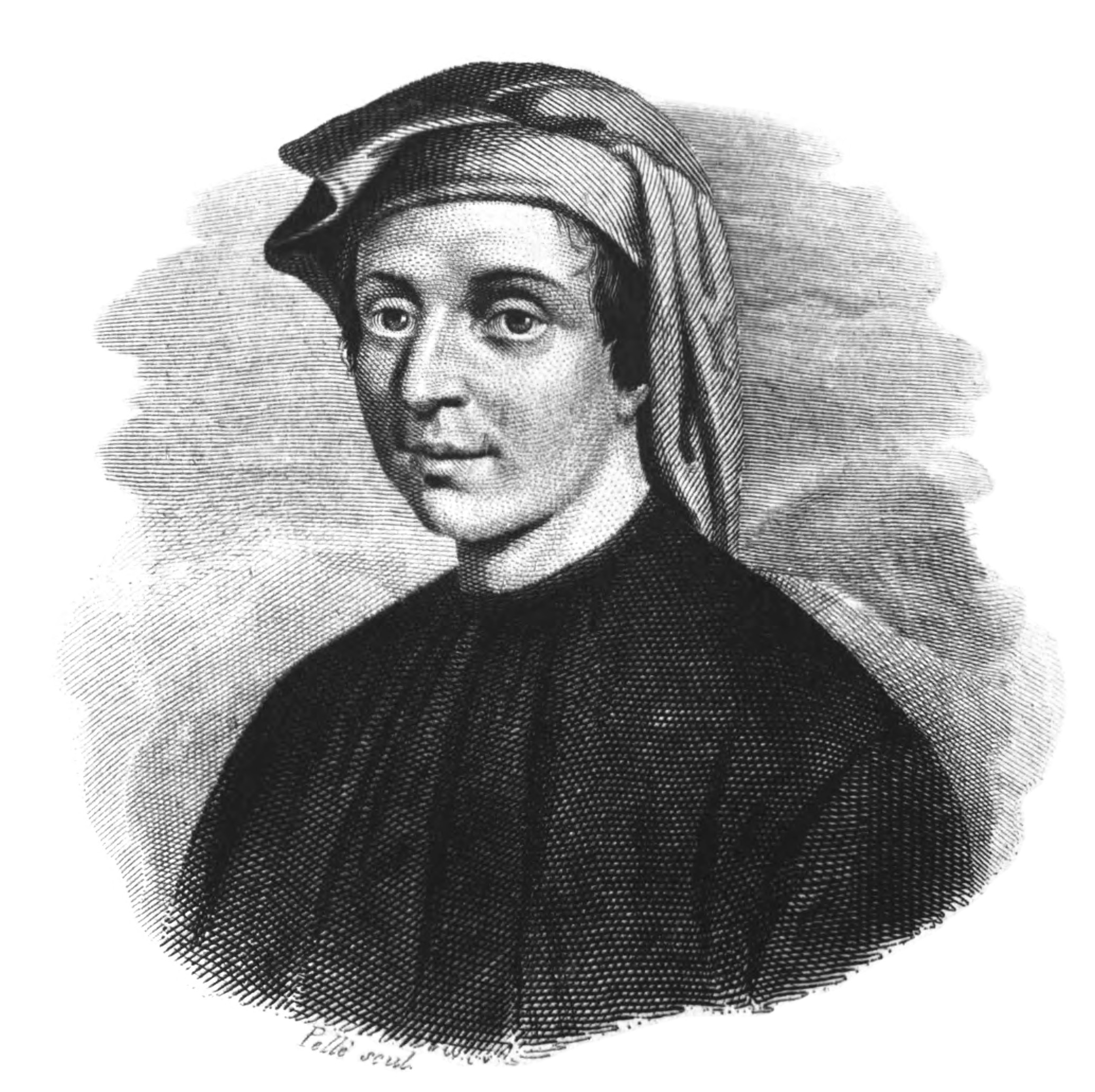
In the 19th century, a statue of Fibonacci was set in Pisa. Today it is located in the western gallery of the Camposanto, historical cemetery on the Piazza dei Miracoli.
There are many mathematical concepts named after Fibonacci because of a connection to the Fibonacci numbers. Examples include the Brahmagupta–Fibonacci identity, the Fibonacci search technique, and the Pisano period. Beyond mathematics, namesakes of Fibonacci include the asteroid 6765 Fibonacci and the art rock band The Fibonaccis.
Works
- Liber Abaci (1202), a book on calculations (English translation by Laurence Sigler, 2002)
- Practica Geometriae (1220), a compendium of techniques in surveying, the measurement and partition of areas and volumes, and other topics in practical geometry (English translation by Barnabas Hughes, Springer, 2008).
- Flos (1225), solutions to problems posed by Johannes of Palermo
- Liber quadratorum ("The Book of Squares") on Diophantine equations, dedicated to Emperor Frederick II. See in particular congruum and the Brahmagupta–Fibonacci identity.
- Di minor guisa (on commercial arithmetic; lost)
- Commentary on Book X of Euclid's Elements (lost)
Notes
References
Bibliography
References
- "Fibonacci's Statue in Pisa". Epsilones.com.
- (1911). "The Hindu–Arabic Numerals". Ginn and Company.
- MacTutor, R.. "Leonardo Pisano Fibonacci". www-history.mcs.st-and.ac.uk.
- "Fibonacci, Leonardo". [[Oxford University Press]].
- (2019-06-23 }} and {{cite web). "Fibonacci sequence". [[HarperCollins]].
- {{Cite Merriam-Webster. Fibonacci number
- was an [[Italians. Italian]] [[mathematician]] from the [[Republic of Pisa]], considered to be "the most talented Western mathematician of the [[Middle Ages]]".[[Howard Eves. Eves, Howard]]. ''An Introduction to the History of Mathematics''. Brooks Cole, 1990: {{ISBN. 0-03-029558-0 (6th ed.), p. 261.
- Devlin, Keith. (2017). "Finding Fibonacci: The Quest to Rediscover the Forgotten Mathematical Genius Who Changed the World". Princeton University Press.
- Pask, Colin. (7 July 2015). "Great Calculations: A Surprising Look Behind 50 Scientific Inquiries". Prometheus Books.
- Devlin, Keith. (2012). "The Man of Numbers: Fibonacci's Arithmetic Revolution". A&C Black.
- Livio, Mario. (2003). "The Golden Ratio: The Story of Phi, the World's Most Astonishing Number". [[Random House.
- "Fibonacci Numbers".
- (2006). "Leonardo Pisano: 'Contributions to number theory'".
- Singh, Parmanand. (1986). "Acharya Hemachandra and the (so called) Fibonacci Numbers". Ed. Siwan.
- (2014). "Medieval Science, Technology, and Medicine: An Encyclopedia". Routledge.
- Singmaster, David. (18 March 2004). "Sources in Recreational Mathematics: An Annotated Bibliography".
- Horadam, A. F.. (1975). "Eight hundred years young". [[The Australian Mathematics Teacher]].
- Devlin, Keith. (7 November 2002). "A man to count on". The Guardian.
- Bonaini, F.. (1857). "Memoria unica sincrona di Leonardo Fibonacci, novamente scoperta". Giornale storico degli archivi toscani.
- Koshy, Thomas. (2011). "Fibonacci and Lucas Numbers with Applications". John Wiley & Sons.
- Tanton, James Stuart. (2005). "Encyclopédia of Mathematics". Infobase Publishing.
- (2002). "Fibonacci's Liber Abaci". Springer-Verlag.
- (2011-07-16). "Fibonacci: The Man Behind The Math". NPR.
- Devlin, Keith. "The Man of Numbers: Fibonacci's Arithmetic Revolution [Excerpt]".
- Gordon, John Steele. "The Man Behind Modern Math".
- Singh, Pamanand. (1985). "The so-called fibonacci numbers in ancient and medieval India". Historia Mathematica.
- Goonatilake, Susantha. (1998). "Toward a Global Science". Indiana University Press.
- Knuth, Donald. (2006). "The Art of Computer Programming: Generating All Trees – History of Combinatorial Generation; Volume 4". Addison-Wesley.
- Hall, Rachel W. [http://www.sju.edu/~rhall/mathforpoets.pdf Math for poets and drummers] {{Webarchive. link. (2012-02-12 . ''Math Horizons'' '''15''' (2008) 10–11.)
- {{Cite OEIS
- (1 January 1857). "Scritti: Il Liber Abbaci". Tip. delle Scienze Fisiche e Matematiche.
- Smith, David Eugene. (1951). "History of Mathematics". [[Ginn and Company]].
- Devlin, Keith. (2010). "The Man of Numbers: In Search of Leonardo Fibonacci". [[Mathematical Association of America]].
This article was imported from Wikipedia and is available under the Creative Commons Attribution-ShareAlike 4.0 License. Content has been adapted to SurfDoc format. Original contributors can be found on the article history page.
Ask Mako anything about Fibonacci — get instant answers, deeper analysis, and related topics.
Research with MakoFree with your Surf account
Create a free account to save articles, ask Mako questions, and organize your research.
Sign up freeThis content may have been generated or modified by AI. CloudSurf Software LLC is not responsible for the accuracy, completeness, or reliability of AI-generated content. Always verify important information from primary sources.
Report