From Surf Wiki (app.surf) — the open knowledge base
FIBA Europe Cup
European basketball competition
_16.jpg)
European basketball competition
| Field | Value |
|---|---|
| name | FIBA Europe Cup |
| image | FIBA Europe Cup logo.svg |
| pixels | 250px |
| organiser | FIBA Europe |
| region | Europe |
| founded | |
| first | 2015–16 |
| teams | 40 (regular season) |
| level | 2 (overall: 4) |
| pyramid | European professional club basketball system |
| related_competitions | FIBA Champions League |
| season | 2024–25 |
| champions | ESP Bilbao Basket (1st title) |
| most_champs | 9 teams (1 title) |
| tv | |
| website | |
| current | 2025–26 FIBA Europe Cup |
The FIBA Europe Cup (FEC) is an annual professional club basketball competition organised by FIBA for eligible European clubs. It is FIBA Europe's second level competition, but it is usually regarded as the 4th-tier Pan-European competition overall. Clubs mainly qualify based on their performance in national leagues and cup competitions, although this is not the sole deciding factor. The winner is decided by a two-legged final.
The league was founded in 2015 as a replacement of the FIBA EuroChallenge.
History
On June 30, 2015, FIBA announced it would start a new league to compete with Euroleague Basketball's EuroCup. The new competition, which replaced FIBA EuroChallenge, was supposed to be open for up to 100 teams to enter. A former 4th-tier FIBA competition, the FIBA EuroCup Challenge, was named as* FIBA Europe Cup* between 2003 and 2005.
The 2015–16 FIBA Europe Cup attracted 16 domestic champions and 8 runners-up including KK Cibona, Pallacanestro Cantu, ASVEL, Pallacanestro Varese, CEZ Nymburk, BK Ventspils, PBC Academic and Krka. The first FIBA Europe Cup game was played on October 21, 2015, when Donar Groningen beat Egis Körmend 78–71. Frankfurt Skyliners won the 1st edition in a Final Four tournament and represented Europe in the 2016 FIBA Intercontinental Cup, following the FIBA-EuroLeague dispute. In the 2016–17 season, FIBA started the Basketball Champions League and since then teams from the Champions League can be transferred to the Europe Cup through their position.
Format
Tournament
The tournament proper begins with a regular season of 32 teams, divided into eight groups. Seeding is used whilst making the draw for this stage, whilst teams from the same country may not be drawn into groups together. Each team meets the others in its group in home and away games, in a round-robin format. The winning team and runner-up from each group then progress to the second round with 16 teams divided into four groups. Each team meets the others in its group in home and away games, in a round-robin format.
For the play-offs, the winning team and runner-up from each group join them and play a two-legged format. Until 2019, the fifth-placed teams and sixth-placed teams were dropped from the Basketball Champions League regular season. The regular season is usually played from October to December and the second round is played from December to January, whilst the play-offs start in February.
Finals
The Finals were played in either a Final Four tournament format or with a two-legged series.
| Year | Final | Semifinalists | Champion | Score | Second place | Third place | Score | Fourth place |
|---|---|---|---|---|---|---|---|---|
| 2015–16 | ||||||||
| Details | GER | |||||||
| Fraport Skyliners | 66–62 | ITA | ||||||
| Openjobmetis Varese | FRA | |||||||
| Élan Chalon | 103–72 | RUS | ||||||
| Enisey | ||||||||
| 2016–17 | ||||||||
| Details | FRA | |||||||
| Nanterre 92 | 140–137 | |||||||
| (58–58 / 82–79) | FRA | |||||||
| Élan Chalon | GER Telekom Baskets Bonn and BEL Telenet Oostende | |||||||
| 2017–18 | ||||||||
| Details | ITA | |||||||
| Umana Reyer Venezia | 158–148 | |||||||
| (77–69 / 81–79) | ITA | |||||||
| Sidigas Avellino | NED Donar and DEN Bakken Bears | |||||||
| 2018–19 | ||||||||
| Details | ITA | |||||||
| Banco di Sardegna Sassari | 170–163 | |||||||
| (89–84 / 81–79) | GER | |||||||
| s.Oliver Würzburg | ISR Hapoel Holon and ITA OpenjobMetis Varese | |||||||
| 2019–20 | ||||||||
| Details | Curtailed and voided due to the COVID-19 pandemic in Europe | Semi-finalists: TUR Bahçeşehir Koleji, DEN Bakken Bears, | ||||||
| GER medi Bayreuth and TUR Pınar Karşıyaka | ||||||||
| 2020–21 | ||||||||
| Details | ISR | |||||||
| Ironi Nes Ziona | 82–74 | POL | ||||||
| Arged BMSLAM Stal | ROM | |||||||
| CSM Oradea | 85–76 | RUS | ||||||
| Parma | ||||||||
| 2021–22 | ||||||||
| Details | TUR | |||||||
| Bahçeşehir Koleji | 162–143 | |||||||
| (72–69 / 90–74) | ITA | |||||||
| UnaHotels Reggio Emilia | DEN Bakken Bears and NED ZZ Leiden | |||||||
| 2022–23 | ||||||||
| Details | POL | |||||||
| Anwil Włocławek | 161–155 | |||||||
| (81–77 / 80–78) | FRA | |||||||
| Cholet | EST Kalev/Cramo and FIN Karhu | |||||||
| 2023–24 | ||||||||
| Details | GER | |||||||
| Niners Chemnitz | 180–179 | |||||||
| (85–74 / 95–105) | TUR | |||||||
| Bahçeşehir Koleji | ITA Itelyum Varese and SPA Surne Bilbao Basket | |||||||
| 2024–25 | ||||||||
| Details | ESP | |||||||
| Surne Bilbao Basket | 154–149 | |||||||
| (72–65 / 82–84) | GRE | |||||||
| PAOK mateco | FRA Cholet and FRA JDA Dijon |
Performance by club
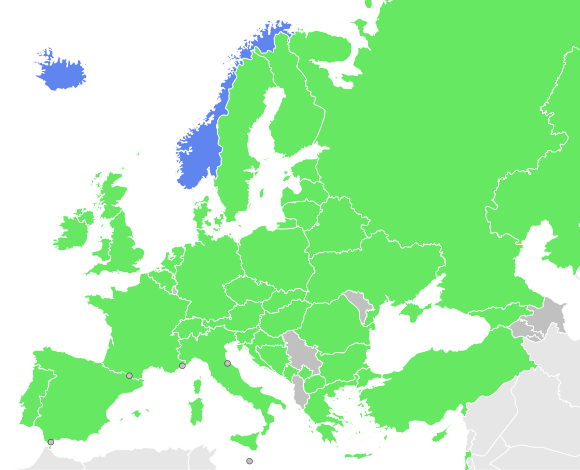
]] Main article: FIBA Europe Cup records and statistics
A total number of 140 clubs from 38 FIBA member countries have participated in the competition. The competition has been won by eight clubs from seven countries.
Teams from Italy have been most successful, as two teams won the title and three other teams finished as runners-up.
Statistics
All-time leaders
Statistics as of 11 June 2022.
Players in bold were active in the most recent FIBA Europe Cup season.
Points
| Rank | Player | Nation | Points | Games | Per game | Years | Club(s) |
|---|---|---|---|---|---|---|---|
| 1 | Michel Diouf | SEN | 931 | 76 | 12.3 | 2015– | Bakken Bears |
| 2 | Trae Golden | USA | 897 | 51 | 17.6 | 2015– | ETHA Engomis, ESSM Le Portel, Avtodor, Bahçeşehir Koleji |
| 3 | Darko Jukić | DEN | 728 | 71 | 11.8 | 2015– | Bakken Bears |
| 4 | Worthy de Jong | NED | 782 | 51 | 14.3 | 2015–2022 | ZZ Leiden |
| 5 | Ryan Evans | USA | 616 | 46 | 12.4 | 2018– | Bakken Bears |
Rebounds
| Rank | Player | Nation | Rebounds | Games | Per game | Years | Club(s) |
|---|---|---|---|---|---|---|---|
| 1 | Michel Diouf | SEN | 463 | 73 | 6.3 | 2015– | Bakken Bears |
| 2 | Tony Taylor | USA | 318 | 36 | 8.8 | 2016– | Enisey, Karşıyaka |
| 3 | Darko Jukić | DEN | 308 | 74 | 4.2 | 2015– | Bakken Bears |
| 4 | Željko Šakić | CRO | 291 | 42 | 6.9 | 2015–2022 | Cluj-Napoca, Avtodor |
| 5 | Thomas Koenis | NED | 279 | 52 | 5.4 | 2015–2022 | ZZ Leiden, Donar |
Assists
| Rank | Player | Nation | Assists | Games | Per game | Years | Club(s) |
|---|---|---|---|---|---|---|---|
| 1 | Trae Golden | USA | 298 | 51 | 5.8 | 2015– | ETHA Engomis, ESSM Le Portel, Avtodor, Bahçeşehir Koleji |
| 2 | John Roberson | USA | 318 | 36 | 8.8 | 2016– | Élan Chalon, ASVEL, Enisey |
| 3 | Adama Darboe | DEN | 229 | 60 | 3.8 | 2015– | Bakken Bears |
| 4 | Worthy de Jong | NED | 208 | 51 | 4.1 | 2015–2022 | ZZ Leiden |
| 5 | Tony Taylor | USA | 188 | 49 | 8.8 | 2016– | Enisey, Karşıyaka |
Single game records
| Category | Efficiency | Points | Rebounds | Assists | Steals | Blocks | Three-pointers |
|---|---|---|---|---|---|---|---|
| USA Chase Fieler | 46 | ||||||
| USABIH John Roberson | 39 | ||||||
| USA Spencer Butterfield | |||||||
| USA Travis Taylor | 21 | ||||||
| FIN Teemu Rannikko | |||||||
| USA Kim Adams | 9 | ||||||
| SRB Dejan Kravić | 6 | ||||||
| EST Janar Talts | |||||||
| USA Spencer Butterfield | 11 |
Source: FIBA Europe Cup As of 2 May 2017.
Awards
_by_Sandro_Halank–045.jpg)
After each round, the FIBA Europe Cup awards the "Top Performer" honour to the best player of the given round. In its inaugural season, in 2016, the competition had a Final Four MVP award for the best player of its final four. The final four format was later abandoned in favor of playoffs with two-legged finals. Since 2020, the league awards a Final MVP trophy again.
Winning rosters
References
References
- "Competition Regulations Page 4 of 49.".
- (June 30, 2015). "FIBA Europe Board pushes ahead with attractive club competitions model". FIBA Europe.
- "2017–18 FIBA Europe Cup regulations". FIBA.com.
- "FIBA Europe 2019-20 club competitions will not resume, Board sets plan for 2020-21". FIBA.basketball.
- (13 March 2020). "FIBA Europe confirms suspension of EuroLeague and EuroCup Women, FIBA Europe Cup until the end of the club season". FIBA.
- "All-Time Leaders".
- "Diouf overtakes Golden to become FIBA Europe Cup's all-time leading scorer".
This article was imported from Wikipedia and is available under the Creative Commons Attribution-ShareAlike 4.0 License. Content has been adapted to SurfDoc format. Original contributors can be found on the article history page.
Ask Mako anything about FIBA Europe Cup — get instant answers, deeper analysis, and related topics.
Research with MakoFree with your Surf account
Create a free account to save articles, ask Mako questions, and organize your research.
Sign up freeThis content may have been generated or modified by AI. CloudSurf Software LLC is not responsible for the accuracy, completeness, or reliability of AI-generated content. Always verify important information from primary sources.
Report