From Surf Wiki (app.surf) — the open knowledge base
Ferdinand I of Bulgaria
Prince/Tsar of Bulgaria from 1887 to 1918
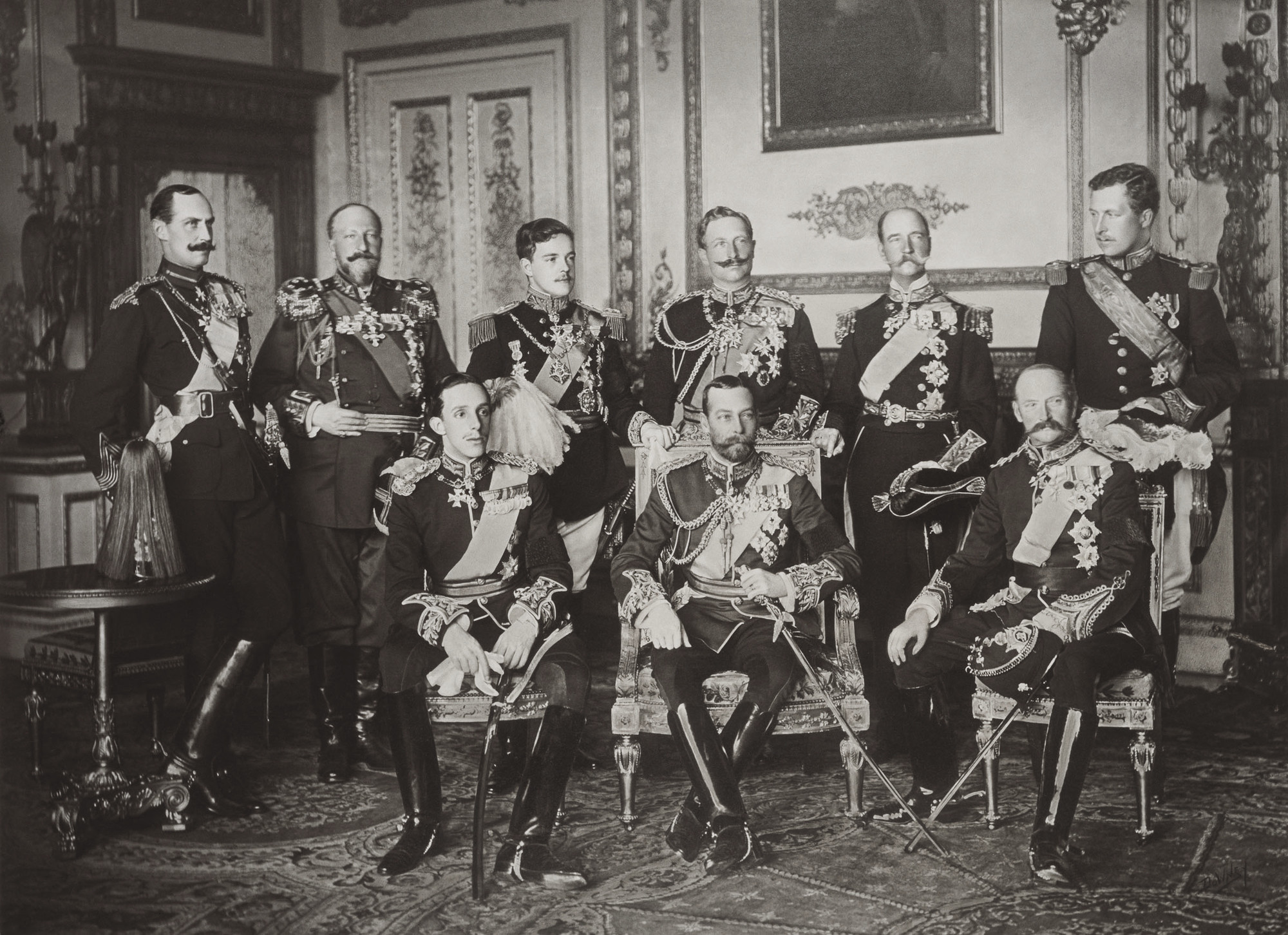
Prince/Tsar of Bulgaria from 1887 to 1918
| Field | Value | ||||
|---|---|---|---|---|---|
| name | Ferdinand I | ||||
| {{native name | bg | Фердинанд I | italics | no | paren=omit}} |
| full name | |||||
| image | Zar Ferdinand Bulgarien.jpg | ||||
| caption | Ferdinand I in 1912 | ||||
| reign | 5 October 1908 – 3 October 1918 | ||||
| succession | Tsar of Bulgaria | ||||
| predecessor | Himself (as Prince) | ||||
| successor | Boris III | ||||
| reign2 | 7 July 1887 – 5 October 1908 | ||||
| succession2 | Prince of Bulgaria | ||||
| predecessor2 | Alexander | ||||
| successor2 | Himself (as Tsar) | ||||
| spouses | |||||
| issue | |||||
| house | Saxe-Coburg and Gotha-Koháry | ||||
| father | Prince August of Saxe-Coburg and Gotha | ||||
| mother | Princess Clémentine of Orléans | ||||
| birth_date | 26 February 1861 | ||||
| birth_place | Vienna, Austrian Empire | ||||
| death_date | |||||
| death_place | Coburg, Germany | ||||
| burial_place | |||||
| religion | Catholic | ||||
| signature | Ferdinand I of Bulgaria signature.svg |
| bg
Ferdinand I (Ferdinand Maximilian Karl Leopold Maria; 26 February 1861 – 10 September 1948) was the monarch of Bulgaria from 1887 to 1918, reigning as Prince of Bulgaria from 1887 to 1908 and Tsar of Bulgaria from 1908 until his abdication in 1918. Under his rule, Bulgaria entered the First World War on the side of the Central Powers in 1915.
Family background
Ferdinand was born on 26 February 1861 in Vienna, a German prince of the House of Saxe-Coburg and Gotha-Koháry. He was the son of Prince August of Saxe-Coburg and his wife Clémentine of Orléans, daughter of King Louis Philippe I of France. Princess Maria Antonia Koháry was a Hungarian Noble and heiress who married Ferdinand's grandfather, Prince Ferdinand of Saxe-Coburg and Gotha. Ferdinand was raised in his parents’ Catholic faith and baptised in St. Stephen's Cathedral, Vienna on 27 February, having as godparents Archduke Maximilian of Austria and his wife Princess Charlotte of Belgium. He grew up in the cosmopolitan environment of Austro-Hungarian high nobility and also in their ancestral lands in Hungary and in Germany. The House of Koháry descended from an immensely wealthy Upper Hungarian noble family, who held the princely lands of Čabraď and Sitno in present-day Slovakia, among others. The family's property was augmented by Clémentine of Orléans' remarkable dowry.
Ferdinand was a grandnephew of Ernest I, Duke of Saxe-Coburg and Gotha and of Leopold I, first king of the Belgians. His father August was a brother of King Ferdinand II of Portugal, and also a first cousin to Queen Victoria, her husband Albert, Empress Carlota of Mexico and her brother Leopold II of Belgium. These last two, Leopold and Carlota, were also first cousins of Ferdinand I's through his mother, a princess of Orléans. This made the Belgian siblings his first cousins, as well as his first cousins once removed. Indeed, the House of Saxe-Coburg and Gotha had contrived to occupy, either by marriage or by direct election, several European thrones in the course of the 19th century. Following the family trend, Ferdinand was himself to found the royal dynasty of Bulgaria.
Prince of Bulgaria
The previous ruling prince of Bulgaria, Alexander of Battenberg, had abdicated in 1886 after a pro-Russian coup, only seven years after he had been elected. Ferdinand, who was an officer in the Austro-Hungarian Army, was elected Prince of autonomous Bulgaria by its Grand National Assembly on 7 July 1887 in the Gregorian calendar (the "New Style" used hereinafter). The throne had been previously offered, before Ferdinand's acceptance, to princes from Denmark to the Caucasus and even to the King of Romania. The Russian tsar himself had nominated his aide, Nichols Dadian of Mingrelia, but his candidacy was rejected by the Bulgarians. Ferdinand's accession was greeted with disbelief in many of the royal houses of Europe; Queen Victoria, his father's first cousin, stated to her prime minister, "He is totally unfit ... delicate, eccentric and effeminate ... Should be stopped at once." To the amazement of his initial detractors, Ferdinand generally gave a good account of himself during the first two decades of his reign.
Bulgaria's domestic political life was dominated during the early years of Ferdinand's reign by liberal party leader Stefan Stambolov, whose foreign policy saw a marked cooling in relations with Russia, formerly seen as Bulgaria's protector.
Stambolov's fall (May 1894) and subsequent assassination (July 1895) — probably not engineered by Ferdinand — paved the way for a reconciliation of Bulgaria with Russia, effected in February 1896 with Ferdinand's decision to convert his infant son, Prince Boris, from Roman Catholicism to Eastern Orthodoxy. However, this earned him the animosity of his Catholic Austrian relatives, and he was excommunicated by Pope Leo XIII.
Tsar of Bulgaria
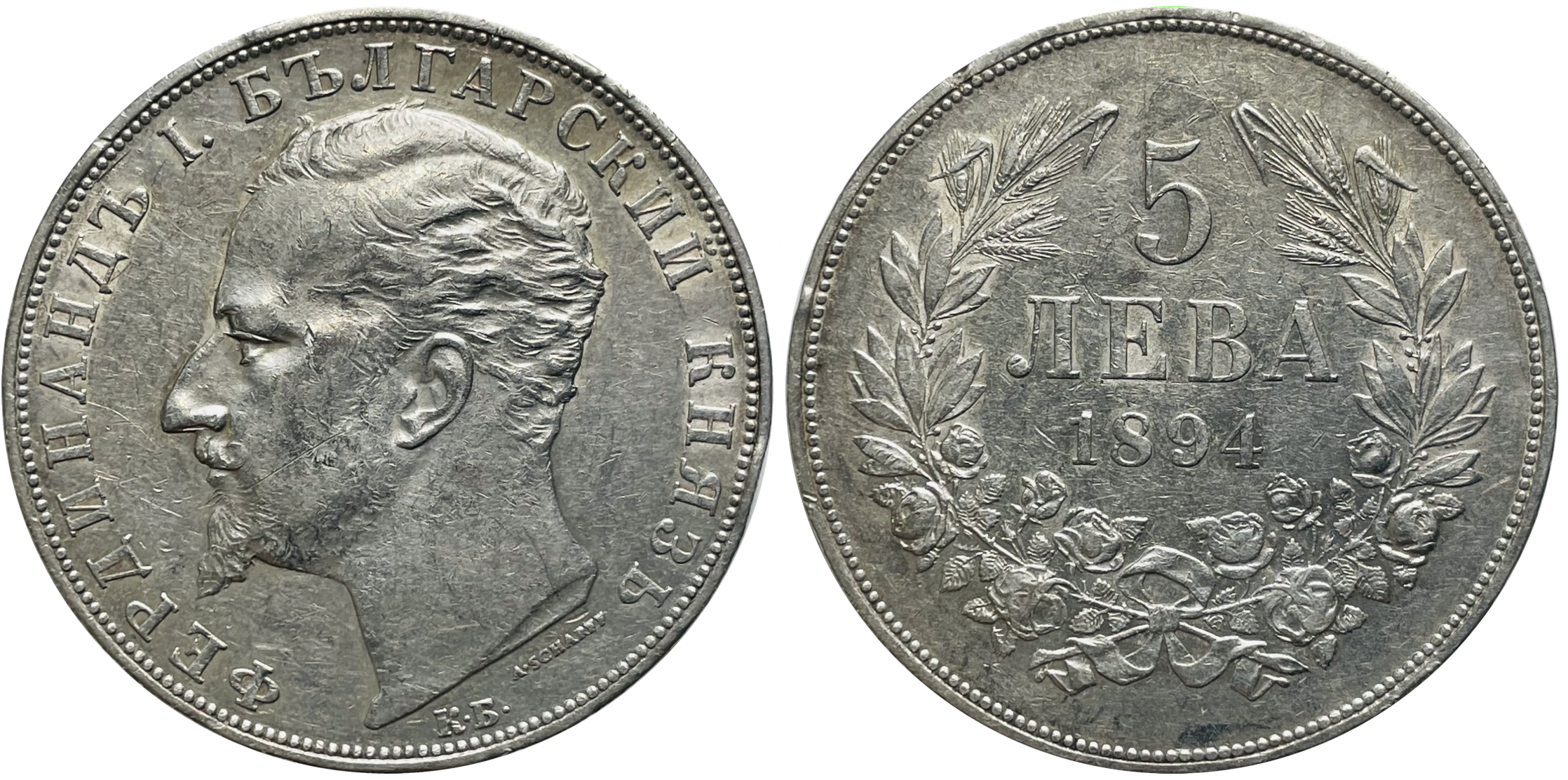
On 5 October 1908 (celebrated on 22 September), Ferdinand proclaimed Bulgaria's de jure independence from the Ottoman Empire (though the country had been de facto independent since 1878). He also proclaimed Bulgaria a kingdom, and assumed the title of tsar—a deliberate nod to the rulers of the earlier Bulgarian states. However, while the title tsar was translated as "emperor" in the First and Second Bulgarian empires, it was translated as "king" under Ferdinand and his successors. The Bulgarian Declaration of Independence was proclaimed by him at the Holy Forty Martyrs Church in Tarnovo, and was recognized by the Ottoman Empire and the other European powers. The Tarnovo Constitution was retained, with the word "prince" replaced by the word "tsar."
On a visit to German Emperor Wilhelm II, his second cousin once removed, in 1909, Ferdinand was leaning out of a window of the New Palace in Potsdam when the Emperor came up behind him and slapped him on the bottom. Ferdinand was affronted by the gesture, but the Kaiser refused to apologize. Ferdinand however exacted his revenge by awarding a valuable arms contract he had intended to give to the Krupp's factory in Essen to French arms manufacturer Schneider-Creusot. Another incident occurred on his journey to the funeral of his second cousin King Edward VII of the United Kingdom in 1910. A tussle broke out over where his private railway carriage would be positioned in relation to the heir presumptive to the Austro-Hungarian throne, Archduke Franz Ferdinand. The Archduke won out, having his carriage positioned directly behind the engine. Ferdinand's was placed directly behind his. Realising the dining car of the train was behind his own carriage, Ferdinand obtained his revenge on the Archduke by refusing him passage through his own carriage to the dining car. On 15 July the same year during a visit to Belgium, Ferdinand also became the first head of state to fly in an airplane. He awarded the pilot of the plane with a medal when they landed.
Balkan Wars (1912–1913)
Main article: Balkan Wars
Like many other rulers before him, Ferdinand desired the creation of a "new Byzantium", a desire that has to be interpreted as wanting to create a significant, essentially Christian, Balkan power, given that Bulgaria and Bulgarians had neither cultural, ethnic, historical nor linguistic affinity with the old Byzantine Empire, which was quintessentially Roman and, evolving through the centuries, Greek. In 1912, Ferdinand joined the other Balkan states in an assault on the Ottoman Empire to free occupied territories. He saw this war as a new crusade declaring it, "a just, great and sacred struggle of the Cross against the Crescent." Bulgaria contributed the most and also lost the greatest number of soldiers. The Great Powers insisted on the creation of an independent Albania. Though the Balkan League allies had fought together against the common enemy in the First Balkan War, that was not enough to overcome their mutual rivalries. In the original documents for the Balkan League, Serbia had been pressured by Bulgaria to hand over most of Vardar Macedonia after it had conquered it from the Ottoman Empire. However Serbia, in response to the new Albanian state receiving territory in the north that it had expected to gain for itself, said that it would keep possession of the areas that its forces had occupied. Soon after, Bulgaria began the Second Balkan War when it invaded its recent allies Serbia and Greece to seize disputed areas, before being attacked itself by Romania and the Ottoman Empire. Although Bulgaria was defeated, the 1913 Treaty of Bucharest granted the Kingdom some territorial gains. The region of Western Thrace, giving access to the Aegean Sea was secured.
First World War and abdication (1915–1918)
Main article: Bulgaria during World War I
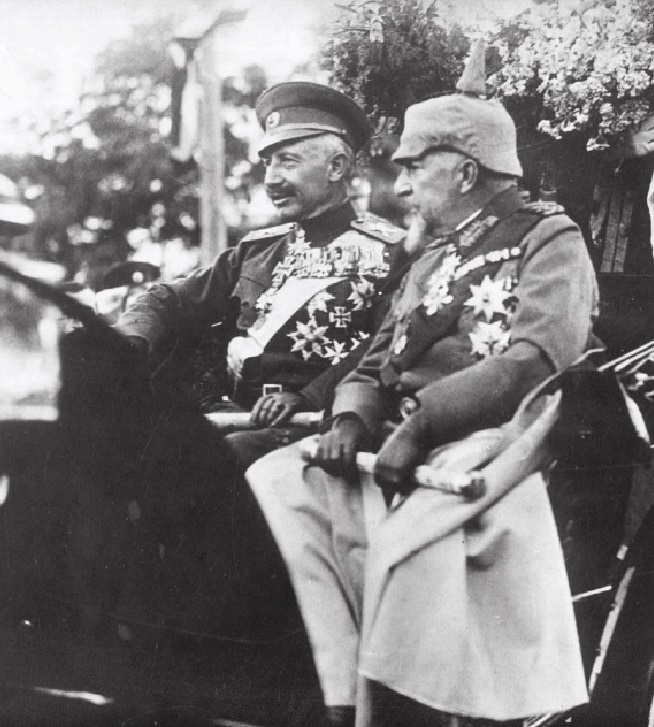
On 11 October 1915, the Bulgarian army attacked Serbia after signing a treaty with Austria-Hungary and Germany stating that Bulgaria would gain the territory it sought at the expense of Serbia. While he was not an admirer of German Emperor Wilhelm II or Austrian Emperor Franz Josef I—whom he described as "that idiot, that old dotard of a Francis Joseph"—Ferdinand wanted additional territorial gains after the humiliation of the Balkan Wars. This also entailed forming an alliance with his former enemy, the Ottoman Empire. This ranging of his country with the Central Powers made him a de facto supporter of Germany's war aims and was not well received by the Allies. Edmund Gosse wrote:
During the initial phase of World War I, the Tsardom of Bulgaria achieved several decisive victories over its enemies and laid claim to the disputed territories of Macedonia after Serbia's defeat. For the next two years, the Bulgarian army shifted its focus towards repelling Allied advances from nearby Greece. They were also partially involved in the 1916 conquest of neighboring Romania, now ruled by another Ferdinand I, who was also Ferdinand's first cousin once removed.
To save the Bulgarian monarchy after multiple military setbacks in 1918, Tsar Ferdinand abdicated in favour of his eldest son, who became Tsar Boris III on 3 October 1918. Under new leadership, Bulgaria surrendered to the Entente and, as a consequence, lost not only the additional territory it had fought for in the major conflict, but also the territory it had won after the Balkan Wars giving access to the Aegean Sea.
Personal life

According to her memoirs, Ferdinand I was vehemently in love with Archduchess Louise of Austria, and proposed marriage to her, but she refused:
Ferdinand married Princess Marie Louise of Bourbon-Parma, daughter of Robert I, Duke of Parma and Princess Maria Pia of Bourbon-Two Sicilies, on 20 April 1893 at the Villa Pianore in Lucca. Steven Constant describes this as a "marriage of convenience". The marriage produced four children:
- Boris III (1894–1943)
- Kyril (1895–1945)
- Eudoxia (1898–1985)
- Nadezhda (1899–1958).
Marie Louise died on 31 January 1899 after giving birth to her youngest daughter. Ferdinand did not think about remarriage until his mother, Princess Clémentine, died in 1907. To satisfy dynastic obligations and to provide his children with a mother figure, Ferdinand married Princess Eleonore Reuss of Köstritz, on 28 February 1908. Neither romantic love or physical attraction played any role, and Ferdinand treated her as no more than a member of the household, and showed scant regard.
In his private relations, Ferdinand was a somewhat hedonistic individual. He enjoyed affairs with a number of women of humble position, siring a number of illegitimate children whom he then supported financially. In his later life, rumours abounded of Ferdinand's trysts with lieutenants and valets. His regular holidays on Capri, then a popular holiday destination with wealthy epicenes, were common knowledge in royal courts throughout Europe.
He was remembered in his cousin's memoir:
Exile and death (1918–1948)
After his abdication, Ferdinand returned to live in Coburg, Germany. He had managed to salvage much of his fortune and was able to live in some style. He saw his being in exile simply as one of the hazards of kingship. He commented, "Kings in exile are more philosophic under reverses than ordinary individuals; but our philosophy is primarily the result of tradition and breeding, and do not forget that pride is an important item in the making of a monarch. We are disciplined from the day of our birth and taught the avoidance of all outward signs of emotion. The skeleton sits forever with us at the feast. It may mean murder, it may mean abdication, but it serves always to remind us of the unexpected. Therefore we are prepared and nothing comes in the nature of a catastrophe. The main thing in life is to support any condition of bodily or spiritual exile with dignity. If one sups with sorrow, one need not invite the world to see you eat." He was pleased that the throne could pass to his son. Ferdinand was not displeased with exile and spent much of his time devoted to artistic endeavors, gardening, travel and natural history. In 1922 the Bulgarian government gave former King Ferdinand I, who had been living in exile since 1918, permission to return to Sofia. The Kingdom of Yugoslavia immediately sent an ultimatum objecting to the move.

However, he would live to see the collapse of everything he had held to be precious in life. His eldest son and successor, Boris III, died under mysterious circumstances after returning from a visit to Hitler in Germany in 1943. Boris' son, Simeon II, succeeded him only to be deposed in 1946, ending the Bulgarian monarchy. The Kingdom of Bulgaria was succeeded by the People's Republic of Bulgaria, under which Ferdinand's other son, Kyril, was executed. On hearing of Kyril's death he said, "Everything is collapsing around me."
Ferdinand died in Bürglass-Schlösschen on 10 September 1948 in Coburg, Germany, cradle of the Saxe-Coburg-Gotha dynasty. He was the last surviving grandchild of Louis-Philippe of France. His final wish was to be buried in Bulgaria. However, the Communist authorities in Bulgaria would not allow it, so he was buried in the family crypt in St. Augustin, Coburg.
On 29 May 2024, the remains of Ferdinand I of Bulgaria were transported from Coburg to Sofia by a military plane, which landed at Sofia Airport. They were transported from Germany to Bulgaria by a military aircraft in accordance with the decision adopted by the Council of Ministers. The coffin was taken down and carried by national guards and solemnly placed in a hearse which left for the royal Vrana Palace on the outskirts of Sofia, where Ferdinand I was buried.
Honours
Bulgarian
- Grand Cross of St. Alexander, in Diamonds, 27 May 1883
- Founder and Grand Master of the Civil Merit Order, 1891
- Founder and Grand Master of the Military Merit Order, 19 May 1900
- Founder and Grand Master of the Order of Saints Cyril and Methodius, 18 May 1909
Foreign
.svg)
- Kingdom of Albania Albanian royal family:
- Knight of the Order of Albania, with Collar
- Grand Cross of the Order of Fidelity, Special Class
- Austrian Empire Kingdom of Hungary Austro-Hungarian imperial and royal family:
- Grand Cross of the Royal Hungarian Order of St. Stephen, with Collar, 1899; in Diamonds, 1917
- Knight of the Golden Fleece, with Collar, 1911
- Military Merit Cross, 3rd Class with War Decoration, 1915
- Grand Cross of the Military Order of Maria Theresa, with Collar, 1917
- Kingdom of Bavaria Bavarian royal family:
- Knight of St. Hubert, 1896
- Grand Cross of the Military Order of Max Joseph
- Belgium: Grand Cordon of the Order of Leopold
- Empire of Brazil Brazilian imperial family: Grand Cross of the Rose, with Collar
- Denmark: Knight of the Elephant, with Collar, 20 May 1910
- Saxe-Coburg and Gotha Saxe-Altenburg Saxe-Meiningen Ernestine ducal families:
- Grand Cross of the Saxe-Ernestine House Order, 1879
- Knight of the Order of Saint Joachim, 1888
- French Third Republic: Grand Officer of the Legion of Honour, 1905
- Kingdom of France French royal family:
- Knight of St. Michael
- Grand Cross of St. Lazarus, with Collar
- Kingdom of France French royal family:
- Grand Duchy of Hesse Hessian grand ducal family: Grand Cross of the Ludwig Order, 28 November 1893
- Kingdom of Italy Italian royal family:
- Knight of the Annunciation, with Collar, 10 July 1897
- Grand Cross of Saints Maurice and Lazarus
- Grand Cross of the Crown of Italy
- Duchy of Parma Parmese ducal family: Senator Grand Cross of the Constantinian Order of St. George, 1893
- Two Sicilies Two Sicilian royal family: Knight of St. Januarius
- Sovereign Military Order of Malta: Bailiff Grand Cross of Justice, 1st Class
- Monaco: Grand Cross of St. Charles, 11 May 1892
- Kingdom of Portugal Portuguese royal family:
- Grand Cross of the Sash of the Two Orders, 17 July 1886
- Grand Cross of the Tower and Sword, 17 July 1886
- Kingdom of Prussia Prussian royal family:
- Grand Cross of the Red Eagle, with Collar, 2 May 1896
- Knight of the Black Eagle, with Collar
- Iron Cross (1914), 2nd and 1st Classes
- Pour le Mérite (military), with Oak Leaves, 8 September 1916
- Kingdom of Romania Romanian royal family: Collar of the Order of Carol I
- Russian Empire Russian imperial family:
- Knight of St. Andrew, with Collar, 1907
- Knight of St. Alexander Nevsky, 10 February 1910
- Knight of the White Eagle
- Knight of St. Anna, 1st Class
- Knight of St. Vladimir, 1st Class
- Restoration (Spain) Spanish royal family: Grand Commander of the Order of Calatrava
- Sweden: Knight of the Seraphim, with Collar, 28 June 1937
- Ottoman Empire Turkish imperial family:
- Order of Distinction in Diamonds, 26 March 1896
- Exalted Order of Honour, 1915
- United Kingdom of Great Britain and Ireland:
- Queen Victoria Diamond Jubilee Medal, 1897
- Honorary Grand Cross of the Royal Victorian Order, 6 September 1904
- Honorary Grand Cross of the Bath (civil), 7 March 1905
- Württemberg Württemberg royal family: Grand Cross of the Military Merit Order
Honorary military appointments

- Russian Empire: Colonel of the 54th Minsk Regiment, 1902
References
Notes
Books
- {{cite book | author-link = Theo Aronson
- {{cite book
- {{cite book | author-link = Jiri Louda
- {{cite book | author-link = Robert K. Massie
- {{cite book | author-link = Alan Palmer
References
- Stephen Constant, ''Foxy Ferdinand, 1861-1948, Tsar of Bulgaria'' (Sidgwick & Jackson, 1979).
- [[#Louda1981. Louda, 1981, ''Lines of Succession'']], Table 149
- Archiv der Domkirche St. Stephan, Wien, Taufbuch 1860-1865
- Constant, ''Foxy Ferdinand, 1861-1948, Tsar of Bulgaria'' (1979).
- [[#Finestone1981. Finestone, 1981, ''The Last Courts of Europe'']], p 227
- [[#Louda1981. Louda, 1981, ''Lines of Succession'']], p 297
- [[#Aronson1986. Aronson, 1986, ''Crowns In Conflict'']], p 83
- Constant, pp. 159-167.
- [https://www.britannica.com/topic/tsar Tsar] at [[Encyclopedia Britannica]]
- [[#Aronson1986. Aronson, 1986, ''Crowns In Conflict'']], pp 8–9
- [[#Aronson1986. Aronson, 1986, ''Crowns In Conflict'']], p 7
- (16 July 1910). "King up in Aeroplane: Ferdinand of Bulgaria First Monarch to Do It – Sons Fly Also". New York Times website.
- [[#Aronson1986. Aronson, 1986, ''Crowns In Conflict'']], p 86
- [[#Aronson1986. Aronson, 1986, ''Crowns In Conflict'']], p 87
- [[#Aronson1986. Aronson, 1986, ''Crowns In Conflict'']], p 126
- (2025). "Crusading in the Long Nineteenth Century, 1798–1928: Engaging the Crusades, Volume Ten". Taylor & Francis.
- [[#Palmer1978. Palmer, 1978, ''The Kaiser'']], p 206
- of Tuscany, Louisa. (1911). "My Own Story".
- Constant, 1986, ‘’Foxy Ferdinand’’, p 143
- Aronson, p 85.
- Stéphane Groueff, ‘’Crown of Thorns: The Reign of King Boris III of Bulgaria, 1918-1943’’, Madison Books, 1998.
- Constant, Stephen ''Foxy Ferdinand, 1861–1948, Tsar of Bulgaria'', Sidgwick and Jackson, 1979, pp. 96, 266.
- Gleichen, Lady Helena. (1940). "Contacts and Contrasts". Butler & Tanner Ltd..
- [[#Aronson1986. Aronson, 1986, ''Crowns In Conflict'']], p 201
- [[#Aronson1986. Aronson, 1986, ''Crowns In Conflict'']], p 175
- Fendrick, Raymond. (January 2, 1924). "Ultimatum to Bulgars Sent by Jugo-Slavs". [[Chicago Daily Tribune]].
- [[#Aronson1986. Aronson, 1986, ''Crowns In Conflict'']], p 202
- "Mortal Remains of Bulgarian King Ferdinand I Brought to Bulgaria from Germany".
- [http://www.kingsimeon.bg/en/simvoli-i-ordeni/velikiyat-magistar-na-balgarskite-ord/ The Grand Master of the Bulgarian Orders] - official website of H.M. Simeon II
- ''State Gazette'', No. 104, 21 May 1909
- (1918). "Hof- und Staatshandbuch der Österreichisch-Ungarischen Monarchie".
- ''[https://archive.org/details/bub_gb_nTedipoxoGcC/page/n39 Hof- und Staats-Handbuch des Königreichs Bayern]'' (1906), "Königliche-Orden" p. 8
- Jørgen Pedersen. (2009). "Riddere af Elefantordenen, 1559–2009". Syddansk Universitetsforlag.
- ''[https://zs.thulb.uni-jena.de/rsc/viewer/jportal_derivate_00243753/Sachsen_Coburg_Gotha_166999342_1890_0054.tif?logicalDiv=jportal_jparticle_00484309 Staatshandbücher für das Herzogtum Sachsen-Coburg und Gotha]'' (1890), "Herzogliche Sachsen-Ernestinischer Hausorden" p. 43
- (1907). "Großherzoglich Hessische Ordensliste". Staatsverlag.
- "Image".
- "The Majesties attended the celebrations of the 900th anniversary of the Sovereign Order of Malta". The Majesties attended the celebrations of the 900th anniversary of the Sovereign Order of Malta - H.R.H. King Simeon II.
- "The Royal family attended the reception on the occasion of the Day of St. John the Baptist, patron of the Order of Malta". The Royal family attended the reception on the occasion of the Day of St. John the Baptist, patron of the Order of Malta - H.R.H. King Simeon II.
- (31 May 1892). "Journal de Monaco".
- (2014). "Agraciamentos Portugueses Aos Príncipes da Casa Saxe-Coburgo-Gota". Pro Phalaris.
- (1895). "Königlich Preussische Ordensliste".
- "Foreign Pour le Mérite Awards: Foreign Awards During World War I".
- "Ordinul Carol I".
- Sergey Semenovich Levin. (2003). "Order of the Holy Apostle Andrew the First-called (1699-1917). Order of the Holy Great Martyr Catherine (1714-1917)".
- Alexei Popovkin. (2012). "Visits of the Slavic Monarchs to Russia".
- (1940). "Sveriges statskalender".
- Kumanov, Milen. (2015). "Bulgarian-Turkish relations during the First World War (1914 – 1918) – A collection of documents". Gutenberg.
- Shaw, Wm. A. (1906) ''The Knights of England'', '''I''', London, [https://archive.org/stream/cu31924092537418#page/n521/mode/2up p. 430]
- {{London Gazette. (14 March 1905)
- (27 June 1902). "Prince ferdinand at Kieff".

This article was imported from Wikipedia and is available under the Creative Commons Attribution-ShareAlike 4.0 License. Content has been adapted to SurfDoc format. Original contributors can be found on the article history page.
Ask Mako anything about Ferdinand I of Bulgaria — get instant answers, deeper analysis, and related topics.
Research with MakoFree with your Surf account
Create a free account to save articles, ask Mako questions, and organize your research.
Sign up freeThis content may have been generated or modified by AI. CloudSurf Software LLC is not responsible for the accuracy, completeness, or reliability of AI-generated content. Always verify important information from primary sources.
Report