From Surf Wiki (app.surf) — the open knowledge base
Feodor III of Russia
Tsar of Russia from 1676 to 1682
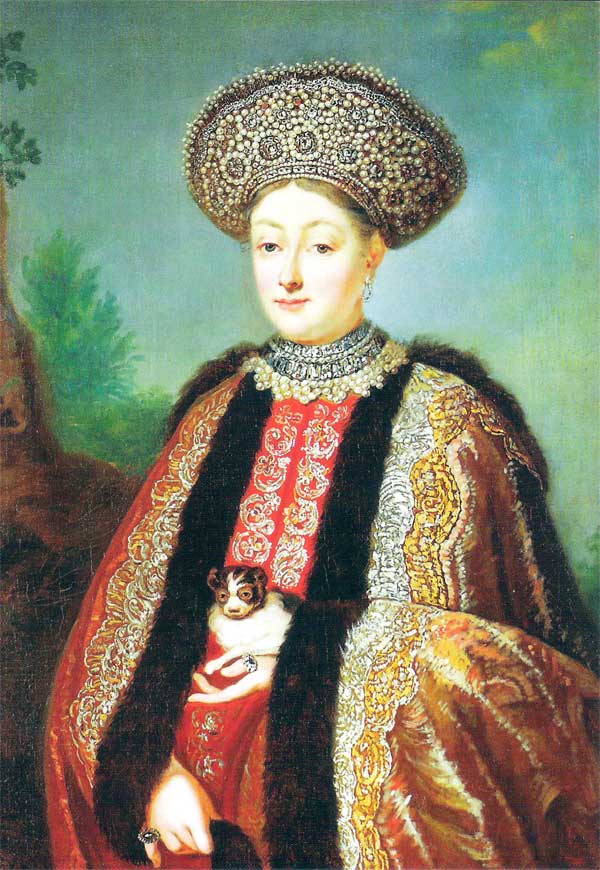
Tsar of Russia from 1676 to 1682
| Field | Value | ||||
|---|---|---|---|---|---|
| name | Feodor III | ||||
| image | Feodor III of Russia.jpg | ||||
| caption | Portrait | ||||
| succession | Tsar of all Russia | ||||
| reign | 8 February 1676 – 7 May 1682 | ||||
| coronation | 18 June 1676 | ||||
| cor-type | Coronation | ||||
| full name | Feodor Alexeevich Romanov | ||||
| predecessor | Alexis | ||||
| successor | Peter I and Ivan V | ||||
| spouses | {{Plainlist | ||||
| * {{marriage | Agafya Grushetskaya | 1680 | 1681 | end | d}} |
| house | Romanov | ||||
| father | Alexis of Russia | ||||
| mother | Maria Miloslavskaya | ||||
| birth_date | |||||
| birth_place | Moscow, Russia | ||||
| death_date | |||||
| death_place | Moscow, Russia | ||||
| burial_place | Cathedral of the Archangel | ||||
| religion | Russian Orthodoxy |
| cor-type = Coronation
Feodor III or Fyodor III Alekseyevich (; 9 June 1661 – 7 May 1682) was Tsar of all Russia from 1676 until his death in 1682. Despite poor health from childhood, he managed to pass reforms on improving meritocracy within the civil and military state administration as well as founding the Slavic Greek Latin Academy.
Life
Born in Moscow, Fyodor, as the eldest surviving son of Tsar Alexis and Maria Miloslavskaya, succeeded his father on the throne in 1676 at the age of fifteen. He had a fine intellect and a noble disposition; he had received an excellent education at the hands of Simeon Polotsky, the most learned Slavonic monk of the day. He knew Polish and even possessed the unusual accomplishment of Latin. He had been disabled from birth, however, horribly disfigured and half paralysed by a mysterious disease, supposedly scurvy. He spent most of his time with young nobles, and .
On 28 July 1680 he married a noblewoman, Agaphia Simeonovna Grushevskaya (1663–1681), daughter of Simeon Feodorovich Grushevsky and of his wife Maria Ivanovna Zaborovskaya, and assumed the sceptre. His native energy, though crippled, was not crushed by his disabilities. He soon showed himself as a thorough and devoted reformer. The atmosphere of the court ceased to be oppressive, the light of a new liberalism shone, and the severity of the penal laws was considerably mitigated. The Tsar founded the academy of sciences in the Zaikonospassky monastery, where competent professors were to teach everything not expressly forbidden by the Orthodox church – the syllabus included Slavonic, Greek, Latin and Polish.
The Feodorean and the later Petrine reforms differed in that while the former were primarily, though not exclusively, for the benefit of the church, the latter were primarily for the benefit of the state. A household census took place in 1678. | author-link1 = David Moon (historian) | publication-date = 2014 | access-date = 2019-01-27 The most notable reform of Feodor III, made at the suggestion of Vasily Galitzine, involved the abolition in 1682 of the system of mestnichestvo, or "place priority", which had paralyzed the whole civil and military administration of Tsardom of Russia for generations. Henceforth all appointments to the civil and military services were to be determined by merit and by the will of the sovereign, while pedigree (nobility) books were to be destroyed.
Family
Fyodor's first consort, Agaphia Simeonovna Grushevskaya, shared his progressive views. She was the first to advocate beard-shaving. On 11 July 1681, the Tsaritsa gave birth to her son, Tsarevich Ilya Fyodorovich, the expected heir to the throne. Agaphia died as a consequence of the childbirth three days later, on 14 July, and seven days later, on 21 July, the Tsarevich also died.
Seven months later, on 24 February 1682 Fyodor married a second time Marfa Apraksina (1667–1716), daughter of Matvei Vasilievich Apraksin and wife Domna Bogdanovna Lovchikova. Feodor was so weak that he could not stand at the wedding. Feodor died three months after his second wedding, on 7 May, without surviving issue. The news of his death sparked the Moscow Uprising of 1682.

Ancestors
Notes
Sources
References
References
- (2012). "Russia's People of Empire: Life Stories from Eurasia, 1500 to the Present". Indiana University Press.
This article was imported from Wikipedia and is available under the Creative Commons Attribution-ShareAlike 4.0 License. Content has been adapted to SurfDoc format. Original contributors can be found on the article history page.
Ask Mako anything about Feodor III of Russia — get instant answers, deeper analysis, and related topics.
Research with MakoFree with your Surf account
Create a free account to save articles, ask Mako questions, and organize your research.
Sign up freeThis content may have been generated or modified by AI. CloudSurf Software LLC is not responsible for the accuracy, completeness, or reliability of AI-generated content. Always verify important information from primary sources.
Report